Annual Indian Car Sales Grew 6.4 Percent in 2025 With 44.75 Lakhs Cars Sold
By Arjun Nair
Updated January 7, 2026
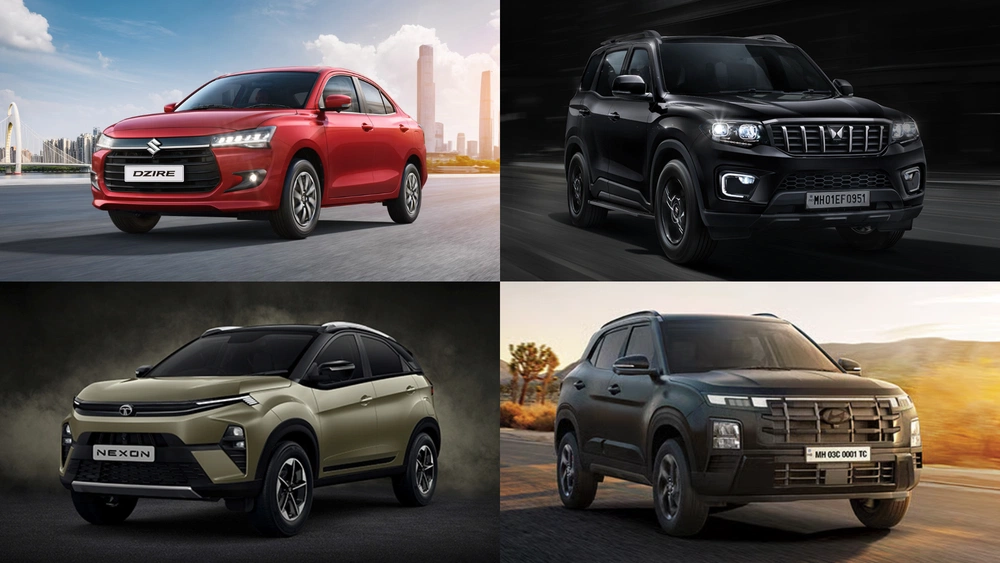
FADA has released its annual car sales data and expected Maruti leads while Mahindra grabbed a surprising number 2 dethroning TATA and more importantly Hyundai to fourth
| OEM | CY’25 Sales In Lakhs | Market Share CY’25 | CY’24 Sales In Lakhs | Market Share CY’24 |
|---|---|---|---|---|
| Maruti Suzuki India Ltd | 17,86,226 | 39.91% | 16,41,773 | 40.24% |
| Mahindra & Mahindra Ltd | 5,92,771 | 13.25% | 4,92,981 | 12.08% |
| Tata Motors Ltd | 5,67,607 | 12.68% | 5,37,737 | 13.18% |
| Hyundai Motor India Ltd | 5,59,558 | 12.50% | 5,61,183 | 13.76% |
| Toyota Kirloskar Motor Pvt Ltd | 3,20,703 | 7.17% | 2,60,591 | 6.39% |
| Kia India Pvt Ltd | 2,59,043 | 5.79% | 2,38,222 | 5.84% |
| Skoda Auto Volkswagen Group | 1,08,277 | 2.42% | 79,880 | 1.96% |
| JSW MG Motor India Pvt Ltd | 65,614 | 1.47% | 52,975 | 1.30% |
| Honda Cars India Ltd | 62,576 | 1.40% | 69,137 | 1.69% |
| Renault India Pvt Ltd | 36,420 | 0.81% | 40,669 | 1.00% |
| Nissan Motor India Pvt Ltd | 21,875 | 0.49% | 26,225 | 0.64% |
| Force Motors Ltd | 7,627 | 0.17% | 6,043 | 0.15% |
| BYD India Pvt Ltd | 5,402 | 0.12% | 2,869 | 0.07% |
| Others | 30,371 | 0.68% | 21,533 | 0.53% |
| Total Market | 44,75,309 | 100% | 40,79,532 | 100% |
Maruti Suzuki India Ltd
Maruti Suzuki dominated the mass-market space in CY2025 with 17,86,226 units sold and a 39.91 percent market share. Volumes were driven by consistently high demand for the Swift, Dzire, WagonR, Baleno, Ertiga, and Fronx, which together cover private buyers, fleet demand and family use.
Maruti’s biggest advantage remains its unmatched dealership and service network, especially in smaller towns. Strong fuel efficiency, competitive pricing and high resale value helped convert festive and rural demand into actual deliveries, allowing Maruti to grow volumes despite rising competition.
Mahindra & Mahindra Ltd
Mahindra emerged as the second-largest passenger vehicle manufacturer in CY2025 with 5,92,771 units and a 13.25 percent market share. Growth was led almost entirely by SUVs such as the Scorpio family, XUV700, XUV 3XO, Thar, and Bolero, reflecting India’s clear shift towards larger, higher-clearance vehicles.
Tata Motors Ltd
Tata Motors sold 5,67,607 passenger vehicles in CY2025, securing a 12.68 percent market share. The Punch and Nexon continued to anchor volumes, supported by steady demand for the Tiago and Altroz in the hatchback space. Tata’s emphasis on safety ratings, value pricing and feature-rich updates kept its models competitive. ns.
Hyundai Motor India Ltd
Hyundai closed CY2025 with 5,59,558 sales and a 12.50 percent market share. The Creta was the backbone of Hyundai’s volumes, continuing to dominate the midsize SUV segment with strong appeal among urban families. Models like Venue and Exter contributed additional volume at lower price points
However, rising pressure from Mahindra and Tata in the SUV space limited Hyundai’s overall growth.
Toyota Kirloskar Motor Pvt Ltd
Toyota recorded 3,20,703 sales in CY2025 with a 7.17 percent market share, driven by consistent demand for durable and high-resale models. The Innova range and Fortuner continued to attract buyers prioritising reliability and long-term ownership, while hybrid offerings brought in fuel-efficiency-focused customers.
Kia India Pvt Ltd
Kia sold 2,59,043 vehicles in CY2025, capturing a 5.79 percent market share. The Seltos and Sonet remained key volume drivers, while the Carens added steady family-oriented demand. Kia’s success lies in design-led products, feature-heavy variants and strong appeal among younger buyers.
Although competition intensified across all SUV segments, Kia maintained relevance through frequent updates, attractive interiors and consistent marketing, allowing it to hold stable volumes in a crowded market.
Skoda Auto Volkswagen Group
Skoda Volkswagen posted 1,08,277 sales in CY2025 with a 2.42 percent market share. Growth was supported by locally produced models that offer European driving dynamics at accessible price points. The Kushaq and Slavia attracted buyers looking for refinement and build quality beyond mainstream hatchbacks and compact SUVs.
JSW MG Motor India Pvt Ltd
MG Motor sold 65,614 units in CY2025, translating to a 1.47 percent market share. The brand carved out a niche through connected SUVs and electric vehicles that appeal to tech-focused urban buyers with models like Windsor and Comet. Their BaaS scheme also helped a lot
Honda Cars India Ltd
Honda delivered 62,576 vehicles in CY2025 with a 1.40 percent market share. Demand remained steady for models that focus on comfort, reliability and smooth drivetrains, but limited new launches constrained growth. Honda continues to attract buyers who prioritise long-term ownership and low maintenance, yet the brand faces pressure from newer, more aggressively updated rivals.
Renault India Pvt Ltd
Renault sold 36,420 vehicles in CY2025, accounting for a 0.81 percent market share. The Kiger and Triber continued to drive volumes by offering space and practicality at affordable price points. Renault’s value-driven positioning helped it maintain relevance among budget-conscious family buyers, though limited product diversity restricted expansion. Targeted promotions and competitive pricing helped stabilise demand in a highly competitive entry-level market.
Nissan Motor India Pvt Ltd
Nissan recorded 21,875 sales in CY2025 with a 0.49 percent market share. The brand relied heavily on a single high-volume model, which limited its ability to scale further. Slower product refresh cycles and lower showroom momentum compared to rivals kept volumes subdued. Nissan’s numbers underline the importance of new launches and stronger localisation to remain competitive in India’s fast-moving mass-market segments.
Force Motors Ltd
Force Motors reported 7,627 sales in CY2025, securing a 0.17 percent market share. Demand was driven by rugged utility vehicles suited for rural, fleet and institutional use. Force’s focused approach and strong presence in niche segments helped maintain steady volumes, even though it remains outside the mainstream passenger car race.
BYD India Pvt Ltd
BYD sold 5,402 vehicles in CY2025 with a 0.12 percent market share, reflecting gradual growth in electric vehicle adoption. Its EV-only strategy appealed mainly to urban early adopters, as awareness and charging infrastructure improved. While volumes are still small, BYD’s performance indicates rising acceptance of premium electric vehicles in select Indian cities.
Others
Other manufacturers together sold 30,371 vehicles in CY2025, holding a combined 0.68 percent market share. These brands largely operate in niche or limited-volume segments and contribute to market diversity rather than scale. Their combined performance highlights how the Indian passenger vehicle market remains heavily concentrated among a handful of dominant players.
SUVs Continue to Rule
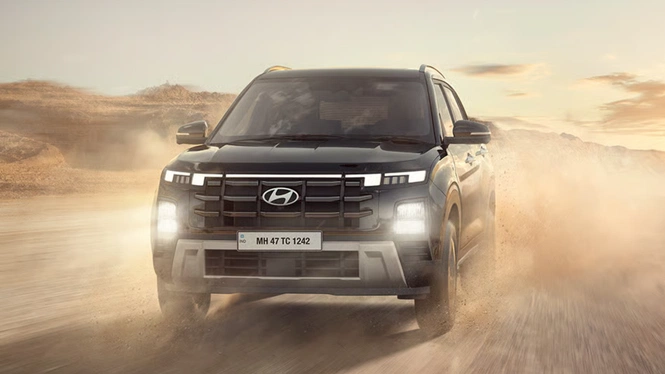
Utility vehicles accounted for about 55% of all passenger vehicles sold in 2025, up from 48% in 2024, with compact SUVs priced between ₹10 lakh and ₹15 lakh driving two of every three new car purchases.
Demand for popular SUVs like the Tata Nexon, Hyundai Creta, Mahindra Scorpio, Mahindra Thar, and a few other models was a key contributor.
The share of entry-level hatchbacks shrank from 25% to 22%, while sedans (8.5%) and MPVs (13.2%) remained steady with marginal growth.
Also Read: Tata Punch Facelift Will Be Revealed On 13 January
GST 2.0 Impact
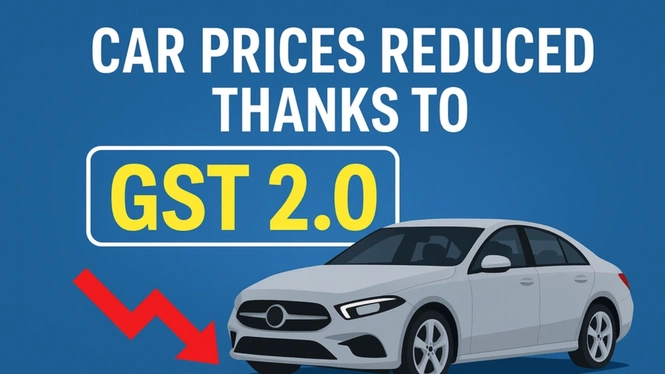
The implementation of GST 2.0 in September 2025 significantly boosted India's car market by simplifying tax slabs to 5%, 18%, and 40% while removing the additional cess, making vehicles more affordable and spurring sales growth.
Small and mid-segment cars, such as compact SUVs and hatchbacks under four meters, saw their GST rate drop from 28% to 18%, slashing prices by up to 13% and enabling entry-level models to start below ₹4 lakh, which revived demand among middle-class buyers and led to a 40% surge in retail sales during the festive season.
Larger luxury cars and SUVs shifted to a flat 40% rate, which was effectively lower than the previous 43-50%, resulting in average price cuts of 6-7%.
Electric vehicles retained their 5% rate.
Also Read: Hyundai Is Offering Upto ₹1.69 Lakhs Off This January
Looking Forward to 2026
2026 could follow a similar trend to 2025, with the initial months seeing a spike due to dealers offering discounts on MY2025 models, before demand settles down by April and May.
The year has many launches in its pipeline, with new SUVs like the Tata Punch facelift, Maruti Brezza facelift, Kia Seltos, Mahindra XUV 7XO, Renault Duster, Nissan Tekton and other models expected to keep this segment at the top.
Source- Vahan, SIAM , FADA
Table of Contents
- Maruti Suzuki India Ltd
- Mahindra & Mahindra Ltd
- Tata Motors Ltd
- Hyundai Motor India Ltd
- Toyota Kirloskar Motor Pvt Ltd
- Kia India Pvt Ltd
Join the Conversation
Trending
Five Chinese Cars That Could Shake Up the Indian Market
Chinese carmakers BYD, Denza and Jetour could bring five new SUVs, a luxury MPV and a high-performance electric grand tourer to India, with expected prices ranging from Rs 18 lakh to Rs 1.35 crore.
Anmol Kumar
October 23, 2026
Denza India Debut Set for November 13, Z9 GT and D9 Expected as First Models
Denza has confirmed its India entry, with the Z9 GT and D9 MPV expected as its first models. Prices could range from around Rs 90 lakh to Rs 1.5 crore, with no launch date announced yet.
Anmol Kumar
October 23, 2026
Top 10 Petrol Cars With Best Mileage You Can Buy
A list of the 10 most fuel-efficient petrol cars in India, including their claimed mileage, prices, engines and key features.
Arjun Nair
October 23, 2026
Featured
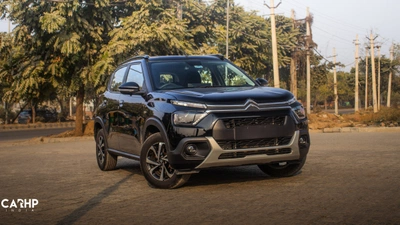
Citroen C3 Review: Who Should Consider This Car?
A few days ago, I took the Citroen C3X out for a spin in the city and on the highways. I travelled long distances and checked its fuel efficiency, features, comfort, and other factors. Today, I’ll briefly share my overall experience with the C3X and will tell you whether you should consider it or not and which is the most value-for-money variant of the lot.
Vatsal Agrawal
May 19, 2026
Tesla Finally In India Officially. Why Now And What Does It Mean For EVs?
The much-anticipated 2025 Tesla Model Y has officially arrived in India, marking a pivotal moment for the nation's burgeoning electric vehicle market. Launched on July 15, 2025, the Model Y Juniper facelift offers cutting-edge technology, impressive range, and signature Tesla performance. Positioned as a premium electric SUV, its entry will intensify competition and reshape consumer expectations for EVs across the subcontinent.
Author
July 17, 2025
Here Are 10 Things The Harrier.EV Offers That The Mahindra XEV 9E Doesn't
The Harrier.EV is an incredible new offer from Tata. Its most popular competitor would be the Mahindra XEV 9E, priced similarly. With these two incredible offerings from home grown brands available, here is a list of everything the Harrier.EV offers that the XEV 9E doesn't.
Author
June 13, 2025
Write a comment
Comments
No comments yet. Be the first to comment!