

Renault Kiger
Overall Rating

Renault Kiger
Overall Rating
EMI Loading
Renault Kiger Key Specifications
Renault Kiger Highlights

Ventilated seats cool you on hot days.

360-degree camera aids parking.

7-inch detailed digital cluster.

Expert Review
reviewed by Arjun Nair
After extensive time with the Renault Kiger Emotion Turbo MT, I consider it one of the more rewarding cars in its price range for drivers who spend time on high... Read More
After extensive time with the Renault Kiger Emotion Turbo MT, I consider it one of the more rewardin... Read More
Exterior
Interior
Safety
Engine
Ride & Handling
Road Test Photos
Good Things
- Strong mid-range performance and enjoyable turbo character
- Impressive high-speed stability and controlled body roll
Could Be Better
- Noticeable turbo lag and three-cylinder vibrations at low speeds
- Heavier clutch and notchy gearshifts can get tiring in city traffic
Updated 2 days ago
Expert Review
reviewed by Arjun Nair
After extensive time with the Renault Kiger Emotion Turbo MT, I consider it one of the more rewarding cars in its price range for drivers who spend time on high... Read More
After extensive time with the Renault Kiger Emotion Turbo MT, I consider it one of the more rewardin... Read More
Exterior
Interior
Safety
Engine
Ride & Handling
Exterior
Interior
Safety
Engine
Ride & Handling
Road Test Photos
Good Things
- Strong mid-range performance and enjoyable turbo character
- Impressive high-speed stability and controlled body roll
Could Be Better
- Noticeable turbo lag and three-cylinder vibrations at low speeds
- Heavier clutch and notchy gearshifts can get tiring in city traffic
Updated 2 days ago
Renault Kiger Overview
Renault introduced the Kiger in India in 2021 to compete in the highly competitive sub-compact SUV segment. With a lower starting price than its rivals, a turbocharged engine with a CVT option, a 405-litre boot that beats most of the competition, and ride quality that deserves praise, the Kiger has earned genuine recognition.
Its facelift, launched in August 2025, is the most comprehensive update the Kiger has received since launch. The exterior was substantially revised, the interior was enhanced with new materials and a fresh theme, over 35 feature and refinement improvements were made, and crucially, six airbags were standardised across the full variant range.
What remained unchanged was the powertrain combinations that made the Kiger interesting to begin with. The 1.0-litre turbo petrol paired with the CVT remains the standout choice in the segment for buyers who want performance and convenience together. The naturally aspirated 1.0-litre is the budget entry point for buyers who primarily drive in the city and do not need the turbo's breadth of capability.
Two areas where the Kiger continues to fall short relative to its most direct rivals are the quality of some of the materials used in the cabin and poor NVH levels, reflecting the cost-cutting that has been done to price this car aggressively.
However, for a buyer who prioritises good ride quality, boot space, turbo performance, and value for money over an outright premium feel, the Kiger remains one of the most rational choices in the sub-4-metre segment.
Engine and Performance
Engine and Performance
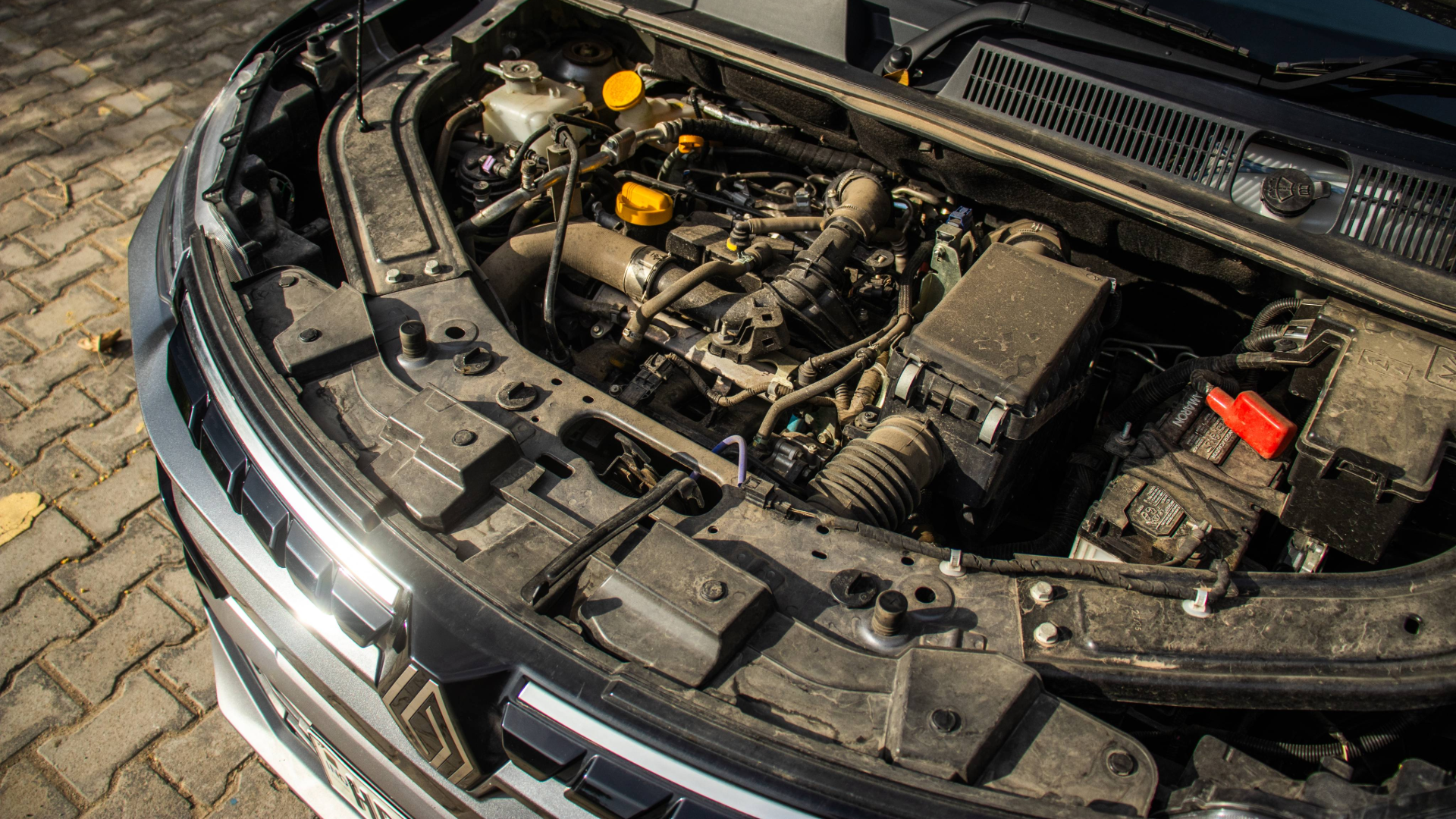
The Kiger's powertrain story is really a tale of two cars.
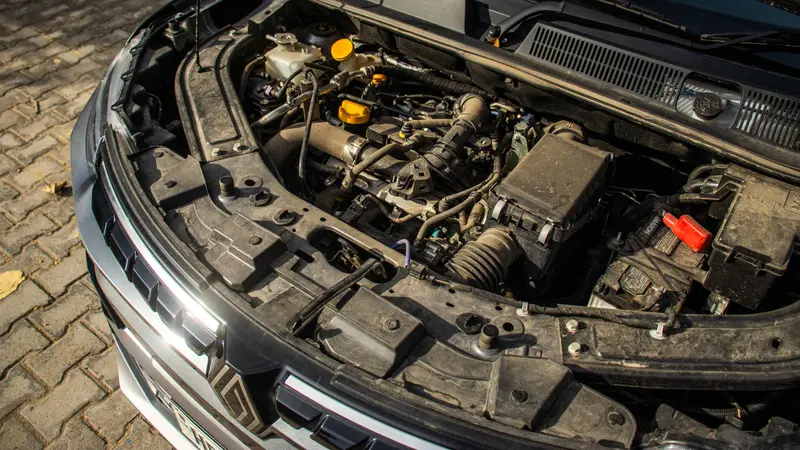
The 1.0-litre naturally aspirated petrol with 71 bhp and 96 Nm is an adequate but unexciting urban commuter. It does the job in city traffic, returns reasonable fuel efficiency, and asks very little of the driver. The 5-speed manual pairing is lighter and more responsive in its shifting action than the Kwid's equivalent unit.
The AMT is available on the Evolution and Techno trims and carries the same traits as most AMTs at this price. It is smooth at steady speeds, occasionally jerky under sudden throttle inputs, and best suited to buyers who prioritise convenience over polish. Neither the engine nor the AMT is a bad combination in isolation, but in a segment populated by rivals offering four cylinder engines in their entry level trims, the Kiger’s 3-cylinder unit from the Kwid can feel underpowered when the road opens up.
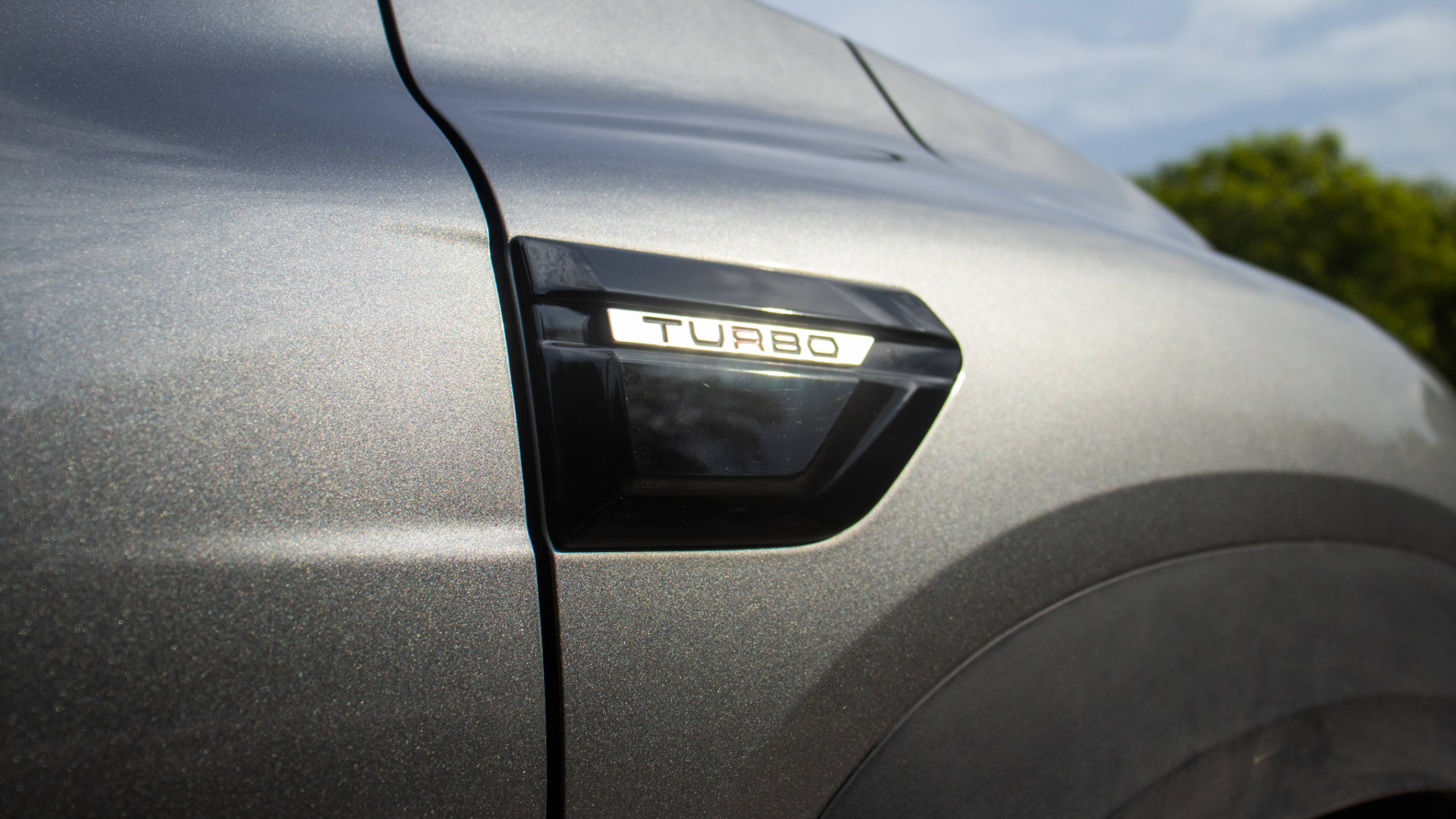
The 1.0-litre turbo petrol is where the Kiger establishes its strongest argument.
At 99 bhp and 160 Nm arriving from 2800 rpm, it delivers torque confidently and broadly. In the manual variant, the engine pulls cleanly from 1,500 rpm in most real-world gears, making urban driving effortless and highway overtaking brisk without constant downshifts.
The CVT is the more popular pairing and also the better match for the turbo engine's character. It manages the torque delivery smoothly, maintains appropriate ratios in city and highway conditions, and produces the kind of unhurried, linear performance that suits the Kiger's role as a relaxed, capable everyday crossover.

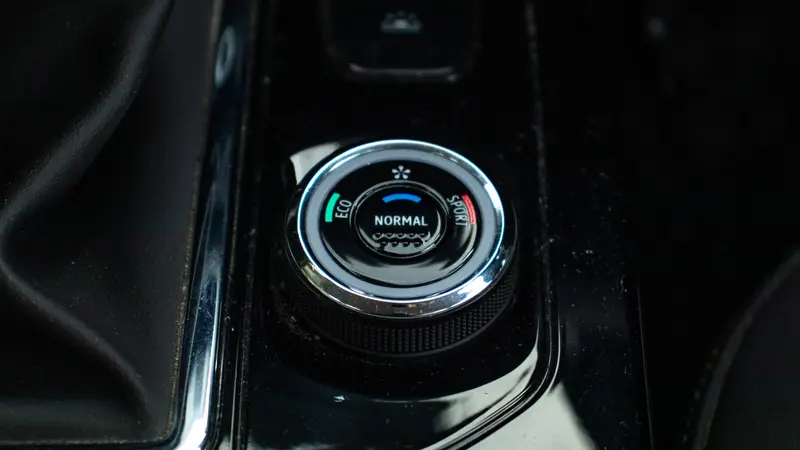
Under hard acceleration, the CVT holds revs in a way that sounds busier than the progress suggests. However, turning on Sport mode sharpens throttle response noticeably, and the combined effect with the CVT makes the Kiger feel more alert.
While the NVH improvements from thicker carpets, insulated A-pillars, and additional dash padding have made a noticeable difference, there is still scope for improvement.
Vibrations can be felt on the steering wheel, pedals, and door panels at lower revs, especially upon engine ignition and idle. Things get much smoother once the engine is running in its mid-range, but some vibrations re-appear as you get to the top-end.
Ride quality is the Kiger's most consistent strength across both powertrains and both generations, and the 2025 update's additional insulation improvements extend that advantage further. The suspension, though audible inside the cabin, soaks up potholes, broken road surfaces, and speed breakers with good composure, helped by the generous 205 mm ground clearance.
Body roll in fast cornering is noticeable, as the relatively soft suspension tuning prioritised for comfort shows its other side in quick direction changes. Though, it is not unnerving, and the Kiger holds its line well around corners.
The light steering in the city weighs up at highway speeds, though feedback is limited.
Overall, the Kiger is tuned for comfort and ease of use rather than pure driving engagement.
fuel economy
fuel economy
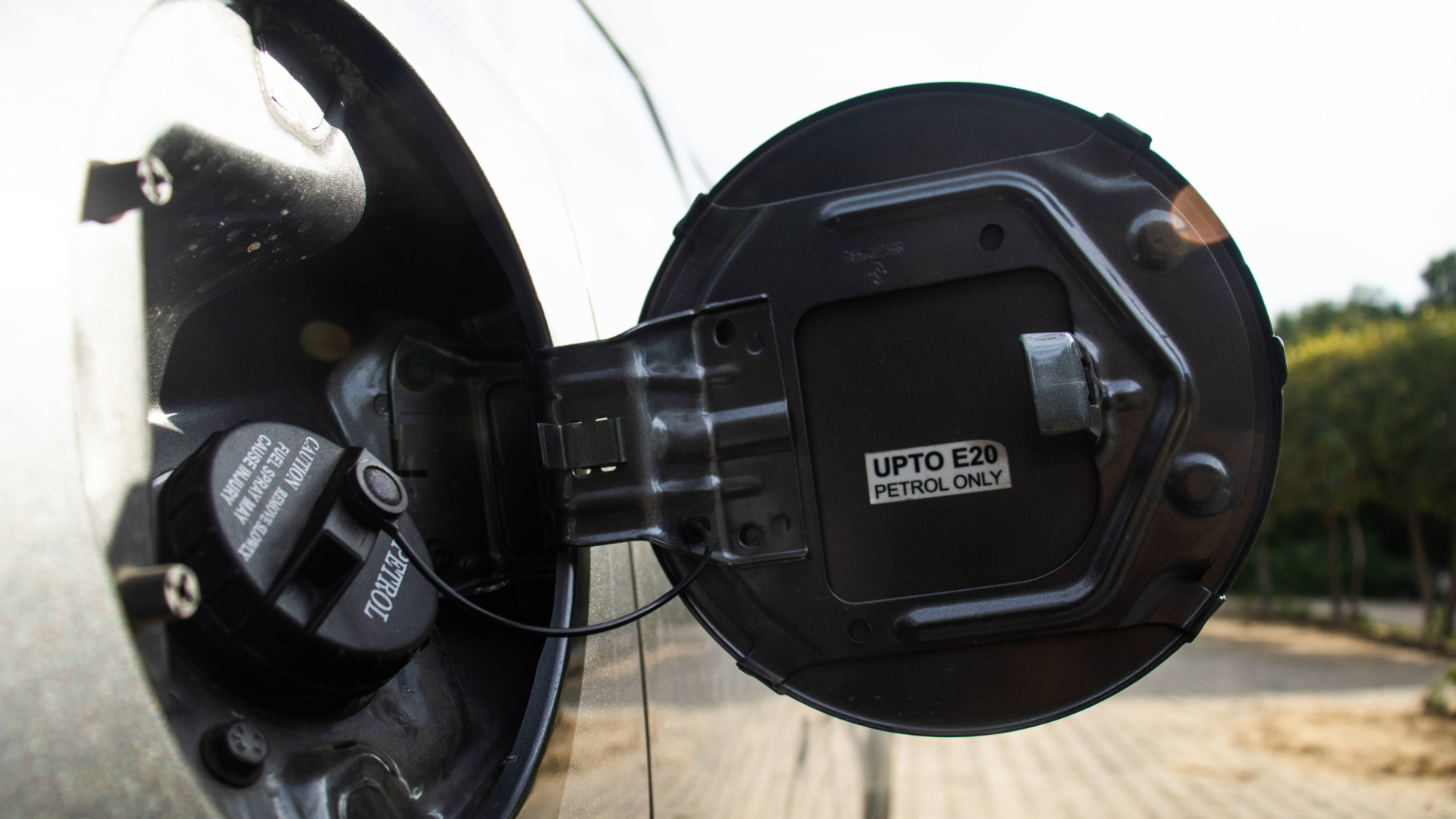
The turbo petrol CVT's ARAI figure of 20.38 km/l is the highest in the Kiger range and genuinely competitive for a turbocharged engine in this class. This is partly a function of the CVT's ability to manage the engine at optimal revs in steady-state driving.
In real-world conditions, owners of the turbo CVT report 14 to 17 km/l across mixed urban and highway use, with highway runs at a measured pace pushing to the upper end of that range. The turbo manual, while offering a more engaging driving experience, returns slightly lower real-world figures owing to the tendency to use more of the rev range.
The NA petrol's 18.24 km/l ARAI figure translates to broadly similar real-world returns of 13 to 16 km/l, with city driving at the lower end. The AMT variant returns slightly less than the manual due to the same tendency to hold lower gears longer that affects most AMT setups.
The 40-litre fuel tank provides a comfortable range buffer across all powertrains, and the turbo CVT's efficiency figure in particular means refuelling stops on longer trips are infrequent.
For buyers opting for the CNG retrofit (only available with the 1.0-litre NA petrol manual variants), running costs drop further, though boot space gets compromised, and range calculations change depending on the cylinder setup.
interior
interior

The Kiger's interior received its most significant transformation with the 2025 facelift, and the improvement is genuine.
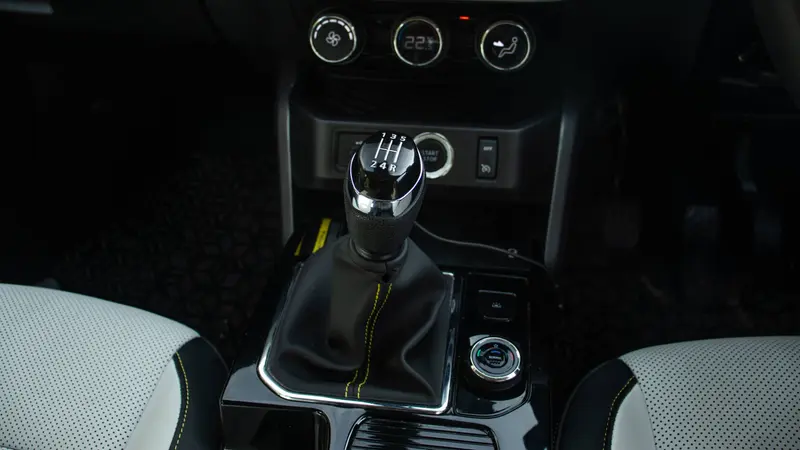
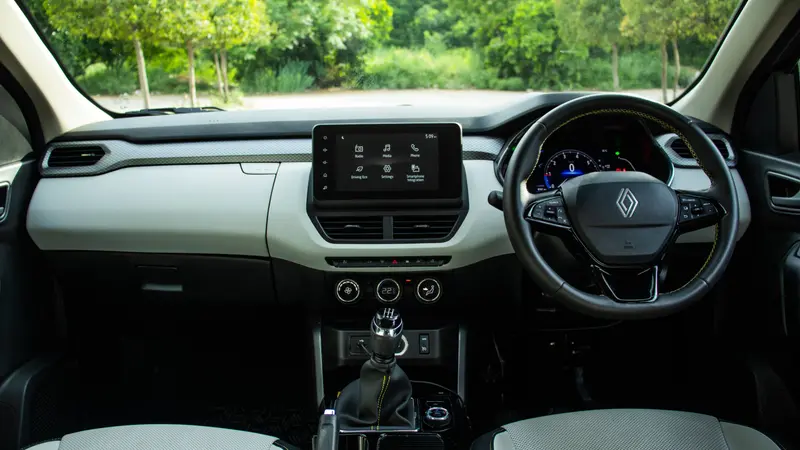
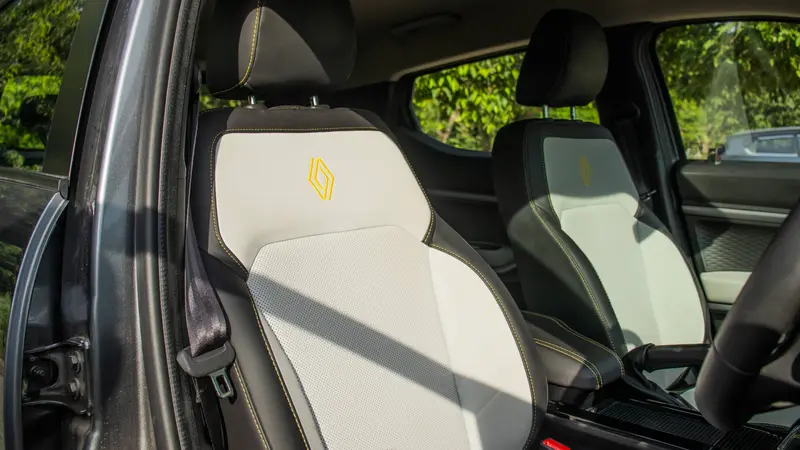
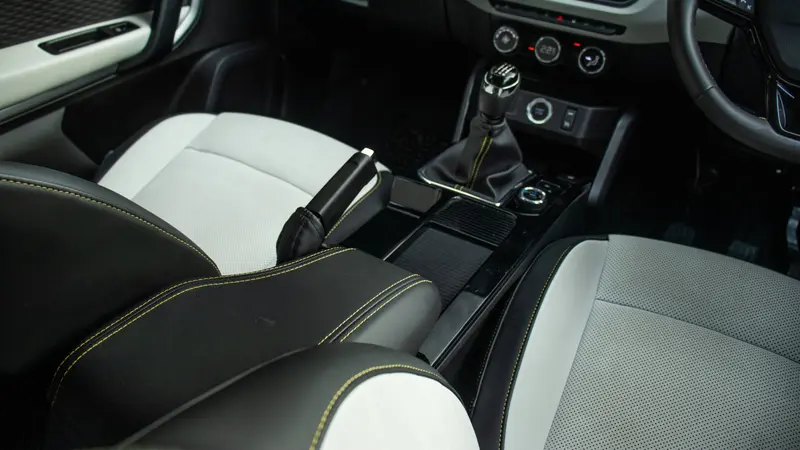
Where the previous cabin's all-black theme read as utilitarian, the new black and white dual-tone treatment is lighter, more contemporary, and more noticeably premium in the Emotion's leatherette configuration with its yellow contrast stitching.
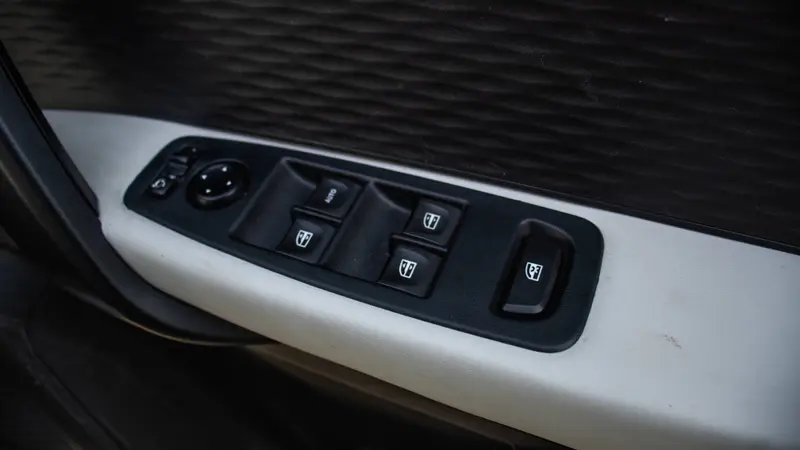
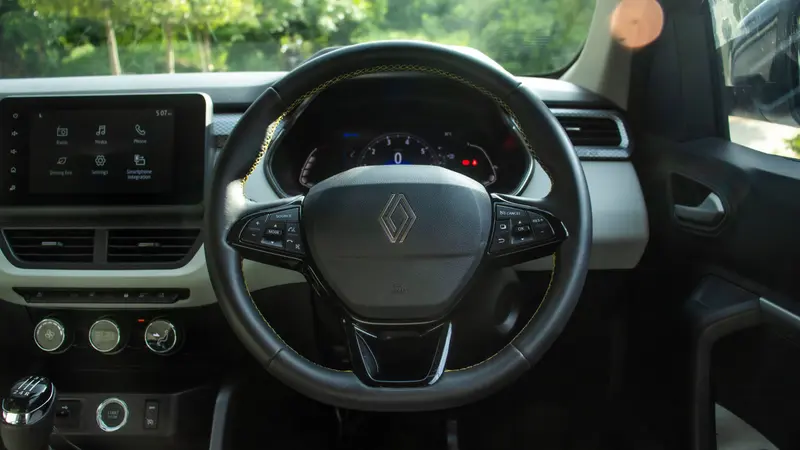
The Renault logo embroidered in yellow on the front seat backrests, the flat-bottom steering wheel, and the updated door card inserts all contribute to a cabin that now looks the part far more effectively than the model it replaces.

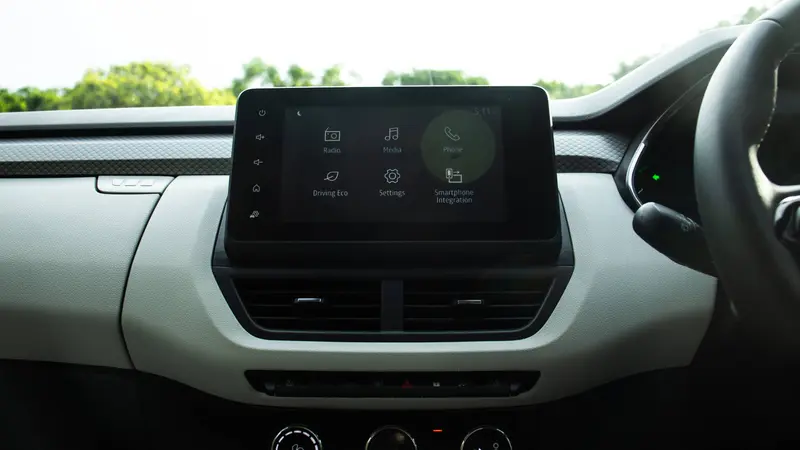
The 8-inch touchscreen is the same unit across most of the range, and while it serves its function adequately, the display is not the sharpest, and the interface graphics feel a generation behind rivals.
Wireless Android Auto and Apple CarPlay, which are available from the Techno variant, effectively compensate for the in-built system's limitations by handing navigation and media to the phone. Below the Techno, only wired connectivity is offered.

The 7-inch fully digital instrument cluster exclusive to the Emotion variant is a meaningful visual upgrade over the semi-digital unit in lower trims. It displays turn-by-turn navigation prompts, trip data, and drive mode information cleanly, though the resolution and animation quality do not match the more expensive digital displays.
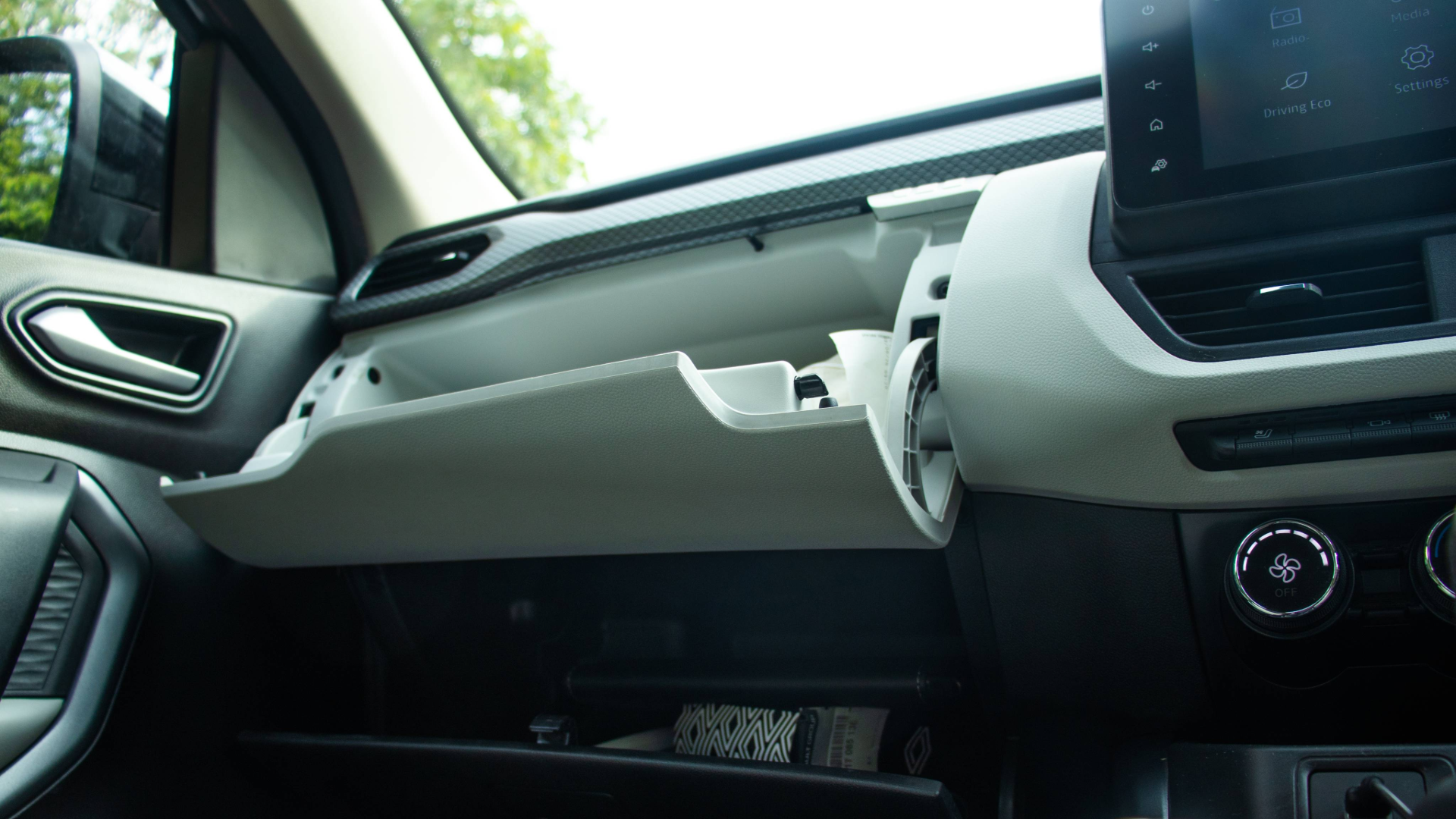
The one area where the Kiger falls short of its rivals is its cabin material quality.
Hard plastics on the dashboard, centre console, and door panels look and feel like they have been built to a cost, and tend to rattle over rough patches of road. Additionally, the driver side footwell exposes a lot of the pedal mechanisms and even the steering column, which can put off many potential buyers.
The new interior colour scheme and certain material choices improve the perception, but the underlying surface quality has remained largely unchanged.

Front seat comfort is one of the Kiger's genuine strengths.
The cushioning is well-judged for long drives, the bolstering is broad enough to accommodate most body types without feeling restrictive, and ventilated seats in the Emotion with three intensity settings are a boon during Indian summers.
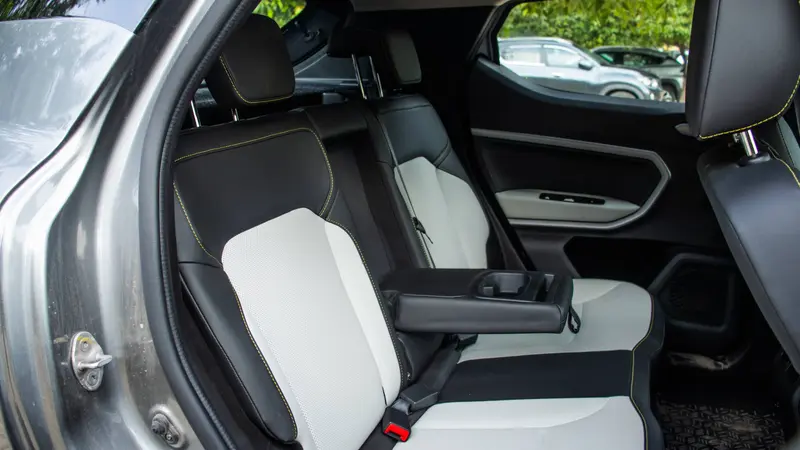
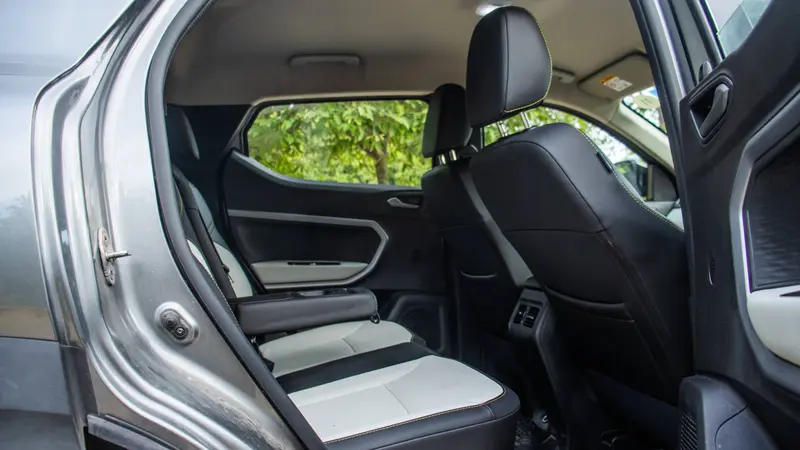
Space at the rear is generous relative to the sub-4-metre footprint, with adequate legroom for average-height adults behind a front seat set for an average-sized driver, and a flat floor that helps the centre passenger.
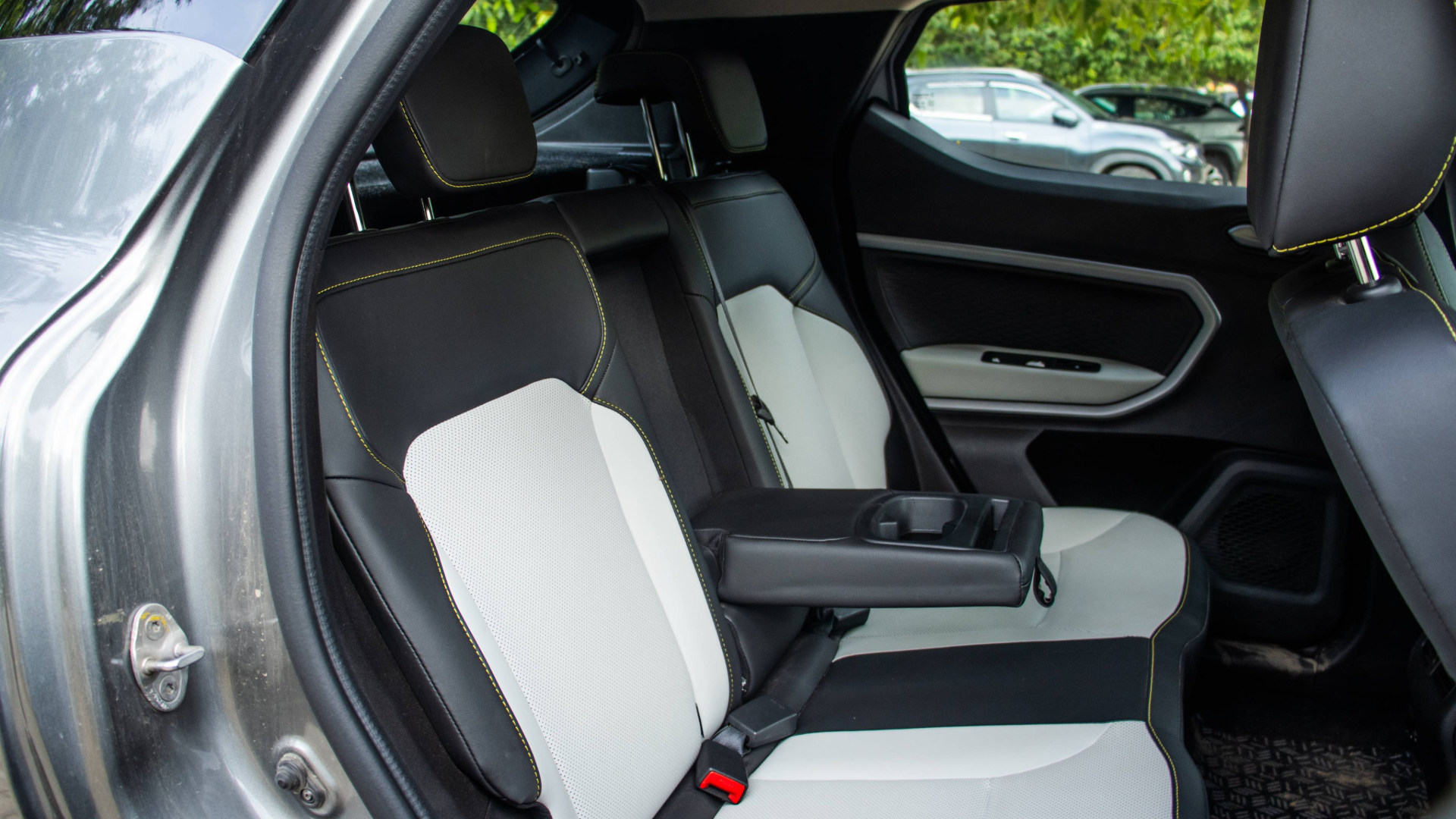
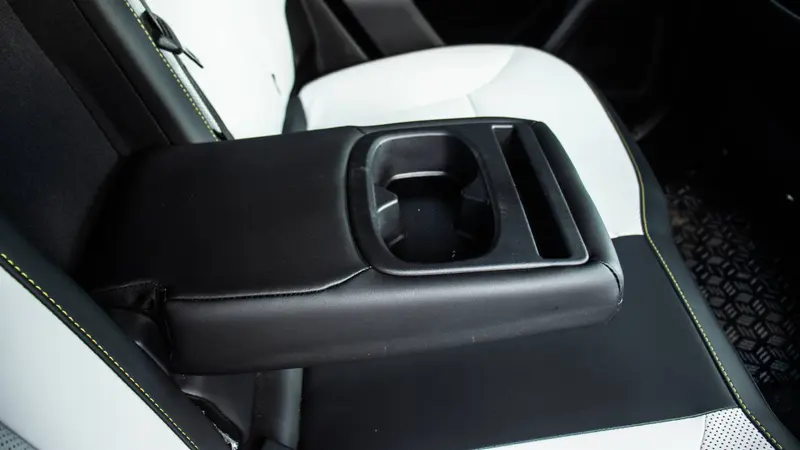
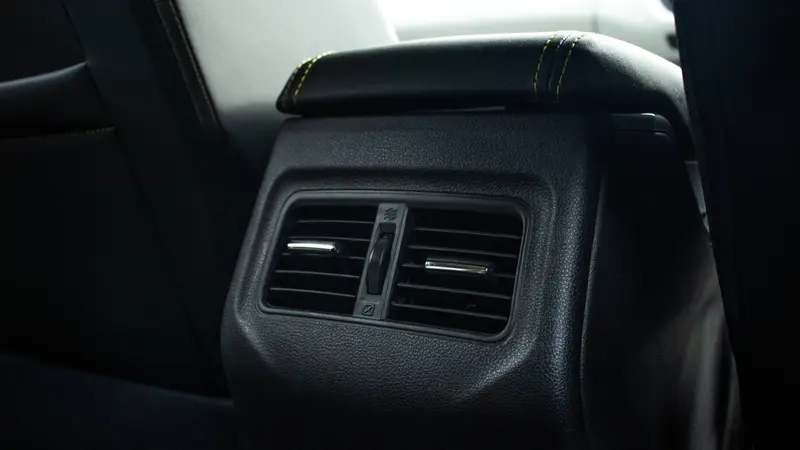
The foldable centre armrest with cup holders and dedicated rear AC vents add comfort for longer journeys. There are no USB charging ports for rear passengers, and the only provision is a 12V socket. Even the front occupants get a single USB-A port.
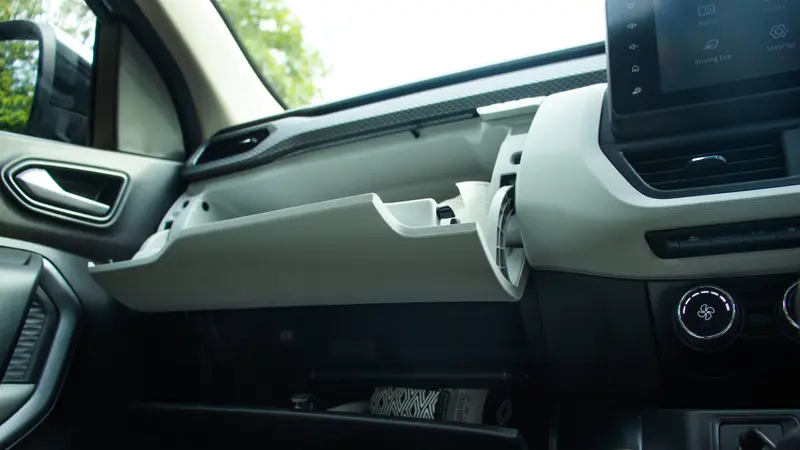
Storage in the cabin is practical, with deep door pockets front and rear, a centre console tray, and a cooled glove box on the Emotion covering the daily requirements.
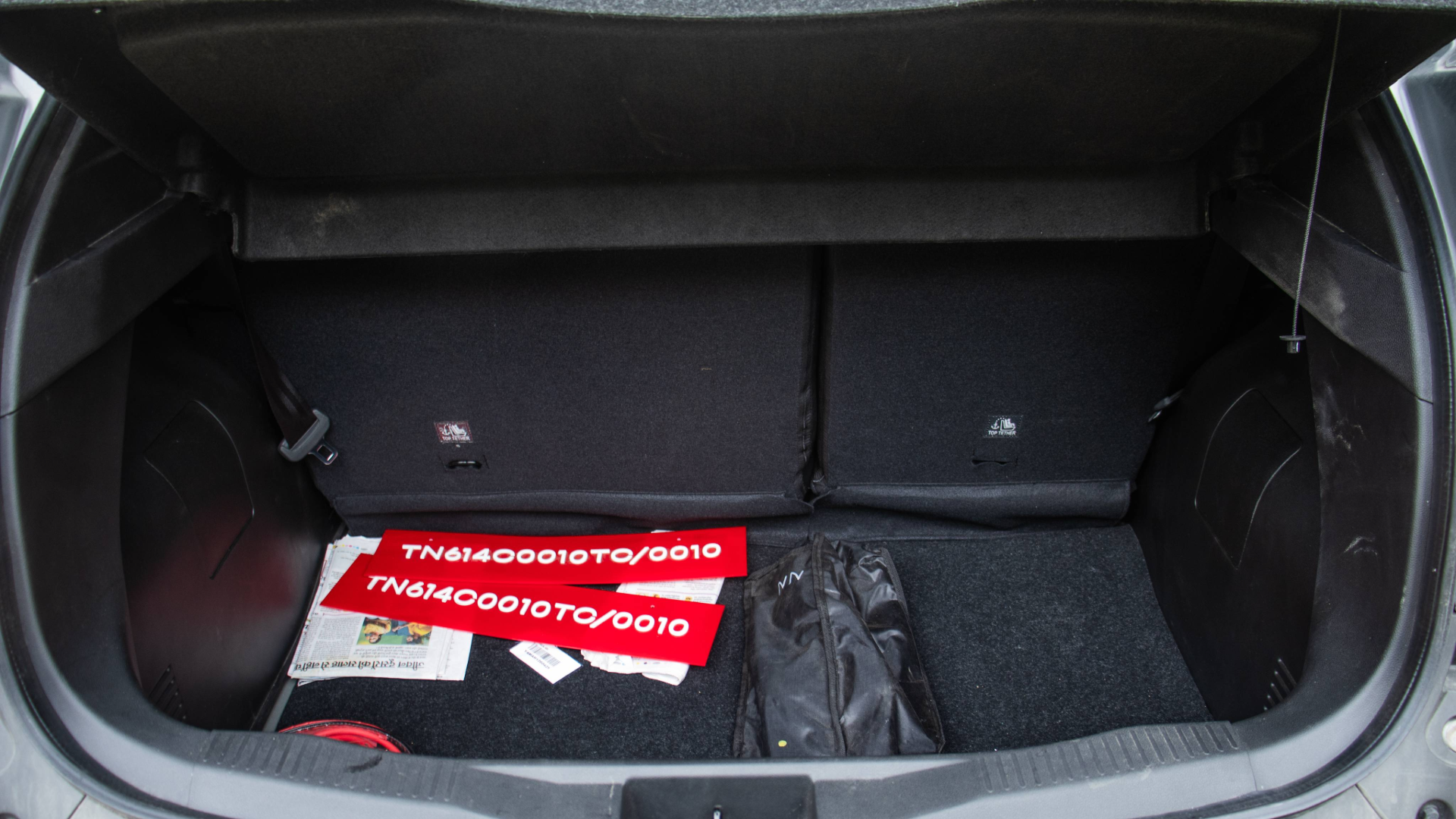
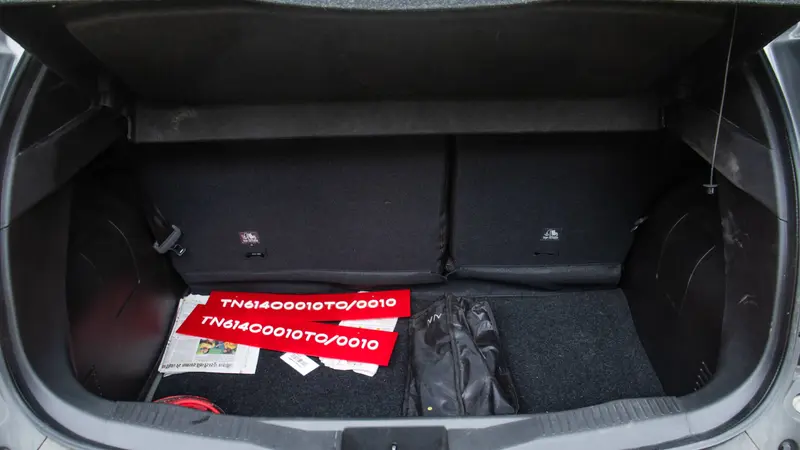
The boot at 405 litres is one of the biggest in the segment, only behind the Skoda Kylaq’s 446 litres. It can accommodate airport luggage for four or weekly groceries with much more room to spare.
exterior
exterior
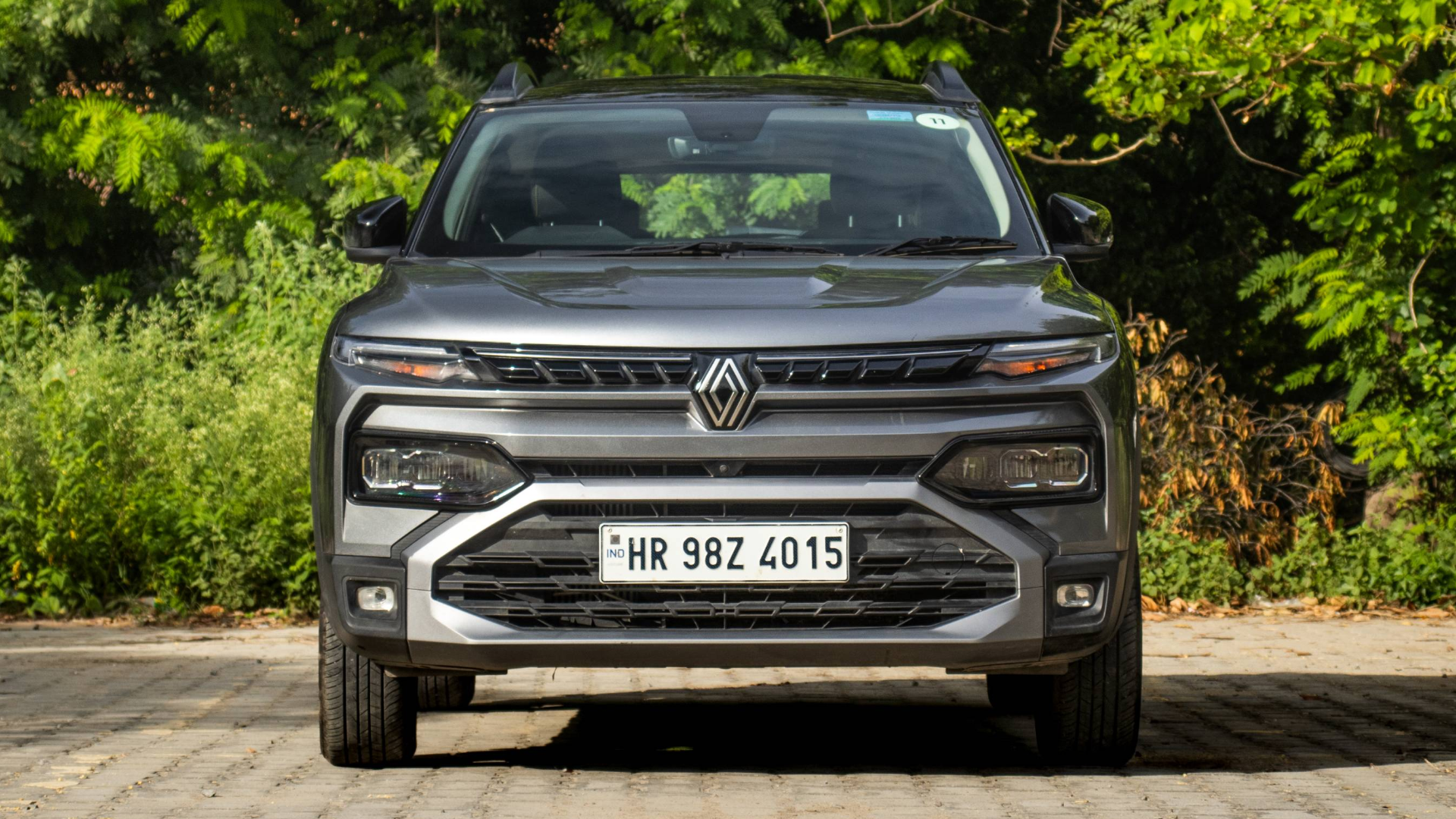
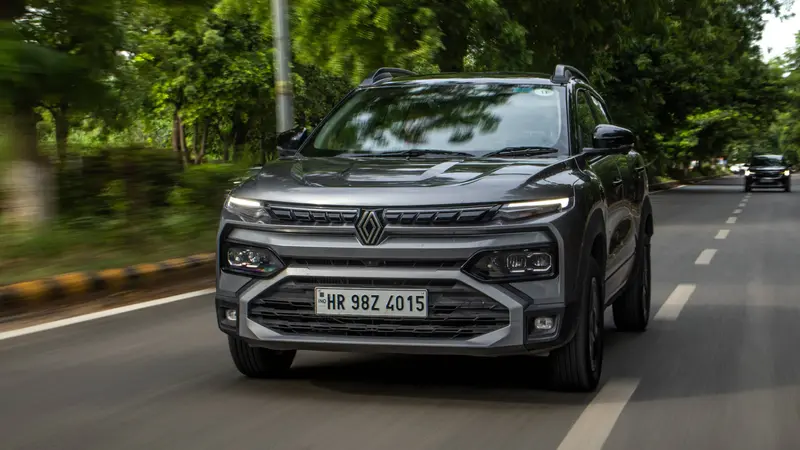
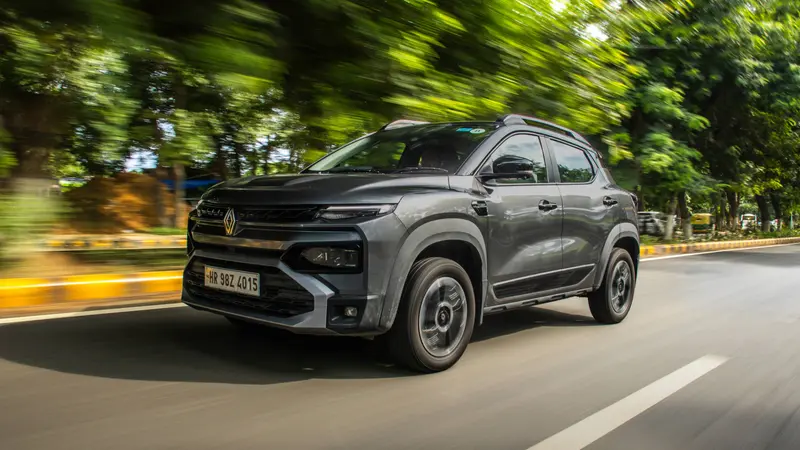
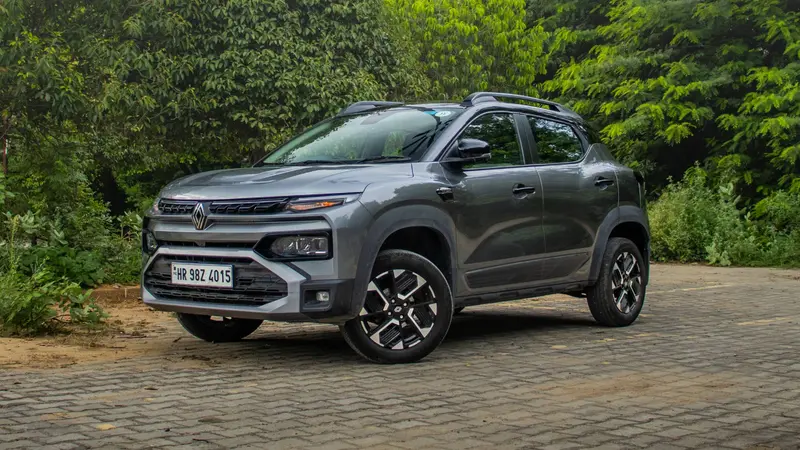
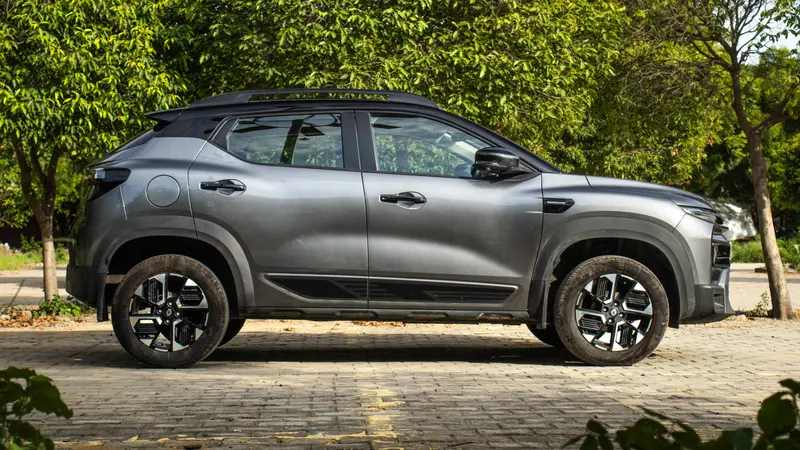
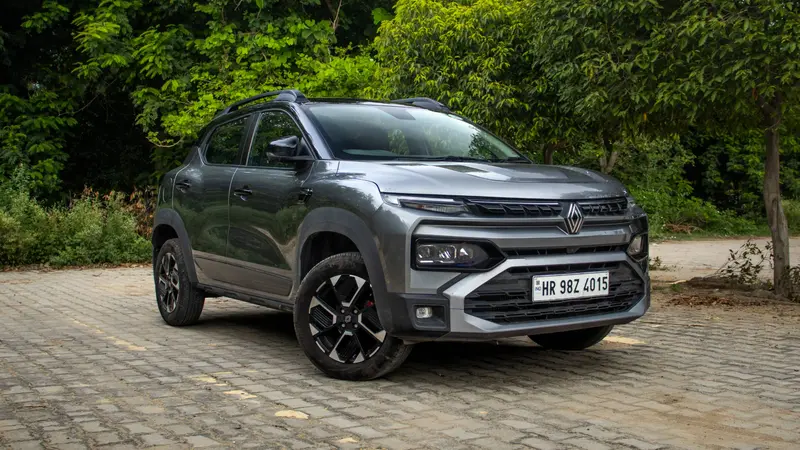
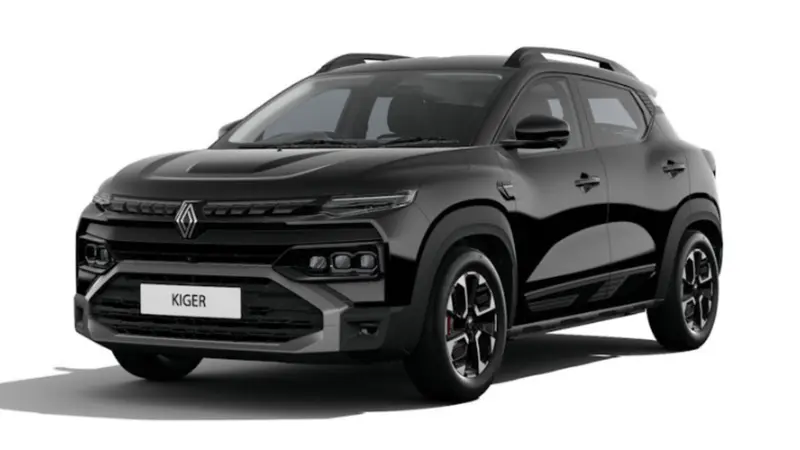
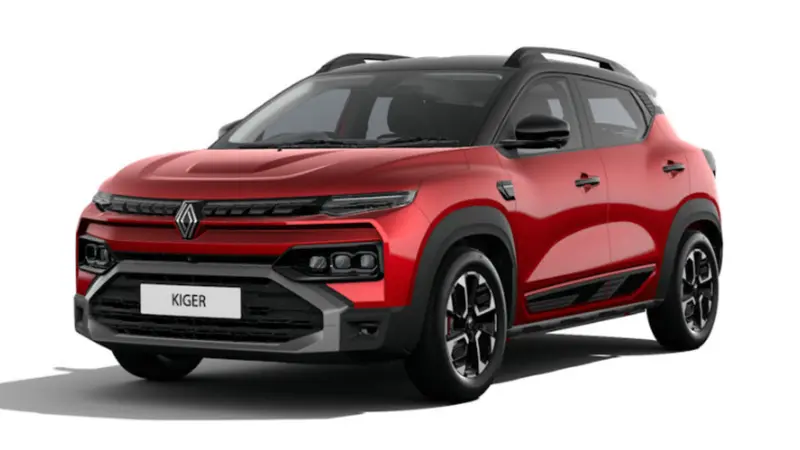
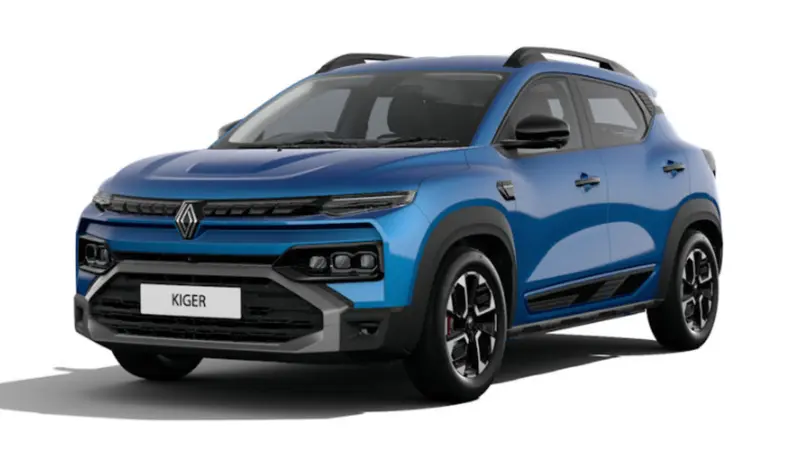
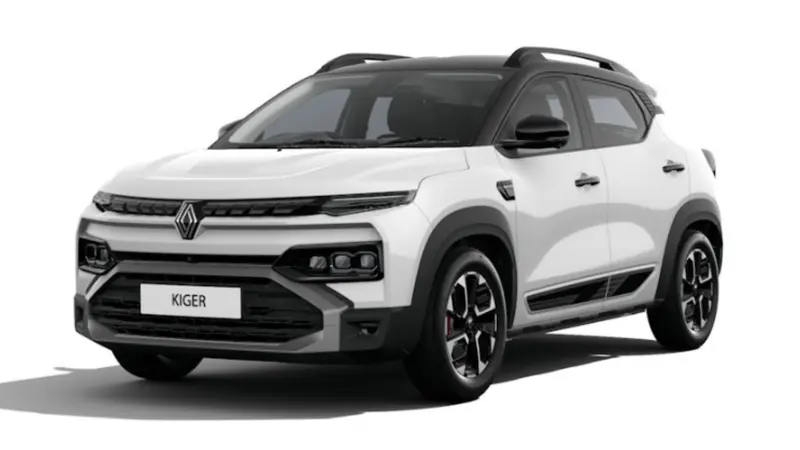
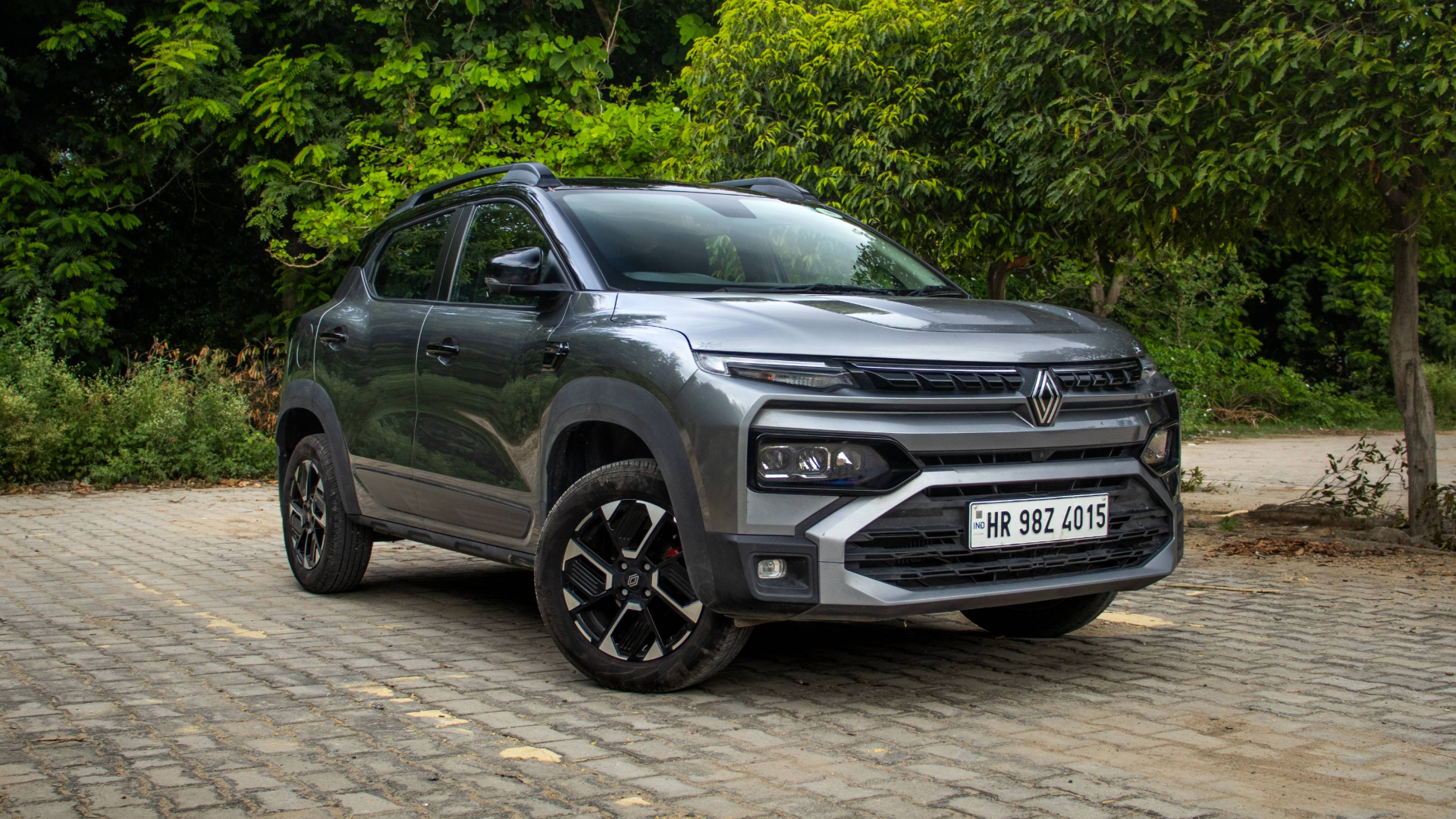
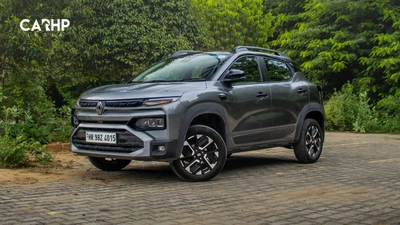
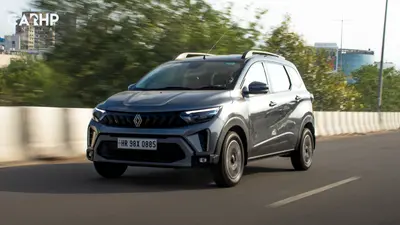
The Kiger's exterior design has always been one of its most discussed qualities, and the facelift enhanced an already distinctive look rather than reinventing it. The fundamental proportions, a sub-4-metre body with a coupe-influenced roofline, muscular wheel arches, and a relatively tall stance, carry forward, with subtle but effective changes to the detailing.
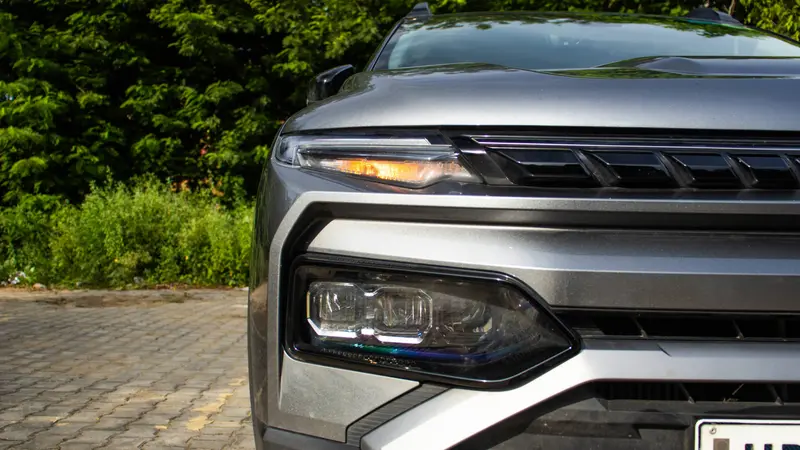
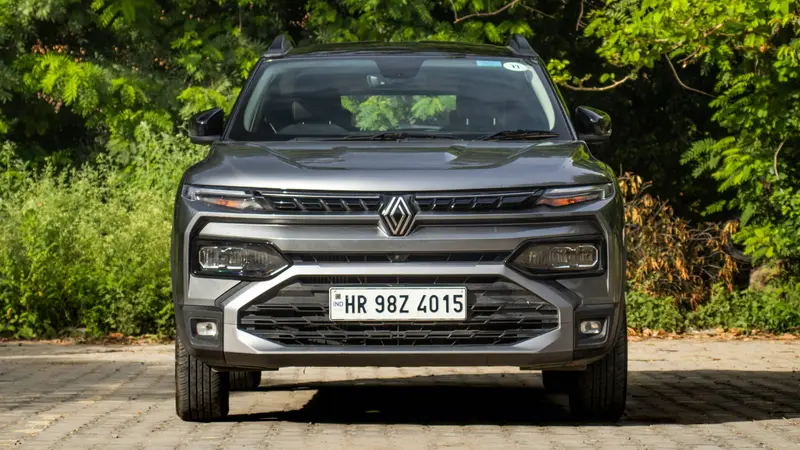
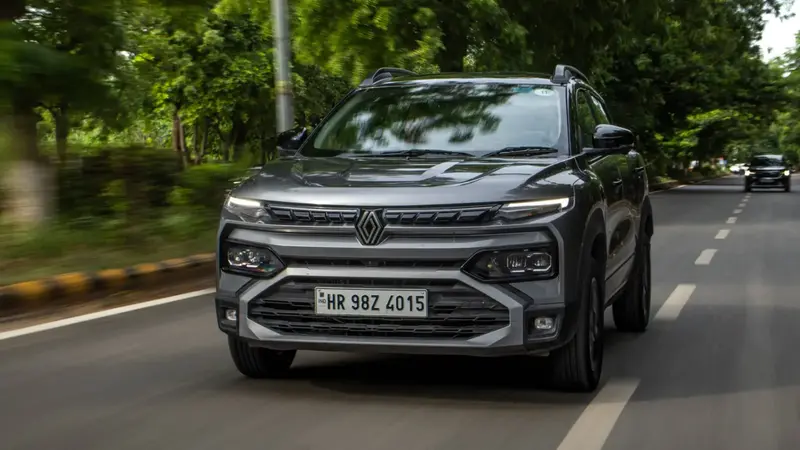
At the front, the updated headlamp cluster integrates the boomerang-shaped DRLs into a split arrangement. The DRLs run along the upper portion of the lamp, while the three-block LED headlamp units sit lower in the bumper.
The 10-slat grille carries Renault's revised diamond logo, the bumper is wider and more angular than before, and new skid plate treatments front and rear emphasise its crossover character. The effect is bolder and more angular than the pre-facelift car, which itself was not shy about its presence.
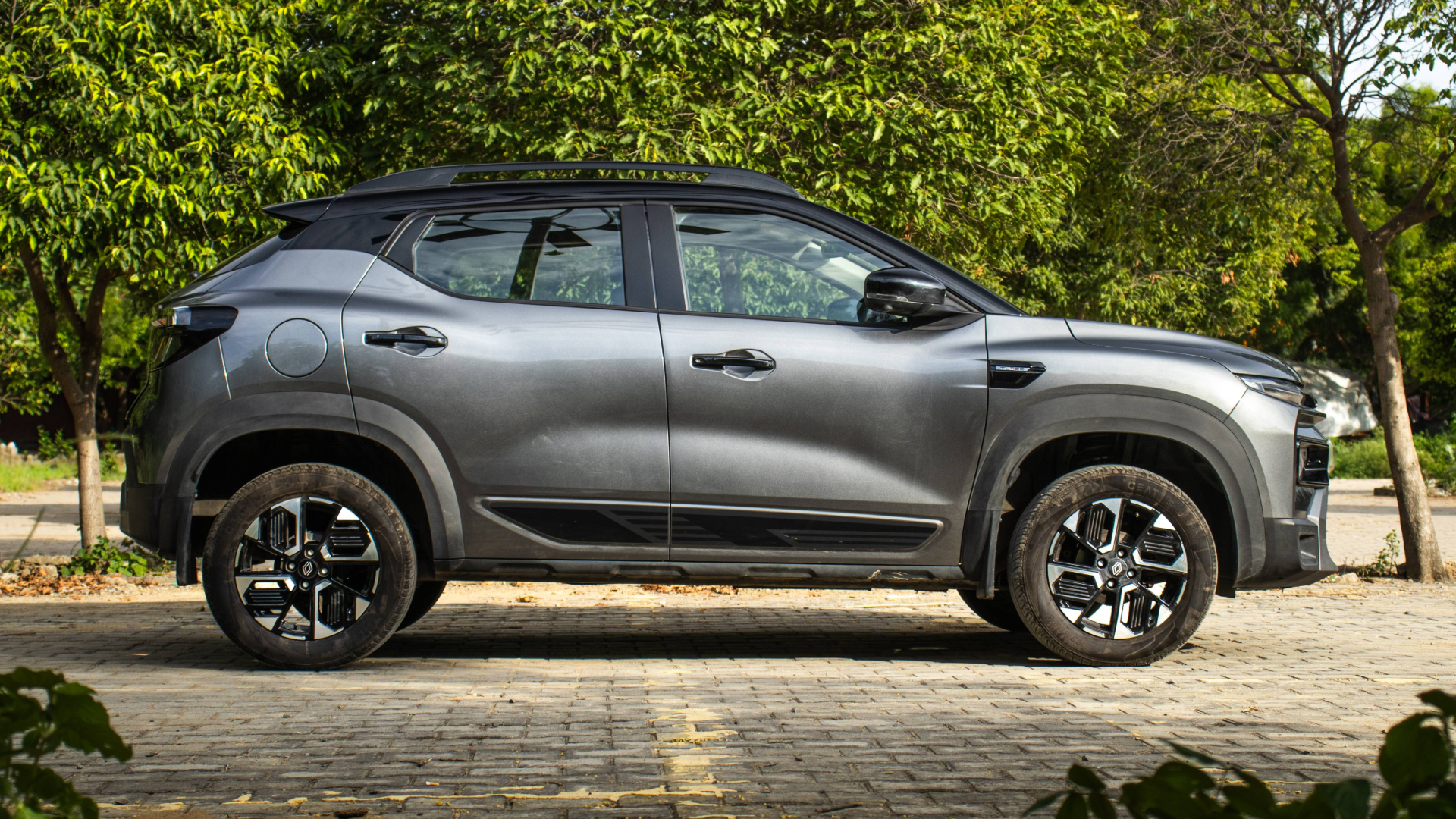
Over to the side, graphic decals on the C-pillar and wheel arches are design elements that divide opinions. Some find them youthful and distinctive, while others consider them additions that will date.
The 16-inch alloy wheels in the Techno and Emotion trims, with a diamond-cut finish and red-painted brake callipers on top turbo variants, fill the arches well and give those variants a more purposeful stance.

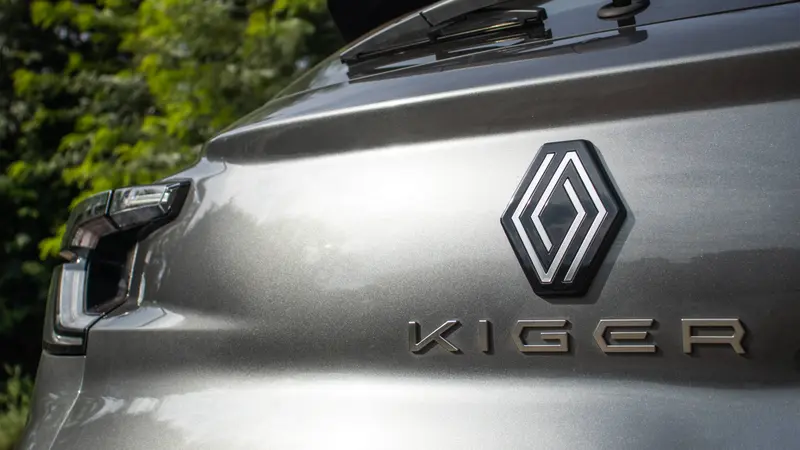
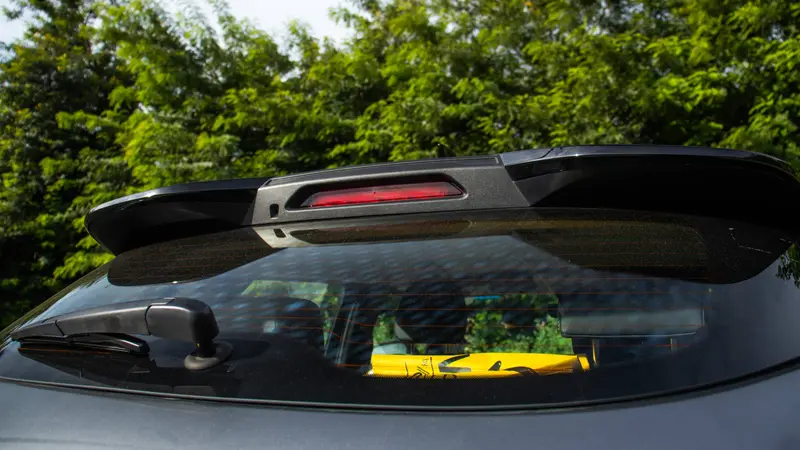
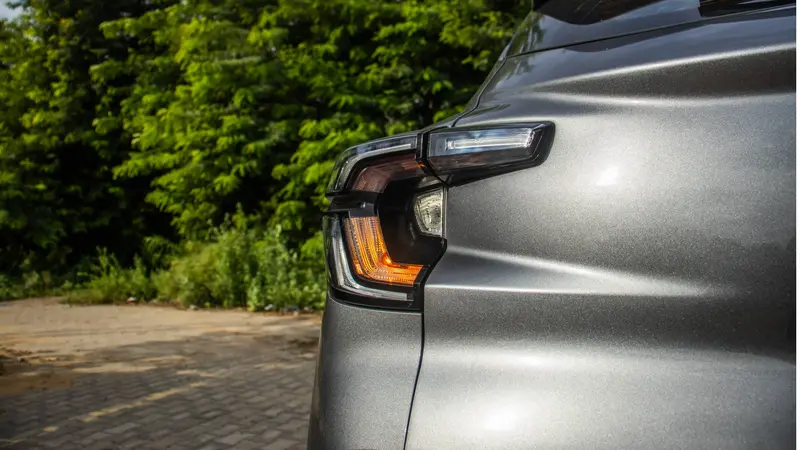
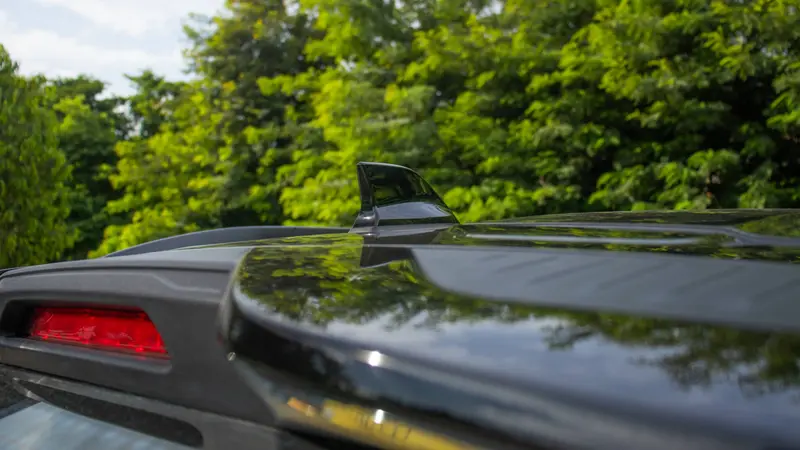
The rear, by contrast, is less dramatically updated. The new clear lens C-shaped LED tail lamps with dynamic indicators are welcome additions, and the new Renault logo replaces the older badge cleanly. The high-mounted rear spoiler and shark-fin antenna contribute to the sporty silhouette.
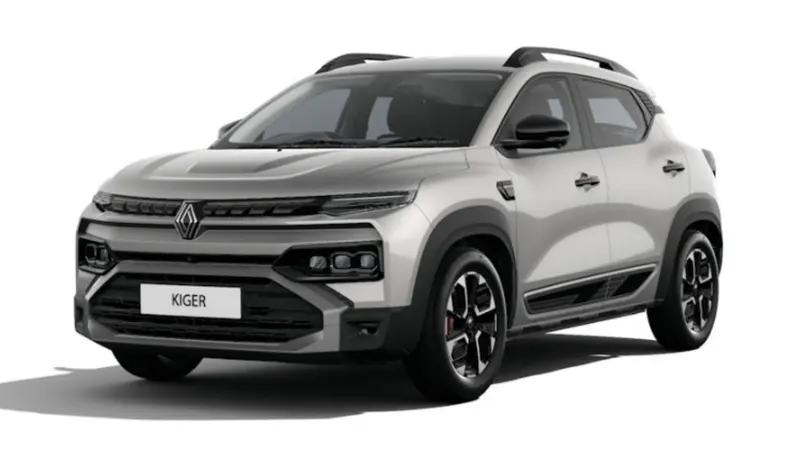
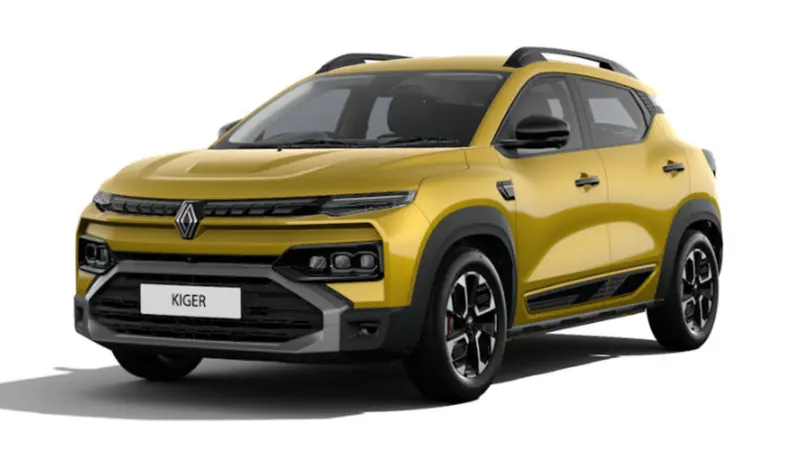
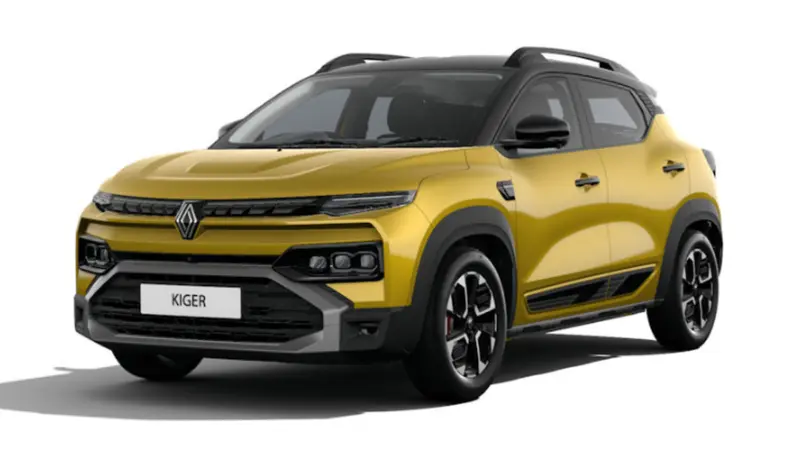
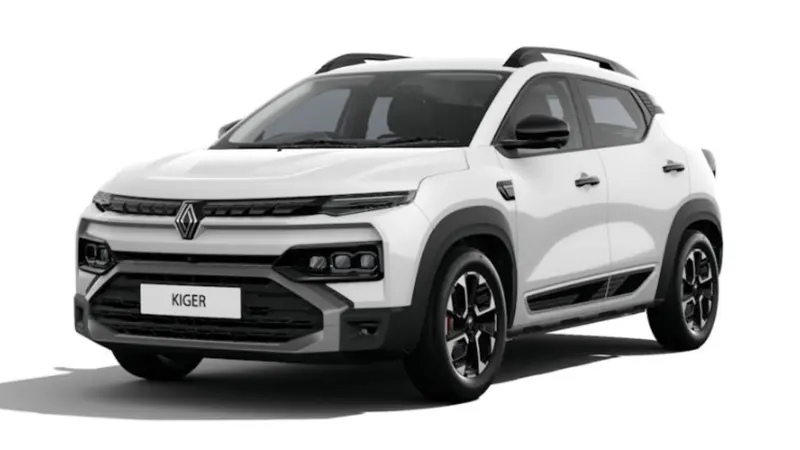
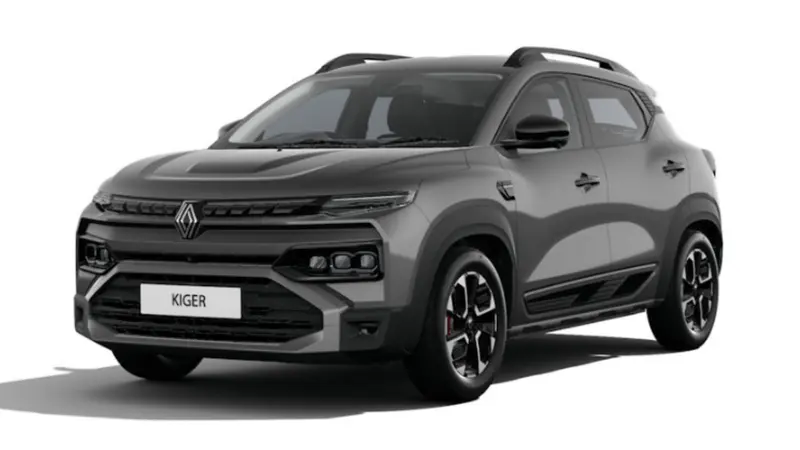
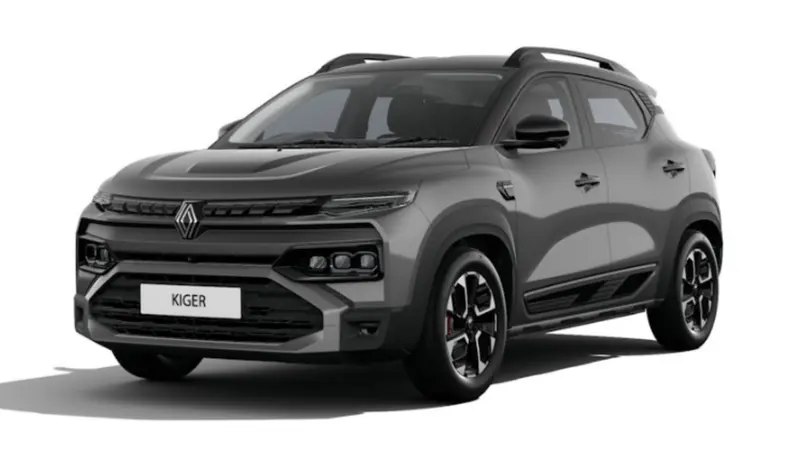
Seven colour options are available, including two new additions, Oasis Yellow and Shadow Grey. Dual-tone combinations with black roofs are available at a small premium on most variants and are the most visually distinctive configurations in the range.
Build quality for a sub-4-metre SUV at this price is reasonable. There are some inconsistent panel gaps, though body panel rigidity is adequate, and the plastic cladding and bumper mouldings do not feel fragile.
safety
safety
The standardisation of six airbags across all variants, including the base Authentic, is a highlight and a marked improvement over the previous model. Additionally, ABS with EBD, ESC with traction control, hill start assist, ISOFIX mounts, TPMS, and a rear parking camera are also offered as standard.
The 4-star Global NCAP adult occupant rating from the 2022 test remains the most current independent crash data for the Kiger. The two-star child occupant rating from the same test is a weaker result that buyers who carry children regularly should factor into their decision.
The multi-view camera in the Emotion provides multiple angles including a birds-eye-view composite, which aids parking manoeuvres. Though, the image resolution is not very sharp.
There is no ADAS, but it would be unfair to expect that at this price point, especially in this segment.
competition
competition
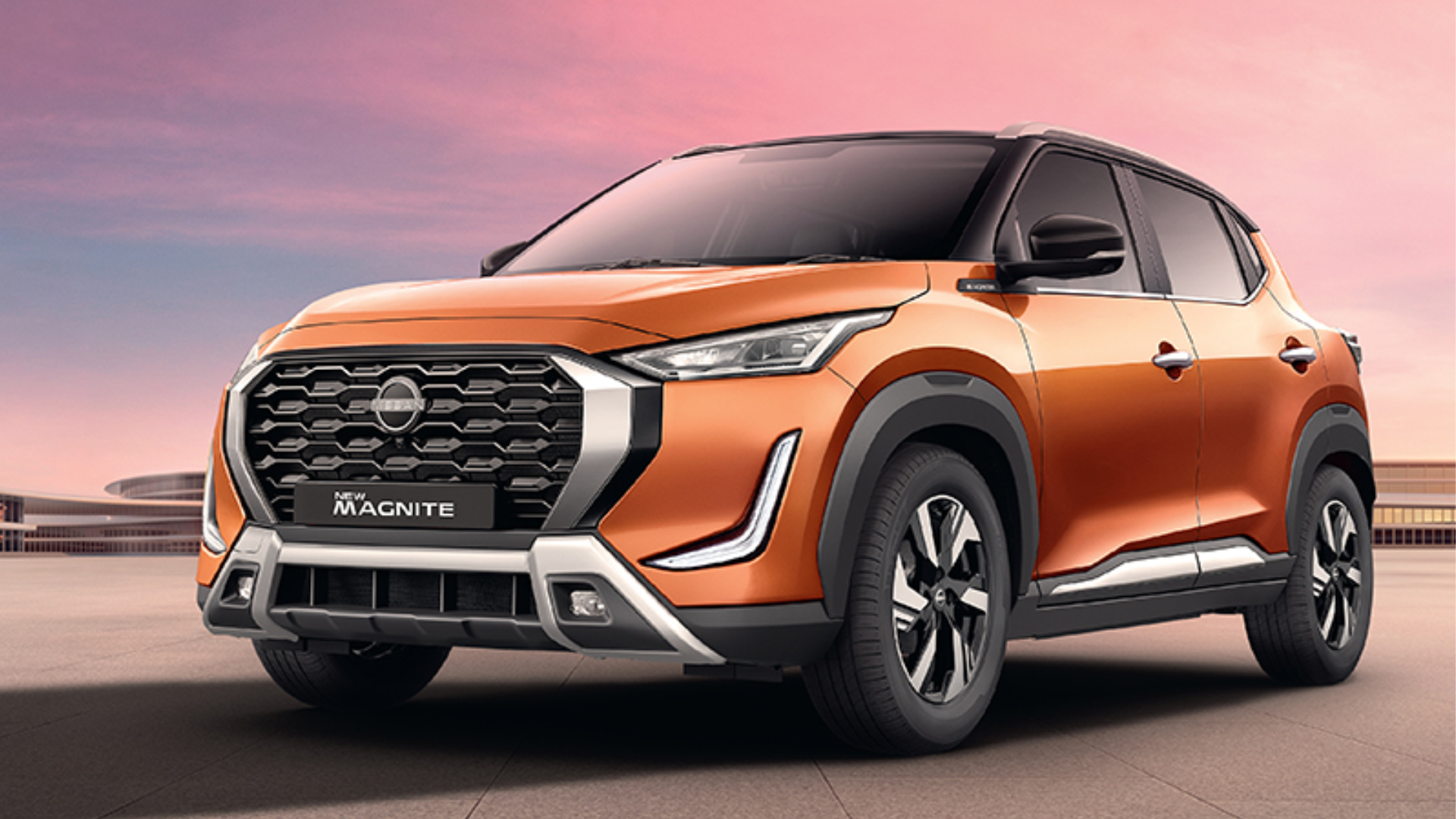
Nissan Magnite is the closest relative, sharing the Kiger's CMF-A+ platform and Renault-Nissan manufacturing setup in Chennai.
The Magnite uses the same engine options and is also priced similarly across its variant lineup.
As for dimensions, the Magnite is marginally longer and wider, while the Kiger is taller and has a much bigger boot.
As for safety, the Magnite has received a 5-star Global NCAP rating for the South African-spec model with six airbags and ESC, and the India-spec facelift also standardised six airbags across the range.
The buying decision largely comes down to design preference and dealership proximity, since the mechanical package is nearly identical.
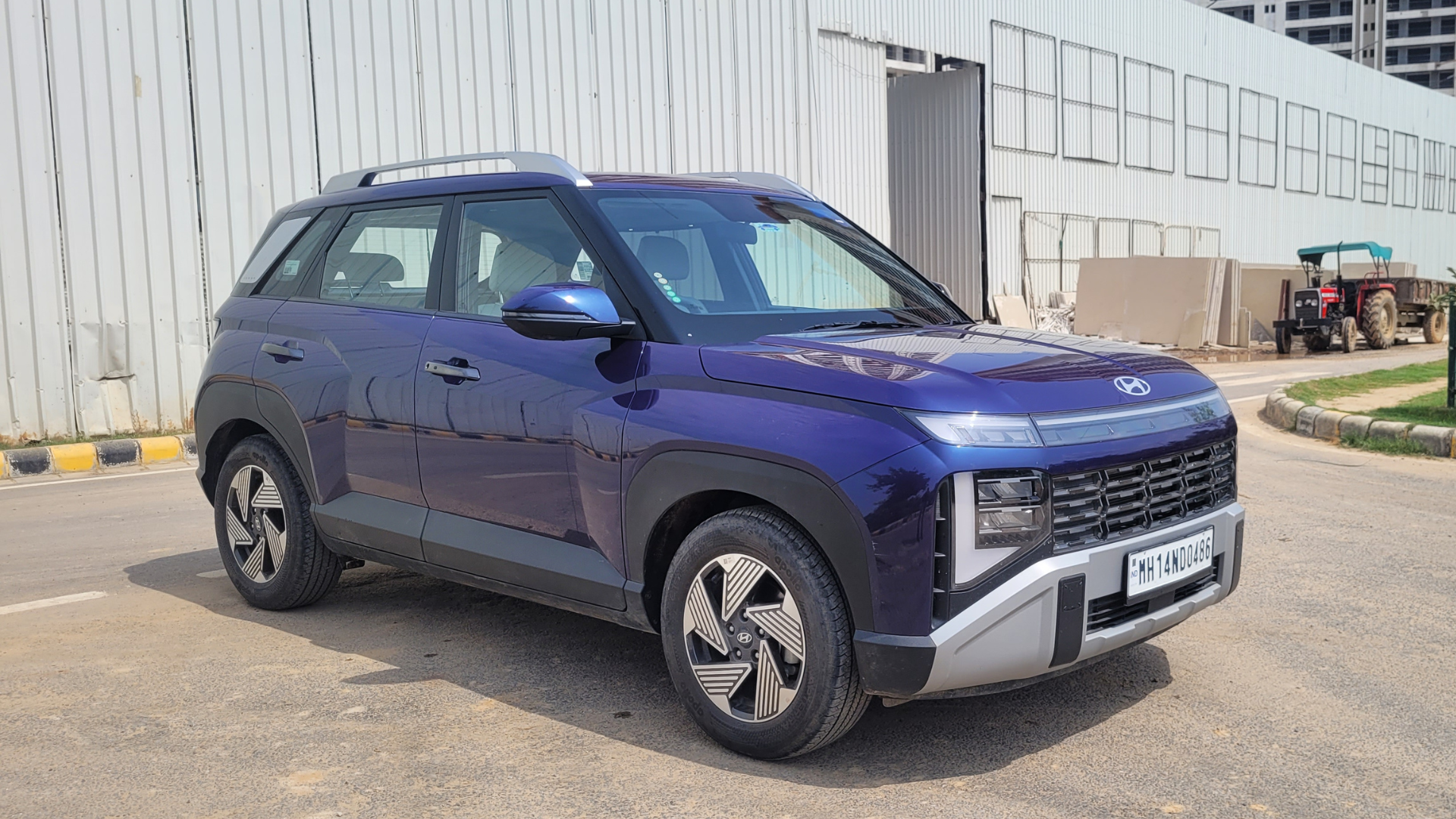
The Hyundai Venue offers a wider powertrain range, a sunroof from mid-variants, a more premium cabin, up to six airbags, a 5 star Bharat NCAP rating, and ADAS on higher trims. Its feature list is longer than the Kiger's, and its resale value and service network are stronger.
The Kiger counters with more boot space, a 4 star Global NCAP rating, and a lower price for a comparable powertrain combination.
For buyers who prioritise ownership practicality and brand infrastructure, the Venue is the safer choice. For buyers who want the most features in a limited budget, the Kiger makes a compelling counter-argument.
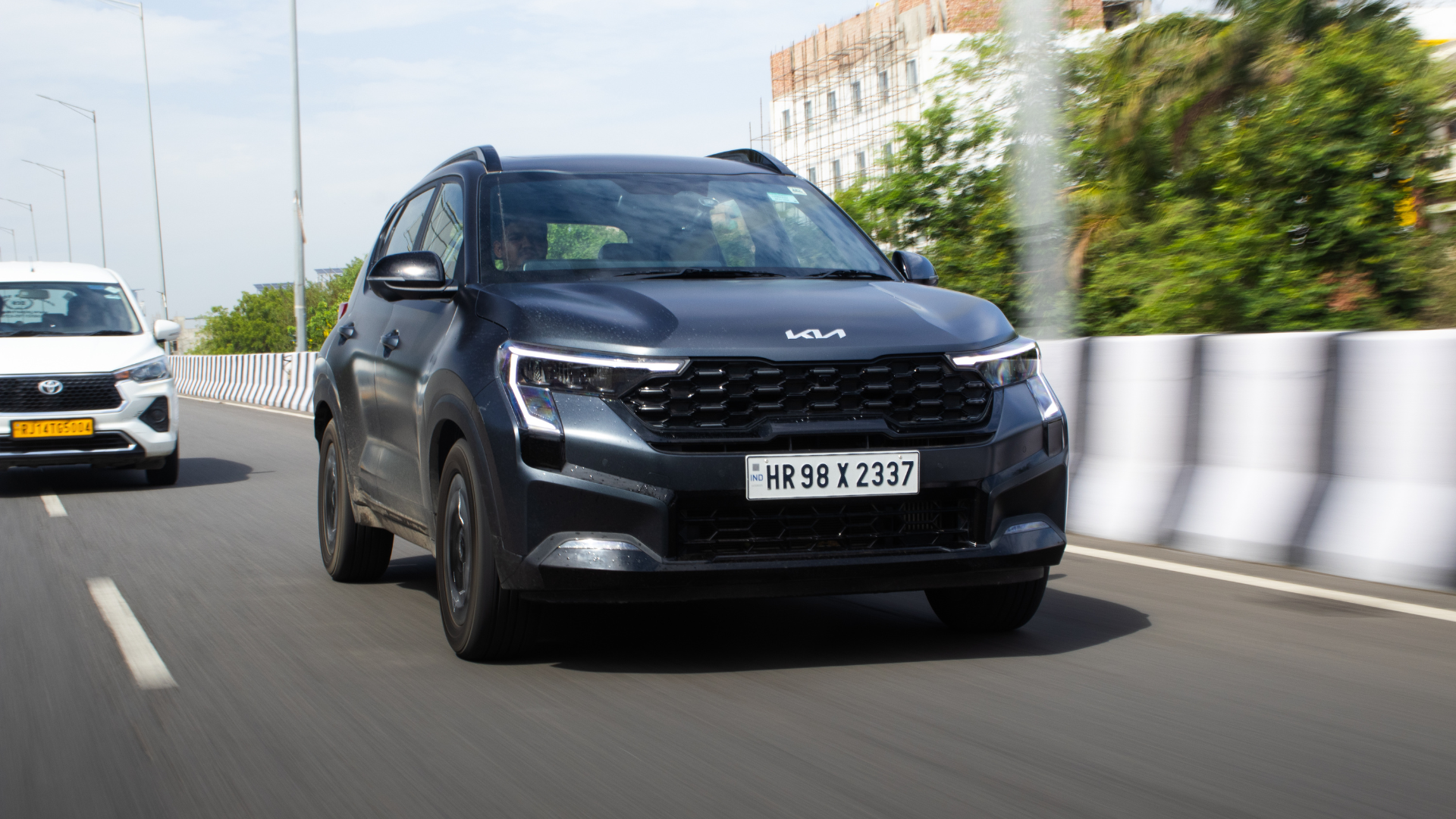
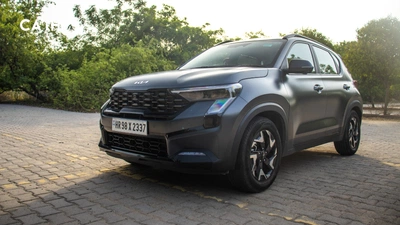
The Kia Sonet, just like the Venue, occupies the premium end of the sub-4-metre segment and offers the most complete feature package, including a sunroof, ADAS, a diesel option, and a larger infotainment screen.
However, it is priced higher than comparable Kiger variants, and has a poor 1 star Global NCAP rating.
For buyers who want every feature box checked, the Sonet is the answer. For buyers who find the Sonet's pricing stretched relative to what they actually need from a daily driver, the Kiger offers most of the practical benefits at a lower cost.
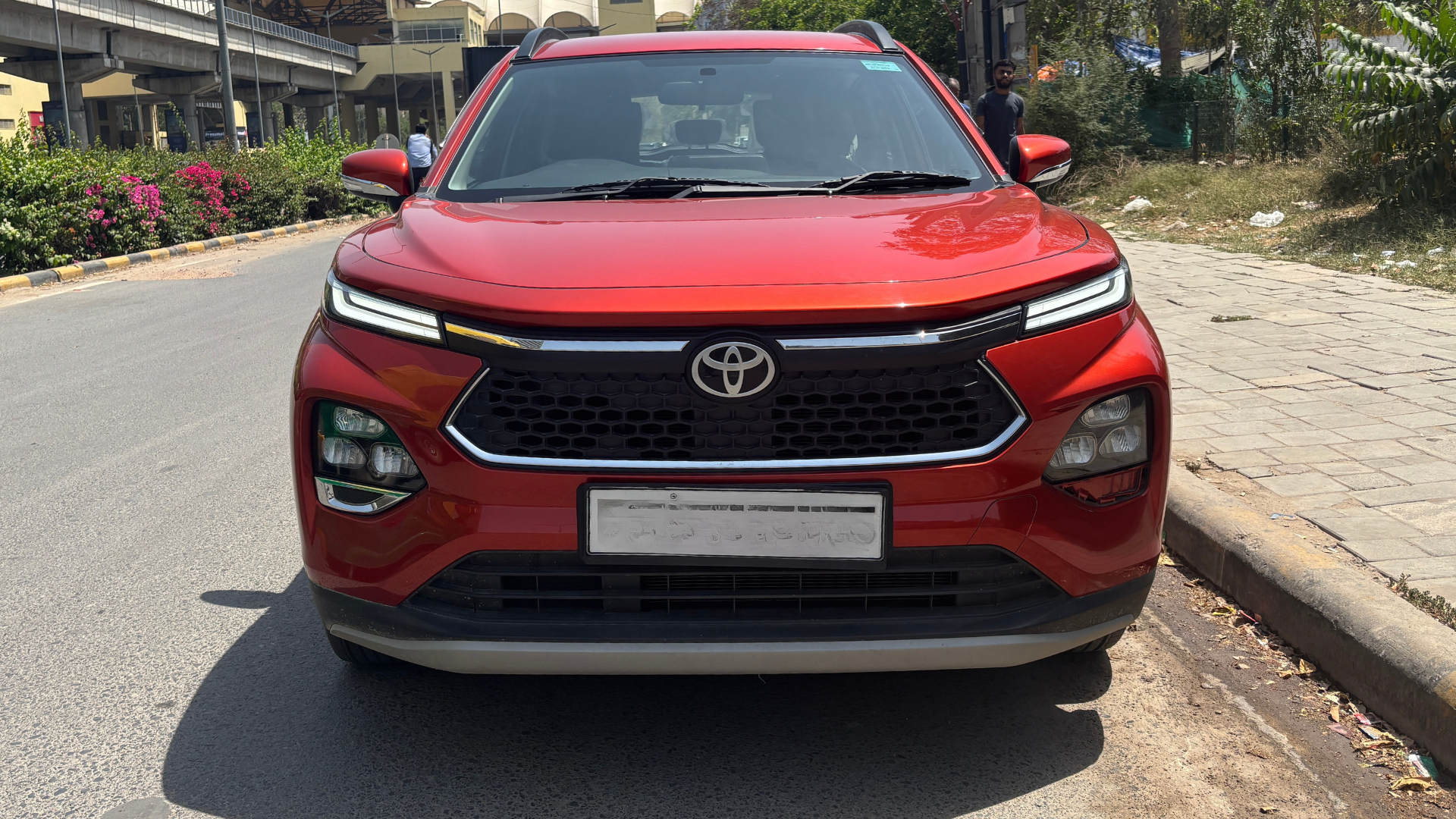
The Maruti Suzuki Fronx and Toyota Taisor are essentially the same car sold with different badges and from different dealerships.
Both get a 1.0-litre turbo petrol with 100 bhp, better ride quality over rough roads, an extensive service network, and competitive pricing.
The Kiger however, has a higher ground clearance and better high speed manners and a good proven safety rating.
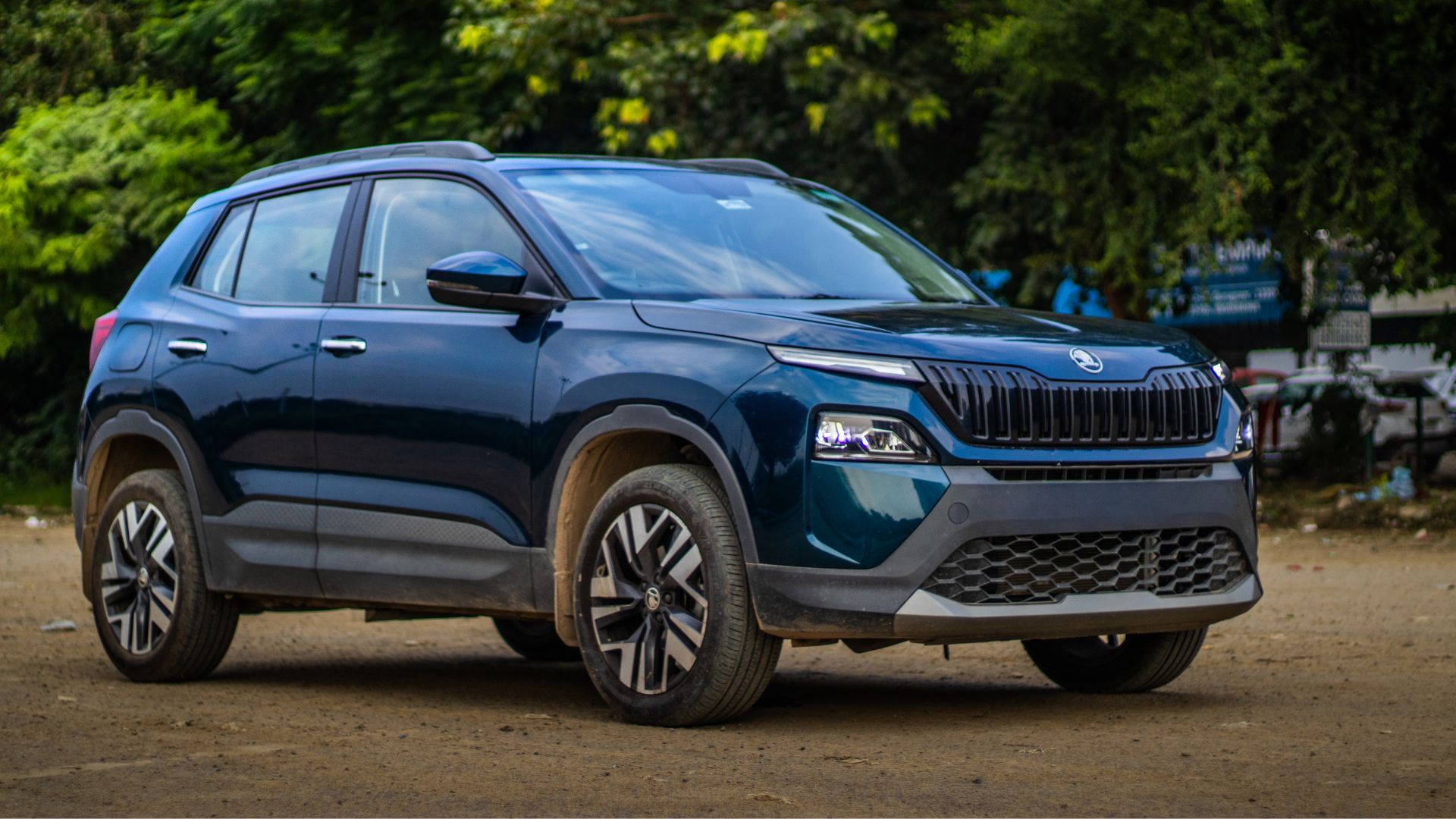
The Skoda Kylaq immediately raised the bar on driving dynamics and safety upon its launch.
Its MQB-A0-IN platform delivers the sharpest handling in the class, the interior material quality is noticeably better, and the 1.0-litre TSI turbo petrol with 115 bhp is the most powerful engine in the segment. The Kylaq also has the bigger boot space at 446 litres, and boasts a 5 star Bharat NCAP rating.
Pricing overlaps with the Kiger's turbo range, and for buyers who can stretch to the Kylaq, it is worth a direct comparison before deciding.
final verdict
final verdict
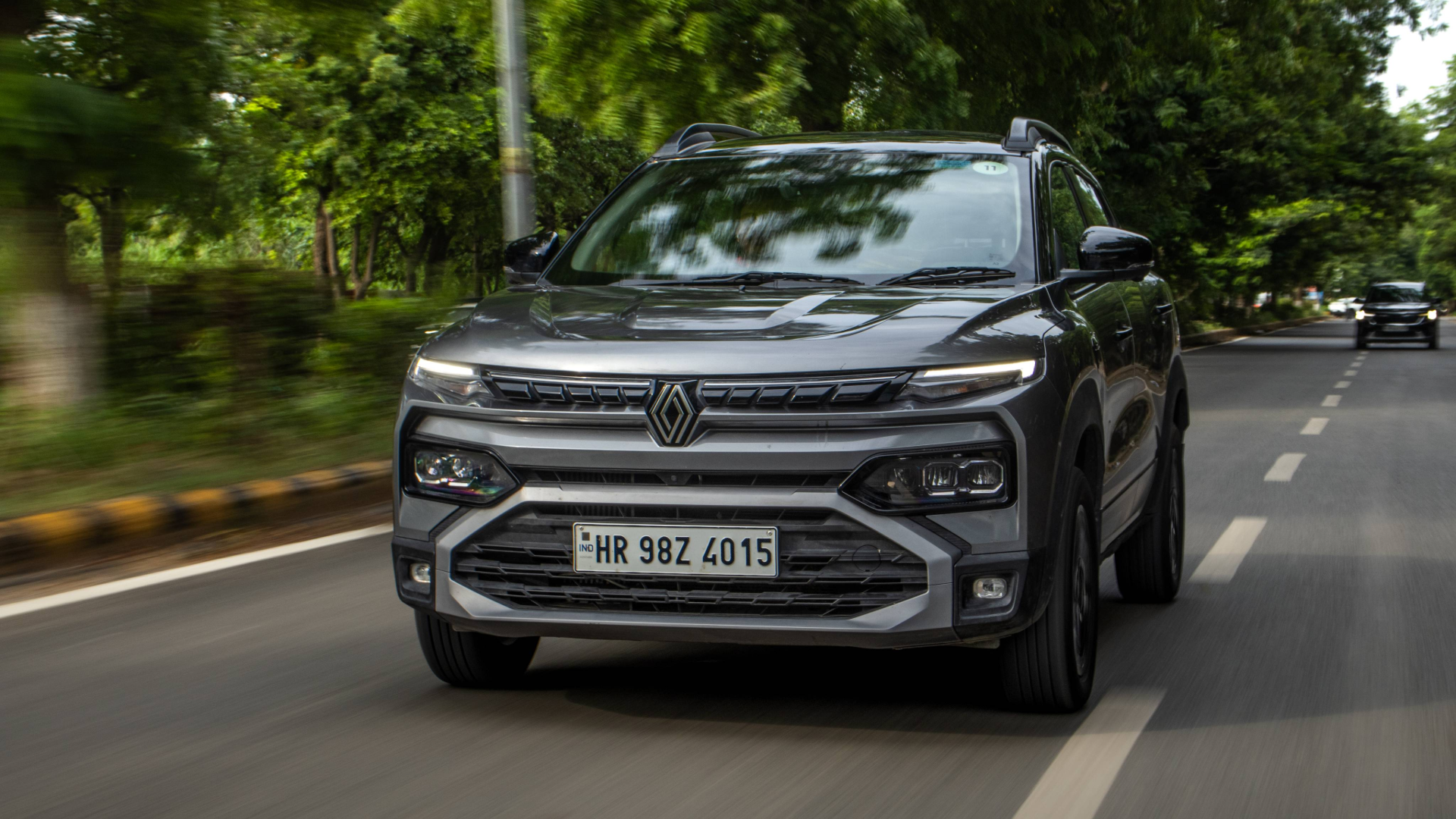
The Renault Kiger is the most complete version of a car that has consistently delivered more than its price suggests.
The exterior is sharper, the interior looks more premium, the NVH improvements are real and appreciated in daily driving, and the standardisation of six airbags across the full range is a meaningful commitment to occupant safety that was overdue.
The gaps that remain are specific and consistent. While the interior does “look” premium, the hard cabin plastics are a let down, the NVH though better, has much more room for improvement, The multi-view camera is useful but not a substitute for a 360-degree system, and the infotainment interface needs an upgrade in the next update cycle.
For the buyer in the right frame of mind, none of these are deal-breakers. The Kiger's strengths, ride quality, boot space, turbo performance, standard safety equipment, and value for money, make a coherent and compelling package that is genuinely difficult to match at this price.
The turbo petrol CVT is the most complete combination in the range and the one to buy if budget allows. The turbo manual is the choice for drivers who want the performance without the CVT premium.
For budget-first buyers, the naturally aspirated petrol manual variants provides the essentials at the most accessible price in the range.
Avoid the base Authentic variant unless it is the only variant within reach, since the Evolution's additions are meaningful enough to justify the step-up.
Renault Kiger Expert Reviews
I Drove Renault Kiger for 10,000km & Here Are 5 Reasons Why You Need It !!
I have spent around 5 months with the Renault Kiger to understand what it is like in the real world. Here is my overall experience, and I will tell you the five reasons why you should definitely consider it for under ₹10 lakh.
Vatsal Agrawal
September 21, 2026

Renault Kiger News
Most Affordable Cars With 360 Degree Camera Under 10 Lakhs
The 360 cam is one of the most in demand features that helps to increase your situational awareness when parking or while driving. Here is the full list of cars that offer a 360-degree camera under ₹10 lakh with variant names, prices, and what else you get alongside the camera.
Salil Kumar
October 15, 2026
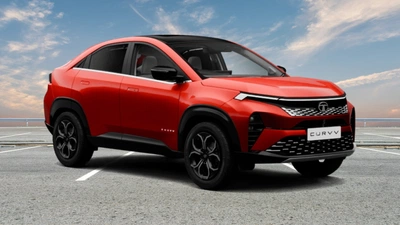
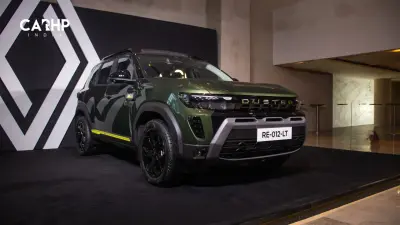
Renault Offering Up to Rs. 1.30 Lakh Benefits in September 2026
Renault India's September 2026 offers cover all four models in its lineup, with benefits ranging from Rs. 40,000 on the Kwid to Rs. 1.30 lakh on the Duster. Here is the full breakdown for every model, including state-wise differences where applicable.
Anmol Kumar
September 7, 2026


Renault Kiger FAQs
What engine options are available in the Kiger?
−Two 1.0-litre three-cylinder petrol engines: a naturally aspirated unit producing 71 bhp and 96 Nm, available with a 5-speed manual or 5-speed AMT, and a turbocharged unit producing 99 bhp and 160 Nm (manual) or 152 Nm (CVT), paired with a 5-speed manual or CVT.
Does the Kiger come with an automatic gearbox?
+Yes. The Kiger is available with two automatic options: an AMT (paired with the naturally aspirated engine) and an X-Tronic CVT (paired with the turbo engine).
What is the boot space in the Renault Kiger?
+The Kiger offers 405 litres of boot space.
What is the ground clearance of the Renault Kiger?
+The Kiger has a ground clearance of 205 mm.
Does the Kiger have a sunroof?
+No. The Kiger does not offer a sunroof or panoramic roof in any variant.
Does the Renault Kiger have a crash test safety rating?
+Yes, the Kiger earned a 4-star adult and 2-star child occupant protection rating in Global NCAP tests. 6 airbags along with ABS, ESP, traction control, hill-start assist and TPMS are standard across the range.
What is the fuel tank capacity of the Kiger?
+The Kiger has a 40-litre fuel tank.
What is the mileage of the Renault Kiger?
+The Kiger delivers (manual) and up to (automatic) as per ARAI. Real-world mileage ranges from depending on conditions.
Is the Renault Kiger available in petrol, CNG, electric or diesel engines?
+The Kiger is currently available with Petrol engines.
What is the current ex-showroom price of the Renault Kiger?
+The current ex-showroom prices start at and go up to , depending on the variant.
How many variants does the Kiger come in, and what are their names?
+The Renault Kiger is available in 19 variants: Authentic, Emotion, Emotion DT, Emotion Turbo, Emotion Turbo CVT, Emotion Turbo DT, Emotion Turbo DT CVT, Evolution, Evolution AMT, Evolution Plus, Evolution Plus AMT, Evolution Plus Turbo, Techno, Techno AMT, Techno DT, Techno DT AMT, Techno Turbo, Techno Turbo CVT and Techno Turbo DT CVT. It offers transmission options.
What is the engine capacity, power, and torque of the Kiger?
+It has a engine that produces and of torque.
What are the key safety features in the Kiger ?
+The Kiger comes equipped with several safety features including Anti-lock Braking System (ABS), Central Locking, Electronic Brakeforce Distribution (EBD), Electronic Stability Control (ESC) and Hill Assist.
What are the boot space and dimensions of the Renault Kiger?
+The Kiger offers 405 Litres of boot space. Its dimensions are 3990 mm in length, 1750 mm in width, and it has a wheelbase of 2500 mm.
Which features are available in the top model of the Kiger (touchscreen, camera, cruise control, etc.)?
+The top Emotion Turbo CVT variant includes .
What is the standard warranty on the Kiger, and what are the average service costs?
+Renault offers a warranty. Annual service costs range between .
What colours does the Renault Kiger come in?
+The Renault Kiger is available in the following colours: .
Which variants of the Renault Kiger have a sunroof?
+variant of Renault Kiger is having sunroof
Is the Renault Kiger available in petrol, CNG, electric or diesel engines?
+The Kiger is currently available with Petrol engines.
What are the key safety features in the Kiger ?
+The Kiger comes equipped with several safety features including Anti-lock Braking System (ABS), Central Locking, Electronic Brakeforce Distribution (EBD), Electronic Stability Control (ESC) and Hill Assist.
What are the boot space and dimensions of the Renault Kiger?
+The Kiger offers 405 Litres of boot space. Its dimensions are 3990 mm in length, 1750 mm in width, and it has a wheelbase of 2500 mm.