




EMI Loading
Mahindra Thar OG Key Specifications
Mahindra Thar OG Overview

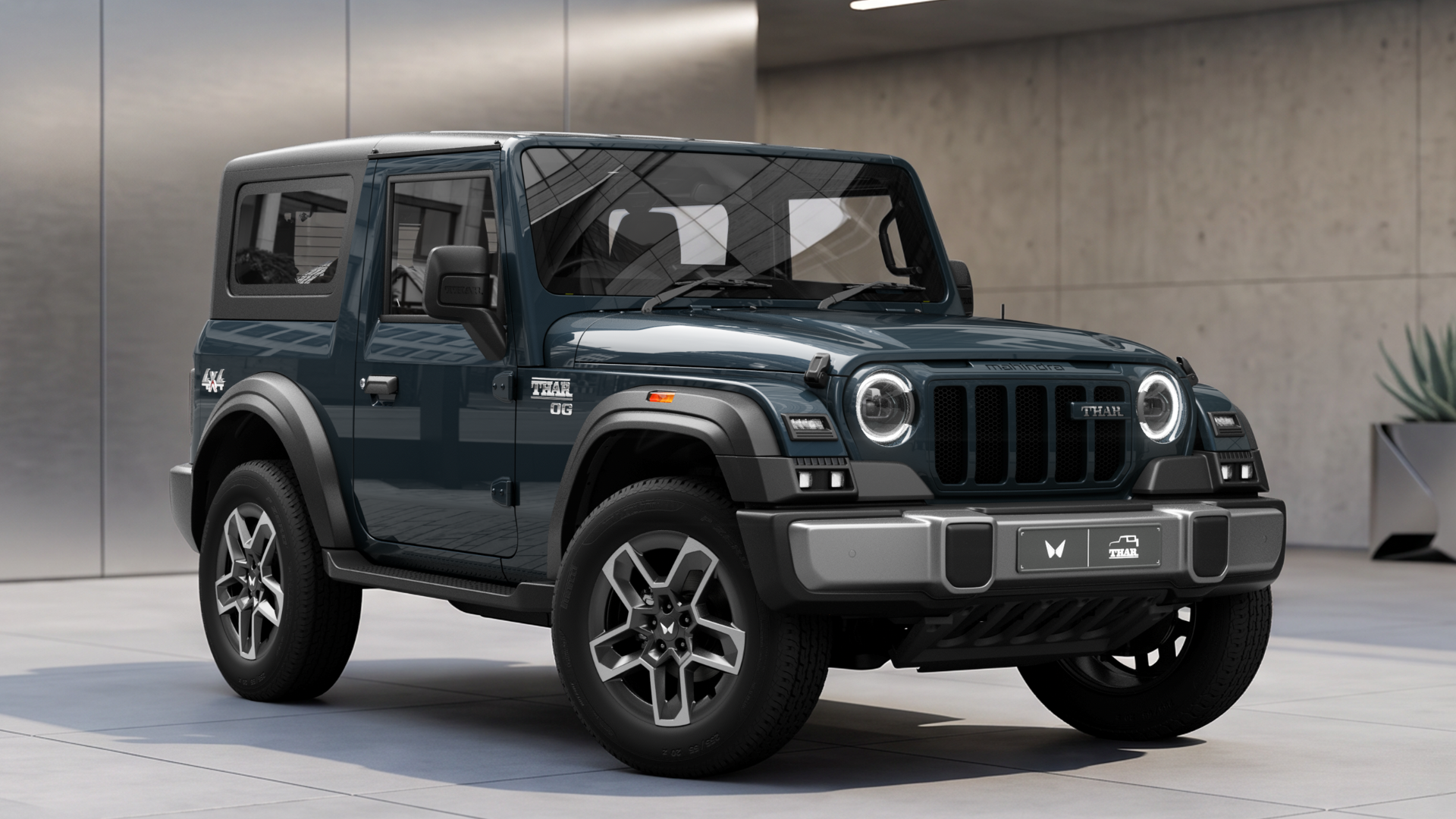
Few nameplates in India carry the cultural weight of the Mahindra Thar.
Since its second-generation launch in 2020, the three-door Thar redefined what a lifestyle off-roader could be in the Indian market, attracting buyers who had no prior interest in off-roading. The Thar OG is Mahindra's best and most significant update to the three-door formula.
What makes the Thar OG a more meaningful update than a conventional facelift is the depth of engineering change underneath. The M_Glyde 4G platform is new, the suspension geometry has been revised with a Pentalink rear setup and a Watts Link for improved lateral stability, the DaVinci frequency-dependent dampers on the ZXT address the outgoing model's most consistent criticism, the steering has moved from hydraulic to electric, and the two larger engines have received meaningful power and torque increases.
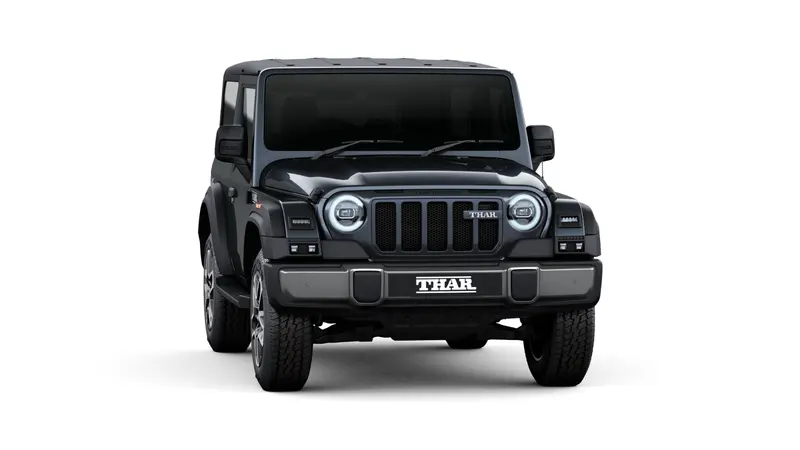
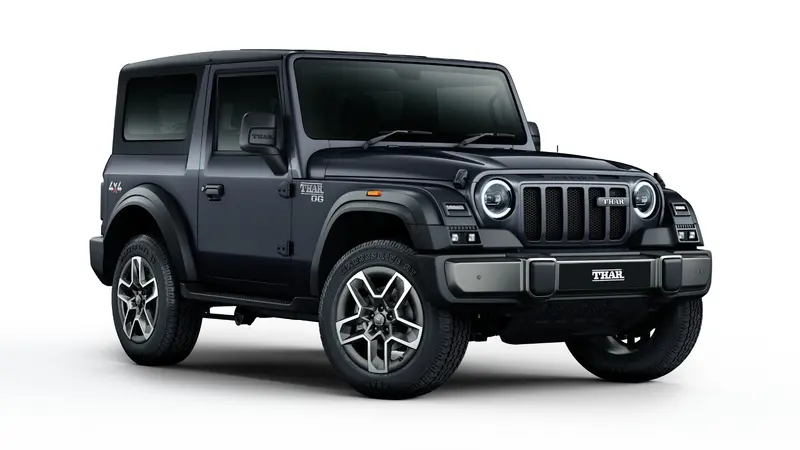
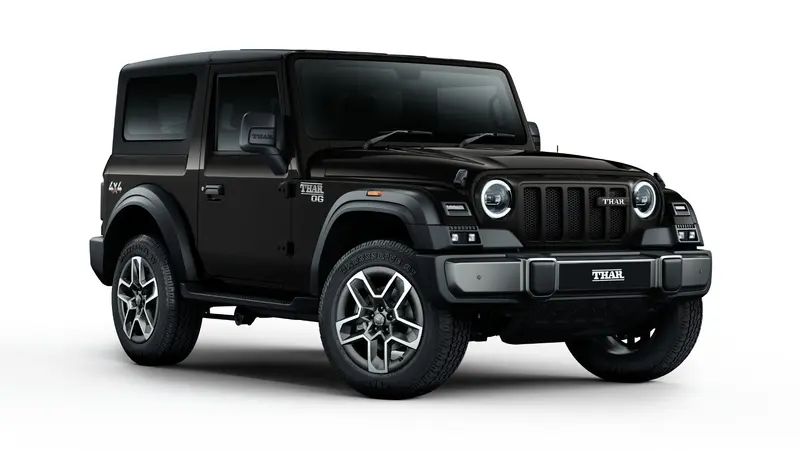
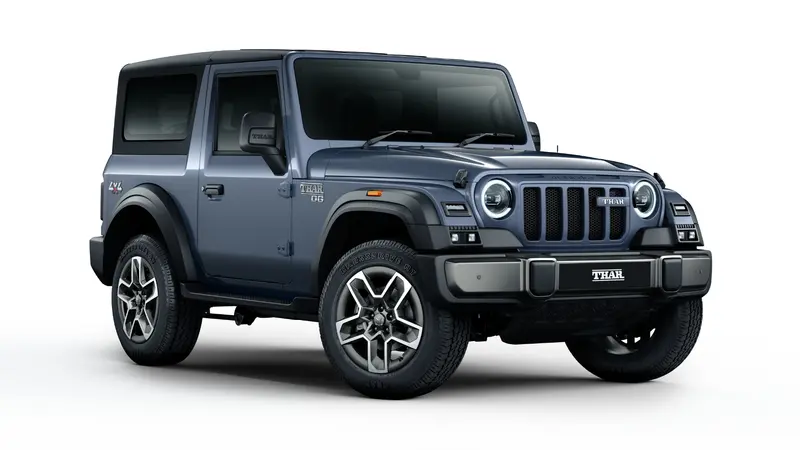
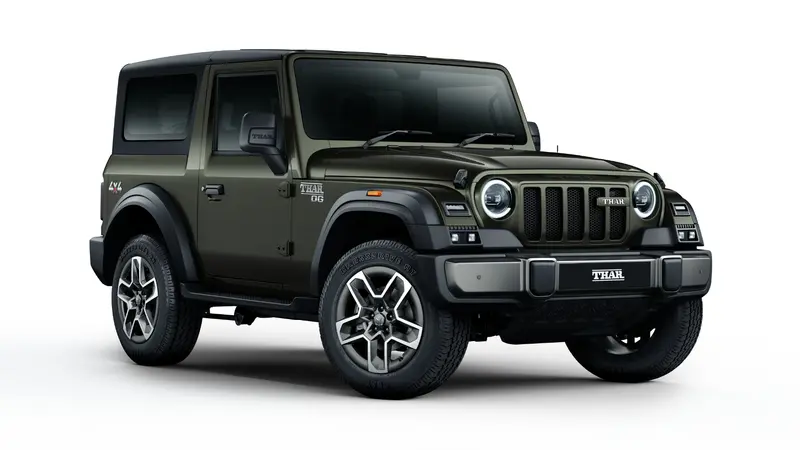
The exterior takes clear cues from the Thar Roxx, be it the projector LED headlamps on the ZXT, a five-slat grille replacing the old seven-slat unit, the C-shaped DRLs, and wider tracks.
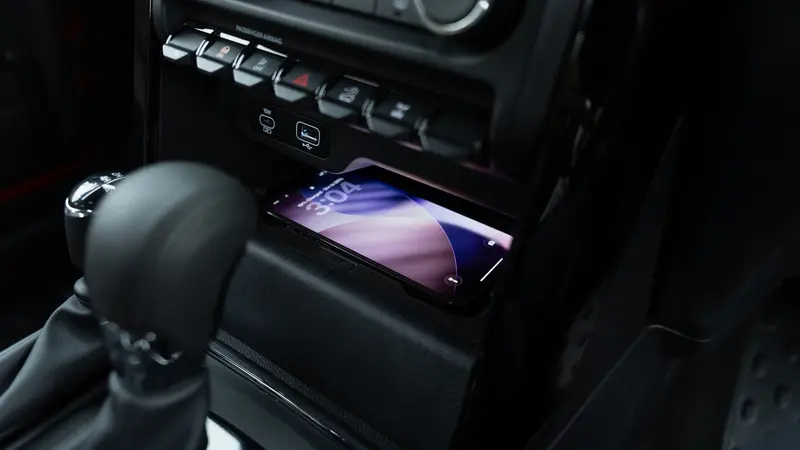
The new ZXT top trim brings the three-door into genuinely premium territory with LED lighting, 19-inch alloys, six airbags, all-wheel disc brakes, leatherette seats, and wireless charging.
With the base AXT, the entry point remains accessible, with the 1.5-litre diesel and rear-wheel drive keeping costs down for buyers who want the Thar's character and road presence without stretching to the bigger petrol and diesel engines with 4x4 or automatic options.
Engine and Performance
Engine and Performance
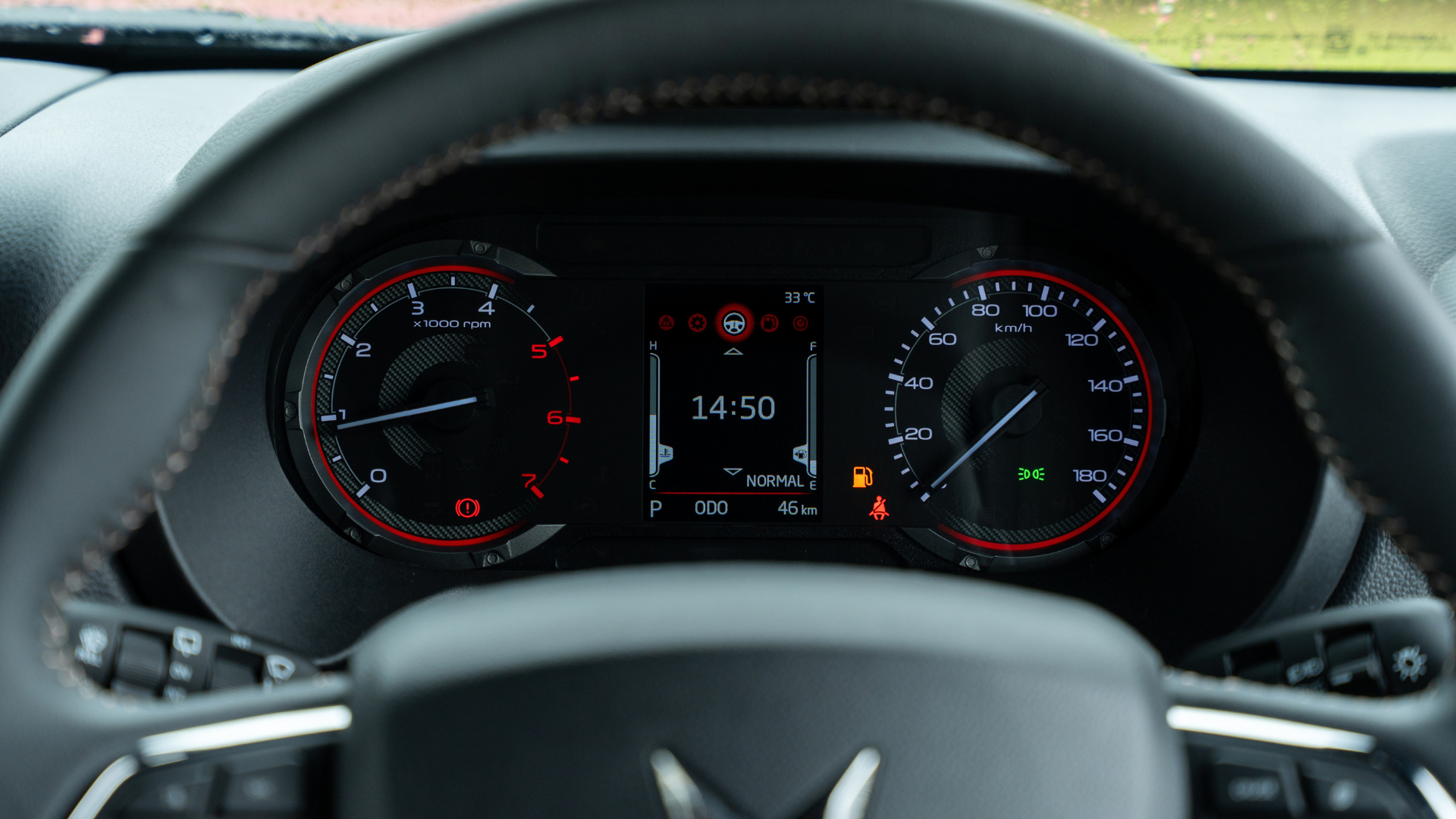
All three engine options from the previous 3-Door Thar carry over to the Thar OG.
| Specification | 1.5L Diesel | 2.0L Turbo Petrol | 2.2L Diesel |
|---|---|---|---|
| Engine | 1.5L mHawk D117 diesel | 2.0L mStallion turbo petrol | 2.2L mHawk diesel |
| Displacement | 1497 cc | 1997 cc | 2184 cc |
| Power | 117 bhp at 3750 rpm | 162 bhp at 5000 rpm | 152 bhp at 3500 rpm |
| Torque | 300 Nm at 1600-2800 rpm | 330 Nm at 1600-3500 rpm | 330 Nm at 1600-2800 rpm |
| Transmission | 6-speed MT (RWD only) | 6-speed MT / 6-speed AT | 6-speed MT / 6-speed AT |
| Drivetrain | RWD only | RWD (AT only) / 4WD (MT and AT) | RWD (AT only) / 4WD (MT and AT) |
| Variants Available | AXT, LXT, ZXT | LXT, ZXT | LXT, ZXT |
| Fuel Tank | 45 litres | 57 litres | 57 litres |
The 1.5-litre D117 diesel carries over unchanged at 117 bhp and 300 Nm, paired exclusively with a 6-speed manual and a rear-wheel drivetrain. It remains the entry point to the Thar OG lineup and the only engine available on the base AXT trim.
The 2.0-litre mStallion turbo-petrol and 2.2-litre mHawk diesel, which are available on LXT and ZXT only, have both received meaningful upgrades.
The petrol now produces 162 bhp and 330 Nm, gains of 12 bhp and 30 Nm over the outgoing unit, while the 2.2-litre diesel climbs to 152 bhp and 330 Nm, improvements of 22 bhp and 30 Nm.
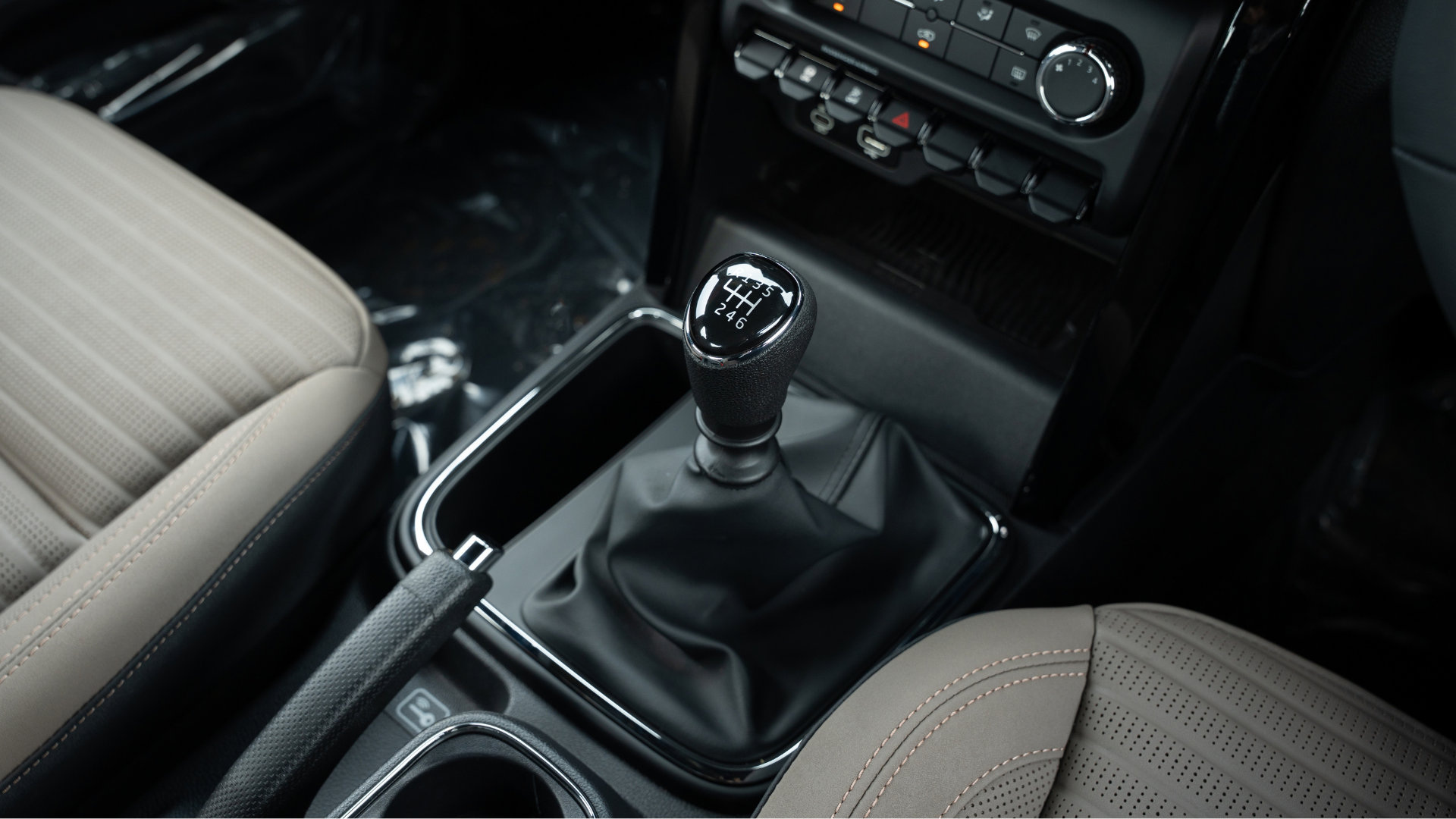
Both engines retain the 6-speed manual and 6-speed torque-converter automatic gearbox options. Notably, both larger engines now offer a rear-wheel-drive automatic option in addition to the 4WD configurations, giving buyers more flexibility when choosing their drivetrain setup.
Ride and Handling
The most significant mechanical story of the Thar OG is not the powertrain updates but the changes underneath.
The move to the M_Glyde 4G platform, shared with the larger Thar Roxx, brings a stiffer body structure that provides a better foundation for both on-road refinement and off-road articulation. The previous Thar's chassis, while capable off-road, was a known quantity on the road, with the compliance and composure trade-offs typical of an older ladder-frame platform.
At the rear, the Pentalink suspension replaces the leaf-spring setup of the previous generation. The Pentalink is a more sophisticated multi-link arrangement that allows the rear axle to travel more independently through bumps, reducing the secondary reactions that leaf-spring setups often produce on sharp edges and broken urban surfaces.
The Watts Link is a lateral locating device for the rear axle that prevents side-to-side axle movement under cornering and braking loads, improving directional stability and reducing the rear-end float that body-on-frame SUVs can exhibit.
The DaVinci dampers, with frequency-dependent damping (FDD) system (only on ZXT), is the same technology that debuted on the Mahindra XUV 7XO.
The dampers sense the frequency of suspension inputs and adjust their resistance accordingly. At high frequencies generated by sharp-edged potholes and road texture, they soften to absorb the impact, while at lower frequencies generated by body roll and dive under braking, they firm up to maintain control. This results in a ride that handles both rough urban surfaces and fast highway driving much better than a single-tune damper setup can manage.
The shift from hydraulic to electric power steering is another meaningful change for everyday drivability. The previous Thar's hydraulic steering required considerably more effort at low speeds and in parking situations.
These upgraded underpinnings alone make the Thar OG a more sensible choice for buyers who found the previous Thar’s driving experience and comfort underwhelming.
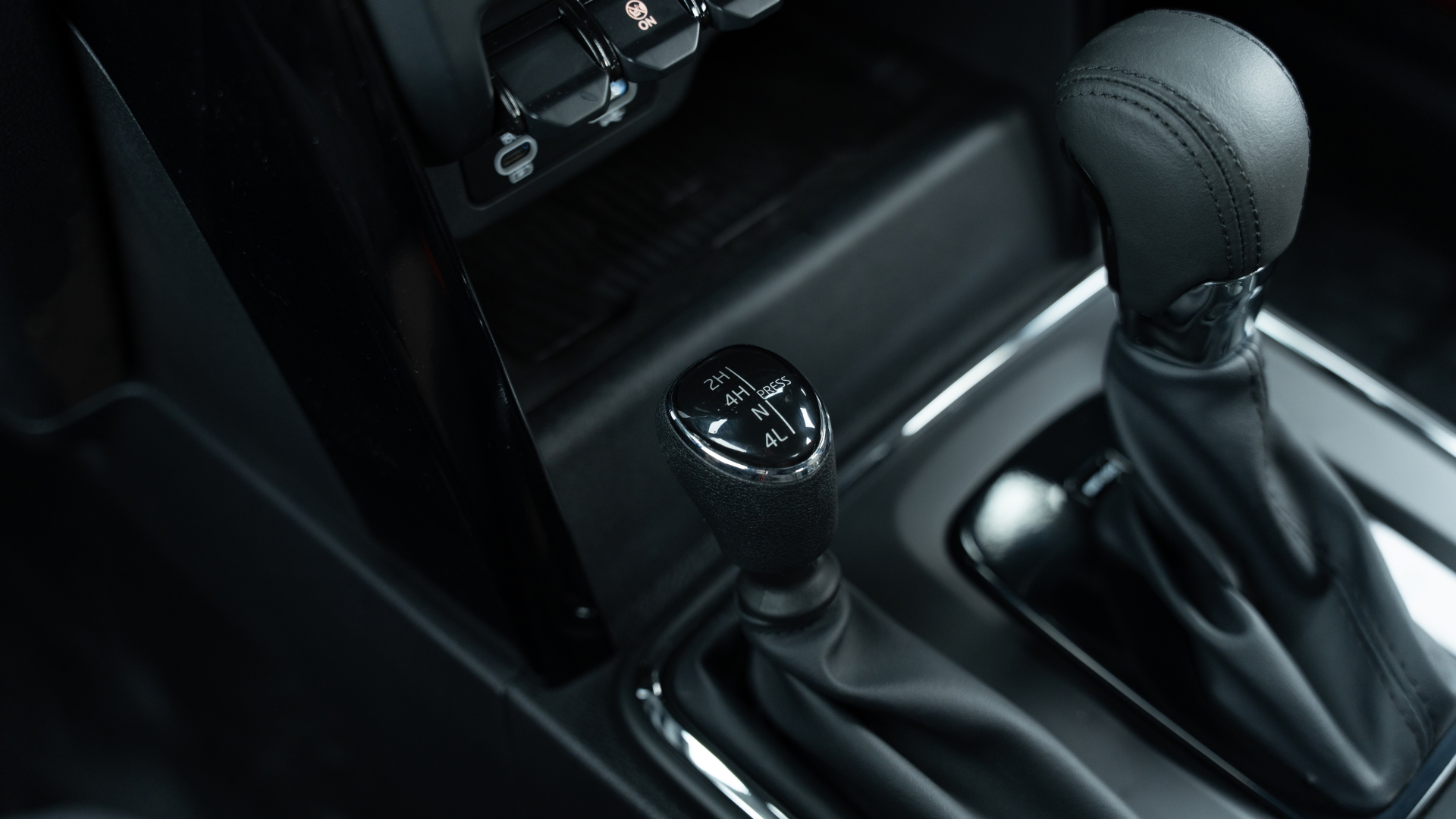
For the off-roading enthusiasts, the 4WD variants retain the mechanical credentials that gave the Thar its reputation. The Electronic Locking Differential locks the rear axle to send power to the wheel with the most grip, working in conjunction with the terrain modes (Mud, Sand, Snow) and Brake-Locking Differential to handle the kind of terrain that defeats less capable SUVs.
Automatic hub locks, tow hitch protection, and the Adventure Statistics Gen II system for tracking and displaying off-road data round out the off-road package on the LXT and ZXT 4WD variants.
The wider track compared to the outgoing model improves lateral stability on both roads and trails, and the ground clearance of 226 mm on 18-inch wheel variants and 232 mm on the ZXT's 19-inch setup is generous for the class. The 650 mm wading depth and 41.8-degree approach angle mean the Thar OG retains the off-road hardware credentials that define the nameplate.
fuel economy
fuel economy
The Thar OG's fuel efficiency figures have not been officially published by Mahindra yet.
Based on the outgoing model's real-world owner-reported figures and the fact that the 1.5-litre diesel is mechanically unchanged, the entry-point diesel is expected to return approximately 14 to 17 km/l on the highway and 9 to 11 km/l in city conditions.
The upgraded 2.2-litre diesel and 2.0-litre petrol, with their higher outputs and slightly heavier body, are expected to return broadly similar figures in their respective configurations to the outgoing model, though the power increases may affect efficiency depending on how the engines are driven.
The 45-litre tank on the 1.5-litre diesel variants and the 57-litre tank on the larger diesel and petrol engines provide a reasonable range buffer given the fuel consumption patterns of a body-on-frame off-roader with this level of capability.
interior
interior
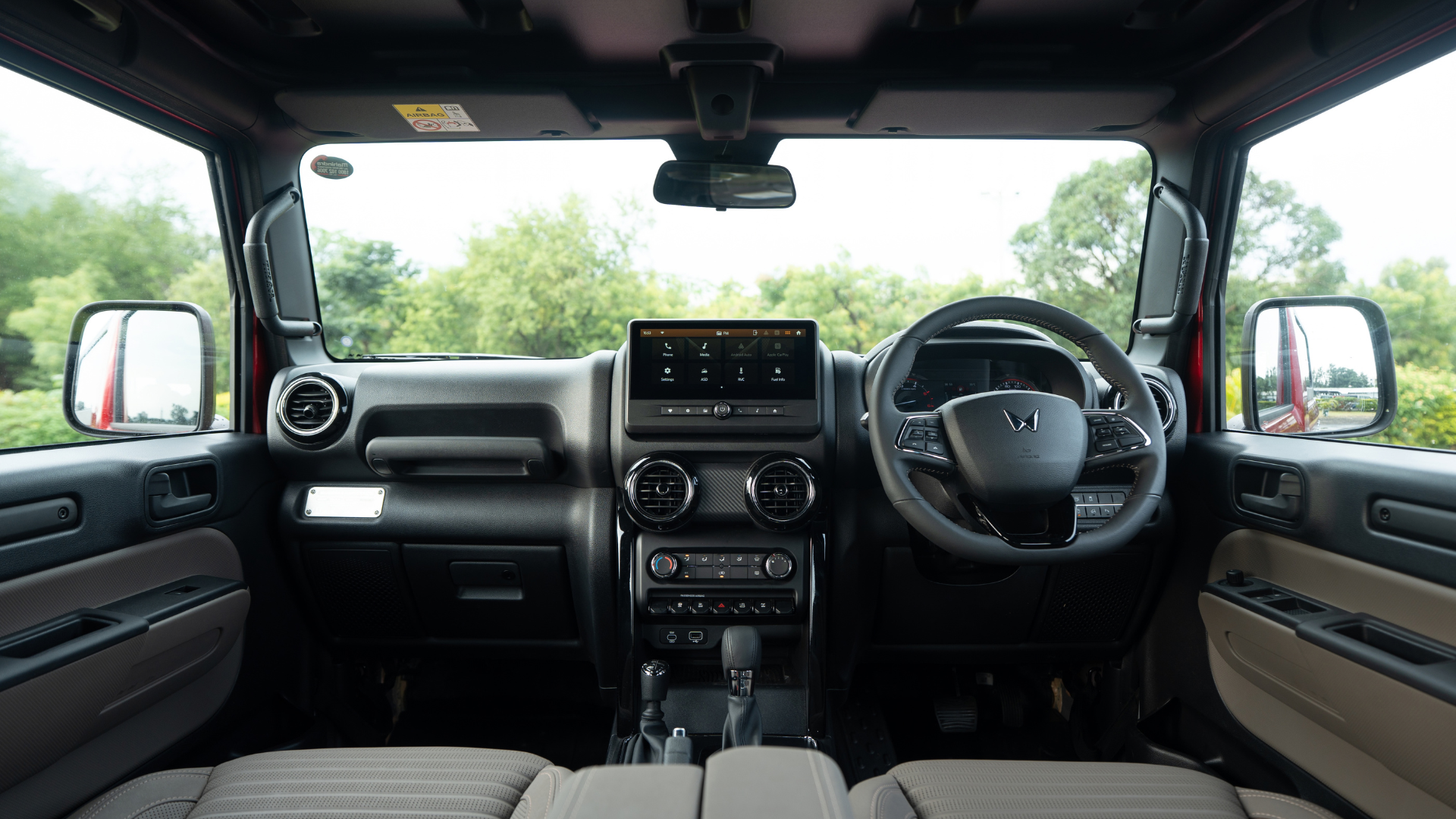
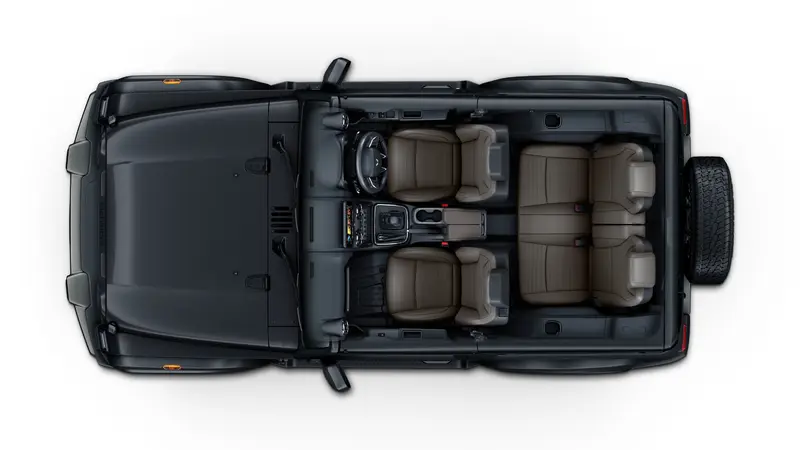
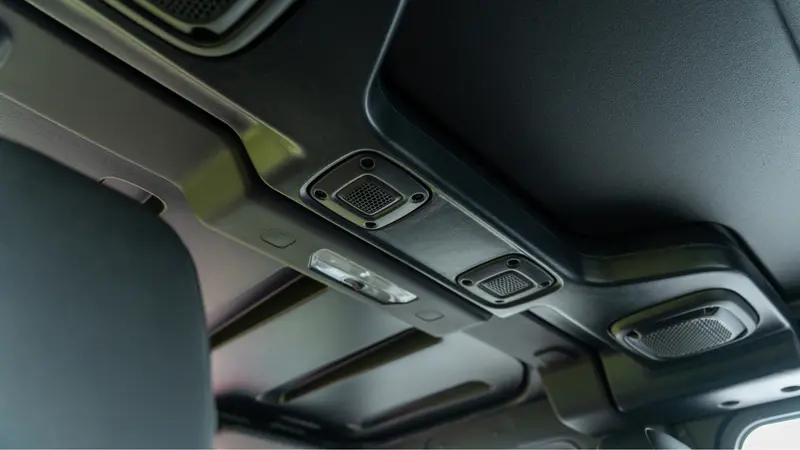
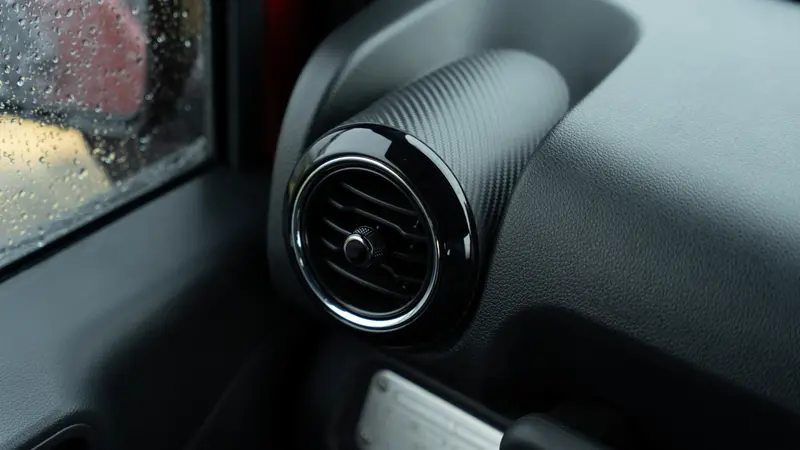
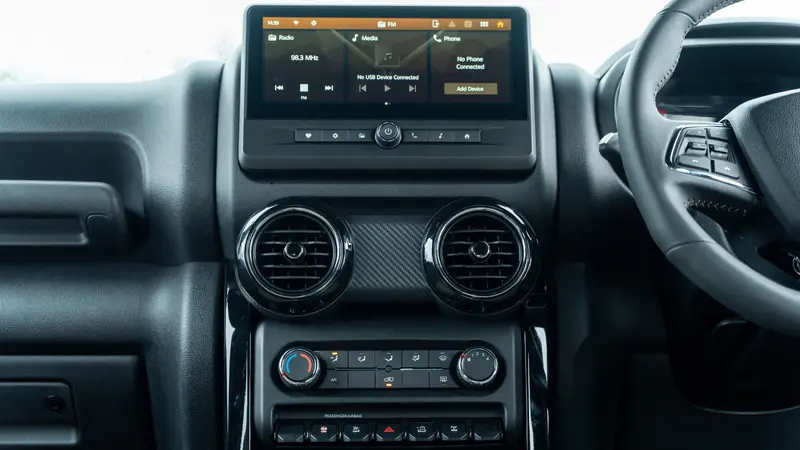
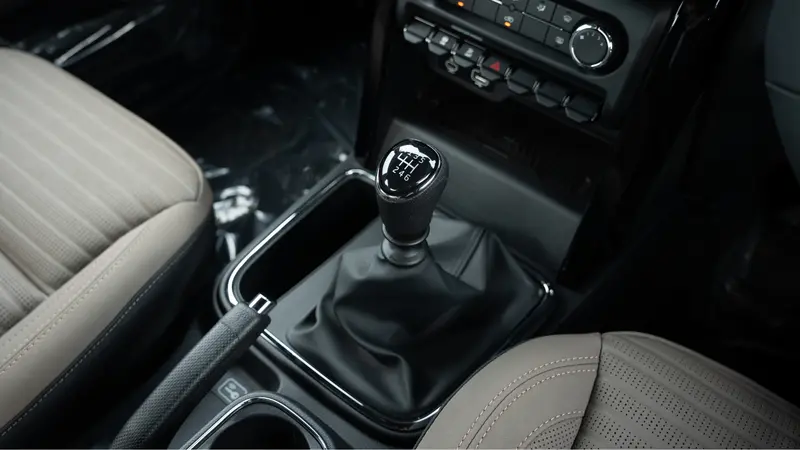
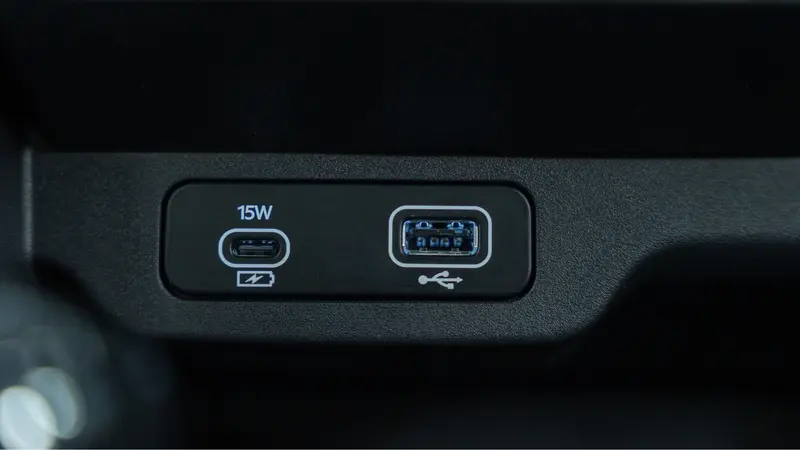
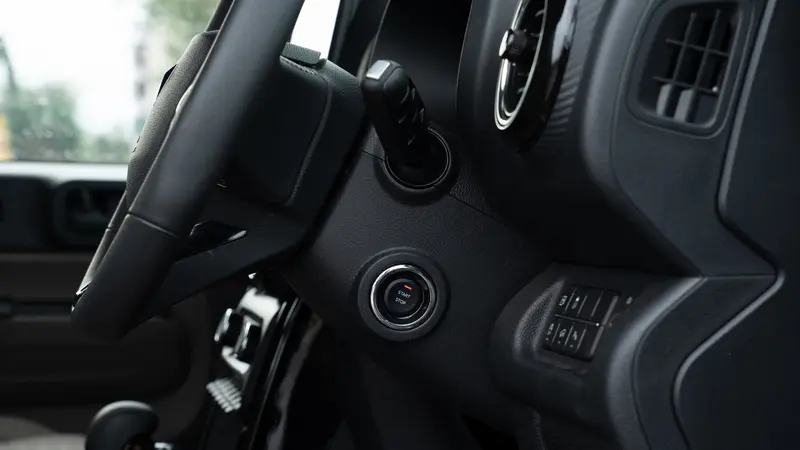
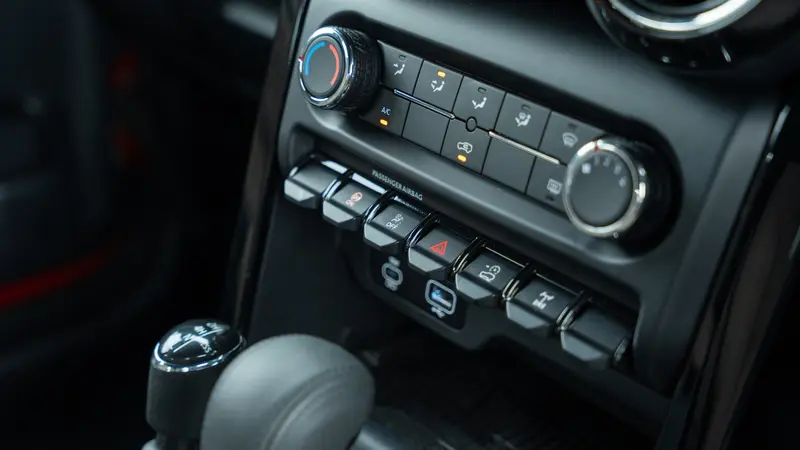
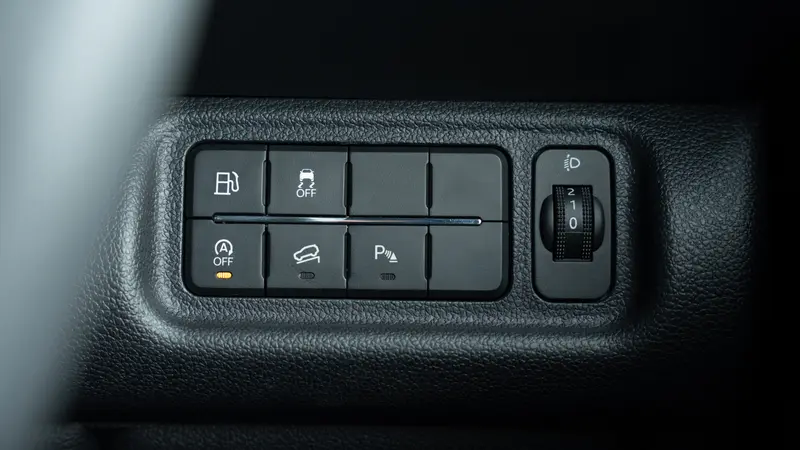
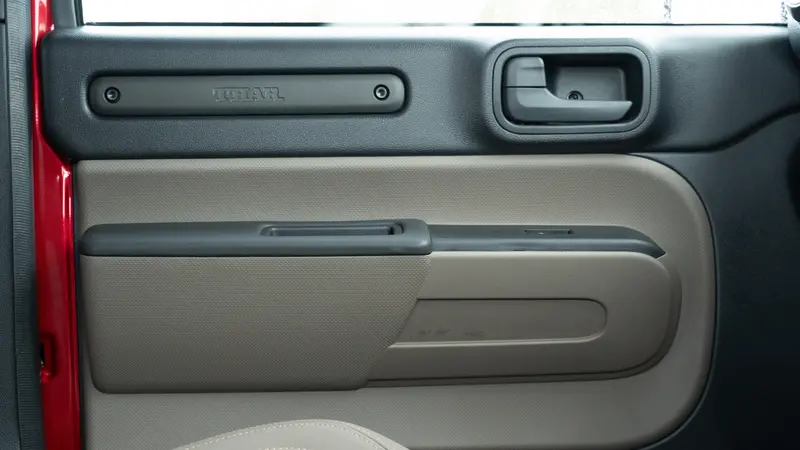
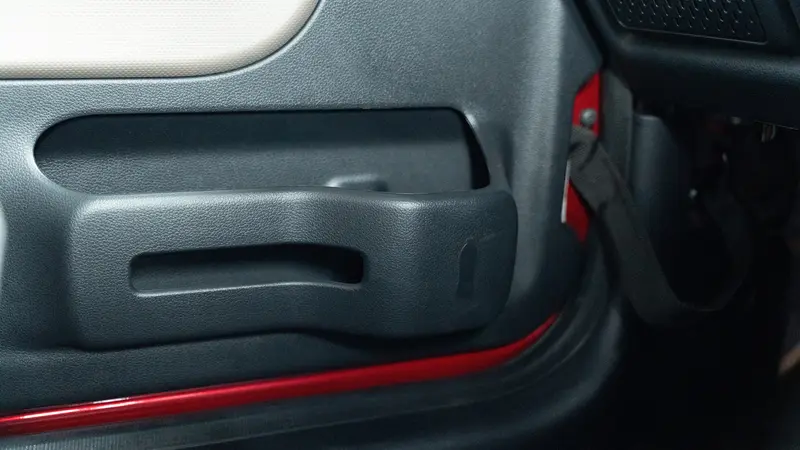
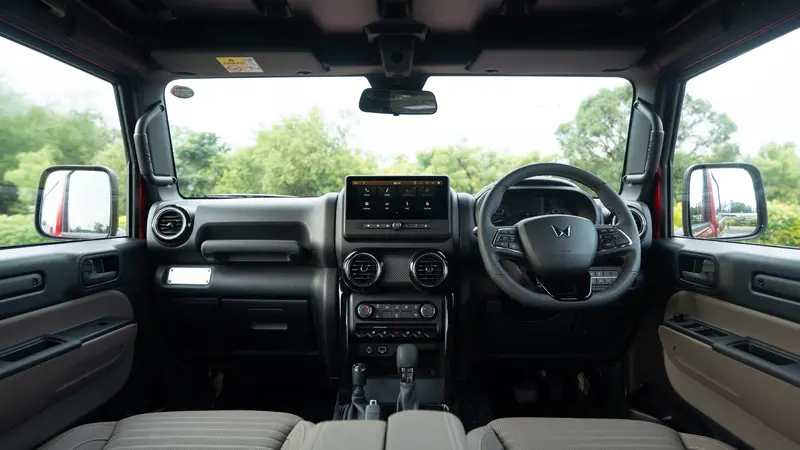
The Thar OG's interior represents the most comprehensive cabin upgrade the three-door nameplate has received.
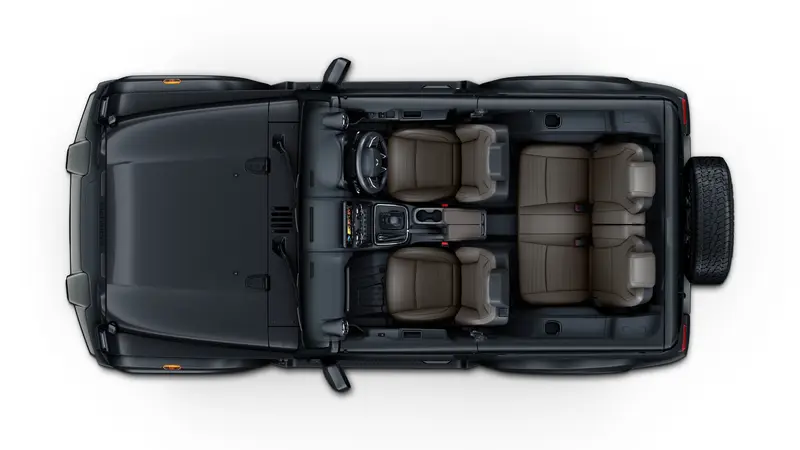
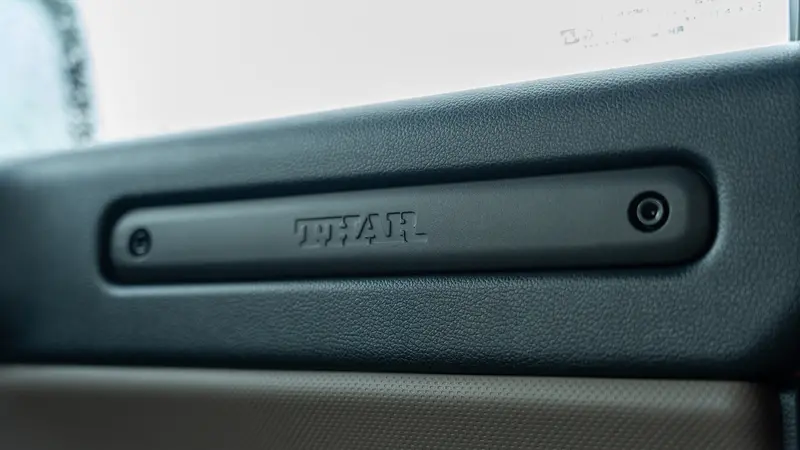
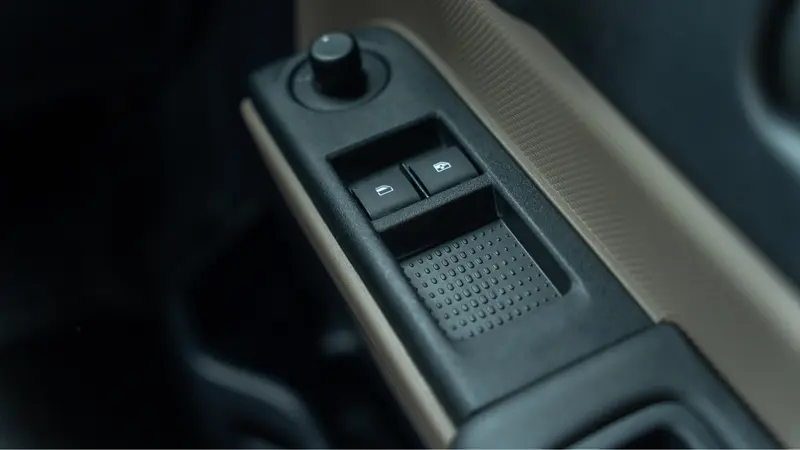
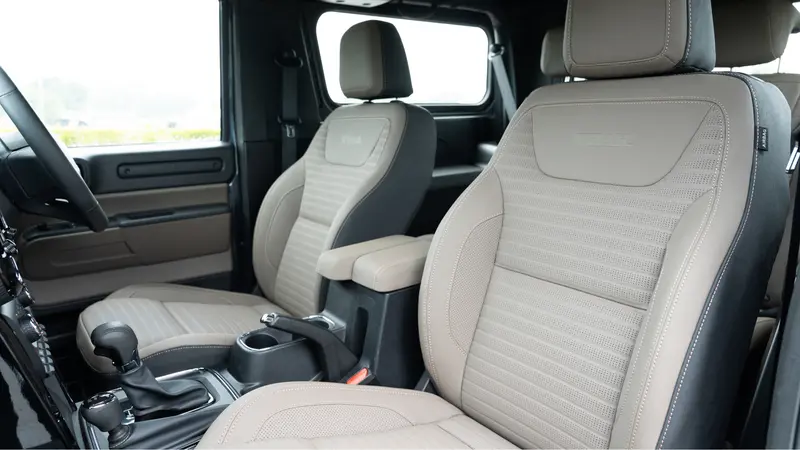
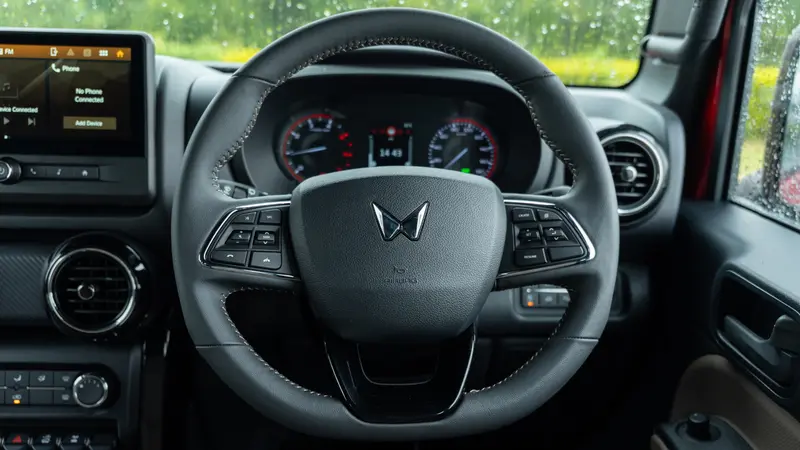
Soft-touch door panels replace some of the harder surfaces of the outgoing model, and the Truffle Brown leatherette upholstery exclusive to the ZXT gives the top-trim cabin a warmer, more premium character. The 'Thar' embossing on seat headrests, and the leatherette-wrapped steering wheel on the ZXT add a nice touch without feeling overdone.
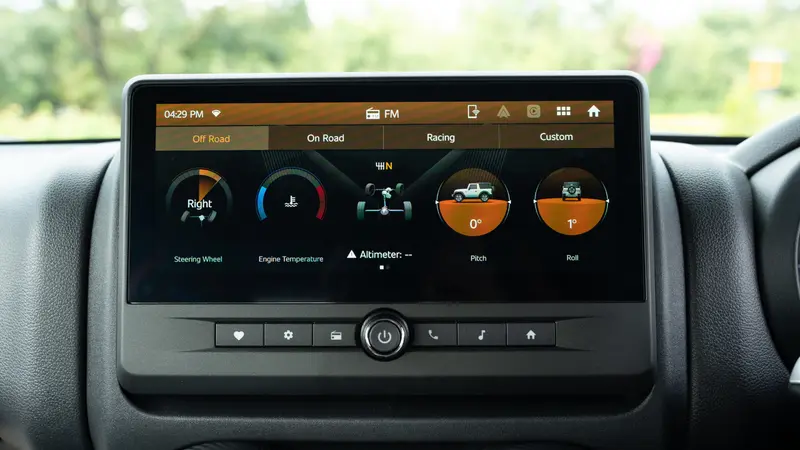
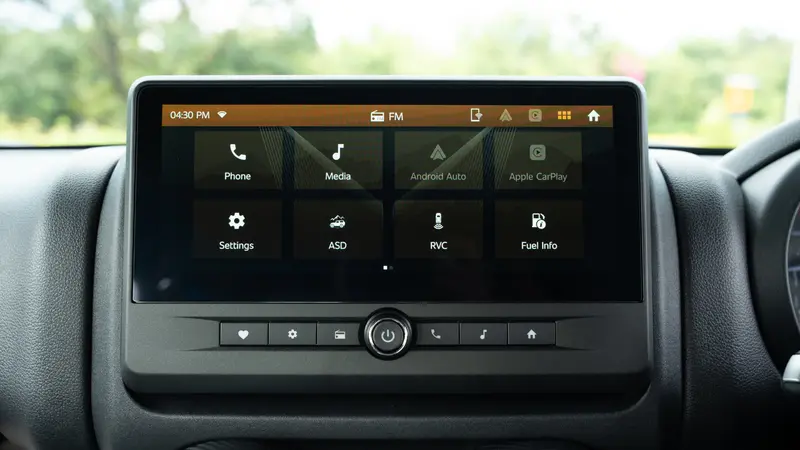
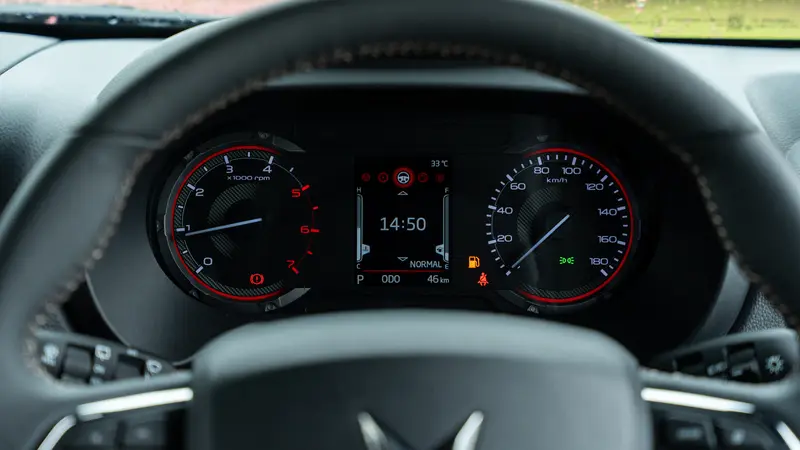
The 10.25-inch HD touchscreen from LXT upward is the same unit that featured on the previous model's top trims, now with wireless Android Auto and Apple CarPlay as standard. The colour MID from the LXT variant adds useful display options including off-road statistics via the Adventure Statistics Gen II system, which shows data like incline angle, wheel articulation, and off-road driving metrics in real time.
The AXT's basic analogue cluster with a simple MID is functional but noticeably basic for a car in this price range, and most buyers who value the instrument display experience should step up to at least the LXT.
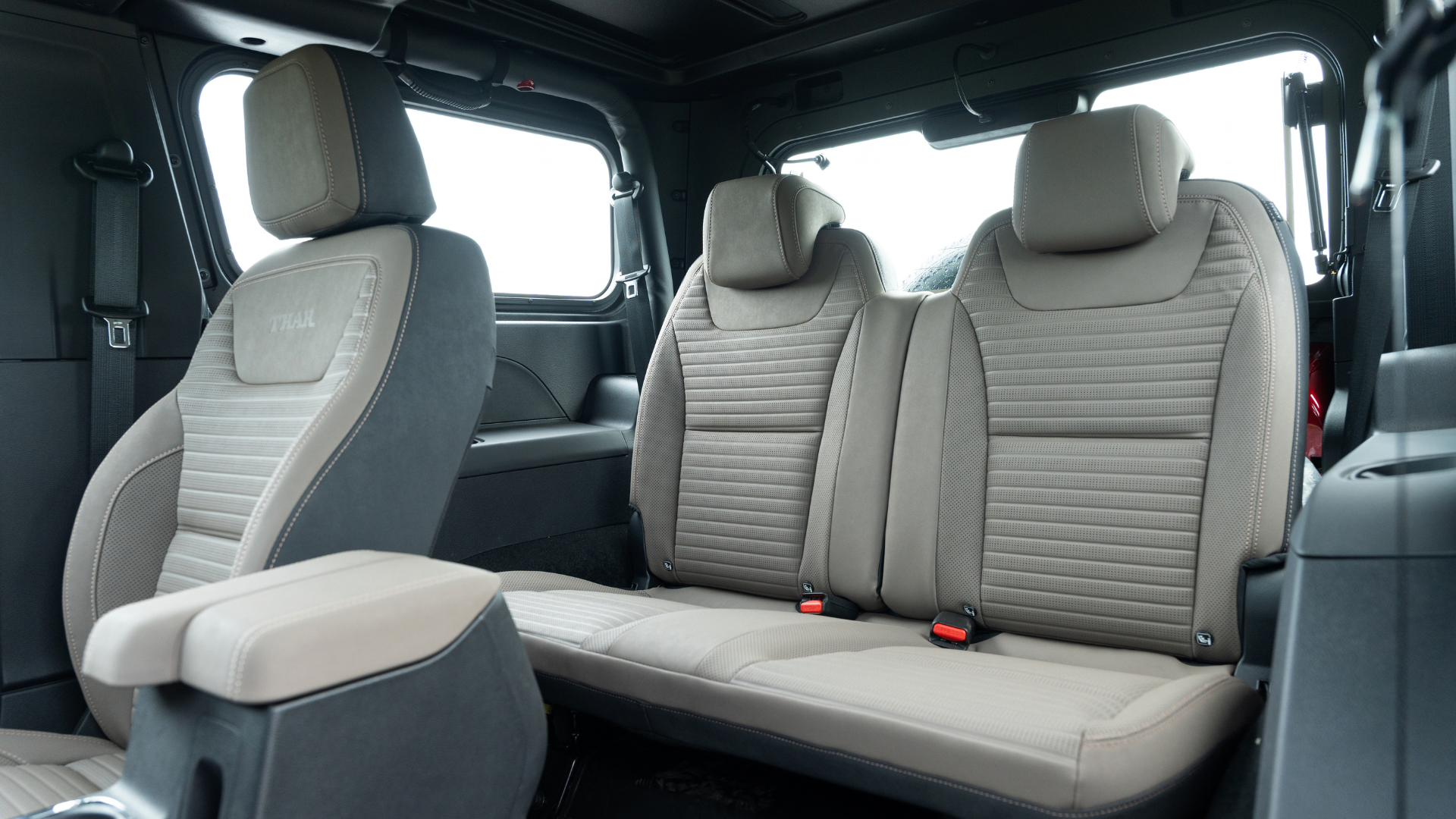
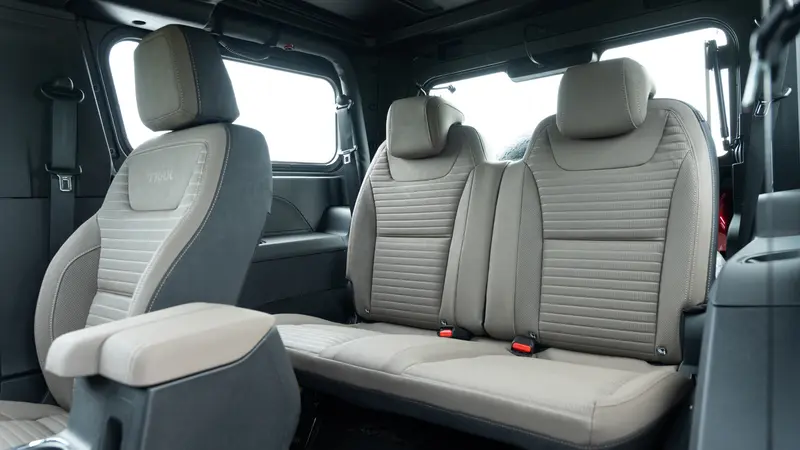
The four-seat configuration with individual rear captain-style seats remains unchanged. Space at the rear is compact by any sedan or crossover standard, and access to the rear seats remains the same front-door entry arrangement as before.
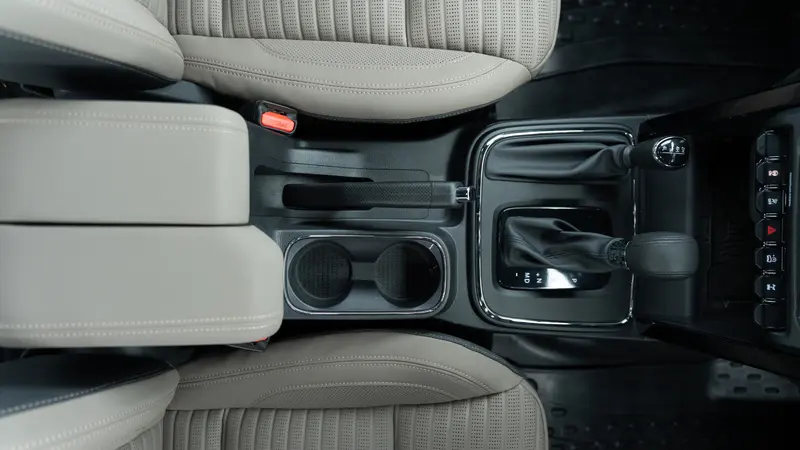
For two adults on occasional short trips it is adequate, but as a regular commuting arrangement for four adults it demands patience. The addition of rear armrests with cup holders on either side across all variants is a practical improvement for rear passengers.
While the overall cabin material quality on the Thar OG is a step above the previous generation, it remains a body-on-frame off-roader at heart, and the cabin does not approach the ambient quality of mainstream crossovers at similar price points. Plastics in mid-dash and lower console areas remain hard and basic, and the overall interior assembly reflects function-first priorities.
exterior
exterior
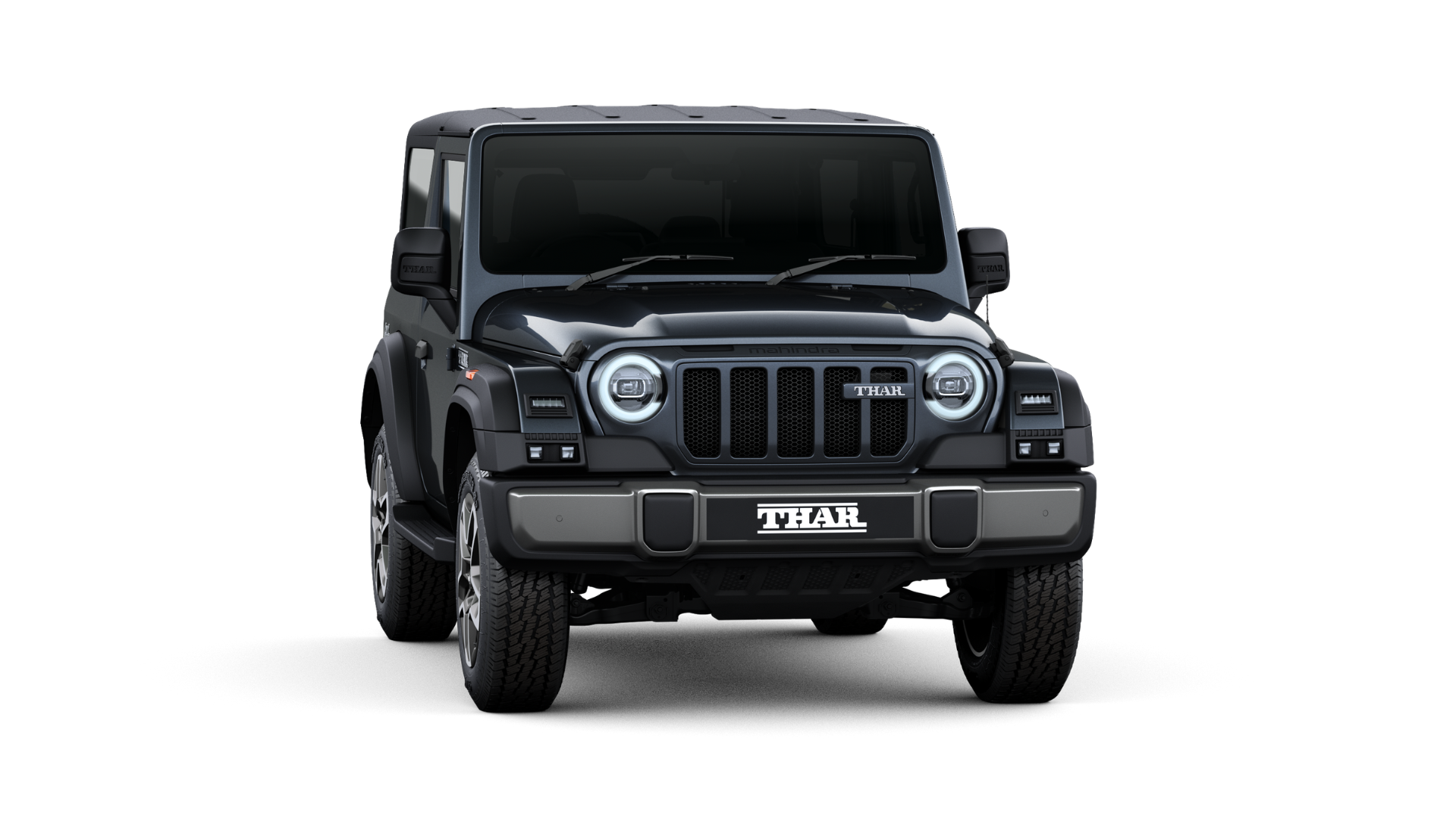
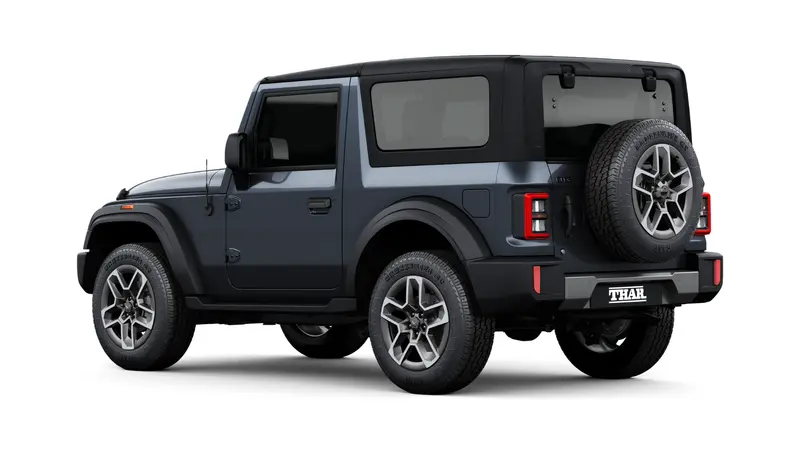
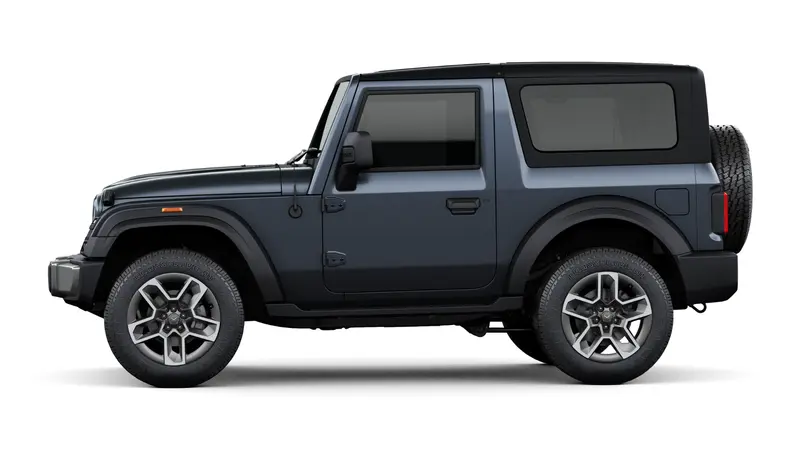
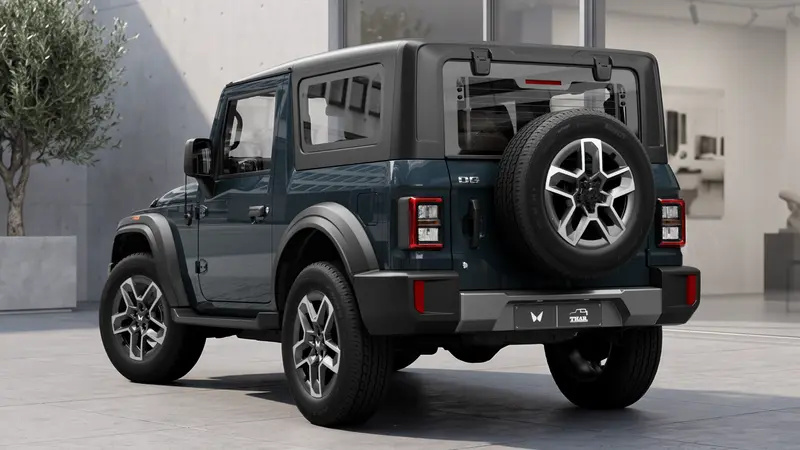
The Thar OG's exterior is the most thoroughly restyled version of the three-door since the second generation launched in 2020.
A bolder five-slat grille replaces the outgoing seven-slat unit, the headlamp arrangement moves to Roxx-derived projector LEDs on the ZXT with C-shaped DRLs, and fender-mounted LED turn indicators and ice-cube LED fog lamps.
The track width has been increased, giving the Thar OG a more planted, wider stance than its predecessor. This is visible in person and contributes to the car's more assured appearance on the road.
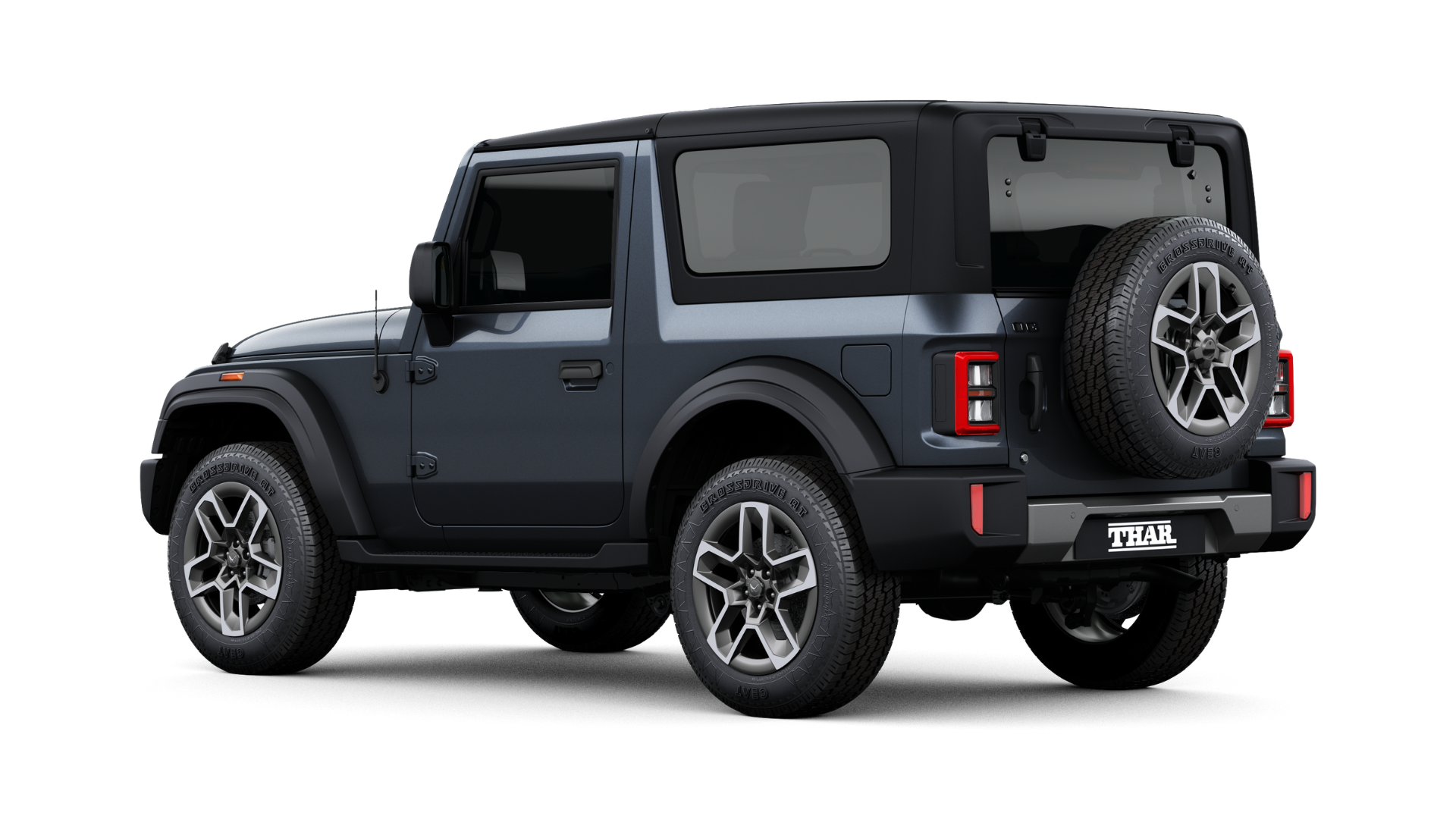
The 19-inch dual-tone alloy wheels on the ZXT are the most visually distinctive wheel option in the range and fill the arches proportionally, and the 18-inch alloys on the LXT offer a good balance of aesthetics and sidewall height for comfort. The 16-inch steel wheels on the AXT are functional and offer good off-road tyre options, though they are visually plain.
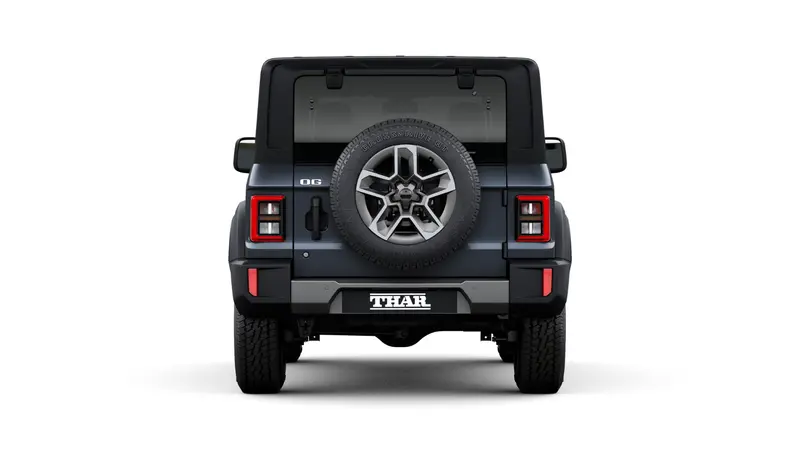
At the rear, LED tail lamps from the Roxx and 'OG' branding on the tailgate are the major changes, and the full-size spare wheel remains mounted on the tailgate.
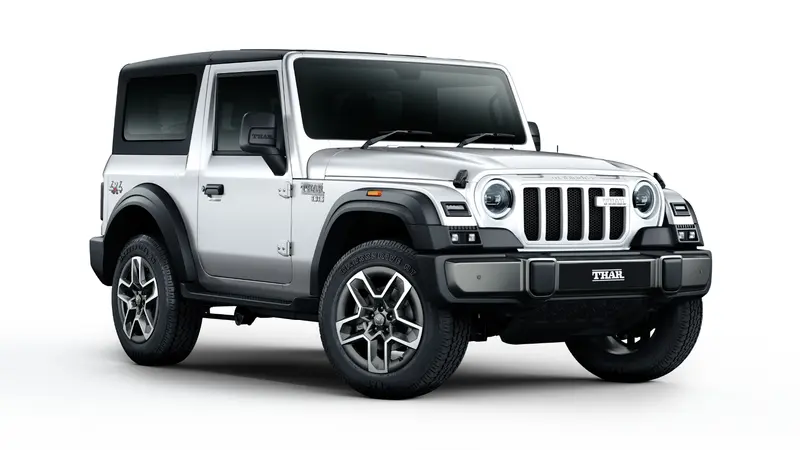
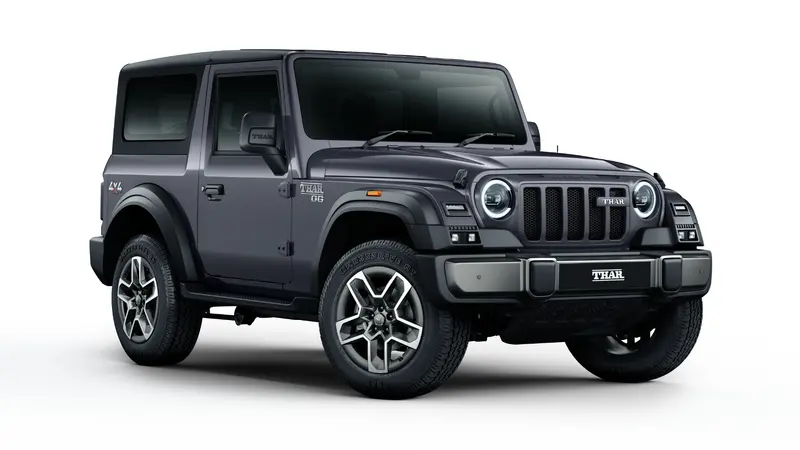
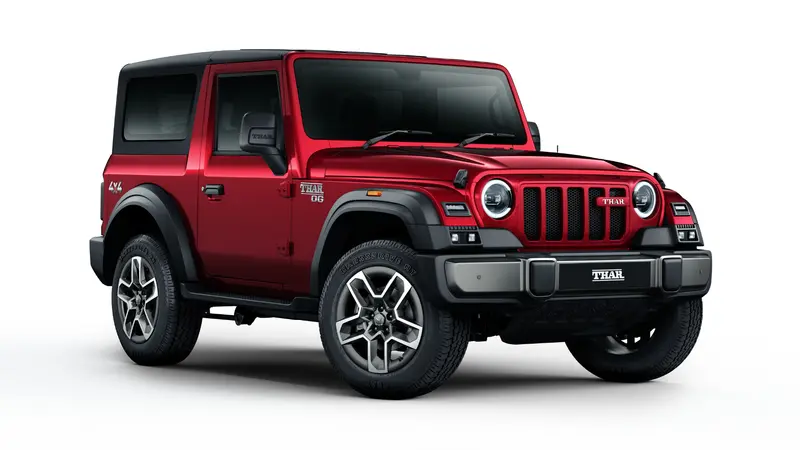
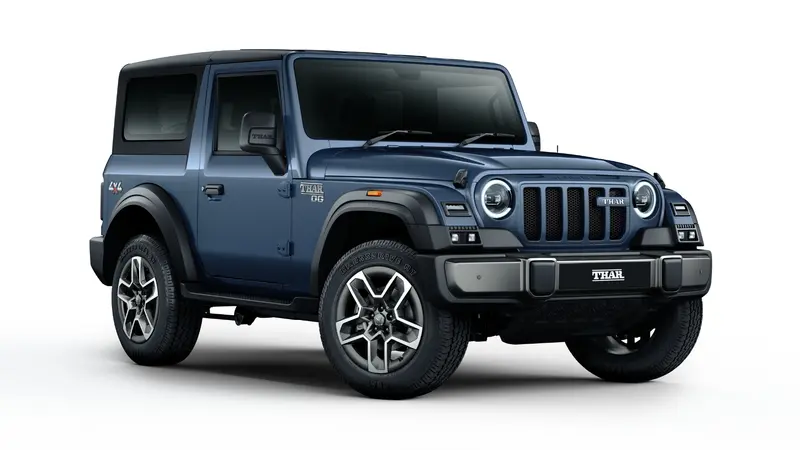
Eight colour options are available, with six carried over from the previous model (Deep Forest, Galaxy Grey, Battleship Grey, Stealth Black, Everest White, Tango Red) and two new additions (Artemis Silver and Jeans Blue).
safety
safety
The Thar OG's safety upgrade is most significant at the ZXT level.
Six airbags, featuring Mahindra's HPTS (Head, Pelvis, Thorax, Shoulder) side protection airbag system, all-wheel disc brakes, TPMS, a rear-view camera, and front and rear parking sensors make the ZXT meaningfully safer than the AXT and LXT, which continue with dual airbags and front disc/rear drum brakes.
The standard safety suite across all variants includes dual front airbags, ABS with EBD, ESP, hill hold control, hill descent control, and ISOFIX mounts. Electronic stability control is present from the base AXT, which is an important baseline given the Thar OG's tall body and body-on-frame construction.
The safety gap between AXT/LXT and ZXT is notable and worth understanding before choosing a variant.
The outgoing Thar received a 4-star Global NCAP rating. The Thar OG has not yet been submitted for testing on the new platform. Given the M_Glyde 4G platform's claimed structural improvements and the addition of the ZXT's HPTS airbag system, there is reasonable expectation that the new model will perform at least as well when formally tested.
There is no ADAS on any variant of the Thar OG.
competition
competition

The Maruti Suzuki Jimny is the Thar OG's most comparable rival in terms of size and four-seat layout.
The Jimny uses a petrol-only 1.5-litre K15B engine producing 103 bhp and 134 Nm, with Suzuki's AllGrip Pro four-wheel drive system featuring solid front and rear axles, low-range transfer case, and two locking differentials. Its off-road hardware is genuinely credible, and the Japanese engineering pedigree gives it a refinement and chassis balance that the Thar OG, despite its substantial improvements, does not yet fully match on road. The Jimny offers six airbags, ESC, hill hold, and hill descent as standard, putting it ahead of the Thar OG's AXT and LXT on active safety.
The Thar OG counters with its sheer road presence, three powerful engine options, greater wading depth at 650 mm, and a lower entry-level price.
The Jimny remains compelling for buyers who want the most refined, smooth, and refined off-road experience in the three-door format. For buyers who need diesel efficiency, a powerful engine, commanding road presence, and a wider set of off-road electronics, the Thar OG is the better-equipped package.

The Force Gurkha is the hardcore alternative to both.
Its Mercedes-derived 2.6-litre diesel produces 138 bhp and 320 Nm, paired with a five-speed manual gearbox and a part-time 4WD system with mechanically locking front and rear differentials and a 700 mm wading depth. On pure off-road metrics, the Gurkha's mechanical differential locks and 700 mm wading depth exceed the Thar OG's electronic locking differential and 650 mm depth.
However, the Gurkha's cabin quality, NVH, and on-road refinement remain well below the Thar OG. The Gurkha also has no NCAP crash rating, with only dual airbags. For buyers who plan to use their three-door SUV primarily for serious off-road work and want the most capable mechanical setup at the lowest price, the Gurkha remains a valid option.
For those who want a vehicle that balances off-road ability with daily usability, the Thar OG is a considerably more complete package.

Mahindra's Thar Roxx is the internal alternative and the most direct context for understanding what the Thar OG is and is not. The Roxx is a five-door, proper five-seater SUV on a longer platform, with a more premium cabin, more comfort features, a panoramic sunroof, and gets ADAS in its top variants. It is more practical, more comfortable over long highway distances, and hence more suitable as a primary family vehicle.
The Thar OG is shorter and lighter. Its tighter turning radius, more engaging off-road dynamics, and three body style options give it a character the Roxx does not try to replicate.
Buyers who are genuinely choosing between the two should ask themselves what purpose they are buying the SUV for. For regular city and occasional highway runs with four on board, the Thar OG should suffice, but as a regular family commuter for four or more adults or a long drive companion, the Roxx should be the default choice.
final verdict
final verdict
The Mahindra Thar OG is the most convincing version of the three-door Thar formula since the second generation reset the nameplate's relevance in 2020.
With a new platform, revised suspension with Pentalink geometry and DaVinci dampers, electric power steering, increased engine outputs on the two larger units, and a new ZXT flagship trim with six HPTS airbags and all-wheel disc brakes, the changes are more than cosmetic, and add up to a substantially more capable, safer, and more usable vehicle than the one it replaces.
For buyers who want the entry-level Thar experience, the 1.5-litre diesel RWD variants remains an accessible, honest starting point. For most buyers who want the Thar OG as a serious everyday vehicle and weekend off-roader, the LXT with the 2.2-litre diesel 4WD manual represents the best balance of off-road hardware and daily practicality.
The ZXT is the most complete specification, bringing the six-airbag safety package, all-disc brakes, Harman Kardon audio, ventilated front seats, and DaVinci dampers into a single configuration that makes the most compelling case for the Thar OG as a premium lifestyle proposition.
The gaps that remain are characteristic of the vehicle's intent. It remains an SUV best suited for two adults (driver and front passenger), and the cabin, while improved, does not match mainstream crossovers on material quality or comfort at similar price points.
None of these are reasons to look elsewhere if the Thar OG's specific character is what the buyer is after. It is one of the most capable and fully resolved off-roaders in India right now, and it makes that case more confidently than any version before it.
Mahindra Thar OG News
Mahindra Thar OG FAQs
What changes does the Thar OG bring over the outgoing, 3-door Thar?
−The Thar OG gets a refreshed exterior design, an improved platform, revised suspension with DAVINCI dampers, an electric power steering, and increased outputs from the 2.0L petrol and 2.2L diesel engines. The top-end ZXT trims additionally get FDD, 6 airbags, and all-wheel disc brakes, among many styling and feature upgrades.
What engines does the Mahindra Thar OG offer?
+The Mahindra Thar OG comes with three engine options. A 1.5-litre diesel (117 bhp, 300 Nm), available only with a manual gearbox and RWD, a 2.0-litre turbo petrol (162 bhp, 330 Nm) available with manual or automatic and RWD or 4WD, and a 2.2-litre mHawk diesel (152 bhp, 330 Nm) also available with both gearboxes and both drivetrain configurations. The two larger engines are available only on LXT and ZXT trims.
What is the new platform on the Thar OG?
+The Thar OG moves to Mahindra's M_Glyde 4G platform, a shortened version of the same architecture used by the five-door Thar Roxx. It offers improved structural stiffness over the previous Thar's platform.
How many airbags does the Thar OG get?
+The AXT and LXT receive two front airbags. The ZXT receives six airbags, comprising two front units and four HPTS side airbags providing head, pelvis, thorax, and shoulder protection.
What are the off-road specifications of the Thar OG?
+Ground clearance: 226 mm (18-inch variants) and 232 mm (ZXT 19-inch). Approach angle: 41.8 degrees. Departure angle: 36 degrees. Water wading depth: 650 mm. 4WD variants also get an Electronic Locking Differential, terrain modes (Mud, Sand, Snow), Brake-Locking Differential, and automatic hub locks.
What colour options does the Thar OG come in?
+The Mahindra Thar OG comes in eight colour options: Deep Forest, Galaxy Grey, Battleship Grey, Stealth Black, Everest White, Tango Red, Artemis Silver and Jeans Blue
Does the Mahindra Thar OG get DAVINCI dampers as standard?
+Yes, DAVINCI dampers are standard right from the base AXT trim of the Thar OG. However, FDD (Frequency Dependant Dampers) is exclusive to the top-end ZXT trims.