
Maruti Suzuki Fronx
Overall Rating

Maruti Suzuki Fronx
Overall Rating
EMI Loading
Maruti Suzuki FRONX Key Specifications
Maruti Suzuki FRONX Highlights
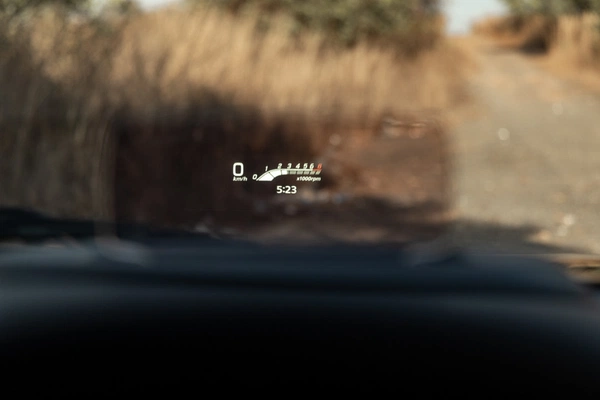
Heads-up display keeps essential driving data in the driver’s direct line of sight.
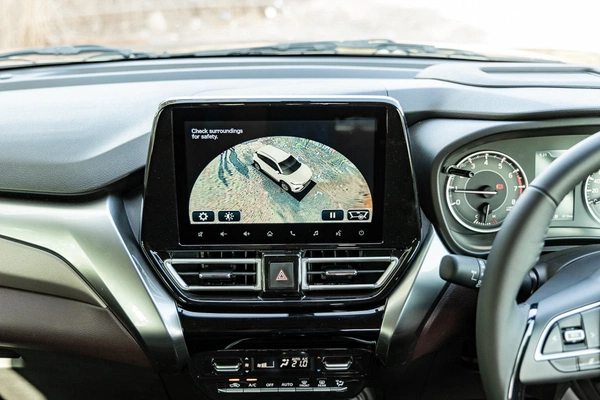
360-degree camera is invaluable for squeezing into tight parking spots and heavy traffic.
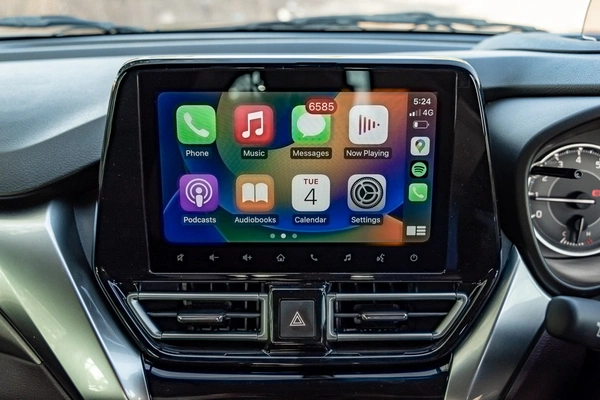
Wireless Android Auto and Apple CarPlay make phone connectivity completely cable-free.
What Real Fronx Owners Are Saying
CarHP analysed over 1,200 ownership experiences shared by Fronx buyers across the web, covering petrol, turboand CNG variants, to surface patterns manufacturer spec sheets don't show.
Is the Maruti Fronx Worth Buying?
Which Variant Should You Actually Buy?
Based on which trims come up most positively in ownership experiences — not the trim Maruti pushes as "recommended."
The trim owners circle back to most often. Gets alloys, LED DRLsandroid Autoand a stronger safety kit, without paying the Turbo premium. Owners specifically flag the price jump from Delta AGS to Delta Plus AGS as worth paying — Delta Plus gives noticeably more for a small additional cost.
The budget entry point, priced around ₹7.5–8L on-road. Owners treat this purely as a value play rather than a feature-rich pick.
Aimed at performance seekers — adds cruise control and a 360-degree camera over lower trims, alongside the punchier 1.0L Turbo engine.
The lowest running-cost option in the lineup — owners confirm 28+ km/kg with no perceptible power loss.
Owner consensus: Delta Plus 1.2L MT is the sweet spot overall. The AGS version suits city-heavy drivers who want convenience without a traditional automatic's cost premium.
Owner Satisfaction, By Aspect
Real-World Mileage, By Engine Option
Owner-reported figures suggest the 1.2L NA engine stays close to its ARAI figure, while the 1.0L Turbo trades some efficiency for performance. The CNG variant is the clear economy winner, consistently confirmed by owners at 28+ km/kg.
Is the Maruti Fronx Expensive to Maintain?
Maintenance costs are reported as very low — comparable to the Baleno. Routine service runs ₹2,000–4,500. Most owners report no major issues up to 20,000 km, reflecting Maruti's broader reliability and low-running-cost reputation.
Running cost, relative to rivals
What works in its favour
Which Competitor Is Actually Better?
| Rival | Where Maruti Suzuki FRONX wins | Where the rival wins |
|---|---|---|
Hyundai Venue ₹8–15.83L | Design, service cost | Features, safety rating |
Kia Sonet ₹7.33–14.09L | Price, service cost | Features, engine power, diesel option |
Maruti Suzuki Baleno ₹5.99–9.17L | Design, ground clearance | Price |
Toyota Taisor ₹7.43–12.94L | Service network | Comparable across most factors |
Maruti Suzuki Brezza ₹8.26–13.01L | Price, design, mileage | True SUV credentials, rear space |
Many owners came from Venue, Sonetand i20 shortlists and chose the Fronx for its styling and lower running costs. Critics point out that dedicated SUVs like the Venue and Sonet offer more features and better crash ratings at similar prices. The Fronx is not a true SUV — it's a crossover on a hatchback platform — and buyers should set expectations accordingly.
Pros & Cons of Maruti Suzuki Fronx
- ✓Offers both naturally aspirated and turbo-petrol engine options
- ✓Available with manual, AMTand torque converter automatic transmissions
- ✓Distinctive coupe-crossover design stands out in the segment
- ✕No diesel engine option available in the lineup
- ✕No factory-offered sunroof, which several rivals provide
- ✕Rear seat comfort trails true SUVs in the segment
- ✓Head-turning coupe-crossover design owners consistently praise
- ✓Excellent city and highway mileage across engine options
- ✓Very low routine service cost, comparable to the Baleno
- ✓Strong CNG variant efficiency — 28+ km/kg confirmed by owners
- ✓185mm ground clearance handles most Indian roads well
- ✕No rear AC vents on most variants — a real concern in summer
- ✕No Bharat NCAP crash test rating as of current reviews
- ✕Build quality and plastic feel perceived as below rivals
- ✕City mileage can drop to 12–14 kmpl in heavy traffic
- ✕Reverse camera missing on lower variants
Is the Maruti Fronx a Good Family Car?
Ownership data shows good front-seat space and a comfortable ride overall, making the Fronx a solid choice for a small family. Rear headroom is slightly limited for taller passengersand the absence of rear AC vents in most variants is a frequently repeated concern for anyone carrying rear passengers regularly, especially in summer.
Families that prioritise rear passenger comfort over styling and running cost may want to test the rear seat experience directly, or consider the top Zeta/Alpha variants where more comfort features are available.
What Owners Commonly Report
Owners frequently mention switching from other shortlisted cars specifically for the Fronx's styling — the coupe-crossover design and distinctive LED DRLs come up repeatedly as a deciding factor.
Highway mileage is a consistent highlight, with several owners reporting 18–22 kmpl at sustained speedand one confirmed report of 25.1 kmpl on a single highway run.
So, Should You Buy the Maruti Fronx?
Buy it if you want a stylish, modern crossover under ₹12 lakh with low running costs, especially with the CNG optionand you do mostly city driving with occasional highway trips. Look elsewhere if a confirmed crash safety rating is non-negotiable, or if you regularly carry rear passengers who'll miss the absent AC vents.
Maruti Suzuki FRONX Overview

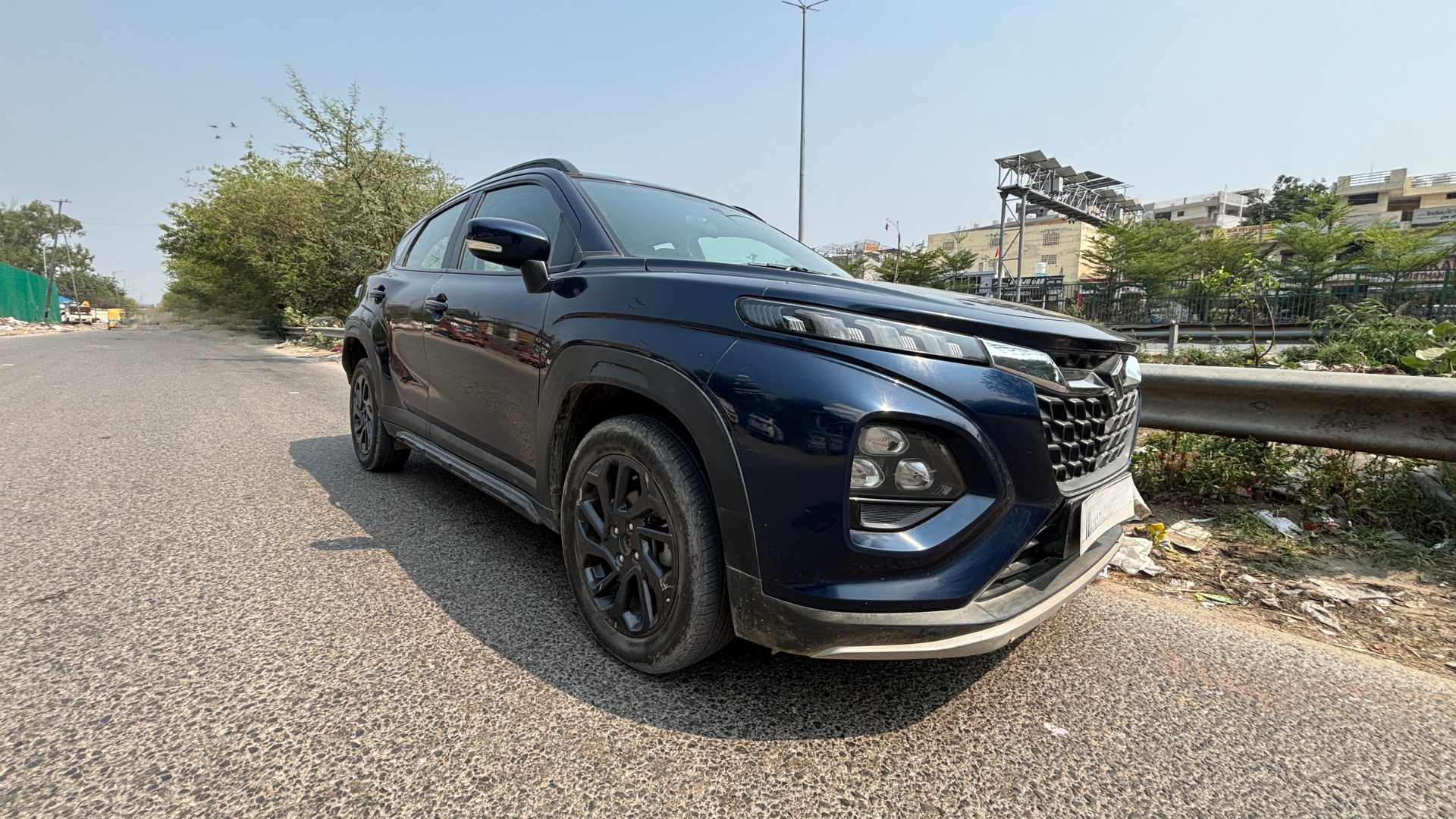
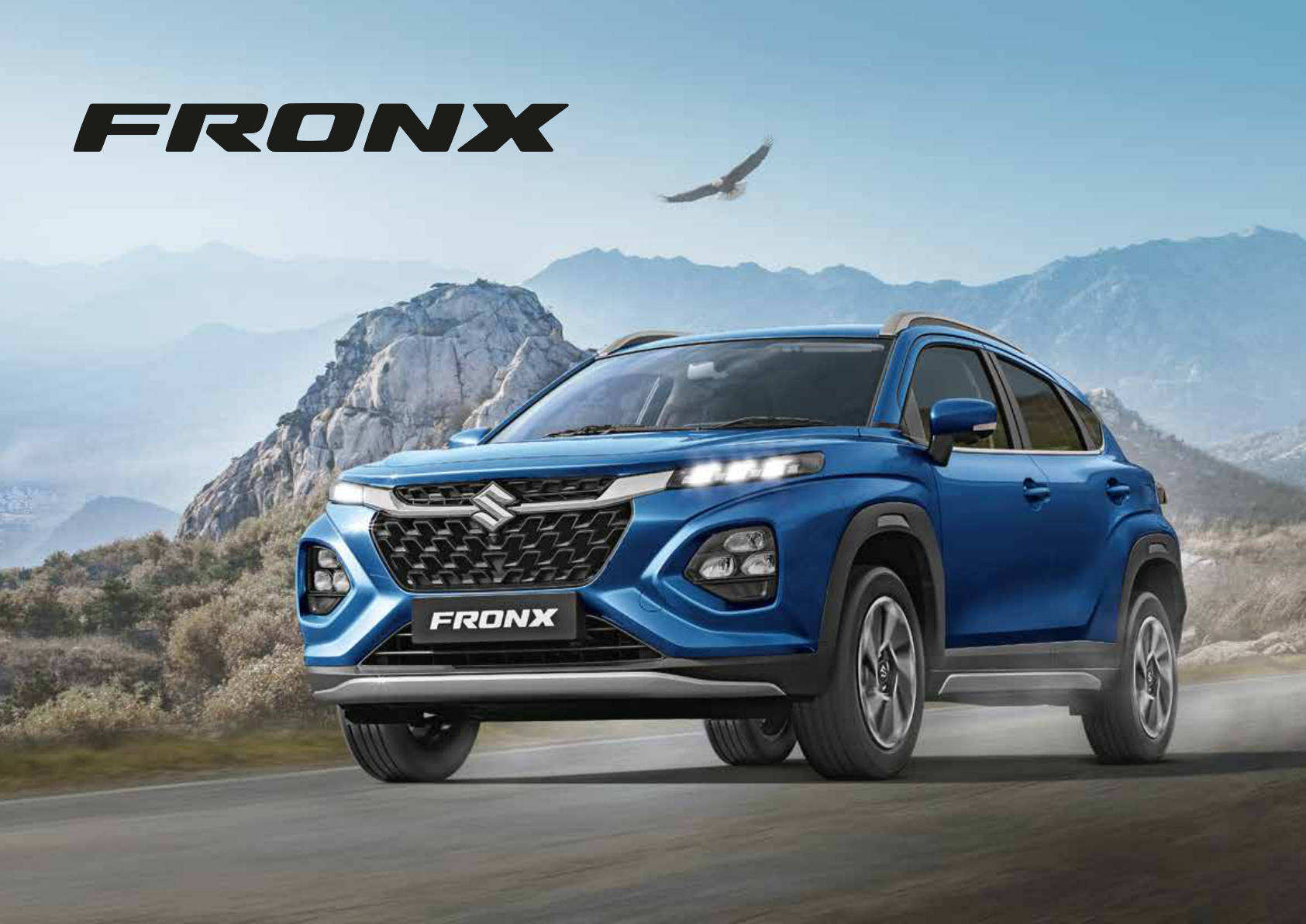
The Fronx will go down as the one of the greatest Maruti cars ever, a fact backed by 5 lakhs plus sales.
It's made for the crowd that want the seating height, the ground clearance and the look, and want all of it wrapped around a car with the running costs of a hatchback.
So Maruti took the Baleno, lifted it, gave it an aggressive front and rear makeover with a coupe-ish roofline, added a generous amount of body cladding, brought back the 1.0-litre Boosterjet engine from the Baleno RS, and sent it out through the Nexa network. Five lakh customers later, the strategy is not in question.
Pricing runs from roughly Rs 6.85 lakh to just under Rs 12 lakh ex-showroom with three engines on offer and spread across the familiar Sigma, Delta, Delta Plus, Zeta and Alpha ladder with a handful of sub-variants in between.
This car suits urban and semi-urban families upgrading from a Swift or a WagonR, first-time crossover buyers who value fuel bills over feature counts, and a smaller enthusiast slice drawn to the only affordable turbo-petrol Maruti currently sells.
Engine and Performance
Engine and Performance
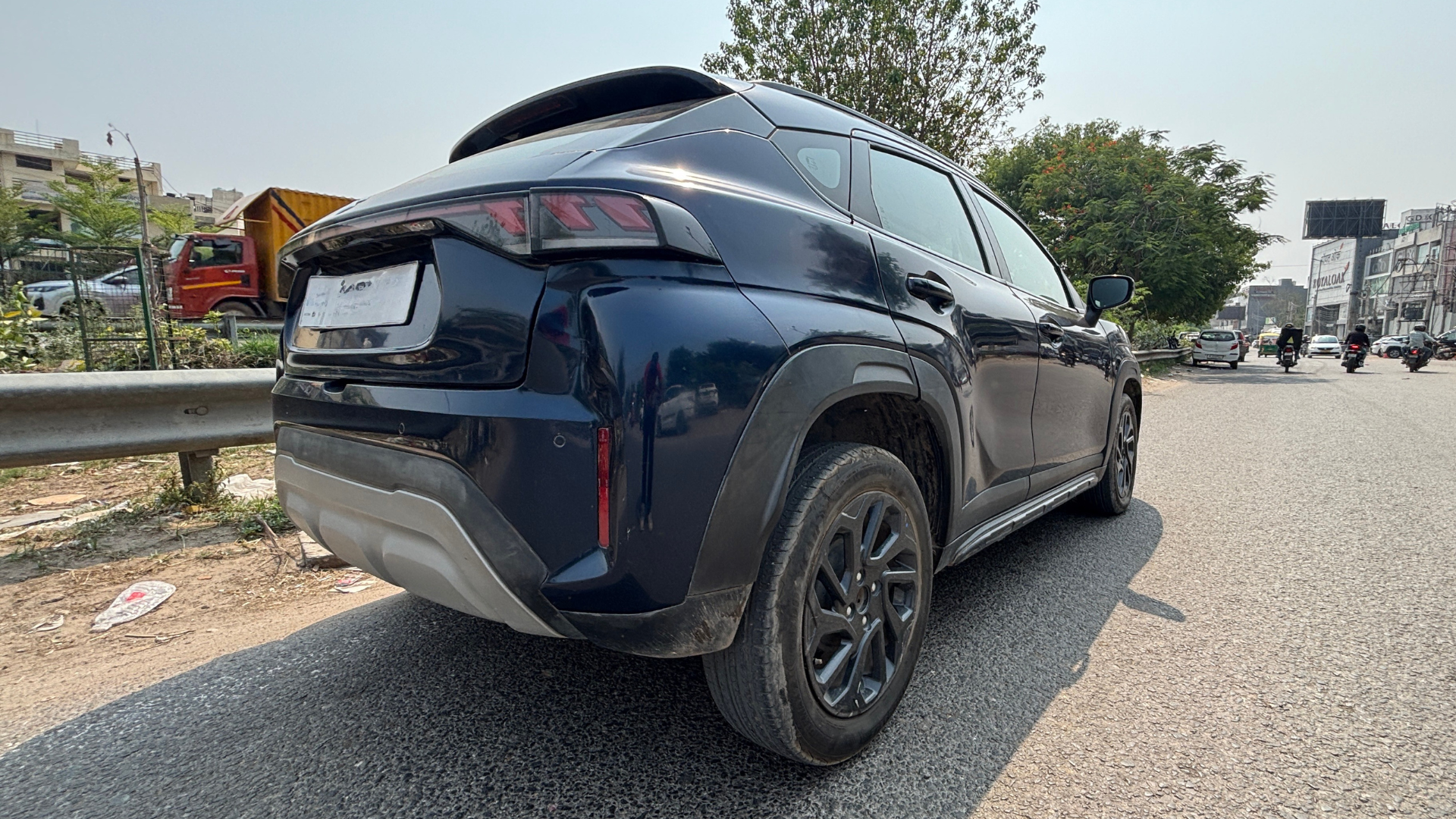
Two very different cars live under this badge, and choosing between them is the most consequential decision a Fronx buyer can make.
The 1.2-litre 4-cylindernaturally aspirated petrol is the sensible one. It is smooth, quiet at town speeds and completely tractable, pulling cleanly from low revs without needing constant gear changes and returning excellent efficiency almost regardless of how it is driven.
The automated manual (AMT) attached to it is the honest weak point, since it saves money over a torque converter and delivers the characteristic head-nod pause between shifts, and while lifting off the throttle at the moment of the shift or taking manual control smooths it out considerably, that is a technique the driver has to learn rather than a refinement the car provides.
The 1.0-litre Boosterjet is the one for fun. Turbo lag is minimal by the standards of small-capacity turbos, the mild hybrid system provides a subtle assist off the line, and the engine responds crisply once the needle is past 2,000rpm.
Below 2,500rpm the throttle response is noticeably softer than the numbers suggest, and asking for more than light throttle around 1,000rpm produces a boomy note that encourages a downshift. Past that point it becomes genuinely enjoyable, with a strong, progressive surge through the mid-range that makes the car feel considerably quicker than its modest power figure.
This is a brisk car rather than a fast one, and enthusiasts arriving from other turbo-petrols in this price bracket will find the power-to-weight ratio short of the segment's best.
What it does exceptionally well is make city driving effortless and highway cruising relaxed, sitting comfortably at triple-digit speeds without strain or noise, and delivering an overtake with a single downshift rather than a change of plan.
Unlike the naturally aspirated petrol, this engine does get the six-speed torque converter automatic, and it’s the pick of the gearboxes, transforming this car for anyone commuting in traffic. Shifts are smooth and well timed, kickdown is prompt, and the paddles are useful enough on a hill descent to justify their existence.
The five-speed manual with the same engine is the enthusiast's choice, lighter on fuel and more engaging, with a clutch so light it borders on numb.
Ride and Handling
The suspension has been retuned to cope with the extra ride height rather than simply lifted, and the result is a setup that leans towards absorption without becoming loose. Struts up front and a torsion beam at the rear is a conventional arrangement, but the damping is judged well.
Around town the ride is genuinely compliant. Small potholes, broken tarmac and the general low-grade roughness of Indian city roads are filtered out effectively, and the suspension does its work quietly without the thuds and clunks that budget cars often transmit.
Larger potholes taken at speed do register in the cabin, and sharp-edged craters produce a distinct thump, but the car recovers immediately rather than crashing through and continuing to bounce. Rear seat passengers are comfortable, which is an area where hatchbacks often lose out.
At speed, the car is considerably more settled than its light kerb weight suggests. Straight-line stability on the highway is good, the car tracks true without constant steering correction and does not get thrown around by crosswinds or passing trucks the way its weight might imply.
Body roll through corners is well controlled, the raised ride height notwithstanding, and the chassis retains most of the composure of the hatchback it is based on. Push it into a fast corner and it holds its line predictably, and while nobody would call this an entertaining car to drive quickly, it is reassuring and undemanding at every speed a family will use.
The steering is the least satisfying part of the package for a keen driver. It is very light, which makes parking and city manoeuvring effortless and is exactly what most buyers want, but it stays light as speed builds and offers little feedback about what the front tyres are doing.
The 195/60 tyres on 16-inch wheels provide sufficient grip for normal driving and give up progressively rather than suddenly when pushed, and the tall sidewall contributes meaningfully to the ride comfort.
Noise and vibration levels are well managed for this class. The bonnet is insulated, wind noise is acceptable at highway speeds, and the three-cylinder turbo stays refined through most of its range with the boomy note at very low revs being the main exception.
Tyre roar on coarse surfaces is the loudest intrusion. The turning circle is tight, the car is easy to place in traffic.
Braking is adequate for the performance available, with a pedal that is soft in initial travel and firms up sensibly. The car stops from high speeds in a non-dramatic fashion.
fuel economy
fuel economy
Efficiency is the Fronx's headline argument and it holds up in the real world better than most turbo cars manage.
The naturally aspirated petrol comfortably returns around 15 km/l in city traffic and slightly over 20 km/l on a steady highway run.
The turbo is more sensitive to the right foot, with city figures around 12-14 km/l. This engine rewards a gentle approach with highway figures reaching close to 20 km/l on a very light foot. The torque converter automatic too delivers similar efficiency.
Drive it enthusiastically though, and these figures drop considerably.
The CNG variants are where the maths becomes decisive for high-mileage urban users, with around 22 km/kg in city, and up to 28 km/kg on the highway.
interior
interior
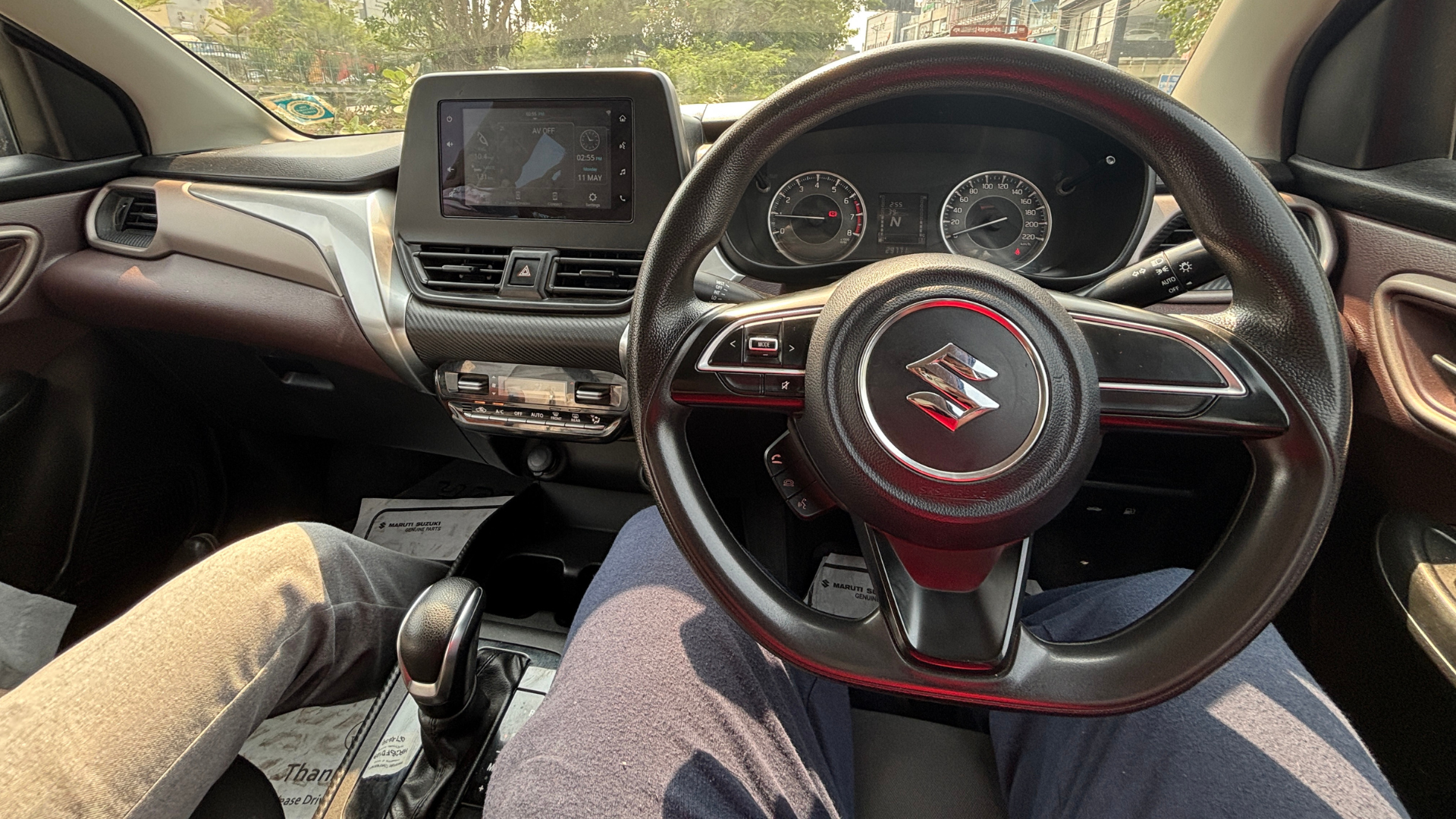
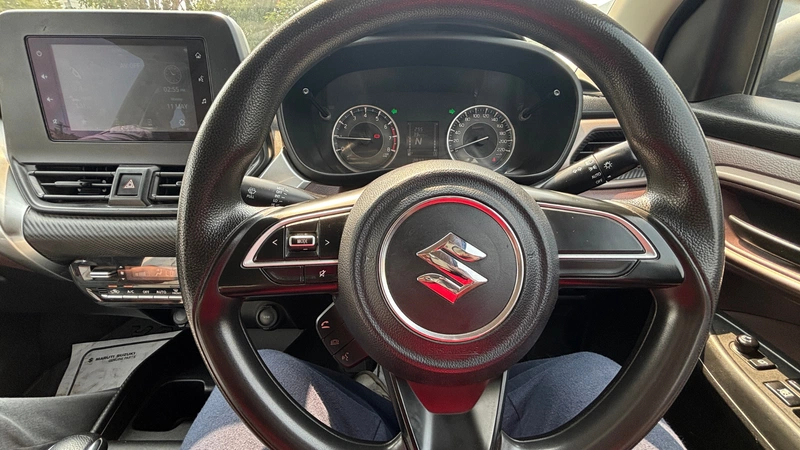
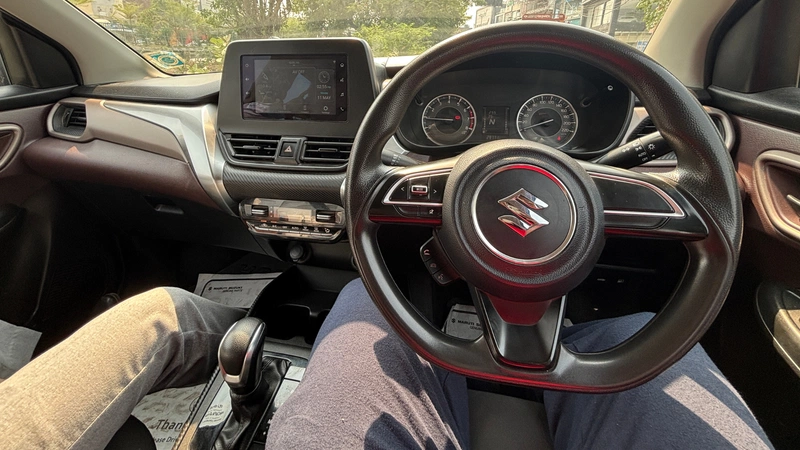
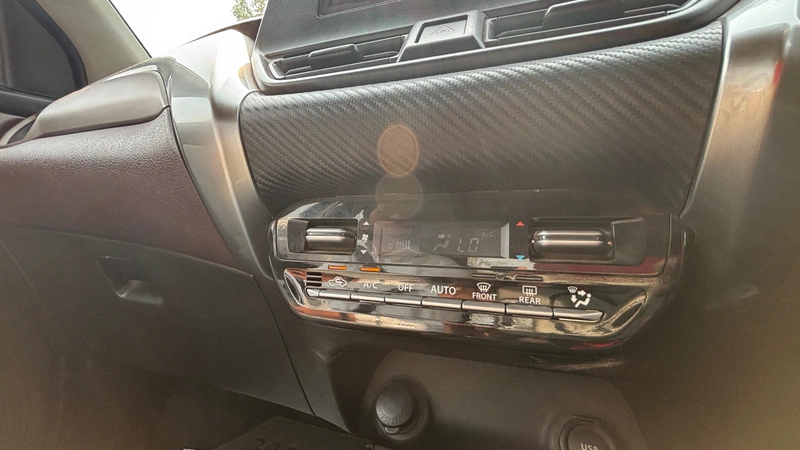
Step inside and the layout is instantly legible, which is Maruti's core competence and should not be undersold. The dashboard is horizontal and uncluttered, physical switches handle the climate control, the touchscreen sits high in the driver's line of sight, and the steering wheel gets both tilt and telescopic adjustments (on higher variants).
For a buyer moving up from an older hatchback, everything is where instinct expects it, and after a week of ownership the car has demanded no adaptation at all.
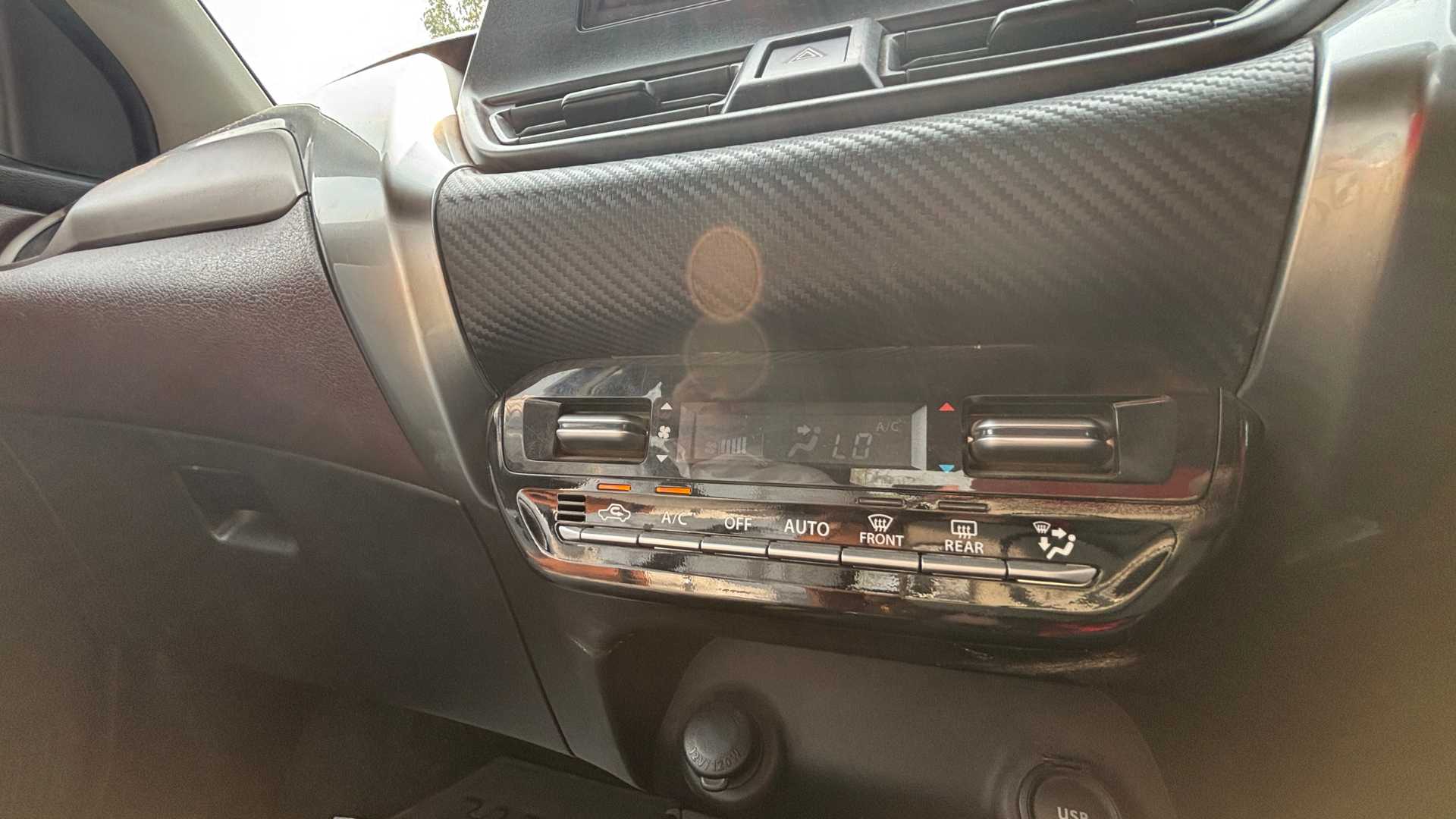
Material quality is mid-table for the price, with the dual-tone black and maroon treatment adding a premium yet slightly sporty ambience. The leather-wrapped flat-bottom steering wheel feels a bit upmarket in the hand, the seat fabric and leatherette are hard-wearing rather than luxurious, and the plastics are hard almost everywhere you touch.
This is a cabin built to survive a decade of family use rather than to impress on a showroom floor.
Where the Fronx quietly beats several rivals is space and comfort. The seats have impressive under-thigh support, which is not surprising given how good the Baleno’s seats are. The front seats hold you properly even under hard cornering.
The rear bench genuinely seats three adults, which is more than what most compact SUVs typically manage. At the back, knee room behind a tall driver is adequate, and headroom is acceptable despite the sloping roof.
The rear air vents keep the second row liveable in summer, and the floor hump is small enough that a middle passenger is not perched awkwardly.
For a family of four or five doing weekend runs, this is a comfortable car.
The equipment story is generous at the top and thin at the bottom. Higher variants carry a nine-inch touchscreen with wireless smartphone mirroring, an Arkamys-tuned audio setup, a head-up display (HUD), a surround-view camera system, cruise control, wireless charging, automatic LED headlamps, footwell lighting and connected car features.
That HUD and the 360-degree camera are genuinely unusual at this money and the latter especially is a boon in our country. The base Sigma, by contrast, does without a touchscreen entirely, which makes the step to Delta almost mandatory for anyone buying petrol rather than gas.
The gaps are specific and mostly forgivable. There is no sunroof anywhere in the range, which in this segment is a competitive liability whether or not you personally want one. Auto wipers, drive modes, front parking sensors and a rear centre armrest are all absent.
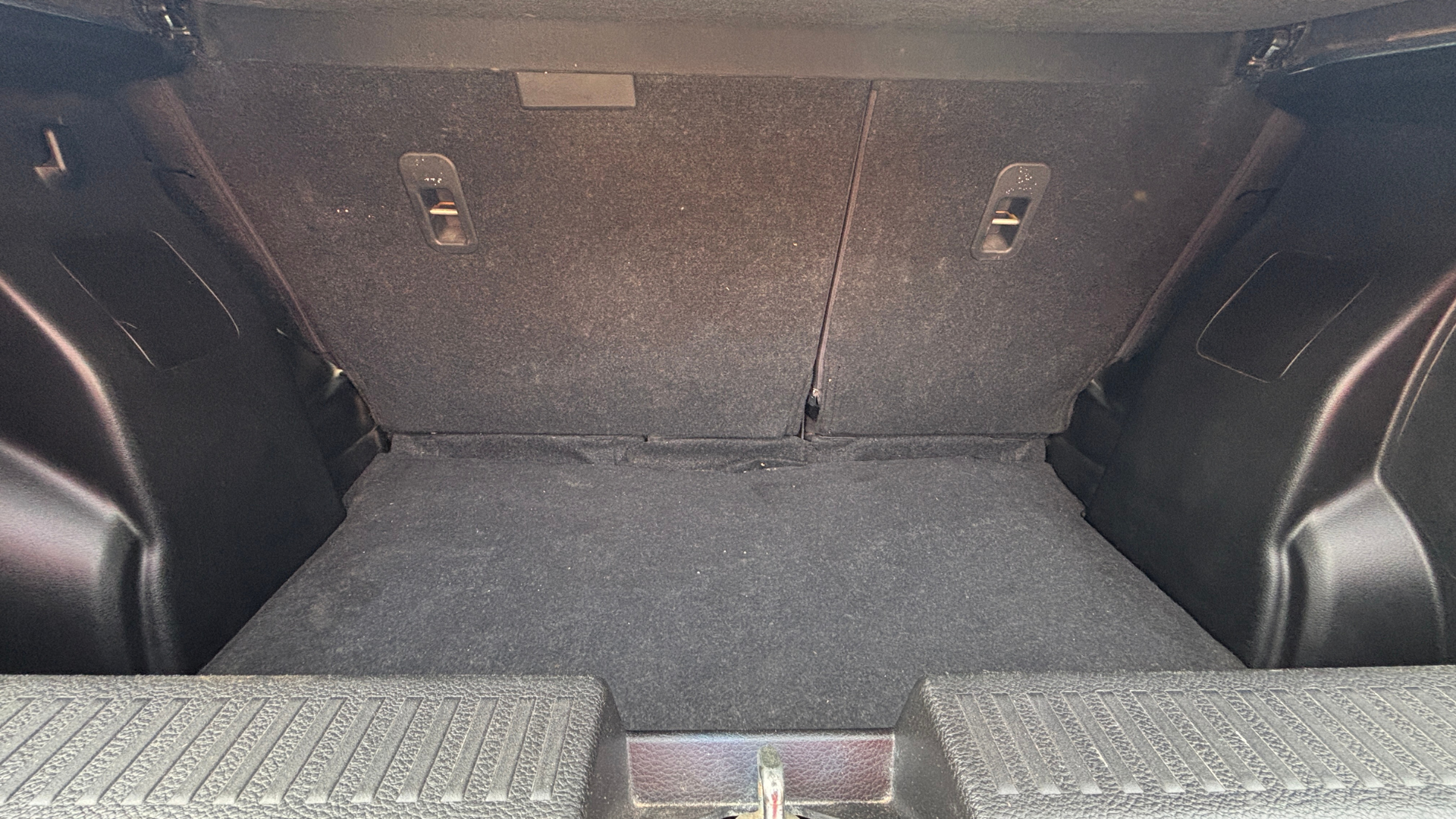
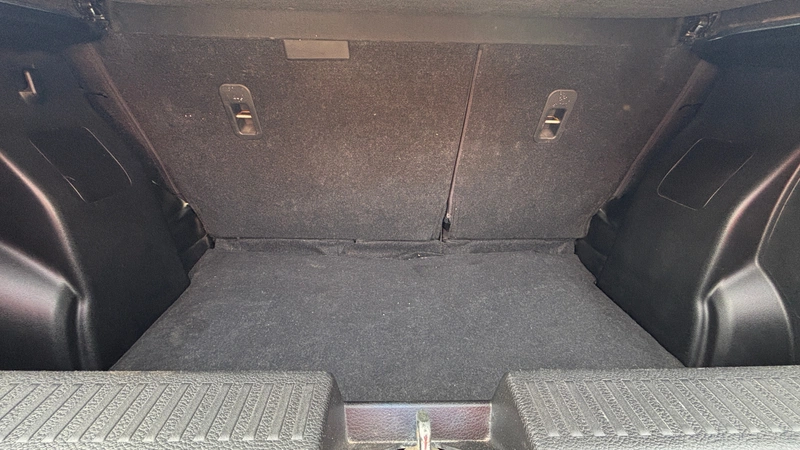
At 308 litres, its boot is a real practical weakness, good enough for one large suitcase or a couple of cabin bags, and forces careful packing for a family holiday.
The CNG version fares far worse. With the cylinder consuming almost the entire luggage area, it is only good enough for some weekend shopping. It only makes sense for buyers who prioritise fuel bills and are not going to travel long distances with loaded luggage. Rivals, including the Tata Punch offer better boot space with its twin-cylinder setup.
exterior
exterior
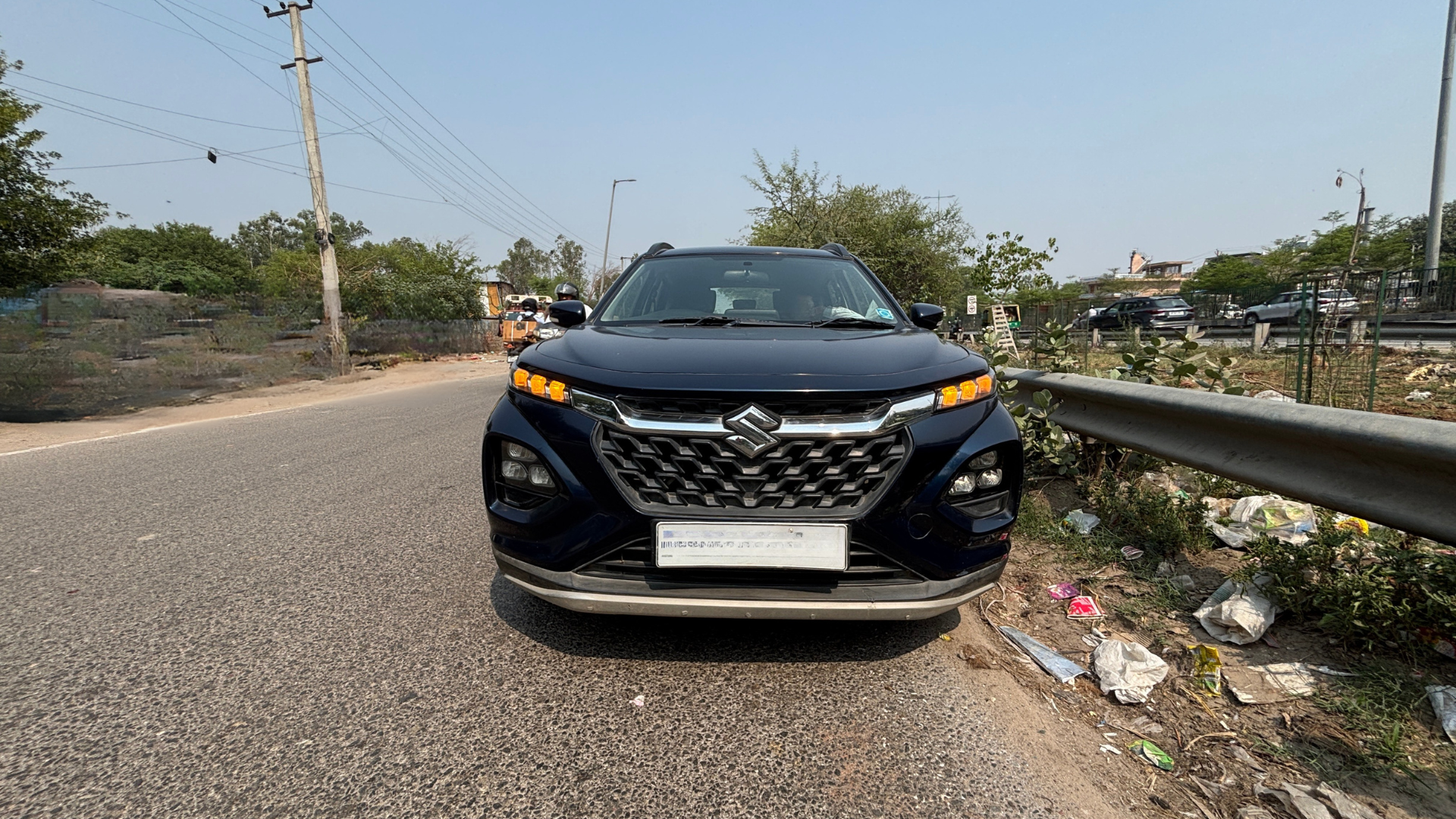
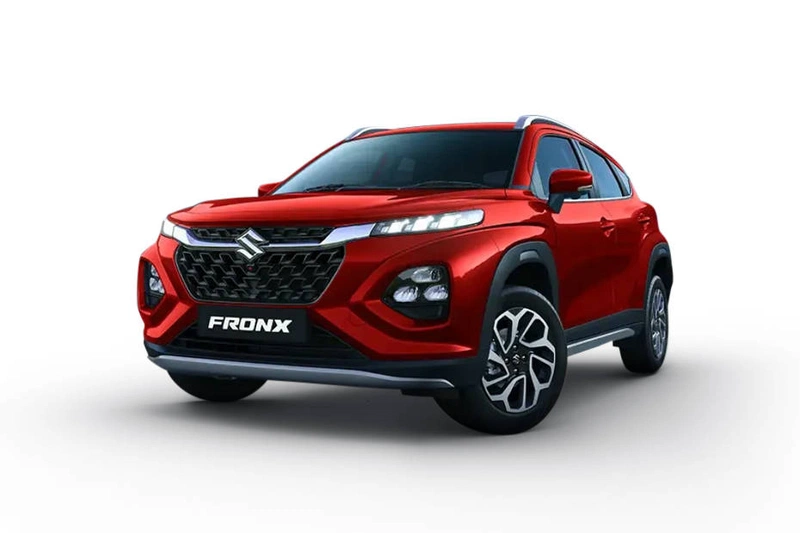
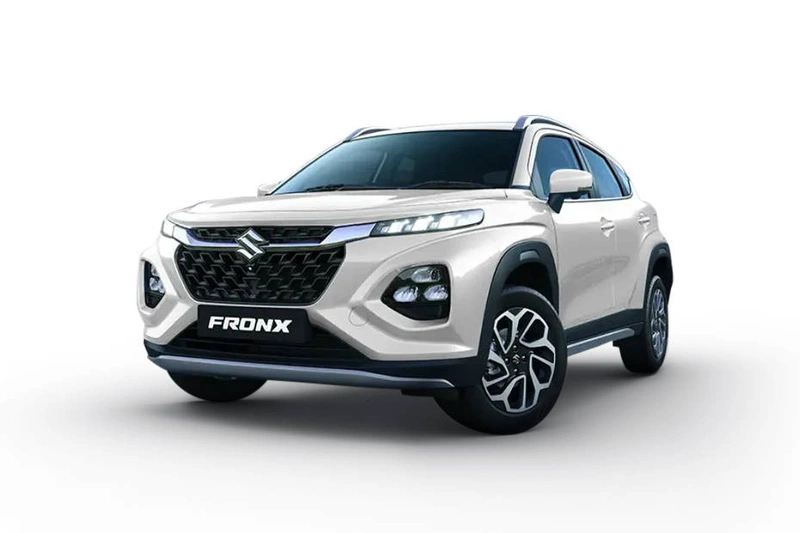
The Fronx looks more expensive than it actually is, which is precisely the point. Also, the tons of Instagram Reels featuring heavily modified Fronx models further prove that its styling works as a blank canvas for customisation.
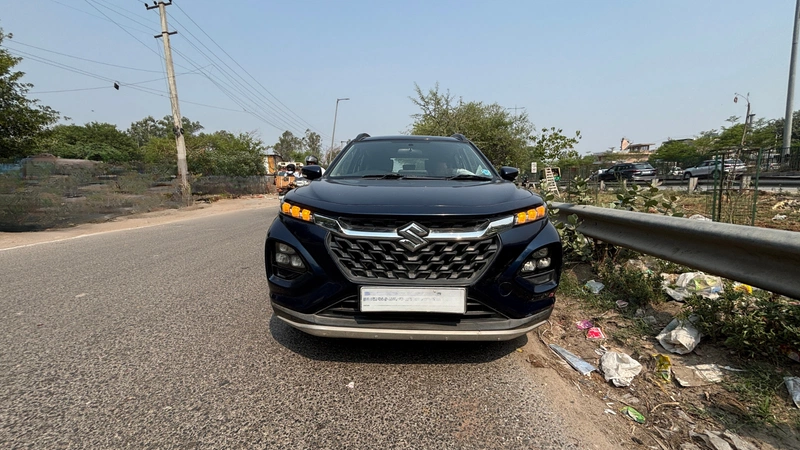
The front end is the most heavily worked part of the car, with a wide grille flanked by slim LED daytime running strips high on the face and the actual headlamp units dropped into the bumper below them.
Whether it is handsome is a matter of taste, but nobody mistakes it for the hatchback it is based on, and that alone earned Maruti its money back. In fact, you would be forgiven for briefly mistaking this for a Grand Vitara from this angle.
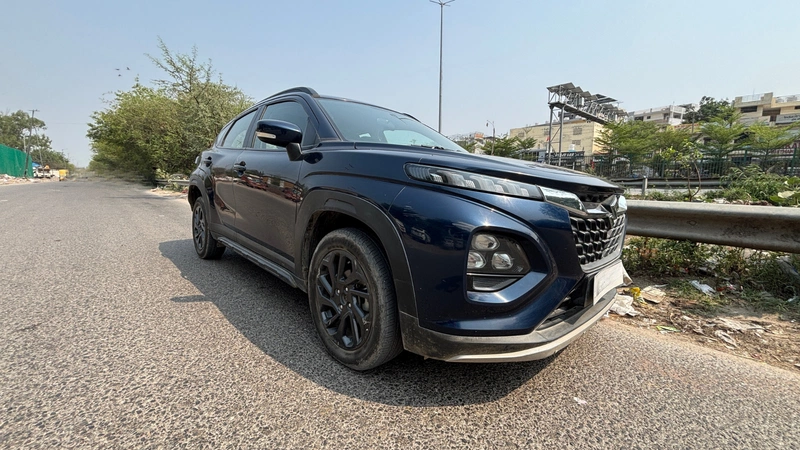
LED projector headlamps on the upper trims is available , and 16-inch alloys with 195/60 tyres fill the arches adequately without looking undersized.
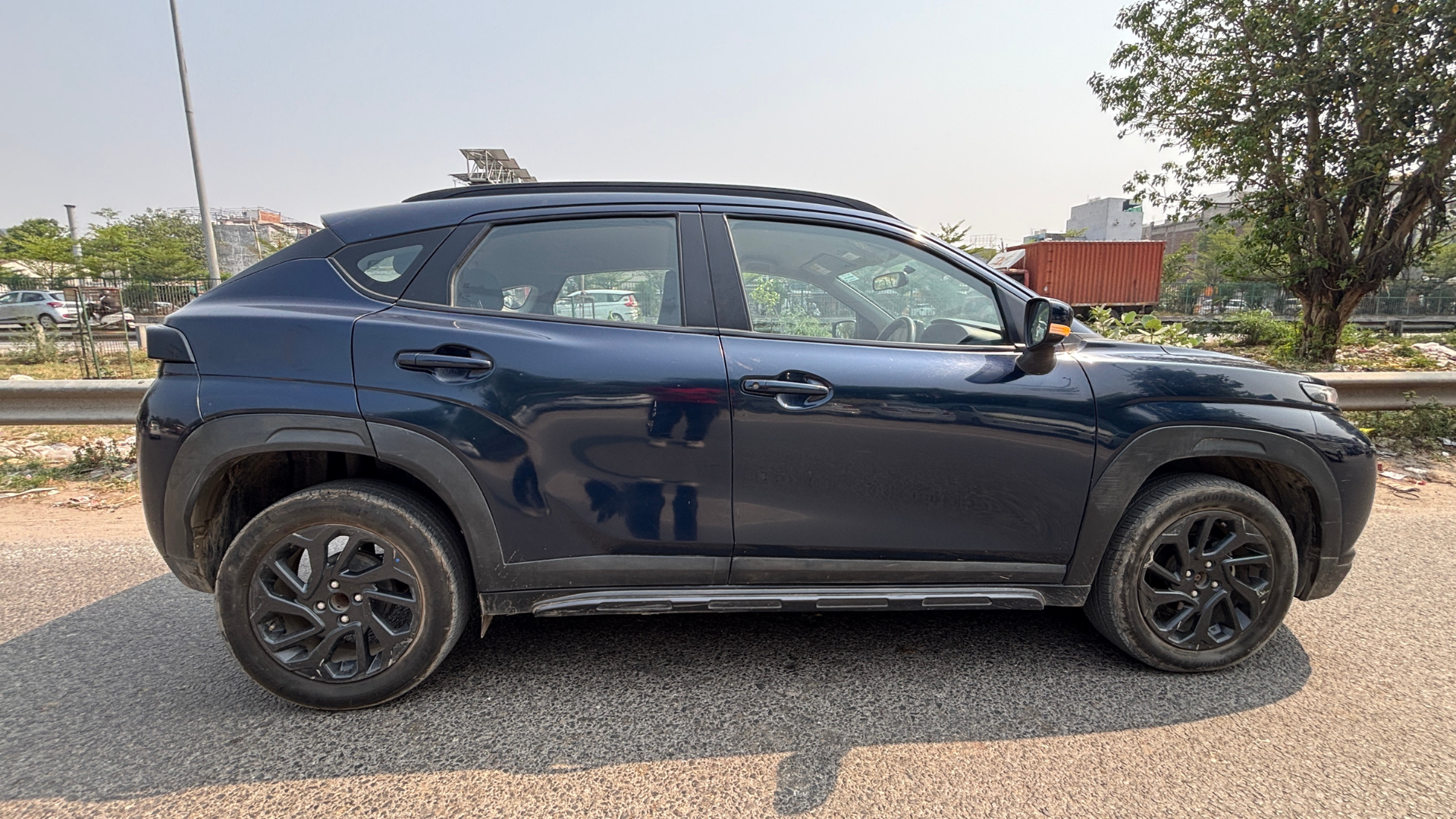
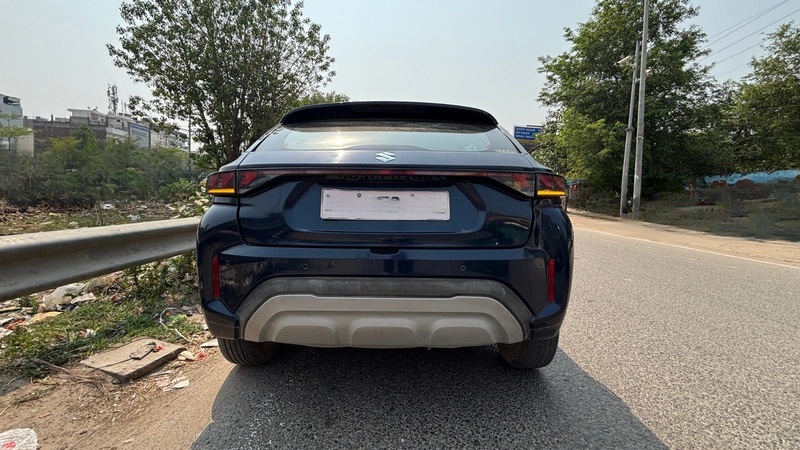
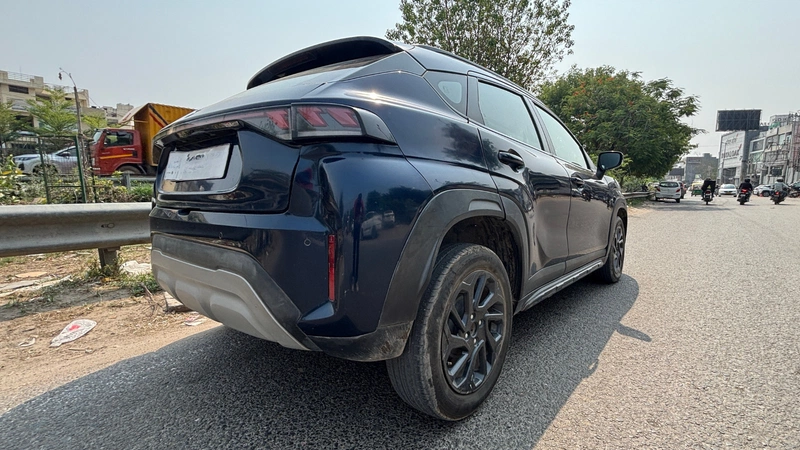
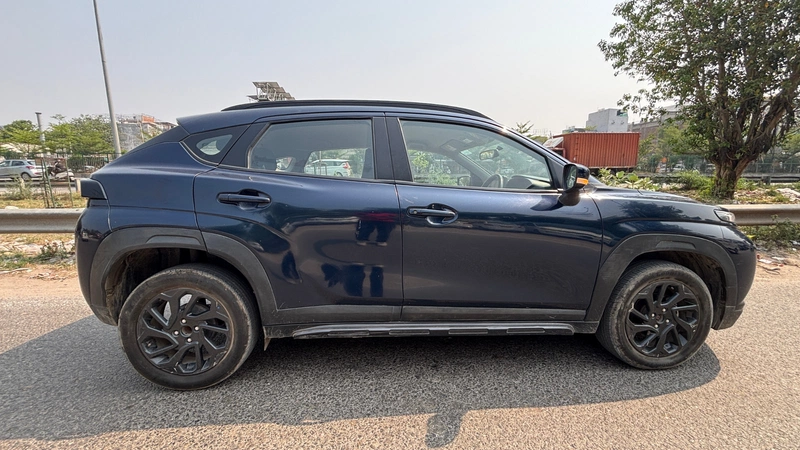
Its roofline tapers towards the rear in a mild coupe curve, the shoulder line rises towards the tail, and the black wheel arch cladding and side sills do their best to bulk up what is fundamentally a hatchback silhouette on taller springs.
The Fronx works from all angles. What it cannot disguise though is its height. Parked next to a Nexon or a 3XO, the Fronx sits visibly lower and reads as a tall hatchback rather than a compact SUV.
This is fair though, considering the Fronx does not directly compete with compact SUVs, but buyers who want an imposing, upright stance will feel happier in those SUVs.
Ground clearance of 190mm is the more useful number, and it is a substantial 20mm improvement over the Baleno.
Broken village approaches, unmarked speed breakers and monsoon-scarred city roads all stop being a source of anxiety, and the car clears obstacles that catch out hatchbacks and sedans.
The exterior is well judged. The compact footprint makes parking effortless, the doors open wide and the sill height means older passengers step in rather than climb in, which matters more in daily family use than any styling detail.
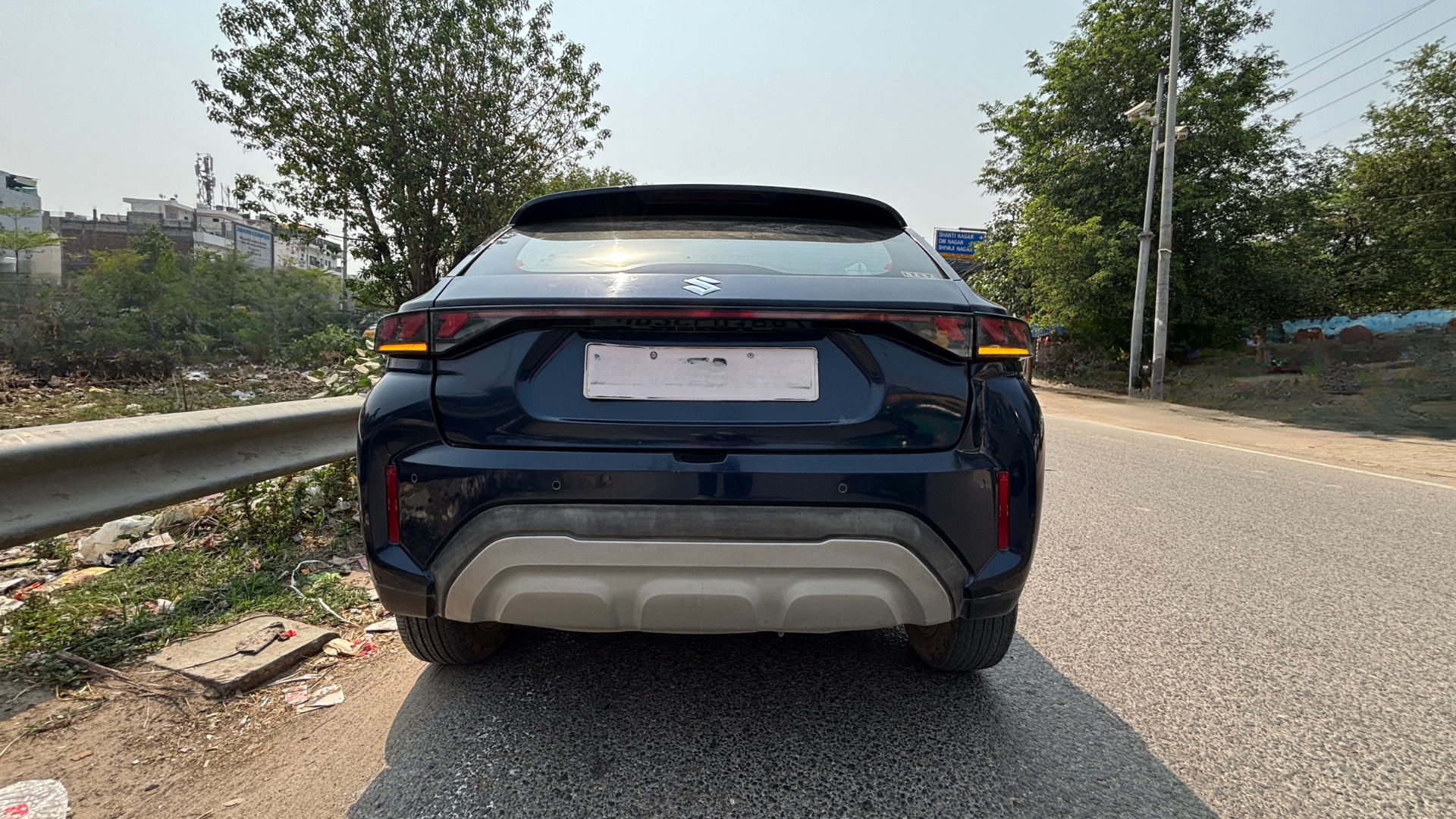
Front and side visibility is very good, though the tapering rear glass and the thick C-pillars restrict the over-shoulder view, making the reversing camera more necessary than optional.
Overall, it is a desirable design, but like most crossovers and compact SUVs, the black cladding is a dust magnet and needs polishing occasionally, more frequently on lighter body colours.
safety
safety
The equipment case is solid and, importantly, it applies from the bottom of the range upward.
Six airbags, along with electronic stability programme, ABS with EBD, hill hold assist, three-point seatbelts for all occupants, ISOFIX child seat mounts, and rear parking sensors are standard across the range.
Higher variants add a surround-view camera system, making tight parking and blind gate exits far less stressful. The head-up display keeps speed in the driver's eyeline without a glance down, which is a genuine if understated safety contribution on long drives.
The Fronx has not been tested under Bharat NCAP, so there is no Indian crash score to point at. The version sold in Japan, built in India and exported, earned a four-star result in that market's own assessment programme, which is a reasonable indicator of the underlying structure but is measured against a different protocol and a different specification.
Buyers who treat crash ratings as a hard filter should be aware that several direct rivals carry published five-star Bharat NCAP results and this car does not.
On the active side, there is no ADAS suite of any kind. Ordinary cruise control is fitted higher up the range and works well. Brakes are competent rather than outstanding, stability control intervenes smoothly, and the car's predictable handling means a sudden lane change or an emergency swerve does not produce nasty surprises.
For city and highway family use, the fundamentals are sound. For a buyer who wants the latest active technology, the Fronx does not offer it.
competition
competition
The Tata Nexon is the most direct challenge and wins on almost everything the Fronx concedes. It offers a substantially larger boot, larger proportions and road presence, diesel and CNG alongside petrol, a longer feature list including a sunroof, and a published five-star Bharat NCAP result that the Maruti cannot match.
Where the Fronx pulls ahead is refinement, fuel efficiency, resale value and the near certainty that nothing electrical will misbehave. Tata's software niggles and inconsistent dealer experiences remain the counterweight to its superior hardware, so the decision usually comes down to how much a buyer values peace of mind against getting more car for the money.
The Hyundai Venue and Kia Sonet occupy the premium end of this bracket, offering diesel engines, dual-clutch automatics, sunroofs, better cabin materials and more polished infotainment. Both feel like more substantial cars from behind the wheel and both cost more to buy and to service.
Neither matches the Fronx on running costs or on the long-term resale calculation, and neither offers a factory CNG option, which for a high-mileage urban buyer is the argument that ends the discussion. The Fronx also has the better naturally aspirated petrol engine.
The Skoda Kylaq is the enthusiast's alternative and the one that best exposes the Fronx's dynamic limitations. It rides and handles with a maturity nothing else at this price approaches, carries a strong published crash score and a bigger boot, and its turbo engine is more entertaining.
What it gives up is the service network reach, the resale confidence and the certainty of trouble-free ownership, and it offers no CNG or diesel. Buyers who drive for pleasure should try it. Buyers who drive because they have to get somewhere will be happier in the Maruti.
The Mahindra XUV 3XO undercuts most of this bracket on equipment for the money, adding a panoramic sunroof, driver assistance and a diesel option, with a well-sorted chassis and much stronger road presence. Its cabin quality and long-term software behaviour are the reservations.
The Maruti Brezza, sold through Maruti’s Arena network, is the more upright, more practical answer to the same brief, with a larger boot and better SUV credentials at slightly higher cost. Now with a turbo petrol option, it is arguably the better buy for a family who find the Fronx's luggage space limiting.
Below this sits the Tata Punch and the Hyundai Exter, both cheaper, both smaller and both aimed at first-time buyers stepping up from a small hatchback or buying their first car rather than families needing full-size practicality. Both make more sense than a base Fronx for a buyer working with a tight budget.
The Toyota Taisor is the same car as the Fronx wearing a different badge and sold through a different network, so the choice there rests entirely on which dealer you trust and which warranty package appeals.
For most buyers reading this, the honest shortlist is the Fronx against the Nexon, and the answer depends on whether your priority is what the car does on paper or what it costs you over seven years.
final verdict
final verdict
The Fronx succeeds because it has established itself as a crossover and does not pretend to be a compact SUV. It is not the most exciting or feature laden car, but it is one that will be your money’s worth with the least amount of long-term ownership troubles.
It has efficient and dependable engines, a comfortable ride, a roomy cabin that can seat five without argument, faultless ergonomics, very low running costs (especially with CNG), and a service network that reaches places where other brands have never set up a workshop.
Resale values remain the strongest in the class by a comfortable margin, which quietly recovers a large chunk of the ownership cost at the point of sale.
The weaknesses are real. The 308-litre boot is small for a family, and the CNG variants effectively have none. There is no sunroof, no ADAS and no diesel and no safety rating like Punch or Kiger
The car sits low and lacks the road presence of compact SUVs. Interior plastics are functional rather than pleasing. The turbo engine is likeable but not quick enough to satisfy someone shopping specifically for performance.
Maruti Suzuki FRONX mileage
The Maruti Suzuki FRONX mileage ranges from 21.79 to 22.89 kmpl and 28.51 km/kg. The Manual Petrol variant has an ARAI mileage of 21.79 kmpl. The Automatic Petrol variant has an ARAI mileage of 22.89 kmpl. The Manual CNG variant has an ARAI mileage of 28.51 km/kg.
| Fuel Type | Transmission | ARAI Mileage | * City Mileage | * Highway Mileage |
|---|---|---|---|---|
| Petrol | Manual | 21.79 kmpl | - | - |
| Petrol | Automatic | 22.89 kmpl | - | - |
| CNG | Manual | 28.51 km/kg | - | - |
Maruti Suzuki FRONX News


Maruti Suzuki FRONX FAQs
What engine options does the Fronx offer?
−It comes with three engine options: a 1.2L Dual Jet Dual VVT petrol, a 1.2L S-CNG, and a 1.0L Turbo Boosterjet petrol.
What transmission options are available?
+Depending on the variant, you get a 5-speed MT, 5-speed AMT, or 6-speed AT, where the AT is exclusive to the 1.0L turbo.
Does every variant get 6 airbags?
+Yes, 6 airbags. Dual front, side, and curtain are standard across all variants.
Does the Fronx get a sunroof?
+No, the Fronx does not offer a sunroof in any variant.
Has the Fronx been crash tested in India?
+The India-spec Fronx has not been crash-tested by Bharat NCAP or Global NCAP. However, it received a 5-star ASEAN NCAP rating in November 2025. A separate export-spec version tested by ANCAP received a 1-star rating, but it had different safety specifications from the model sold in India.
What are the boot space and dimensions?
+The Fronx offers 308 litres of boot space. Its dimensions are 3995 mm in length, 1765 mm in width, 1550 mm in height, and it has a wheelbase of 2520 mm.
Is the Maruti Suzuki FRONX available in petrol, CNG, electric or diesel engines?
+The FRONX is currently available with Petrol and CNG engines.
What are the key safety features in the FRONX ?
+The FRONX comes equipped with several safety features including Anti-lock Braking System (ABS), Central Locking, Electronic Brakeforce Distribution (EBD), Electronic Stability Control (ESC), Speed Alert and Hill Assist.
What are the boot space and dimensions of the Maruti Suzuki FRONX?
+The FRONX offers 308 Litres of boot space. Its dimensions are 3995 mm in length, 1765 mm in width, and it has a wheelbase of 2520 mm.
What colours does the Maruti Suzuki FRONX come in?
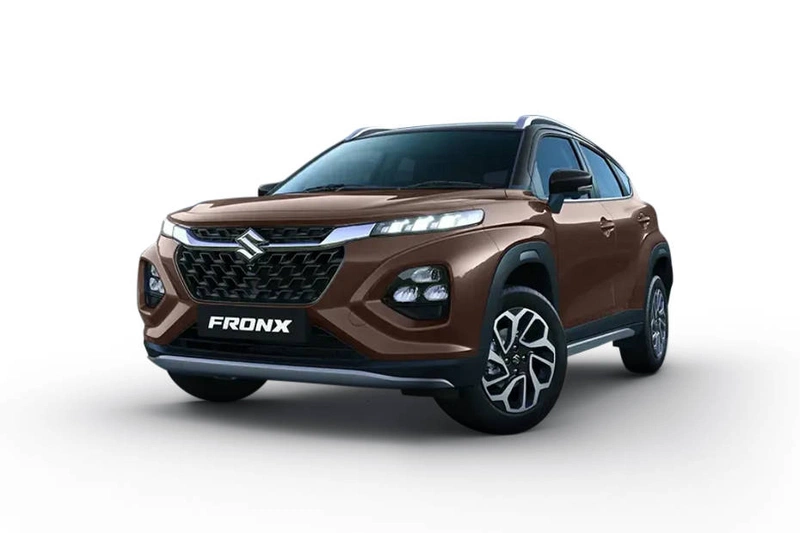
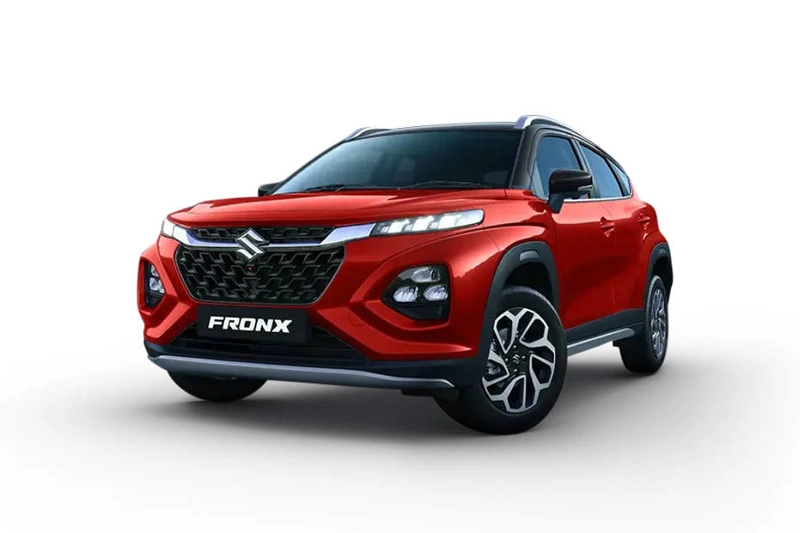
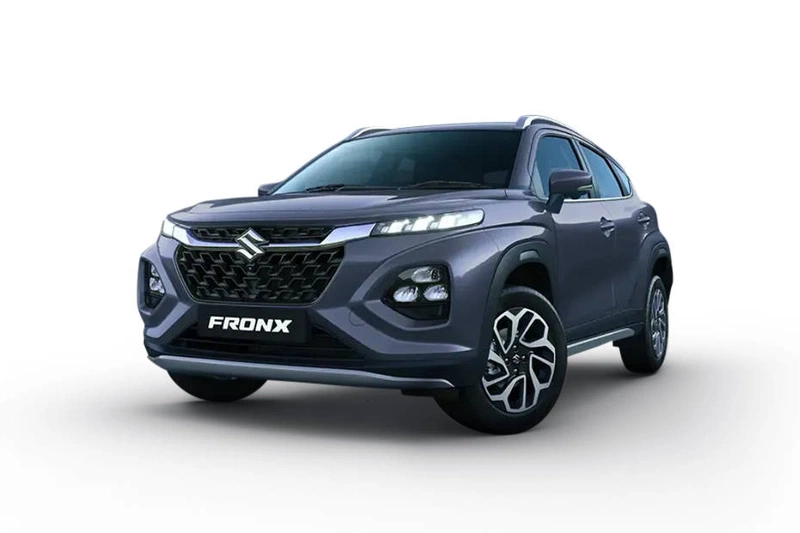
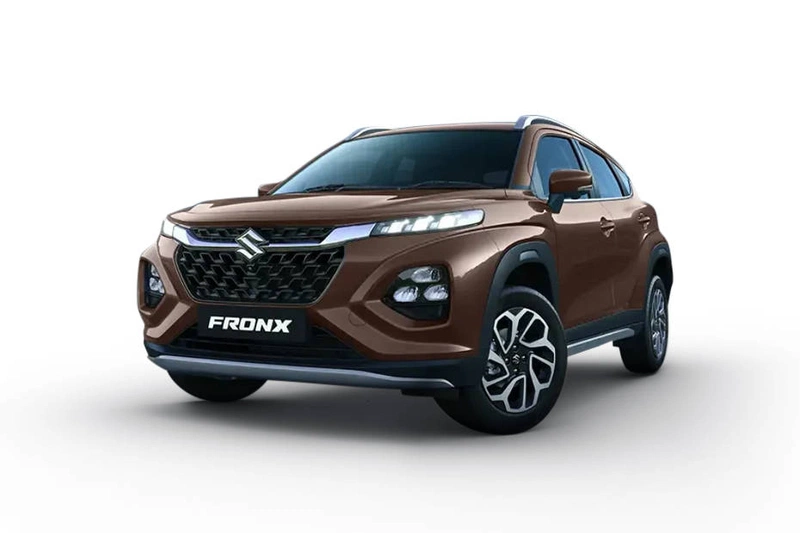
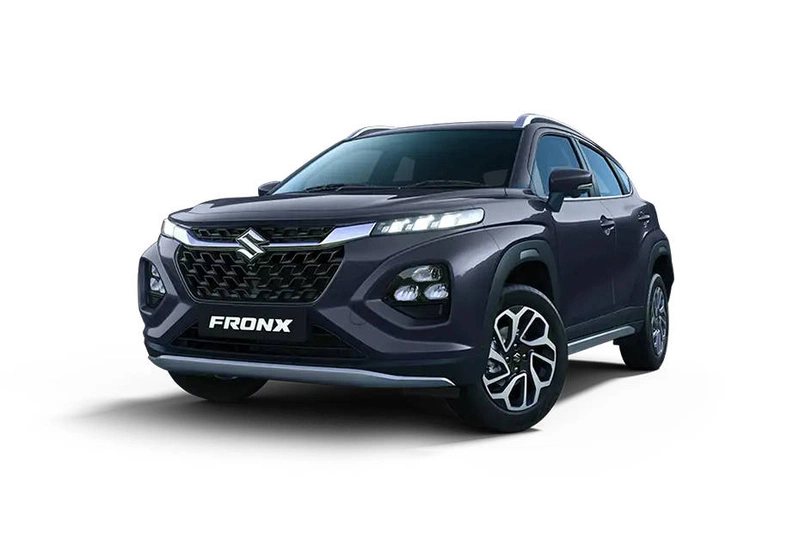
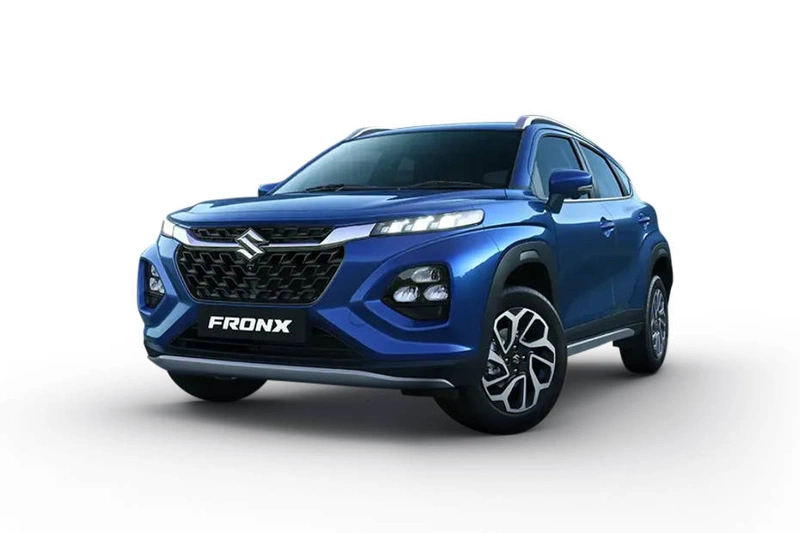
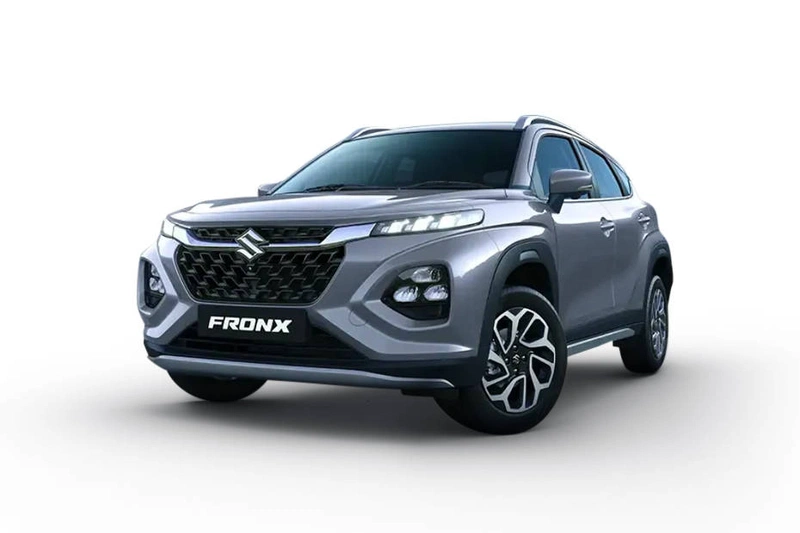
+The Maruti Suzuki FRONX is available in the following colours: Arctic White, Earthen Brown With Bluish Black Roof, Opulent Red With Black Roof, Splendid Silver With Black Roof, Grandeur Grey, Earthen Brown, Bluish Black, Nexa Blue and Splendid Silver.
Upcoming Cars

Maruti Suzuki Grand Vitara 3-row
₹14 Lakh - 14 Lakh Estimated
Oct 2026 Expected Launch
Maruti Suzuki Fronx Facelift
₹5.99 Lakh - 5.99 Lakh Estimated
Nov 2026 Expected Launch

Maruti Suzuki WagonR Electric
₹8.50 Lakh - 8.50 Lakh Estimated
Dec 2027 Expected Launch
Maruti Suzuki Fronx EV
₹12 Lakh - 12 Lakh Estimated
Dec 2027 Expected Launch