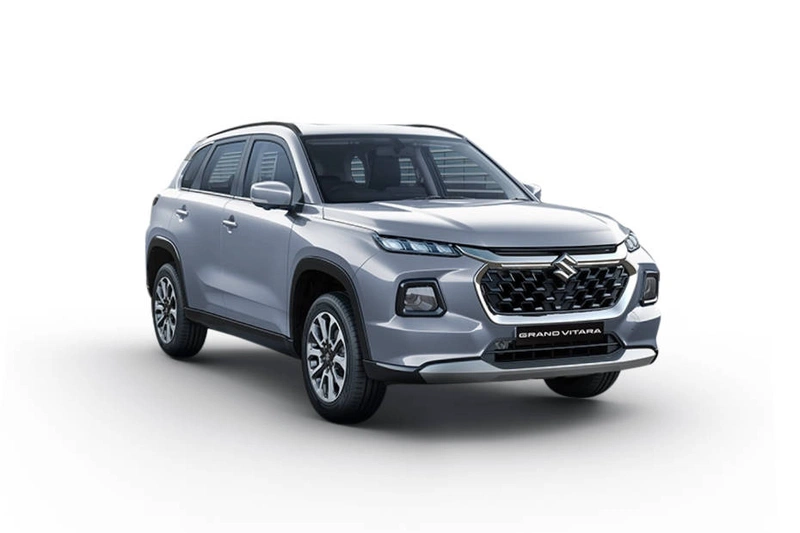
Maruti Suzuki Grand Vitara
Overall Rating

Maruti Suzuki Grand Vitara
Overall Rating
EMI Loading
Maruti Suzuki Grand Vitara Key Specifications
Maruti Suzuki Grand Vitara Highlights
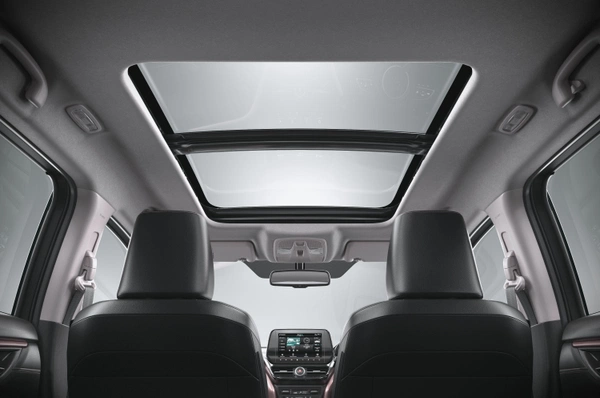
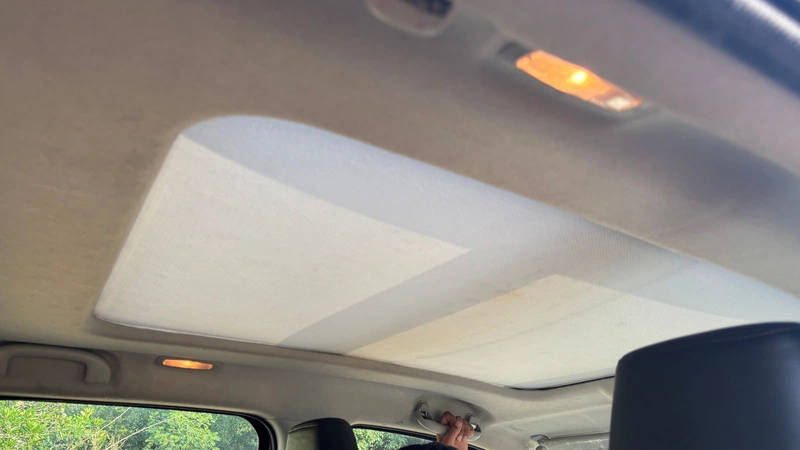
Panoramic sunroof makes the cabin feel bright, open and premium.
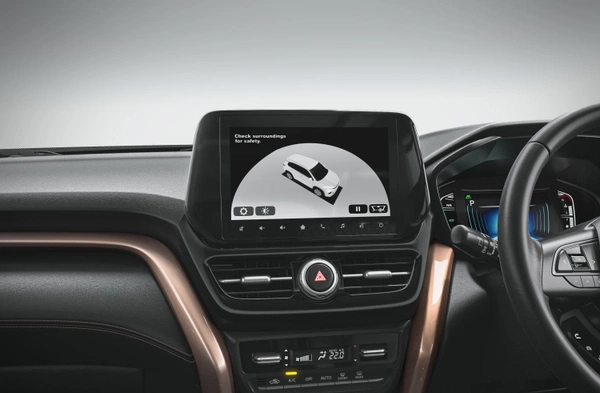
360-degree camera lets you manoeuvre confidently in the tightest spots.
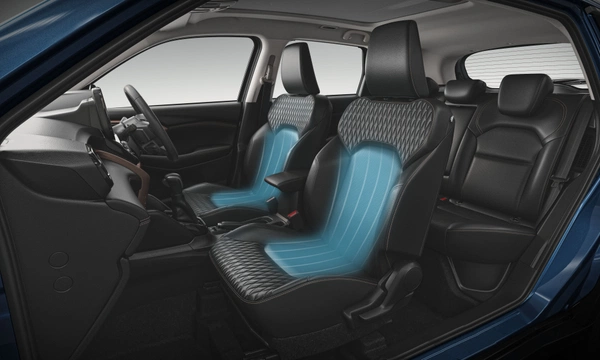
Ventilated seats keep your back cool and comfortable on hot days.
Maruti Suzuki Grand Vitara Overview

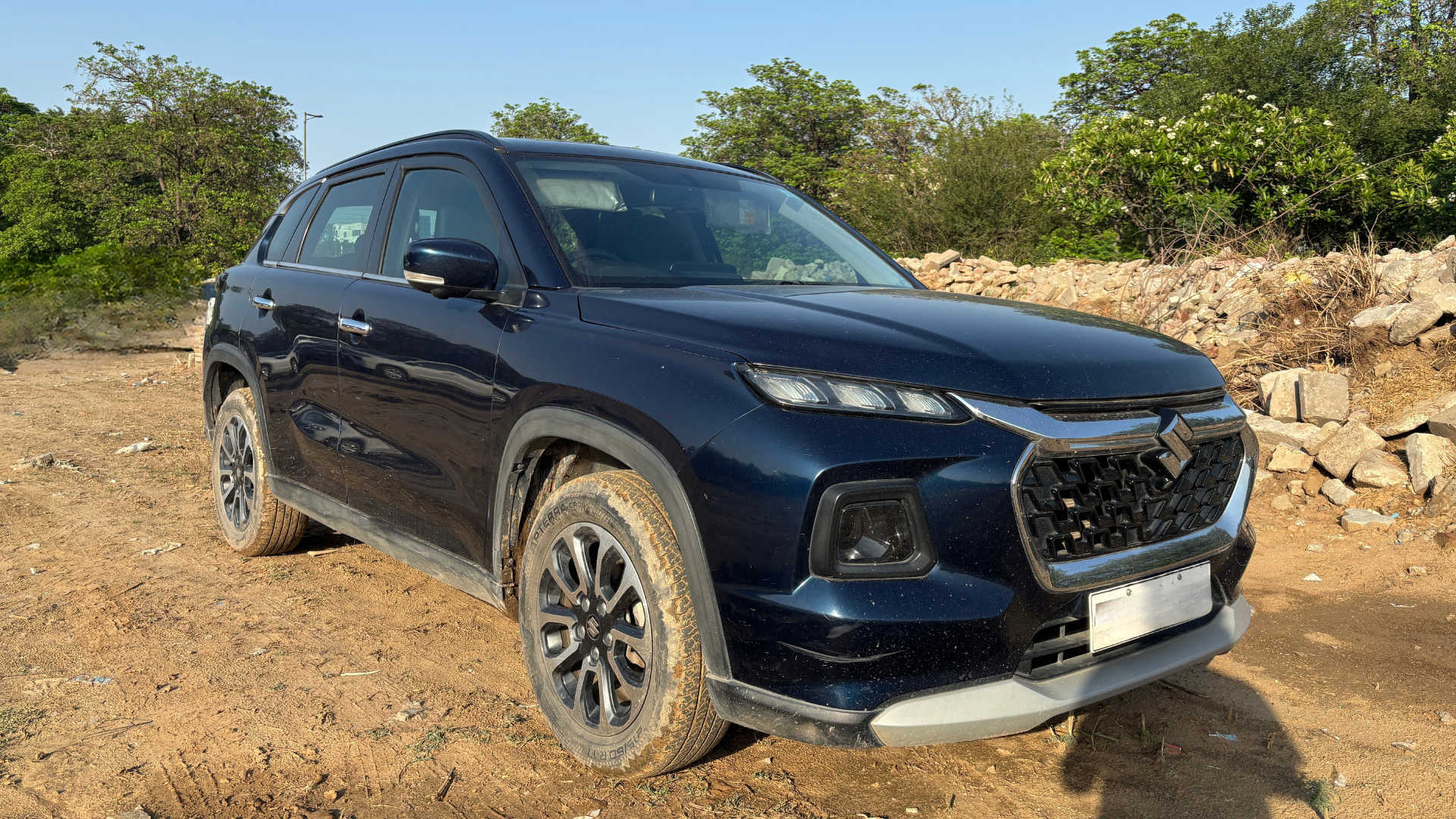
The Grand Vitara did something no Maruti had managed before. It took the company out of the small car business and into the crowded, prestige-heavy midsize SUV segment.
Four years on, it holds close to a fifth of a segment that the Hyundai Creta has dominated for a decade, it passed two lakh sales within two years of launch, and it did all of that while being visibly behind its rivals on cabin technology. That contradiction is the most interesting thing about this car and the key to understanding whether you should buy one.
Prices run from roughly Rs 10.8 lakh to about Rs 19.7 lakh ex-showroom, across a wide ladder of more than thirty variant combinations built on the familiar Sigma, Delta, Zeta and Alpha structure with optional packs and dual-tone paint above them.
Four powertrain configurations cover the range and they are genuinely different products rather than trim-level variations.
A 1.5-litre four-cylinder petrol with a mild hybrid system and front-wheel drive serves the bulk of the range with a five-speed manual or a six-speed torque converter automatic. The same engine is available with a proper all-wheel-drive system and a manual gearbox, which no direct rival offers.
A factory-fitted CNG option comes paired with the petrol engine and covers the high-mileage commercial and family buyer.
A 1.5-litre Atkinson-cycle petrol paired with a full hybrid system and an electrically controlled continuously variable transmission sits at the top and is the reason most people walk into the showroom.
It is worth noting that a mid-life update of this car has been widely reported for launch within the next several months, bringing a Level 2 ADAS suite, a substantially larger touchscreen and digital cluster, a powered tailgate, an upgraded audio system and an underbody CNG tank that would fix the current CNG variant’s biggest practical flaw.
The buyer here is a family that has run the numbers. Someone who does enough city driving for a hybrid to pay for itself, and who values running costs and service reach above cabin theatre.
Engine and Performance
Engine and Performance
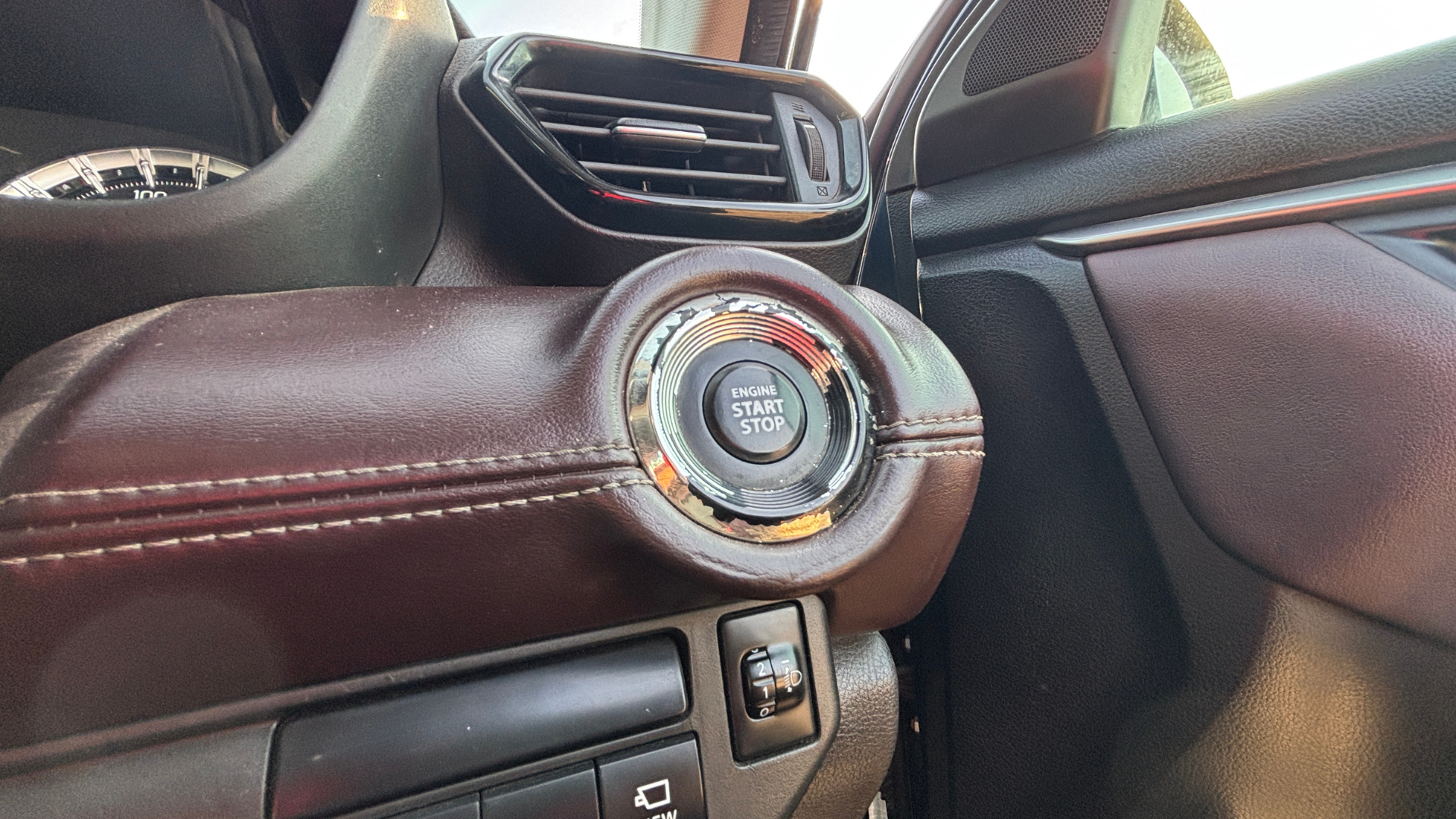
The strong hybrid is the powertrain that deserves the most attention. It pairs an Atkinson-cycle petrol engine with an electric motor and a small battery, paired to an e-CVT that has no conventional gears at all.
At low city speeds and while reversing, the car runs on electric power alone, silently and smoothly. It gets going from standstill quietly, and the transitions between electric and petrol running are hardly noticeable.
The result is a driving experience that suits city work exceptionally well. Throttle response at low speeds is immediate because an electric motor provides the initial shove, there is no gearbox hunting for ratios, and progress through traffic is effortless. Owners regularly report that this is the most relaxing car they have driven in urban conditions.
The compromise arrives when the car is asked for sustained effort. Because the transmission holds the engine at whatever speed the system considers most efficient, a hard acceleration or a long climb produces a constant, droning engine note that rises and stays there while the car gathers pace much more gradually than the noise suggests. This is what is popularly called the CVT’s rubber band effect.
The mild hybrid petrol is the more conventional choice and also the one that sells the most. It is smooth, refined at city speeds and completely predictable, with a linear power delivery and no turbo threshold to manage.
Performance is adequate rather than strong, and with a loaded, climbing inclines and making quick overtakes demands downshifts, which is a familiar characteristic of this engine family. The five-speed manual is light and easy, but can feel out of breath while maintaining triple digit speeds. The six-speed torque converter automatic is smooth but not really quick. Neither combination will excite a keen driver, but neither is intended to.
The all-wheel-drive variant is the segment's only genuine one, pairing the mild hybrid engine with Suzuki’s All-Grip AWD system that includes selectable modes for slippery surfaces. It is not a hardcore off-roader though, and is restricted to a manual gearbox and a single trim, which limits its appeal. For buyers in hilly regions or those who regularly encounter unpaved roads and tricky conditions, it is a meaningful capability that only its platform siblings match at this price.
The CNG version delivers the lowest running costs in the segment and asks for patience in return, since power drops noticeably in gas mode and a loaded car on a climb requires momentum management. For high-mileage users the maths is decisive.
Ride and Handling
The suspension is tuned for comfort on Indian road surfaces, and on that brief it performs well.
Low-speed ride quality is absorbent, with potholes, patched tarmac and broken edges dealt without much reaching the cabin, and the generous ground clearance means the underbody rarely makes contact with anything. Owners covering rough rural roads and unpaved stretches report that the car handles them without complaint or drama, which is precisely what a family SUV should do.
At legal highway speeds, the car feels stable and settled. It tracks straight without constant correction, undulations are absorbed in a single controlled movement rather than a series of bounces, and the added weight of the hybrid system in that version actually helps, giving the car a more planted feel than the ICE variants. Long-distance touring is comfortable and unfatiguing, and the cabin stays quiet at cruising speeds as long as the engine is not being worked hard.
Handling is predictable rather than engaging, and here the car's comfort-focused tuning becomes more evident. Body roll is noticeable through quick direction changes and in corners taken with enthusiasm, and while the car remains predictable and holds its line, rear passengers will feel the lean and some drivers find fast curves less reassuring than they would in some of the rivals.
The steering is light and accurate with a modest weight build-up as speed rises, but offers little feedback about what the front tyres are doing, which will disappoint anyone who has driven its Volkswagen Group rivals.
Braking in the hybrid deserves a mention too. Since the system blends regenerative braking with the conventional discs, the pedal has a slightly artificial feel and there is a perceptible lag before the physical brakes engage, which takes acclimatisation. Once learned, it is a non-issue in ordinary driving, but the initial impression is of brakes that respond later than expected. The tyres provide adequate grip and give up progressively.
The turning circle is reasonable for the size, and the car is easy to manoeuvre in tight urban situations thanks to the light controls and good forward visibility.
Overall, the Grand Vitara makes for a comfortable, stable, undemanding family SUV that prioritises passenger comfort over driving thrill. For a large majority of buyers in this segment, that is exactly the correct set of priorities, and the car should be judged on how well it delivers them rather than on the driving dynamics it never claimed to be engaging.
fuel economy
fuel economy
Fuel efficiency is the headline and it holds up in the real world unusually well.
Owners of the strong hybrid regularly report figures above 25 km/ per litre in city conditions, which is genuinely remarkable for a vehicle of this size, though highway and expressway running can bring this down to the low 20s, since the engine has to do much more of the hardwork. However, a 1000+ km range on a full fuel tank makes this a great option for long road trips.
The mild hybrid manual returns just under 20 km/l on a highway run and close to 15 km/l in city traffic, with slightly lower numbers for the automatic.
The CNG delivers around 20 km/kg in the city and 25 km/kg on highways, keeping costs lower than anything else in the class.
For a buyer covering fifteen hundred kilometres a month or more with a mix of city and highway running, the hybrid premium can be recovered within a few years, and everything after that is savings.
interior
interior
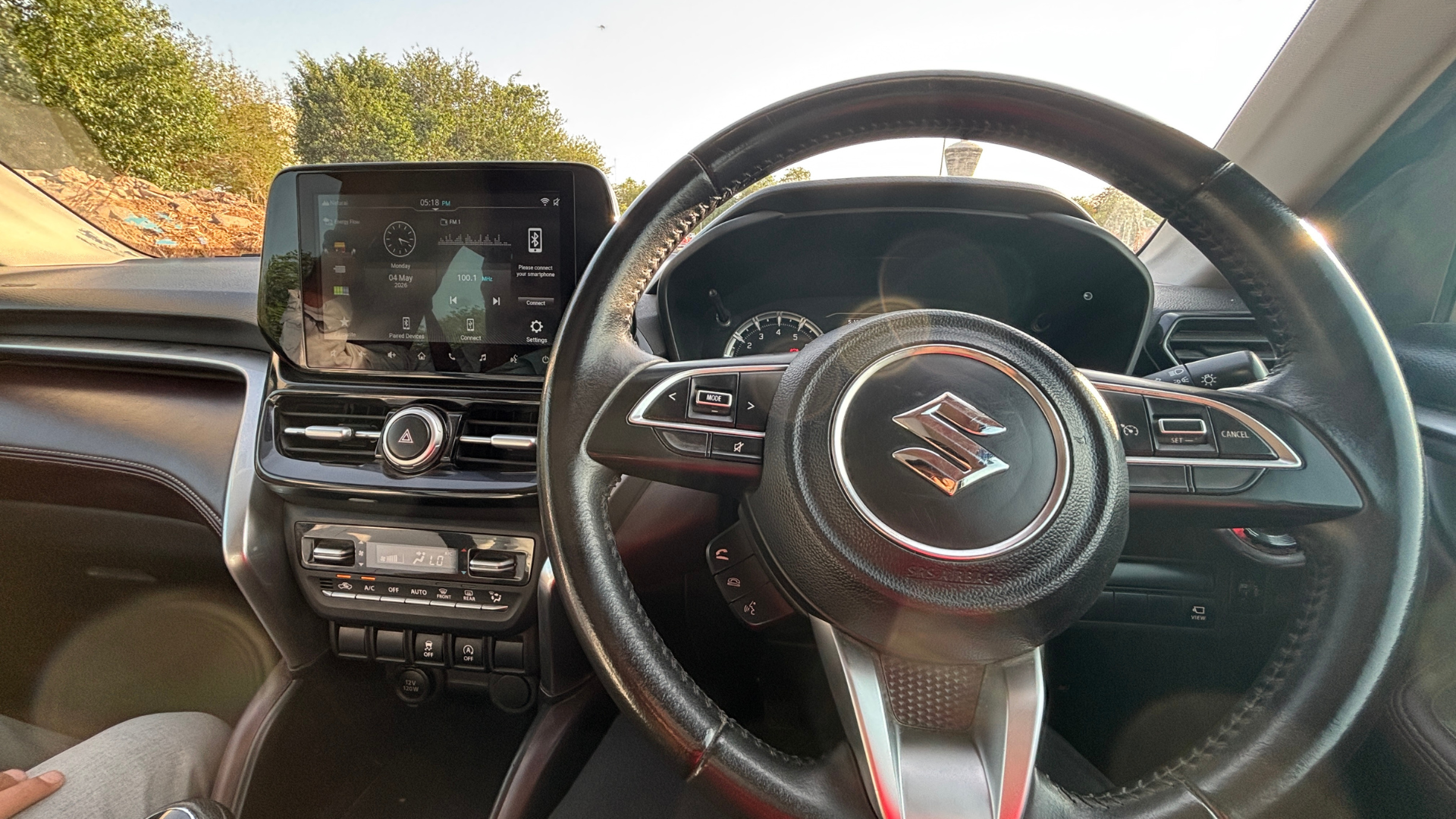
This is where the Grand Vitara shows its age, and there is no way to write around it.
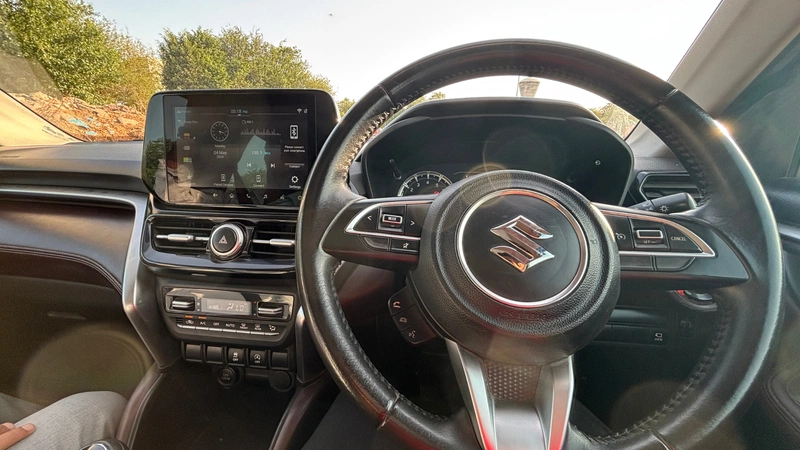
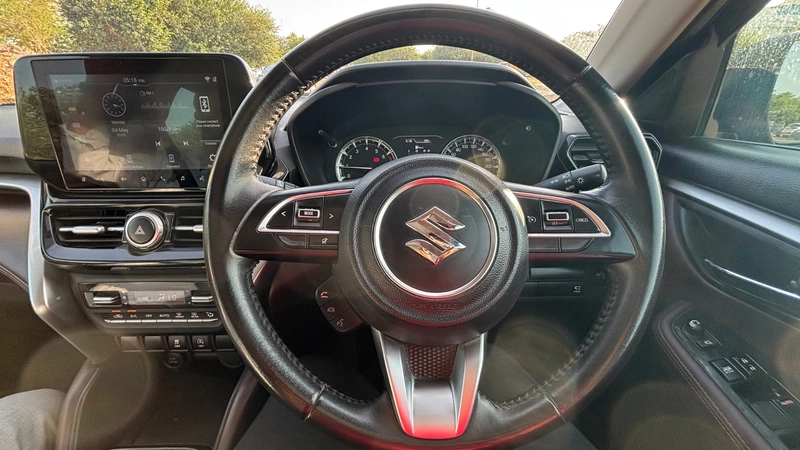
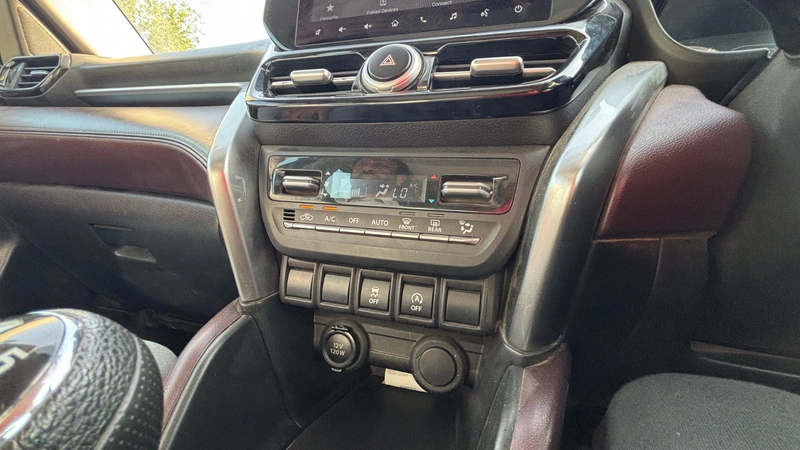
The dashboard layout is inspired by some of Maruti's smaller cars like the Baleno and Fronx, and it shows. The layout is logical and easy to use, but visually plain and built from materials that fall short of what one may expect after paying over Rs 20 lakh.
The 9-inch infotainment screen is small by current standards and the lower variants make do with an even smaller 7-inch unit, at a time when rivals offer large joined displays running from the driver's line of sight to the centre of the dash. There is a digital instrument display, but it is modest in size and ambition.
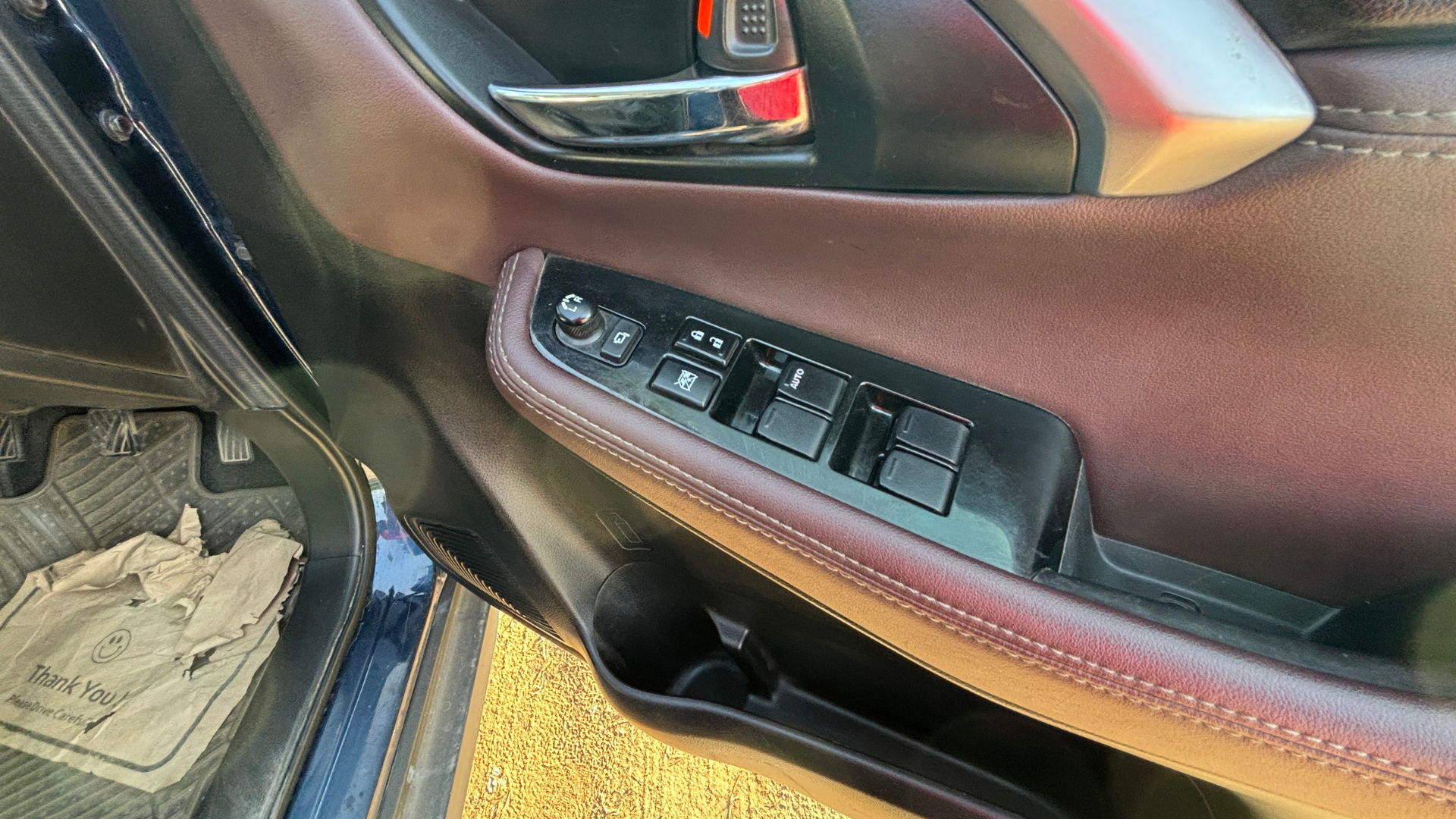
The ergonomics, in fairness, are excellent, something that has always been a strength for Maruti.
Every control is where instinct expects it, the physical climate controls are properly damped and easy to use without looking, the steering adjusts sensibly and the driving position is comfortable for most builds.
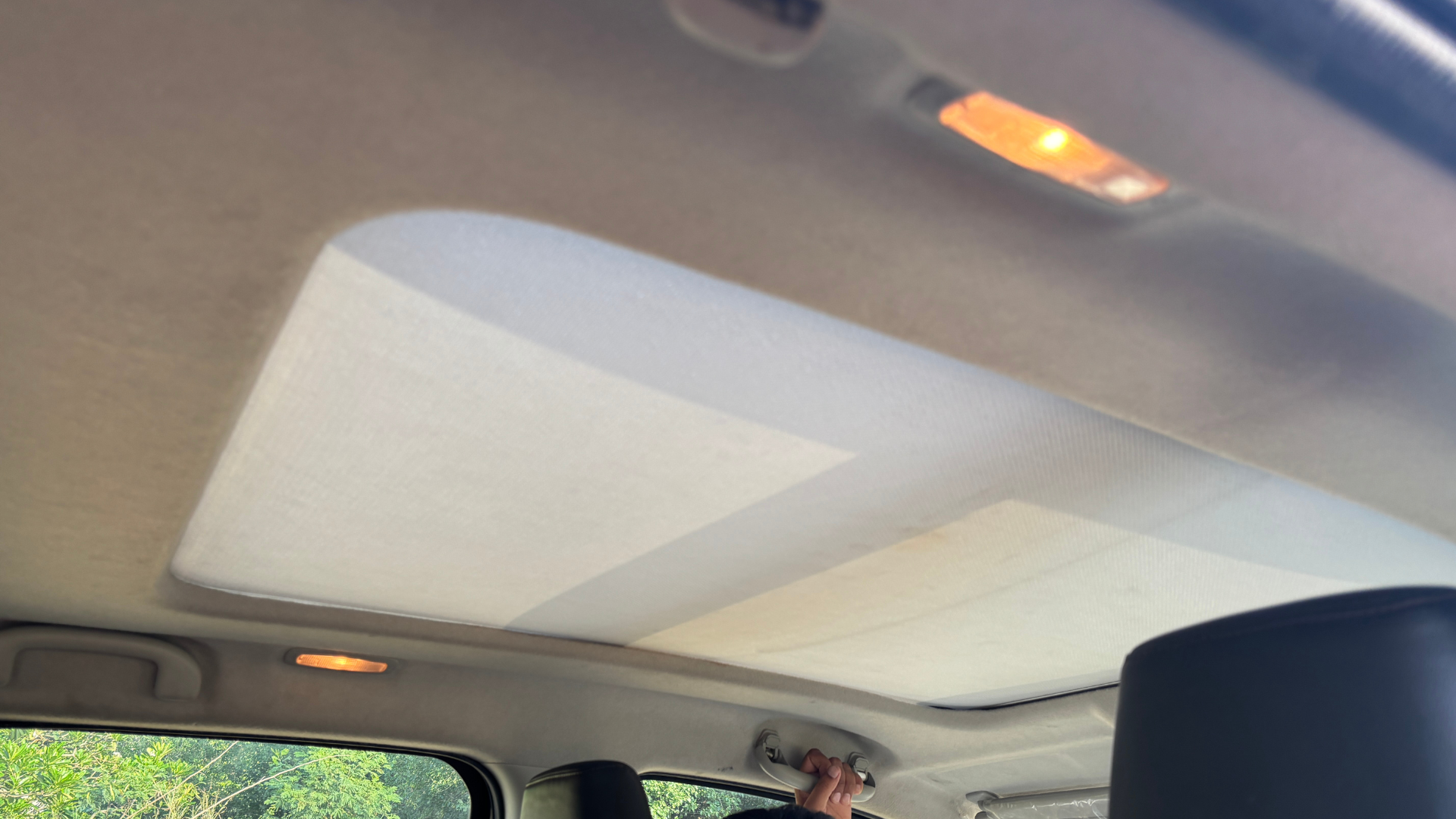
Nothing about this cabin needs to be learned, which is worth more in daily use than a large screen with buried menus, and the head-up display and panoramic sunroof on the upper trims add a genuine sense of occasion.
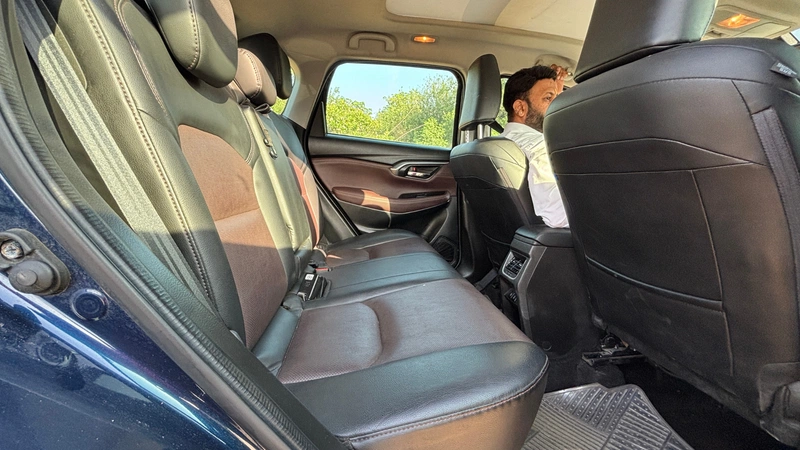
Space is a strong point. Front occupants have generous room, the rear bench offers good legroom and knee room behind a tall driver, and headroom is ample thanks to the upright roofline.
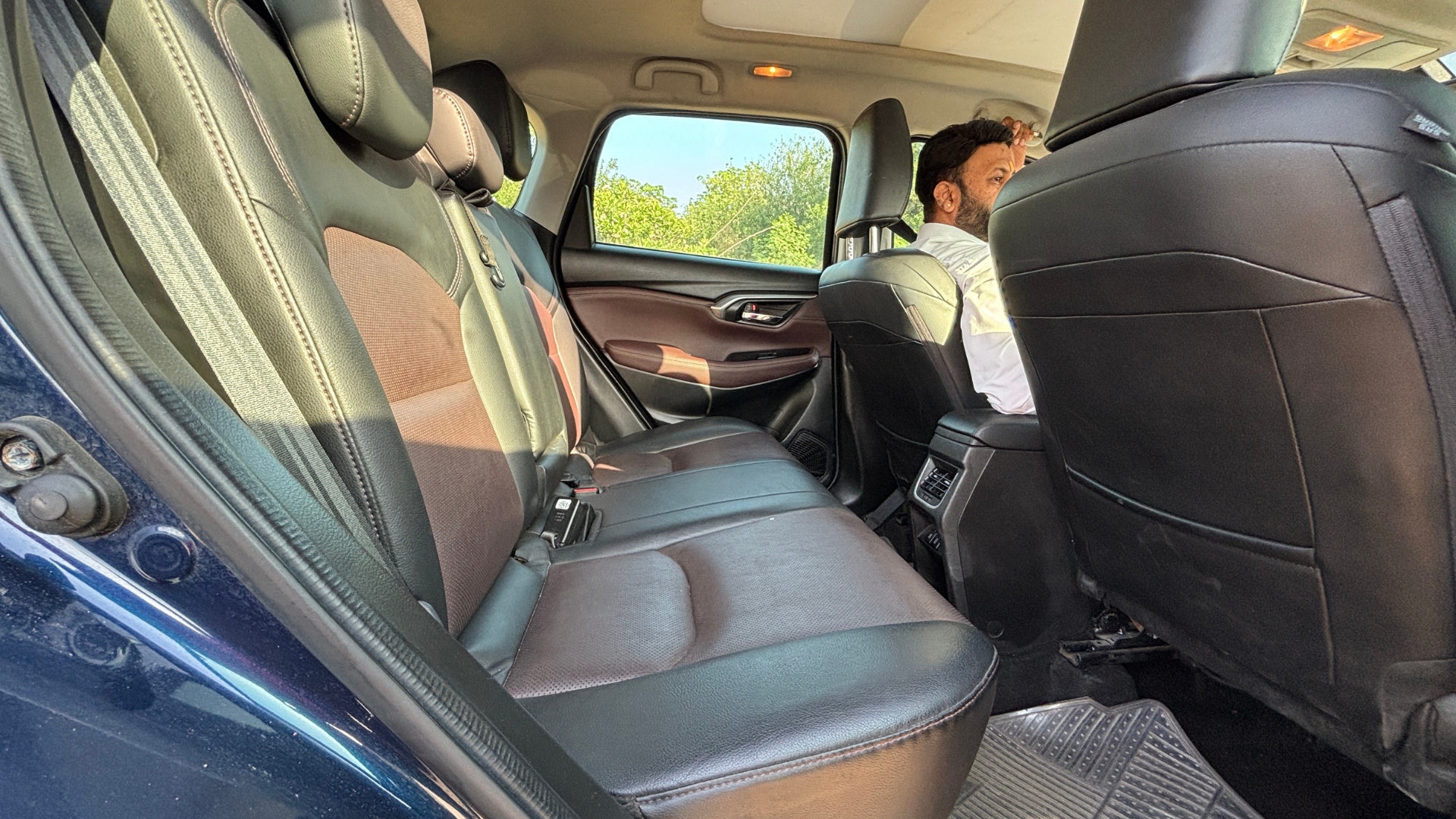
Two adults sit comfortably in the back with a reclining backrest and rear air vents. Three across is possible but tight, because the cabin is not especially wide, and the middle passenger sits on a raised centre section. Seat comfort on long journeys is good, and the ventilated front seats in the higher variants are genuinely useful in Indian summers.
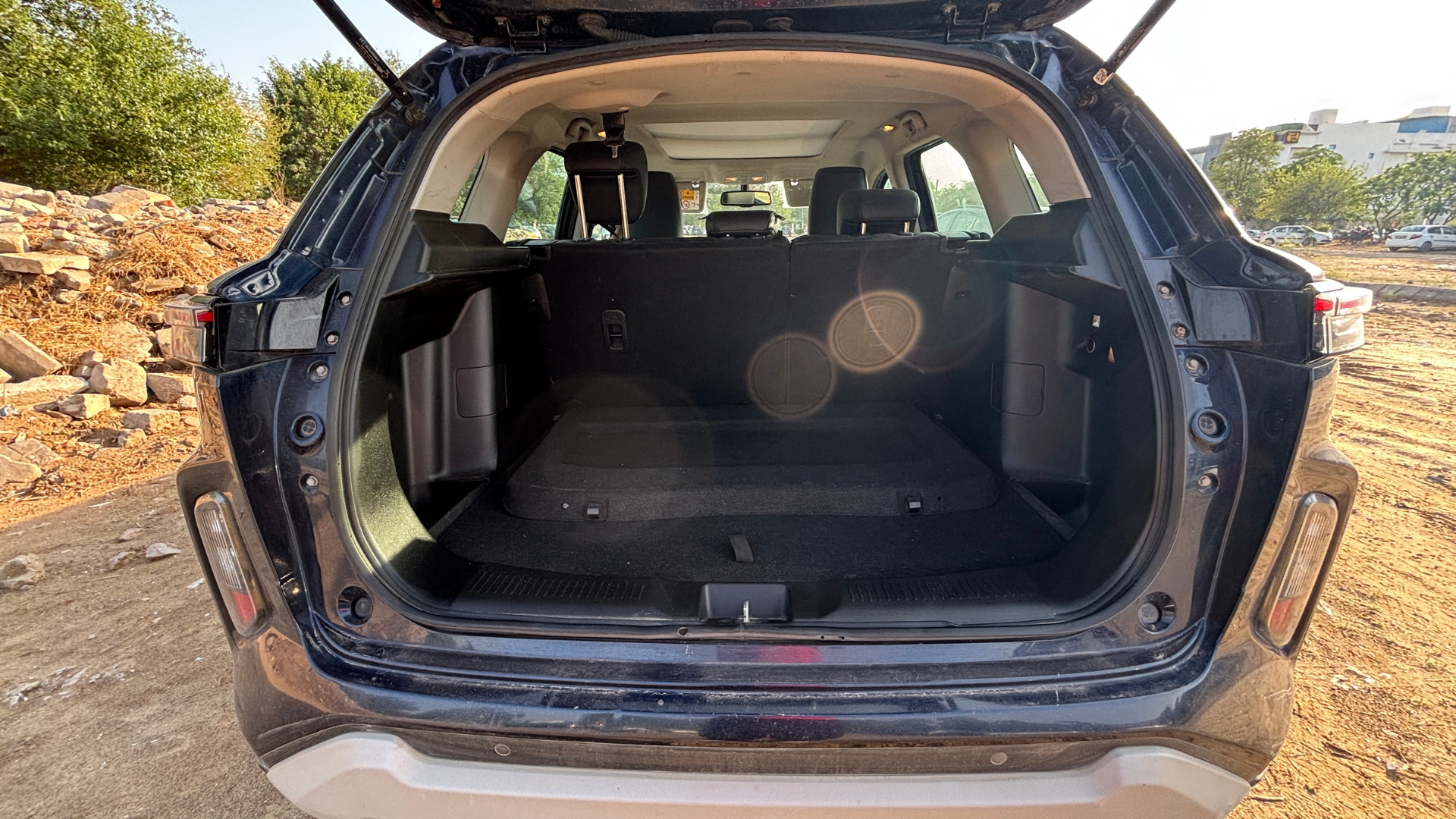
Boot space is where the powertrain choice bites.
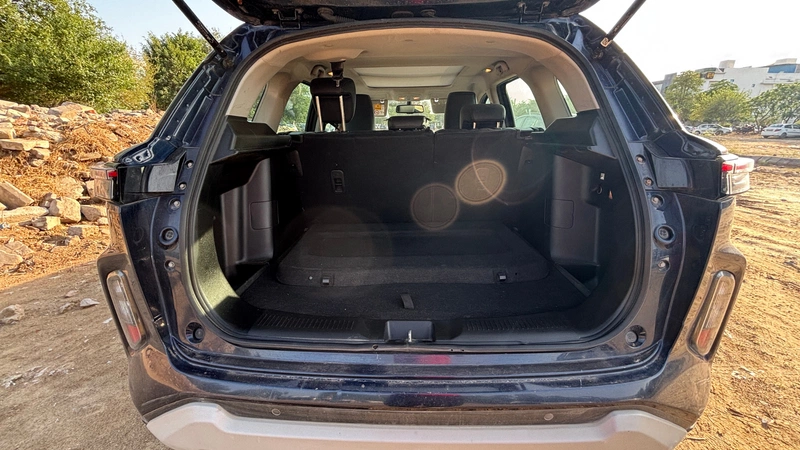
The conventional petrol versions offer a competitive 373 litres and usefully shaped load bay. The strong hybrid loses a substantial chunk of that space at around 265 litres, thanks to the battery pack mounted under the boot floor, leaving it with one of the smallest boots in the segment. The CNG variant loses even more to the cylinder, though the facelift is expected to move that tank underbody and solve the problem.
The connected car functions, the 360-degree camera, the head-up display and the sunroof are all present and work well, so the car is not sparsely equipped. It simply lacks the specific items that win showroom comparisons in the current day and age. The facelift should address nearly all of them.
exterior
exterior
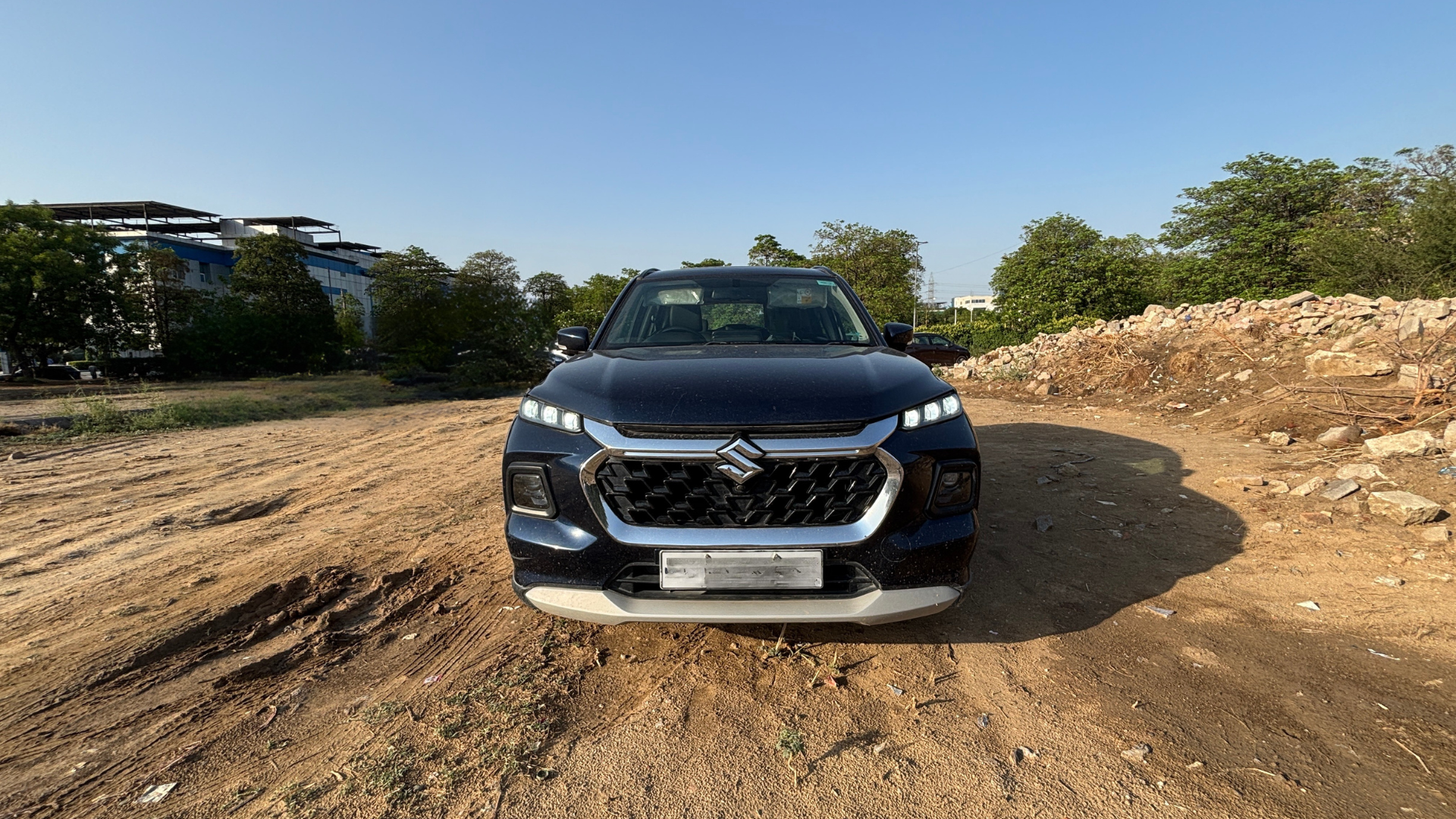
The Grand Vitara has aged better from outside than on the inside.
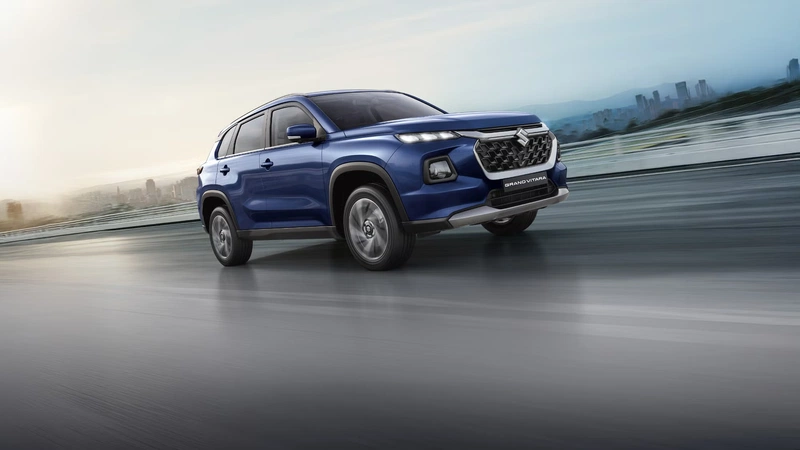
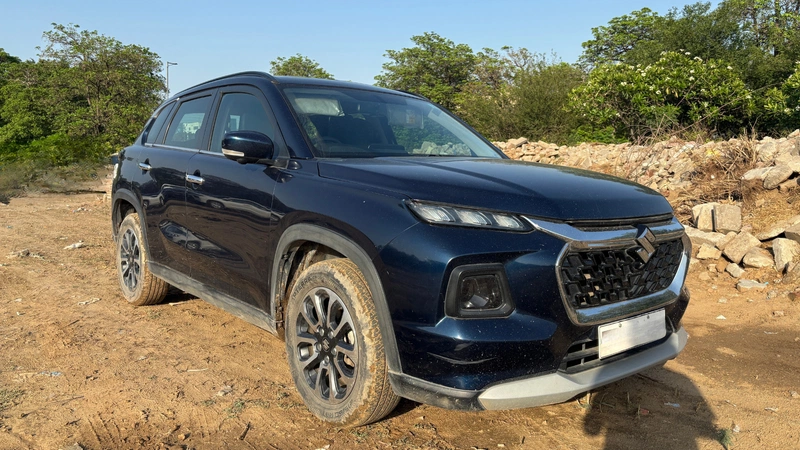
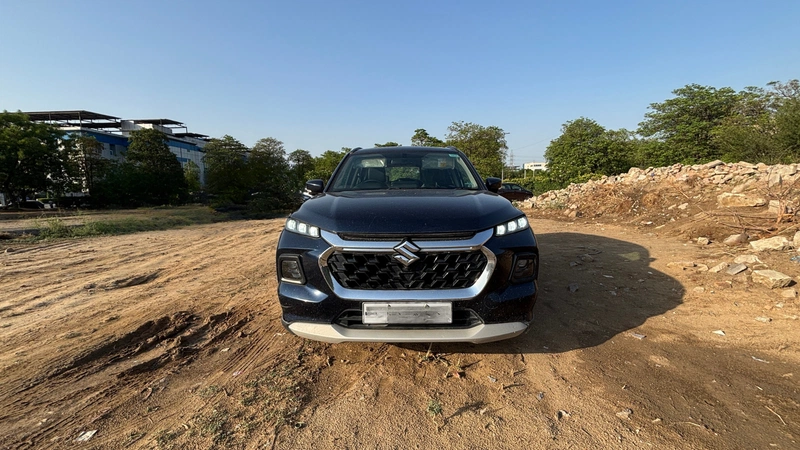
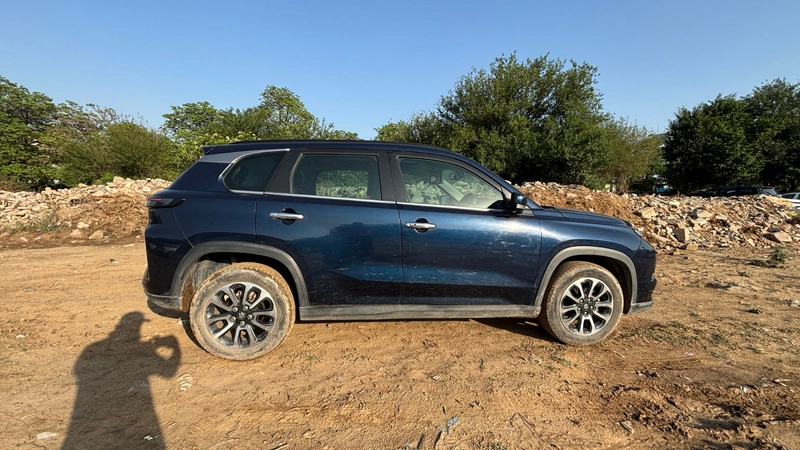
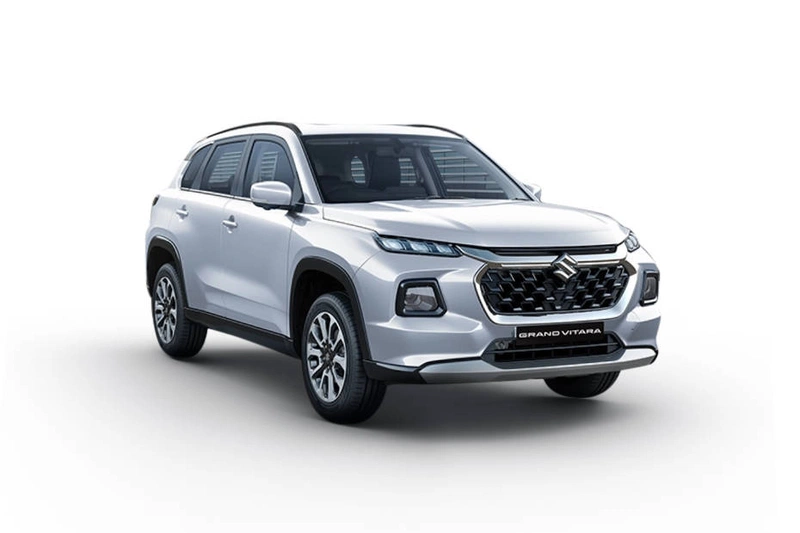
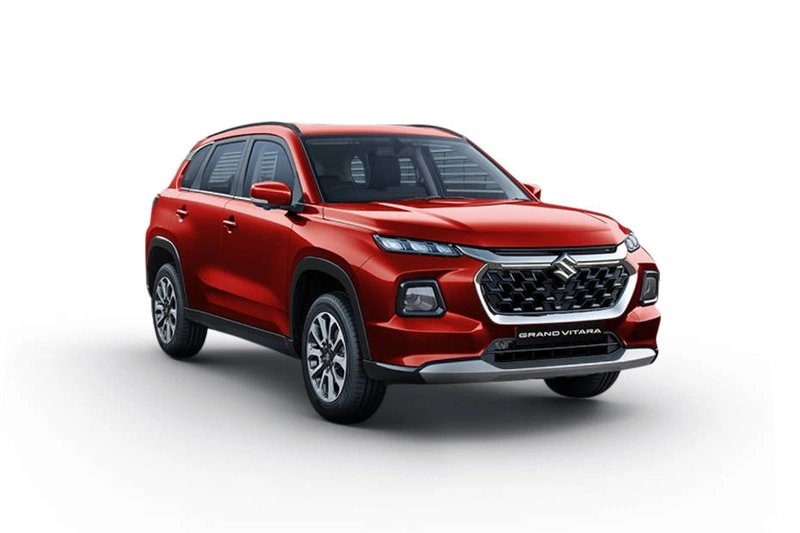
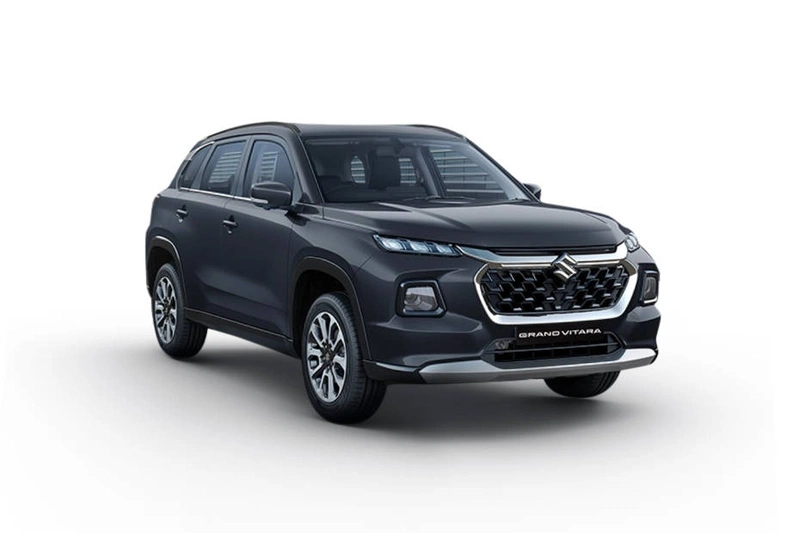
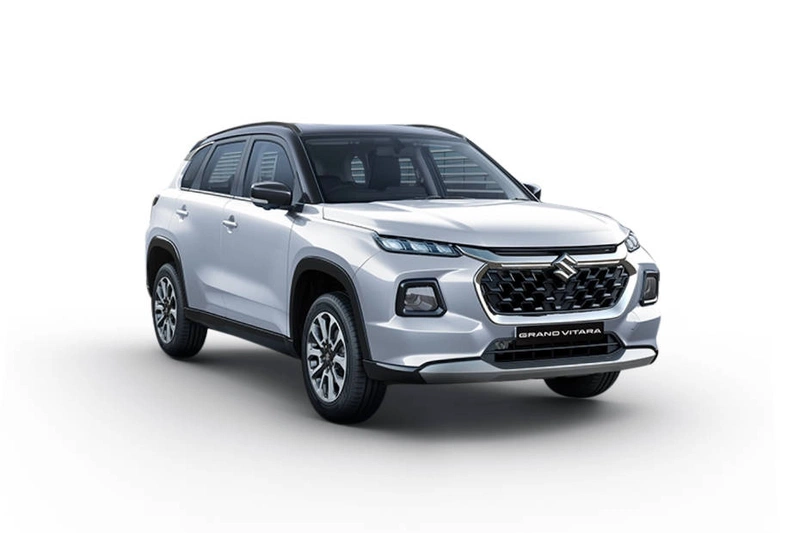
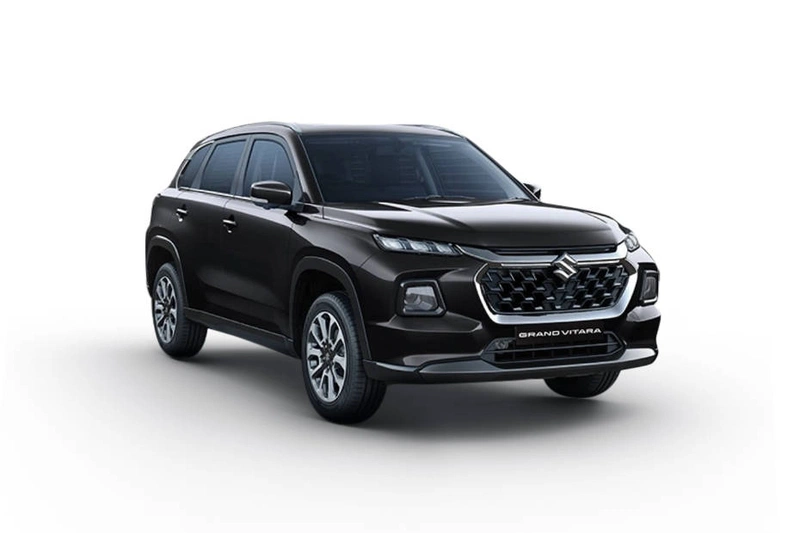
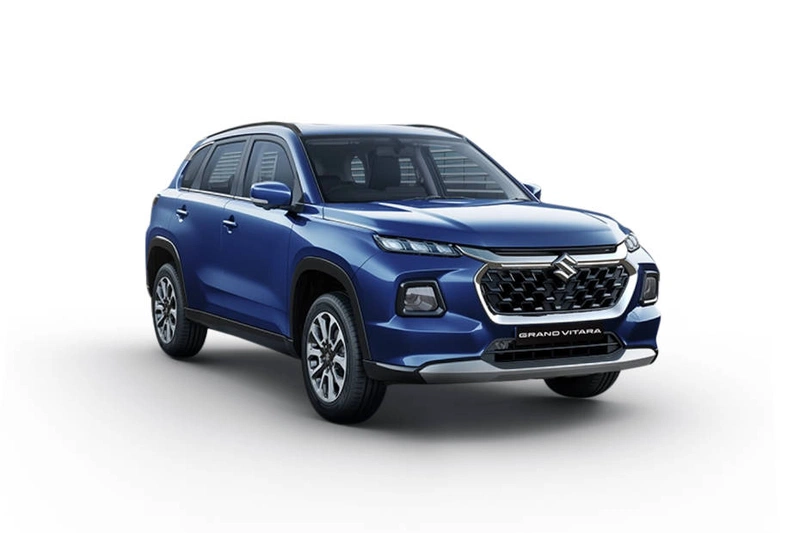
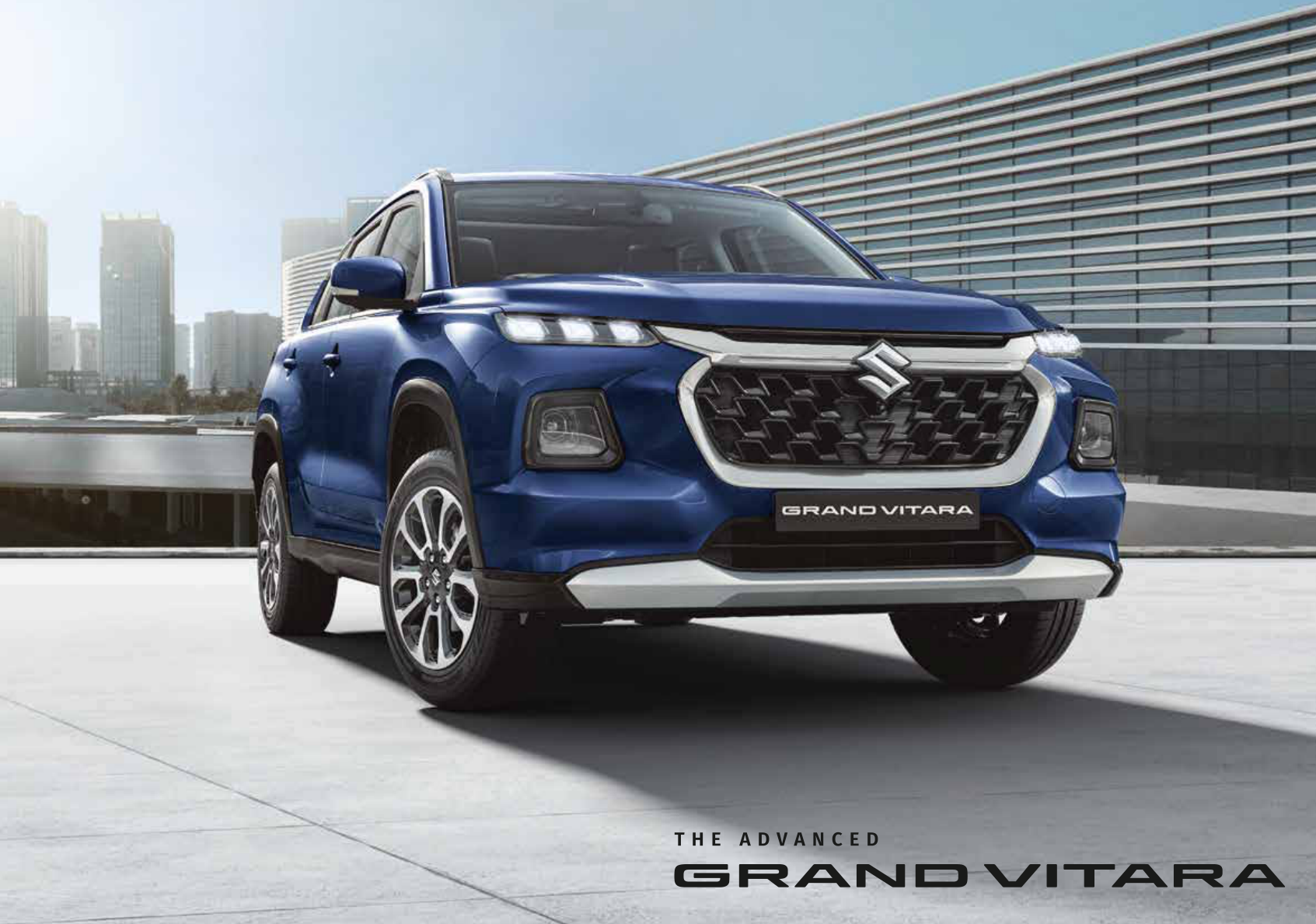
The design is upright and formal rather than fashionable, with a broad grille, squared LED headlamps sitting below the slim three-block DRLs, a flat bonnet and squared-off wheel arches. There are no dramatic creases, and the result is a car that looks like a sleek SUV.
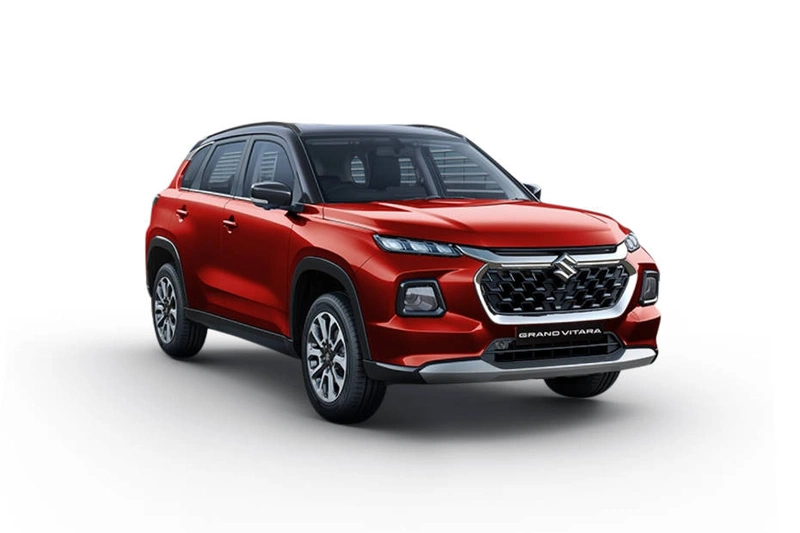
Proportions do a lot of the work. At a little over 4.3 metres with a generous wheelbase and a tall roofline, the car has genuine road presence and looks substantial from every angle. Owners consistently comment that it looks more expensive on the road than the price suggests, and the darker colours in particular compliment its design. The dual-tone options with a black roof add visual interest without descending into gimmickry.
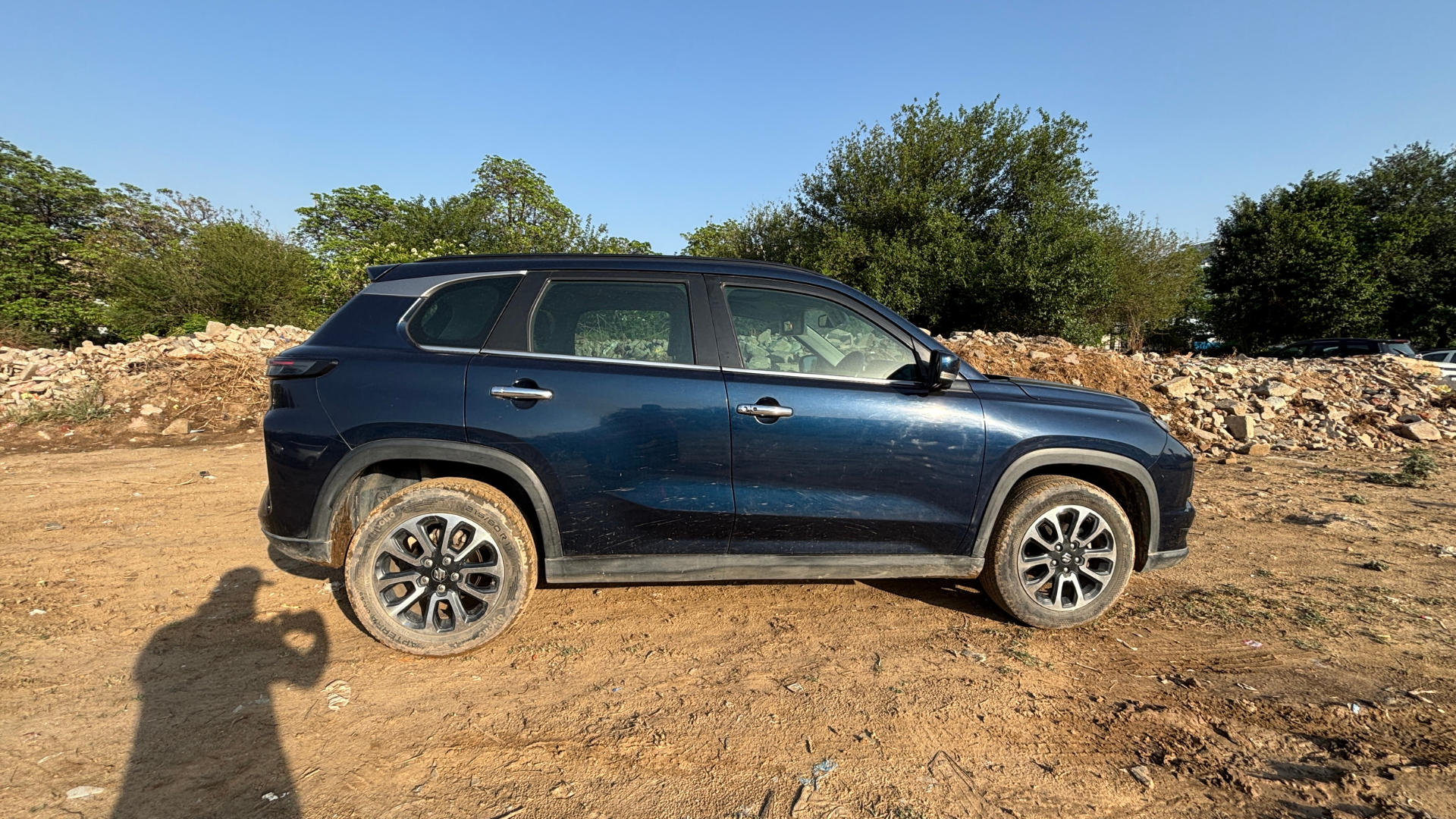
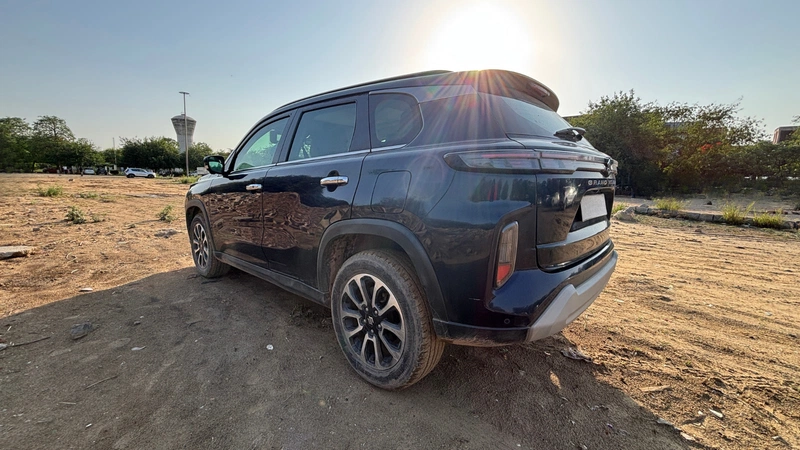
The 17-inch alloy wheels fill the arches properly, the chrome is applied sparingly enough to age gracefully, the roof rails are functional in appearance and the rear is one of its best angles, with the sleek connected lighting elements. Build quality is solid for the price, with even panel gaps and a consistent paint finish, though the sheet metal has the lightness that Suzuki's platforms are known for and the doors don’t shut with that reassuring thud found in its Volkswagen Group rivals.
Ground clearance at 210 mm is generous enough for badly built speed breakers and rutted rural approaches. The doors open wide, and the low sill height makes access easy for older passengers.
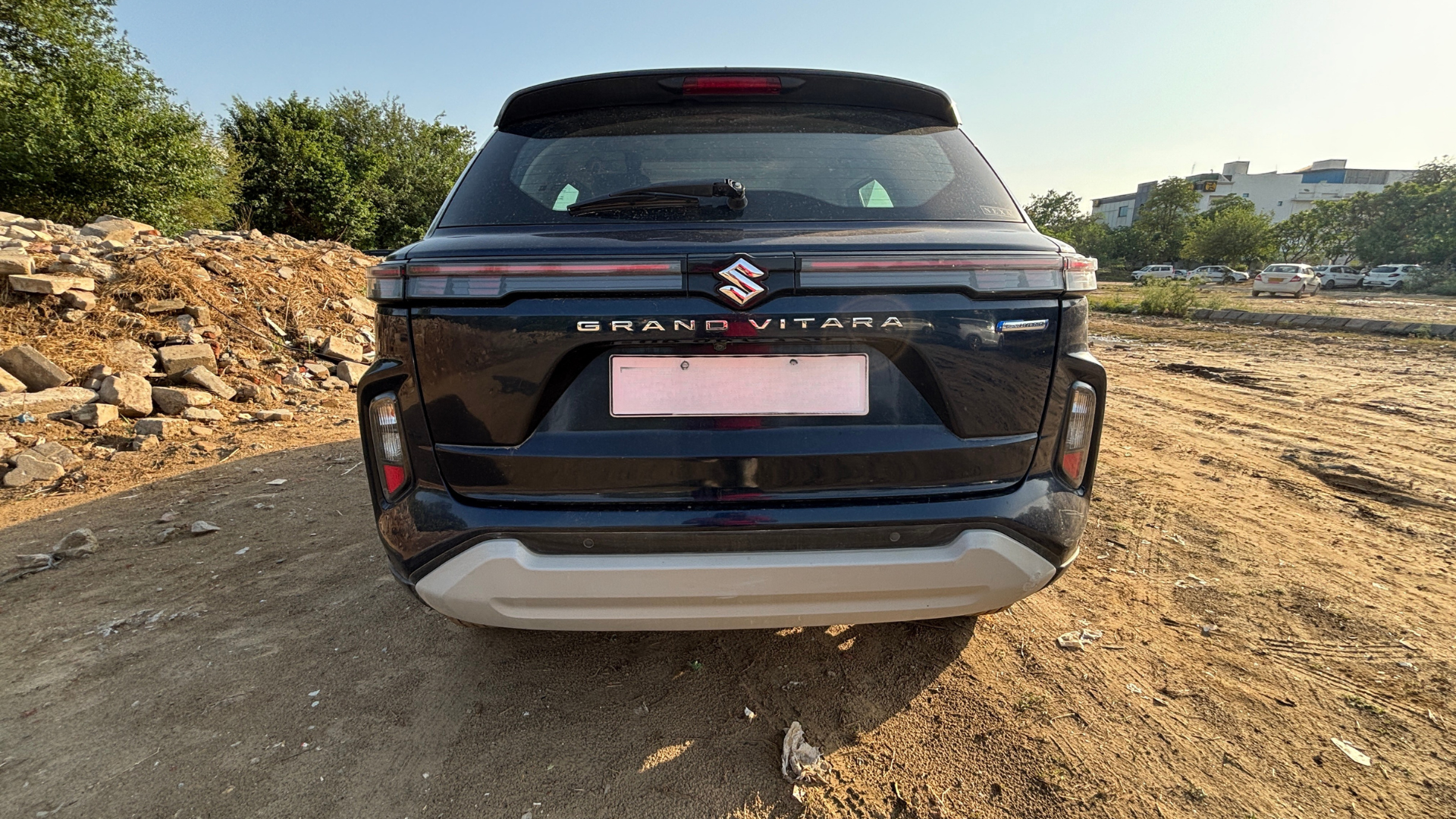
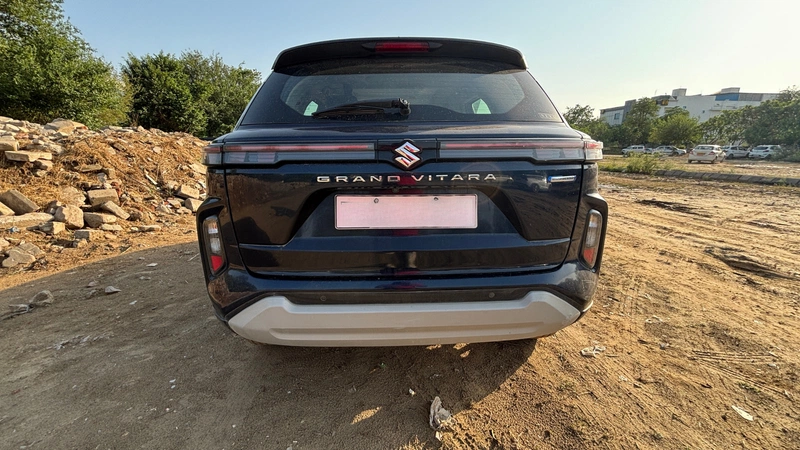
The rear of the Grand Vitara is arguably one of its best angles, with the sleek, connected taillamps, bumper mounted vertical indicator and reverse lamp housing, and a chunky silver skid plate. Though, the small rear glass and large headrests limit visibility from inside, so the 360-degree camera on higher variants earns its place.
The genuine omission is a powered tailgate, something that lower priced rivals offer, and owners of the top variants have raised repeatedly.
safety
safety
The Grand Vitara is well equipped with standard safety features like six airbags, ESP, hill hold assist, ABS with EBD, disc brakes on all four wheels, ISOFIX child seat mounts, three-point seatbelts for all occupants, and rear parking sensors across the range, with a tyre pressure monitoring system, 360-degree camera and a head-up display available higher up.
There is no ADAS tech though, which is a major omission at this price point since most of its rivals, including the Victoris, offers it.
Second, and more crucially, there is no published crash rating. Reports indicate the car has been through Bharat NCAP testing and images from the facility have circulated, but no official result has been released, which leaves buyers with nothing verifiable to point at.
This is an uncomfortable position for a car in this price bracket, particularly when several rivals lead their marketing with five-star results. It is worth noting that the Victoris, which the Grand Vitara shares its platform with, achieved a full five-star rating from both Bharat NCAP and Global NCAP. However, this does not necessarily mean that the Grand Vitara would have performed similarly.
However, the practical safety strengths are genuine. Forward and sideways visibility is very good, the car is stable at highway speeds, the brakes are dependable, and the handling and chassis behaviour are predictable enough that emergency lane changes do not feel too unnerving.
competition
competition
The Hyundai Creta is the segment's benchmark and the car most Grand Vitara buyers consider first. It offers a wider engine range including a turbo-petrol and a diesel that the Maruti cannot answer, a far more modern cabin with large connected displays, a comprehensive driver assistance suite, and a level of showroom appeal that explains its dominance. What it does not offer is a full hybrid, and the running cost gap in city driving is large enough to reverse the purchase price difference over a long ownership. The Creta is the better car in almost every showroom comparison, whereas the Grand Vitara is the cheaper car to own.
The Kia Seltos sits alongside the Creta with similar mechanical options, a sharper design and a more driver-focused character, along with the same technology advantages and the same absence of a hybrid. Its dual-clutch automatic is quicker than anything Maruti offers here and carries the durability question that dual-clutch units always do in Indian conditions.
The Toyota Urban Cruiser Hyryder is the same vehicle underneath, sold through a different network with Toyota's warranty and service reputation attached, and it is due for the same update at the same time. The choice between the two comes down to dealer trust, the deal on offer and which network is closer to your home, because the product is fundamentally identical.
Maruti's own Victoris deserves specific mention, because it is the more awkward rival. Sold through the company's other network, it is newer, carries the ADAS suite and larger screens that this car lacks, and covers similar ground at similar money. Anyone shopping a Grand Vitara today should drive it, because the Victoris takes the Vitara’s underpinnings and significantly improves on it.
The Volkswagen Taigun and Skoda Kushaq are the enthusiast's alternatives, with turbo-petrol engines, genuinely engaging chassis tuning, strong crash ratings and cabins built with a density that the Maruti cannot match. They give up rear-seat space, fuel efficiency, feature counts and service network reach, and their running costs are meaningfully higher. For a buyer who drives for pleasure, they are worth the compromises. For a buyer who drives out of necessity, they are not.
The Honda Elevate offers refinement, dependability and a spacious cabin with a strong crash record, but a single naturally aspirated engine and a modest feature list leave it short of the segment leaders on showroom appeal.
The Tata Sierra is the carmaker’s second attempt at this segment after failing to make a strong impression with the Curvv. It offers a proper SUV stance, multiple powertrain options, a strong feature list, ample space to seat five comfortably, and a five-star safety rating. However, quality inconsistencies, software niggles, and an inconsistent dealership and after sales experiences continue to shadow the brand.
Buyers who want three rows should note that Maruti has been reported to be developing a longer seven-seat derivative of this platform, which would move the conversation into different territory entirely and is worth waiting for if extra seats are the deciding factor.
final verdict
final verdict
The Grand Vitara wins comparisons on a calculator but loses out when comparing brochures. Its strengths are substantial and they compound over years of ownership.
The strong hybrid returns fuel figures that no conventional rival can approach and that make a genuine difference to a monthly budget. The all-wheel-drive option is unique in the segment. The car rides comfortably, feels stable at speed, looks premium, offers generous cabin space and comes with the most extensive service network in the country, the lowest maintenance costs in its class and resale values that recover a large share of the purchase price.
The weaknesses are equally clear and they are mostly about the last three years of segment progress passing this car by. The cabin design and screen technology are visibly behind rivals, there is no driver assistance suite, and no powered tailgate. The hybrid's boot is among the smallest in the class and the CNG version's is worse. The engine drones unpleasantly under sustained load in the hybrid, and the brakes take acclimatisation, and body roll is noticeable. Crucially, the absence of a published crash rating on a car at this price is difficult to defend.
An update has been widely reported for imminent launch, and the changes are expected to address most areas of improvement on the current model, like the addition of Level 2 ADAS suite, much larger screens, a powered tailgate, a better audio system and an underbody CNG tank.
If those features matter to you, waiting is the obvious course. If they do not, the coming update is the best negotiating leverage available, because dealers will be clearing current stock and the discounts on offer in the next few months are likely to be significant. Paying full price for the current car today is the one clearly avoidable mistake in this range.
Buy this car if running costs, ride comfort, service reach and resale value sit at the top of your list, and if you can accept a cabin that is a generation behind on screens and assistance technology.
Look elsewhere if you want the latest in-car technology today, a large boot with a hybrid, or a documented crash rating. For the buyer it fits, it remains one of the most financially sensible purchases in the Indian market, and the coming update should make that case considerably easier to argue.
Maruti Suzuki Grand Vitara News
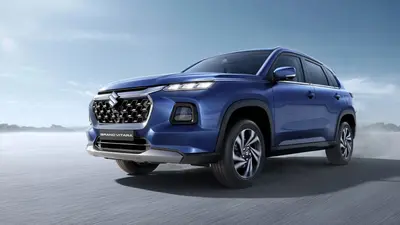
Maruti Suzuki Says Its Cars Have Been E20 Compatible Since 2008
Maruti Suzuki MD and CEO Hisashi Takeuchi confirmed at the 45th AGM that all Maruti cars made from 2008 onwards are E20 compatible. That covers 18 years of production and should answer the E20 worries of most current Maruti owners.
Anmol Kumar
September 1, 2026

India Car Sales July 2026: Market Falls 3 Percent to 3.53 Lakh, Tata's EV Arm Posts Its Best Month of the Year
India's passenger vehicle market registered 3,53,043 units in July 2026, down 3.2 percent from June. Maruti accounted for most of the decline, while Tata's electric arm crossed 12,000 units for the first time this year. Here is the full breakdown by segment.
Anmol Kumar
August 1, 2026
Maruti Suzuki To Hike Prices By Up To ₹30,000 From August 2026
Maruti Suzuki has announced a price hike of up to Rs 30,000 across its passenger vehicle range, effective from August 2026. The automaker cited rising inflationary pressures and higher input costs as the primary reasons behind the latest revision.
Arjun Nair
July 31, 2026
Maruti Suzuki Grand Vitara FAQs
Does the Grand Vitara Strong Hybrid need to be plugged in to charge?
−No. The Strong Hybrid charges its lithium-ion battery through regenerative braking and the petrol engine itself. It is not a PHEV, so there is no charging port and no external charging required.
Which Grand Vitara variant gets the AWD system?
+The ALLGRIP Select AWD is available exclusively with the Alpha and Alpha (O) petrol automatic variants, not on any hybrid variant.
Is the 6-airbag safety feature available on all variants or only top trims?
+All variants, including the base Sigma, come with 6 airbags as standard in front, side, and curtain.
What is the official fuel efficiency of the Strong Hybrid?
+ARAI-certified efficiency is 27.97 km/l (e-CVT). The petrol variants return 21.11 km/l (MT), 20.58 km/l (AT), and 19.20 km/l (ALLGRIP AT).
Which infotainment system does the Grand Vitara offer, and which variants get it?
+Lower variants (Delta petrol and Delta+ hybrid) get a 17.78 cm SmartPlay Pro touchscreen. Higher variants get a 22.86 cm SmartPlay Pro+ with wireless Android Auto and Apple CarPlay.
What is the seating capacity and can the rear seats fold flat?
+The Grand Vitara is a 5-seater. The rear seats are 60:40 split-folding and also recline, but they do not fold completely flat.
Does the Grand Vitara have ADAS (Advanced Driver Assistance Systems)?
+No. The Grand Vitara does not offer ADAS features on any of its variants.
What is the mileage of the Maruti Suzuki Grand Vitara?
+The Grand Vitara delivers (manual) and up to (automatic) as per ARAI. Real-world mileage ranges from depending on conditions.
Is the Maruti Suzuki Grand Vitara available in petrol, CNG, electric or diesel engines?
+The Grand Vitara is currently available with Petrol and CNG engines.
What is the current ex-showroom price of the Maruti Suzuki Grand Vitara?
+The current ex-showroom prices start at and go up to , depending on the variant.
How many variants does the Grand Vitara come in, and what are their names?
+The Maruti Suzuki Grand Vitara is available in 35 variants: Alpha, Alpha AT, Alpha AT DT, Alpha AWD AT, Alpha AWD AT DT, Alpha AWD Opt AT, Alpha AWD Opt AT DT, Alpha DT, Alpha Opt, Alpha Opt AT, Alpha Opt AT DT, Alpha Opt DT, Alpha Plus Hybrid CVT, Alpha Plus Hybrid CVT DT, Alpha Plus Opt Hybrid CVT, Alpha Plus Opt Hybrid CVT DT, Delta, Delta AT, Delta CNG, Delta Plus Hybrid CVT, Sigma, Zeta, Zeta AT, Zeta AT DT, Zeta CNG, Zeta CNG DT, Zeta DT, Zeta Opt, Zeta Opt AT, Zeta Opt AT DT, Zeta Opt DT, Zeta Plus Hybrid CVT, Zeta Plus Hybrid CVT DT, Zeta Plus Opt Hybrid CVT and Zeta Plus Opt Hybrid CVT DT. It offers transmission options.
What is the engine capacity, power, and torque of the Grand Vitara?
+It has a engine that produces and of torque.
What are the key safety features in the Grand Vitara ?
+The Grand Vitara comes equipped with several safety features including Anti-lock Braking System (ABS), Central Locking, Electronic Brakeforce Distribution (EBD), Electronic Stability Control (ESC), Speed Alert and Hill Assist.
What are the boot space and dimensions of the Maruti Suzuki Grand Vitara?
+The Grand Vitara offers of boot space. Its dimensions are 4345 mm in length, 1795 mm in width, and it has a wheelbase of 2600 mm.
Which features are available in the top model of the Grand Vitara (touchscreen, camera, cruise control, etc.)?
+The top Alpha Plus Opt Hybrid CVT DT variant includes .
What is the standard warranty on the Grand Vitara, and what are the average service costs?
+Maruti Suzuki offers a warranty. Annual service costs range between .
What colours does the Maruti Suzuki Grand Vitara come in?
+The Maruti Suzuki Grand Vitara is available in the following colours: .
Which variants of the Maruti Suzuki Grand Vitara have a sunroof?
+variant of Maruti Suzuki Grand Vitara is having sunroof
Is the Maruti Suzuki Grand Vitara available in petrol, CNG, electric or diesel engines?
+The Grand Vitara is currently available with Petrol and CNG engines.
What are the key safety features in the Grand Vitara ?
+The Grand Vitara comes equipped with several safety features including Anti-lock Braking System (ABS), Central Locking, Electronic Brakeforce Distribution (EBD), Electronic Stability Control (ESC), Speed Alert and Hill Assist.
What colours does the Maruti Suzuki Grand Vitara come in?
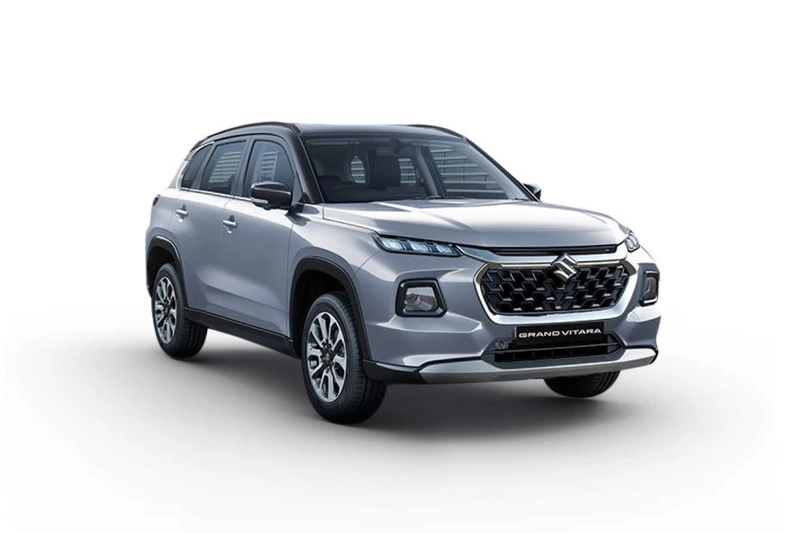
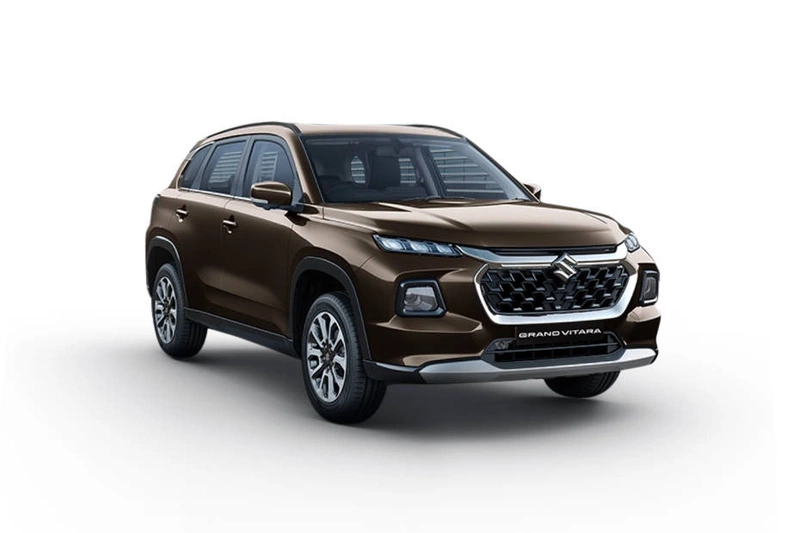
+The Maruti Suzuki Grand Vitara is available in the following colours: Arctic White, Opulent Red, Opulent Red With Black Roof, Splendid Silver With Black Roof, Chestnut Brown, Grandeur Grey, Arctic White Black Roof, Midnight Black, Nexa Blue and Splendid Silver.