Maruti Suzuki To Hike Prices By Up To ₹30,000 From August 2026
By Arjun Nair
Updated July 31, 2026
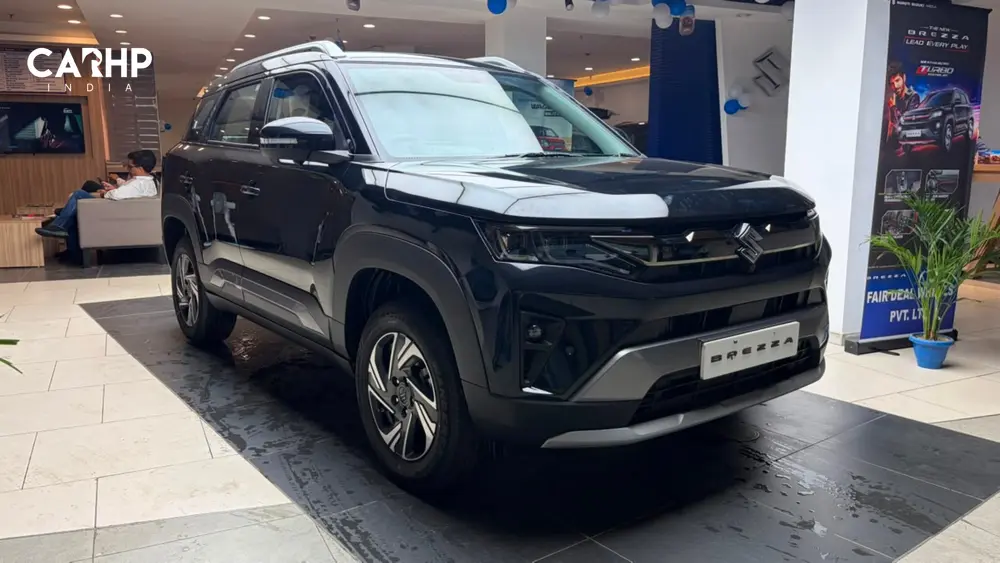
Maruti Suzuki is going back to the price board for the third time in 2026. India's largest carmaker has informed stock exchanges that it will raise prices across its range by up to Rs 30,000, effective from August, and if that sounds familiar, it should. This is the second such move in as many months, coming right on the heels of a similar hike the company pushed through in June.
For a brand that sells more cars in India than anyone else, a move like this ripples through showrooms nationwide within days. Anyone with a booking in hand or a purchase decision pending now has a fairly firm deadline to beat the new prices.
What's Changing and Which Cars Are Affected
In its regulatory filing, Maruti Suzuki pointed to persistent commodity inflation and rising input costs as the reason behind the revision. In a regulatory submission to the Bombay Stock Exchange, the company mentioned increased inflation pressures and a challenging cost landscape as reasons for the adjustment.
The statement read,
“The company is constrained to pass on a portion of the increased cost to the market, while continuing to ensure that the impact on customers is kept to the minimum extent possible.”
The hike itself is not uniform. Maruti has been clear that the exact increase will vary by model and variant, with the ceiling set at Rs 30,000. Going by the pattern from the June revision, where models including the e Vitara, Jimny, Baleno, XL6, Ertiga, Swift, Dzire, Invicto and Fronx saw price adjustments, the August round is expected to touch a similarly broad slice of the lineup rather than being limited to one or two nameplates.
Maruti has not published a model-by-model breakup yet, so buyers eyeing a specific car would do well to check with their dealership once the revised price list is out.
Also Read – Carmakers Who Have Announced Price Hikes For 2026
Why Is Maruti Doing This?
The official reasoning is straightforward: input costs have been climbing for a while now, and Maruti's cost-cutting efforts have only offset part of that increase. This is not a new story either. When the company announced its June price hike, it cited the exact same combination of sustained input cost inflation and elevated commodity prices.
Two hikes within three months, both justified in near-identical language, suggests the pressure on raw material costs has not eased through the middle of the year, and Maruti has decided that absorbing it any further isn't sustainable for its margins.
It's also worth noting that Maruti isn't hiking prices in isolation. Mahindra, Tata Motors and BYD have all revised prices on select models in recent weeks, pointing to an industry-wide cost environment rather than something specific to Maruti's own balance sheet.
Also Read – Why Maruti Suzuki Isn't Betting Big on EVs Yet
Will There Be More Price Hikes?
Nobody at Maruti has said this is the last one for the year, and going by the frequency we've seen in 2026 alone, ruling out a fourth hike would be premature. If commodity prices and input costs stay elevated through the rest of the year, particularly with festive season demand typically running high from September onwards, further adjustments wouldn't be a surprise.
That said, automakers are usually reluctant to hike prices too aggressively heading into the festive stretch, since that's when volumes matter most. Whether Maruti holds off until the new year or moves again before Diwali will likely depend on how raw material costs behave over the next couple of months.
Our Take
Two price hikes in three months is a fast clip even by the standards of an industry that revises prices every few quarters. On its own, a Rs 30,000 bump is not going to change anyone's decision to buy a Baleno or a Dzire, but the pattern matters more than the number. It tells you input cost inflation has been a genuine headwind through 2026, not a one-off adjustment Maruti made and moved on from.
Also Read – Do Entry-Level Hatchbacks Still Make Sense To Buy in India?
If you've been sitting on a booking, this is as good a nudge as any to close it out before August. If you're still deciding, it's worth keeping an eye on whether Mahindra and Tata follow with hikes of their own in the coming weeks, since that tends to be the more reliable signal of where the broader cost environment is headed.
Table of Contents
- What's Changing and Which Cars Are Affected
- Why Is Maruti Doing This?
- Will There Be More Price Hikes?
- Our Take
Join the Conversation
Trending
How 2027 Traffic Rule Changes Will Affect Drivers in India
India’s traffic rules are tightening, with repeat offenders facing possible driving licence disqualification and stricter deadlines for paying or disputing e-challans. New vehicle safety requirements will also affect specified commercial vehicles from 2027. Check the latest 2027 Indian traffic rules here.
Anmol Kumar
October 22, 2026
Check Out These Upcoming Hybrid Cars In India
Hybrid cars are gaining serious interest in India as more affordable options start appearing and real-world city mileage figures impress owners.
Salil Kumar
October 22, 2026

What Is CBG? Know About Its Production, Engine Performance, Prices and Future in India
Compressed biogas (CBG) is gaining attention in India as a renewable alternative to CNG. Here's how it is produced, its impact on engine performance and mileage, current pricing factors, and its future in India's automotive sector.
Salil Kumar
October 21, 2026

Hyundai Bayon Safety Features Revealed Ahead of October 26 Launch
Hyundai has revealed the safety package of the upcoming Bayon ahead of its October 26 launch in India. The compact SUV gets Level 2 Pro ADAS with 23 functions, six airbags as standard and a body structure made using 69% advanced multi-grade high-strength steel.
Anmol Kumar
October 21, 2026
Featured
Citroen C3 Review: Who Should Consider This Car?
A few days ago, I took the Citroen C3X out for a spin in the city and on the highways. I travelled long distances and checked its fuel efficiency, features, comfort, and other factors. Today, I’ll briefly share my overall experience with the C3X and will tell you whether you should consider it or not and which is the most value-for-money variant of the lot.
Vatsal Agrawal
May 19, 2026
Tesla Finally In India Officially. Why Now And What Does It Mean For EVs?
The much-anticipated 2025 Tesla Model Y has officially arrived in India, marking a pivotal moment for the nation's burgeoning electric vehicle market. Launched on July 15, 2025, the Model Y Juniper facelift offers cutting-edge technology, impressive range, and signature Tesla performance. Positioned as a premium electric SUV, its entry will intensify competition and reshape consumer expectations for EVs across the subcontinent.
Author
July 17, 2025
Here Are 10 Things The Harrier.EV Offers That The Mahindra XEV 9E Doesn't
The Harrier.EV is an incredible new offer from Tata. Its most popular competitor would be the Mahindra XEV 9E, priced similarly. With these two incredible offerings from home grown brands available, here is a list of everything the Harrier.EV offers that the XEV 9E doesn't.
Author
June 13, 2025
Write a comment
Comments
No comments yet. Be the first to comment!