BS7 Norms From April 1, 2029: 6 Major Changes Car Buyers Need to Know
By Salil Kumar
Published October 15, 2026
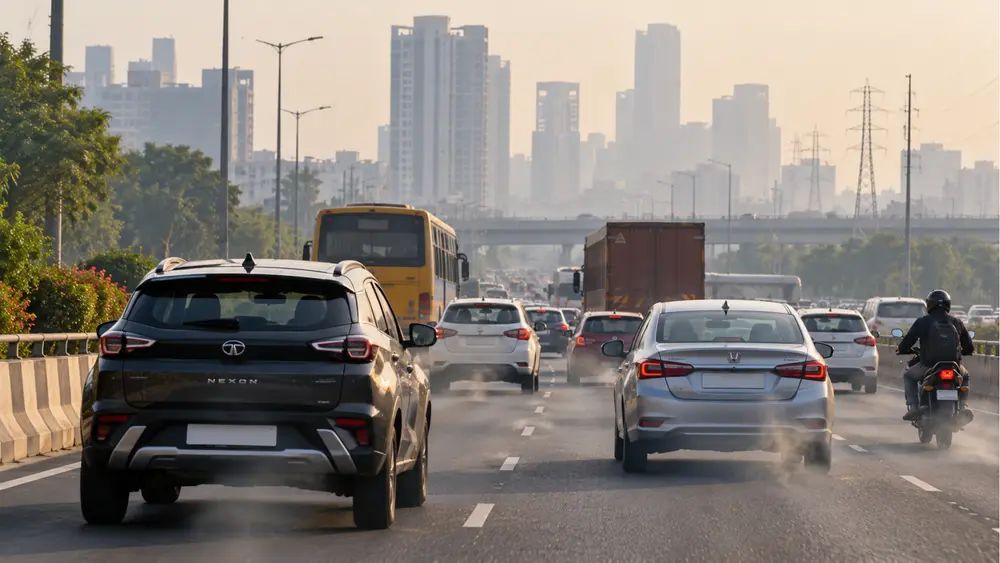
Quick Read - The proposed BS7 norms will introduce stricter real-world emission testing, onboard pollution monitoring, brake and tyre emission limits, and minimum EV battery durability requirements in phases from April 2029 to 2035.
India’s proposed Bharat Stage VII (BS7) emission norms will introduce a broader framework for regulating passenger cars from April 1, 2029.
Unlike the transition to BS6, which brought significant reductions in several exhaust-emission limits, the BS7 proposal focuses heavily on stricter real-world emission testing, continuous pollution monitoring, battery durability and pollution from brakes and tyres. The requirements will be introduced in phases through 2035. The rules remain at the draft stage.
1. Real-World Emission Testing Will Become Stricter
One of the biggest proposed changes is a conformity factor of 1.0 for nitrogen oxides (NOx) and particle numbers in real-driving emissions tests from April 1, 2030. This removes the additional allowance over the applicable laboratory limits during these tests. Cars will have to demonstrate compliance not just under laboratory conditions but also during prescribed on-road testing, putting greater pressure on manufacturers to maintain emission-control performance in everyday driving.
Also Read - Delhi Announces Stricter Winter Anti-Pollution Measures
2. Cars Will Monitor Their Actual Pollution Levels
BS7 proposes onboard monitoring (OBM) systems alongside existing onboard diagnostics (OBD). While OBD identifies faults in emission-control equipment, OBM will monitor and record actual exhaust emissions, particularly NOx and particulate matter. The proposed system must detect emissions reaching at least 2.5 times the applicable limits.
This creates an additional layer of monitoring once a car is in use, rather than relying exclusively on periodic inspections and fault detection.
3. Brake and Tyre Pollution Will Come Under Regulation
BS7 will extend pollution controls beyond the exhaust pipe for the first time under this framework. From April 2031, passenger cars will face proposed brake-particle limits of 3 milligrams per kilometre for pure electric vehicles and 7 milligrams per kilometre for other specified powertrains, including petrol, diesel and hybrid cars.
From April 2035, a common brake-particle limit of 3 milligrams per kilometre is proposed across passenger-car powertrains. Tyre-abrasion requirements are also proposed from April 2031, although the numerical limits and certain technical requirements are yet to be specified.
4. EV Battery Durability Will Get Minimum Performance Requirements
Pure electric cars and plug-in hybrids will have to meet proposed minimum battery-capacity retention requirements. Batteries must retain at least 75% of their original energy capacity for up to five years or 1 lakh kilometres, whichever comes first. The minimum then becomes 67% for the period extending up to eight years or 1.6 lakh kilometres, whichever comes first.
These requirements introduce a defined battery-performance benchmark, rather than leaving battery durability entirely to manufacturer specifications. They should not, however, be confused with an automatic promise of free battery replacement.
Also Read - Govt Proposes 5-Year Extension in Age Limit for EV, Hydrogen and CNG Vehicles
5. An Environmental Vehicle Passport Will Be Introduced
The proposed Environmental Vehicle Passport will provide buyers and owners with information about a vehicle's fuel consumption, pollutant emissions and traction-battery health. BS7 also introduces phased requirements for onboard fuel and energy consumption monitoring, with access to relevant vehicle data through diagnostic interfaces and, in later stages, wireless transmission.
The objective is to make vehicle efficiency and environmental performance more transparent throughout ownership.
6. Existing Exhaust Limits Will Not Simply Be Cut Across the Board
An important distinction is that the draft does not lower the principal passenger-car tailpipe limits for every pollutant. For example, the stated NOx limits remain 60 milligrams per kilometre for petrol cars and 80 milligrams per kilometre for diesel cars, while the particulate-matter limit remains 4.5 milligrams per kilometre.
The major changes instead concern how emissions are tested, monitored and controlled, alongside the introduction of brake and tyre pollution requirements and battery-durability standards.
BS7: Key Changes and Implementation Dates
| Proposed date | Change to the norms |
|---|---|
| April 1, 2029 | Initial BS7 requirements for new passenger cars, including proposed EV battery-durability and Environmental Vehicle Passport provisions. |
| April 1, 2030 | A conformity factor of 1.0 for NOx and particle numbers in real-driving emissions tests. |
| April 1, 2031 | Proposed brake-particle emission limits and tyre-abrasion requirements begin. |
| April 2032 onwards | Further phased access to onboard emissions and fuel or energy consumption data, including wireless transmission. |
| April 1, 2035 | A common brake-particle limit of 3 mg/km is proposed across passenger-car powertrains. |
Also Read - BS7 Emission Norms Draft Expected in Two Months, Says MoRTH
CarHP’s Take
These norms will not affect your buying prices in any way, nor are they expected to increase vehicle prices in any noticeable manner.
The only price increases you will see will be the usual year-on-year adjustments. You will, however, be better informed about the various emission limits of your vehicle, covering not just exhaust pollution but also tyre and brake dust.
Another bit concerning thing to note is that while these BS7 norms will surely help the environment, there is a distinct but legitimate possibility of Indian carmakers lobbying to delay or tweak these norms. After all, this is India, and these kinds of underhand tactics are already well known
Image Source: Generated Using Gemini
Table of Contents
- Real-World Emission Testing Will Become Stricter
- Cars Will Monitor Their Actual Pollution Levels
- Brake and Tyre Pollution Will Come Under Regulation
- EV Battery Durability Will Get Minimum Performance Requirements
- An Environmental Vehicle Passport Will Be Introduced
- Existing Exhaust Limits Will Not Simply Be Cut Across the Board
Join the Conversation
Trending
Honda 0 Alpha Electric SUV India Debut Set for December 2
Honda will unveil the production-spec 0 Alpha electric SUV in India on December 2. The locally manufactured model is expected to go on sale in 2027. Check for the expected design, features, powertrain and other key details of the SUV.
Anmol Kumar
October 15, 2026
Mahindra XUV 3XO CNG Launched at Rs 9.99 Lakh, Gets 24.70 km/kg Mileage
The Mahindra XUV 3XO CNG has been launched at Rs 9.99 lakh, with a claimed mileage of 24.70 km/kg, twin CNG cylinders and four variants. Here are its prices, specifications and features.
Anmol Kumar
October 15, 2026
Top 10 Best Mileage CNG Cars You Can Buy In 2026
CNG offers an unbeatable value for money proposition for car buyers. Here are the most efficient CNG cars currently on sale.
Salil Kumar
October 15, 2026
Featured
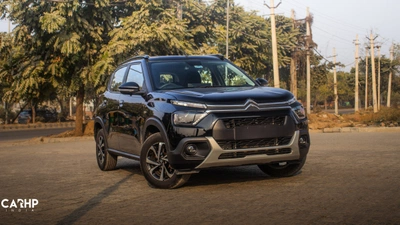
Citroen C3 Review: Who Should Consider This Car?
A few days ago, I took the Citroen C3X out for a spin in the city and on the highways. I travelled long distances and checked its fuel efficiency, features, comfort, and other factors. Today, I’ll briefly share my overall experience with the C3X and will tell you whether you should consider it or not and which is the most value-for-money variant of the lot.
Vatsal Agrawal
May 19, 2026
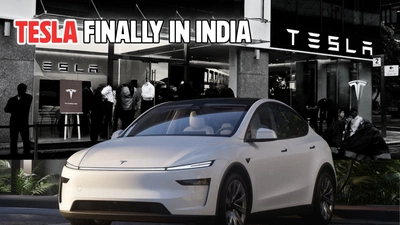
Tesla Finally In India Officially. Why Now And What Does It Mean For EVs?
The much-anticipated 2025 Tesla Model Y has officially arrived in India, marking a pivotal moment for the nation's burgeoning electric vehicle market. Launched on July 15, 2025, the Model Y Juniper facelift offers cutting-edge technology, impressive range, and signature Tesla performance. Positioned as a premium electric SUV, its entry will intensify competition and reshape consumer expectations for EVs across the subcontinent.
Author
July 17, 2025
Here Are 10 Things The Harrier.EV Offers That The Mahindra XEV 9E Doesn't
The Harrier.EV is an incredible new offer from Tata. Its most popular competitor would be the Mahindra XEV 9E, priced similarly. With these two incredible offerings from home grown brands available, here is a list of everything the Harrier.EV offers that the XEV 9E doesn't.
Author
June 13, 2025
Write a comment
Comments
No comments yet. Be the first to comment!