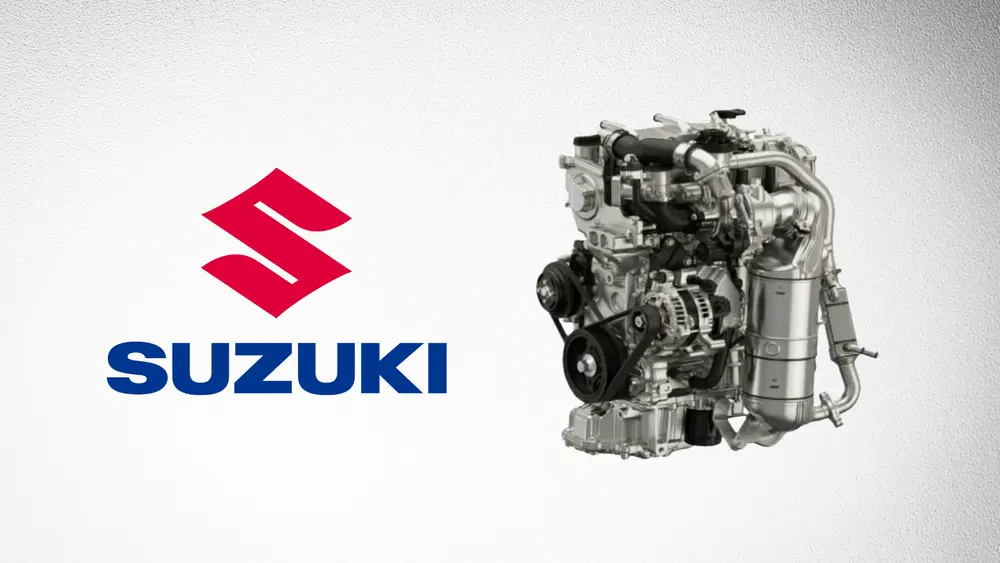
Quick Read - Suzuki’s new 1.2-litre DITC three-cylinder turbo-petrol engine produces 125 bhp and 230 Nm, supports petrol, CNG, CBG and E100 fuels, and targets over 40% thermal efficiency. Suzuki is also developing a 1.2-litre series hybrid system.
Suzuki Motor Corporation has confirmed development of a new direct-injection turbocharged petrol engine, internally referred to as the DITC, specifically aimed at growth markets including India.
Details emerged from Suzuki's Technology Strategy Briefing 2026, with additional technical specifics later surfacing from Japanese media.
What the New DITC Engine Brings
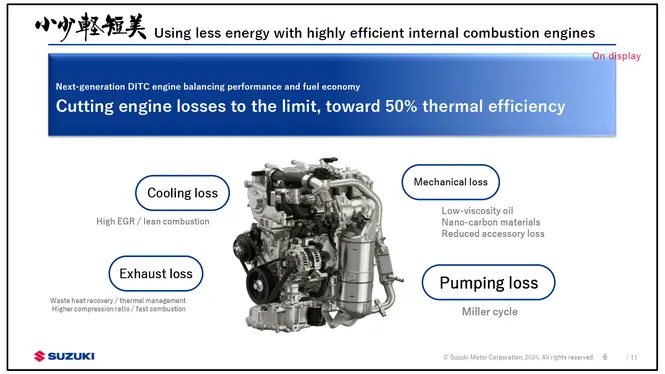
The DITC is a 1.2-litre three-cylinder turbocharged direct-injection petrol unit producing 93 kW (125 bhp) and 230 Nm of torque. It sits on Suzuki's Z-series engine architecture, the same family that currently underpins the 1.2-litre naturally aspirated and 1.5-litre units used across Maruti Suzuki's lineup.
One of the more unusual engineering choices is the use of a VG (variable geometry) turbocharger, a technology almost exclusively found on diesel engines. It allows the turbo to vary the angle of its inlet vanes, improving response at low revs and efficiency at higher ones.
Also Read - Honda's Upcoming Compact SUV Could Get Horse Powertrain-Sourced Engine
The engine is designed to run on petrol, CNG, CBG (compressed biogas), and E100 ethanol flex fuel. Each fuel requires specific injector calibration, but Suzuki is working toward a common base architecture that can accommodate them without a complete redesign.
Suzuki is also using a water-cooled intercooler, which it says is specifically configured to handle the high ambient temperatures found in markets like India, and exhaust gas recirculation to cut both cooling and pumping losses.
Suzuki Targets Over 40% Thermal Efficiency
Suzuki says the DITC targets maximum thermal efficiency of over 40%, with a broader research goal of reaching 50%. For context, the current Z12E engine that powers the Maruti Suzuki Baleno and Fronx already achieves around 40 per cent thermal efficiency, which was itself considered impressive for a naturally aspirated unit of this size.
Pushing past that with a turbocharged engine while also accommodating multiple fuel types is a more complex engineering challenge.
Also Read - Maruti Suzuki To Launch 7 New SUVs By 2031
A 1.2-Litre Series Hybrid Is Also in Development
Alongside the DITC, Suzuki also displayed a 1.2-litre series hybrid unit intended to serve as both a conventional hybrid and a stepping stone toward plug-in variants. In this setup, a 60 kW (80.5 bhp) engine paired with a 61 kW generator charges a battery that drives a 65 kW motor.
Suzuki targets over 29.2 km/l for the next-generation Alto using a 600 kg body combined with this system.
What it means for Maruti Suzuki in India
No model application has been confirmed. However, the DITC's output puts it in the same ballpark as the Hyundai mStallion and Kia Hyperion 1.2-litre T-GDi engines that power the Venue and Sonet, making it a credible option for Maruti Suzuki's compact SUV and hatchback lineup.
Suzuki has not disclosed which model will receive the engine first or when it will enter production.
Also Read - Next Generation Tata Nexon Project Garud Spotted Testing
Image Source: Suzuki Press Release
Table of Contents
- What the New DITC Engine Brings
- Suzuki Targets Over 40% Thermal Efficiency
- A 1.2-Litre Series Hybrid Is Also in Development
- What it means for Maruti Suzuki in India
Join the Conversation
Trending
Which EVs Are Available With BaaS Scheme?
BaaS is the new buzzword for EVs, here is every one that is availed with it for just few rupees per KM.
Salil Kumar
September 28, 2026

Tata Extends BaaS Across Its Entire EV Range
Tata extends Battery-as-a-Service to Nexon EV, Curvv EV, Sierra EV and Harrier EV. BaaS prices start at Rs 4.69 lakh, with battery financing quoted from Rs 2.6 to Rs 5.9 per km.
Arjun Nair
September 28, 2026
Skoda Slavia Facelift Production Begins Ahead of Festive Season Launch
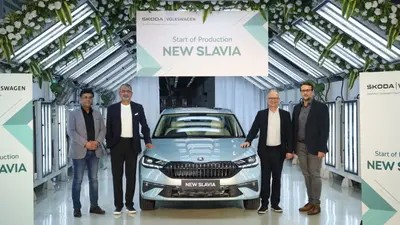
Skoda Auto Volkswagen India has started production of the new Slavia at its Chakan plant in Pune, ahead of its festive launch. It gets an 8-speed torque converter automatic with the 1.0 TSI, rear seat massage function, 360-degree camera, and an AI-powered infotainment system.
Anmol Kumar
September 28, 2026
Honda's Upcoming Compact SUV Could Get Horse Powertrain-Sourced Engine
Honda Cars India is reportedly in talks with Horse Powertrain to source a 1.2-litre engine for a new compact SUV. The engine could be offered in petrol, hybrid and CNG options, with production targeted for October 2028.
Anmol Kumar
September 28, 2026
Featured
Citroen C3 Review: Who Should Consider This Car?
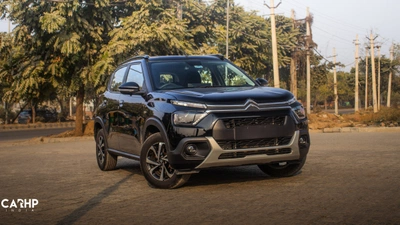
A few days ago, I took the Citroen C3X out for a spin in the city and on the highways. I travelled long distances and checked its fuel efficiency, features, comfort, and other factors. Today, I’ll briefly share my overall experience with the C3X and will tell you whether you should consider it or not and which is the most value-for-money variant of the lot.
Vatsal Agrawal
May 19, 2026
Tesla Finally In India Officially. Why Now And What Does It Mean For EVs?
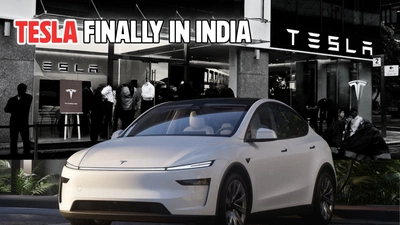
The much-anticipated 2025 Tesla Model Y has officially arrived in India, marking a pivotal moment for the nation's burgeoning electric vehicle market. Launched on July 15, 2025, the Model Y Juniper facelift offers cutting-edge technology, impressive range, and signature Tesla performance. Positioned as a premium electric SUV, its entry will intensify competition and reshape consumer expectations for EVs across the subcontinent.
Charan Narain
July 17, 2025

Here Are 10 Things The Harrier.EV Offers That The Mahindra XEV 9E Doesn't
The Harrier.EV is an incredible new offer from Tata. Its most popular competitor would be the Mahindra XEV 9E, priced similarly. With these two incredible offerings from home grown brands available, here is a list of everything the Harrier.EV offers that the XEV 9E doesn't.
Charan Narain
June 13, 2025
Write a comment
Comments
No comments yet. Be the first to comment!