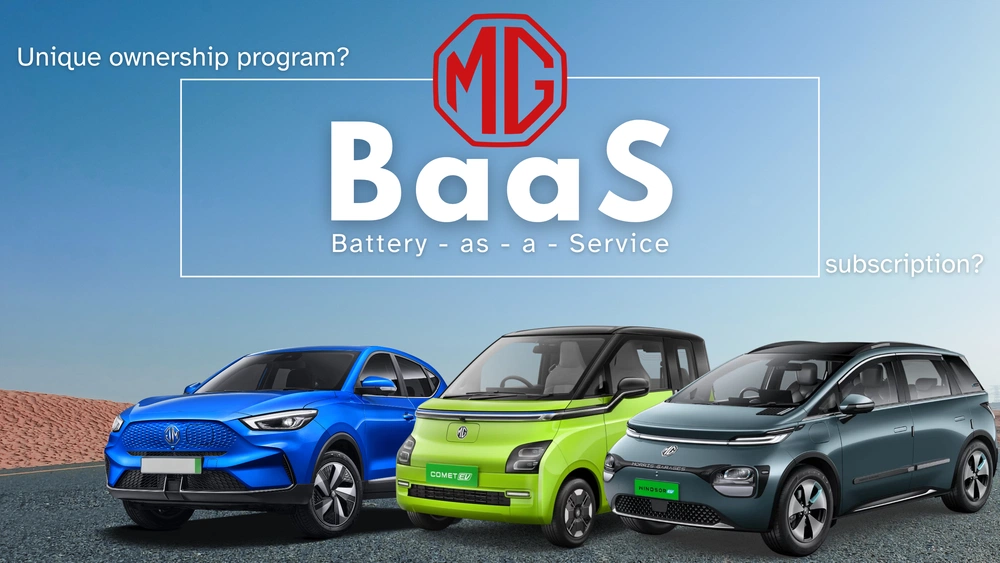
MG Motor's Battery-as-a-Service (BaaS) program introduces a fresh take on electric vehicle ownership by targeting one of the biggest concerns for buyers, the high cost of the battery. Instead of purchasing the battery upfront along with the car, MG allows customers to buy the EV separately and rent the battery through a third-party financer.
The user then pays for the battery usage based on how many kilometers they drive.
What started as an MG-only idea has now spread across the industry. Mahindra, Kia, Tata, Hyundai, Citroen, Maruti Suzuki and Toyota have all launched their own BaaS schemes through 2026, each with its own per-kilometer rate and savings structure.
It's important to note that BaaS is different from MG's "Subscribe" program. While both aim to provide flexibility, the Subscribe model is more like a full-fledged vehicle rental service.
Also Read – Which EVs Are Available With BaaS Scheme?
Upfront Costs and Base Per-Kilometer Charges
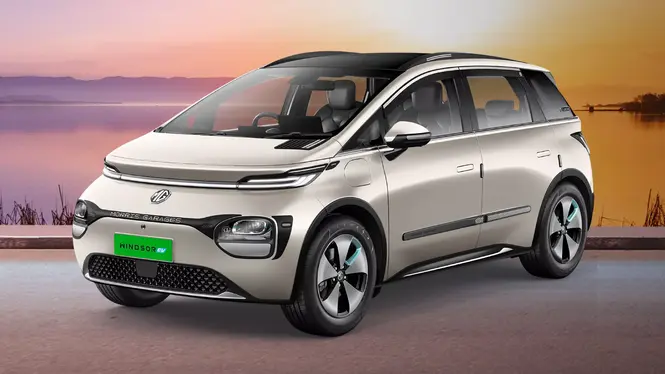
The BaaS model was first rolled out with the Windsor EV and has since been extended to other models like the compact Comet EV and the mid-size ZS EV. This shows MG's broader strategy to make EVs more affordable and accessible across different segments.
Under this scheme, the upfront price of the car is considerably lower since it doesn't include the battery. Instead, the customer pays a per-kilometer rate to use the battery, and this rate may vary depending on the financing partner.
For example, the Windsor EV starts at ₹9.99 lakh without the battery, with a battery usage charge of ₹3.99 per kilometer for the 38kWh pack.
The Windsor EV Pro comes with the larger 52.9kWh pack. It's available from ₹12.90 lakh under BaaS, with a battery charge of ₹4.5 per kilometer.
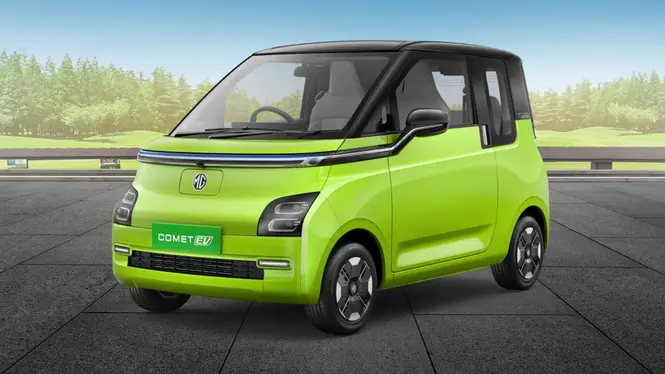
The Comet EV, which is even more affordable, starts at just ₹4.99 lakh under BaaS, with a base battery usage charge of ₹3.2 per kilometer.
The ZS EV, a more premium option, is priced from ₹13 lakh under BaaS, with a per-kilometer battery charge of ₹4.5.
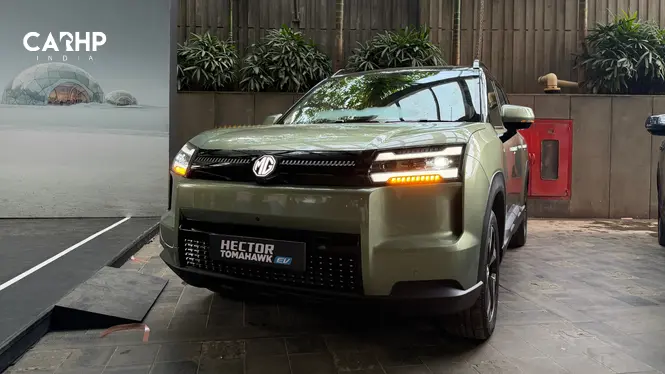
MG's newest model, the Hector Tomahawk, joined the BaaS line-up too, in both fully electric and plug-in hybrid form (PHEV).
Also Read – Best EVs Under ₹30 Lakh With 400 Km Real World Range
| Car Model (BaaS Variant) | Upfront Price (Ex-showroom, without battery) | Base Per-Km Battery Charge | Claimed Range (km) | Full Ex-showroom Price (approx., with battery) |
|---|---|---|---|---|
| MG Comet EV | ₹4.99 Lakh | ₹3.2/km | 230 | ₹7.80 Lakh |
| MG Windsor EV (38kWh) | ₹9.99 Lakh | ₹3.99/km | 449 | ₹14.70 Lakh |
| MG Windsor EV Pro (52.9kWh) | ₹12.90 Lakh | ₹4.5/km | 449 | ₹17.90 Lakh |
| MG ZS EV | ₹13 Lakh | ₹4.5/km | 461 | ₹17.99 Lakh |
| Hector Tomahawk EV | ₹13.99 Lakh | ₹4.90/km | 517 | ₹19.50 Lakh |
| Hector Tomahawk PHEV | ₹21.79 Lakh | ₹3.20/km | upto combine 1,100+ | ₹25.70 Lakh |
When looking deeper into MG's BaaS (Battery-as-a-Service) model, the actual running costs become more apparent, especially once you consider the per-kilometer battery rental rates and the minimum monthly usage conditions set by different financing partners.
One of the more flexible plans comes from VidyutTech. It charges users strictly based on how many kilometers they drive, without any minimum monthly usage requirements.
So if you don't use the vehicle at all in a given month, you won't pay anything for the battery rental, although you may still need to place a security deposit.
For the MG Windsor EV, VidyutTech charges ₹3.5 per kilometer, making it a true “pay-as-you-go” model.
On the other hand, Bajaj Finance also charges ₹3.5 per kilometer for the Windsor EV, but with a mandatory minimum usage of 1500 kilometers per month. This means even if you drive less, you’re still paying ₹5,250 every month (₹3.5 × 1500 km).
Also Read – Every Electric Three Row SUV On Sale Under Rs 65 Lakh
Actual Cost Of Owning A MG EV For A Month
| Financier | Per-Km Charge (MG Windsor EV) | Minimum Running per Month (km) | Minimum Monthly Battery Cost | Pay for Additional Kms? |
|---|---|---|---|---|
| VidyutTech | ₹3.5 | 0 | ₹0 (based on actual usage) | On actual running |
| Bajaj Finance | ₹3.5 | 1500 | ₹5,250 | No |
| Herofin Corp | ₹3.5 | 1500 | ₹5,250 | Yes |
| Ecofy and Autovert | ₹5.8 | 1500 | ₹8,700 | Yes |
MG Windsor EV with VidyutTech (1500 km/month usage)
- Battery cost: ₹3.5/km * 1500 km = ₹5,250 (VidyutTech charges on actual usage).
- Charging cost: ₹1/km * 1500 km = ₹1,500.
- Total running cost (battery + charging): ₹6,750.
MG Windsor EV with Bajaj Finance (1000 km/month usage)
- Battery cost: ₹5,250 (fixed for up to 1500km, as per Bajaj Finance terms).
- Charging cost: ₹1/km * 1000 km = ₹1,000.
- Total running cost (battery + charging): ₹6,250.
- In this scenario, despite driving only 1000 km, the customer pays for 1500 km of battery usage, effectively increasing the per-actual-km cost for the battery.
MG Windsor EV with Herofin Corp (2000 km/month usage)
- Battery cost: ₹5,250 (for the first 1500km) + (500km * ₹3.5) = ₹7,000.
- Charging cost: ₹1/km * 2000 km = ₹2,000.
- Total running cost (battery + charging): ₹9,000.
MG Windsor EV with Ecofy and Autovert (2000 km/month usage)
- Battery cost: ₹8,700 (for the first 1500km) + (500km * ₹5.8) = ₹11,600.
- Charging cost: ₹1/km * 2000 km = ₹2,000.
- Total running cost (battery + charging): ₹13,600.
Interestingly, Bajaj does not charge extra if you exceed the 1,500 km limit. You pay the same fixed amount whether you drive more or less.
Herofin Corp takes a similar approach to Bajaj Finance. It also charges ₹3.5 per kilometre with a minimum usage of 1,500 kilometres, resulting in the same base monthly cost of ₹5,250. However, there is one key difference:
If you drive more than 1,500 kilometres in a month, Herofin charges for the extra distance, so you will pay more if your driving exceeds the baseline.
Also Read – Maruti Suzuki E-Vitara BaaS Explained
For customers who may not qualify for standard financing due to lower credit scores, options like Ecofy and Autovert are available. These plans come with a much higher per-kilometer cost of ₹5.8. Like Herofin Corp, they also require a minimum usage of 1500 kilometers per month and charge extra for additional distance.
This pushes the base monthly cost to ₹8,700 (₹5.8 × 1500 km), with added costs if you drive beyond that.
All of this highlights the importance of carefully reviewing the terms of each financing partner under the BaaS scheme. Depending on your driving habits and budget, the difference in monthly expenses can be substantial.
When Flexibility Becomes a Fixed Cost
These cost breakdowns make one thing clear: while MG’s BaaS model lowers the upfront price of EVs, it can become expensive each month, especially with a high per-kilometre rate or charges for exceeding the minimum limit.
The bigger issue is the perception of a true “pay-per-usage” model. On paper, you pay based on how much you drive, but that is not always the case.
Most BaaS financing partners, including Bajaj Finance, Herofin Corp, Ecofy, and Autovert, require a minimum monthly usage of 1,500 kilometres. This locks users into a fixed monthly cost even if they drive less. Only VidyutTech offers a genuinely usage-based model, charging strictly according to the distance driven.
This is an important detail buyers could miss. If you drive only 500 to 800 km a month, you could still be charged for 1,500 km, making the model less cost-effective than it initially appears.
Your credit score is another factor that can affect monthly costs. Ecofy and Autovert are often the only options for buyers with lower credit ratings, but they charge a higher rate of ₹5.8 per kilometre.
This ties creditworthiness directly to the monthly cost of using the EV, potentially undermining the affordability of BaaS. For these buyers, BaaS could prove much more expensive over the long term.
Also Read – MG Hector Tomahawk EV: First Impressions
Beyond the Low Upfront Price
One of the standout benefits of MG's Battery-as-a-Service program is the lifetime battery warranty with unlimited kilometers. This feature addresses one of the most pressing concerns for EV buyers, the long-term reliability of the battery and the potential costs of replacement, which can often run into lakhs of rupees.
Flexibility to Exit or Buy the Battery: Customers aren't locked into the BaaS model forever. MG allows you to opt out of the scheme at any point by paying off the remaining battery amount, along with any outstanding balance on the vehicle itself.
VidyutTech, in particular, offers a well-thought-out structure. After the typical 3 to 5-year financing period, customers can choose to either continue with battery rentals or purchase the battery outright.
Selling the Vehicle: If you choose to sell your MG EV before the BaaS tenure is over, you're still allowed to do so. However, you'll need to clear any pending dues for both the vehicle and the battery beforehand.
Assured Buyback Value: MG has also added a safety net in the form of an assured buyback plan, now called MG Value Promise. Buyers can choose a tenure of 3, 4 or 5 years, with a guaranteed resale value ranging from 40% to 60% depending on the plan and tenure picked.
The scheme runs independently of any loan or finance arrangement, so it applies whether the car was bought in cash or on credit. Commercial MG ZS EV buyers are now covered too, for vehicles up to three years old or with usage capped at 60,000 km a year.
This helps reduce uncertainty around EV resale prices, a sticking point for many first-time EV buyers, and provides a structured exit route.
Repossession Clause: It's important to note that missing monthly payments for battery rental or per-kilometer usage can lead to repossession of the vehicle. In such cases, the financer will calculate depreciation and outstanding dues before issuing any refund. This makes it crucial for users to stay financially disciplined throughout the rental period.
Also Read – MG Hector Tomahawk PHEV All 6 Driving Modes Explained
Conclusion
MG's Battery-as-a-Service (BaaS) model was never just a sales strategy. It marked a real shift in how electric mobility is made accessible in India, and by September 2026 the idea has spread well beyond MG.
Mahindra, Kia, Tata, Hyundai, Citroen, Maruti Suzuki and Toyota now run BaaS schemes of their own, each unbundling the battery cost to tackle the same barrier, the high upfront price of an EV.
The result is that EVs like the MG Comet, MG Windsor and their rivals from other brands are now priced closer to, and in some cases below, many petrol or diesel cars of a similar size.
The benefit doesn't end at the showroom. MG's lifetime battery warranty and its Value Promise buyback structure help ease long-term ownership concerns, giving buyers a clearer picture of depreciation, battery failure risk and resale value before they commit.
Add to that the flexibility to opt out, buy the battery outright, or use a guaranteed buyback option, and the BaaS model still holds up as a useful ownership structure, provided the fine print is read closely.
However, while the upfront cost is much reduced across every brand offering BaaS, the real cost of ownership needs to be worked out properly to avoid unpleasant financial surprises.
The final monthly expenditure isn't just the EMI on the car. It includes battery rental charges and charging expenses, and those vary much depending on the brand, the financing partner and how much the car is actually driven.
For instance, several financiers still impose a 1500 km minimum monthly usage on their plans, meaning even low-mileage drivers may end up paying for kilometers they don't use. This can distort the idea of a true "pay-per-use" model, whichever brand's scheme you choose.
Image Source: MG India
Table of Contents
- Upfront Costs and Base Per-Kilometer Charges
- Actual Cost Of Owning A MG EV For A Month
- When Flexibility Becomes a Fixed Cost
- Beyond the Low Upfront Price
- Conclusion
Join the Conversation
Trending
Hyundai BAYON Design Sketches Revealed Ahead of India Launch
Hyundai India has released the first design sketches of the BAYON, its upcoming mid-size SUV. The renders preview a sculpted exterior with H-Edge lighting and a tech-focused cabin ahead of what is expected to be a launch later this year.
Anmol Kumar
September 16, 2026

Safest Cars In India To Buy in 2026
A complete list of Bharat NCAP tested models, their adult and child occupant protection scores, and star ratings.
Salil Kumar
September 15, 2026
Mahindra XUV 7XO Scores 5 Stars in Bharat NCAP, Gets Near-Perfect Adult Safety Score
The Mahindra XUV 7XO has been awarded a 5-star Bharat NCAP rating, scoring 30.76 out of 32 for adult occupant protection and 44.97 out of 49 for child safety. The rating covers the full variant range, petrol and diesel both.
Arjun Nair
September 15, 2026

Maruti Wagon R Facelift Spied Testing With New Head and Tail Lights
The Wagon R facelift has been spotted testing in CNG and heavy camouflage. A fresh face, reworked rear, and a bigger touchscreen can be expected on one of India's best-selling hatchbacks.
Anmol Kumar
September 15, 2026
Maruti Suzuki Offering Up to Rs. 1.35 Lakh Benefits in September 2026
Maruti Suzuki's September 2026 Arena offers cover seven models, with the Victoris strong hybrid getting the highest benefits at Rs. 1.35 lakh. Here is the full breakdown, including fuel-type differences on the Wagon R, Alto K10, Swift, and Eeco.
Anmol Kumar
September 11, 2026
Featured
Citroen C3 Review: Who Should Consider This Car?
A few days ago, I took the Citroen C3X out for a spin in the city and on the highways. I travelled long distances and checked its fuel efficiency, features, comfort, and other factors. Today, I’ll briefly share my overall experience with the C3X and will tell you whether you should consider it or not and which is the most value-for-money variant of the lot.
Vatsal Agrawal
May 19, 2026
Tesla Finally In India Officially. Why Now And What Does It Mean For EVs?
The much-anticipated 2025 Tesla Model Y has officially arrived in India, marking a pivotal moment for the nation's burgeoning electric vehicle market. Launched on July 15, 2025, the Model Y Juniper facelift offers cutting-edge technology, impressive range, and signature Tesla performance. Positioned as a premium electric SUV, its entry will intensify competition and reshape consumer expectations for EVs across the subcontinent.
Charan Narain
July 17, 2025
Here Are 10 Things The Harrier.EV Offers That The Mahindra XEV 9E Doesn't
The Harrier.EV is an incredible new offer from Tata. Its most popular competitor would be the Mahindra XEV 9E, priced similarly. With these two incredible offerings from home grown brands available, here is a list of everything the Harrier.EV offers that the XEV 9E doesn't.
Charan Narain
June 13, 2025
Write a comment
Comments
No comments yet. Be the first to comment!