


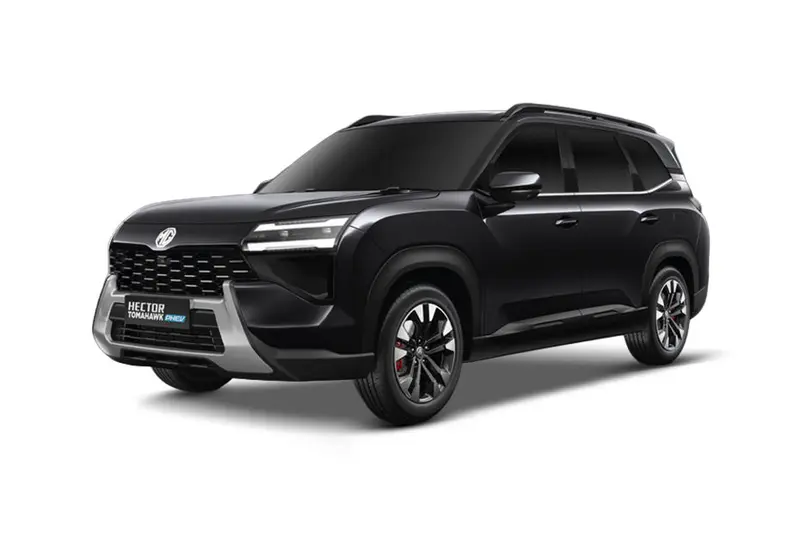
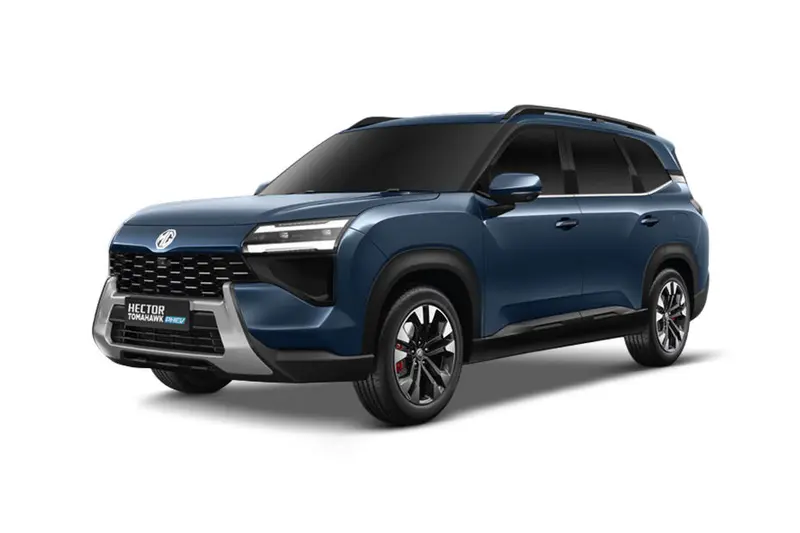
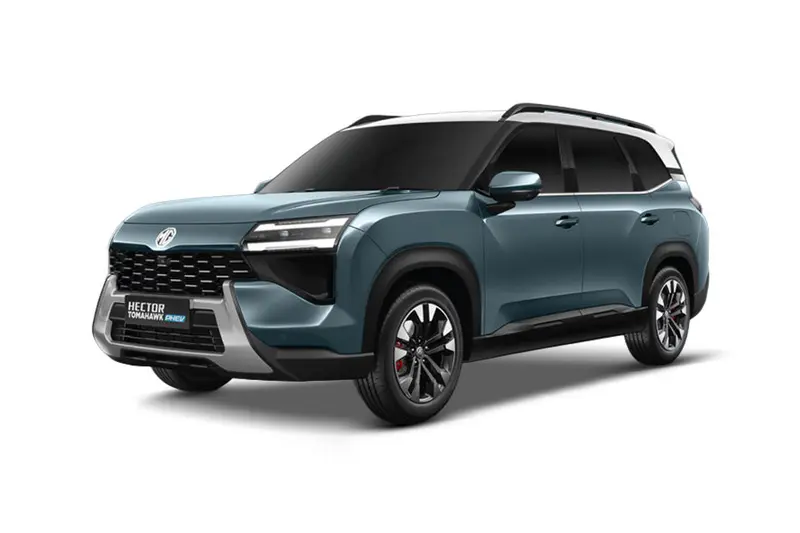
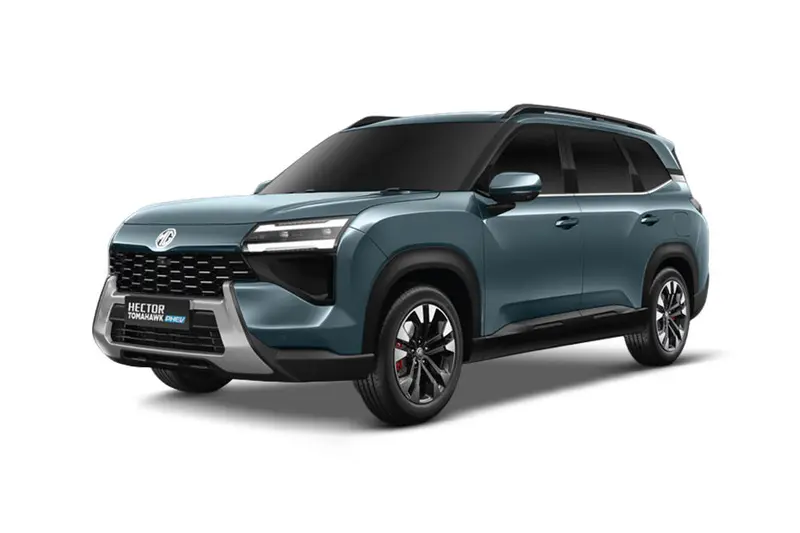
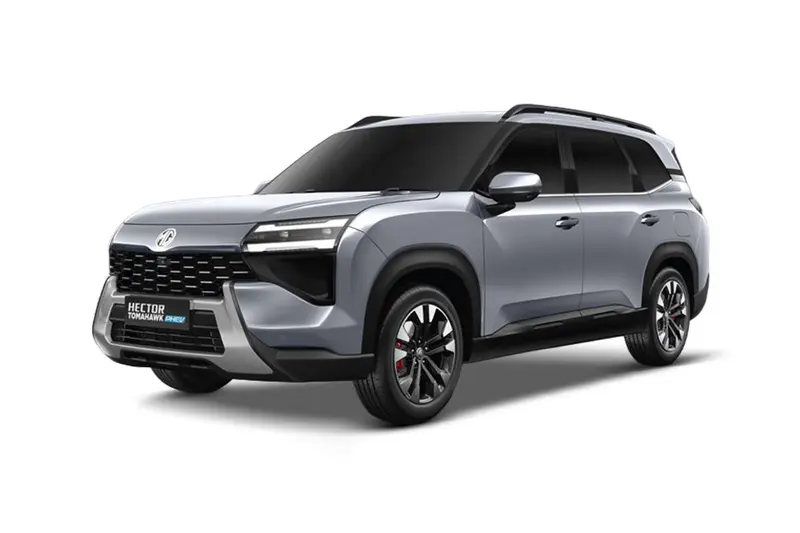
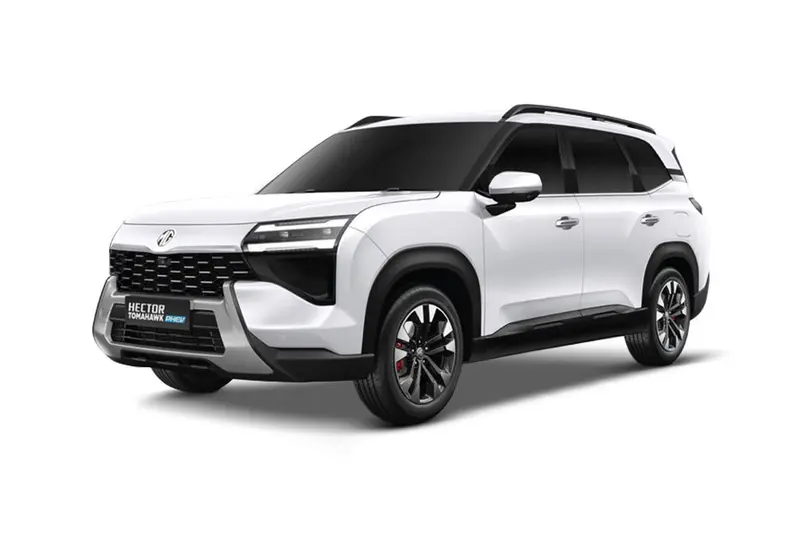
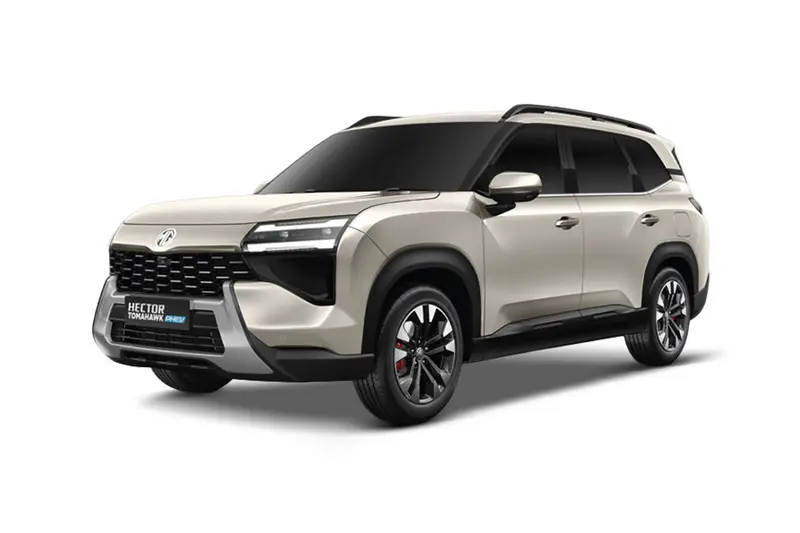
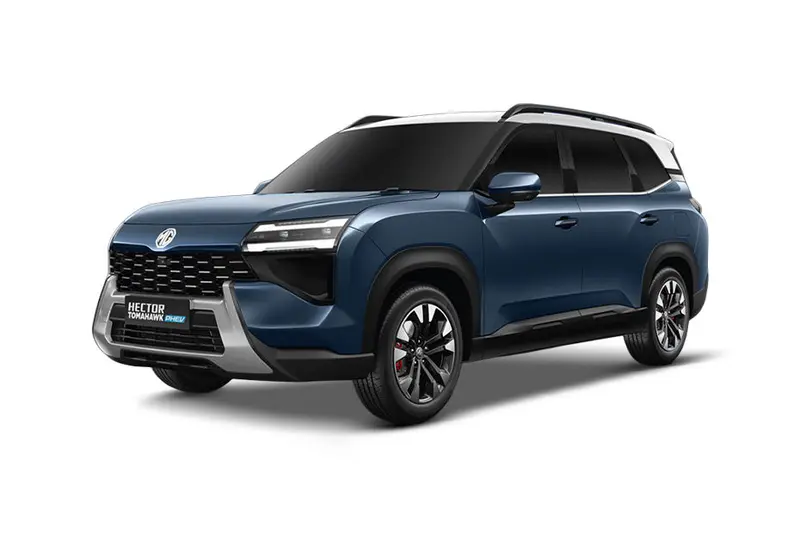
MG Hector Tomahawk PHEV

MG Hector Tomahawk PHEV
EMI Loading
MG Hector Tomahawk PHEV Key Specifications
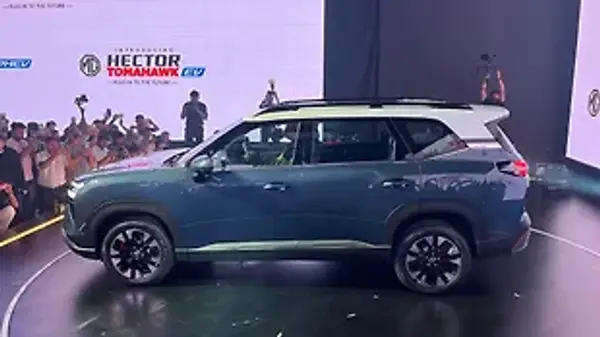
It has decently large proportions, with a length of 4.74 metres and a 2.8-metre wheelbase.
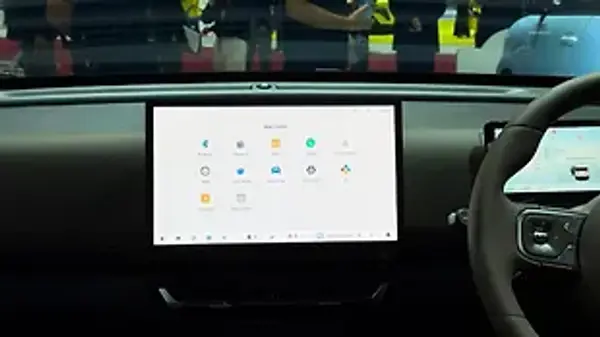
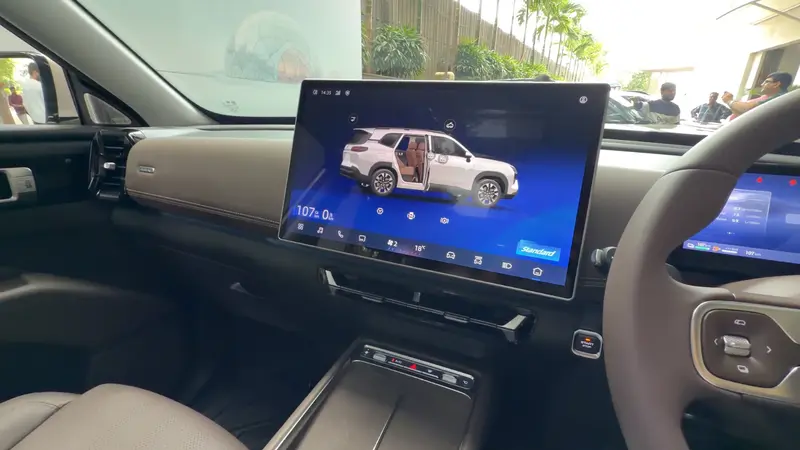
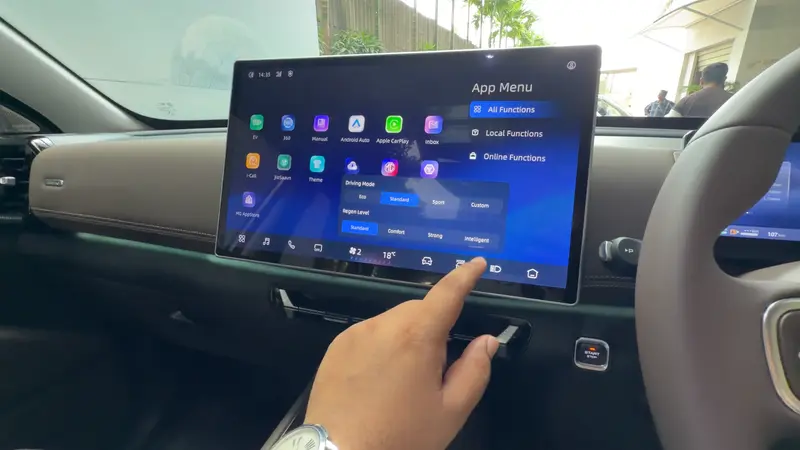
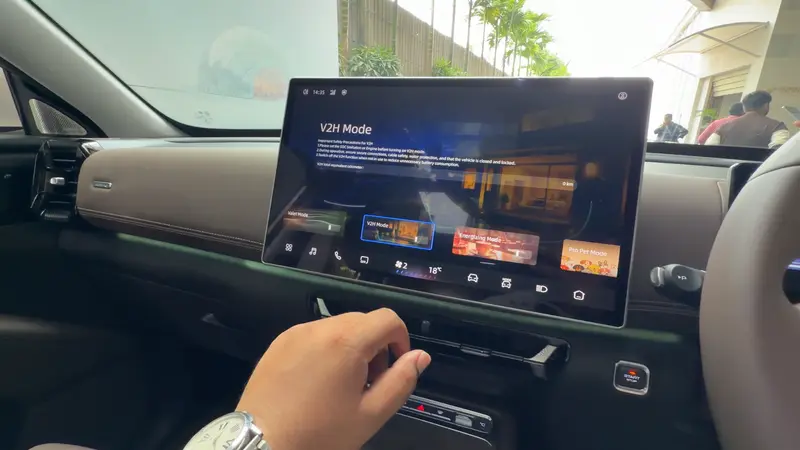
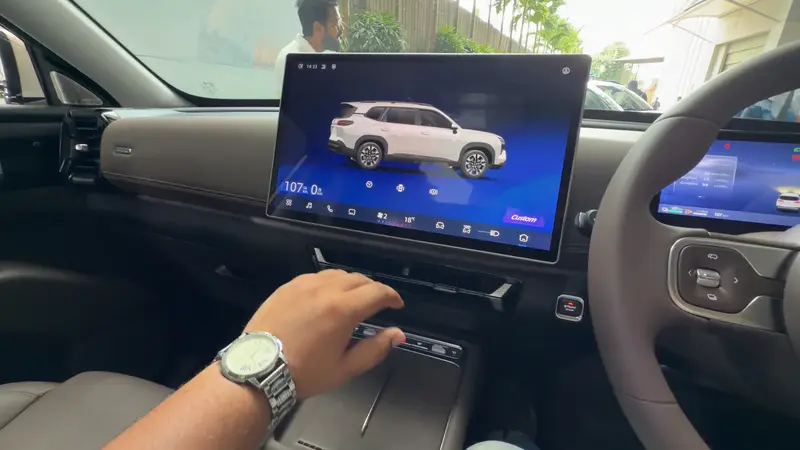
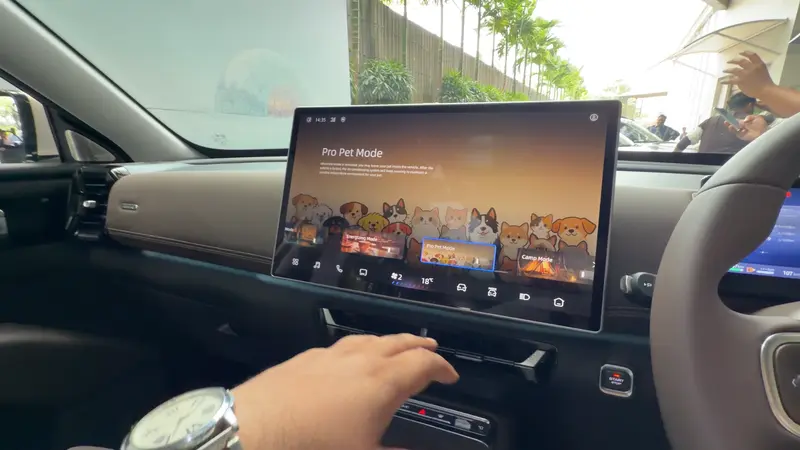
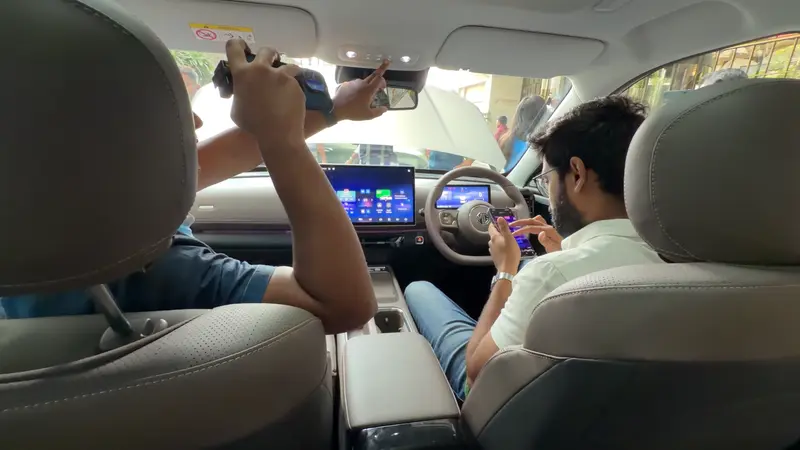
The MG Hector Tomahawk PHEV gets a massive 15.6-inch infotainment unit with wireless Apple CarPlay and Android Auto.

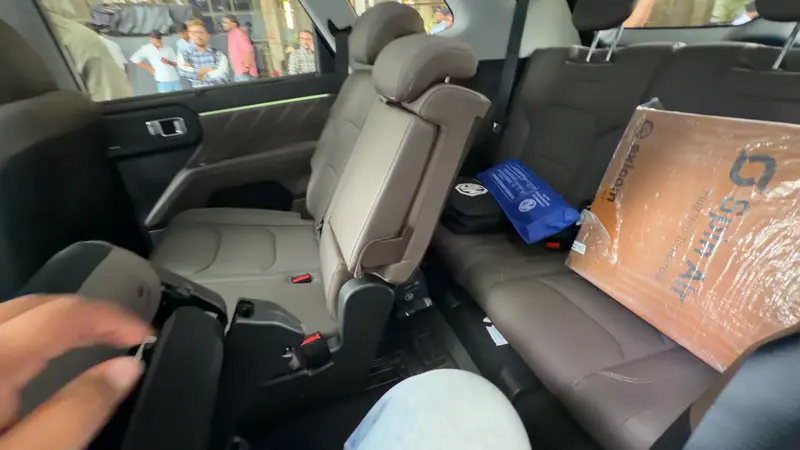
The Hector Tomahawk PHEV is only offered as a seven-seater currently.

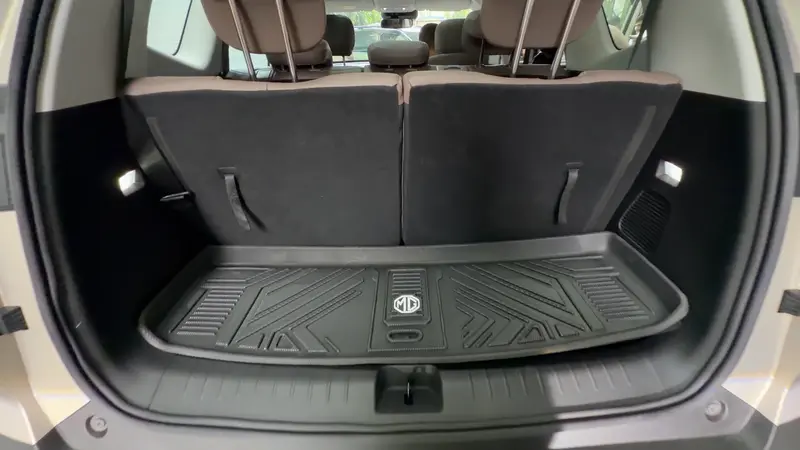
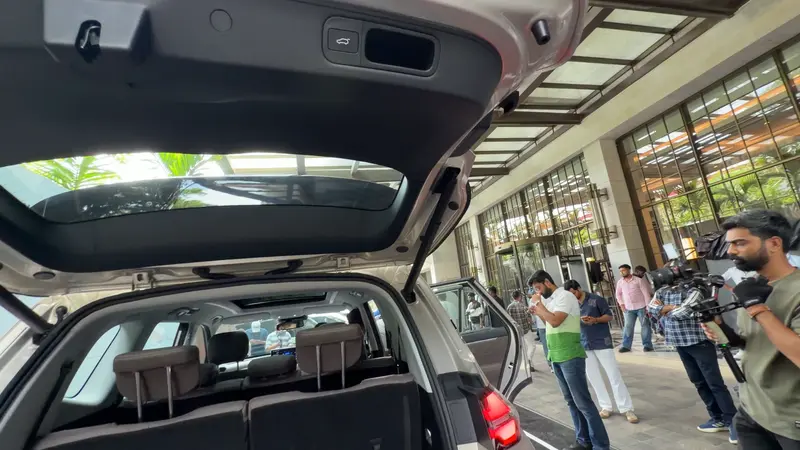
It has a boot space of 194 litres, expandable to 528 litres by folding the third row.
MG Hector Tomahawk PHEV Overview

The MG Hector Tomahawk PHEV is India's first plug-in hybrid SUV and shares its ADAPT platform with the all-electric Hector Tomahawk EV. The two cater to different needs, though. The EV makes the most sense for buyers who can charge regularly and are comfortable planning longer trips around charging, while the PHEV can cover daily commutes on electric power and still fall back on petrol when the battery runs low.
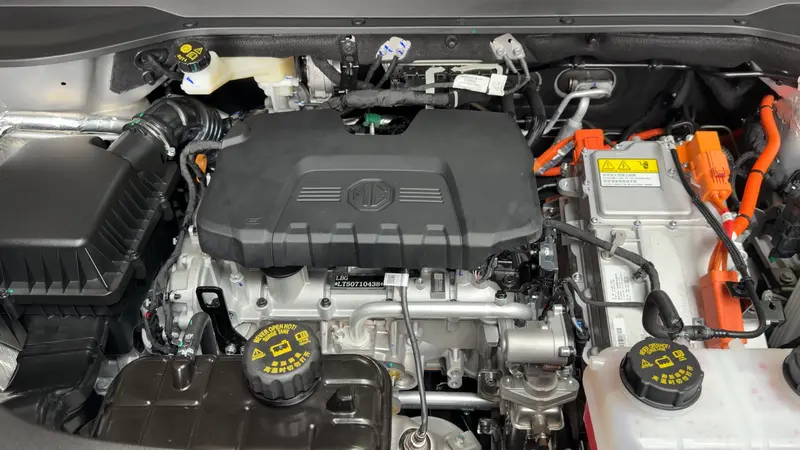
Power comes from a 1.5-litre Atkinson cycle petrol engine that produces 75 kW or 102 hp, paired with a 148 kW electric Motor. A Dedicated Hybrid Transmission links the two, while a 20.5 kWh MAGIC battery supplies the motor. MG claims over 115 km of electric range, with the total range rising to more than 1,100 km with a full battery and fuel tank.
The system has six operating modes, namely Pure EV, Series Hybrid, Parallel Hybrid Boost, Regeneration, Pure Engine, and Engine Drive with Charge. The petrol engine has a claimed thermal efficiency of 43.2 percent, while the Dedicated Hybrid Transmission is rated at 98.8 percent efficiency.
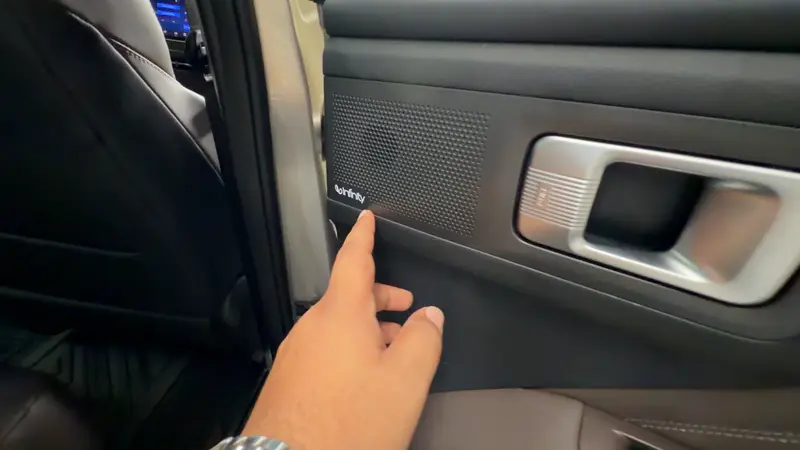
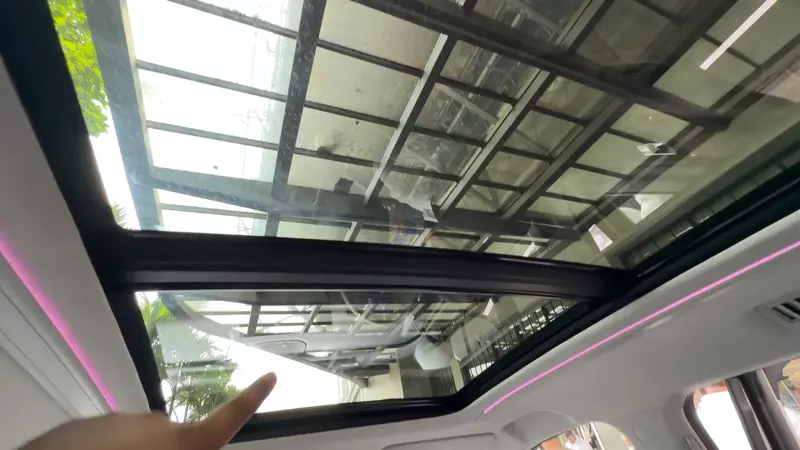
Much of the cabin and exterior are shared with the Tomahawk EV. Inside, the PHEV gets a Moroccan Brown and Carbon Black theme and a dual-pane cockpit sunroof. The top-spec Essence also gets a 15.6-inch Grand View Display, a 10-speaker Infinity audio system, and the complete Level 2 ADAS package with 11 functions.
The Tomahawk PHEV is offered only with seven seats. Buyers can choose between the Exclusive and Essence variants, with eight exterior colour combinations available, including two dual-tone options.
Battery and Motor
Battery and Motor
The Hector Tomahawk PHEV uses a 1.5-litre Atkinson cycle petrol engine alongside an electric motor. The petrol engine develops 75 kW or 102 hp and 125 Nm. It has been tuned specifically for hybrid use and has a claimed thermal efficiency of 43.2 percent.
The electric motor produces 148 kW or 201 hp and 237 Nm and draws power from a 20.5 kWh MAGIC battery. Both power sources work through a Dedicated Hybrid Transmission, which MG says is 98.8 percent efficient.
A 10-in-1 Intelligent Electric Drive Unit brings the motor, inverter, reduction gearbox, and other related functions together in one unit. The powertrain can operate in six modes, covering Pure EV, Series Hybrid, Parallel Hybrid Boost, Pure Engine, Engine Drive with Charge, and Regeneration.
Range and Charging
Range and Charging
The Hector Tomahawk PHEV has a claimed electric range of over 115 km from its 20.5 kWh battery under the MIDC test procedure. With a full battery and its 52-litre fuel tank filled, MG claims a total range of more than 1,100 km.
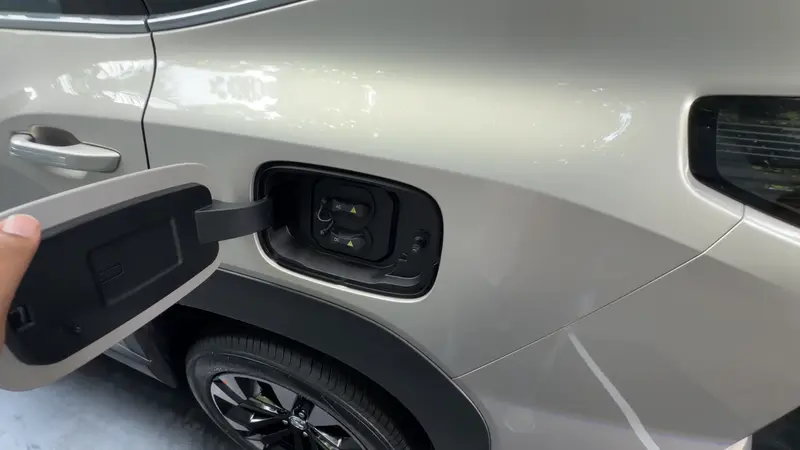
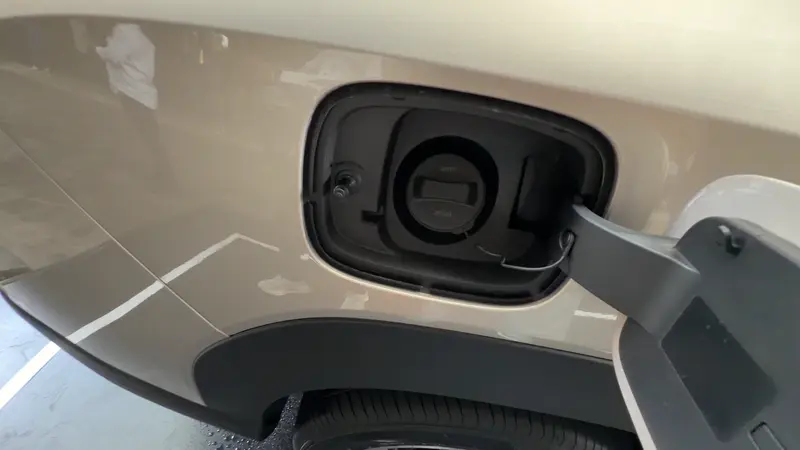
Charging can be done using either AC or DC power. A 25 kW DC fast charger takes around 35 minutes to take the battery from 30 to 80 percent, while a 3.3 kW AC supply takes around 7.5 hours for a 10 to 100 percent charge. MG includes a 3.3 kW portable charging cable and a 3.3 kW home charging box with the SUV. The charging port uses the CCS2 standard.
interior
interior
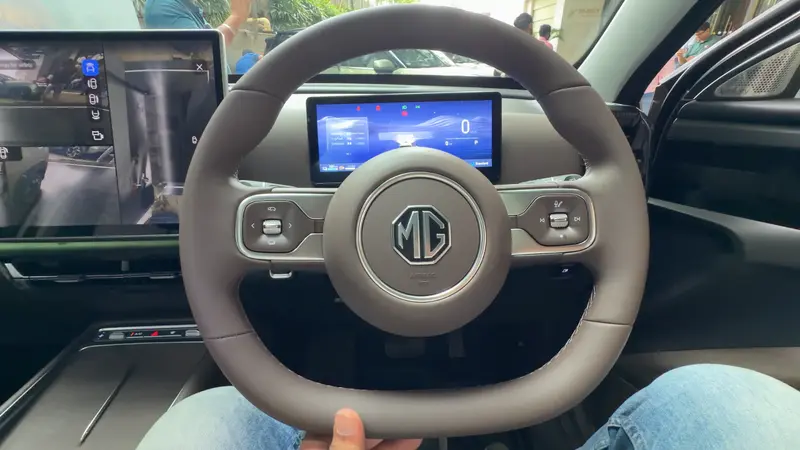
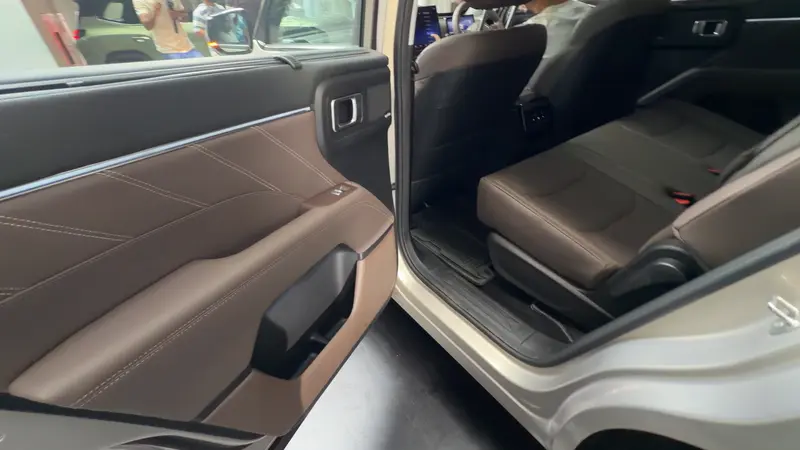
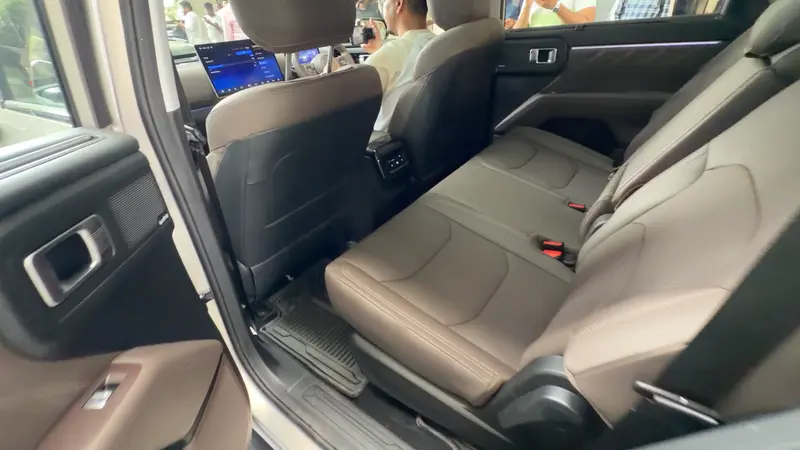
The Hector Tomahawk PHEV gets the same Moroccan Brown and Carbon Black interior theme as the EV. Both variants have leather-finish upholstery, matching door armrests and dashboard inserts, along with a leather-wrapped steering wheel.
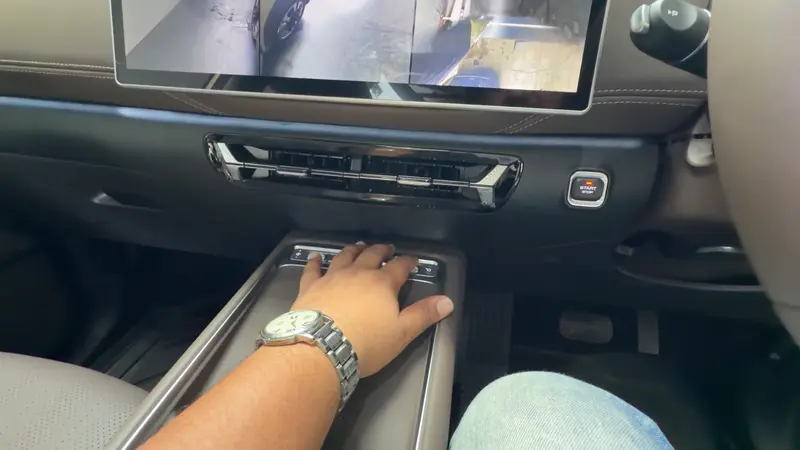
The driver's seat is electrically adjustable in six ways on the Exclusive, while the Essence adds a memory function and auto-retract feature for easier entry and exit. Both versions get a four-way power-adjustable co-driver seat. Front ventilated seats, a cooled 50W wireless charger, and USB-A and fast-charging USB-C ports are provided in the first row, while the second row gets its own USB-A and USB-C ports. Ambient lighting is limited to blue on the Exclusive, while the Essence gets 256-colour lighting.
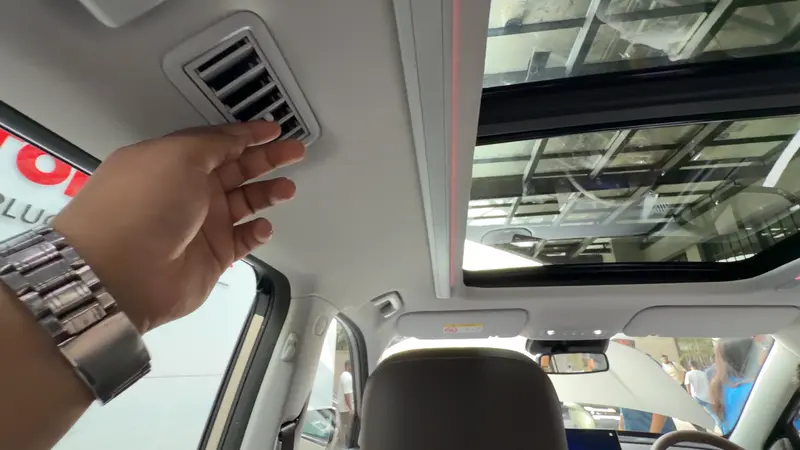
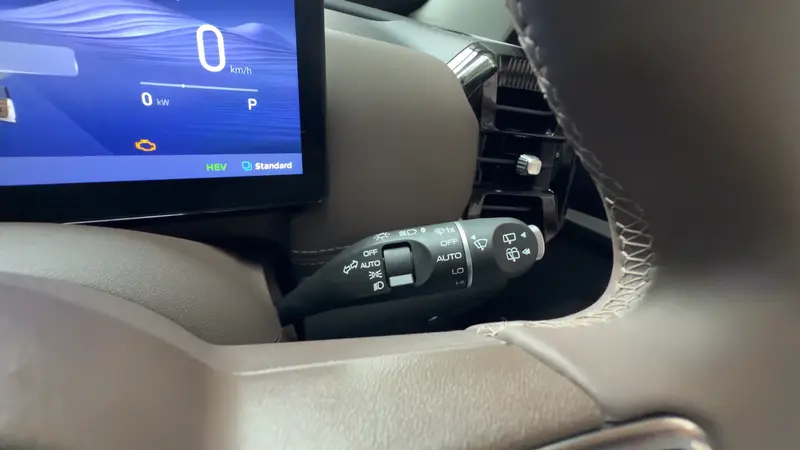
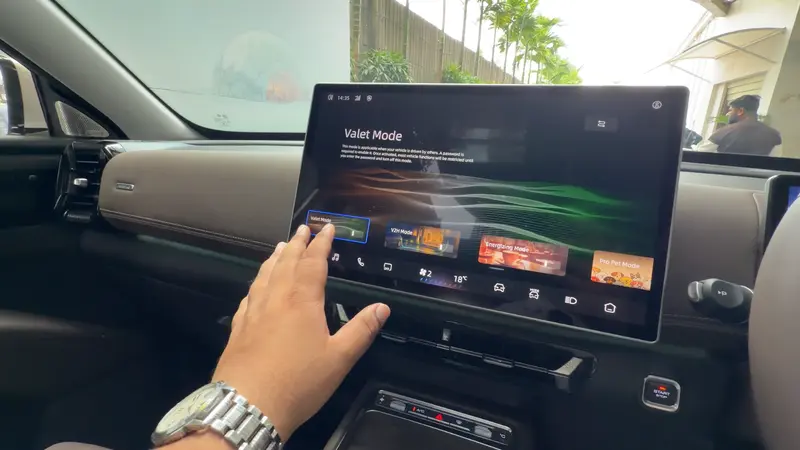
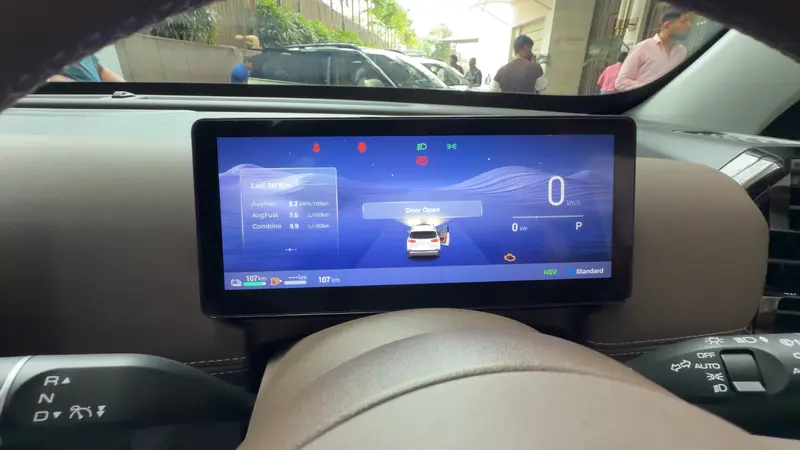
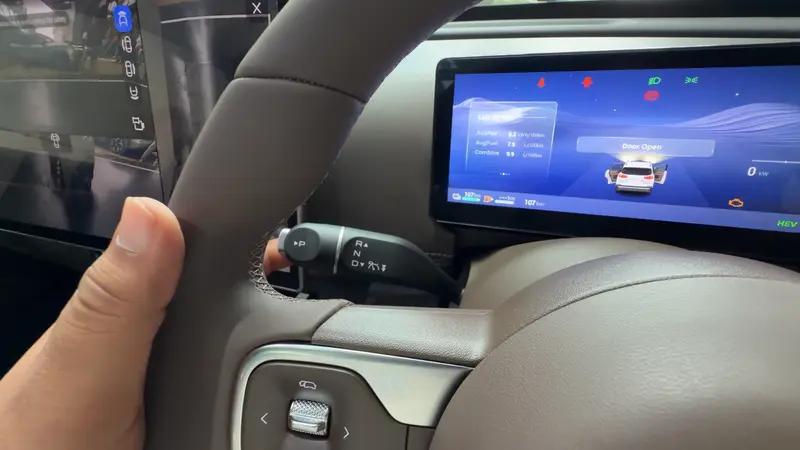
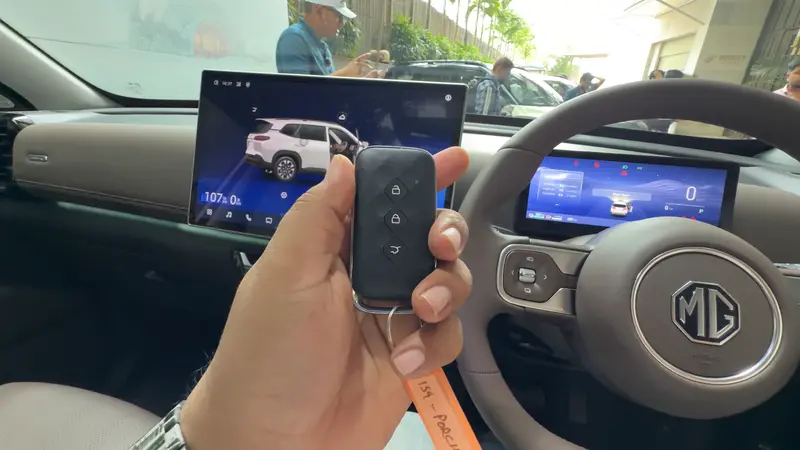
The Exclusive gets a 12.8-inch touchscreen, while the Essence replaces it with MG's larger 15.6-inch Grand View Display. The latter also gets a 10-speaker Infinity audio system with a subwoofer. Both variants have an 8.8-inch Multi Information Display for the driver, wireless Android Auto and Apple CarPlay, i-SMART 3.0 with a Gen AI-powered voice assistant, and the Starmaanch Karaoke app with more than 8,000 tracks. A dual-pane cockpit sunroof is standard on both.
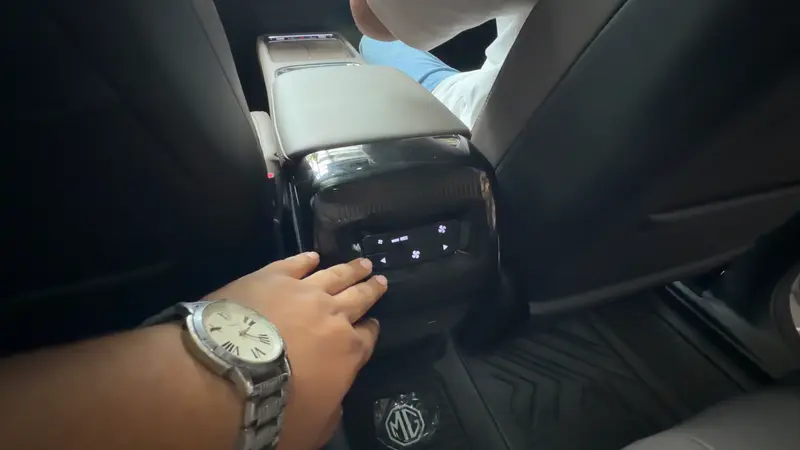
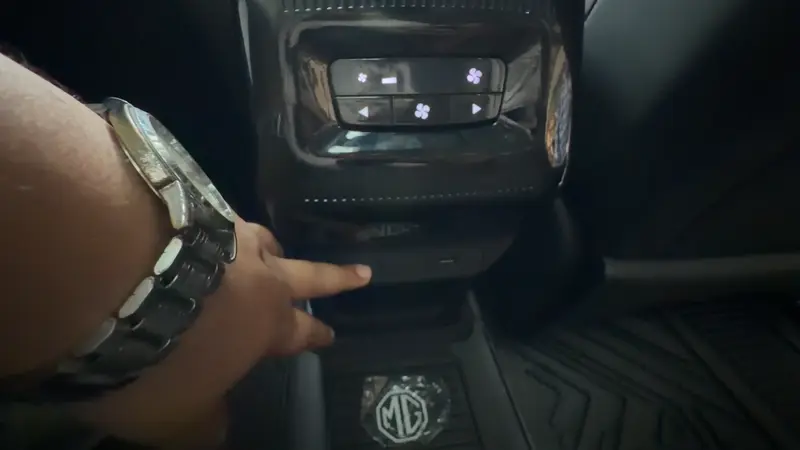
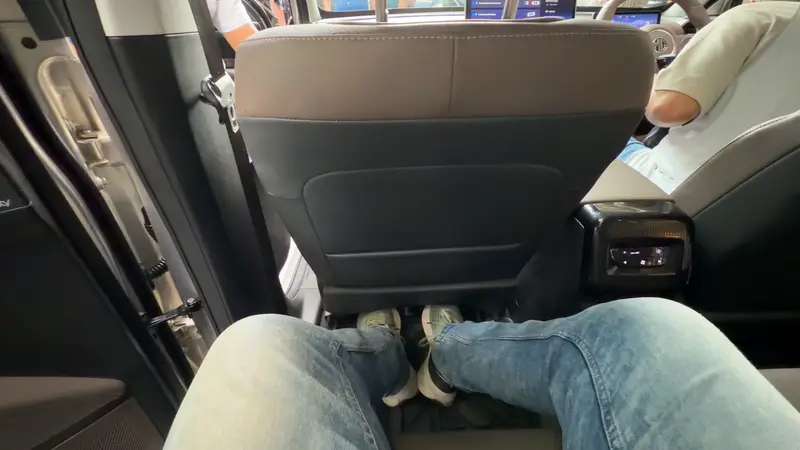
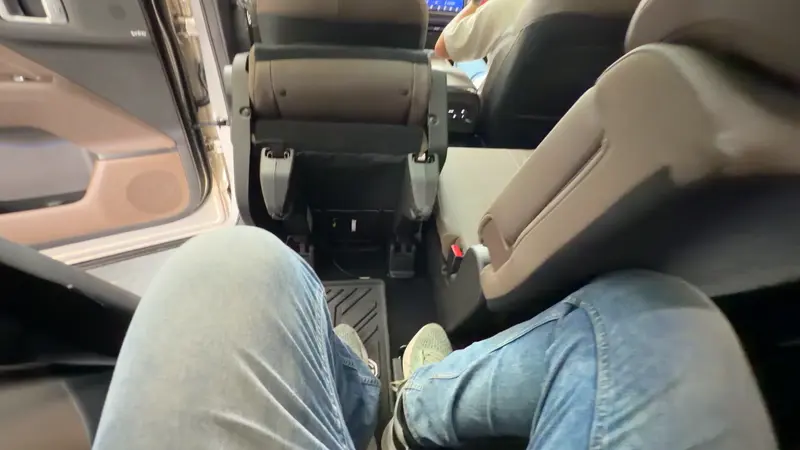
The second row has 60:40 split seats with recline and sliding functions, along with a tip-and-tumble mechanism for access to the third row. The third row uses 50:50 split seats and gets its own AC vents.
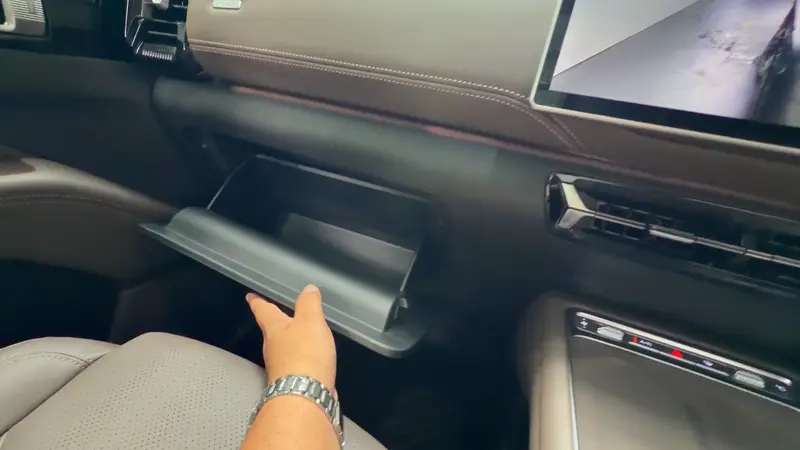
There is 192 litres of boot space with all three rows in use, increasing to 528 litres when the third row is folded. A storage-equipped leather driver's armrest and a second-row armrest with cup holders are also standard. Lastly, the PHEV is available only with seven seats.
exterior
exterior
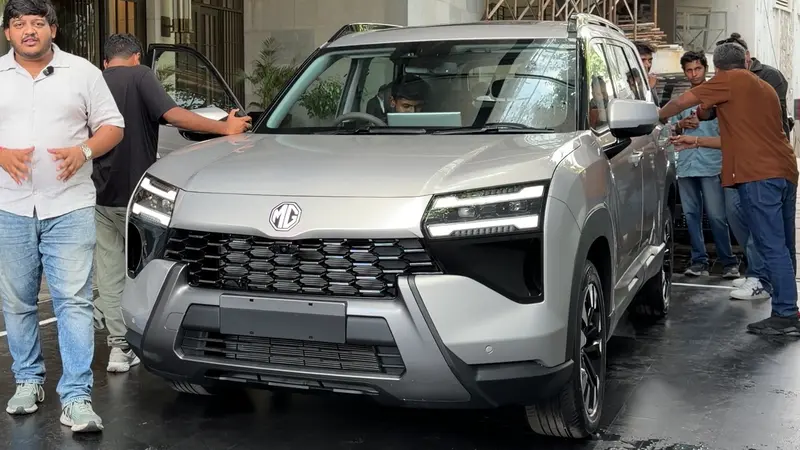
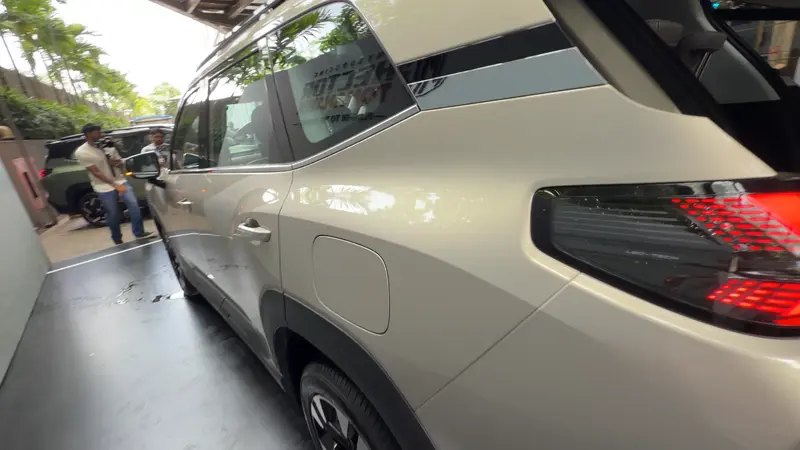
The Hector Tomahawk PHEV uses the same body as the EV. It measures 4,745 mm long, 1,850 mm wide without the mirrors, and 1,770 mm tall, with a 2,810 mm wheelbase. Ground clearance measured at the battery is 230 mm.
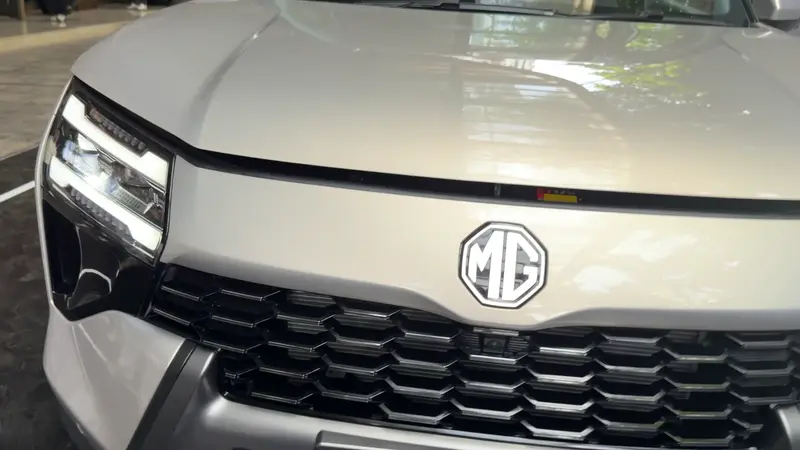
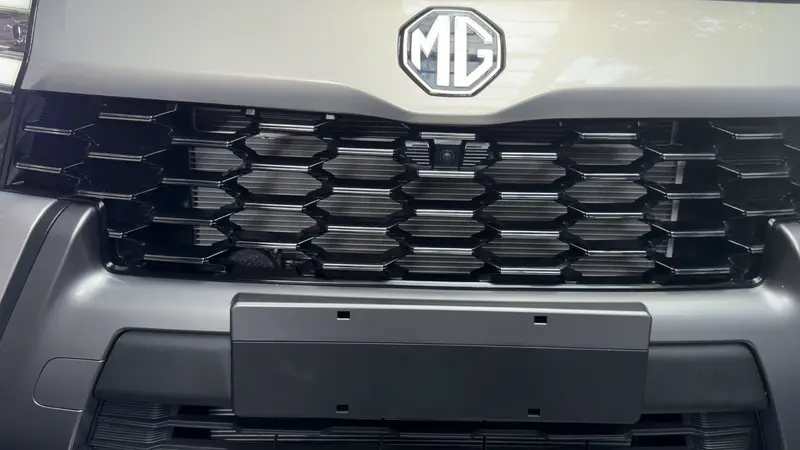
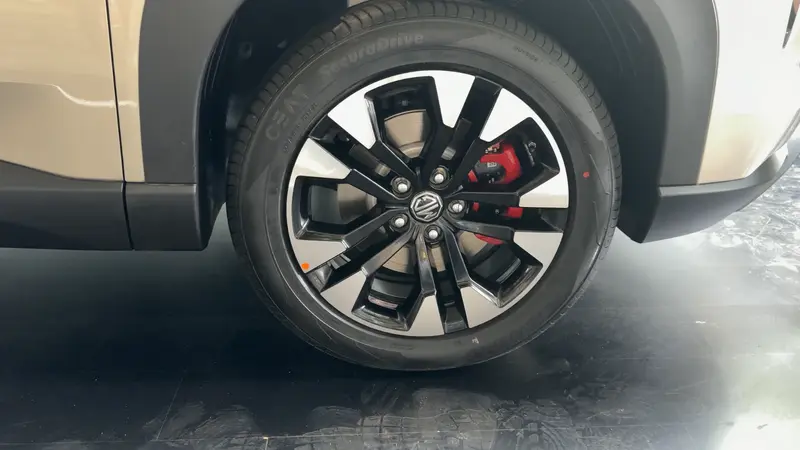
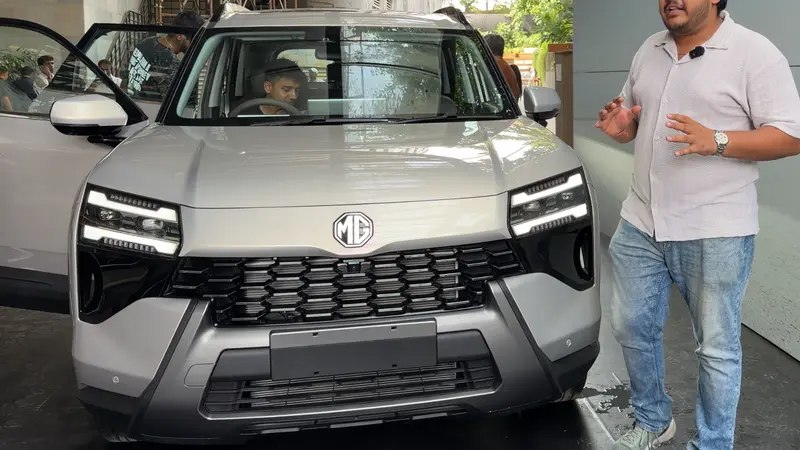
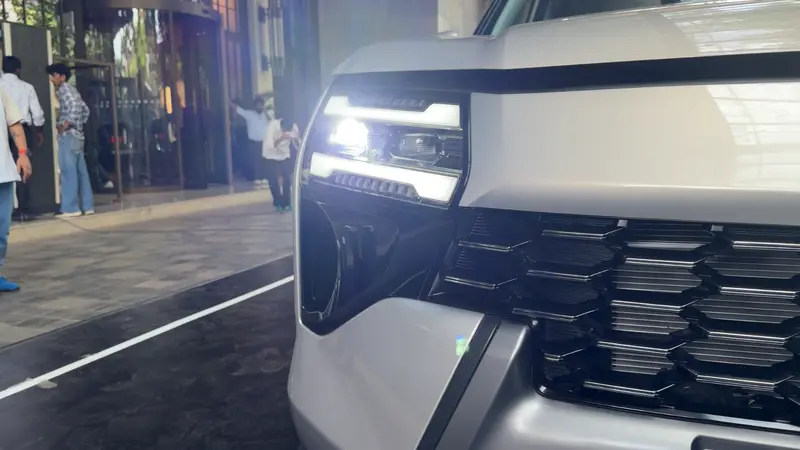
At the front, the main visual elements are the Hawk X three-dimensional grille, Beacon LED projector headlamps and LED DRLs. Chrome accents sit around the front, while an illuminated MG logo is integrated into the grille. The Essence gets a couple of additional details, including floating LED turn indicators and red brake callipers.
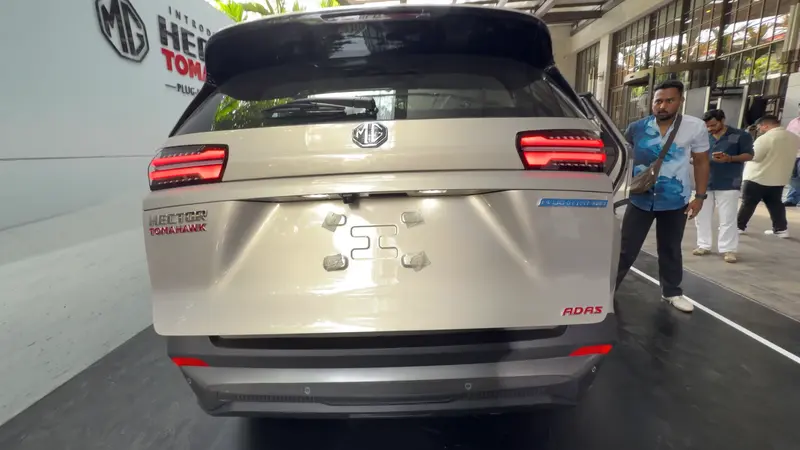
Both variants ride on R18 Precision-cut Aeronautic alloy wheels. The front windshield and front door glass get acoustic and UV protection, while roof rails, side body cladding, chrome window surrounds and chrome-finished outside door handles are standard. A glass antenna and rear spoiler complete the main exterior equipment.
At the back, the SUV gets LED tail lamps, a rear fog lamp and a powered automatic tailgate. The turn indicators are integrated into the ORVMs.
safety
safety
The Hector Tomahawk PHEV does not have a published Global NCAP or Bharat NCAP rating at the time of launch. Six airbags are standard on both variants, covering the front, side and curtain positions. Other standard safety equipment includes ESP, traction control, hill hold control, ABS with EBD, brake assist, all-wheel disc brakes, an electric parking brake with auto hold, and direct TPMS.
The SUV also gets ISOFIX child seat mounts and three-point seatbelts across all seats. The front occupants have seatbelt pretensioners and load limiters, while the doors have speed-sensing and impact-sensing automatic locking.
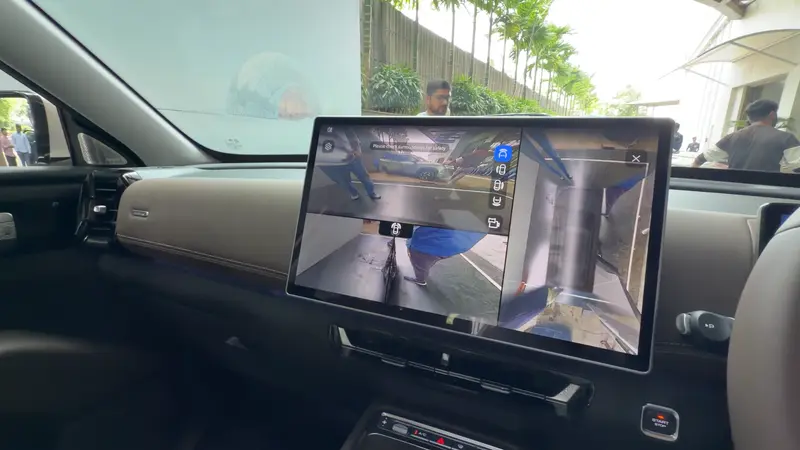
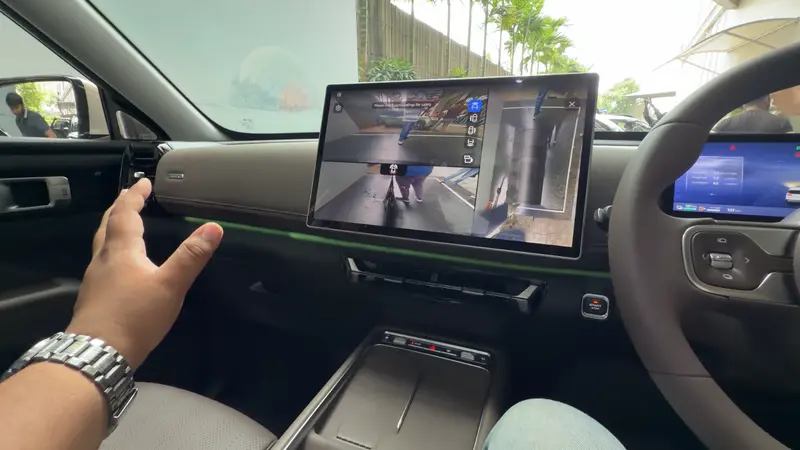
A 360-degree HD camera with transparent chassis and wheel views is available on the Exclusive. The Essence adds front parking sensors to the rear sensors and reverse camera. MG says the MAGIC battery has gone through more than 2,000 bench tests and over 490 vehicle-level tests, including testing under extreme conditions. Its Battery Management System continuously monitors battery health.
The biggest safety difference between the two variants is the ADAS package. The full Level 2 system with 11 functions is exclusive to the Essence. The Exclusive does not get it.
competition
competition
There are currently no direct PHEV rivals for the Hector Tomahawk PHEV in India. As a result, its more relevant alternatives are strong hybrids and electric SUVs that appeal to buyers looking for some form of electrification in this segment.
The Toyota Fortuner Legender with its 48V mild hybrid system is one such alternative for buyers considering a three-row SUV. Its diesel engine offers considerably more performance, while the Fortuner also has an established reputation for resale value and a body-on-frame construction. The Hector PHEV's advantage is its ability to run entirely on electric power for more than 115 km, something the mild hybrid system cannot do. It also offers a more technology-heavy cabin and should cost less to run during regular urban use.
The Mahindra XEV 9S is another option in a similar price bracket, but it is a full electric SUV. Its advantages include a longer electric range, no dependence on petrol and access to Mahindra's expanding fast-charging network. The Hector PHEV instead makes more sense for buyers who frequently travel long distances and do not want to plan trips around public charging. Its claimed combined range of more than 1,100 km also means that long highway journeys can be handled without depending entirely on charging infrastructure.
The Jeep Meridian is another three-row SUV that competes in a similar space, although it uses a conventional diesel powertrain. It brings four-wheel-drive capability and stronger off-road credentials, along with the appeal of the Jeep badge. The Hector PHEV has the advantage in everyday urban running costs and offers considerably more technology inside the cabin. It also gets V2H capability, which is not available on the Meridian.
MG Hector Tomahawk PHEV News

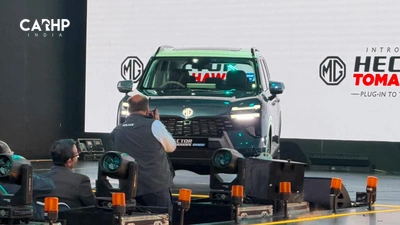
MG Hector Tomahawk Launched in India from Rs 13.99 Lakh BaaS with a 517 km EV and a 1,100 km Plug-in Hybrid
MG has launched the Hector Tomahawk in India in two forms, a 69.2 kWh electric SUV with a claimed 517 km range and a plug-in hybrid claiming over 1,100 km on a full tank and a full charge. Battery as a Service prices start at Rs 13.99 lakh for the EV and Rs 21.79 lakh for the PHEV.
Anmol Kumar
August 27, 2026
MG Hector Tomahawk PHEV FAQs
What is the MG Hector Tomahawk PHEV, and what makes it significant?
−It is India's first plug-in hybrid electric SUV. It combines a 1.5-litre petrol engine with a 148 kW electric motor and a 20.5 kWh battery, allowing it to run on pure electric power for daily commutes and switch to petrol for longer journeys, eliminating the range anxiety associated with full EVs.
What is the difference between the MG Hector Tomahawk PHEV and the Tomahawk EV?
+The EV uses a larger 69.2 kWh battery with a claimed 517 km of pure electric range and no petrol engine. The PHEV has a smaller 20.5 kWh battery for up to 115 km of electric range, but adds a 1.5-litre petrol engine that extends total range to over 1,100 km. The EV is available in both 5- and 7-seat layouts; the PHEV is a 7-seater only.
What is the claimed electric range and total range of the MG Hector Tomahawk PHEV?
+MG claims a pure electric range of 115-plus km and a combined range of over 1,100 km on a full charge and full tank.
What petrol engine and electric motor does the MG Hector Tomahawk PHEV use?
+The petrol unit is a 1.5-litre Gasoline Atkinson cycle engine producing 75 kW (102 hp) and 125 Nm. The electric motor is an electric motor producing 148 kW (201 hp) and 237 Nm. Both are connected through a Dedicated Hybrid Transmission with 98.8 percent transmission efficiency. The battery capacity is 20.5 kWh.
What are the six drive modes in the MG Hector Tomahawk PHEV?
+The six modes are Pure EV, where only the battery powers the motor; Series Hybrid, where the engine generates electricity while the motor drives the wheels; Parallel Hybrid Boost, where both the engine and motor work together; Pure Engine, for direct engine power on highways; Engine Drive with Charge, where the engine drives the wheels and charges the battery simultaneously; and Regeneration, which recovers energy during braking and deceleration.
How fast does the MG Hector Tomahawk PHEV charge?
+On DC fast charging at up to 25 kW, it goes from 30 to 80 percent in approximately 35 minutes. On a 3.3 kW AC supply, a 10 to 100 percent charge takes approximately 7.5 hours. A 3.3 kW portable cable and a 3.3 kW home charging box are both included as standard.
Does the MG Hector Tomahawk PHEV support V2H, V2L, and V2V?
+Yes, but only on the Essence variant. V2H allows the car to power household appliances directly. V2L powers external devices, and V2V can charge another compatible electric vehicle from the Tomahawk's battery.
How many variants does the MG Hector Tomahawk PHEV come in, and what are the key differences?
+Two variants at launch: Exclusive and Essence. The Essence adds the 15.6-inch Grand View Display over the Exclusive's 12.8-inch screen, upgrades the audio to a 10-speaker Infinity system with a subwoofer, adds 256-colour ambient lighting, the full Level 2 ADAS suite, Adaptive Cruise Control, Auto Dimming IRVM, front parking sensors, red brake callipers, floating LED turn indicators, driver seat memory with auto-retract, V2L, V2V, V2H, and a rear window sunshade.
Does the MG Hector Tomahawk PHEV get ADAS?
+Yes, but only on the Essence variant. It gets Level 2 ADAS with 11 functions.
How many airbags does the MG Hector Tomahawk PHEV get, and what are the key safety features?
+Six airbags covering dual front, side, and curtain positions are standard across both variants. Other standard safety equipment includes ESP, Traction Control, Hill Hold Control, ABS with EBD, Electric Parking Brake with Auto Hold, TPMS, ISOFIX anchors, and a 360-degree HD camera with transparent chassis view.
What infotainment features does the MG Hector Tomahawk PHEV offer?
+The Exclusive gets a 12.8-inch touchscreen. The Essence upgrades to a 15.6-inch Grand View Display with a 10-speaker Infinity system. Both variants include i-SMART 3.0 with over 80 connected features, a Gen AI-powered voice assistant, 30-plus Hinglish voice commands, wireless Android Auto and Apple CarPlay, and the Starmaanch Karaoke app with over 8,000 tracks.
Is the MG Hector Tomahawk PHEV a 5-seater or 7-seater?
+The PHEV is available only as a 7-seater. The 5-seat option is exclusive to the all-electric Tomahawk EV.