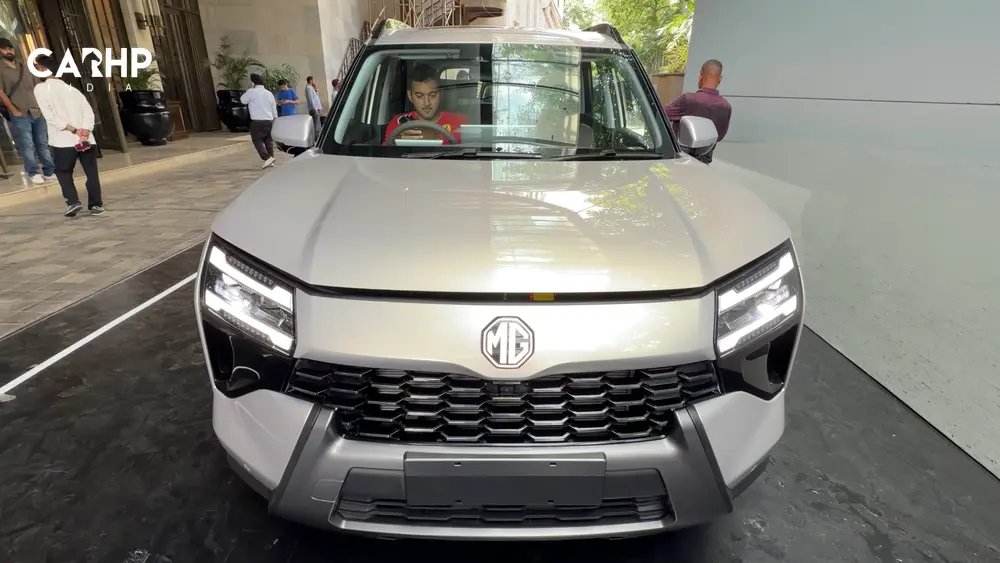
The Hector Tomahawk PHEV is one of the first exciting mass-market plug-in hybrids available in India. With it, the SUV brings a fair amount of technical jargon that can be overwhelming for first-time buyers. Here, we simplify one of the most complicated aspects of its drivetrain: the different driving modes.
Depending on the driving situation, the Hector Tomahawk PHEV powertrain can operate as a pure electric vehicle, use the petrol engine to generate electricity, combine the engine and motor to drive the wheels, or use the engine to recharge the battery.
MG offers six operating modes in the Tomahawk PHEV: Pure EV, Series Hybrid, Parallel Hybrid, Regeneration, Pure Engine and Engine Drive + Charge. Understanding these modes makes it much easier to understand why a plug-in hybrid can deliver EV-like driving around town while still offering the long-distance convenience of a petrol engine.
Also Read – How Does the Kia Sorento Hybrid Actually Work?
The basic powertrain
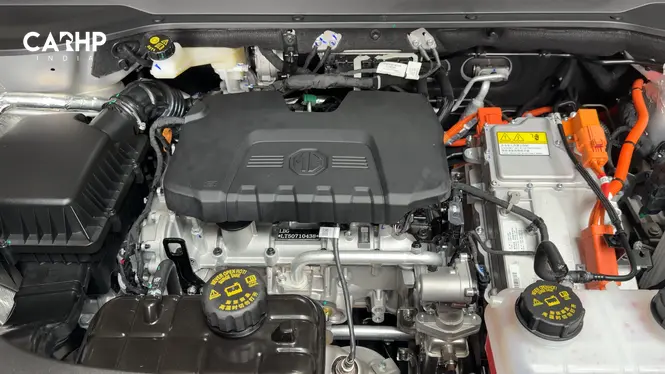
The Tomahawk PHEV uses a 1.5-litre Atkinson-cycle petrol engine, a 20.5 kWh battery and an electric motor. The petrol engine produces around 102 hp and 125 Nm, while the electric motor produces around 201 hp and 237 Nm.
The battery can provide more than 115 km of claimed electric-only driving range, while the combination of the battery and 52-litre petrol tank gives the SUV a claimed overall range of more than 1,100 km.
The important thing to understand is that the petrol engine does not have to drive the wheels all the time. The car can decide whether electricity, the engine, or both should provide the required propulsion.
| Mode | Main power source | What drives the wheels? | Main purpose |
|---|---|---|---|
| Pure EV | Battery | Electric motor | Zero-emission electric driving |
| Series Hybrid | Petrol engine + generator | Electric motor | Engine generates electricity |
| Parallel Hybrid | Engine + battery | Engine and electric motor | Combined propulsion |
| Regeneration | Vehicle's kinetic energy | Electric motor acts as generator | Recover energy |
| Pure Engine | Petrol engine | Petrol engine | Engine-driven operation |
| Engine Drive + Charge | Petrol engine | Petrol engine | Drive while charging battery |
Also Read – Best EVs Under ₹30 Lakh With 400 Km Real World Range
Pure EV mode
Pure EV mode is the simplest operating mode. The battery sends electricity to the electric motor, and the electric motor drives the wheels.
The petrol engine remains switched off, so there is no need to burn fuel during this type of driving. This is the mode that makes the Tomahawk PHEV behave most like a conventional electric car.
It is particularly useful for city driving and short daily journeys. With more than 115 km of claimed electric range, a driver with a relatively short commute could potentially complete their daily journey without using the petrol engine at all.
The biggest advantage here is smoothness. The electric motor can deliver torque almost immediately, which makes the SUV feel responsive when pulling away from traffic lights or moving through congested roads.
Series Hybrid mode
Series Hybrid mode is one of the most interesting parts of the Tomahawk's powertrain.
Here, the petrol engine does not directly drive the wheels. Instead, the engine is used to generate electricity. That electricity can then be used by the electric motor to propel the vehicle.
The power flow can be simplified as:
Petrol engine → generator → electricity → electric motor → wheels
This means that even though the petrol engine has started, the electric motor remains responsible for driving the wheels.
The advantage is that the engine can operate in a way that is better suited to generating electricity, while the electric motor handles propulsion. It is conceptually similar to a range-extender system.
This mode can be useful when the battery's charge is getting low but the vehicle still needs electric propulsion.
Also Read – Why India's EV And Hybrid Future Cannot Happen Without China
Parallel Hybrid mode
Parallel Hybrid mode is where the petrol engine and electric motor work together to propel the vehicle.
Instead of the engine merely generating electricity, the engine can contribute directly to propulsion while the electric motor provides additional assistance.
The basic idea is:
Petrol engine + electric motor → wheels
This mode becomes particularly useful when the driver demands more power, such as during acceleration, overtaking or higher-speed driving.
The electric motor can provide immediate torque while the petrol engine supplies sustained power. The result is a combination that can offer stronger acceleration than relying on either power source alone.
This is also one of the key differences between a plug-in hybrid and a pure EV. Once the battery charge becomes low, the vehicle doesn't simply lose its ability to travel long distances. The petrol engine can take over or assist as required.
Regeneration mode
Regeneration is not really a conventional driving mode in the same sense as EV or Parallel Hybrid mode. Instead, it describes what happens when the vehicle uses its electric motor to recover energy that would otherwise be lost during deceleration.
When you lift off the accelerator or apply the brakes, the electric motor can operate in reverse as a generator.
The vehicle's kinetic energy is converted into electrical energy, which is then sent back into the battery.
The simplified process is:
Wheels → electric motor acting as generator → battery
This is called regenerative braking.
It is one of the reasons hybrids and EVs can be particularly efficient in city traffic. Every time the vehicle slows down, some of the energy can be recovered instead of being completely wasted as heat through the conventional brakes.
Also Read – How Regeneration Works in EV Cars
Pure Engine mode
As the name suggests, Pure Engine mode relies primarily on the petrol engine for propulsion.
Instead of asking the electric motor to provide the main driving force, the powertrain allows the petrol engine to operate as the primary source of propulsion.
This can be useful when the battery's available charge is low or when the driving conditions favour direct engine operation.
It also means that the Tomahawk PHEV does not have to behave like an EV simply because it has a large battery. The system has the flexibility to use its petrol engine when necessary.
Engine Drive + Charge mode
Engine Drive + Charge takes the concept a step further.
In this mode, the petrol engine is used not only to propel the vehicle but also to generate additional electricity for the battery.
The powertrain is therefore doing two things at the same time: moving the SUV and replenishing some of the battery's charge.
This can be useful when a driver knows that they will soon enter an area where electric driving is desirable but the battery does not have enough charge.
For example, imagine driving on a highway with a low battery and knowing that you will soon reach a city. The system can use the petrol engine during the highway section and build up some battery charge, allowing more electric driving later.
Also Read – Maruti Victoris Strong Hybrid Explained: How the Technology Actually Works
Why does the Tomahawk need six modes?
The reason is efficiency.
There is no single powertrain configuration that is ideal for every driving situation. An electric motor is excellent at low-speed acceleration and stop-start traffic, while a petrol engine can be useful for sustained high-speed driving and long-distance travel.
A hybrid system therefore tries to use each component where it makes the most sense.
| Driving situation | Likely advantage |
|---|---|
| Short city trip with battery charge | Pure EV |
| Battery getting low while electric propulsion is useful | Series Hybrid |
| Hard acceleration or higher power demand | Parallel Hybrid |
| Braking or slowing down | Regeneration |
| Long-distance driving with limited battery charge | Pure Engine |
| Need to replenish battery while driving | Engine Drive + Charge |
That is ultimately the point of the six-mode system. The Tomahawk PHEV is not simply switching between a petrol engine and an electric motor. It is constantly deciding how electricity should be generated, stored and delivered to the wheels to balance performance, efficiency and range.
Table of Contents
- The basic powertrain
- Pure EV mode
- Series Hybrid mode
- Parallel Hybrid mode
- Regeneration mode
- Pure Engine mode
Join the Conversation
Trending
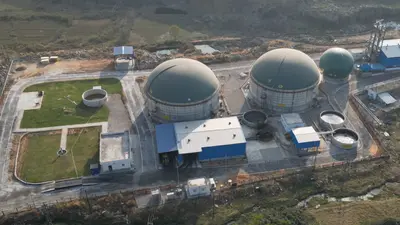
What Is CBG? Know About Its Production, Engine Performance, Prices and Future in India
Compressed biogas (CBG) is gaining attention in India as a renewable alternative to CNG. Here's how it is produced, its impact on engine performance and mileage, current pricing factors, and its future in India's automotive sector.
Salil Kumar
October 21, 2026

How 2027 Traffic Rule Changes Will Affect Drivers in India
India’s traffic rules are tightening, with repeat offenders facing possible driving licence disqualification and stricter deadlines for paying or disputing e-challans. New vehicle safety requirements will also affect specified commercial vehicles from 2027. Check the latest 2027 Indian traffic rules here.
Anmol Kumar
October 21, 2026

Hyundai Bayon Safety Features Revealed Ahead of October 26 Launch
Hyundai has revealed the safety package of the upcoming Bayon ahead of its October 26 launch in India. The compact SUV gets Level 2 Pro ADAS with 23 functions, six airbags as standard and a body structure made using 69% advanced multi-grade high-strength steel.
Anmol Kumar
October 21, 2026
Featured
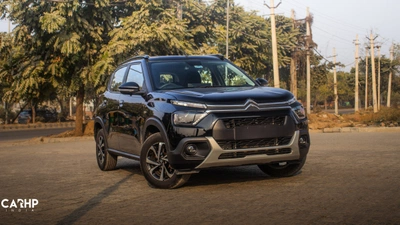
Citroen C3 Review: Who Should Consider This Car?
A few days ago, I took the Citroen C3X out for a spin in the city and on the highways. I travelled long distances and checked its fuel efficiency, features, comfort, and other factors. Today, I’ll briefly share my overall experience with the C3X and will tell you whether you should consider it or not and which is the most value-for-money variant of the lot.
Vatsal Agrawal
May 19, 2026
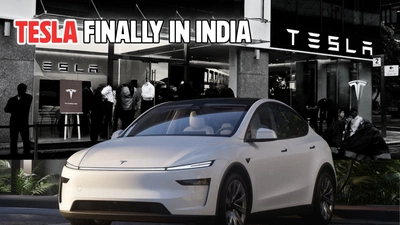
Tesla Finally In India Officially. Why Now And What Does It Mean For EVs?
The much-anticipated 2025 Tesla Model Y has officially arrived in India, marking a pivotal moment for the nation's burgeoning electric vehicle market. Launched on July 15, 2025, the Model Y Juniper facelift offers cutting-edge technology, impressive range, and signature Tesla performance. Positioned as a premium electric SUV, its entry will intensify competition and reshape consumer expectations for EVs across the subcontinent.
Author
July 17, 2025
Here Are 10 Things The Harrier.EV Offers That The Mahindra XEV 9E Doesn't
The Harrier.EV is an incredible new offer from Tata. Its most popular competitor would be the Mahindra XEV 9E, priced similarly. With these two incredible offerings from home grown brands available, here is a list of everything the Harrier.EV offers that the XEV 9E doesn't.
Author
June 13, 2025
Write a comment
Comments
No comments yet. Be the first to comment!