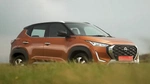
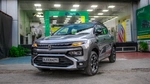
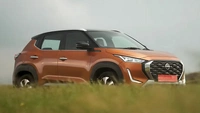
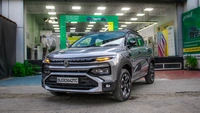
Nissan Magnite vs Renault Kiger - Which One Should You Buy
Nissan Magnite vs Renault Kiger Comparison at CarHP India. Compare Nissan Magnite and Renault Kiger Prices, Mileage, Features, Specs, Colours and much more.
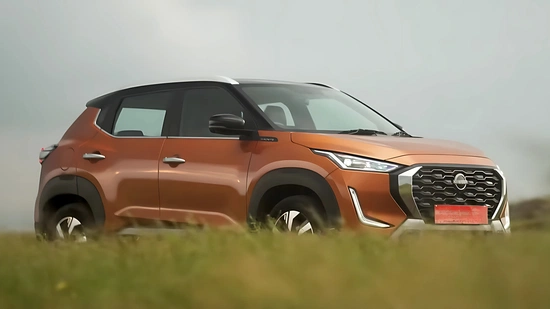
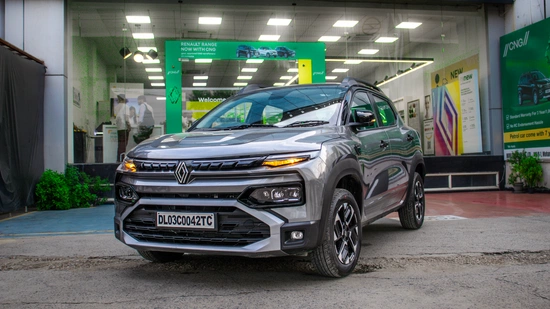
The Nissan Magnite comes in 28 variants. Engine options include Petrol and CNG as per the selected variant, paired with manual or automatic transmissions. The selected variant is priced at ₹5.68 Lakh. The cheapest variant, Visia, costs ₹5.68 Lakh, while the top-end variant, Tekna Plus Turbo CVT, is priced at ₹10.99 Lakh. The Renault Kiger comes in 19 variants. Engine options include Petrol as per the selected variant, paired with manual or automatic transmissions. The selected variant is priced at ₹5.81 Lakh. The cheapest variant, Authentic, costs ₹5.81 Lakh, while the top-end variant, Emotion Turbo CVT, is priced at ₹10.40 Lakh.
₹ 5.68 Lakh
₹ 5.81 Lakh
Compare Minimum 2 Cars At Once — Tap To Activate / Deactivate
Smart Summary for Car Selection
 Why Choose Nissan Magnite?
Why choose
- The turbo petrol pairs with a continuously variable automatic, which is smoother in traffic than an automated manual
- Global NCAP testing found the bodyshell stable after impact, where the Kiger's was assessed as unstable under further loading
- Six airbags are offered from the entry version on the current car
- Upper versions add a 360-degree camera, hill start assist, traction control and tyre pressure monitoring
- Claimed efficiency is marginally ahead of the Kiger's on the shared engines
Why not choose
- The turbo engine transmits vibration into the footwell and the cabin, and refinement is the weakest part of the driving experience
- Global NCAP scored it four stars for adults and two for children, which is behind several rivals now carrying five
- The gas version fills part of the boot, since there is no twin-cylinder layout to protect luggage space
- The naturally aspirated engine is slow with a full load, and the automated manual paired with it does not help
Why Choose Renault Kiger?Why choose
- The 405-litre boot on the petrol version is among the largest in the class
- The naturally aspirated engine can be had with an automated manual, giving a low-cost route to two-pedal driving
- The same turbo engine and continuously variable automatic as the Magnite for buyers who want the stronger option
Why not choose
- Global NCAP noted the bodyshell was unstable and not capable of withstanding further loading after the crash test
- The four-star adult and two-star child result is well behind newer rivals
- The child occupant score was hurt because the child seat anchorages were unmarked and hidden under seat fabric
- The gas version cuts into that large boot, and there is no twin-cylinder layout to prevent it
- Cabin materials and switchgear feel basic against newer sub-four-metre rivals
- The turbo engine shares the Magnite's vibration and refinement issues
 Our Recommendation For Most Buyers
Nissan Magnite
Turbo performance at this price is the reason most buyers look at either of these, and the Magnite delivers it with a continuously variable automatic that behaves better in traffic than the automated manuals its rivals use. The structural detail worth knowing is that in Global NCAP testing the Magnite's bodyshell was assessed as stable while the Kiger's, on the same platform, was not, despite near-identical adult scores.
That is a meaningful separation between two cars that otherwise share almost everything. Both carry a two-star child occupant result, so buyers who carry children daily should weigh that carefully against newer rivals. The other honest caveat is refinement, because the turbo engine sends vibration through the footwell in a way that becomes tiring on longer drives.
Renault Kiger
The Kiger's argument is a gearbox one, since the naturally aspirated engine can be paired with an automated manual, giving a cheap route into two-pedal driving that the turbo does not offer at the same price. The large boot is the second reason, and it is a real advantage over most cars this size. Where the Kiger runs into trouble is the crash test detail.
Global NCAP found the bodyshell unstable after impact and marked the car down on child protection partly because the seat anchorages were hidden under fabric. Buyers choosing the gas version should also note it eats into that boot, because there is no twin-cylinder tank layout to protect it. Test both this and the Magnite before deciding, since they share more than they differ.
Engine and Performance
Fuel Specifications
Dimensions and Design
Interior Specifications
Wheels & Tires
Suspension, Brakes & Steering
Safety Features
Interior Features
Comfort & Convenience
Infotainment Features
Exterior Features
Brochure

EMI Cost Comparison
Assuming 20% down payment, 9.5% interest, 60-month tenure
 Loan Amount
 Interest: 9.5%
 Down Payment (20%)
 Loan TenureLoan AmountInterest: 9.5%Down Payment (20%)Loan Tenure
Pros & Cons Comparison
Things We Like in Nissan Magnite
- 205 mm ground clearance is higher than most rivals.
- 5-star Global NCAP adult occupant rating.
Things We Like in Renault Kiger
- Value for money, packing more features at affordable prices than rivals.
- Standard safety features like 6 airbags, ABS-EBD, ESP, hill-hold, TPMS, and ISOFIX mounts.
Things We Don't Like in Nissan Magnite
- Spare tyre is a smaller 165/80 R14 step-down, not a full-size unit.
- CVT gearbox is only accessible if the turbo x-tronic engine is opted.
Things We Don't Like in Renault Kiger
- 1.0-litre naturally aspirated petrol engine feels underpowered for this segment.
- Cabin uses many hard plastics that don't feel premium.
Nissan Magnite Comparisons
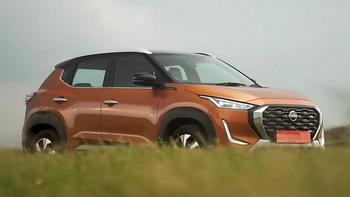
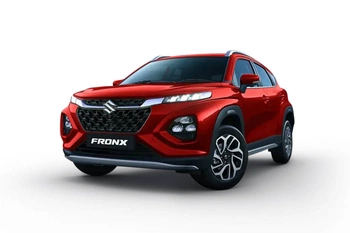
Nissan Magnite
₹5.68 - 10.99 Lakh
Maruti Suzuki Fronx
₹6.90 - 12.03 Lakh
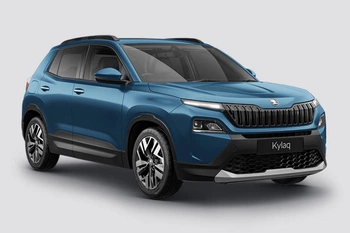
Nissan Magnite
₹5.68 - 10.99 Lakh
Skoda Kylaq
₹7.59 - 12.99 Lakh
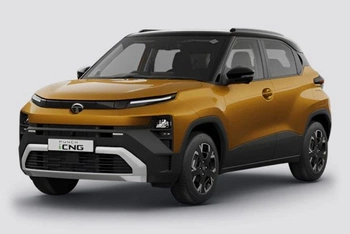
Nissan Magnite
₹5.68 - 10.99 Lakh
Tata Punch
₹5.70 - 10.67 Lakh
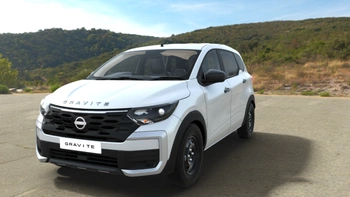
Nissan Magnite
₹5.68 - 10.99 Lakh
Nissan Gravite
₹5.73 - 9.38 Lakh
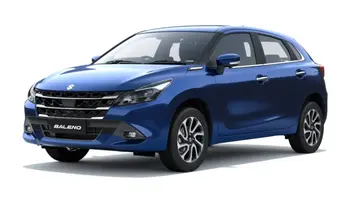
Nissan Magnite
₹5.68 - 10.99 Lakh
Maruti Suzuki Baleno
₹5.99 - 9.99 Lakh
Renault Kiger Comparisons
Car News
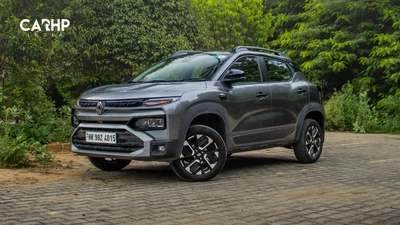
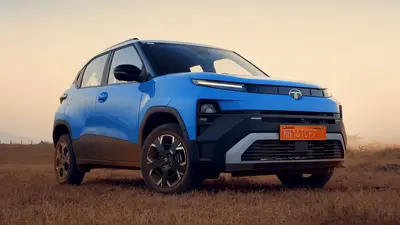
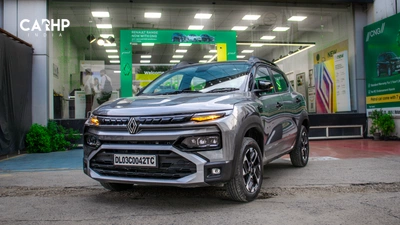
Most Affordable Cars With 360 Degree Camera Under 10 Lakhs
The 360 cam is one of the most in demand features that helps to increase your situational awareness when parking or while driving. Here is the full list of cars that offer a 360-degree camera under ₹10 lakh with variant names, prices, and what else you get alongside the camera.
Salil Kumar
September 29, 2026
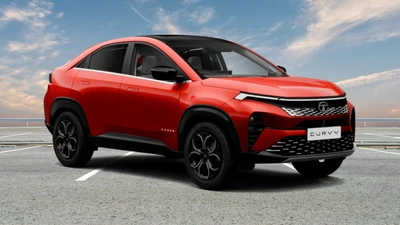
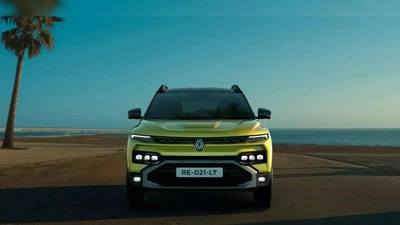
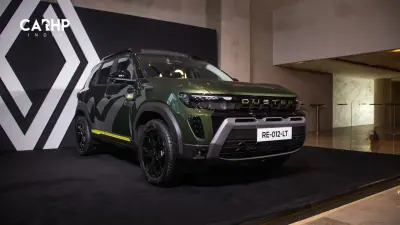
Renault Offering Up to Rs. 1.30 Lakh Benefits in September 2026
Renault India's September 2026 offers cover all four models in its lineup, with benefits ranging from Rs. 40,000 on the Kwid to Rs. 1.30 lakh on the Duster. Here is the full breakdown for every model, including state-wise differences where applicable.
Anmol Kumar
September 7, 2026