Hyundai Alcazar vs Kia Carens - Which One Should You Buy
Hyundai Alcazar vs Kia Carens Comparison at CarHP India. Compare Hyundai Alcazar and Kia Carens Prices, Mileage, Features, Specs, Colours and much more.
Hyundai Alcazar is available in 29 variants, while Kia Carens comes in 3 variants. The Alcazar pricing starts at ₹14.50 Lakh and goes up to ₹21.74 Lakh, while the Carens is a more affordable option with a price range between ₹10.60 Lakh and ₹19.94 Lakh. The Alcazar uses a 1482cc petrol engine that produces 158bhp and 253Nm of torque, making the car feel very quick and punchy with its 7-speed DCT gearbox. In comparison, the Carens features a 1493cc diesel engine with 114.41bhp and 250Nm of torque, which works with a 6-speed automatic transmission for a smooth drive. Both vehicles are front-wheel drive and handle bumpy roads and speed breakers easily, with the Alcazar offering a more powerful experience while the Carens stays relaxed for the family. Both of these six-seater cars have premium cabins and features like digital clusters and leather-wrapped steering wheels. The Alcazar offers 210 litres of boot space, sharp LED headlamps, and lane keep assist for better safety in city traffic. The Carens stands out with a smart air purifier and an HD touchscreen to keep the interior feeling fresh and modern. Common safety features like six airbags, ABS, ESC, and hill assist are present in both models to keep everyone safe. While the Carens is an excellent value-for-money choice for daily driving, the Alcazar is recommended for those seeking extra power and a high-end feel. Book a test drive through us before making a final decision to get exclusive benefits, discounts, and special offers.
₹ 14.51 Lakh

₹ 11.12 Lakh
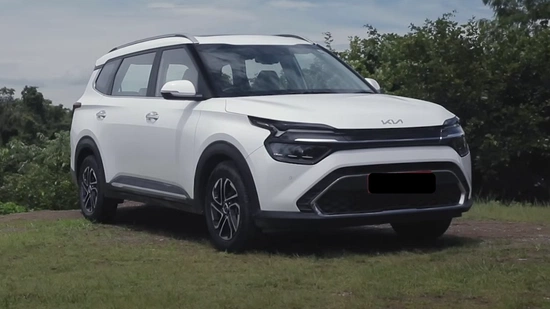


Compare Minimum 2 Cars At Once — Tap To Activate / Deactivate
Smart Summary for Car Selection
 Why Choose Hyundai Alcazar?
Why choose the Hyundai Alcazar
- Both engines can be had with an automatic, a 7-speed dual-clutch on the 160hp turbo petrol and a 6-speed automatic on the diesel, so a three-row family car that crawls through city traffic does not demand constant clutch work.
- A six-seat layout with captain seats is available, with boss mode, extendable under-thigh support and seat ventilation, so a parent or elderly passenger travels in comfort on long trips.
- The 160hp turbo petrol has far more power than the Carens's 115hp petrol, so a fully loaded car climbs ghat roads without repeated downshifts.
- Level 2 ADAS, a 360-degree camera and front and rear parking sensors are offered, so long highway drives get electronic assistance and a large car is easier to place in tight parking.
- Front and rear ventilated seats and two-zone climate control keep both rows cool in summer, so rear passengers get relief without waiting for the front AC to reach them.
- The diesel manual is rated at 20.4kpl, so long intercity trips stay economical despite the size of the car.
Why not choose the Hyundai Alcazar
- The turbo petrol returns around 7 to 9kmpl in city driving, so the most powerful option is expensive to run in daily traffic.
- The third row is unsuitable for full-sized adults, so the extra seats are best reserved for children on anything longer than a short trip.
- Choosing the diesel automatic drops rated economy from 20.4kpl to 18.1kpl, so the most convenient diesel costs more to run.
- Picking the captain seats means one fewer seat, so a family that chooses the comfort layout gives up the seventh seat for good.
- Its 2,760mm wheelbase is 20mm shorter than the Carens's even though the body is longer, so the extra length does not go into cabin legroom.
Why Choose Kia Carens?Why choose the Kia Carens
- Its 2,780mm wheelbase is 20mm longer than the Alcazar's despite a shorter body, so more of the car's length goes to the cabin, which helps third-row legroom.
- Folding the third row creates 1,164 litres of space, so bulky loads like a cooler, a pram and suitcases fit together for a holiday.
- The light clutch and slick gearshift make the manual easy to live with for a driver moving up from a hatchback, which softens the lack of an automatic.
- The diesel manual is rated at 21.3kpl, slightly ahead of the Alcazar diesel manual's 20.4kpl, so long family trips cost a little less in fuel.
- Every version covers the basics with a touchscreen, Android Auto, Apple CarPlay and steering-mounted controls, so even the simplest Carens connects your phone for navigation and calls.
Why not choose the Kia Carens
- No automatic is offered on any engine, so families in heavy city traffic have to work the clutch through every jam.
- Its Global NCAP adult rating is three stars with an unstable bodyshell noted, so buyers who put safety first will struggle to accept the result in a family car.
- The higher, better-equipped versions have been withdrawn, so buyers who want a more feature-rich Kia seven-seater have to look at a different model.
- The petrol engine becomes loud and strained at higher revs, so a full load on an incline tests the driver's patience.
- With all three rows up the boot shrinks to 216 litres, so a seven-person trip has room only for soft bags.
- Its 115hp petrol and 116hp diesel have much less power than the Alcazar's 160hp turbo, so highway overtakes with a full cabin take longer.
 Our Recommendation For Most Buyers
Who should buy the Hyundai Alcazar
For families who want three rows without giving up automatic convenience, the Alcazar is the more complete option. Both its engines are available with an automatic, the turbo petrol delivers far stronger performance than the Carens, and the six-seat layout's captain seats with boss mode and ventilation make it a comfortable chauffeur-driven car.
Level 2 ADAS, a 360-degree camera and dual-zone climate control add everyday ease. The trade-offs are running costs and third-row space. The turbo petrol drops to around 7 to 9kmpl in city traffic, the diesel automatic is less efficient than the manual, and the third row suits children more than adults. Choosing captain seats also removes the seventh seat. If your family travels in groups of six, values comfort and spends time in city traffic, the Alcazar is the better three-row car.
Who should buy the Kia Carens
The Carens works for a buyer who wants the most seven-seat space from a simple, manual-only package. Its longer wheelbase and 1,164 litres of folded load space make it practical for family trips and bulky loads, and the diesel manual returns slightly better rated economy than the Alcazar's. Basic essentials such as phone mirroring come on every version, and the light clutch makes it easy to drive.
The limitations, however, are hard to ignore. There is no automatic at all, the higher-equipped versions have been withdrawn, and the Global NCAP adult rating is only three stars with an unstable bodyshell. The engines have far less power than the Alcazar's turbo petrol, and the boot is tiny with all rows up. For a family that needs maximum seating and does most of its driving on highways, the Carens still covers the essentials.
Engine and Performance
Performance Specifications
Fuel Specifications
Dimensions and Design
Interior Specifications
Wheels & Tires
Suspension, Brakes & Steering
Safety Features
Interior Features
Comfort & Convenience
Infotainment Features
Exterior Features
Brochure

EMI Cost Comparison
Assuming 20% down payment, 9.5% interest, 60-month tenure
 Loan Amount
 Interest: 9.5%
 Down Payment (20%)
 Loan TenureLoan AmountInterest: 9.5%Down Payment (20%)Loan Tenure
Pros & Cons Comparison
Things We Like in Hyundai Alcazar
- Six airbags and four-wheel disc brakes are standard across all variants.
- Four powertrain combinations cover petrol, turbo, diesel, and transmission choices.
Things We Like in Kia Carens
- Six airbags and all-wheel disc brakes as standard
- A diesel option at this price bracket is an exclusive differentiator.
Things We Don't Like in Hyundai Alcazar
- Diesel variants get a tyre mobility kit, not a spare tyre.
- DCT is turbo-petrol only, also diesel automatics get the older torque-converter.
Things We Don't Like in Kia Carens
- Exterior looks basic with halogen headlamps and taillamps, no LED DRLs, and steel wheels.
- No automatic transmission option.
Hyundai Alcazar Comparisons


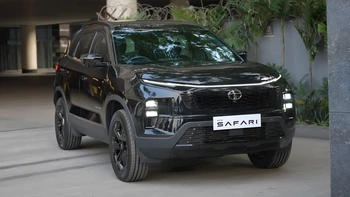

Kia Carens Comparisons


Kia Carens
₹11.12 - 12.98 Lakh
Maruti Suzuki Ertiga
₹8.85 - 12.99 Lakh

Kia Carens
₹11.12 - 12.98 Lakh
Maruti Suzuki XL6
₹11.62 - 14.68 Lakh

Kia Carens
₹11.12 - 12.98 Lakh
Toyota Rumion
₹9.79 - 14.21 Lakh

Kia Carens
₹11.12 - 12.98 Lakh
Mahindra Bolero Neo
₹8.99 - 10.79 Lakh
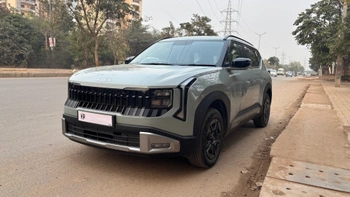
Kia Carens
₹11.12 - 12.98 Lakh
Kia Seltos
₹11 - 21.82 Lakh



Car News




Kia Opens Pre-Bookings for Carens CNG, Carens Clavis CNG, and Carnival Limousine Hybrid
Kia has opened pre-bookings for the Carens CNG, Carens Clavis CNG, and Carnival Limousine Hybrid in India. Both CNG models get factory-fitted 60-litre tanks, while the Carnival gets a 1.6-litre turbo-petrol strong-hybrid system. Prices not announced yet.
Anmol Kumar
September 11, 2026

Hyundai Creta, Alcazar and Creta Electric Lounge Edition Launched, Prices Start at Rs 19.21 Lakh
Hyundai has launched the Lounge Edition across the Creta, Alcazar, and Creta Electric in India. The big addition is an 11.6-inch Rear Seat Entertainment System, along with lounge-exclusive interiors and black exterior treatment.
Anmol Kumar
September 10, 2026

Kia Carens and Carens Clavis CNG Variants To Launch Soon
Kia India is set to launch factory-fitted CNG versions of the Carens and Carens Clavis. Powered by the 1.5-litre petrol engine, the new variants will offer better integration and warranty support compared to the earlier dealer-fitted kit on the Carens.
Arjun Nair
September 4, 2026