Hyundai Alcazar vs Tata Safari - Which One Should You Buy
Hyundai Alcazar vs Tata Safari Comparison at CarHP India. Compare Hyundai Alcazar and Tata Safari Prices, Mileage, Features, Specs, Colours and much more.
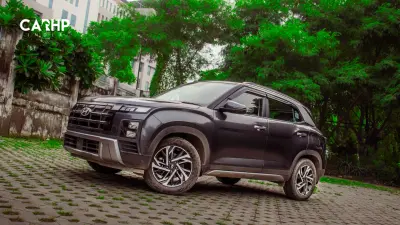
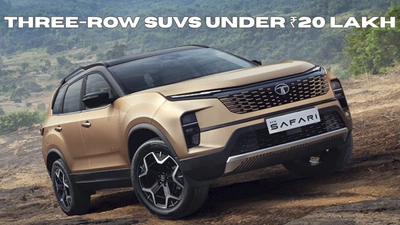
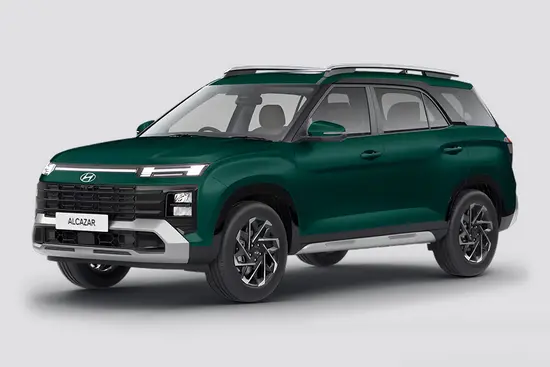
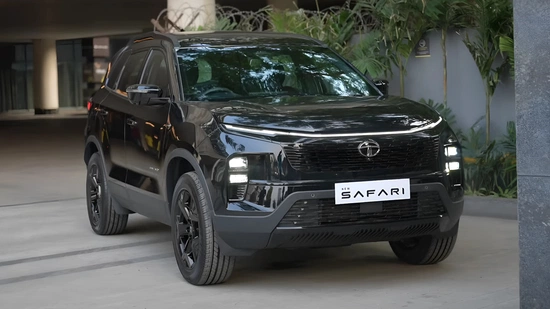
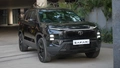
Hyundai Alcazar is available in 29 variants, while Tata Safari comes in 53 variants. The price for the Alcazar ranges from ₹14.50 Lakh to ₹21.74 Lakh, while the Safari offers a wider range between ₹13.29 Lakh and ₹27.25 Lakh. For performance, the Alcazar uses a 1482cc petrol engine with a smooth 7-speed DCT gearbox, producing 158bhp and 253Nm of torque. The Safari is powered by a larger 1956cc diesel engine making 167.62bhp and 350Nm of torque, delivering a mileage of 14.1 kmpl with its 6-speed automatic transmission. Both SUVs use front-wheel-drive systems and are well-suited for driving on Indian city roads. The Alcazar features a 6-seater layout and a 420-litre boot, while the Safari gives the option of choosing between 6 or 7 seats. Both cars are equipped with power steering, cruise control, and automatic climate control for a comfortable journey. Inside the Alcazar, there is a digital cluster and LED headlamps, whereas the Safari offers more technology like a JBL sound system and 250 native voice commands. Safety is a high priority for both models, with the Alcazar providing 6 airbags and the Safari offering 7 airbags along with a 5-star safety rating and autonomous emergency braking. For city use, the Alcazar is light and easy to drive through narrow lanes with its quiet petrol engine, making it a feature-rich choice for daily office runs. The Safari is better for rough roads and long highway trips because of its rugged build and commanding view of the road. It provides more cabin space for weekend travel with the family and feels very solid on the move. Book a test drive through us before final decision to get exclusive benefits, special discounts, and the best available offers.
₹ 14.51 Lakh
₹ 13.40 Lakh

Compare Minimum 2 Cars At Once — Tap To Activate / Deactivate
Smart Summary for Car Selection
 Why Choose Hyundai Alcazar?
Why choose the Hyundai Alcazar
- At 4,560mm long it is shorter than the Safari's 4,668mm, so a crowded mall basement and a narrow society gate are far less stressful to negotiate.
- Its 160hp turbo petrol pairs with a 7-speed dual-clutch, so quick shifts come with the stronger petrol engine rather than a torque converter.
- Captain seats with boss mode, extendable under-thigh support and seat ventilation are offered, so a parent in the middle row travels in real comfort.
- The diesel manual is rated at 20.4kpl against the Safari's 14.1 to 16.3kpl range, so long intercity runs cost meaningfully less in fuel.
- Level 2 ADAS with a 360-degree camera and front and rear parking sensors are available, so highway drives get support and a large car is easier to place.
- Front and rear ventilated seats with two-zone climate control keep both rows cool, so rear passengers get relief without waiting for the front vents.
Why not choose the Hyundai Alcazar
- The turbo petrol returns around 7 to 9kmpl in city driving, so the most powerful option is expensive to run in daily traffic.
- Its third row is unsuitable for full-sized adults, so the rear seats are best kept for children on anything beyond a short trip.
- Choosing the diesel automatic drops rated economy from 20.4kpl to 18.1kpl, so the most convenient diesel costs more to run.
- Picking the captain seats means one fewer seat, so a family taking the comfort layout gives up the seventh place for good.
- It has no Bharat NCAP score to set against the Safari's, so a buyer choosing by tested safety has nothing current to compare.
Why Choose Tata Safari?Why choose the Tata Safari
- Its 680-litre boot dwarfs what a compact three-row car offers, so a family of six packs for a long holiday without strapping anything to the roof.
- It holds 5-star ratings from both Global NCAP and Bharat NCAP, scoring 30.08 out of 32 for adults and 44.54 out of 49 for children, so every passenger is covered.
- Both its 170hp turbo petrol and 170hp diesel come with a manual or an automatic, so fuel choice never dictates the gearbox you live with.
- Ride quality was rated superb in road testing and it stays steady at high speed, so a long highway run is settled for everyone aboard.
- A 14.5-inch touchscreen, front and rear seat ventilation and a 10-speaker sound system are available, so rear passengers stay cool and the cabin feels special.
Why not choose the Tata Safari
- Its rated mileage of 14.1 to 16.3kpl is well below the Alcazar diesel manual's 20.4kpl, so heavy monthly mileage costs considerably more.
- The diesel engine is loud and needs better insulation, so the engine best suited to distance is also the most tiring to sit behind.
- Panel gaps are inconsistent and the tech package glitches from time to time, so build quality does not match the equipment list you paid for.
- It drives the front wheels only with no four-wheel drive in the range, so slippery hill roads get less traction than buyers of a large SUV might expect.
- At 4,668mm long and 1,922mm wide it needs a generous parking slot, which is hard to find in older apartment basements.
- Its 350Nm diesel produces less pulling power than rivals in its size class, so loaded highway climbs need more downshifts.
 Our Recommendation For Most Buyers
Who should buy the Hyundai Alcazar
The Alcazar suits families who want three rows without the bulk and running costs of a full-size SUV. Its shorter body is far easier to park, the 160hp turbo petrol comes with a dual-clutch, and captain seats with boss mode and ventilation make the middle row properly comfortable. The diesel manual's 20.4kpl rating and available Level 2 ADAS with a 360-degree camera round out a sensible package.
The compromises are third-row space and running costs on the turbo. That engine drops to 7 to 9kmpl in traffic, the third row suits children rather than adults, and the diesel automatic loses efficiency. Choosing captain seats removes the seventh seat, and there is no Bharat NCAP score. For a family of five or six that parks in tight city spaces, the Alcazar fits better.
Who should buy the Tata Safari
The Safari is the stronger buy for families who need full-size space and the best tested safety. Its 680-litre boot handles a long holiday, five-star ratings from both Global NCAP and Bharat NCAP come with high adult and child scores, and both engines pair with a manual or an automatic. Ride quality was rated superb, and rear seat ventilation with a 14.5-inch screen keeps the third row comfortable.
The costs are fuel, refinement and size. Rated mileage falls well below the Alcazar diesel manual, the diesel is loud, and panel gaps with occasional tech glitches undercut the quality feel. There is no four-wheel drive, the body needs a generous parking slot, and diesel pulling power trails its size class. For a family that regularly fills six seats with luggage, the Safari delivers more.
Engine and Performance
Performance Specifications
Fuel Specifications
Dimensions and Design
Interior Specifications
Wheels & Tires
Suspension, Brakes & Steering
Safety Features
Interior Features
Comfort & Convenience
Infotainment Features
Exterior Features
Brochure

EMI Cost Comparison
Assuming 20% down payment, 9.5% interest, 60-month tenure
 Loan Amount
 Interest: 9.5%
 Down Payment (20%)
 Loan TenureLoan AmountInterest: 9.5%Down Payment (20%)Loan Tenure
Pros & Cons Comparison
Things We Like in Hyundai Alcazar
- Six airbags and four-wheel disc brakes are standard across all variants.
- Four powertrain combinations cover petrol, turbo, diesel, and transmission choices.
Things We Like in Tata Safari
- Excellent 5-star safety ratings and comprehensive standard safety kit.
- Second row ventilated seats on higher 6-seater variants.
Things We Don't Like in Hyundai Alcazar
- Diesel variants get a tyre mobility kit, not a spare tyre.
- DCT is turbo-petrol only, also diesel automatics get the older torque-converter.
Things We Don't Like in Tata Safari
- Large size and weight make it less agile in dense city traffic
- No AWD/4WD offered even as an option
Hyundai Alcazar Comparisons
Tata Safari Comparisons
Tata Safari
₹13.40 - 26.91 Lakh
Tata Harrier
₹13 - 26.11 Lakh
Tata Safari
₹13.40 - 26.91 Lakh
Toyota Innova Hycross
₹18.70 - 36.69 Lakh
Tata Safari
₹13.40 - 26.91 Lakh
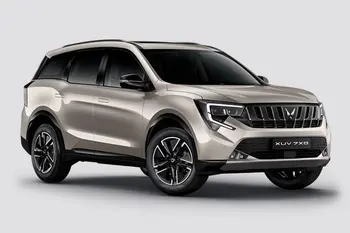
Mahindra XUV 7XO
₹13.99 - 25.79 Lakh
Tata Safari
₹13.40 - 26.91 Lakh
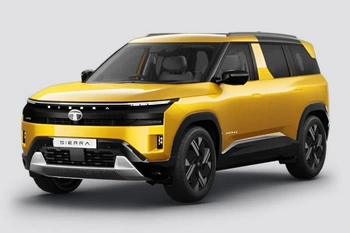
Tata Sierra
₹11.49 - 21.59 Lakh
Tata Safari
₹13.40 - 26.91 Lakh
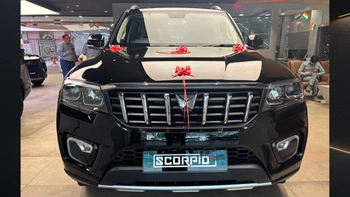
Mahindra Scorpio N
₹13.50 - 25.49 Lakh
Car News
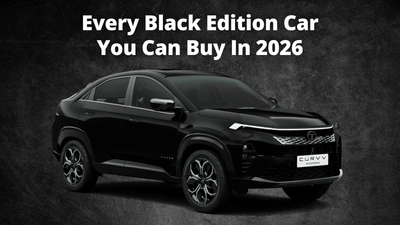
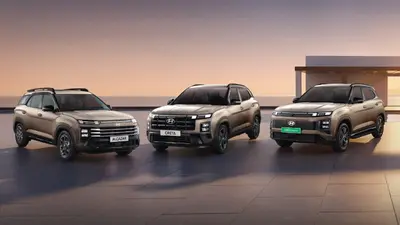
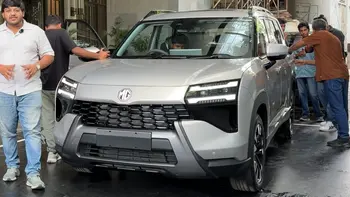
Hyundai Creta, Alcazar and Creta Electric Lounge Edition Launched, Prices Start at Rs 19.21 Lakh
Hyundai has launched the Lounge Edition across the Creta, Alcazar, and Creta Electric in India. The big addition is an 11.6-inch Rear Seat Entertainment System, along with lounge-exclusive interiors and black exterior treatment.
Anmol Kumar
September 10, 2026