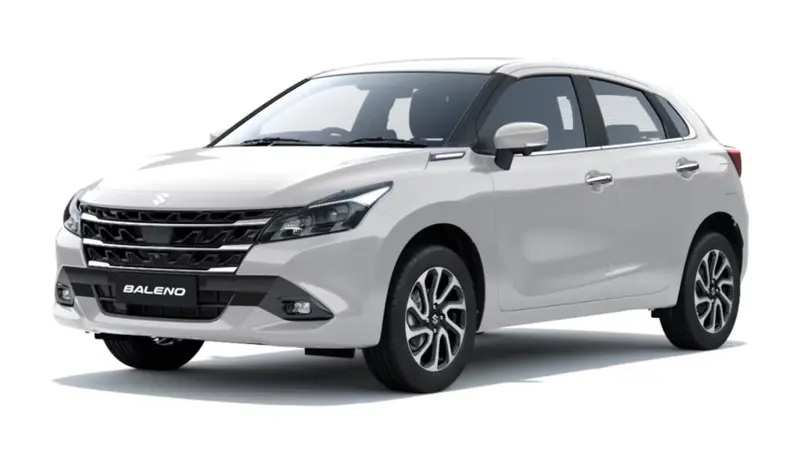
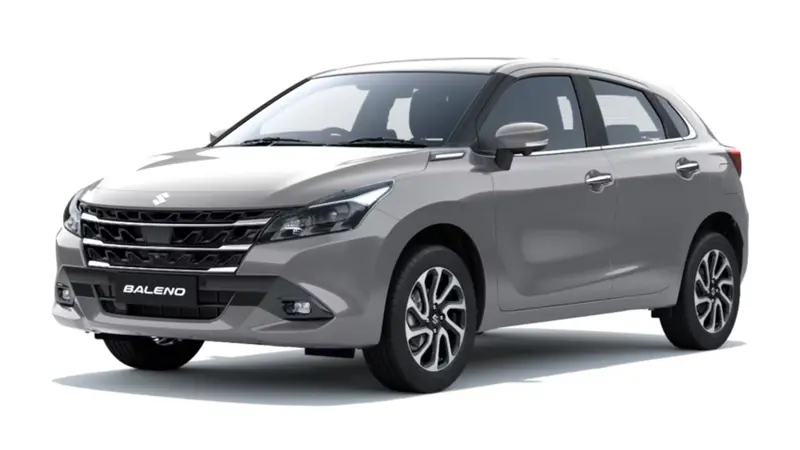
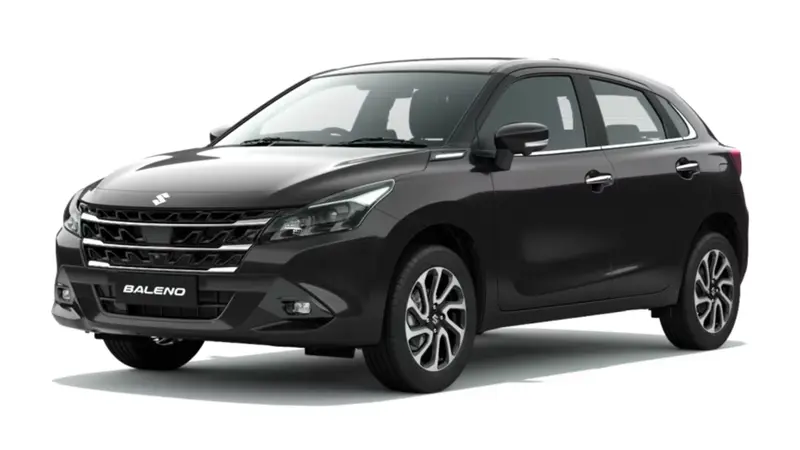
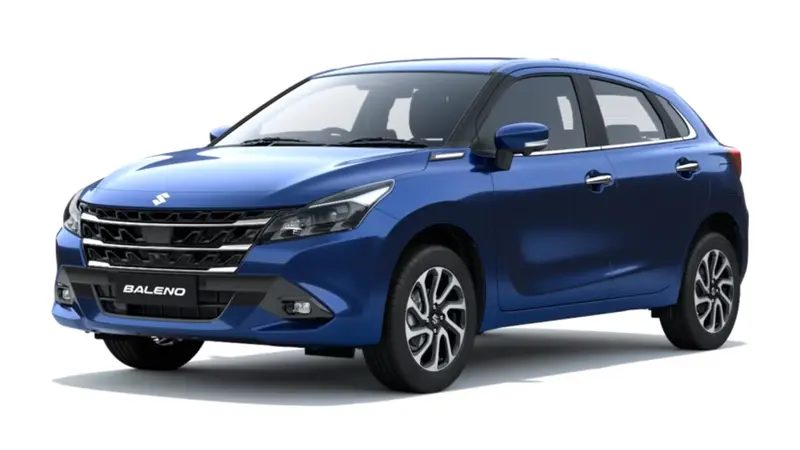
Maruti Suzuki Baleno
Overall Rating

Maruti Suzuki Baleno
Overall Rating
EMI Loading
Maruti Suzuki Baleno Key Specifications
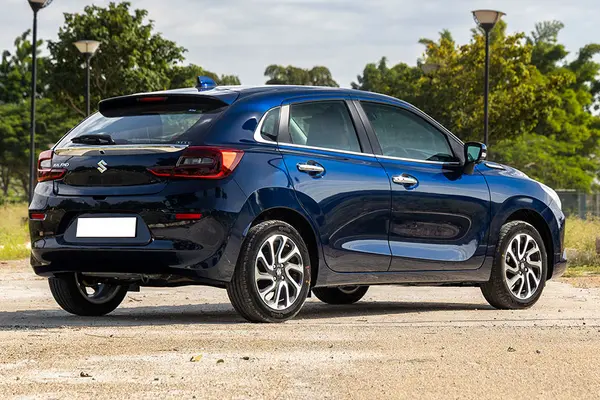
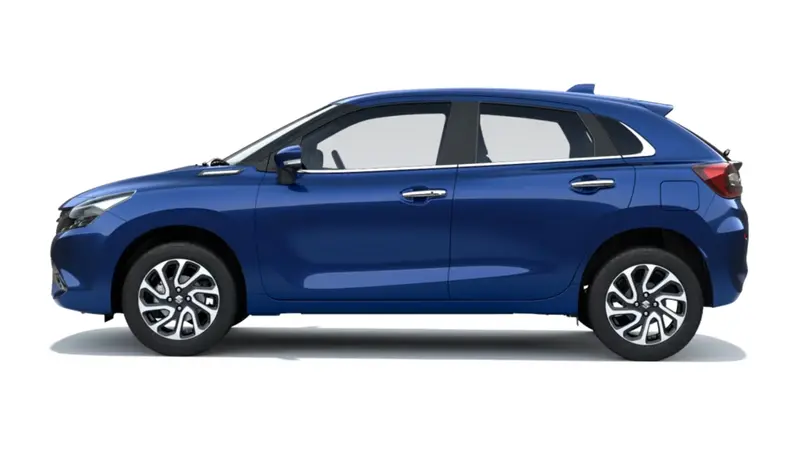
Its 16-inch alloy wheel gets a slightly retweaked design.
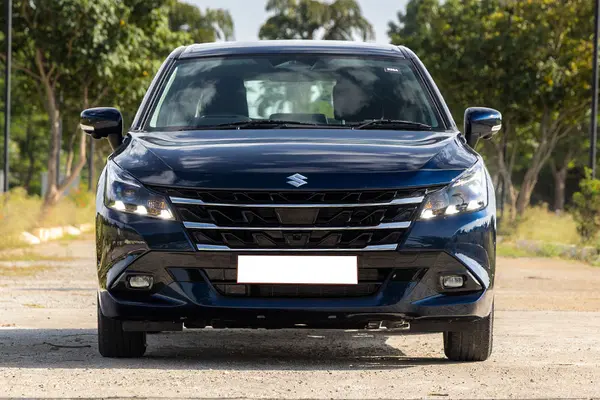
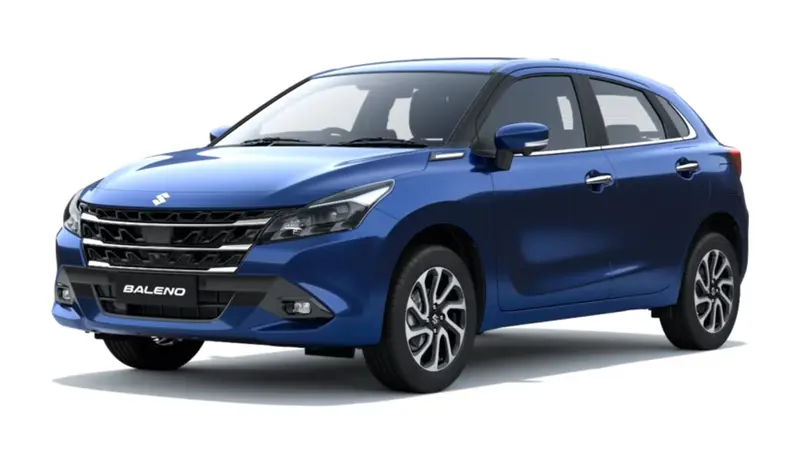
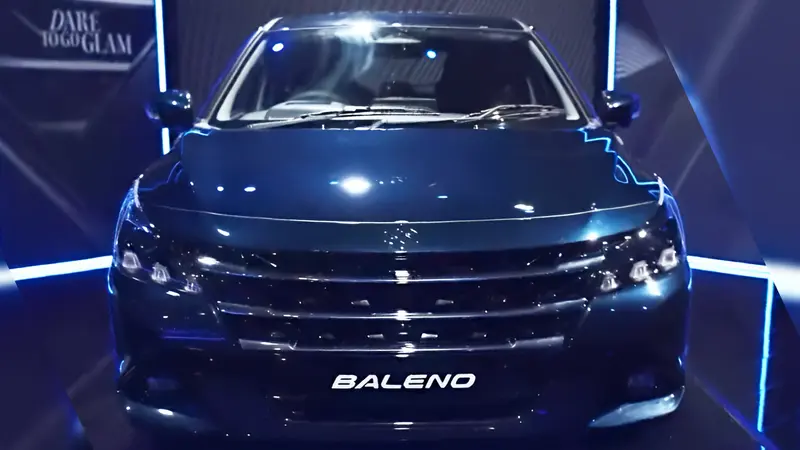
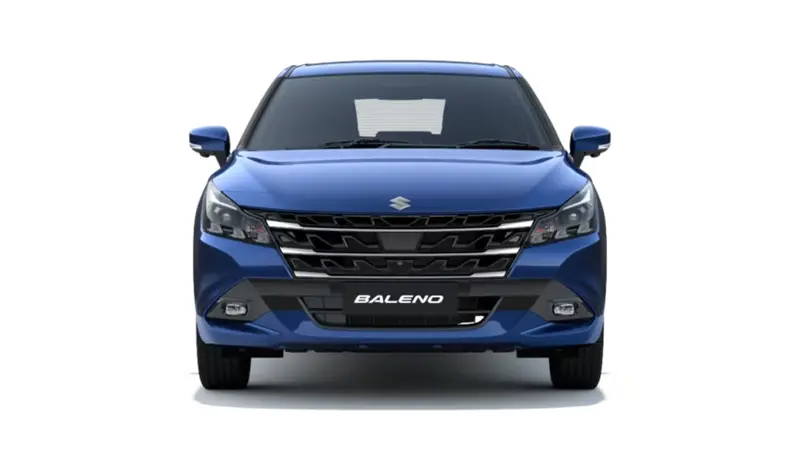
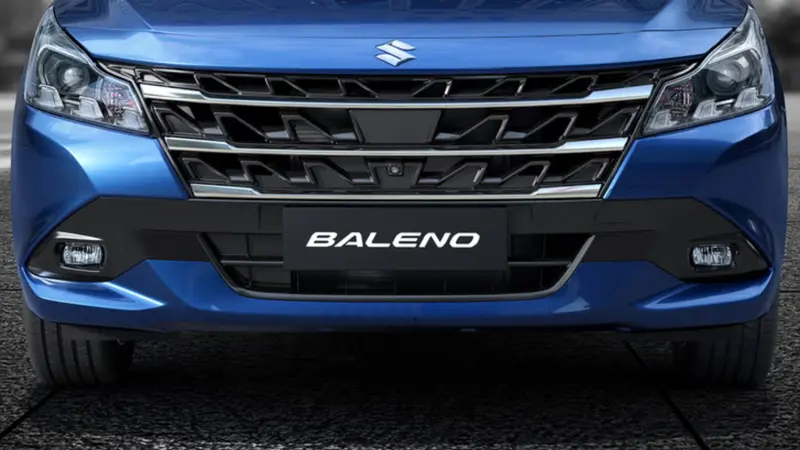
The 2026 Baleno gets an updated headlamp and grille design.
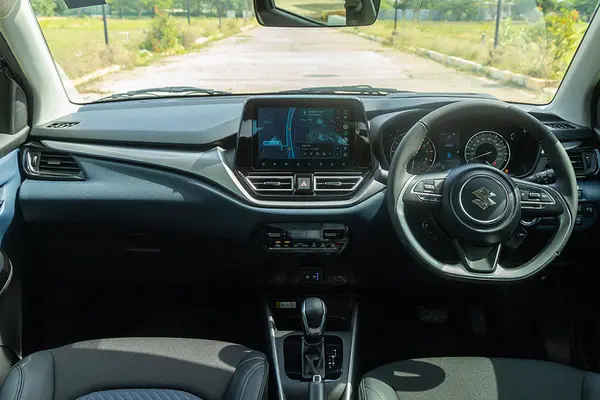
It now comes equipped with a Level-2 ADAS suite.
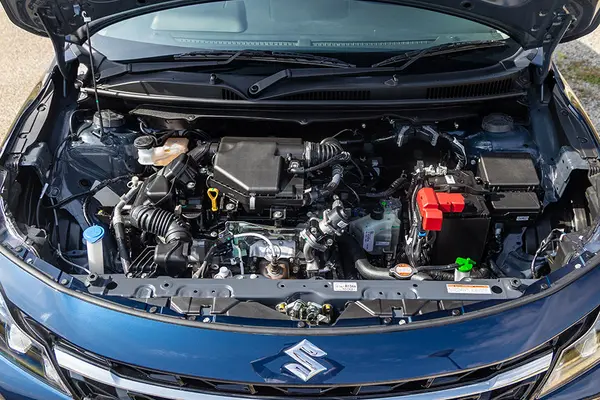
It features a new 1.2-litre Z Series three-cylinder engine.
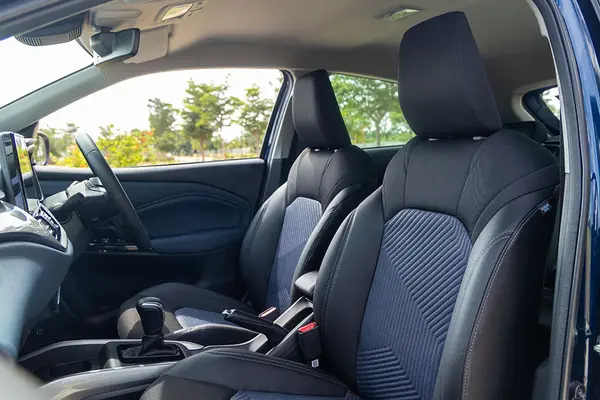
The new Baleno 2026 gets ventilated front seats.
Maruti Suzuki Baleno Overview

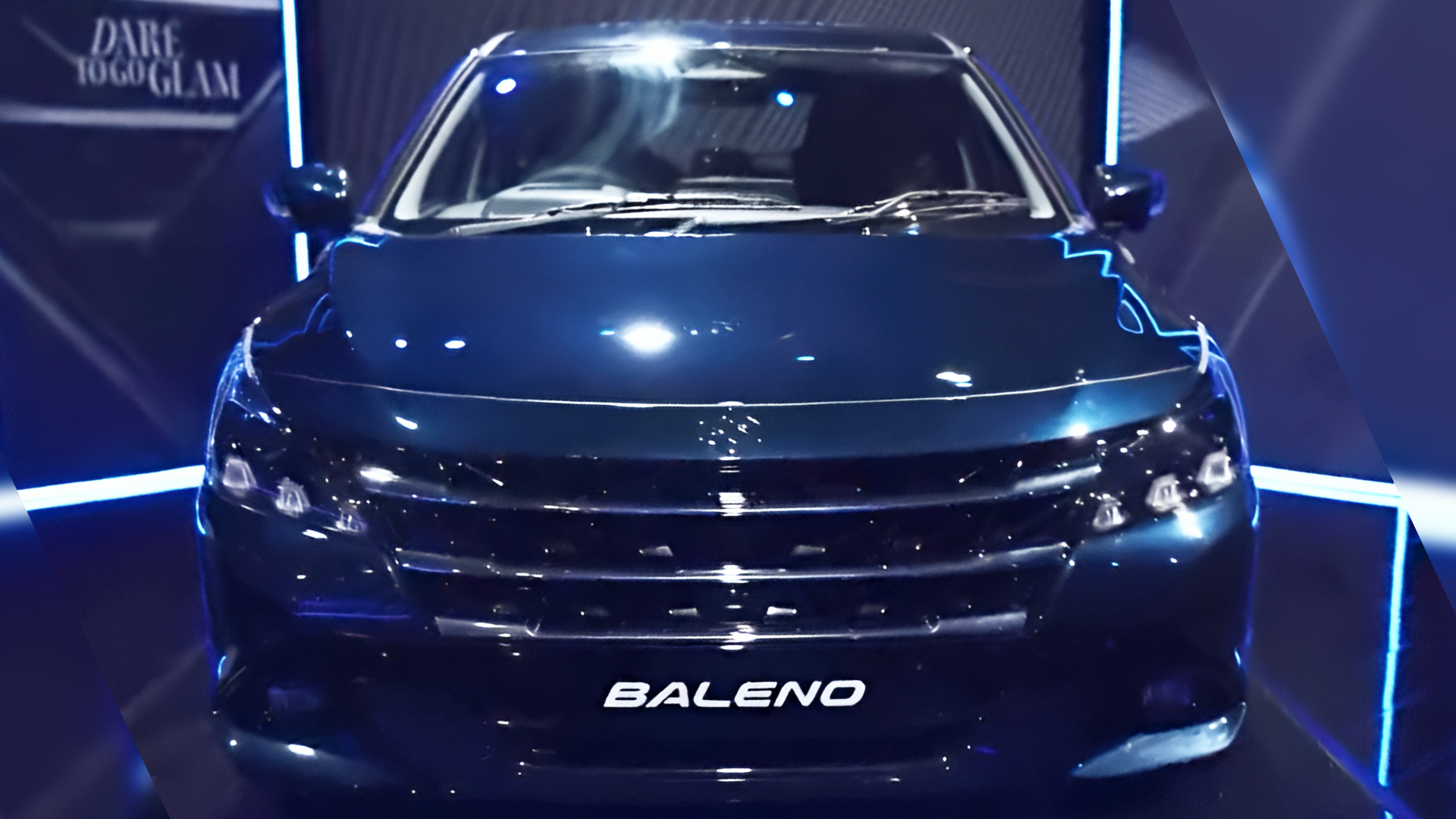
The second generation Maruti Suzuki Baleno has finally received a mid-life update, four years after it was launched in 2022.
The biggest change comes from under the bonnet. Maruti has dropped the 1.2-litre four-cylinder K12N and brought in the 1.2-litre three-cylinder Z12E petrol engine. A CNG option continues to be on offer, and both the petrol and CNG can be had with a 5-speed manual or 5-speed AMT.
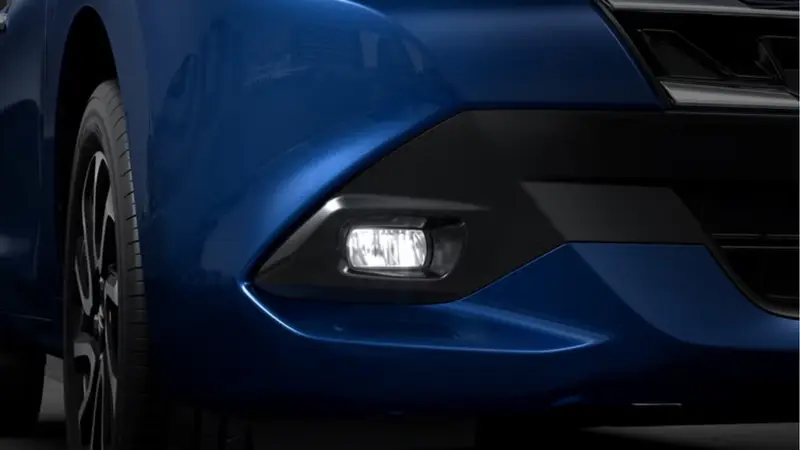
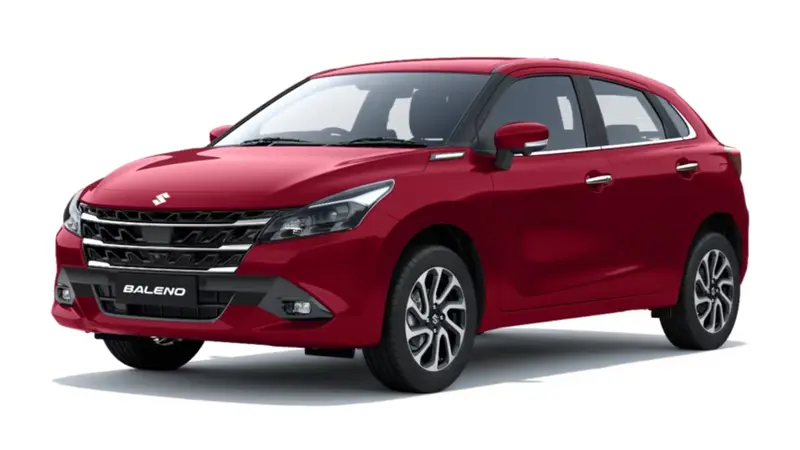
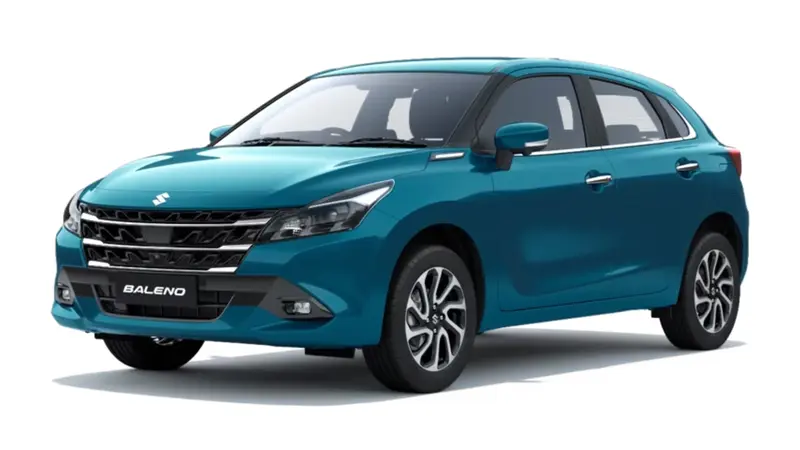
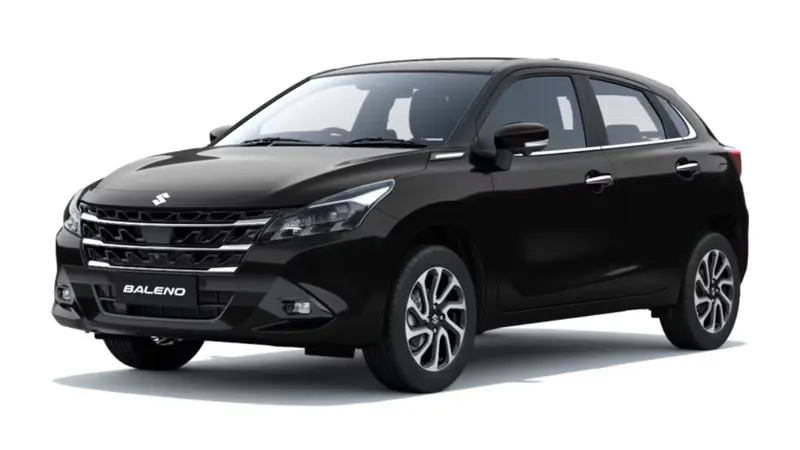
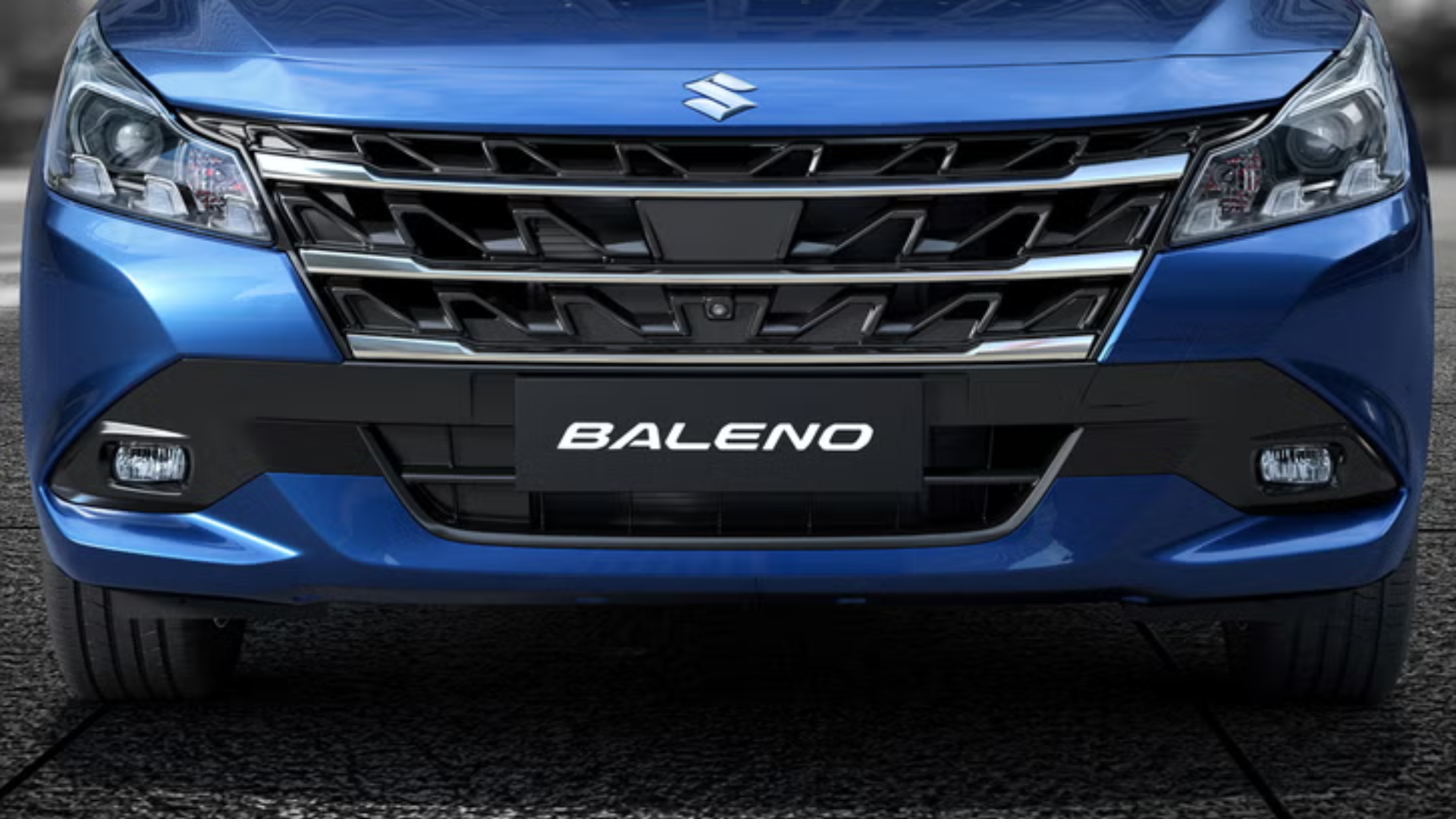
There are noticeable changes to the exterior, with most of them concentrated at the front. The new grille is wider and taller than before and uses a three-dimensional pattern with chrome detailing. It is paired with LED projector headlamps and LED DRLs. The fog lamps are LED units as well.
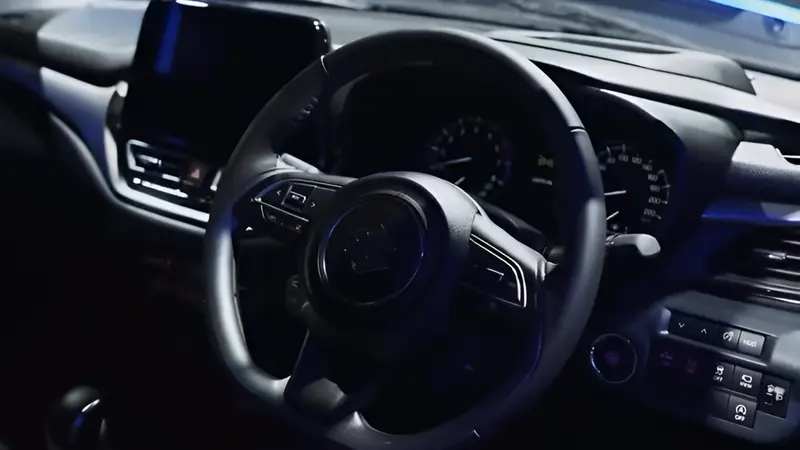
The cabin continues with the existing dashboard design, but higher variants now add leatherette upholstery, ventilated front seats, a head-up display, a cooled wireless charging dock and a SmartPlay Pro+ touchscreen.
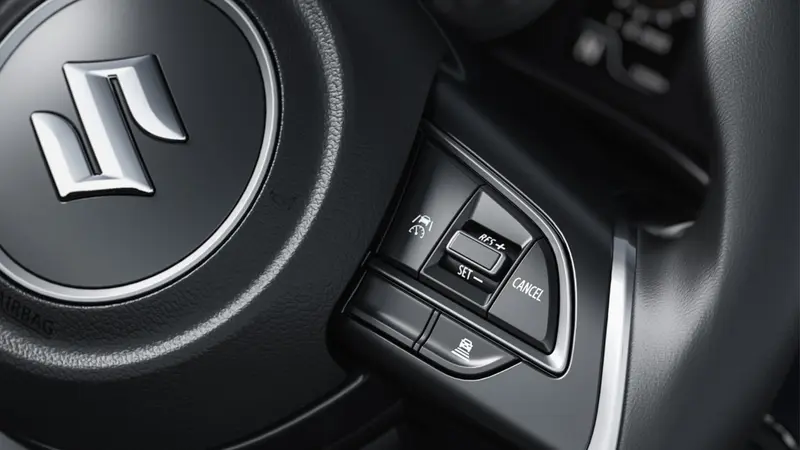
The headline safety upgrade is Level 2 ADAS, available on the top Alpha variant. The system brings features such as adaptive cruise control, lane keep assist, advanced emergency braking and high beam assist, none of which are currently offered by its direct rivals. Six airbags are standard across the range.
It continues to be sold exclusively through Maruti's NEXA network and sits in the premium hatchback segment alongside the Hyundai i20, Tata Altroz and Toyota Glanza.
Engine and Performance
Engine and Performance
| Parameter | Petrol | CNG |
|---|---|---|
| Engine | 1.2-litre Z12E 3-cylinder NA | 1.2-litre Z12E 3-cylinder NA |
| Max Power | 83 hp @ 5,700 rpm | 70 hp (CNG mode) |
| Max Torque | 112.4 Nm @ 4,500 rpm | 102 Nm (CNG mode) |
| Transmission | 5-speed MT / 5-speed AMT | 5-speed MT / 5-speed AMT |
The Baleno facelift is powered by Maruti's 1,197cc Z12E naturally aspirated three-cylinder petrol engine, replacing the 90 hp K12N four-cylinder unit used by the outgoing car. It can be paired with either a 5-speed manual or a 5-speed AMT.
This engine was introduced earlier on the Swift and Dzire, but the Baleno gets a specific tune aimed at improving low-end torque, producing 83 hp at 5,700 rpm and 112.4 Nm at 4,500 rpm.
The S-CNG version makes 70 hp and 102 Nm in CNG mode and is now also available with a 5-speed AMT alongside the 5-speed manual transmission.
fuel economy
fuel economy
The petrol manual Baleno has an ARAI-certified fuel efficiency figure of 23.80 km/l, while the petrol AMT is rated at 24.77 km/l.
The manual S-CNG version has a claimed efficiency of 33.61 km/kg, with the AMT claiming a higher 34.47 km/kg.
Idle Start Stop is standard across the lineup and is intended to help reduce fuel consumption in city driving.
interior
interior
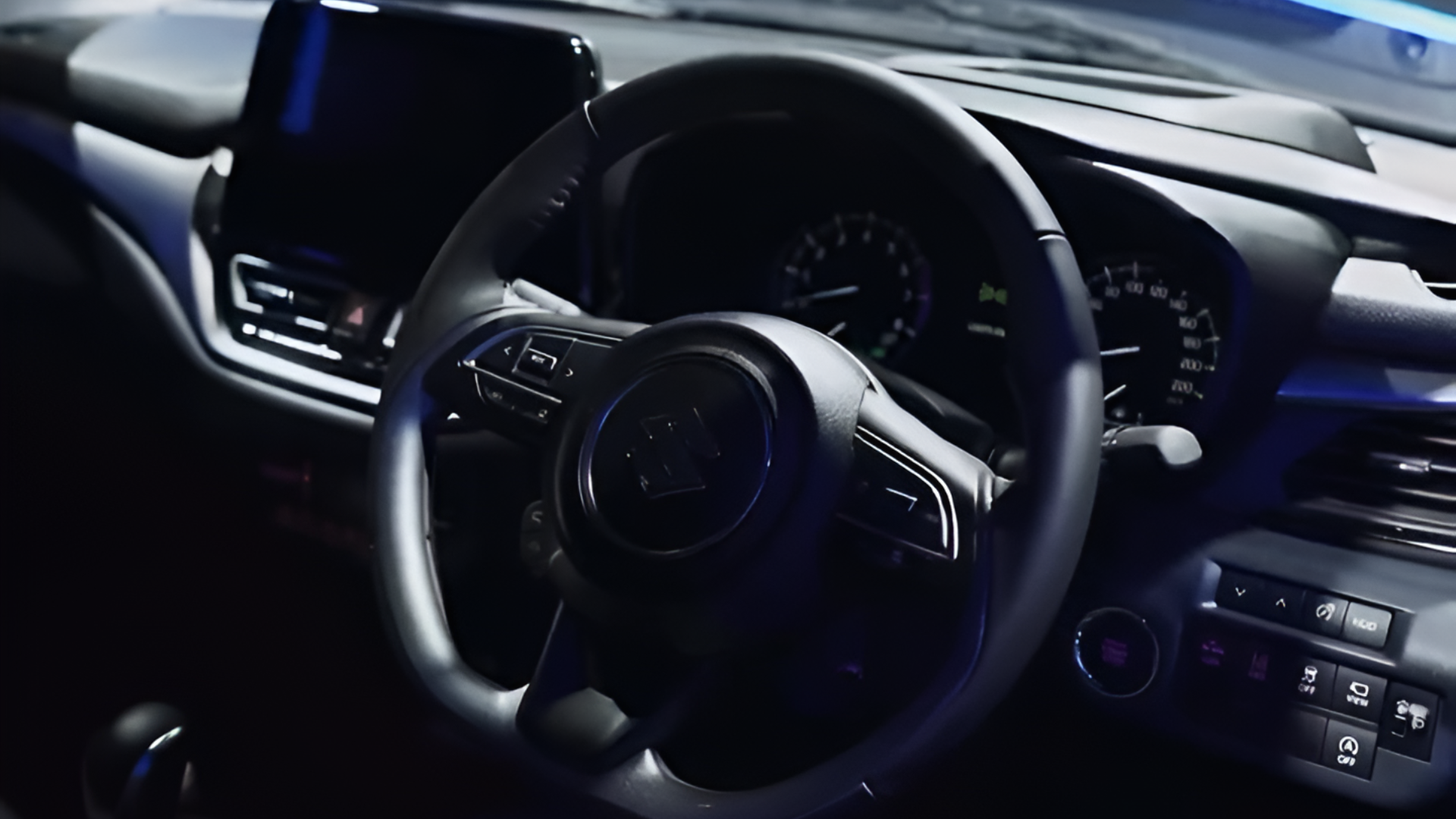
| Feature | Details / Availability |
|---|---|
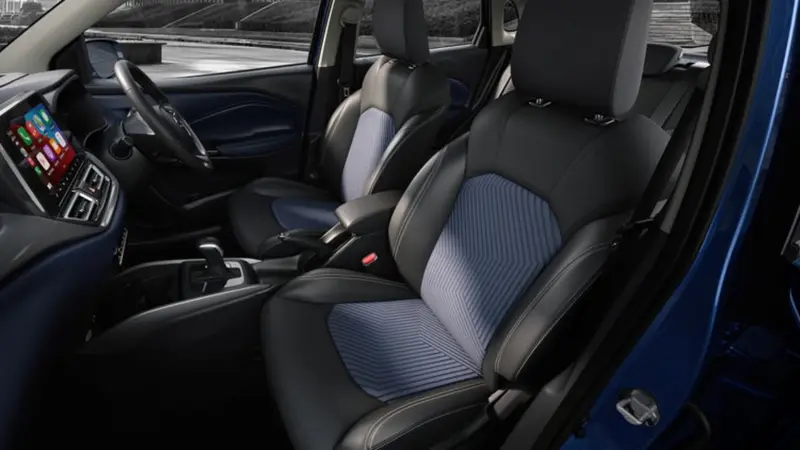
| Seats | Fabric upholstery on lower variants (Sigma, Delta). Leatherette upholstery with ventilated front seats from Zeta / Alpha upward. 60:40 split-folding rear bench. Sliding front centre armrest on mid and higher variants. |
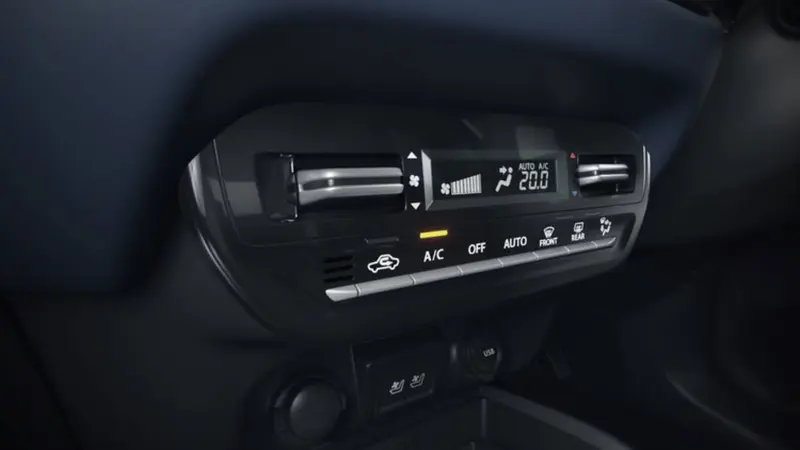
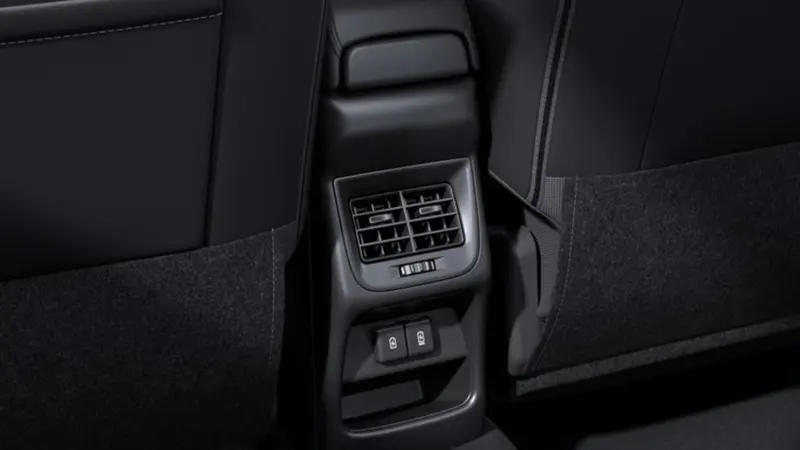
| Climate Control | Manual air-conditioning on lower variants. Automatic climate control from Zeta upward. Rear AC vents available on mid and higher variants. |
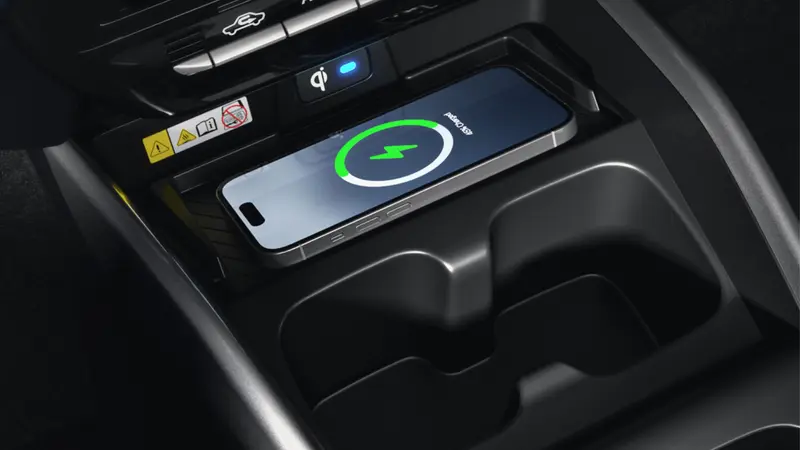
| Wireless Charger | Cooled (active-cooling) wireless charging dock available on higher variants (typically Alpha / Alpha(O)). |
| Other Conveniences | Head-up display (Alpha(O)), auto-dimming IRVM (higher variants), rear parcel shelf, push-button start (from Zeta), Suzuki Connect telematics (from Zeta – remote locking, tracking, Alexa, etc.), Clarion premium audio with tweeters (Alpha). |
| Boot Space | 318 litres. |
The Baleno's dashboard design remains familiar, with a black and blue theme. The Zeta and above trims get a 9-inch SmartPlay Pro+ touchscreen infotainment system with wireless Android Auto and Apple CarPlay, an onboard voice assistant with barge-in wake-up functionality.
The Delta trim gets a smaller 7-inch screen with the SmartPlay Pro system, though connectivity remains wireless.
The facelift adds several pieces of equipment higher up the range, including a head-up display, a wireless charging dock with active cooling, a 360-degree camera, and an auto-dimming IRVM. The Alpha also gets a Clarion premium sound system with tweeters.
Suzuki Connect is available from the Zeta variant and adds functions such as remote door locking, hazard light operation, vehicle tracking, stolen vehicle alerts and Alexa voice connectivity.
| Feature | Availability / Details |
|---|---|
| Infotainment | 7-inch SmartPlay Pro (Delta), 9-inch SmartPlay Pro+ (Zeta and onwards) |
| Instrument Cluster | Twin-pod analogue + MID (monochrome on lower variants, TFT colour display on higher) |
| Head-Up Display | Alpha(O) |
| Connectivity | Suzuki Connect (Zeta & above) with remote functions, tracking, Alexa |
| Audio | Arkamys (Zeta), Clarion (Alpha) |
Automatic climate control is also introduced from Zeta upward, while lower variants use manual air conditioning. This is a step down, since the pre-facelift Baleno offered it right from the base Sigma.
Ventilated front seats and leatherette upholstery are exclusive to the Alpha variant, while lower versions continue with fabric seats. Mid and higher variants get features such as a sliding front centre armrest, rear AC vents and a rear parcel shelf.
The rear bench folds in a 60:40 split. Boot space stands at 318 litres.
exterior
exterior
| Dimensions | Value |
|---|---|
| Length | 3,990 mm |
| Width | 1,745 mm |
| Height | 1,530 mm |
| Wheelbase | 2,520 mm |
The facelifted Baleno remains dimensionally unchanged from the outgoing model.
The front gets a much larger three-dimensional grille, though the LED projector headlamps and LED DRLs remain unchanged. The fog lamps are now rectangular instead of round, and get LEDs as well.
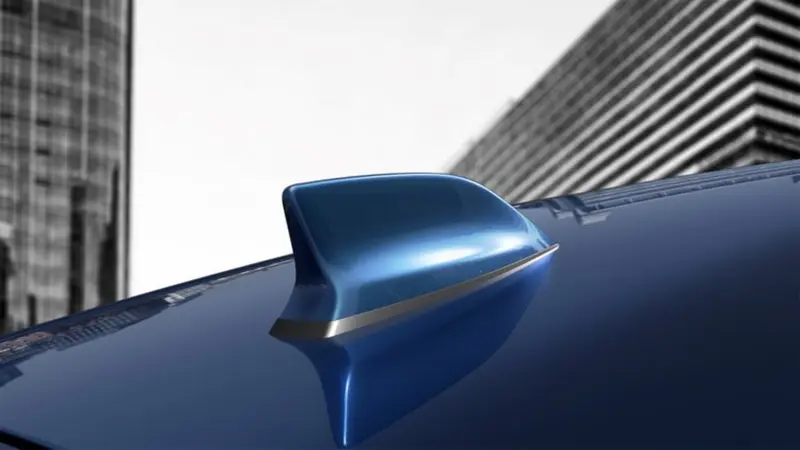
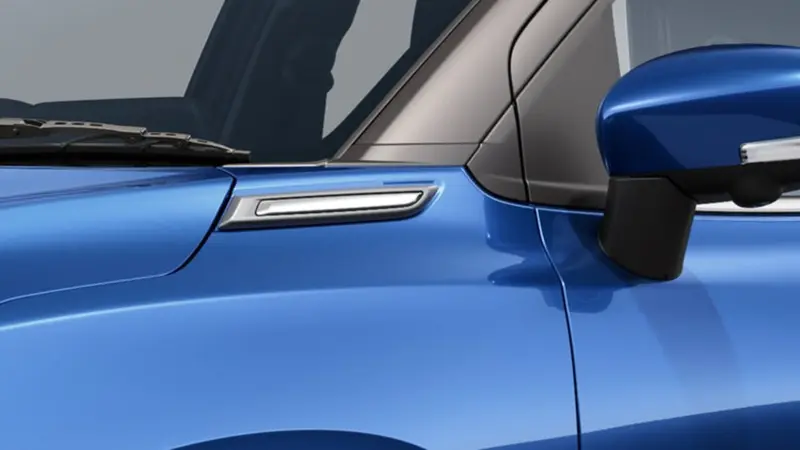
The side profile remains untouched, with even the alloy wheels being carried over from the pre-facelift model. A shark fin antenna is the only noticeable addition.
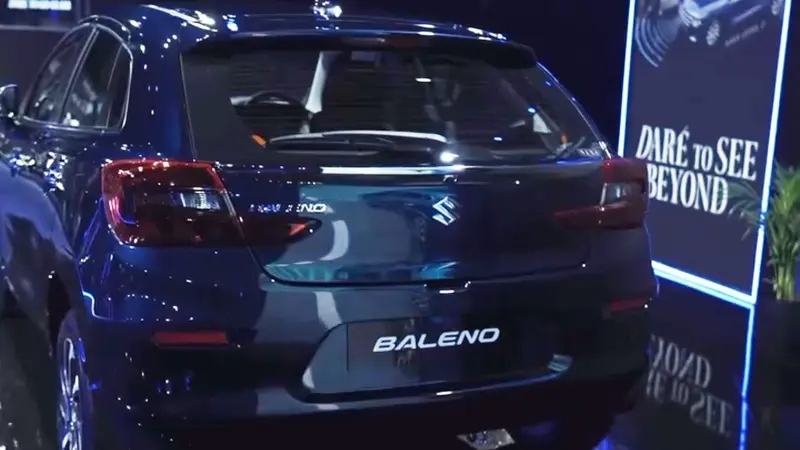
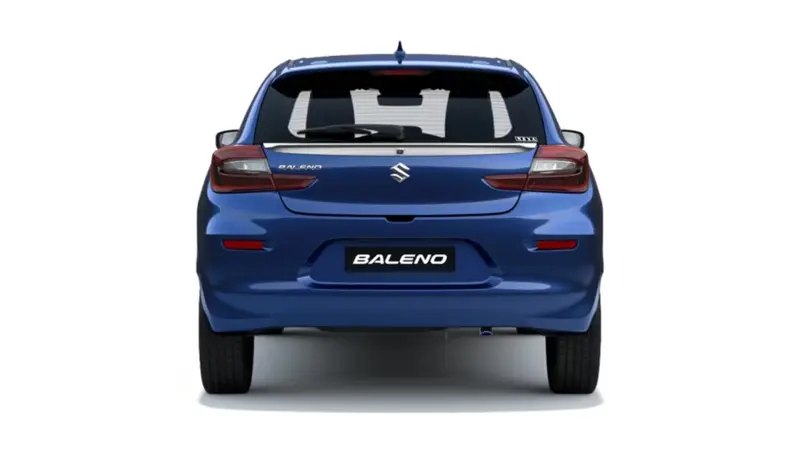
This story continues to the rear as well, with the car looking exactly identical to the outgoing model, with no changes to the bumper and taillights. A tailgate door spoiler is standard across the range.
A new Enigmatic Teal Green colour has been introduced, joining Nexa Blue, Opulent Red, Arctic White, Splendid Silver, Grandeur Grey and Bluish Black.
safety
safety
| Feature | Availability |
|---|---|
| Standard | 6 airbags, ABS with EBD, ESP, Hill Hold Assist, Brake Assist, ISOFIX. |
| TPMS | Delta onwards |
| Reverse Parking Camera | Delta onwards |
| 360-degree Camera | Alpha, Alpha(O) |
| Level 2 ADAS | Alpha(O) only |
The facelifted Baleno has not been tested by Bharat NCAP or Global NCAP at the time of launch. The outgoing model with 6 airbags had received a 4-star rating from Bharat NCAP. Since the car has not undergone any structural or platform changes, it is expected to retain this rating.
Six airbags, ABS with EBD, ESP with Hill Hold Assist, brake assist, seat belt pretensioners and force limiters, ISOFIX child seat anchorages and an emergency stop signal are standard across the range in the new model.
A reverse parking camera is included from Delta variant, TPMS is now standard from the Zeta, while the top-end Alpha gets a 360-degree view camera.
Level 2 ADAS has been introduced in the top-end Alpha (O) variant, making it a first in the premium hatchback segment.
competition
competition
The Baleno facelift continues to face competition from the Hyundai i20, Tata Altroz and its badge-engineered sibling, the Toyota Glanza.
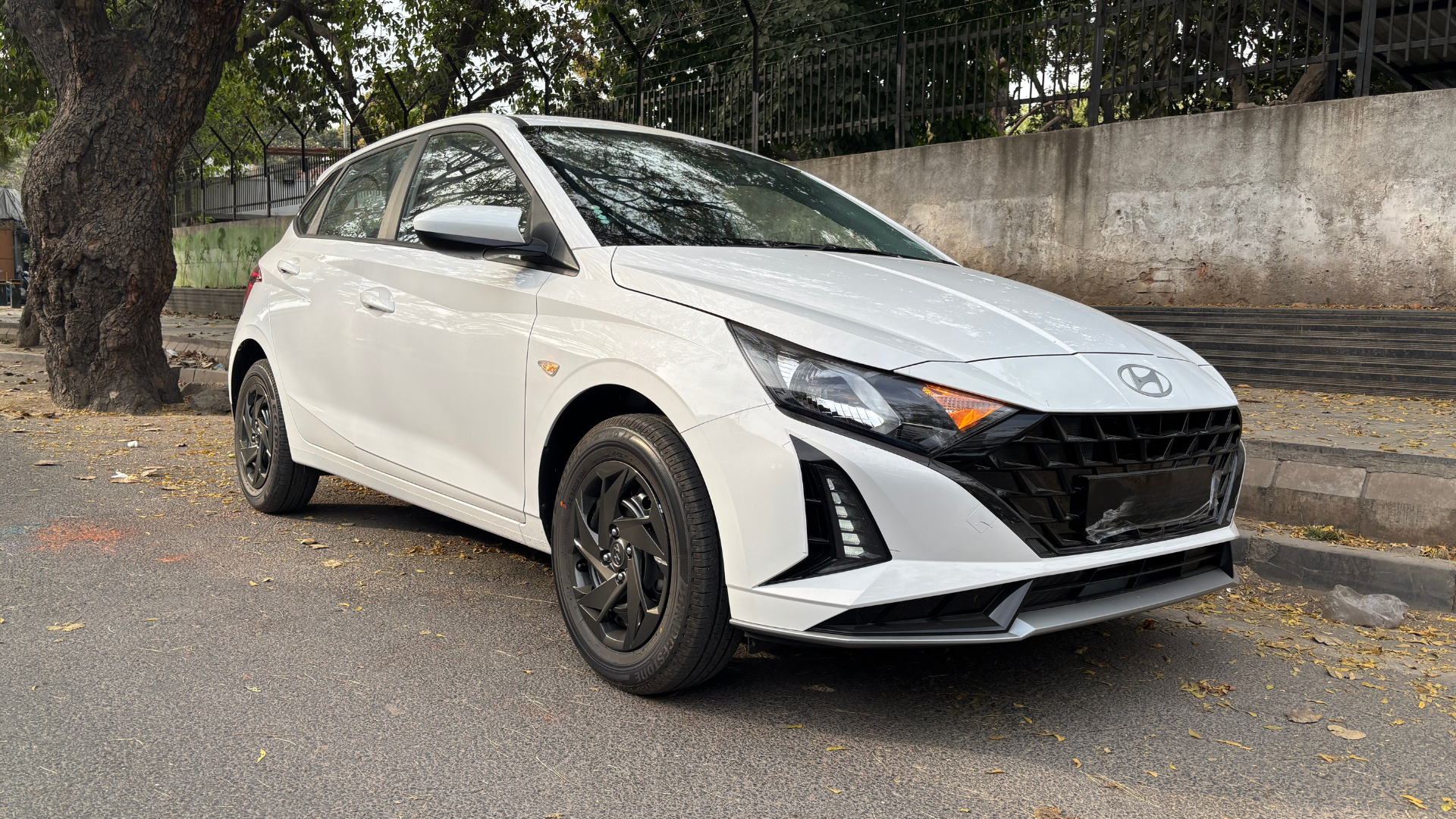
The Hyundai i20 comes with a smooth 4-cylinder engine, also offers a turbo-petrol engine (in the N Line), and gets a more premium cabin. The Baleno's key advantages are its Level 2 ADAS package, fuel efficiency with the petrol manual, the option of a CNG, and Maruti's wider service network.

The Tata Altroz has the benefit of a 5-star Bharat NCAP rating, giving it a confirmed structural safety record that the Baleno cannot claim at present. It is also the only hatchback not just in this segment, but in all of India, to still offer a diesel engine. The Baleno fights back with a wider equipment list, ADAS, and a service network with a peace of mind ownership experience that the Tata cannot match.
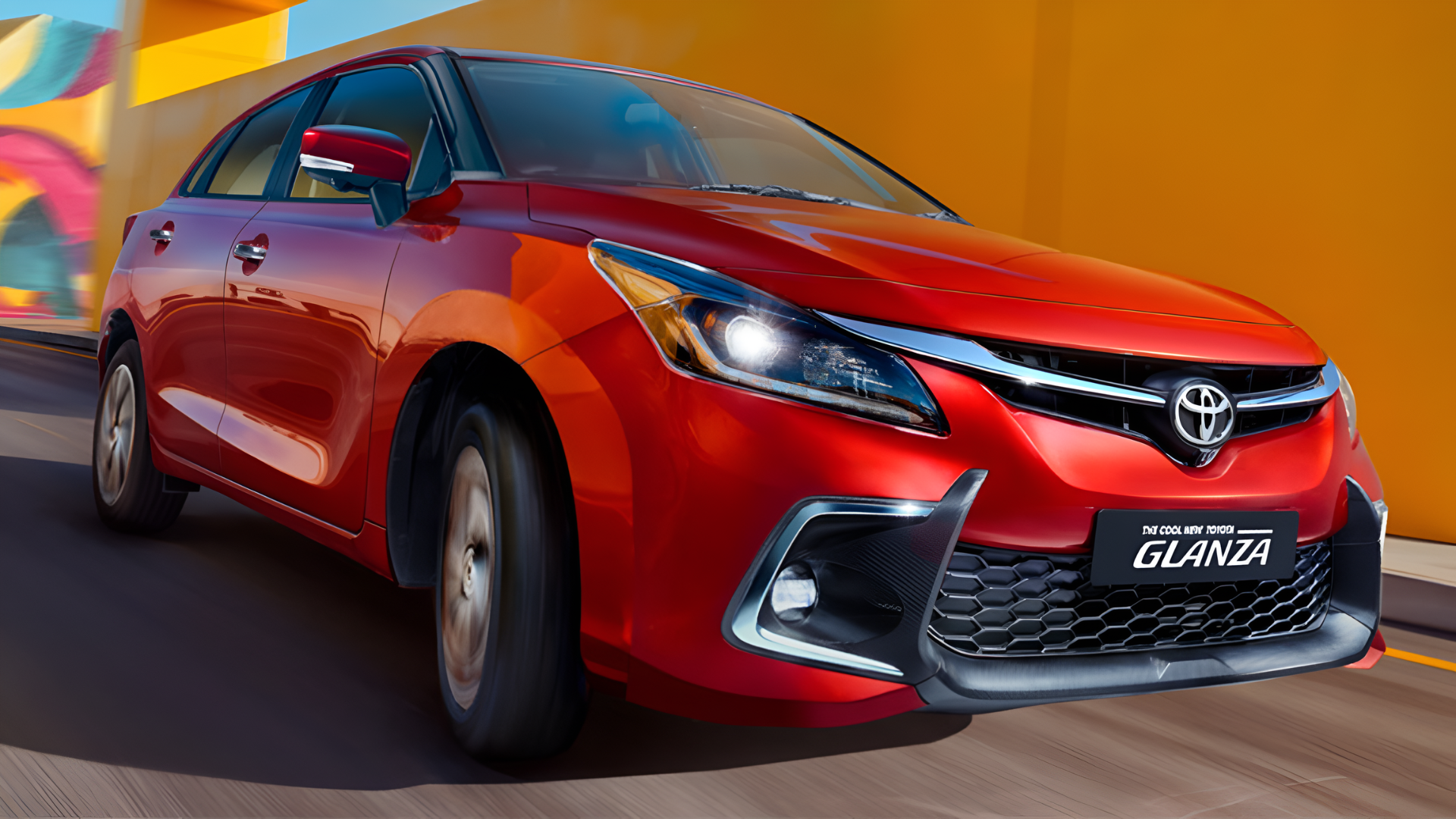
Being mechanically identical cars, this Baleno facelift launch signals the imminent arrival of the updated Toyota Glanza as well. As of today, the current Glanza holds the four cylinder engine advantage over the Baleno, and Toyota's positive after-sales service reputation arguably even surpasses Maruti's, along with a better standard warranty as well. The Baleno gets access to NEXA's premium retail experience, a slightly wider choice of colours, and Maruti's significantly wider service network.
On the product itself, however, there is very little separating the two. They are, for all practical purposes, the same car.
final verdict
final verdict
The 2026 Maruti Suzuki Baleno facelift is a smart, practical evolution of one of India’s most popular premium hatchbacks.
It successfully addresses key buyer demands with a new, more efficient and city friendly petrol engine, higher claimed mileage, six airbags as standard across the range, much more tech than before, and a segment-first Level 2 ADAS on the top Alpha(O) variant.
It continues to excel as a value-for-money daily driver with a wide variant spread and competitive pricing. Against rivals such as the Hyundai i20, Tata Altroz, and Toyota Glanza, the Baleno differentiates itself through its unique ADAS suite, more features at comparable prices, and Maruti's bulletproof nationwide service network.
The trade-offs are clear. The new three-cylinder is less refined and has a weaker top-end than the outgoing four-cylinder K12N at higher speeds, and peak power is modest. The exterior changes are largely limited to the front, and some desirable features remain restricted to the highest trims.
Overall, the Baleno remains an excellent all-rounder for buyers prioritising efficiency, equipment, low running costs, and everyday usability. Those seeking sharper dynamics, a more premium cabin feel, or proven five-star safety may still prefer the i20 or Altroz, but for the majority of premium hatchback shoppers, the Baleno continues to be a highly compelling and future-ready choice.
Maruti Suzuki Baleno mileage
The Maruti Suzuki Baleno mileage ranges from 23.8 to 24.77 kmpl and 33.61 km/kg. The Manual Petrol variant has an ARAI mileage of 23.8 kmpl. The Automatic Petrol variant has an ARAI mileage of 24.77 kmpl. The Manual CNG variant has an ARAI mileage of 33.61 km/kg. The Auto CNG variant has an ARAI mileage of 33.61 km/kg.
| Fuel Type | Transmission | ARAI Mileage | * City Mileage | * Highway Mileage |
|---|---|---|---|---|
| Petrol | Manual | 23.8 kmpl | - | - |
| Petrol | Automatic | 24.77 kmpl | - | - |
| CNG | Manual | 33.61 km/kg | - | - |
| CNG | Auto | 33.61 km/kg | - | - |
Maruti Suzuki Baleno News
Maruti Suzuki Brings CNG-AMT Options To The Swift, Baleno and Dzire
Maruti has finally paired CNG with an automatic gearbox on the Swift, Dzire and Baleno, priced from Rs 7.92 lakh. The AMT trims share a 1.2 litre engine, a 55 litre boot-mounted tank and cost around Rs 35,000 more than the manual versions.
Anmol Kumar
October 1, 2026
Suzuki Developing New 125 bhp DITC Turbo Engine for India
Suzuki has confirmed development of a new 1.2-litre direct-injection turbocharged petrol engine for India and other growth markets. The engine targets over 125 bhp, 230 Nm and thermal efficiency of over 40 per cent, and will support petrol, CNG, CBG and E100 fuel.
Salil Kumar
September 28, 2026


Maruti Suzuki Baleno Facelift Launched at Rs 6.10 Lakh with a New Engine, Level 2 ADAS and Ventilated Seats
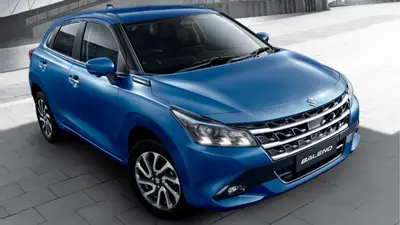
Maruti Suzuki has launched the Baleno facelift at Rs 6.10 lakh as an introductory festive price. The update brings a new Z-Series engine, Level 2 ADAS, ventilated front seats, and an active-cooled wireless charger, all new to this hatchback.
Anmol Kumar
September 10, 2026
Maruti Suzuki Baleno FAQs
What is new in the Maruti Suzuki Baleno facelift compared to the outgoing model?
−The main changes are a new Z12E three-cylinder engine replacing the K12N four-cylinder, a refreshed front with a wider chrome grille, LED projector headlamps with new DRLs, Level 2 ADAS on the top variant, TPMS from the Zeta upward, a 360-degree camera, a head-up display, a wireless charging dock with active cooling, and a new Enigmatic Teal Green colour.
What powertrains does the new Maruti Baleno use?
+A 1.2-litre Z12E three-cylinder naturally aspirated petrol engine producing 83 hp and 112.4 Nm, paired with a 5-speed manual or 5-speed AMT. An S-CNG variant is also offered with 70 hp and 102 Nm in gas mode, and is paired with the same 5-speed manual and AMT.
What is the ARAI-certified fuel efficiency of the new Maruti Baleno?
+23.80 km/l on the petrol MT and 24.77 km/l on the petrol AMT. The S-CNG variants return 33.61 km/kg with the manual and 34.47 km/kg with the AMT.
Does the new Maruti Baleno have ADAS, and which variant gets it?
+Yes, Level 2 ADAS is available exclusively on the top Alpha variant. No other variant gets any ADAS function.
Does the Maruti Baleno get a 360-degree camera?
+Yes, the Baleno gets a 360-degree camera, but only on the Alpha variant. A rear-view camera with parking sensors is available from the Delta upward.
What infotainment system does the new Baleno use?
+The Zeta and above variants get the SmartPlay Pro+ with a 9-inch touchscreen. The Delta gets a smaller SmartPlay Pro 7-inch unit.
Does the new Baleno have ventilated seats?
+Yes, front ventilated seats are available from the Zeta variant.
What is the boot space of the new Maruti Baleno?
+318 litres, measured using the VDA method. This is unchanged from the outgoing Baleno.
What standard safety features does the Baleno get?
+The Baleno gets 6 airbags, ABS with EBD, ESP, Hill Hold Assist, Brake Assist, ISOFIX mounts, and a high speed alert.