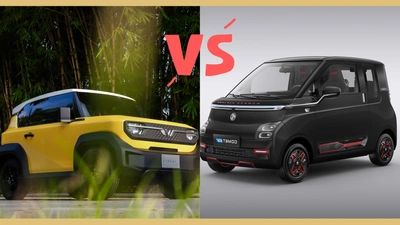
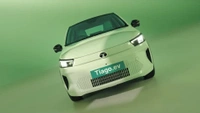
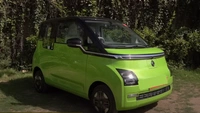
Tata Tiago EV vs MG Comet EV - Which One Should You Buy
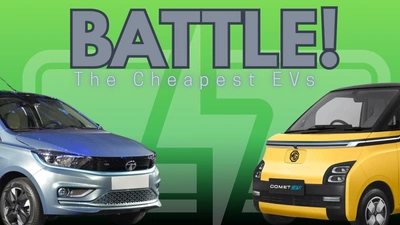
Tata Tiago EV vs MG Comet EV Comparison at CarHP India. Compare Tata Tiago EV and MG Comet EV Prices, Mileage, Features, Specs, Colours and much more.
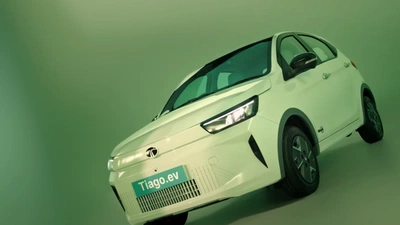
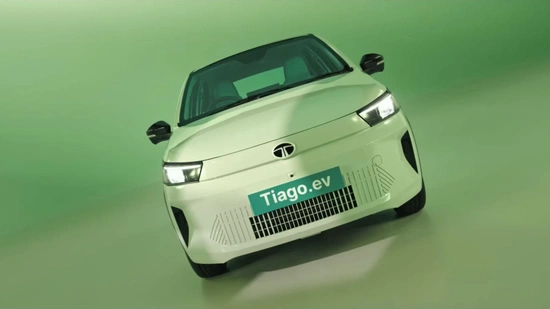
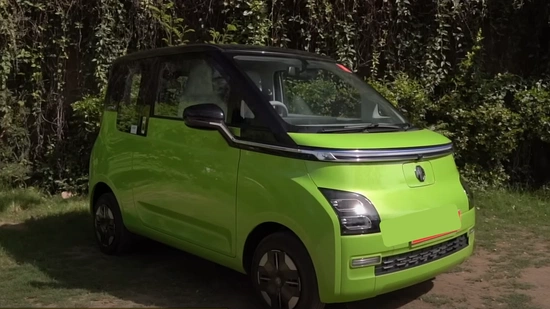
The Tata Tiago EV comes in 4 variants. The selected variant is priced at ₹6.99 Lakh. The cheapest variant, Smart 19 Medium Range, costs ₹6.99 Lakh, while the top-end variant, Creative Plus 24 Long Range, is priced at ₹10.09 Lakh. The MG Comet EV comes in 6 variants. The selected variant is priced at ₹7.80 Lakh. The cheapest variant, Executive, costs ₹7.80 Lakh, while the top-end variant, Exclusive FC, is priced at ₹10.07 Lakh.
₹ 6.99 Lakh
₹ 7.80 Lakh


Compare Minimum 2 Cars At Once — Tap To Activate / Deactivate
Smart Summary for Car Selection
 Why Choose Tata Tiago EV?
Why choose
- It has four doors and five seats against the Comet's two doors and four seats, so a family can actually use it rather than treating it as a second car
- At 3,825mm long it is 851mm longer than the Comet, and that turns into a real rear seat and a proper boot rather than a token one
- The 240-litre boot takes luggage the Comet cannot begin to fit, since the MG's is limited to roughly a laptop bag
- Two battery options at 19.2kWh and 24kWh let you match the pack to your distance, with the larger one claiming around 290km against the Comet's 230km
- Peak output reaches 75hp and 114Nm on the larger battery against the Comet's 42hp, so it keeps up with traffic on a flyover rather than being overtaken
- There is no top speed restriction, where the Comet is electronically limited to 85kmph
- Six airbags are fitted across the range
Why not choose
- It costs more than the Comet, and for a buyer whose use is confined to short city trips that money buys capability they will not use
- At 3,825mm it is the larger car, so the very tightest parking spots the Comet slips into are harder work
- Real-world range on the larger pack comes in well below the claim, so trip planning needs the lower figure
- Tata's public charging coverage is uneven by region
- Ground clearance and ride height are both modest, so broken roads are felt
Why Choose MG Comet EV?Why choose
- At 2,974mm long and 1,505mm wide it is the smallest car on sale in India, which makes it able to park and turn where nothing else can
- It costs less than the Tiago EV, and as a dedicated city runabout or second car that gap is the point
- Tested real-world range came in at 191km against a 230km claim, a far tighter correlation than most electric cars manage, so the number you plan with is close to the number on the brochure
- Efficiency is the best here by a wide margin, extracting 191km from only a 17.4kWh battery
- It reaches 0 to 60kmph in 6.9 seconds, which is all the acceleration city traffic ever asks for
- Dual 10.25-inch displays with wireless smartphone mirroring are fitted, so the cabin does not feel stripped out
- The 7.4kW charger fills it in around 3.5 hours, which is quick simply because there is so little battery to fill
Why not choose
- Top speed is electronically limited to 85kmph, which makes highway driving unsuitable rather than merely slow
- It takes 19.9 seconds to reach 100kmph, so joining fast-moving traffic is a problem
- Two doors and four seats mean rear passengers climb in past the front seats, and a family of five cannot travel
- The boot holds little more than a bag, so any luggage travels on a seat
- At 42hp it is the least powerful car in this comparison by a wide margin
- The 17.4kWh battery is small enough that a single longer detour can leave you short
 Our Recommendation For Most Buyers
Tiago EV
The Tiago EV is the one to buy if this has to work as a real car rather than a city-only tool. Four doors, five seats, a 240-litre boot and no top speed restriction mean it can take a family on a longer trip, which the Comet fundamentally cannot. Up to 75hp and 114Nm also means it holds its place in fast-moving traffic instead of being swept along. What you pay for is capability you may not need.
If your driving never leaves the city and never involves more than two people, the Comet does that job for less money and parks where the Tiago cannot. Plan around real-world range rather than the claim.
Comet EV
The Comet is an unusually honest product once you accept what it is for. At 2,974mm long it parks where nothing else will, it returned 191km against a 230km claim which is a tighter correlation than most electric cars manage, and it extracts that from only 17.4kWh, making it the most efficient car here by a distance. For a short city commute it needs very little charging.
The limits are hard rather than soft. An 85kmph electronic limit and 19.9 seconds to 100kmph make highway use unsuitable, two doors and four seats rule out a family of five, and the boot will not take luggage. Buy it as a second car rather than an only car.
Engine and Performance
Performance Specifications
Fuel Specifications
Dimensions and Design
Interior Specifications
Wheels & Tires
Suspension, Brakes & Steering
Safety Features
Interior Features
Comfort & Convenience
Infotainment Features
Exterior Features
Brochure

EMI Cost Comparison
Assuming 20% down payment, 9.5% interest, 60-month tenure
 Loan Amount
 Interest: 9.5%
 Down Payment (20%)
 Loan TenureLoan AmountInterest: 9.5%Down Payment (20%)Loan Tenure
Pros & Cons Comparison
Things We Like in Tata Tiago EV
- 24 kWh pack delivers around 200 km real-world range
- DC fast charging reaches 10-80 percent in 35 minutes
Things We Like in MG Comet EV
- ARAI-certified 230 km in single-charge range.
- The IP67-rated battery is fully sealed against dust and temporary water submersion.
Things We Don't Like in Tata Tiago EV
- No spare tyre; only a puncture repair kit is provided
- Power fades sharply after 100 km/h with 120 km/h top speed
Things We Don't Like in MG Comet EV
- The motor only generates 41 hp and 110 Nm.
- At 17.3 kWh, the battery is among the smallest in the market.
Tata Tiago EV Comparisons
MG Comet EV Comparisons
MG Comet EV
₹7.80 - 10.07 Lakh
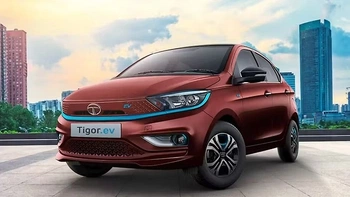
Tata Tigor EV
₹12.49 - 13.75 Lakh
MG Comet EV
₹7.80 - 10.07 Lakh
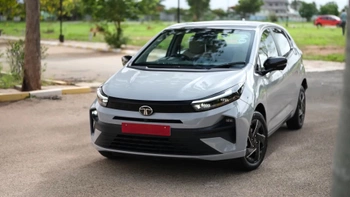
Tata Altroz
₹6 - 10.90 Lakh
MG Comet EV
₹7.80 - 10.07 Lakh
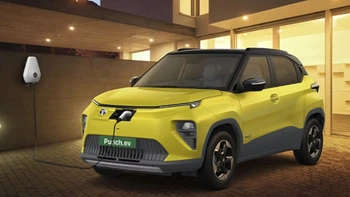
Tata Punch EV
₹9.79 - 12.99 Lakh
MG Comet EV
₹7.80 - 10.07 Lakh
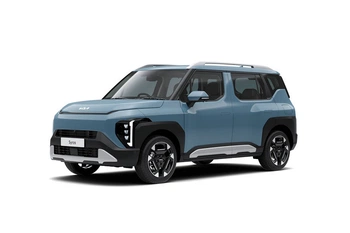
Kia Syros
₹8.42 - 15.82 Lakh
MG Comet EV
₹7.80 - 10.07 Lakh
Hyundai Grand i10 Nios
₹5.60 - 8.09 Lakh
MG Comet EV
₹7.80 - 10.07 Lakh
Hyundai Exter
₹5.81 - 9.61 Lakh
Car News