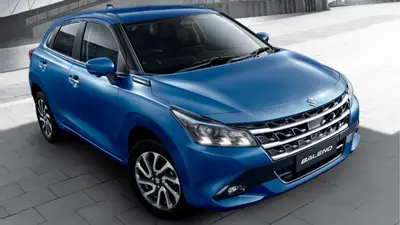
Maruti Suzuki Baleno vs Tata Altroz - Which One Should You Buy
Maruti Suzuki Baleno vs Tata Altroz Comparison at CarHP India. Compare Maruti Suzuki Baleno and Tata Altroz Prices, Mileage, Features, Specs, Colours and much more.
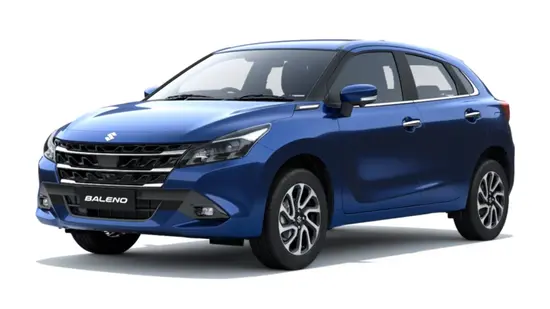
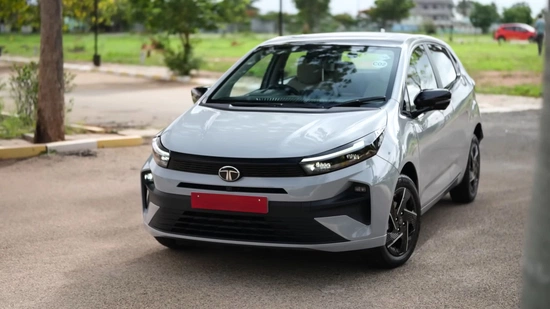
The Maruti Suzuki Baleno comes in 12 variants. Engine options include Petrol and CNG as per the selected variant, paired with manual, automatic, or auto transmissions. The selected variant is priced at ₹5.99 Lakh. The cheapest variant, Sigma, costs ₹5.99 Lakh, while the top-end variant, Alpha (O) AMT, is priced at ₹9.99 Lakh. The Tata Altroz comes in 27 variants. Engine options include Petrol, CNG and Diesel as per the selected variant, paired with manual or automatic transmissions. The selected variant is priced at ₹6 Lakh. The cheapest variant, Smart, costs ₹6 Lakh, while the top-end variant, Accomplished S AMT CNG, is priced at ₹10.90 Lakh.
₹ 5.99 Lakh
₹ 6 Lakh


Compare Minimum 2 Cars At Once — Tap To Activate / Deactivate
Smart Summary for Car Selection
 Why Choose Maruti Suzuki Baleno?
Why choose the Maruti Suzuki Baleno
- It is the only car in its class with a Level 2 ADAS suite, so on a long expressway drive it can help keep the car in its lane and hold a safe gap to the vehicle ahead, which reduces fatigue over several hours.
- Front seat ventilation, also unique in the class, keeps your back from sticking to the seat on a summer afternoon commute while the air conditioning is still cooling the cabin.
- A head-up display projects information onto the windscreen, so you can keep an eye on your speed on camera-enforced highways without dropping your eyes to the instrument panel.
- It seats four adults comfortably, tall ones included in the rear, so an office carpool of four grown-ups fits without anyone folding their knees.
- The three-cylinder engine is refined with well-controlled vibration, so the cabin stays calm while idling at signals, which is where a city car spends much of its time.
Why not choose the Maruti Suzuki Baleno
- There is no diesel, so a buyer who covers long highway distances every month has no engine built for that kind of use and must rely on petrol or CNG.
- The only automatic on offer is an AMT, so a buyer who wants a quicker-shifting dual-clutch for daily traffic, as the Altroz petrol offers, has no equivalent here.
- The CNG version is manual only and drops to 70hp, so the lowest running cost and the ease of an automatic cannot be had together.
- Its 318-litre boot is 27 litres smaller than the Altroz's, which on a family holiday means one less soft bag fits in the back.
- There is no rear centre armrest and no Type-C port at the front, so rear passengers on a long trip have nowhere to rest an arm and newer charging cables need an adapter up front.
- Acceleration beyond 60kph is slow and gradual, so building speed for a highway overtake takes time and a long clear stretch of road.
Why Choose Tata Altroz?Why choose the Tata Altroz
- It holds a 5-star Bharat NCAP rating and every version carries six airbags, so the family buying the most basic Altroz gets the same airbag protection as the one buying the top model.
- A 90hp 1.5-litre diesel is on offer, which suits a buyer covering big monthly highway distances, a use the Baleno has no dedicated engine for.
- The petrol can be had with a manual, an AMT or a dual-clutch automatic, so a city commuter who wants quick, smooth shifts in crawling traffic can pick the dual-clutch.
- Its 345-litre boot is the largest in the class, and the CNG version still keeps 210 litres by splitting the gas across two slim tanks, so choosing CNG does not mean giving up luggage room entirely.
- The suspension absorbs potholes easily and stays composed as speeds rise, so rear passengers feel fewer jolts on broken city streets and patched highways.
- The steering needs very little effort at parking speeds, which makes three-point turns in a narrow lane or a crowded basement far less tiring.
Why not choose the Tata Altroz
- The dual-clutch automatic pairs only with the petrol, and the diesel and CNG are manual only, so a buyer who wants diesel running costs with two-pedal driving cannot have that combination.
- The diesel clatters at idle and stays noisy right through the rev range, so the engine that saves the most fuel on long runs is also the least pleasant to sit behind in city traffic.
- Road noise and wind noise around the mirrors are noticeable at cruising speeds, which makes a four-hour highway drive more tiring for everyone inside.
- Ground clearance is 165mm, so a fully loaded Altroz needs a slow, angled approach over tall speed breakers to keep the underbody from scraping.
- The thick front pillar blocks your view at junctions, so two-wheelers emerging at blind turns and busy roundabouts need an extra lean forward to spot.
 Our Recommendation For Most Buyers
Who should buy the Maruti Suzuki Baleno
The Baleno is the better buy for someone who commutes mostly in the city, takes regular highway trips, and values comfort technology over engine choice. Driver assists, cooled front seats and a head-up display are things nothing else in this class offers, and the refined engine keeps daily traffic calm. That comfort comes at the cost of flexibility.
There is no diesel for heavy highway mileage, and the only automatic is an AMT. Going for CNG to cut running costs means giving up the automatic entirely, and the gas version makes noticeably less power. Highway acceleration beyond 60kph is slow in every version, and the boot is smaller than the Altroz's. If you drive in town most days, want electronic help on long expressway stretches, and rank a cool, calm cabin above gearbox variety, the Baleno gives you more comfort for every kilometre.
Who should buy the Tata Altroz
Families who want the widest spread of fuels and gearboxes in the class, backed by a 5-star Bharat NCAP rating, should look hard at the Altroz. The diesel suits high monthly mileage, the dual-clutch petrol handles traffic smoothly, and the twin-tank CNG keeps a usable boot. It rides broken roads well too. The limitation is that these strengths refuse to combine freely. Diesel and CNG buyers are stuck with a manual, so the most economical versions are also the least convenient in traffic.
The diesel is noisy, road and wind noise intrude at speed, and 165mm of ground clearance asks for care over big speed breakers. The thick front pillars also demand extra attention at junctions. Anyone who ranks tested safety, boot space and fuel choice above a quiet cabin will get more practical value out of the Altroz than the Baleno.
Engine and Performance
Performance Specifications
Fuel Specifications
Dimensions and Design
Interior Specifications
Wheels & Tires
Suspension, Brakes & Steering
Safety Features
Interior Features
Comfort & Convenience
Infotainment Features
Exterior Features
Brochure

EMI Cost Comparison
Assuming 20% down payment, 9.5% interest, 60-month tenure
 Loan Amount
 Interest: 9.5%
 Down Payment (20%)
 Loan TenureLoan AmountInterest: 9.5%Down Payment (20%)Loan Tenure
Pros & Cons Comparison
Things We Like in Maruti Suzuki Baleno
- Level 2 ADAS on the top variant is absent on every direct rival
- 6 airbags standard across all variants
Things We Like in Tata Altroz
- Five-star Bharat NCAP rating with six airbags, ESP, hill hold, and ISOFIX as standard.
- Only premium hatchback in India with a diesel option.
Things We Don't Like in Maruti Suzuki Baleno
- New Z12E three-cylinder engine is less refined than the outgoing K12N four-cylinder at highway speeds
- No turbo-petrol or diesel option
Things We Don't Like in Tata Altroz
- Petrol engine is not as refined or peppy as its rivals'.
- No turbo petrol engine option.
Maruti Suzuki Baleno Comparisons

Maruti Suzuki Baleno
₹5.99 - 9.99 Lakh
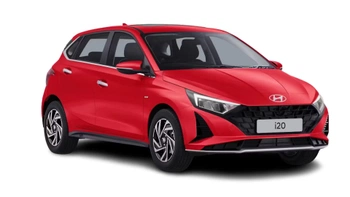
Hyundai i20
₹6 - 10.68 Lakh
Maruti Suzuki Baleno
₹5.99 - 9.99 Lakh
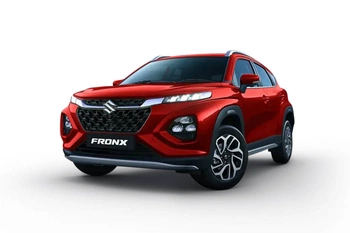
Maruti Suzuki Fronx
₹6.90 - 12.03 Lakh
Maruti Suzuki Baleno
₹5.99 - 9.99 Lakh
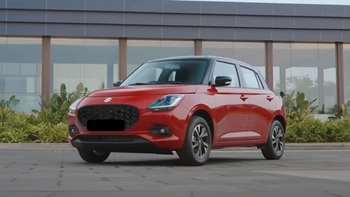
Maruti Suzuki Swift
₹5.84 - 8.89 Lakh
Maruti Suzuki Baleno
₹5.99 - 9.99 Lakh
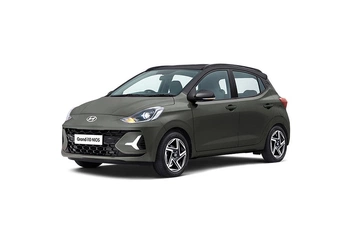
Hyundai Grand i10 Nios
₹5.60 - 8.09 Lakh

Maruti Suzuki Baleno
₹5.99 - 9.99 Lakh
Tata Tiago
₹4.77 - 8.62 Lakh
Maruti Suzuki Baleno
₹5.99 - 9.99 Lakh
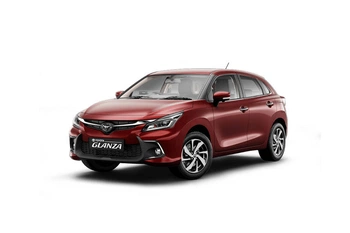
Toyota Glanza
₹6.73 - 9.99 Lakh
Maruti Suzuki Baleno
₹5.99 - 9.99 Lakh
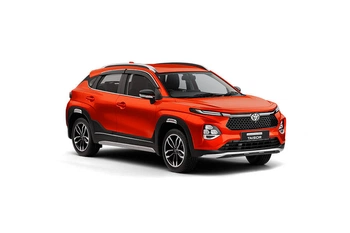
Toyota Taisor
₹7.43 - 12.94 Lakh
Tata Altroz Comparisons
Car News


Maruti Suzuki Brings CNG-AMT Options To The Swift, Baleno and Dzire
Maruti has finally paired CNG with an automatic gearbox on the Swift, Dzire and Baleno, priced from Rs 7.92 lakh. The AMT trims share a 1.2 litre engine, a 55 litre boot-mounted tank and cost around Rs 35,000 more than the manual versions.
Anmol Kumar
October 1, 2026


Most Affordable Cars With 360 Degree Camera Under 10 Lakhs
The 360 cam is one of the most in demand features that helps to increase your situational awareness when parking or while driving. Here is the full list of cars that offer a 360-degree camera under ₹10 lakh with variant names, prices, and what else you get alongside the camera.
Salil Kumar
September 29, 2026

Suzuki Developing New 125 bhp DITC Turbo Engine for India
Suzuki has confirmed development of a new 1.2-litre direct-injection turbocharged petrol engine for India and other growth markets. The engine targets over 125 bhp, 230 Nm and thermal efficiency of over 40 per cent, and will support petrol, CNG, CBG and E100 fuel.
Salil Kumar
September 28, 2026