Why India's EV And Hybrid Future Cannot Happen Without China
By Arjun Nair
Updated July 21, 2026
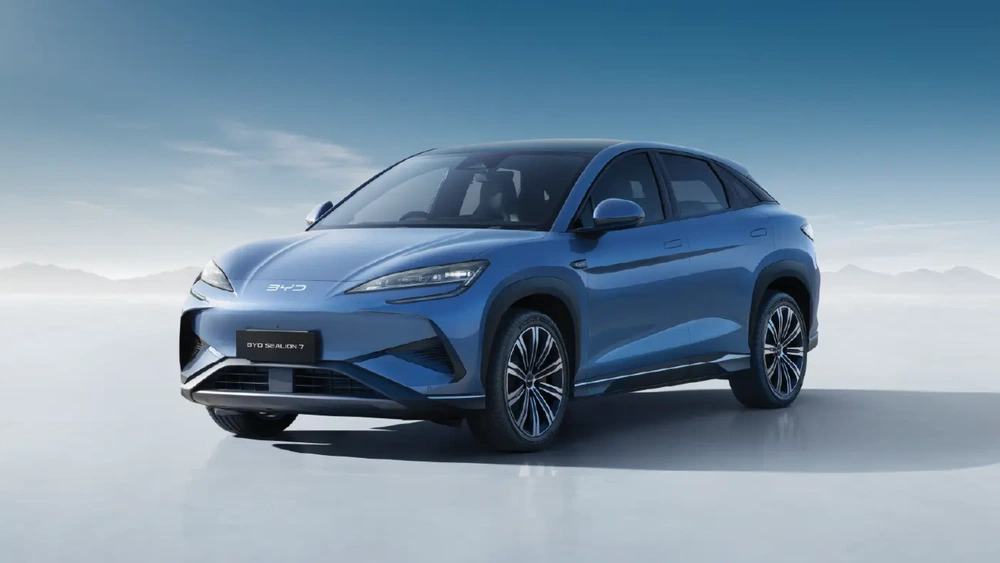
India sold over 2 million EVs in 2024 and is targeting 30% EV penetration by 2030.
Read past those numbers and almost every layer of the electric transition, from cells and platforms to brands, raw materials, and hybrid powertrains, carries a Chinese fingerprint, that will remain on for a healthy part of the foreseeable future.
Chinese Brands Own a Third of India's EV Market
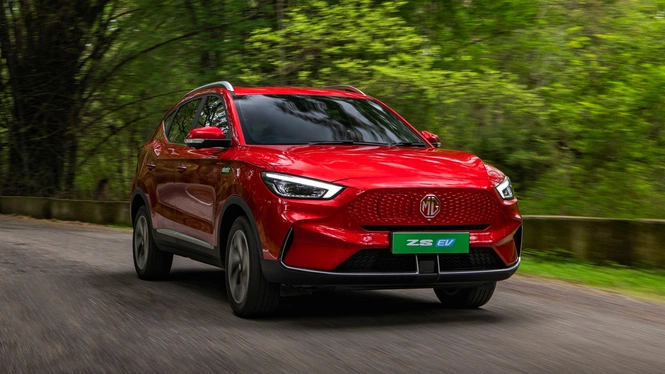
JSW MG Motor (backed by China's SAIC), BYD, and Volvo (owned by China's Geely) collectively held 33% of India's EV passenger car market in 2025, according to FADA registration data.
Their sales grew 165% between January and October 2025, nearly twice the overall market growth of 87%. Tata Motors, which once held 85% of the segment, is now below 50%, and that number will keep falling as more Chinese-linked brands arrive.
Leapmotor, via Stellantis, is targeting a 2026 India launch, while JSW is working with Chery on a new brand expected in 2027.
The incoming hybrid wave follows the same pattern, with BYD's Sealion 6 PHEV and multiple MG plug-in hybrids derived straight from SAIC's Chinese vehicle portfolio.
Also Read – Every Upcoming EV in 2026
The Cells Inside Indian EVs
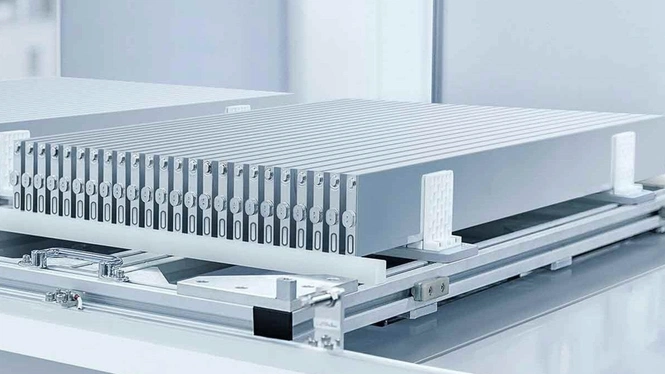
The widespread claim that Mahindra's BE 6 and XEV 9e use CATL cells is wrong. Autocar Professional's confirmed supplier breakdown from the Chakan plant visit identifies BYD Blade Cells, proprietary LFP units arranged in a cell-to-module format inside both the 59 kWh and 79 kWh packs.
Tata's Curvv EV uses cylindrical cells from EVE, another Chinese company, supplied through Octillion's Pune facility. While Tata AutoComp Systems uses cells derived from Gotion systems another Chinese venture.
The Nexon EV, Punch EV, and Tiago EV all use cells assembled in India from imported chemistries, most of them with upstream Chinese inputs.
India's legacy EVs were largely Chinese-cell-powered before localisation became a serious conversation.
That conversation is now real, with Ola's dubious and lagging Gigafactory running at around 5 GWh of installed capacity, but national battery demand is projected to reach 160 GWh by 2030, which puts the gap in perspective.
Also Read – JSW Motors Teases Upcoming Jetour T2-based Hybrid SUV
The Hybrid Architecture Question
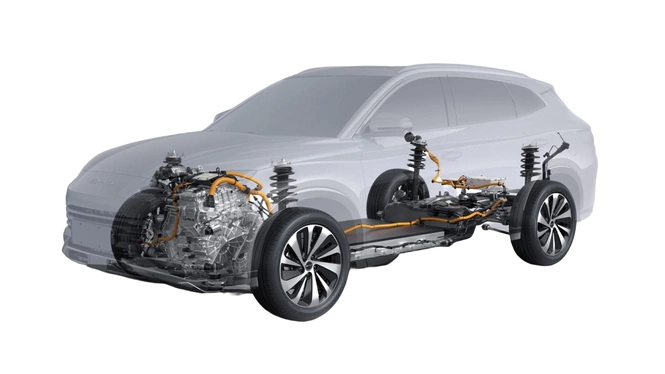
India's strong hybrid market is dominated by Toyota with an 80% share in FY2025 and Maruti Suzuki at 17%, both of whom rely on imported motors, power electronics, and battery packs that Toyota's own strategy documents acknowledge must be localised over time.
The incoming wave from Chinese-backed brands is built on entirely Chinese-architected platforms: JSW-Jetour's T2 PHEV, MG's plug-in 520, and BYD's Sealion 6. Tata's Avinya EVs, due for a 2027 launch, add a sharper point to this.
Tata has moved away from the originally planned JLR EMA platform and confirmed that Avinya X will be built on the iMAX architecture developed by CJLR, the Chery-JLR joint venture in China.
Tata Motors PV CEO Shailesh Chandra explained the rationale at Investor Day in June 2026, citing technical maturity and cost as the deciding factors.
Also Read – Check Out These Upcoming Hybrid Cars In India
The Raw Material Trap Does Not Have a 2030 Solution
India is 100% import-dependent on lithium, cobalt, and nickel, and over 80% of its lithium imports come from China.
China controls roughly 65% of global lithium chemical processing, 74% of cobalt refining, 90% of rare earth processing, and 98% of LFP cathode active material production globally.
India's critical mineral import bill has already doubled, from $3.03 billion in 2020-21 to $8.01 billion in 2023-24.
India does have a 5.9-million-tonne lithium deposit in Jammu and Kashmir's Reasi district, but the country has essentially zero commercial lithium refining capacity, and ore in the ground is not battery-grade material.
Converting deposits to processed supply takes 7-15 years from permitting to production.
The ACC PLI scheme, which was supposed to deliver 50 GWh of domestic cell manufacturing by 2025, has achieved 1.4 GWh with zero incentives disbursed, largely because the domestic value-addition thresholds it set required an upstream supply chain that did not exist at the time of writing.
India's National Critical Minerals Mission, launched in 2025 with Rs 34,300 crore, targets exploration, overseas acquisitions in Argentina and Australia, and recycling infrastructure, and is the right policy response.
But the timelines it operates on do not align with a 2030 EV target that is already being built on Chinese supply chains.
Also Read – BYD Reveals New DM-i Super Plug-in Hybrid EV System
The Honest Picture
Chinese brands sell 1 in 3 EVs in India, Chinese cells power the vehicles those brands don't sell, Chinese platforms are being licensed for the next generation of Indian premium EVs and hybrids, and Chinese-controlled supply chains hold the minerals that make every battery possible.
India has the ambition, the policy tools, and genuinely important initiatives in Tata Agratas, the Ola Gigafactory, and the NCMM. The honest version of the story, though, is that the electric transition currently running in India is not being powered independently. It is being powered by China.
Sources: Business Standard, Wikipedia, FADA, IEEFA, ORF Occasional Paper No. 560, NITI Aayog
Image Source: BYD India
Table of Contents
- Chinese Brands Own a Third of India's EV Market
- The Cells Inside Indian EVs
- The Hybrid Architecture Question
- The Raw Material Trap Does Not Have a 2030 Solution
- The Honest Picture
Join the Conversation
Trending
What Is CBG? Know About Its Production, Engine Performance, Prices and Future in India
Compressed biogas (CBG) is gaining attention in India as a renewable alternative to CNG. Here's how it is produced, its impact on engine performance and mileage, current pricing factors, and its future in India's automotive sector.
Salil Kumar
October 21, 2026
How 2027 Traffic Rule Changes Will Affect Drivers in India
India’s traffic rules are tightening, with repeat offenders facing possible driving licence disqualification and stricter deadlines for paying or disputing e-challans. New vehicle safety requirements will also affect specified commercial vehicles from 2027. Check the latest 2027 Indian traffic rules here.
Anmol Kumar
October 21, 2026
Hyundai Bayon Safety Features Revealed Ahead of October 26 Launch
Hyundai has revealed the safety package of the upcoming Bayon ahead of its October 26 launch in India. The compact SUV gets Level 2 Pro ADAS with 23 functions, six airbags as standard and a body structure made using 69% advanced multi-grade high-strength steel.
Anmol Kumar
October 21, 2026
Featured
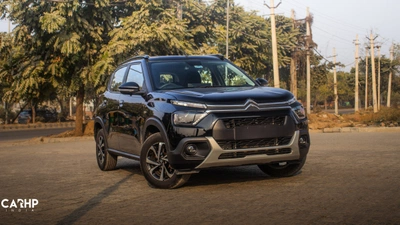
Citroen C3 Review: Who Should Consider This Car?
A few days ago, I took the Citroen C3X out for a spin in the city and on the highways. I travelled long distances and checked its fuel efficiency, features, comfort, and other factors. Today, I’ll briefly share my overall experience with the C3X and will tell you whether you should consider it or not and which is the most value-for-money variant of the lot.
Vatsal Agrawal
May 19, 2026
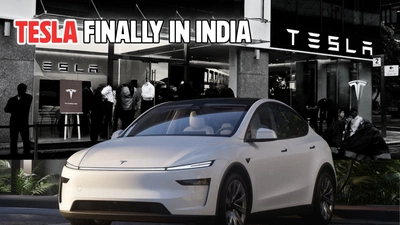
Tesla Finally In India Officially. Why Now And What Does It Mean For EVs?
The much-anticipated 2025 Tesla Model Y has officially arrived in India, marking a pivotal moment for the nation's burgeoning electric vehicle market. Launched on July 15, 2025, the Model Y Juniper facelift offers cutting-edge technology, impressive range, and signature Tesla performance. Positioned as a premium electric SUV, its entry will intensify competition and reshape consumer expectations for EVs across the subcontinent.
Author
July 17, 2025
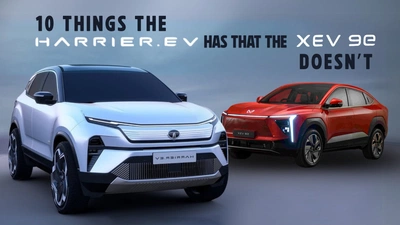
Here Are 10 Things The Harrier.EV Offers That The Mahindra XEV 9E Doesn't
The Harrier.EV is an incredible new offer from Tata. Its most popular competitor would be the Mahindra XEV 9E, priced similarly. With these two incredible offerings from home grown brands available, here is a list of everything the Harrier.EV offers that the XEV 9E doesn't.
Author
June 13, 2025
Write a comment
Comments
No comments yet. Be the first to comment!