What Is CBG? Know About Its Production, Engine Performance, Prices and Future in India
By Salil Kumar
Published October 21, 2026
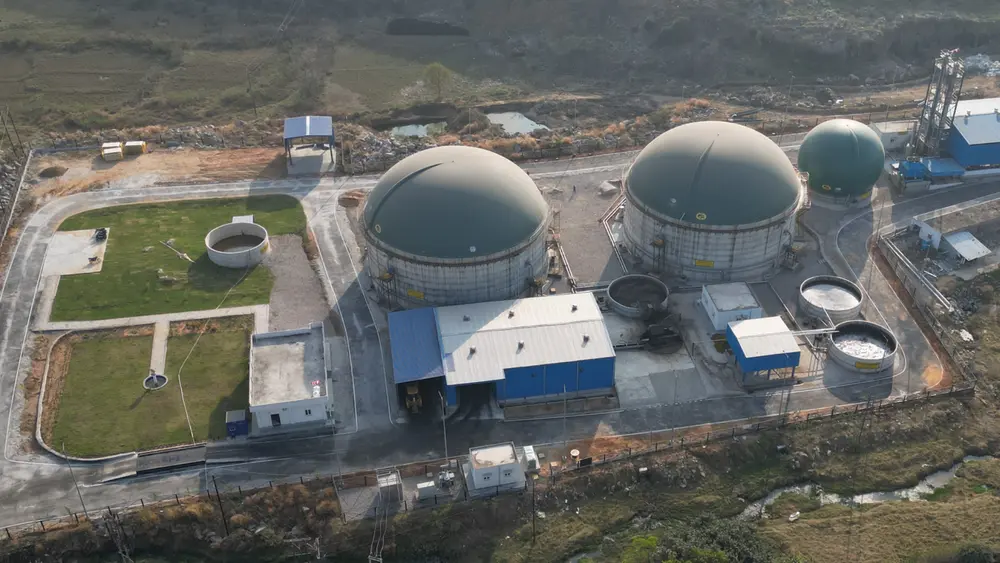
Quick Read - Compressed biogas (CBG) is a renewable alternative to CNG made from organic waste and agricultural residues. Learn how it is produced, whether it can be used in CNG vehicles, how it affects engine performance, and what India's expanding CBG market could mean for fuel prices and availability.
Compressed Biogas (CBG) is emerging as an alternative to conventional compressed natural gas (CNG) in India's transport and energy sectors. Produced from organic waste, agricultural residues and animal dung, CBG offers a way to turn materials that might otherwise create disposal problems into a usable automotive fuel.
The technology behind CBG is not entirely new. Biogas has been used for cooking, heating and power generation for decades. The important difference is that CBG undergoes purification and compression to meet fuel-quality requirements, allowing it to be used in compatible CNG vehicles and gas engines.
In India, CBG is receiving greater attention because the country produces large quantities of agricultural residue, food waste, cattle dung and other biodegradable materials. Government support for production, fuel procurement and distribution is also helping establish a market for the fuel.
Under the GOBARdhan programme approved for 2026 to 2036, the government aims to expand domestic CBG production, improve access to finance and create more predictable demand for producers.
For motorists, the biggest questions concern compatibility, running costs, engine life and availability. CBG can offer benefits similar to CNG when it meets the required fuel standards, but its actual performance and financial advantages depend on fuel quality, vehicle design, local prices and the availability of filling stations.
What Is CBG Gas?
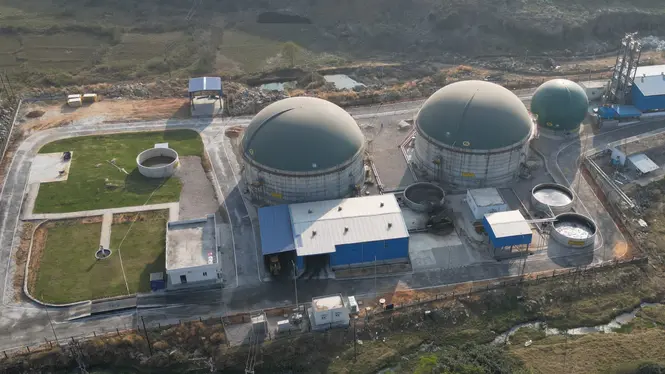
CBG stands for Compressed Biogas. It is produced by processing biodegradable organic material to generate biogas, removing unwanted gases and contaminants, and compressing the purified methane-rich gas for storage and transportation.
Raw biogas contains methane, carbon dioxide, water vapour and varying amounts of contaminants. It cannot simply be collected from a digester and filled into a vehicle. The gas must be upgraded to remove carbon dioxide and impurities so that its composition and properties meet the applicable fuel specifications.
After purification, CBG has properties similar to CNG and can be used in compatible vehicles designed to operate on compressed natural gas. The main difference is its origin. CNG is generally extracted from fossil natural gas deposits, while CBG is produced from renewable biological materials.
The term bio-CNG is also widely used for fuel-grade compressed biogas. In the automotive context, both names generally refer to upgraded biogas prepared for use as a natural-gas substitute.
India's current published CBG specification, IS 16087:2025, sets limits for methane content, moisture, sulphur and other components.
| Gas property | CBG specification | Why it matters |
|---|---|---|
| Methane content | Minimum 95 mol% | Determines the fuel's methane concentration and contributes to its energy content |
| Carbon dioxide | Maximum 4 mol% | Excess carbon dioxide reduces the energy available from a given volume of gas |
| Combined carbon dioxide, nitrogen and oxygen | Maximum 5 mol% | Limits non-methane components in the finished fuel |
| Oxygen | Maximum 0.5 mol% | Controls unwanted oxygen contamination |
| Hydrogen sulphide (H₂S) | Maximum 3.7 mg/m³ | Limits a corrosive sulphur-containing contaminant |
| Total sulphur | Maximum 10 mg/m³, including sulphur from the odorant | Helps control corrosion and sulphur-related emissions |
| Moisture | Maximum 5 mg/m³ | Helps protect fuel-system components and maintain gas quality |
| Storage and delivery pressure | Commonly around 200 to 250 bar in high-pressure systems | Enables practical storage and delivery to vehicles designed for compressed gas |
Where Does CBG Come From?
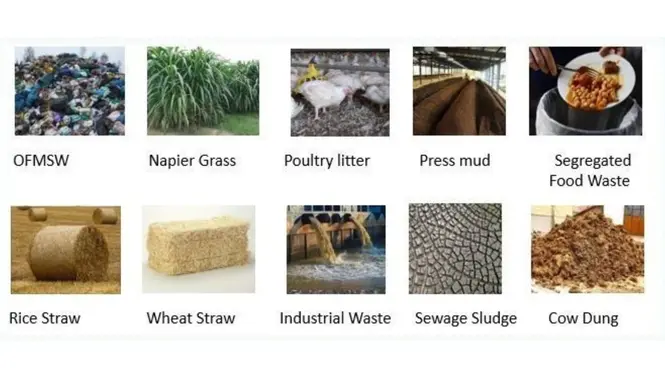
CBG can be produced from several sources of organic waste. The choice of feedstock affects the quantity of gas produced, plant economics, digestate quality and the environmental benefits of the process.
| Production source | How it produces CBG | Main advantage |
|---|---|---|
| Cattle dung | Organic matter decomposes in an oxygen-free digester | Uses livestock waste and can support farm-based energy production |
| Paddy straw and crop residue | Agricultural waste is collected and processed through suitable digestion systems | Creates a productive use for residues that may otherwise be burned or discarded |
| Sugarcane press mud | A by-product of sugar production is digested to generate biogas | Makes use of an existing sugar-industry waste stream |
| Food and vegetable waste | Biodegradable organic material is broken down by microorganisms | Reduces the volume of organic waste requiring disposal |
| Municipal organic waste | The biodegradable fraction of properly segregated city waste is processed | Supports waste management and renewable fuel production |
| Sewage treatment waste | Organic material from wastewater treatment is processed where technically suitable | Can recover energy from treatment operations |
| Distillery spent wash and other industrial organic waste | Suitable high-organic-content waste streams undergo biological treatment | Combines waste treatment with energy recovery |
The economics of a CBG plant depend on whether these materials can be collected, transported and processed consistently. Crop residues may be plentiful during harvesting seasons but costly to store and transport. Food waste may be available throughout the year, although contamination with plastic and other non-biodegradable materials can raise processing costs.
Locating a plant near its feedstock supply, a gas distribution network or a major fuel consumer can improve its commercial prospects.
The government identifies agricultural residue, cattle dung, sugarcane press mud and municipal organic waste as important sources for expanding CBG production.
How Is CBG Produced?
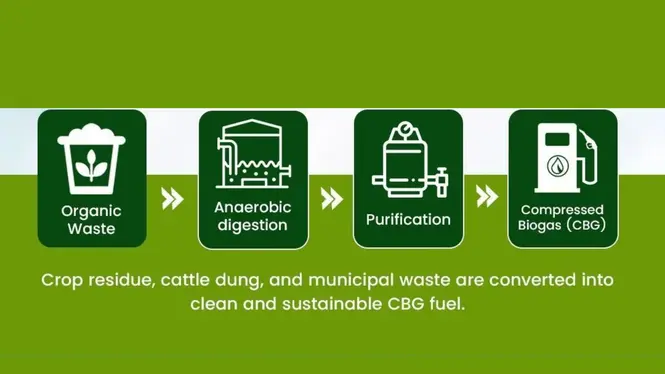
CBG production begins with waste collection and preparation. Organic material is separated from unsuitable items, processed as necessary and fed into an anaerobic digester. Inside the digester, microorganisms break down the material without oxygen and generate raw biogas.
The raw gas then passes through an upgrading system that separates carbon dioxide and removes contaminants such as hydrogen sulphide and water vapour. Depending on the feedstock and plant design, additional treatment may be required to control other impurities.
Once the gas reaches the required specification, it is compressed and transferred to storage cylinders or other approved delivery systems. It can then be transported to a dispensing station or supplied through an appropriate gas distribution network.
The digestion process also produces a residual material called digestate. After suitable processing and quality checks, this material can be used to produce fermented organic manure. Revenue from manure can improve a plant's economics, although its actual commercial value depends on quality, processing costs and local demand.
CBG vs CNG: What Is the Difference?
CBG and CNG are different mainly in how they are produced, rather than in the way a compatible engine uses them. Both are methane-rich gases stored under pressure. Properly upgraded CBG can meet the requirements needed for use as a substitute for CNG in compatible applications.
| Feature | CBG | CNG |
|---|---|---|
| Full form | Compressed Biogas | Compressed Natural Gas |
| Primary source | Organic waste and biomass | Primarily fossil natural gas |
| Main combustible component | Methane, with a fuel-grade minimum of 95 mol% under India's CBG specification | Methane, with composition varying according to the gas supply |
| Renewable origin | Yes, when produced from renewable biological feedstock | No, in the conventional fossil-gas supply chain |
| Fuel quality | Must meet applicable CBG specifications | Must meet applicable natural-gas fuel specifications |
| Energy content | Depends on composition and gas quality | Depends on composition and gas quality |
| Vehicle compatibility | Compatible with suitable CNG vehicle systems when fuel specifications are met | Used in factory-fitted and approved CNG vehicle systems |
| Tailpipe emissions | Produces carbon dioxide and other combustion emissions; results depend on engine design and calibration | Also produces carbon dioxide and other combustion emissions |
| Lifecycle emissions | Can be substantially lower when waste-related methane is captured and production leaks are controlled | Generally higher than well-managed waste-derived biomethane because it uses fossil carbon |
| Supply | Depends on local production plants, waste collection and gas distribution | Depends on natural-gas supply and CNG distribution infrastructure |
| Main economic challenge | Feedstock collection, gas purification, compression and transport costs | Natural-gas procurement, distribution costs, taxes and retail pricing |
CBG is not automatically cheaper or more environmentally beneficial in every situation. A plant that requires long-distance transport of wet waste, substantial processing energy or inefficient gas upgrading may have a less favourable cost and emissions profile than a well-located facility.
The strongest environmental case generally arises when waste is responsibly processed, methane losses are minimised and the finished gas replaces fossil fuel that would otherwise have been consumed.
Can CBG Be Used in Cars, Buses, Trucks and Auto-Rickshaws?
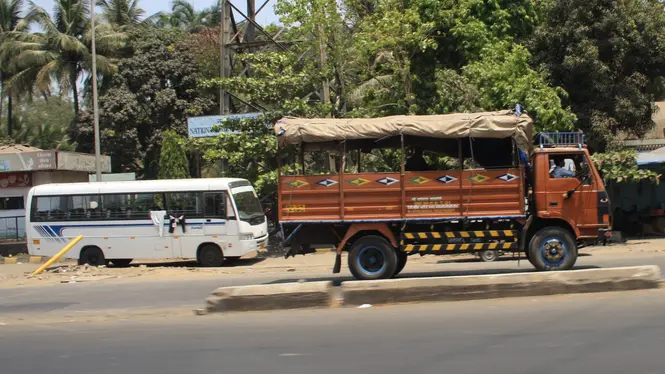
Yes. Fuel-grade CBG can be used in compatible vehicles designed to run on CNG. IndianOil states that vehicles running on CNG can use compliant CBG without modifications because the fuels have similar properties, provided the supplied CBG meets the applicable standards.
This makes CBG relevant to several existing applications rather than only vehicles manufactured specifically for biofuel.
How Does CBG Affect Engine Performance?

When CBG meets the required specifications and is supplied to an engine designed for compressed natural gas, it should perform as a substitute fuel.
It does not inherently damage an engine simply because the methane originated from organic waste rather than a natural-gas reservoir.
However, it is misleading to claim that CBG always produces identical mileage, power and emissions to CNG. The gas composition, engine calibration, air-fuel ratio, ignition timing, compression ratio and operating conditions can all affect performance.
Engine Power and Acceleration
Methane has a high octane rating, making it resistant to knocking under suitable operating conditions. This can be useful in spark-ignition engines specifically designed or calibrated for gaseous fuels.
A converted petrol engine may nevertheless produce less power when operating on CNG or CBG than when running on petrol. One reason is that gaseous fuel occupies space in the intake charge, which can reduce the amount of air entering the cylinder in certain engine designs. An engine developed specifically for CNG can account for these characteristics through its compression ratio, intake system and engine calibration.
If fuel-grade CBG and CNG have similar compositions, a compatible engine can achieve similar performance. Differences in methane content, heating value and calibration can still affect acceleration, maximum power and fuel consumption.
Fuel Consumption and Mileage
Fuel consumption should be evaluated using actual kilometres travelled per kilogram of gas rather than relying solely on methane concentration.
For example, a car that achieves 25 km/kg on one gas might not achieve exactly the same figure with a differently composed gas. A change in the energy content per kilogram, engine calibration or driving conditions can alter the result.
This is why there is no single, universal mileage figure for CBG cars or motorcycles. The most reliable comparison comes from testing the same vehicle under similar conditions, using verified fuel quality and a consistent driving cycle.
Engine Deposits, Corrosion and Wear
Properly upgraded CBG is different from untreated biogas. Raw biogas may contain water, hydrogen sulphide, carbon dioxide and other contaminants that can cause corrosion, deposits or problems in gas-handling equipment.
Fuel-grade CBG is processed to control these components. Compliance with the applicable standard is therefore important not only for fuel performance but also for protecting regulators, injectors and other fuel-system components.
| Engine or component | Potential effect of compliant CBG | Main risk to monitor |
|---|---|---|
| Fuel injectors and regulators | Should operate as designed in a compatible gas system | Contaminants, incorrect pressure or unsuitable components |
| Spark plugs | Methane-rich fuel can burn with lower carbon deposits than some liquid-fuel operating conditions | Incorrect ignition calibration, wear or deposits from other causes |
| Valves and valve seats | No automatic damage from compliant CBG | Poor calibration, unsuitable conversion hardware or excessive operating temperatures |
| Engine oil | Gaseous-fuel operation can change oil contamination and degradation patterns | Incorrect lubricant specification or extended service intervals |
| Exhaust system and catalyst | Emissions depend on combustion quality and after-treatment | Incomplete combustion and unburned methane |
| Gas cylinders, pipes and seals | Fuel compatibility depends on approved high-pressure equipment | Ageing, leakage, corrosion, damage or inadequate inspection |
CBG does not eliminate routine engine maintenance. Vehicles must still follow the manufacturer's service schedule, use the correct lubricants and undergo appropriate inspection of their fuel systems.
The main practical lesson is that gas quality and engine calibration matter more than whether the methane came from a fossil source or biological waste. A compliant gas used in a properly designed engine can work well, while poor-quality gas or an unsuitable conversion can create mechanical and safety problems.
Does CBG Increase or Reduce Engine Life?
There is no sound basis for claiming that compliant CBG automatically shortens engine life or that it always extends it. Long-term durability depends on the engine's design, the quality of the fuel, combustion calibration, maintenance and the operating conditions.
A CNG vehicle may be designed around a particular range of gas properties. If the CBG supplied meets the applicable standard, it is suitable for the intended application. Problems become more likely when fuel contains excessive contaminants, a converted engine operates with an incorrect air-fuel mixture, or high-pressure equipment is not maintained properly.
The available research is useful but has limits. Some studies compare fuel consumption and exhaust emissions over standard driving cycles, while others study combustion in laboratory engines. Their findings do not necessarily establish the lifetime durability of every modern Indian car, truck or motorcycle running on CBG.
A motorist considering a CNG vehicle should therefore focus on the manufacturer's approved fuel requirements, warranty conditions, service schedule and the quality assurance used by the gas supplier. That is more meaningful than assuming that every vehicle will experience the same engine wear simply because it uses CBG.
CBG vs CNG: What Does Research Say About Performance?
Two useful studies illustrate why CBG's performance should be assessed using actual engine tests rather than assumptions.
In a 2013 study published in Applied Energy, researchers tested a spark-ignition vehicle using methane-enriched biogas containing 93% methane and CNG containing 89.14% methane. Under the modified Indian driving cycle, the reported fuel economy was 24.11 km/kg for the enriched biogas and 24.38 km/kg for CNG. The difference was small, although the study found slightly higher carbon monoxide, hydrocarbon and nitrogen oxide emissions with the enriched biogas in that test.
A separate 2021 study in Energy tested a Euro VI-compliant, 11-litre natural-gas engine using CNG and biomethane. It reported a reduction in thermal efficiency of approximately 2% with the biomethane in its full-load test, as well as higher fuel consumption over the specified transient test cycle. The result demonstrates that gas composition and engine conditions can matter, but it should not be interpreted as a universal penalty for all CBG vehicles.
These findings are compatible with a practical conclusion: appropriately purified biomethane can be used as an automotive fuel, but identical mileage, power and emissions should not be assumed without testing the actual fuel and engine combination.
Current CBG and CNG Prices in India
CBG does not have one universal retail price across India. The price paid by a producer, the rate charged within a gas-distribution network and the price displayed at a filling station are different amounts.
For comparison, Indraprastha Gas Limited's published retail prices, effective from August 29, 2026, list CNG at ₹86.98 per kg in Delhi and ₹92.01 per kg in Gurugram. These are local CNG retail prices, not a nationwide CBG price.
The government has also announced changes to CBG procurement pricing under its newer GOBARdhan framework. Those figures must be understood separately from what motorists pay at the pump.
Will CBG Become More Expensive in the Future?
The government's new procurement benchmark is higher than the ₹1,478/MMBtu reference price described under the earlier framework. The government has stated that the move is intended to support CBG producers and improve the economics of new projects, with ₹10 per kg of affordability support to reduce the burden on consumers.
According to the government's August 2026 explanation, the ₹2,110/MMBtu benchmark is equivalent to an effective cost of approximately ₹1,895/MMBtu after the stated affordability support. This represents an increase of around 28% over the earlier ₹1,478/MMBtu reference price. It does not mean that CNG or CBG retail prices automatically rise by 28% or 43%, because those producer procurement values are not the same as the price at the dispensing station.
A further factor is the CBG blending obligation for the city-gas sector. The government's GOBARdhan framework sets a notified trajectory of 3% for financial year 2026-27, 4% for 2027-28 and 5% from 2028-29 onwards in the CNG transport and domestic PNG segments.
That should create a stronger demand signal for CBG producers. The eventual effect on prices will depend on how quickly production expands, whether plants can operate efficiently, the cost of feedstock and transport, and how the government and gas distributors implement the procurement and affordability arrangements.
Environmental Benefits of CBG
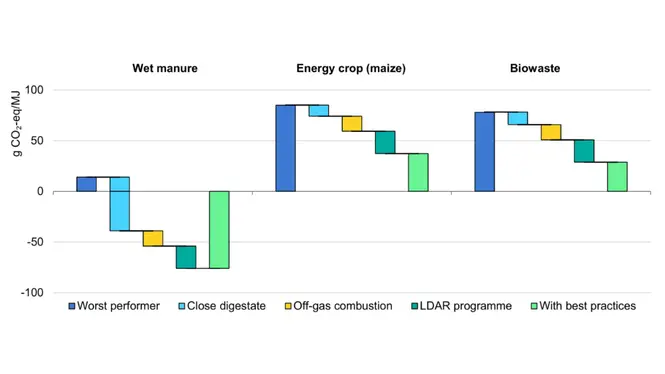
Union when best practices are implemented (Source: IEA)
One of CBG's main advantages is that it can replace fossil natural gas with methane produced from renewable organic material. It also offers a way to recover energy from waste that might otherwise be dumped, allowed to decompose in uncontrolled conditions or burned.
The environmental benefit depends on the entire production process. Capturing methane from manure or organic waste can avoid emissions that would otherwise enter the atmosphere. However, methane leakage during digestion, upgrading, compression, transport or vehicle use can reduce those benefits. The energy consumed by the plant and the type of feedstock also matter.
At the exhaust, CBG does not produce zero emissions. Burning methane generates carbon dioxide, and the engine can emit nitrogen oxides, carbon monoxide and unburned hydrocarbons. CBG can reduce lifecycle greenhouse gas emissions compared with fossil fuels when production is well managed, but this outcome should be assessed rather than assumed for every plant.
The International Energy Agency's 2026 India Bioenergy Market Report discusses how feedstock selection, methane leakage, plant performance and the cost of delivering biomethane affect its environmental and economic value.
What Are the Main Disadvantages of CBG?
CBG has clear potential, but several challenges limit its adoption. Producing vehicle-grade gas requires more processing than collecting raw biogas. Plants need reliable feedstock supplies, effective purification equipment, compression facilities and dependable buyers for the finished gas.
The location of a plant is particularly important. Agricultural waste is often bulky and costly to transport, while its availability can vary seasonally. Plants that operate below their intended capacity may struggle to recover their capital and operating costs. Digestate handling, waste segregation and methane leakage must also be managed properly.
For motorists, the practical limitation is availability. Even when a vehicle can use CBG, it needs access to a station selling the appropriate fuel. A vehicle's theoretical compatibility does not provide much benefit if refuelling is inconvenient or the supply is unreliable.
| Challenge | Effect on the CBG market |
|---|---|
| Feedstock collection and transport | Can increase production costs and create supply interruptions |
| Gas purification and compression | Requires investment in equipment, energy and maintenance |
| Inconsistent plant utilisation | Can raise the cost of each kilogram of gas produced |
| Methane leakage | Reduces the climate benefits of the fuel |
| Limited refuelling infrastructure | Restricts the practicality of CBG for some vehicle owners |
| Uncertain retail pricing | Makes it harder to calculate long-term savings |
| Digestate management | Requires quality control and a viable market for organic manure |
The IEA's assessment identifies cost competitiveness, supply logistics, plant utilisation and the availability of markets for by-products as important factors determining how quickly India's CBG sector can grow.
What Is the Future of CBG in India?
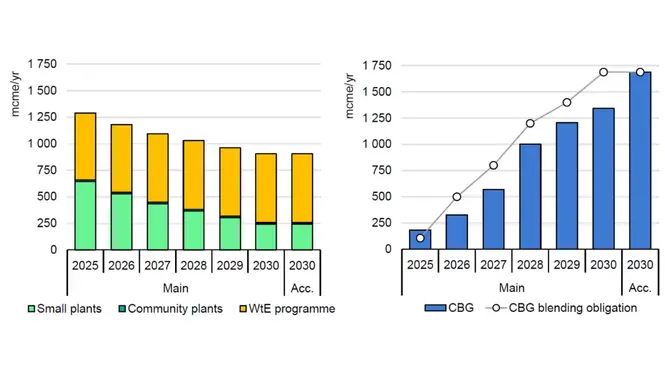
estimated CBG volumes under blending obligations (Source: IEA)
CBG's prospects depend on whether India can turn its large supply of organic waste into a reliable and competitively priced fuel.
The government's GOBARdhan framework, the expansion of city-gas infrastructure and the requirement to increase CBG's share in the gas supply mix are intended to support that process.
For vehicle owners, a wider CBG supply could create another option for running compatible CNG vehicles. It could also help commercial operators diversify their fuel supply, particularly where a plant is located near a fleet depot or an established gas network.
However, a larger production target does not automatically guarantee lower prices. The cost of collecting waste, operating plants, purifying gas and moving it to customers must remain commercially manageable. The pace of station expansion and the reliability of local supply will matter just as much as the number of plants announced.
For motorcycles, wider CBG availability could support factory-designed gaseous-fuel models, but it does not remove the engineering and approval requirements involved in converting a petrol bike.
For cars, three-wheelers, buses and trucks already designed for CNG, compliant CBG is a more immediate alternative because the basic fuel compatibility already exists.
Sources: 1, 2, 3, 4, 5, 6, 7, 8, 9, 10, 11, 12, 13, 14 , 15, 16, 17
Table of Contents
- What Is CBG Gas?
- Where Does CBG Come From?
- How Is CBG Produced?
- CBG vs CNG: What Is the Difference?
- Can CBG Be Used in Cars, Buses, Trucks and Auto-Rickshaws?
- How Does CBG Affect Engine Performance?
Join the Conversation
Trending

How 2027 Traffic Rule Changes Will Affect Drivers in India
India’s traffic rules are tightening, with repeat offenders facing possible driving licence disqualification and stricter deadlines for paying or disputing e-challans. New vehicle safety requirements will also affect specified commercial vehicles from 2027. Check the latest 2027 Indian traffic rules here.
Anmol Kumar
October 21, 2026

Hyundai Bayon Safety Features Revealed Ahead of October 26 Launch
Hyundai has revealed the safety package of the upcoming Bayon ahead of its October 26 launch in India. The compact SUV gets Level 2 Pro ADAS with 23 functions, six airbags as standard and a body structure made using 69% advanced multi-grade high-strength steel.
Anmol Kumar
October 21, 2026

Check Out These Upcoming Hybrid Cars In India
Hybrid cars are gaining serious interest in India as more affordable options start appearing and real-world city mileage figures impress owners.
Salil Kumar
October 21, 2026


Featured

Citroen C3 Review: Who Should Consider This Car?
A few days ago, I took the Citroen C3X out for a spin in the city and on the highways. I travelled long distances and checked its fuel efficiency, features, comfort, and other factors. Today, I’ll briefly share my overall experience with the C3X and will tell you whether you should consider it or not and which is the most value-for-money variant of the lot.
Vatsal Agrawal
May 19, 2026

Tesla Finally In India Officially. Why Now And What Does It Mean For EVs?
The much-anticipated 2025 Tesla Model Y has officially arrived in India, marking a pivotal moment for the nation's burgeoning electric vehicle market. Launched on July 15, 2025, the Model Y Juniper facelift offers cutting-edge technology, impressive range, and signature Tesla performance. Positioned as a premium electric SUV, its entry will intensify competition and reshape consumer expectations for EVs across the subcontinent.
Author
July 17, 2025

Here Are 10 Things The Harrier.EV Offers That The Mahindra XEV 9E Doesn't
The Harrier.EV is an incredible new offer from Tata. Its most popular competitor would be the Mahindra XEV 9E, priced similarly. With these two incredible offerings from home grown brands available, here is a list of everything the Harrier.EV offers that the XEV 9E doesn't.
Author
June 13, 2025

Write a comment
Comments
No comments yet. Be the first to comment!