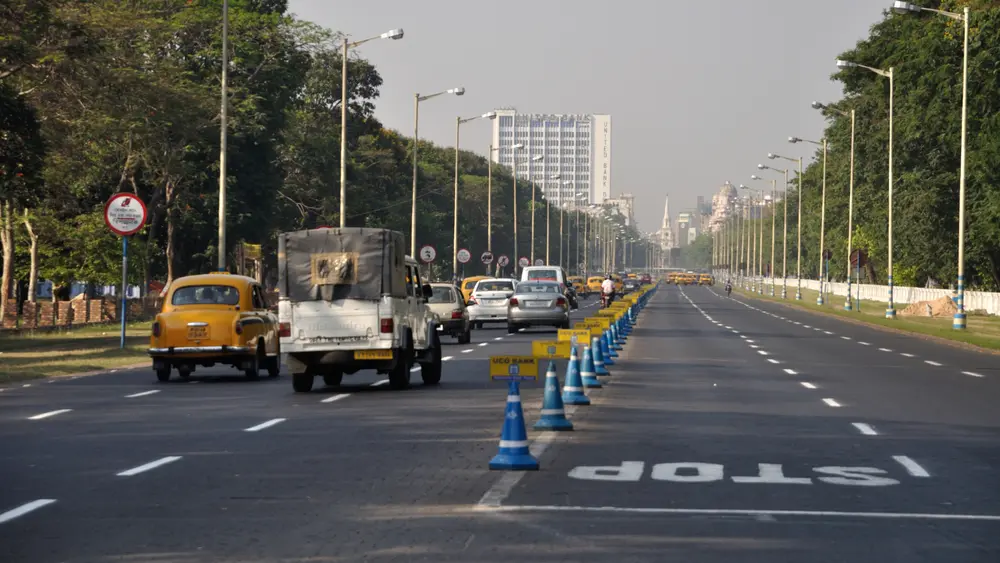
Quick Read - Repeat traffic offenders could face licence disqualification, while unresolved e-challans can restrict vehicle and licence-related services. Stricter braking and driver assistance requirements are also scheduled for specified commercial vehicles in 2027, while vehicle-to-vehicle communication remains a proposal.
India's traffic rules are becoming stricter, and drivers will face serious consequences for repeated violations, unpaid e-challans and failure to follow road safety requirements.
The biggest change for ordinary motorists is the five-offence rule, which allows licensing authorities to take action against drivers who repeatedly break traffic laws. New e-challan procedures also give drivers fixed deadlines to pay fines or challenge them, while specified commercial vehicles will have to meet additional safety standards.
Several of these rules came into force in 2026 and will continue to affect drivers in 2027. Other changes, including vehicle-to-vehicle communication technology, remain proposals. Understanding the difference is important because not every announced measure is a new law that will automatically apply to every driver in January 2027.
Also Read - BS7 Norms From April 1, 2029: 6 Major Changes Car Buyers Need to Know
Major Traffic Rule Changes Drivers Should Know
| Traffic rule change | Effective date or status | Impact on drivers |
|---|---|---|
| Five-offence rule for repeat offenders | In force from January 2026 | Five or more offences within the specified one-year period can provide grounds for driving licence disqualification |
| New e-challan payment and dispute deadlines | In force from January 2026 | Drivers generally have 45 days to pay or contest a challan |
| Restrictions over unresolved challans | Under the amended rules | Certain licence and vehicle registration services can be blocked if the applicable payment and dispute process is not completed |
| Revised braking requirements for specified vehicles | January and October 2027, depending on vehicle category and model status | Improved braking performance and vehicle safety |
| Advanced safety systems for specified commercial vehicles | October 2027 for new models and January 2028 for existing models under the applicable schedule | Better warnings for lane departure, driver fatigue and blind spots |
| Vehicle-to-vehicle communication technology | Proposed implementation from October 2027, with wider mandatory fitment proposed for October 2028 | Vehicles could exchange safety information to warn drivers about potential hazards |
| Nationwide points-based demerit system | Under consideration | A separate points-based system has not been fully introduced under the announced proposal |
Five-Traffic-Offence Rule Could Put Driving Licences at Risk
One of the most important changes is the five-offence rule introduced through the Central Motor Vehicles (Third Amendment) Rules, 2026. The provision adds the commission of five or more offences or contraventions of the Motor Vehicles Act or its rules within the specified one-year period as a ground for action by the licensing authority.
The rule took effect in January 2026, and its consequences will continue into 2027. A driver who repeatedly violates traffic regulations could face disqualification from holding or using a driving licence. The rule also provides that offences from a previous one-year period are not carried forward when determining the total for a subsequent period.
This is not the same as saying that a driving licence is automatically cancelled the moment a driver receives a fifth challan. The provision creates a ground for licensing action, and the relevant authority's decision and applicable legal process remain important. Drivers should therefore take repeated violations seriously rather than assume that paying individual fines will prevent further action against their licences.
Also Read - Govt Proposes 5-Year Extension in Age Limit for EV, Hydrogen and CNG Vehicles
Is a Separate Driving Licence Points System Coming in 2027?
The government has also been considering a points-based demerit system to track driving behaviour. Under such a system, offences could result in penalty points accumulating against a driver's record, with consequences determined by the applicable rules.
However, the government stated in Parliament in February 2026 that amendments to the Motor Vehicles Act introducing a points-based demerit system were still under active consideration. That means drivers should not confuse this proposal with the five-offence provision that is already in force.
For motorists, the practical concern in 2027 is the existing power to take licensing action against repeat offenders. Any separate points-based framework would require the relevant legal changes before its final operation and consequences could be established.
New E-Challan Rules Give Drivers Less Room to Ignore Notices
The amended e-challan procedure is another major change affecting motorists. Under the revised rules, an electronic challan must generally be delivered within three days, while a physical challan must be delivered within 15 days. The notice is issued in the name of the registered vehicle owner.
Drivers have 45 days from the issue of a challan to accept and pay it or challenge it through the designated online process with supporting evidence. If the driver does not contest the challan within that period, it is treated as accepted. The rules then provide a further 30-day payment period.
If a driver contests the challan, the designated authority must resolve the matter within 30 days. A challan that is quashed, or one that is not resolved within the prescribed period, ceases to have effect under the amended procedure. Where the challenge is rejected, the driver can pay within the applicable period or approach a court after depositing 50 per cent of the challan amount, subject to the relevant procedure.
For drivers in Delhi, the local implementation of the disputed 50 per cent pre-deposit mechanism was put on hold in September 2026 following protests by lawyers. Motorists should check the current procedure applicable in their state or union territory before deciding how to challenge a rejected challan.
Unpaid Challans Can Restrict Vehicle and Licence Services
Ignoring an e-challan can create problems beyond the original fine. Under the amended rules, if a driver fails to take the required action and the challan remains unresolved after the prescribed deadlines, certain applications connected with the driving licence or vehicle registration may not be processed.
The vehicle can also be marked as "Not to be Transacted" on the relevant portal until the challan is dealt with. This can affect vehicle-related administrative work, including ownership transfers and other registration services covered by the restriction.
The restriction does not mean that every newly issued challan immediately cancels a driving licence or blocks all vehicle services. The procedure involves specified response and payment periods. Drivers should check their e-challan records regularly, respond to notices within the deadline and retain evidence when disputing an incorrect penalty.
Traffic Cameras and Electronic Enforcement Will Remain Important
Electronic enforcement will continue to play a major role in detecting traffic violations. Cameras and automatic number plate recognition systems can help authorities identify offences such as speeding, red-light jumping and certain unsafe driving practices where suitable enforcement systems are installed.
Drivers may receive challans electronically without being stopped by a traffic officer. They should check that the vehicle number, date, location and alleged offence match the notice before paying it. An incorrect challan should be challenged through the designated procedure rather than ignored.
The expansion of electronic enforcement also makes it important for vehicle owners to keep their registration details and contact information current. Timely notifications can help drivers avoid missing payment or dispute deadlines.
Also Read - BS7 Emission Norms Draft Expected in Two Months, Says MoRTH
New Braking Standards Will Affect Commercial Vehicle Operators
The 2027 changes also include stricter vehicle safety requirements, particularly for specified commercial vehicles. Revised braking standards for trucks are scheduled to take effect from October 1, 2027, alongside requirements for electronic stability control and advanced emergency braking in the applicable categories.
The purpose is to improve braking performance and help heavy vehicles remain stable during sudden manoeuvres or emergency stops. Advanced emergency braking systems can apply the brakes when the driver fails to respond to an identified collision risk, potentially avoiding a crash or reducing its severity.
Other braking requirements, including anti-lock and endurance braking standards for specified vehicle categories, have earlier implementation dates in 2027. The precise deadlines depend on the vehicle category and whether the requirements apply to new or existing models.
Commercial vehicle owners should confirm the standards that apply to their particular vehicles. These manufacturing requirements should not be interpreted as an instruction for every existing private car or motorcycle to install new braking technology.
Lane Departure, Blind Spot and Driver Fatigue Systems
Specified buses and goods vehicles will also face requirements for additional driver assistance systems. These include lane departure warnings, driver drowsiness and attention warnings, blind spot information systems and moving-off warning systems.
Under the applicable implementation schedule, these requirements begin for new models from October 1, 2027, with existing models in the covered categories following from January 1, 2028.
The systems are intended to alert drivers when a vehicle drifts out of its lane, when signs of fatigue or inattention are detected, or when other road users may be hidden beside a large vehicle. Moving-off warnings are particularly relevant in busy areas where pedestrians, cyclists and two-wheelers can enter a truck's blind spots.
Drivers must still check mirrors, maintain safe distances and take rest breaks during long journeys. These technologies provide additional assistance, not a substitute for responsible driving.
Vehicle-to-Vehicle Communication Could Change Road Safety
The government has proposed introducing vehicle-to-vehicle communication technology, which would allow compatible vehicles to exchange information such as speed, position and direction. The information could help warn drivers about sudden braking, forward-collision risks, wrong-way driving or approaching emergency vehicles.
Under the draft framework published in 2026, vehicles in specified categories manufactured from October 1, 2027, would need to meet the relevant technical standard if fitted with these communication systems. The proposal also sets October 1, 2028, as the date for mandatory fitment in the covered categories.
These dates remain part of the proposed framework unless and until the final notification brings the requirements into force. Drivers should not assume that every new car or motorcycle must have this technology from October 2027.
What Drivers Should Do Before 2027
Drivers should pay particular attention to their driving records, outstanding challans and licence status. Repeated traffic offences can create licensing problems, while failure to meet e-challan deadlines can lead to restrictions on vehicle or licence-related services.
Vehicle owners should also keep registration, insurance and pollution certificates up to date and follow the safety requirements applicable to their vehicles. Commercial operators need to check the relevant manufacturing standards and implementation dates before purchasing or registering vehicles.
What the 2027 Changes Mean for Drivers
The most immediate concern for ordinary motorists is the existing five-offence rule and the tighter e-challan process. Drivers can face licensing action for repeated violations, and ignoring an unresolved challan can affect access to vehicle and licence-related services. These provisions are already part of the 2026 regulatory changes and will remain relevant in 2027.
Commercial drivers and fleet operators will also need to prepare for the rollout of stricter braking and driver assistance requirements. Vehicle-to-vehicle communication could become another important development, but its proposed implementation dates should not be treated as confirmed obligations until the final rules are issued.
Also Read - Delhi Announces Stricter Winter Anti-Pollution Measures
Image Source: Wikipedia
Table of Contents
- Major Traffic Rule Changes Drivers Should Know
- Five-Traffic-Offence Rule Could Put Driving Licences at Risk
- Is a Separate Driving Licence Points System Coming in 2027?
- New E-Challan Rules Give Drivers Less Room to Ignore Notices
- Unpaid Challans Can Restrict Vehicle and Licence Services
- Traffic Cameras and Electronic Enforcement Will Remain Important
Join the Conversation
Trending

What Is CBG? Know About Its Production, Engine Performance, Prices and Future in India
Compressed biogas (CBG) is gaining attention in India as a renewable alternative to CNG. Here's how it is produced, its impact on engine performance and mileage, current pricing factors, and its future in India's automotive sector.
Salil Kumar
October 21, 2026

Hyundai Bayon Safety Features Revealed Ahead of October 26 Launch
Hyundai has revealed the safety package of the upcoming Bayon ahead of its October 26 launch in India. The compact SUV gets Level 2 Pro ADAS with 23 functions, six airbags as standard and a body structure made using 69% advanced multi-grade high-strength steel.
Anmol Kumar
October 21, 2026

Check Out These Upcoming Hybrid Cars In India
Hybrid cars are gaining serious interest in India as more affordable options start appearing and real-world city mileage figures impress owners.
Salil Kumar
October 21, 2026


Featured
Citroen C3 Review: Who Should Consider This Car?
A few days ago, I took the Citroen C3X out for a spin in the city and on the highways. I travelled long distances and checked its fuel efficiency, features, comfort, and other factors. Today, I’ll briefly share my overall experience with the C3X and will tell you whether you should consider it or not and which is the most value-for-money variant of the lot.
Vatsal Agrawal
May 19, 2026
Tesla Finally In India Officially. Why Now And What Does It Mean For EVs?
The much-anticipated 2025 Tesla Model Y has officially arrived in India, marking a pivotal moment for the nation's burgeoning electric vehicle market. Launched on July 15, 2025, the Model Y Juniper facelift offers cutting-edge technology, impressive range, and signature Tesla performance. Positioned as a premium electric SUV, its entry will intensify competition and reshape consumer expectations for EVs across the subcontinent.
Author
July 17, 2025

Here Are 10 Things The Harrier.EV Offers That The Mahindra XEV 9E Doesn't
The Harrier.EV is an incredible new offer from Tata. Its most popular competitor would be the Mahindra XEV 9E, priced similarly. With these two incredible offerings from home grown brands available, here is a list of everything the Harrier.EV offers that the XEV 9E doesn't.
Author
June 13, 2025
Write a comment
Comments
No comments yet. Be the first to comment!