How Does the Kia Sorento Hybrid Actually Work?
By Salil Kumar
Updated September 5, 2026
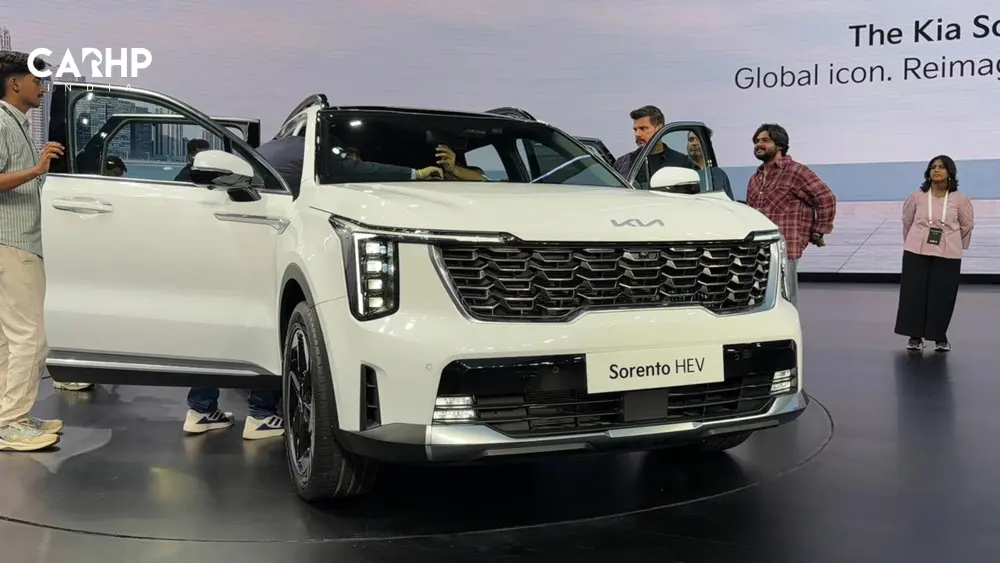
Kia Sorento is the brand's first hybrid for the market, starting at ₹27.99 lakh ex-showroom for the Diesel and ₹29.49 lakh for the Hybrid. It also comes with a diesel option, both with AWD available.
Here's everything you need to know about how the hybrid system works and what sets it apart.
The underlying TMED Platform
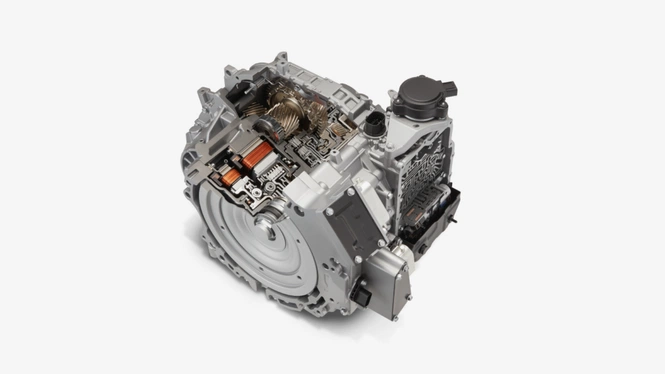
Hyundai and Kia use an architecture the group calls TMED, short for Transmission Mounted Electrical Device. In plain terms, the electric motor is bolted into the space between the petrol engine and the gearbox, in the bell housing where a torque converter would normally live in an automatic car.
Kia's own transmission arm describes it exactly that way, as a conventional automatic gearbox in which the torque converter has been replaced by an electric motor, an engine clutch and a torsion damper.
Also Read – Tata CJLR AND Mahindra INGLO Architecture Explained
The engine clutch is the part that matters most, and it is the part nobody mentions. It is a physical clutch that can completely disconnect the petrol engine from the rest of the drivetrain. When it opens, the engine is not just switched off, it is mechanically severed, spinning nothing and dragging on nothing, while the electric motor drives the wheels through the same six-speed automatic gearbox the car uses at all other times.
When it closes, the engine rejoins the party, and because the motor is already spinning at the same speed on the other side of the clutch, the motor itself can spin the engine up to match before the clutch bites.
That is why a Sorento restarting its engine at 60 kmph does so with a faint shove rather than the shudder you get from a normal start-stop system.
The whole system is one engine, one motor, one clutch between them, one ordinary six-speed automatic, and a small battery.
Also Read – Kia Announces Carnival Hybrid MPV With 1.6 Turbo Petrol
How It Works?
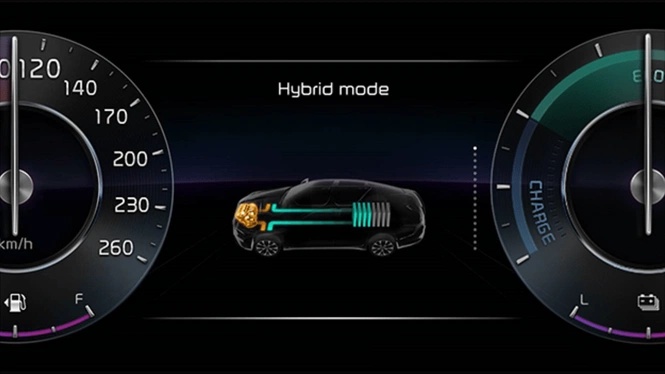
When you press the start button and pull away in traffic, the engine typically stays off and the clutch stays open. The battery feeds the motor, the motor turns the gearbox input shaft, and the car creeps and accelerates gently on electricity alone.
This is unremarkable to sit in and is the whole reason hybrids do so well in city driving, where a petrol engine is at its least efficient and spends most of its life idling or lugging at low load.
Ask for more than the motor can supply, whether by accelerating harder or climbing a flyover, and the control unit spins the engine up through the clutch and brings it in.
From there the two work together. The engine handles the bulk of the load at the efficient part of its rev range while the motor fills the gaps, particularly the low-rpm hole that a small turbocharged engine has before boost arrives.
Also Read – JSW MG Unveils New ADAPT Platform For Future Hybrids
A 1.6-litre turbo petrol on its own would feel hesitant hauling a two-tonne three-row SUV away from a standstill. With an electric motor delivering its full twist from zero rpm, that hesitation disappears, and that is the real reason Kia paired a 1.6 with a car this size rather than a larger naturally aspirated engine.
Lift off the accelerator or brake, and the process reverses. The clutch opens, the engine shuts down so it is not being dragged around against compression, and the motor becomes a generator, turning the car's momentum back into electricity and putting it in the battery.
This is regenerative braking, and the brake pedal is blending two things under your foot at once, the electrical resistance of the motor and the ordinary friction brakes, handing over from one to the other so smoothly that most drivers never notice it happening.
Cruising at a steady speed on a highway is where the system does the least and the engine does the most, because a petrol engine at constant load is already reasonably efficient and there is little braking energy to harvest. Even here the clutch earns its place.
Ease off on a downhill stretch and the engine can be shut down and physically disconnected while the car coasts, which is something a hybrid without a disconnect clutch cannot do as cleanly.
The Sorento Hybrid Is Different Than The One Found In Maruti-Toyota Cars
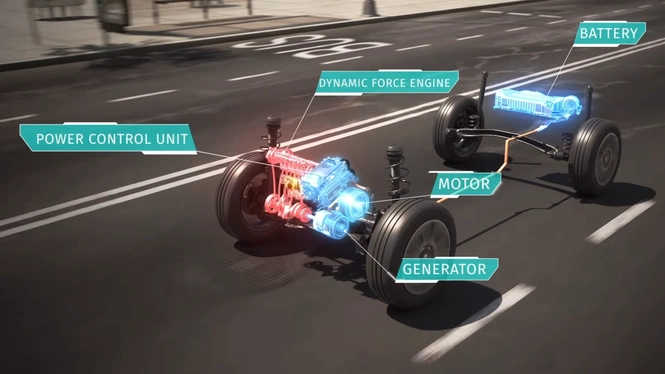
Most Indian buyers who have experienced a strong hybrid have done so in a Toyota or a Maruti, whether an Innova Hycross, a Grand Vitara or a Hyryder. Those cars use a power-split system with a planetary gearset and two motor-generators, and no conventional gearbox at all.
The Sorento has a real six-speed automatic with real ratios and real shifts. The engine revs rise and fall with the gears exactly as they would in any other automatic SUV, and the hybrid part of the system is felt as extra shove rather than as an unfamiliar noise.
Also Read – Maruti Victoris Strong Hybrid Explained: How the Technology Actually Works
How the Sorento Hybrid Differs from a Plug-In
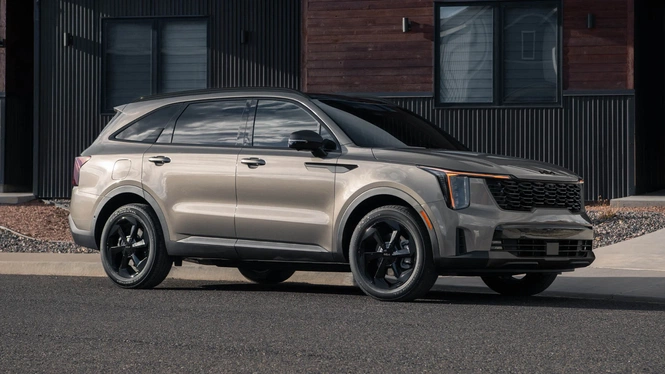
Kia's Sorento Plug-in Hybrid, sold in Europe and America is not a different kind of hybrid. It is the identical layout, the same 1.6 turbo petrol, the same engine clutch, the same six-speed automatic, with two components scaled up and one added.
The battery grows from about 1.5kWh to 13.8kWh, roughly nine times the capacity, which is enough for around 57km of electric-only running on the European WLTP cycle and about 50km on the stricter American test.
The electric motor grows in proportion so it can move a two-tonne SUV on its own at proper road speeds rather than just in traffic, and combined output rises to approximately 265PS and 350Nm. The addition is a charging port, on the right rear flank, taking a standard Type 2 connector at up to 3.3kW.
Also Read – Check Out These Upcoming Hybrid Cars In India
Images Source: Kia India
Table of Contents
- The underlying TMED Platform
- How It Works?
- The Sorento Hybrid Is Different Than The One Found In Maruti-Toyota Cars
- How the Sorento Hybrid Differs from a Plug-In
Join the Conversation
Trending

Every Dark/Black Edition Car On Sale From 8 to 35 Lakhs
These cars, with their blacked-out paint themes, stand out from their standard variants.
Arjun Nair
September 21, 2026

Maruti Suzuki Brings CNG-AMT Options To The Swift, Baleno and Dzire
Maruti has finally paired CNG with an automatic gearbox on the Swift, Dzire and Baleno, priced from Rs 7.92 lakh. The AMT trims share a 1.2 litre engine, a 55 litre boot-mounted tank and cost around Rs 35,000 more than the manual versions.
Anmol Kumar
September 21, 2026
Tata Sierra Dark Launched At Rs 13.99 Lakh, Check Prices
Tata Sierra #DARK launched from Rs 13.99 lakh with Friesian Black exterior, Violet Eclipse interior and Purple Chrome accents. Here is the full price list, features and powertrain details.
Arjun Nair
September 21, 2026

Tata Aeris To Debut On September 25, Expected To Replace Tigor
Tata has officially confirmed the Aeris name and a 25 September launch for its new compact sedan that replaces the Tigor. Here is everything known so far about the design, engine options, features, and expected pricing.
Anmol Kumar
September 21, 2026
Featured
Citroen C3 Review: Who Should Consider This Car?
A few days ago, I took the Citroen C3X out for a spin in the city and on the highways. I travelled long distances and checked its fuel efficiency, features, comfort, and other factors. Today, I’ll briefly share my overall experience with the C3X and will tell you whether you should consider it or not and which is the most value-for-money variant of the lot.
Vatsal Agrawal
May 19, 2026
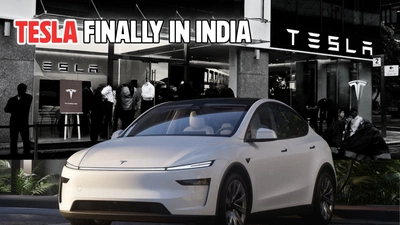
Tesla Finally In India Officially. Why Now And What Does It Mean For EVs?
The much-anticipated 2025 Tesla Model Y has officially arrived in India, marking a pivotal moment for the nation's burgeoning electric vehicle market. Launched on July 15, 2025, the Model Y Juniper facelift offers cutting-edge technology, impressive range, and signature Tesla performance. Positioned as a premium electric SUV, its entry will intensify competition and reshape consumer expectations for EVs across the subcontinent.
Charan Narain
July 17, 2025
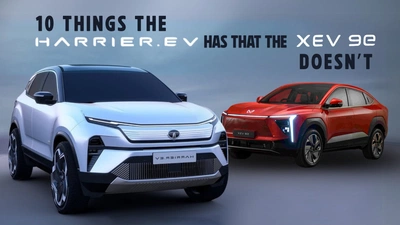
Here Are 10 Things The Harrier.EV Offers That The Mahindra XEV 9E Doesn't
The Harrier.EV is an incredible new offer from Tata. Its most popular competitor would be the Mahindra XEV 9E, priced similarly. With these two incredible offerings from home grown brands available, here is a list of everything the Harrier.EV offers that the XEV 9E doesn't.
Charan Narain
June 13, 2025
Write a comment
Comments
No comments yet. Be the first to comment!