Hyundai Is Better Positioned Than Ever to Weather the Midsize SUV Storm
By Salil Kumar
Updated February 9, 2026
How it all began
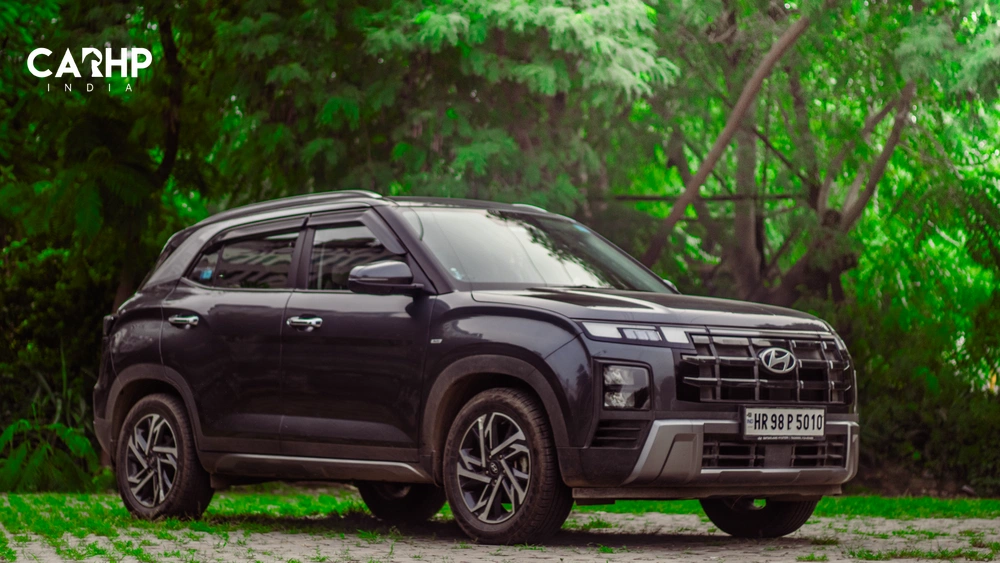
Hyundai’s broader strategy in India has always revolved around customer focused innovation and deep localisation since its entry into the market in 1996. Over the years, the company adapted its products to Indian preferences, played a key role in popularising SUVs in what was once a hatchback dominated market, and invested heavily in building a wide nationwide footprint.
Today, Hyundai operates through more than 1,366 sales points and 1,550 service centres across the country. This long term approach has helped the Creta lead the midsize SUV segment every single year since 2016, achieving a compound annual growth rate of over 9 percent between 2016 and 2025.
King Creta , The One and Only
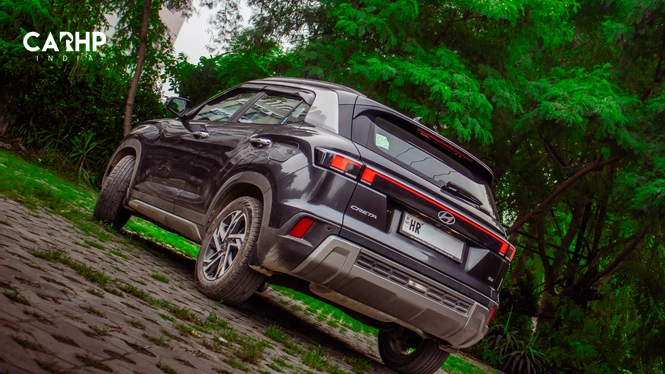
Since its launch in 2015, the Hyundai Creta has emerged as the undisputed leader, consistently outperforming rivals thanks to the minimum standard Hyundai has set for SUVs, which no other carmaker, including Tata and Mahindra, has achieved.
In 2025 alone, the Creta achieved its highest ever annual sales, surpassing 200,000 units, which translates to an average of 550 units sold daily.
This remarkable feat has solidified Hyundai’s position, with the Creta commanding over 34 percent market share in the midsize SUV category. Over the past decade, cumulative domestic sales have exceeded 1.2 million units, making it not just a bestseller but a familiar and dominant presence on Indian roads.
My vision is to build on our strong foundation while accelerating HMIL’s transformation towards sustainable growth, technological leadership and unmatched customer delight. We will continue to reinforce our commitment to Make in India and position HMIL as a global hub for exports. Tarun Garg, CEO, Hyundai Motor India.
The Creta’s appeal lies in a simple fact that it offers everything a car of its calibre can in its segment. And the fact that it comes in over 70 models, yes seventy, means for every Creta buyer there is already a trim in place. Even we were impressed when our Creta crossed 20K mark without any drama.
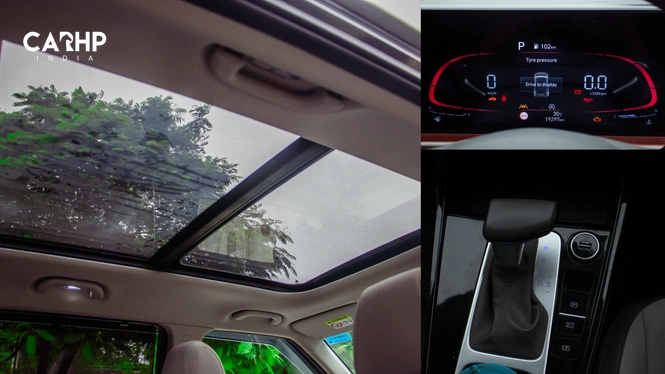
The SUV offers a spacious and premium cabin, highlighted by features such as a panoramic sunroof, which contributes to over 70 percent of total sales coming from sunroof equipped variants.
it packs every in demand feature such as ventilated seats, ADAS, and wireless Apple CarPlay, which other carmakers also offer, but in Hyundai’s case they work reliably in real world conditions, unlike the glitch prone technology often seen in Mahindra and Tata vehicles.
Buyers can choose from multiple powertrain options including petrol, diesel, and turbocharged engines, offering a mix of refined performance and fuel efficiency, with diesel variants still accounting for a strong 44 percent share. Owners frequently highlight the SUV’s reliability, manageable maintenance costs and powerful performance from every engine on offer.
The engines are among the most well-tuned, despite Mahindra offering stronger 200 hp engines and the Sierra with its much-hyped Hyperion unit.
Another critical area That Hyundai has never been in spotlight is its much coveted 5-star BNCAP and GNCAP rating which both it archrivals Tata and Mahindra offer, though we are confident that upcoming Creta facelift will remedy this
Rough Seas Ahead For Hyundai
Hyundai declared that it sold over 2 lakhs Creta last year, thats about 550 cars per day ! Insanely impressive for something that costs about 12 lakhs on road. But tall this was before the Mahindra 7XO and Tata Sierra launched. Tata claims to have over 70,000 bookings on day one while Mahindra a claims over 93,000 (with XEV9s).
To take this new onslaught of rivals, Hyundai has outlined an ambitious roadmap, committing an investment of ₹45,000 crore over the next five years. The company is targeting sustained growth with over 7 percent CAGR and aims to reach a 15 percent overall market share. Plans include launching 26 new models by 2030, expanding production capacity to 1.1 million units annually, and accelerating the push toward electrification with five electric vehicle models planned by 2032
Hyundai also intends to introduce hybrids, enter new segments such as MPVs and off road focused SUVs, and bring its premium Genesis brand to India by 2027.
Leadership direction continues to reinforce this vision. Previous leadership placed strong emphasis on localization and continuous innovation, positioning Hyundai as a brand that feels deeply rooted in the Indian market.
Its established brand loyalty, consistent reliability record, extensive service network, and commanding 34 percent market share provide a substantial advantage.
While rivals may find success through aggressive pricing or specialised features, Hyundai’s regular updates and wide after sales reach, high number of models and word of mouth marketing continue to keep the Creta firmly ahead in the segment. Market trends increasingly favour higher value and feature rich vehicles, an area where the Creta remains particularly strong.
Looking forward, Hyundai’s product pipeline signals even more innovation. The coming years will see the introduction of the Creta Hybrid, a refreshed Verna, the Bayon crossover positioned against compact crossovers like the Fronx, and a new D segment SUV.
One area where Hyundai has been on the back foot is its EV portfolio, which currently only consists of the Creta Electric, and that too largely for namesake with no appeal whatsoever when compared to its much more established rivals.
"We couldn't expect India's EV market to grow so positively. That's why we are a little bit behind in terms of the EV introduction in the Indian market." Unsoo Kim, former Hyundai India CEO.
But this might change soon, as Hyundai is also set to launch its first India specific electric vehicle by late 2026, which by their own admission is something they have been playing catch up on compared to established EV leaders like Tata and Mahindra, while steadily expanding its hybrid portfolio to more than 18 models by 2030
Source- Hyundai India Press, Hyundai
Table of Contents
- How it all began
- King Creta , The One and Only
- Rough Seas Ahead For Hyundai
Join the Conversation
Trending
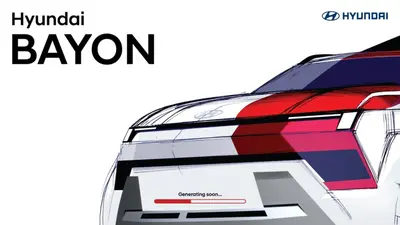
Hyundai BAYON Design Sketches Revealed Ahead of India Launch
Hyundai India has released the first design sketches of the BAYON, its upcoming mid-size SUV. The renders preview a sculpted exterior with H-Edge lighting and a tech-focused cabin ahead of what is expected to be a launch later this year.
Anmol Kumar
September 16, 2026
Safest Cars In India To Buy in 2026
A complete list of Bharat NCAP tested models, their adult and child occupant protection scores, and star ratings.
Salil Kumar
September 15, 2026
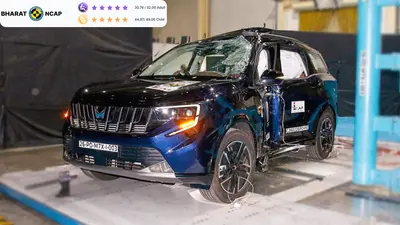
Mahindra XUV 7XO Scores 5 Stars in Bharat NCAP, Gets Near-Perfect Adult Safety Score
The Mahindra XUV 7XO has been awarded a 5-star Bharat NCAP rating, scoring 30.76 out of 32 for adult occupant protection and 44.97 out of 49 for child safety. The rating covers the full variant range, petrol and diesel both.
Arjun Nair
September 15, 2026
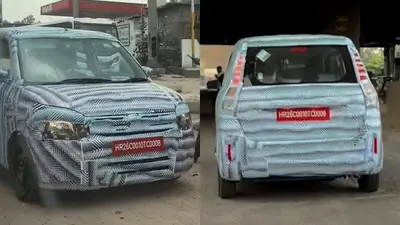
Maruti Wagon R Facelift Spied Testing With New Head and Tail Lights
The Wagon R facelift has been spotted testing in CNG and heavy camouflage. A fresh face, reworked rear, and a bigger touchscreen can be expected on one of India's best-selling hatchbacks.
Anmol Kumar
September 15, 2026
Maruti Suzuki Offering Up to Rs. 1.35 Lakh Benefits in September 2026
Maruti Suzuki's September 2026 Arena offers cover seven models, with the Victoris strong hybrid getting the highest benefits at Rs. 1.35 lakh. Here is the full breakdown, including fuel-type differences on the Wagon R, Alto K10, Swift, and Eeco.
Anmol Kumar
September 11, 2026
Featured
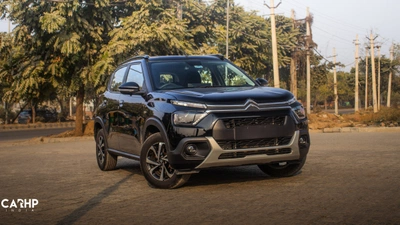
Citroen C3 Review: Who Should Consider This Car?
A few days ago, I took the Citroen C3X out for a spin in the city and on the highways. I travelled long distances and checked its fuel efficiency, features, comfort, and other factors. Today, I’ll briefly share my overall experience with the C3X and will tell you whether you should consider it or not and which is the most value-for-money variant of the lot.
Vatsal Agrawal
May 19, 2026
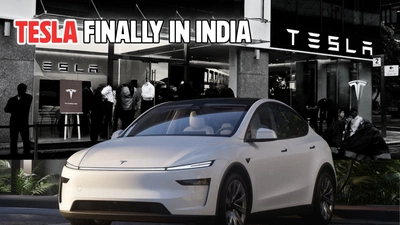
Tesla Finally In India Officially. Why Now And What Does It Mean For EVs?
The much-anticipated 2025 Tesla Model Y has officially arrived in India, marking a pivotal moment for the nation's burgeoning electric vehicle market. Launched on July 15, 2025, the Model Y Juniper facelift offers cutting-edge technology, impressive range, and signature Tesla performance. Positioned as a premium electric SUV, its entry will intensify competition and reshape consumer expectations for EVs across the subcontinent.
Charan Narain
July 17, 2025
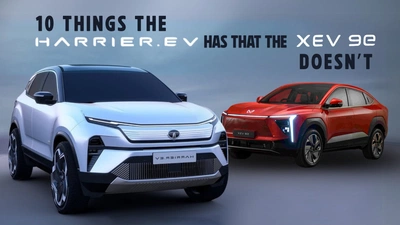
Here Are 10 Things The Harrier.EV Offers That The Mahindra XEV 9E Doesn't
The Harrier.EV is an incredible new offer from Tata. Its most popular competitor would be the Mahindra XEV 9E, priced similarly. With these two incredible offerings from home grown brands available, here is a list of everything the Harrier.EV offers that the XEV 9E doesn't.
Charan Narain
June 13, 2025
Write a comment
Comments
No comments yet. Be the first to comment!