Tata to Soon Have India's Biggest EV Portfolio With an Electric Version of Every Car
By Arjun Nair
Updated June 27, 2026

Over the next three months, Tata Motors will have an EV option for virtually every passenger car it sells, with the Sierra EV and Safari EV set to complete its mainstream electric lineup.
And the story doesn't end there. The company is already preparing the Avinya family of dedicated, ground-up EVs that will take on Mahindra's Born Electric range in the premium space.
However, rapid product launches alone won't be enough. Build quality issues, poor service centre experiences, and the lack of a proper charging network remain key challenges Tata must overcome to maintain its leadership in India's EV market.
Tata Motors Leads the EV Market in India
Tata Motors remains the leading EV carmaker in India. As of early 2026, it holds a market share of over 40% (43.5% as recorded in January 2026). In May 2026, the company sold over 10,000 EVs in a single month, showing strong demand.
By late 2025, Tata had crossed 250,000 cumulative EV sales, commanding nearly two-thirds of all electric passenger vehicles sold in India up to that point.
This success can be largely attributed to early entry into the market, tried-and-tested products, and customer trust built over years.
| Rank | Model | Approximate Sales (Units) |
|---|---|---|
| 1 | MG Windsor EV | 45,000 - 52,000+ |
| 2 | Tata Nexon EV | 35,000 - 42,000 |
| 3 | Tata Punch EV | 25,000 - 30,000 |
| 4 | Tata Tiago EV | 20,000 - 25,000 |
| 5 | Mahindra XEV 9e | 18,000 - 22,000 |
| 6 | Mahindra BE 6 | 12,000 - 15,000 |
| 7 | MG Comet EV | 10,000 - 12,000 |
| 8 | Tata Curvv EV | 8,000 - 10,000 |
Note: Exact 2025 full-year rankings showed MG Windsor as a top seller in some reports, with Tata models dominating overall share. Total passenger EV sales grew substantially, reaching around 1.77 lakh units.
Comprehensive EV Lineup Matching ICE Offerings
Tata Motors offers an EV version for almost every major internal combustion engine (ICE) model. This includes the Tiago, Tigor, Punch, Nexon, Curvv, and Harrier.
The Sierra EV is scheduled to launch on June 30, and the Safari EV is slated for later in 2026. Only the Altroz lacks an EV counterpart so far, but Tata has confirmed it is in the pipeline despite some delays.
This near-complete coverage is impressive. Going forward, Tata could have an EV for every ICE model, a significant achievement that few manufacturers match, even globally.
Also Read - Tata Sierra EV QWD: What Makes it Different From Traditional AWDs?
Affordable Options Across Budget Segments
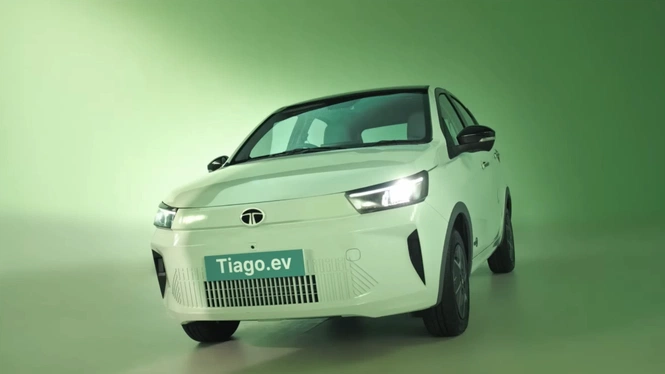
Tata's EV range starts from just under Rs 7 lakh for the entry-level Tiago EV, the most affordable EV in India currently, and goes up to around Rs 30 lakh for the top Harrier EV AWD variant. This spread covers a wide range of buyers, from first-time car owners to those seeking premium features.
The recently facelifted Punch EV and Tiago EV also come with Battery as a Service (BaaS), which lowers the upfront cost by separating the battery price. This makes EVs more accessible, especially for budget-conscious buyers.
Also Read - New Tata Tiago EV Every Variant Explained
Lower running costs, with savings on fuel and maintenance, add to the appeal over time.
| ICE Model | ICE Price Range (₹ Lakh) | EV Counterpart | EV Price Range (₹ Lakh) | Status |
|---|---|---|---|---|
| Tiago | 4.70 - 8.55 | Tiago EV | 6.99 - 9.99 | Available |
| Tigor | 5.49 - 8.83 | Tigor EV | 12.49 onwards | Available |
| Punch | 5.65 - 10.60 | Punch EV | 9.69 - 13+ | Available |
| Nexon | 7.37 - 14.22 | Nexon EV | 12.49 - 17.49 | Available |
| Curvv | 9.66 - 19+ | Curvv EV | 16.99 - 19.49+ | Available |
| Harrier | 12.89 - 25+ | Harrier EV | 21.49 - 30.23 | Available |
| Sierra | 11.49 - 21.29 | Sierra EV | ~20.00 - 25.00+ | Launching June 30 |
| Safari | 13 to 26 lakhs | Safari EV | TBA | Spied |
Note: Prices are ex-showroom and subject to change. Actual on-road prices vary by city and offers.
Comparison with Rival Carmakers
Other manufacturers, while having their own strengths, offer much fewer EV options.
MG Motor has models like the Comet EV, Windsor EV, and ZS EV, but their pricing leaves gaps in the lineup.
Mahindra focuses on higher-end SUVs such as the BE 6, XEV 9S, and XEV 9e, with prices starting around Rs 19 lakh and going above Rs 30 lakh. These appeal to premium buyers but may not attract those seeking affordable city cars.
Tata's broader and more affordable range gives it an edge, particularly in entry-level and mid segments where sales volumes are higher, reflecting in its market share.
Addressing Charging Infrastructure Challenges
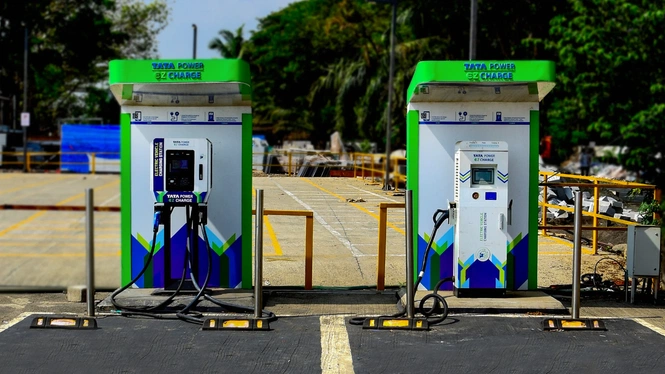
Charging remains a key hurdle for large-scale EV adoption. Public stations are far fewer than petrol pumps, though progress is steady.
Tata Motors, through partnerships with Tata Power and other EV charging players, supports a vast network. Tata Power has facilitated over 7.5 lakh charging sessions, covering hundreds of cities and highways, and aims for significant expansion.
Also Read - Which EV Charging Companies in India Have the Most Chargers?
As EV numbers grow, demand will push more investment in infrastructure. Government schemes like PM E-Drive also support this. A large scale reliable charging ecosystem helps reduce range anxiety for its customers.
Impact of Government Fuel Policies
Recent policies on ethanol blending in petrol and planned isobutanol blending in diesel may make some buyers rethink ICE purchases due to potential changes in fuel efficiency and long-term costs.
For those with mostly city and occasional highway use, EVs become a practical choice. Combined with subsidies and incentives in some states, this could shift preferences toward electric options.
Additional Factors Supporting Tata's Role
Tata benefits from group synergies, including battery technology development and vehicle software.
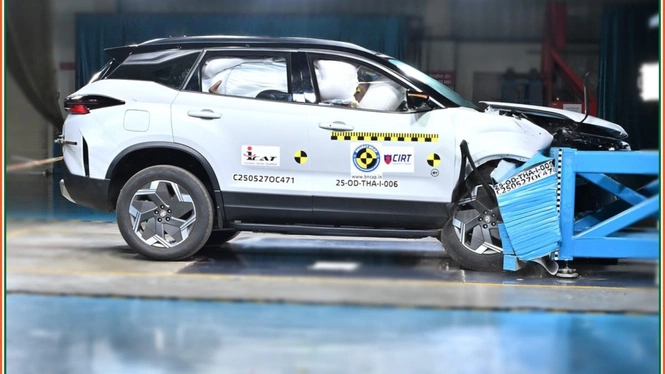
Its focus on safety, with features like multiple airbags, strong structures, and impressive GNCAP and BNCAP ratings builds confidence. Over-the-air updates keep vehicles fresh without visits to service centres.
Also Read - Tata Sierra Achieves 5 Star Bharat NCAP Safety Rating
As battery costs fall and ranges improve, Tata's lineup will become even more competitive.
Image Source: Tata Motors, Bharat NCAP, Tata Power
Table of Contents
- Tata Motors Leads the EV Market in India
- Comprehensive EV Lineup Matching ICE Offerings
- Affordable Options Across Budget Segments
- Comparison with Rival Carmakers
- Addressing Charging Infrastructure Challenges
- Impact of Government Fuel Policies
Join the Conversation
Trending
Every CNG Automatic Car Available in the Market
These options offer the convenience of an automatic without compromising on mileage.
Salil Kumar
September 29, 2026
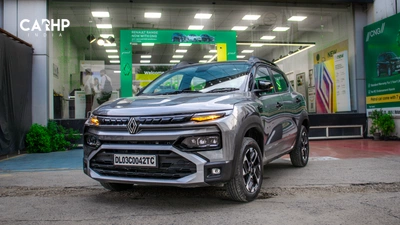
Most Affordable Cars With 360 Degree Camera Under 10 Lakhs
The 360 cam is one of the most in demand features that helps to increase your situational awareness when parking or while driving. Here is the full list of cars that offer a 360-degree camera under ₹10 lakh with variant names, prices, and what else you get alongside the camera.
Salil Kumar
September 29, 2026
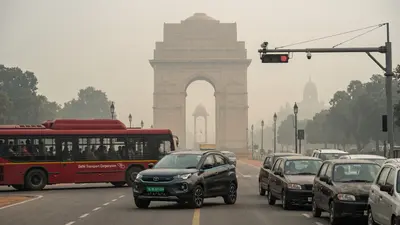
Delhi Announces Stricter Winter Anti-Pollution Measures
Delhi has announced winter anti-pollution measures that directly affect vehicle owners. Non-BS6 vehicles from outside Delhi will be barred from entering the city, parking charges will double, and the No PUC No Fuel rule will be enforced more strictly.
Salil Kumar
September 29, 2026
Featured
Citroen C3 Review: Who Should Consider This Car?
A few days ago, I took the Citroen C3X out for a spin in the city and on the highways. I travelled long distances and checked its fuel efficiency, features, comfort, and other factors. Today, I’ll briefly share my overall experience with the C3X and will tell you whether you should consider it or not and which is the most value-for-money variant of the lot.
Vatsal Agrawal
May 19, 2026
Tesla Finally In India Officially. Why Now And What Does It Mean For EVs?
The much-anticipated 2025 Tesla Model Y has officially arrived in India, marking a pivotal moment for the nation's burgeoning electric vehicle market. Launched on July 15, 2025, the Model Y Juniper facelift offers cutting-edge technology, impressive range, and signature Tesla performance. Positioned as a premium electric SUV, its entry will intensify competition and reshape consumer expectations for EVs across the subcontinent.
Charan Narain
July 17, 2025
Here Are 10 Things The Harrier.EV Offers That The Mahindra XEV 9E Doesn't
The Harrier.EV is an incredible new offer from Tata. Its most popular competitor would be the Mahindra XEV 9E, priced similarly. With these two incredible offerings from home grown brands available, here is a list of everything the Harrier.EV offers that the XEV 9E doesn't.
Charan Narain
June 13, 2025
Write a comment
Comments
No comments yet. Be the first to comment!