Tata Sierra EV QWD: What Makes it Different From Traditional AWDs?
By Arjun Nair
Published June 25, 2026
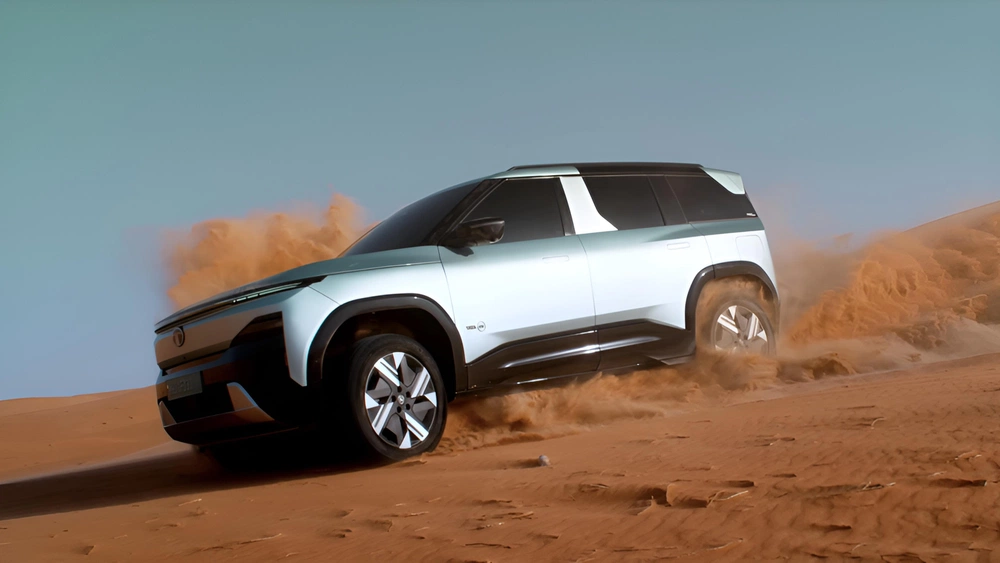
Tata Motors is all set to launch the Sierra EV on June 30, reviving the rugged, go-anywhere ability into the Sierra name, now with modern electric power. Its all-wheel drive system, which Tata calls ‘QWD’, promises strong performance across different driving conditions.
As we close in on the Sierra EV's official launch, here's a detailed look at what QWD exactly is, how it works, and how it differs from AWD systems in ICE and other EV cars.
What is Tata's QWD System?
QWD stands for Quad Wheel Drive, Tata's name for its dual-motor all-wheel-drive setup in electric vehicles. It builds on the company's experience with platforms shared in the Harrier EV and draws from the capable engineering heritage linked to Land Rover DNA.
In simple terms, QWD uses two electric motors, one each at the front and rear, to send power to all four wheels independently. This gives better traction and control compared to single-motor setups.
Tata will offer the Sierra EV with both RWD and QWD options, with the latter being suitable for those who often drive on highways, hills, or light off-road trails.
Also Read - New Tata Sierra EV Teaser Shows Full Front View And Interior Glimpse
How is QWD Different From Standard AWD?
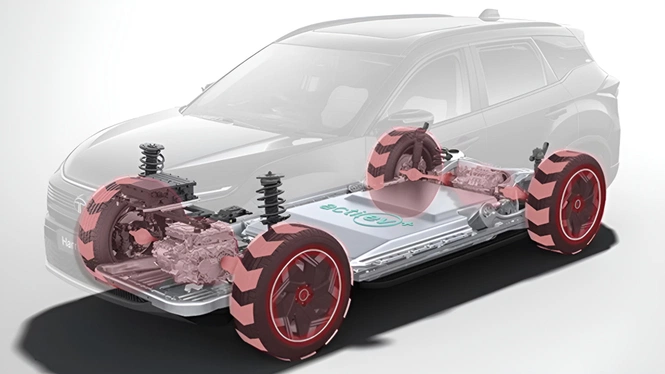
Traditional all-wheel-drive systems in petrol or diesel cars rely on mechanical parts like transfer cases, differentials, and driveshafts to distribute power from a single engine to all wheels. These systems add weight, can lose energy through friction, and are less flexible in instantly adjusting power between axles. In tough conditions, drivers sometimes need to manually lock differentials or select modes, and there is always some lag.
In contrast, EV AWD systems use two similar motors, often permanent magnet types, which work well for quick acceleration but may not always optimise for varied Indian terrains like loose sand, mud, or snow. Tata's QWD addresses this limitation by pairing different motor types for better overall capability.
The rear motor is a powerful Permanent Magnet Synchronous Motor (PMSM), delivering strong torque, high efficiency, and smooth performance for everyday driving and highway runs. In the Harrier EV QWD, this rear motor produces around 235 bhp. It handles most daily driving conditions, helping with better range and responsive power.
The front motor is an induction motor, making about 155 bhp. Induction motors are simpler, more durable, cheaper to produce (no rare-earth magnets needed), and handle heat better during demanding use. They engage mainly when extra traction is required, such as during strong acceleration, on slippery surfaces, or off-road situations, and can freewheel when not needed to avoid drag and save energy.
Together, they provide a combined torque output of 504 Nm and quick 0-100 km/h times (around 6.3 seconds in boost mode). Drivers get multiple terrain modes such as Normal, Rock, Mud, Sand, Snow that adjust power delivery, throttle response, and other parameters automatically. Features like off-road assist, transparent underbody view, and boost mode further enhance control.
All this advanced tech makes Tata's QWD more capable for multiple terrains than standard AWDs.
Also Read - Best Rugged 4x4 and AWD SUVs You Can Buy
Tata Sierra EV Battery Options and Range
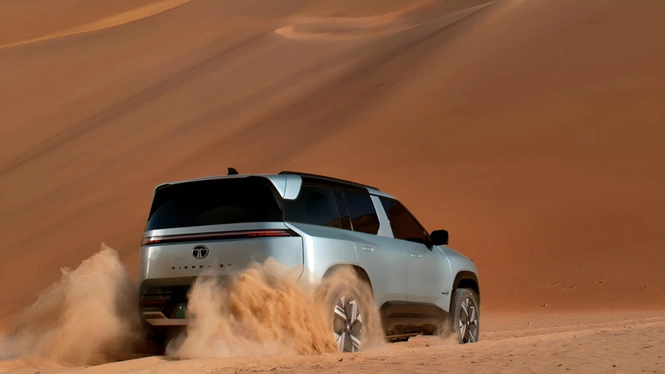
The Sierra EV is expected to use the same 75 kWh battery pack option as the Harrier EV for its higher variants, alongside a smaller 65 kWh pack.
The Harrier EV delivers a real world range of 380-425 km with the 65 kWh battery, and 430-500 km on the 75 kWh unit. Expect figures for the Sierra to be higher for the respective battery packs, thanks to its lighter weight.
The QWD system will likely be paired exclusively with the larger battery for optimal performance. The same battery packs are also expected in the upcoming Safari EV.
Fast charging and good real-world range should make it practical for long trips, while the acti.ev+ platform underneath supports solid build quality and features.
Tata Sierra EV Rivals
The Sierra EV will enter an evolving, but competitive space, going up against the Mahindra BE 6, MG ZS EV, Hyundai Creta Electric, and the Maruti Suzuki e Vitara.
Right now, Tata holds the first-mover advantage, being the only carmaker offering an AWD system in the mass-market mid-size electric SUV segment in India.
All its aforementioned rivals stick to front-wheel-drive or rear-wheel-drive configurations, which although are simpler and lighter, but can struggle in tricky conditions.
Image Credits: Tata Motors
Table of Contents
- What is Tata's QWD System?
- How is QWD Different From Standard AWD?
- Tata Sierra EV Battery Options and Range
- Tata Sierra EV Rivals
Join the Conversation
Trending
Every CNG Automatic Car Available in the Market
These options offer the convenience of an automatic without compromising on mileage.
Salil Kumar
September 29, 2026
Most Affordable Cars With 360 Degree Camera Under 10 Lakhs
The 360 cam is one of the most in demand features that helps to increase your situational awareness when parking or while driving. Here is the full list of cars that offer a 360-degree camera under ₹10 lakh with variant names, prices, and what else you get alongside the camera.
Salil Kumar
September 29, 2026

Delhi Announces Stricter Winter Anti-Pollution Measures
Delhi has announced winter anti-pollution measures that directly affect vehicle owners. Non-BS6 vehicles from outside Delhi will be barred from entering the city, parking charges will double, and the No PUC No Fuel rule will be enforced more strictly.
Salil Kumar
September 29, 2026
Featured
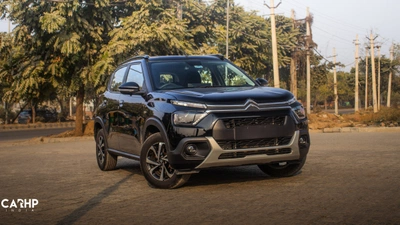
Citroen C3 Review: Who Should Consider This Car?
A few days ago, I took the Citroen C3X out for a spin in the city and on the highways. I travelled long distances and checked its fuel efficiency, features, comfort, and other factors. Today, I’ll briefly share my overall experience with the C3X and will tell you whether you should consider it or not and which is the most value-for-money variant of the lot.
Vatsal Agrawal
May 19, 2026
Tesla Finally In India Officially. Why Now And What Does It Mean For EVs?
The much-anticipated 2025 Tesla Model Y has officially arrived in India, marking a pivotal moment for the nation's burgeoning electric vehicle market. Launched on July 15, 2025, the Model Y Juniper facelift offers cutting-edge technology, impressive range, and signature Tesla performance. Positioned as a premium electric SUV, its entry will intensify competition and reshape consumer expectations for EVs across the subcontinent.
Charan Narain
July 17, 2025
Here Are 10 Things The Harrier.EV Offers That The Mahindra XEV 9E Doesn't
The Harrier.EV is an incredible new offer from Tata. Its most popular competitor would be the Mahindra XEV 9E, priced similarly. With these two incredible offerings from home grown brands available, here is a list of everything the Harrier.EV offers that the XEV 9E doesn't.
Charan Narain
June 13, 2025
Write a comment
Comments
No comments yet. Be the first to comment!