1 Images
Exterior

Tata Safari EV

The upcoming Tata Safari EV is Tata Motors’ all-electric take on its flagship seven-seater SUV and is expected to arrive in India around mid to late 2026. Built on Tata’s advanced Gen 2 act.ev platform, it promises long range capability of over 500 km, modern electric performance, and premium features like Level 2 ADAS. Designed to retain the Safari’s bold road presence and family-friendly nature, the Safari EV aims to offer a zero-emission alternative to diesel three-row SUVs without sacrificing space, comfort, or capability.
32 Lakh*

Tata Safari EV Variants & Prices

Filter By Fuel type & Transmission type

Safari EV Safari EV

32 Lakh*
Automatic, Electric

Tata Safari EV Overview

user avatar
Salil Kumar
Updated on February 6, 2026

Tata Motors is developing the Safari EV as a major step in expanding its electric SUV portfolio, following the launch of the Harrier EV. The Safari EV will sit at the top of Tata’s EV lineup and is expected to launch between May and November 2026. It will be based on the same Gen 2 act.ev architecture, which allows for larger battery packs, better efficiency, and improved performance. The focus is on combining seven-seat practicality with the benefits of electric mobility, including low running costs, smooth performance, and advanced technology. Expected battery options range from 65 kWh to 75 kWh, enabling real-world driving range of over 500 km. With Tata’s strong EV ecosystem and expanding charging and service network, the Safari EV is positioned as a premium yet attainable electric SUV for Indian families.

engine and performance

The Tata Safari EV will be a pure electric SUV based on the Gen 2 act.ev platform. It is expected to offer battery options around 65 kWh and 75 kWh using LFP chemistry for safety and durability. Single-motor front-wheel-drive versions will be offered, while top variants are expected to get dual-motor all-wheel-drive setups for improved traction and performance. Combined output in AWD versions could reach 300 to 400 hp, allowing 0 to 100 kmph acceleration in under 7 seconds. Fast DC charging support of up to 150 kW is expected, enabling a 20 to 80 percent charge in around 30 minutes. Multiple drive and regeneration modes will help balance performance and efficiency for city, highway, and light off-road use.

interior

Inside, the Safari EV is expected to offer a spacious and premium seven-seat cabin focused on comfort and practicality. The interior will likely feature high-quality materials, soft-touch surfaces, leatherette upholstery, and ambient lighting. A large central touchscreen, possibly 12 to 14 inches in size, will run Tata’s latest connected car system with wireless Android Auto and Apple CarPlay. A fully digital instrument cluster is also expected. Second and third row passengers will benefit from dedicated AC vents, USB charging ports, and good legroom and headroom. The third row will be foldable to expand boot space, making it practical for family trips. Features like ventilated front seats, panoramic sunroof, powered adjustments, and multiple storage spaces are expected to enhance everyday usability.

exterior

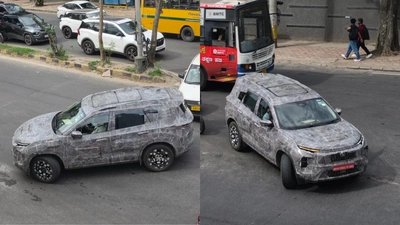
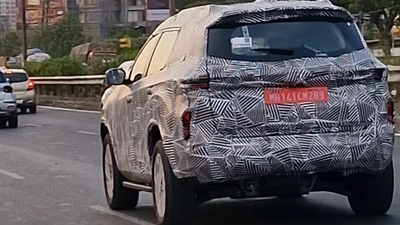
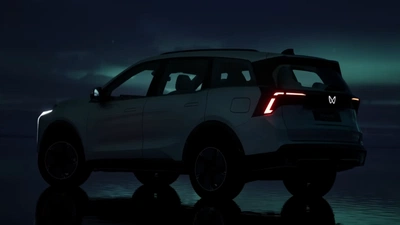
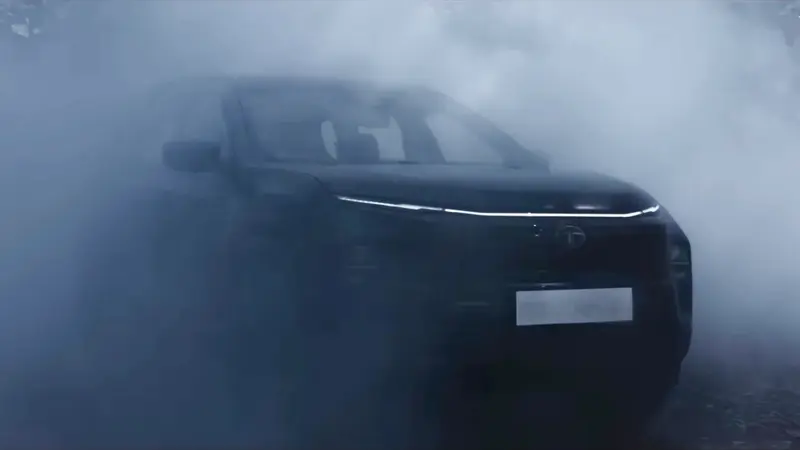
The Tata Safari EV is expected to retain the familiar and muscular Safari silhouette while adding EV-specific design elements for a more futuristic appearance. The front is likely to feature a closed grille with an illuminated Tata logo, slim connected LED headlamps, and a redesigned bumper optimized for aerodynamics. The side profile will highlight the long body needed for three-row seating, along with flush door handles, black cladding, roof rails, and large alloy wheels ranging from 18 to 19 inches. At the rear, connected LED tail lamps and a cleaner bumper design are expected. Overall length should remain close to 4.7 metres, with ground clearance of over 200 mm to maintain light off-road capability. The design balances ruggedness with modern EV styling, ensuring it still looks like a true Safari.

competition

The Tata Safari EV will compete in the premium electric three-row SUV space, where direct rivals are still limited. Upcoming models like the Mahindra XUV.e9 will challenge it with bold design and large batteries, while the BYD eMAX 7 offers MPV-style electric practicality. More premium global EVs like the Kia EV9 or Hyundai Ioniq 7 could compete on technology but at significantly higher prices. Against conventional SUVs, the Safari EV will position itself as an electric alternative to diesel models like the Toyota Fortuner or MG Gloster. With its combination of range, features, space, and Tata’s strong EV presence, the Safari EV could become one of the most compelling electric family SUVs in India.

Tata Safari EV Car FAQs

The Tata Safari EV is expected to launch in India around mid to late 2026, with timelines pointing roughly between May and November 2026. Tata Motors is likely to align the launch after the Harrier EV to properly space its premium electric SUV rollouts.
The Safari EV is expected to be a feature-rich electric SUV with a strong focus on family comfort and technology. Key highlights should include a large battery offering over 500 km real-world range, optional dual-motor AWD in top variants, panoramic sunroof, large touchscreen infotainment system, fully digital driver display, connected car tech, wireless Android Auto and Apple CarPlay, ventilated front seats, ambient lighting, and flexible seven-seat layout. Safety is expected to be a major focus with multiple airbags, electronic stability control, and Level 2 ADAS on higher trims.
The expected starting price of the Tata Safari EV is likely to be around ₹26–32 lakh ex-showroom, depending on battery size and variant. Top-spec dual-motor AWD versions with larger batteries and advanced features could be priced higher, but Tata is expected to keep it competitively positioned against premium diesel three-row SUVs.
Tata Safari EV