Which EV Charging Companies in India Have the Most Chargers?
By Arjun Nair
Updated July 21, 2026
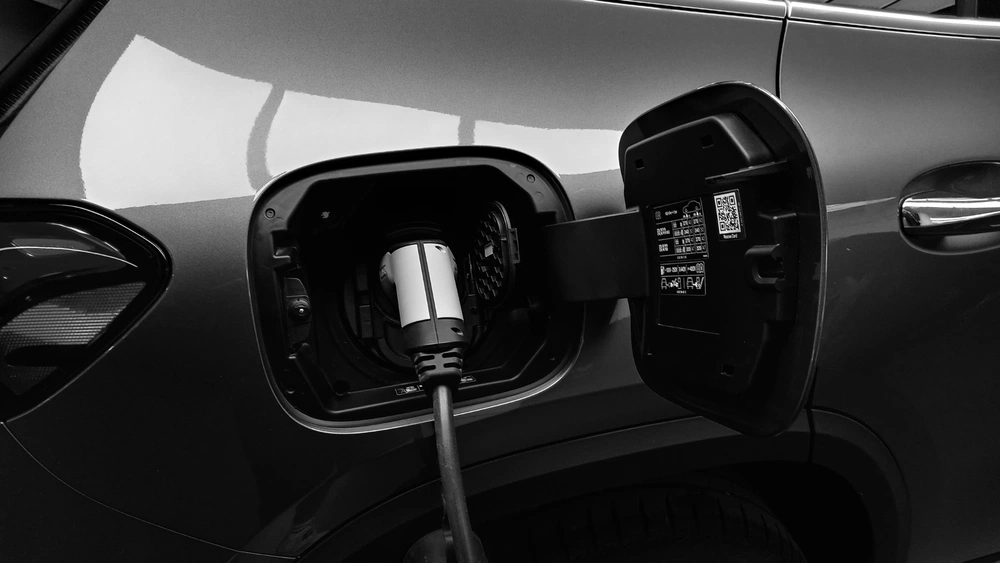
India's electric vehicle sector is growing rapidly, and a strong charging network plays a key role in supporting this growth.
As of early 2026, the country has thousands of public charging stations, with many more home and semi-public points.
Here is a look at the top players in EV charging, focusing on their network size, charger types, power ratings, costs, city coverage, and other important aspects such as reliability and focus areas.
| Company | Total Charging Points (approx.) | Charger Types & Power Outputs | Charging Costs | Charging Speed (Typical 10-80% or Fast Charge Time) | Cities / Coverage |
|---|---|---|---|---|---|
| Tata Power EZ Charge | 5,500–6,700+ public; 200,000+ home chargers | AC (3.7–22 kW), DC fast (25–150 kW+) | ₹18–25 (DC); cheaper for AC | DC fast: 30-60 min for 10-80% on most EVs (faster ~20-40 min on high-power compatible vehicles) | 620+ cities & towns, strong on highways |
| Bolt.Earth | 100,000+ (including distributed, home & P2P) | Mainly AC (3.3 kW+), some DC fast (up to 60 kW+) | Competitive, app-based transparent rates | Blaze DC (2W/3W): ~30 min full or 1% per min; 4W: standard DC times | 2,000+ cities, deep Tier-2/3 reach |
| ChargeZone | 13,500+ | AC & high-power DC (up to 150 kW+, highway hubs 500 kW–1.5 MW) | Market competitive, membership options | Ultra-fast DC: 20-45 min for 10-80% on compatible EVs (360 kW for quickest) | 350+ cities, 26 states, major highways |
| Statiq | 7,000–8,000+ | AC & DC fast (60–360 kW in hubs) | Transparent per-kWh or session, loyalty benefits | DC fast: 30-60 min typical (faster on 120+ kW); examples ~25-55 min for popular models | 1,000+ locations, 70+ cities, highways |
| Ather Grid | 5,000+ (mostly 2W fast chargers) | Specialised fast chargers for 2-wheelers (quick boost e.g., 30 km in 10 min) | Affordable pay-per-use | 6 kW Grid: ~30 km range in 10 min (full day range in ~10-45 min depending on model) | 395+ cities, dense in South & West India |
| Hyundai Motor India (HMIL) | 30,000+ (via app + CPOs) + 183 company-owned | DC fast (60–240 kW) | Competitive (app-based) | 10-80% in ~20-60 min on compatible EVs | 105+ cities, major highways (Delhi-Jaipur, Mumbai-Bengaluru, etc.) |
1. Tata Power EZ Charge
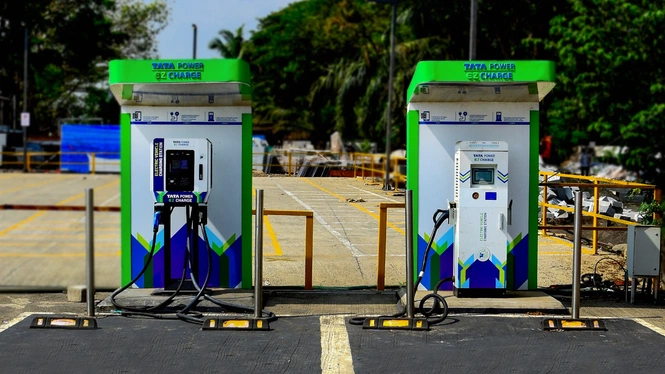
Tata Power operates one of India's largest and most widespread public EV charging networks. Backed by the Tata Group, it enjoys strong trust and presence in both major cities and highways.
The company has installed over 5,500 to 6,700 public, semi-public, and fleet charging points. It also has more than 1,20,000 home chargers and over 1,200 e-bus charging points. The network covers more than 620 cities and towns.
It offers a mix of AC chargers that range from 3.7 kW to 22 kW. These suit slower overnight or workplace charging. It also provides DC fast chargers, commonly 25-60 kW, with some reaching up to 150 kW or higher at key hubs. High-power options for buses go up to 180-360 kW.
Charging costs usually range from ₹18 to ₹25 per kWh for DC fast charging. Rates vary by city and may be higher in places like Hyderabad. AC charging remains cheaper. Payments work through a wallet system or the app, with support for UPI and transparent per-unit rates.
Tata Power maintains an excellent app that shows real-time status and allows reservations, offering seamless payments. This network works well for two-wheelers, cars, and commercial EVs, with high reliability and good customer support.
Also Read - Best EVs Under ₹20 Lakh in India With 300 KM Of Real World Range
2. Bolt.Earth
Bolt.Earth has built a massive distributed network. It performs especially well in homes, residential societies, and smaller cities. Many consider it one of the largest by total charging points when private and peer-to-peer setups are included.
It has deployed over 100,000 chargers. Its network reaches more than 2,000 cities and locations across India.
The company mainly offers AC chargers rated at 3.3 kW and higher. These work well for homes and workplaces. It also provides some DC fast options up to 60 kW or more for public use. The chargers support two-wheelers, three-wheelers, and four-wheelers.
Charging costs stay competitive and transparent. The app clearly shows energy-based pricing. This makes it affordable for daily use. Property owners can also earn by sharing their chargers through the peer-to-peer model.
Bolt.Earth uses a user-friendly app for locating, booking, and paying for charges. It focuses on smart, IoT-enabled chargers. This approach helps expand EV adoption beyond big cities and supports everyday urban charging.
3. ChargeZone
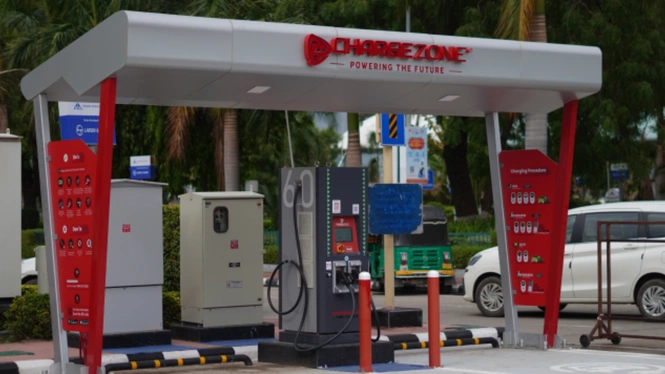
ChargeZone ranks as a leading private player. It specialises in high-speed charging, particularly on highways and in major cities.
The company operates over 13,500 to 15,000 charging points across 26 states and more than 350 cities. It continues to expand rapidly, with plans for over 1,000 new highway stations.
ChargeZone offers both AC and DC fast chargers. It deploys high-power DC stations suitable for quick top-ups. Some locations feature ultra-fast options, especially on highways.
Charging costs follow market rates, with possible benefits for members. The rates remain competitive for fast charging.
The network uses advanced technology and good charge point operator software. It focuses on reliability for long trips. ChargeZone serves individual users, fleets, and original equipment manufacturers. It also provides good uptime and route optimisation features through its app.
Also Read - Best EVs Under ₹30 Lakh With 400 Km Real World Range
4. Statiq
Statiq has grown quickly by using a smart, app-centric approach and forming partnerships with fuel retailers.
The company manages over 7,000 to 10,000 chargers. Its network reaches more than 1,000 cities. Partnerships with companies such as HPCL and BPCL strengthen its presence in urban and highway locations.
Statiq provides a mix of AC and DC fast chargers. Some hubs offer up to 360 kW. The system supports various EVs and includes reservation options.
Charging costs appear transparent through per-kWh or session-based billing via the app. Competitive rates come with loyalty benefits such as Statiq Miles.
The advanced app allows reservations up to seven days in advance. It also shows live availability. Statiq offers franchise options for further expansion. It focuses on highways and commercial use. This makes it reliable for daily commuters and long-distance travellers.
5. Ather Grid
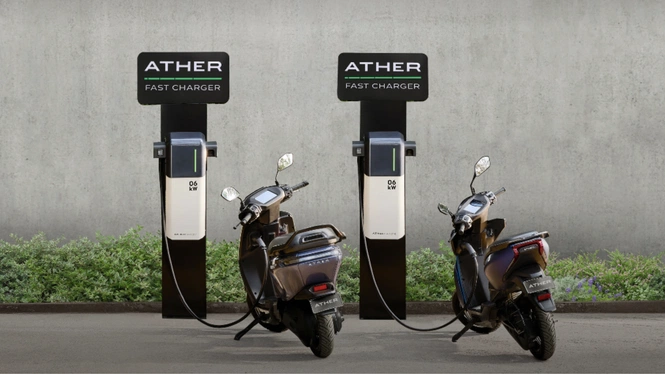
Ather Energy specialises in fast charging for two-wheelers. This focus makes it very popular among scooter and bike owners.
Ather Grid has installed over 4,000 to 5,000 fast chargers. The network covers more than 395 cities, with dense presence in South and West India, including Bengaluru, Chennai, and Hyderabad. It continues to expand.
The company uses specialised LECCS fast chargers designed for two-wheelers. These deliver quick charges, such as 30 km of range in about 10 minutes. Some chargers also work with other brands.
Charging costs stay affordable. Users pay per use through the Ather app. This pricing works well for daily two-wheeler riders.
Ather Grid integrates smoothly with Ather vehicles for a seamless experience. It now provides growing support for other brands. The network focuses on speed and convenience for urban two-wheeler users.
Also Read - EV Scooters Under 1 Lakhs with atleast 100 KM Of Range
6. Hyundai Motor India EV Charging Network
Hyundai Motor India (HMIL) has significantly boosted EV charging access by integrating over 30,000 charging points nationwide through partnerships with multiple charge point operators (CPOs). The network is available to all EV brands via the myHyundai app, allowing users to locate, book, and pay seamlessly.
It covers key highway corridors including Delhi-Gurgaon-Jaipur, Mumbai-Pune-Bengaluru, and others, with facilities within an average 25 km radius in many areas. Hyundai currently operates 183 DC fast-charging stations (60-240 kW) across 105 cities, open to all EVs.
The company aims to expand its proprietary network to 600 stations by 2030 at urban spots, highways, and dealerships.
Other EV Charging Players
Oil marketing companies such as Indian Oil, BPCL, and HPCL have installed thousands of stations at existing petrol pumps. Indian Oil leads with over 13,000 chargers in some reports.
These networks offer AC and DC chargers across the country. Their presence at fuel outlets makes them convenient for highway travel. Costs remain competitive, and coverage spans most parts of India.
Note: Numbers change quickly because of fast expansion. Always check the company's app or website for the most current details. Pricing also varies by location, time of day, and charger speed.
Tips for EV Owners
Many networks now support multiple vehicle types, but owners should always check compatibility for standards such as CCS2 or Type 2 through the app. Public fast charging costs more than home charging. Users can save money by choosing off-peak rates or subscriptions. Electricity rates plus service fees apply.
All these EV charging providers have reliable apps that display information such as nearby chargers, charging costs, and live charging status among others, helping avoid downtime. Highway corridors continue to improve quickly. For the best experience, download multiple apps such as those from Tata Power and Bolt.Earth.
Charging networks are expanding fast to meet 2030 targets, with focus areas including ultra-fast chargers above 150 kW and battery swapping options.
Image Source: Tata Power, Chargezone, Ather Energy
Table of Contents
- Tata Power EZ Charge
- Bolt.Earth
- ChargeZone
- Statiq
- Ather Grid
- Hyundai Motor India EV Charging Network
Join the Conversation
Trending
Everything You Need To Know About BS7 Emission Norms
India is gearing up for the next major leap in vehicle emission standards with Bharat Stage 7.
Arjun Nair
July 23, 2026
Essential Features Every Car Should Have as Standard
Essential Features Every Car Should Have as Standard
Arjun Nair
July 13, 2026
Your Guide To Flex Fuel Vehicles In India
FFVs are the future of every carmaker, so what do they mean and when will the arrive, lets find out
Salil Kumar
July 13, 2026

Featured
Citroen C3 Review: Who Should Consider This Car?
A few days ago, I took the Citroen C3X out for a spin in the city and on the highways. I travelled long distances and checked its fuel efficiency, features, comfort, and other factors. Today, I’ll briefly share my overall experience with the C3X and will tell you whether you should consider it or not and which is the most value-for-money variant of the lot.
Vatsal Agrawal
May 19, 2026
Tesla Finally In India Officially. Why Now And What Does It Mean For EVs?
The much-anticipated 2025 Tesla Model Y has officially arrived in India, marking a pivotal moment for the nation's burgeoning electric vehicle market. Launched on July 15, 2025, the Model Y Juniper facelift offers cutting-edge technology, impressive range, and signature Tesla performance. Positioned as a premium electric SUV, its entry will intensify competition and reshape consumer expectations for EVs across the subcontinent.
Author
July 17, 2025
Here Are 10 Things The Harrier.EV Offers That The Mahindra XEV 9E Doesn't
The Harrier.EV is an incredible new offer from Tata. Its most popular competitor would be the Mahindra XEV 9E, priced similarly. With these two incredible offerings from home grown brands available, here is a list of everything the Harrier.EV offers that the XEV 9E doesn't.
Author
June 13, 2025
Write a comment
Comments
1Sri Sai Raghavendra dattatreya 2605
June 30, 2026Ev station paina clerty