It’s been one of the busiest last six months in the car world, with some of the most anticipated mid-size SUV launches. The Sierra, XUV7XO, Taigun and Kushaq have all been refreshed, updated and revamped, taking a bite out of the stalwart Creta’s sales by small margins.
It’s not much, but enough for Hyundai to take notice.
Also Read- All The Upcoming Electric SUVs From Mahindra
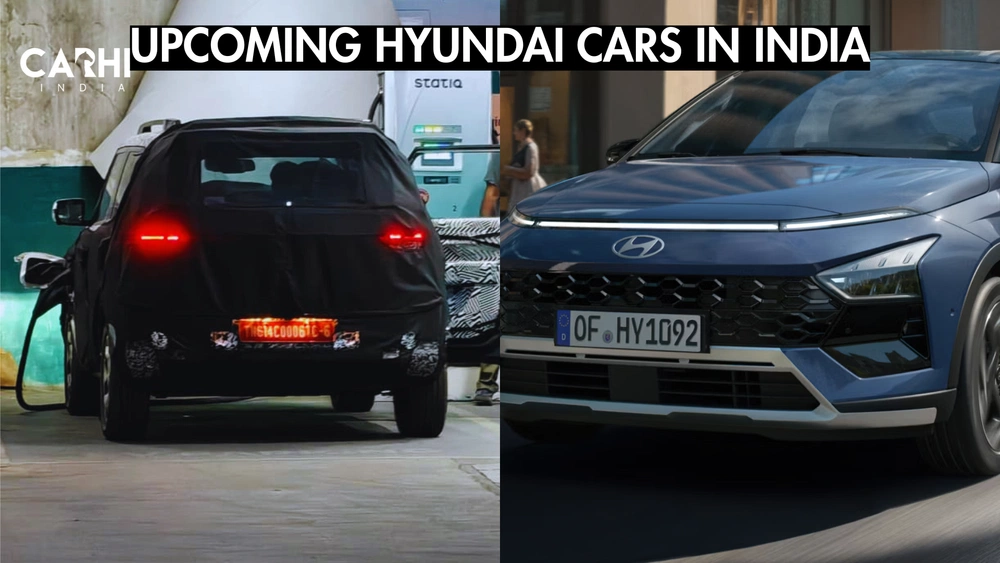
The South Korean giant is now preparing to launch a trio of cars, including a couple of refreshed models and a brand-new crossover entry. Here’s what you need to know about them
Hyundai Inster-Based EV
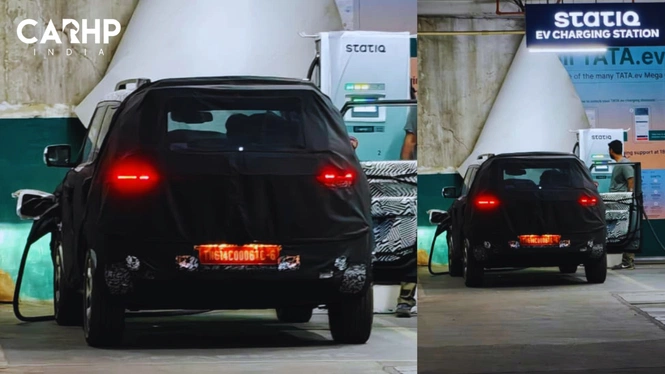
This is the most frequently spotted, or rather the only one among the upcoming trio to be seen testing on Indian roads. Carhp's team member Vatsal spotted it testing at a Statiq EV charging station, likely undergoing charging tests and evaluations.
Now, the Inster is not Hyundai’s next-gen EV platform or anything like that. It is already a proper production EV on sale in the UK, where it costs around Rs 27 lakh and packs plenty of premium hardware like V2L charging, modular seats, privacy glass, a full ADAS suite and a massive 49 kWh battery pack.
Check Out These Upcoming Hybrid Cars In India
Yes, that pricing simply will not work in India, not even close. You can get a Mahindra BE 6 for that amount here.
What Hyundai is expected to do instead is heavily localise the expensive components, remove some of the fancy equipment, fit a smaller 30-35 kWh battery pack and price it aggressively against its India-specific rival, the Tata Punch EV.
The latter remains one of the best-selling EVs in its segment and is currently enjoying an almost competition-free sub-Rs 10 lakh EV space.
From what we can estimate from the spy shots, the upcoming Inster based EV will likely have a boxy design similar to the Syros, along with Hyundai’s latest UI infotainment system.
Since it is an EV, expect a digital instrument cluster with at least two battery pack options, with around 300 km of claimed range at a starting price of roughly Rs 11 lakh, slightly above the Rs 9.6 lakh starting price of the Punch EV. Hyundai commands a premium after all
Also almost guaranteed is some sort of BaaS scheme, potentially bringing the effective entry price down to the Rs 7-8 lakh range or even lower. The upcoming Insert-based EV will likely be launched within the next three months or so, if not then definitely around the Diwali season.
Creta Refresh
This is a big one. I have always found it hard to wrap my head around the fact that the Creta has consistently featured in the top 10 best-selling cars list for over two years now, despite costing nearly twice as much as most cars on that list.
Its fanbase is incredibly loyal and, for the most part, almost blind to alternatives.
That was true until December last year, when Tata Motors and its marketing team, to be fair, did a commendable job hyping up the Sierra to the point where it reportedly accumulated over 1 lakh bookings.
That, combined with the onslaught of SUV launches and refreshes in recent months, seems to have diluted the “I want a Creta or nothing” attitude slightly. Buyers now want the latest products, not just the greatest.
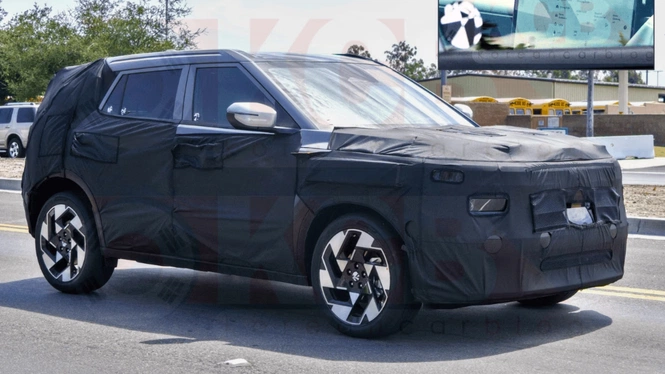
This appears to have pushed Hyundai to fast-track work on the Creta refresh, which has so far been spotted testing in Sorth Korea a couple of times under very thick camouflage.
So what can you expect from the upcoming Creta? Let’s start with the latest rumour first. The SUV may debut Hyundai’s new Pleos infotainment system. While western markets are expected to get it first, there is still a solid chance that top variants of the upcoming Creta could receive the setup.
Hyundai is expected to retain the current petrol and diesel engine lineup largely as it is, while possibly introducing an updated EV version with improved batteries and motors.
The refreshed model will also likely need to secure a 5-star safety rating, something I have been fairly vocal about in the past. To achieve that, Hyundai could move the Creta onto the Seltos’ updated K3 platform, which features a much more rigid and stiffer structure.
A hybrid powertrain is also reportedly under development, although details remain limited for now. It is expected to arrive sometime in mid to late 2027 to take on rivals like the Grand Vitara and Renault-Nissan’s upcoming hybrid SUVs in the Rs 20 lakh segment.
Expect the facelifted Creta to launch by the end of this year for sure, possibly even earlier, but not later unless Hyundai faces an unexpected hiccup during the development process.
Hyundai Bayon Based Crossover
This particular segment has never really been a major hit among the average Indian car buyer. The Tata Curvv, Citroen Basalt, Fronx and copy-cat Taisor are some of the biggest examples of this trend.
Let’s leave the Fronx aside for a moment, because it mainly sells due to the Maruti badge and pricing that very few rivals can realistically match. The rest of the lineup has seen only limited success here and there. Tata even refreshed the Curvv lineup recently in an attempt to reignite interest in the crossover market before potentially axing the whole thing, en masse!
Why do crossovers struggle in India? Mostly because buyers still prefer proper SUVs. Crossovers tend to look a bit awkward to many customers, and most of the current options do not offer enough in terms of engines and outright value for money deal, unlike something like the Fronx.
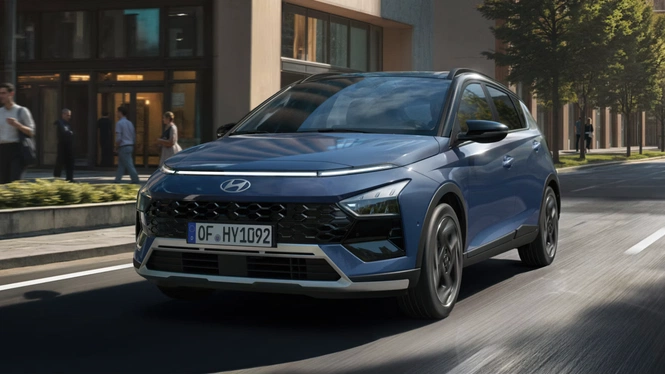
Autocar recently reported that the Hyundai Bayon, which is already a well-known product overseas, could arrive in India next year in the mid-size segment. That points towards two things. First, it will likely be priced above Rs 10 lakh.
Second, Hyundai may be trying to create a more premium crossover segment of its own. That is a difficult task, but this is also the same company that turned the Creta into one of India’s best-selling mid-size SUVs, so they probably know what they are doing.
As for the details, it is still quite difficult to predict things accurately at this stage. Design-wise, the Bayon looks like a strange mix of the Verna and i20 at the front, with some Volvo-inspired styling at the rear. Hyundai’s premium design language has always been an acquired taste in my opinion, and this upcoming crossover will likely be no exception.
It could share the same engine options as the Creta to keep costs in check. The UK-spec model costs around Rs 27-30 lakh, so do not expect fancy Level 2 ADAS features or other expensive hardware, especially on lower variants. This will debut after Creta so a mid 2027 timeline can be expected
Table of Contents
- Hyundai Inster-Based EV
- Creta Refresh
- Hyundai Bayon Based Crossover
Join the Conversation
Trending
How 2027 Traffic Rule Changes Will Affect Drivers in India
India’s traffic rules are tightening, with repeat offenders facing possible driving licence disqualification and stricter deadlines for paying or disputing e-challans. New vehicle safety requirements will also affect specified commercial vehicles from 2027. Check the latest 2027 Indian traffic rules here.
Anmol Kumar
October 22, 2026
Check Out These Upcoming Hybrid Cars In India
Hybrid cars are gaining serious interest in India as more affordable options start appearing and real-world city mileage figures impress owners.
Salil Kumar
October 22, 2026
What Is CBG? Know About Its Production, Engine Performance, Prices and Future in India
Compressed biogas (CBG) is gaining attention in India as a renewable alternative to CNG. Here's how it is produced, its impact on engine performance and mileage, current pricing factors, and its future in India's automotive sector.
Salil Kumar
October 21, 2026
Hyundai Bayon Safety Features Revealed Ahead of October 26 Launch
Hyundai has revealed the safety package of the upcoming Bayon ahead of its October 26 launch in India. The compact SUV gets Level 2 Pro ADAS with 23 functions, six airbags as standard and a body structure made using 69% advanced multi-grade high-strength steel.
Anmol Kumar
October 21, 2026
Featured
Citroen C3 Review: Who Should Consider This Car?
A few days ago, I took the Citroen C3X out for a spin in the city and on the highways. I travelled long distances and checked its fuel efficiency, features, comfort, and other factors. Today, I’ll briefly share my overall experience with the C3X and will tell you whether you should consider it or not and which is the most value-for-money variant of the lot.
Vatsal Agrawal
May 19, 2026
Tesla Finally In India Officially. Why Now And What Does It Mean For EVs?
The much-anticipated 2025 Tesla Model Y has officially arrived in India, marking a pivotal moment for the nation's burgeoning electric vehicle market. Launched on July 15, 2025, the Model Y Juniper facelift offers cutting-edge technology, impressive range, and signature Tesla performance. Positioned as a premium electric SUV, its entry will intensify competition and reshape consumer expectations for EVs across the subcontinent.
Author
July 17, 2025
Here Are 10 Things The Harrier.EV Offers That The Mahindra XEV 9E Doesn't
The Harrier.EV is an incredible new offer from Tata. Its most popular competitor would be the Mahindra XEV 9E, priced similarly. With these two incredible offerings from home grown brands available, here is a list of everything the Harrier.EV offers that the XEV 9E doesn't.
Author
June 13, 2025
Write a comment
Comments
No comments yet. Be the first to comment!