Tata Safari vs Toyota Innova Hycross - Which One Should You Buy
Tata Safari vs Toyota Innova Hycross Comparison at CarHP India. Compare Tata Safari and Toyota Innova Hycross Prices, Mileage, Features, Specs, Colours and much more.
Tata Safari is available in 53 variants, while Toyota Innova Hycross comes in 12 variants. The Safari starts at ₹13.29 Lakh and goes up to ₹27.25 Lakh, whereas the Innova Hycross is priced higher, starting from ₹18.48 Lakh and reaching ₹32.58 Lakh. Under the hood, the Safari features a 1956cc diesel engine producing 167.62bhp and 350Nm of torque, paired with a 6-speed automatic transmission. The Hycross uses a 1987cc petrol-hybrid engine with 183.72bhp and 188Nm of torque, and its e-Drive system is very smooth for urban roads. In terms of fuel efficiency, the Safari gives a mileage of 14.1 kmpl, while the Hycross delivers a much better 23.2 kmpl. The Safari offers 6 or 7 seats and a 420-litre boot, along with an interior that includes a digital cluster, a leather-wrapped steering wheel, and a Harman AudioworX system with JBL modes. It supports wireless Android Auto and Apple CarPlay along with 250 native voice commands. The Hycross provides 7 or 8 seats and uses a JBL premium audio system with a convenient flick-and-drag touch function. Both cars have LED headlamps, DRLs, and automatic climate control. Safety is a major highlight for the Safari, which has 7 airbags and a 5-star safety rating, while the Hycross comes with 6 airbags and lane keep assist. Both vehicles provide cruise control and rear AC vents for a comfortable journey. For daily driving in busy cities, the Hycross is the more practical choice because the hybrid motor is very quiet in bumper-to-bumper traffic. This saves money on fuel every month, while the Safari is better for those who want a tough SUV feel and a lower starting price. If safety and a premium sound experience are top priorities, the Safari is hard to beat, but for a stress-free family commute and long-term reliability, the Toyota Innova Hycross is the clear recommendation. Please book a test drive through this platform before making a final decision to get exclusive benefits, special discounts, and the best available offers.
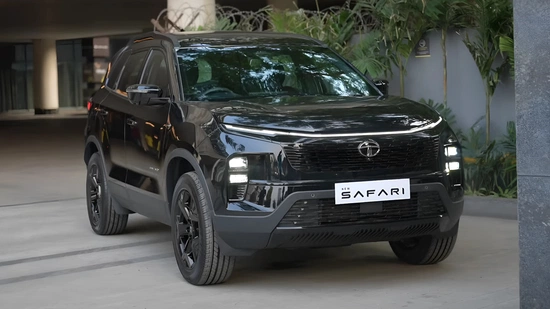
₹ 13.40 Lakh
₹ 18.70 Lakh


Compare Minimum 2 Cars At Once — Tap To Activate / Deactivate
Smart Summary for Car Selection
 Why Choose Tata Safari?
Why choose
- The 2.0-litre diesel makes 170hp and 350Nm, and the Innova Hycross has no diesel at any price, so buyers who want that pulling power have one choice between these two
- Six-seat and seven-seat layouts are both offered, with captain chairs on higher trims that make third-row access far easier than climbing over a folded bench
- It holds a five-star Bharat NCAP rating, scoring 30.08 out of 32 for adults and 44.54 out of 49 for children
- Disc brakes are fitted at all four wheels, which counts when you are slowing a loaded seven-seater repeatedly on a descent
- Boot space runs to around 420 litres with the third row folded and expands to roughly 1,550 litres with both rear rows down
- A 360-degree camera, an electronic parking brake and driver assistance features are all offered on higher versions
- Second-row seat ventilation is available on the six-seat versions, which is rare in this class
Why not choose
- Every version is front-wheel drive, so despite the SUV proportions there is no four-wheel drive anywhere in the range and rough tracks are outside its scope
- Claimed economy runs 14.1 to 16.3kmpl, and in city traffic the Innova Hycross hybrid will cost meaningfully less to fuel every month
- No hybrid exists in the range, so there is no route to the Toyota's city running costs
- The rear suspension is a torsion beam rather than an independent setup, which limits how well it settles a loaded third row over bad roads
- Tata's service costs sit above Toyota's, and resale values do too
Why Choose Toyota Innova Hycross?Why choose
- The strong hybrid handles up to 60 percent of urban driving without the petrol engine running, so in the traffic where a diesel is least efficient this car is switched off
- Real-world economy runs around 20 to 23kmpl, which no Safari engine approaches, and the saving compounds every month for high-mileage owners
- Eight-seat and seven-seat layouts are both offered, and the Safari tops out at seven
- The third row reclines, has three-point belts and enough headroom for average-height adults, which most three-row rivals cannot claim
- Six airbags, ABS with EBD, stability control, hill start assist and ISOFIX anchors are standard on every version
- A powered tailgate and extending rear leg support are fitted on the hybrid
- Toyota's hybrid system is used across its Indian range, so parts supply and workshop familiarity already exist rather than being promised
Why not choose
- Every version is front-wheel drive, matching the Safari's constraint exactly, so neither car here will handle a rough approach
- The naturally aspirated petrol version returns around 9.7kmpl in testing, so choosing it to avoid the hybrid premium means paying that money back at the pump instead
- No manual gearbox is offered anywhere, with a CVT on the petrol and an e-CVT on the hybrid
- The e-CVT feels strained under hard acceleration even though it is smooth driven gently
- Boot space with all three rows upright is modest, so a full eight-seat load leaves little room for luggage
 Our Recommendation For Most Buyers
Safari
The Safari makes sense if your driving is highway-heavy or you specifically want a diesel, because 350Nm from the 2.0-litre is the thing that makes a loaded seven-seater feel unbothered on a long climb. The six-seat captain chair layout and second-row ventilation also give it a more premium feel than the Toyota's more utilitarian approach to three rows. The problem is city fuel cost.
At 14.1 to 16.3kmpl claimed, it cannot come close to the Innova Hycross hybrid in stop-start traffic, and for a high-mileage urban owner that gap shows up every month. There is also no four-wheel drive anywhere in the range, so the SUV stance is largely appearance rather than capability.
Innova Hycross
The Innova Hycross hybrid is the right answer for anyone doing heavy city mileage, and the reason is structural rather than marginal. Running up to 60 percent of urban driving on electric power means the engine is off during exactly the crawling traffic where the Safari's diesel is least efficient, and 20 to 23kmpl in real conditions is a running cost the Tata has no answer to.
The eight-seat option and a third row adults can use reinforce it. Avoid the naturally aspirated petrol version, because at around 9.7kmpl the money saved on the purchase goes straight back into fuel. Anyone wanting diesel pulling power for long loaded highway hauls should look at the Safari.
Engine and Performance
Performance Specifications
Fuel Specifications
Dimensions and Design
Interior Specifications
Wheels & Tires
Suspension, Brakes & Steering
Safety Features
Interior Features
Comfort & Convenience
Infotainment Features
Exterior Features
Brochure

EMI Cost Comparison
Assuming 20% down payment, 9.5% interest, 60-month tenure
 Loan Amount
 Interest: 9.5%
 Down Payment (20%)
 Loan TenureLoan AmountInterest: 9.5%Down Payment (20%)Loan Tenure
Pros & Cons Comparison
Things We Like in Tata Safari
- Excellent 5-star safety ratings and comprehensive standard safety kit.
- Second row ventilated seats on higher 6-seater variants.
Things We Like in Toyota Innova Hycross
- All variants come standard with 6 airbags and Vehicle Stability Control.
- 285 cm wheelbase provides class-leading interior space across all three rows.
Things We Don't Like in Tata Safari
- Large size and weight make it less agile in dense city traffic
- No AWD/4WD offered even as an option
Things We Don't Like in Toyota Innova Hycross
- No diesel option exists.
- Top variants are strictly 7-seater only.
Tata Safari Comparisons
Toyota Innova Hycross Comparisons

Toyota Innova Hycross
₹18.70 - 36.69 Lakh
Maruti Suzuki Invicto
₹24.97 - 28.70 Lakh
Toyota Innova Hycross
₹18.70 - 36.69 Lakh
Jeep Meridian
₹23.33 - 38.26 Lakh
Toyota Innova Hycross
₹18.70 - 36.69 Lakh
Kia Carens Clavis
₹11.39 - 21.79 Lakh
Toyota Innova Hycross
₹18.70 - 36.69 Lakh
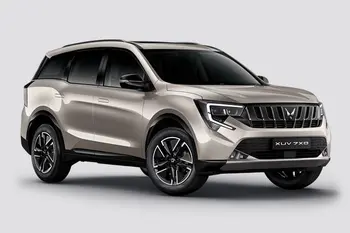
Mahindra XUV 7XO
₹13.99 - 25.79 Lakh
Toyota Innova Hycross
₹18.70 - 36.69 Lakh
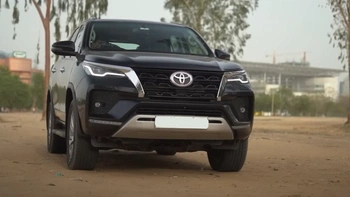
Toyota Fortuner
₹35.11 - 50.97 Lakh
Toyota Innova Hycross
₹18.70 - 36.69 Lakh
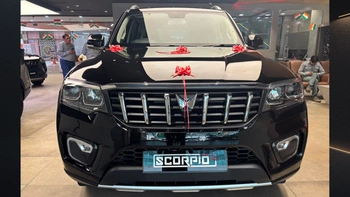
Mahindra Scorpio N
₹13.50 - 25.49 Lakh
Car News

Toyota Innova Hycross Facelift Spotted Testing With A Bigger Touchscreen Inside
The Toyota Innova Hycross facelift has been spotted testing in Karnataka with heavy camouflage. The footage reveals a bigger freestanding touchscreen inside, slimmer headlamps, and a reworked grille.
Anmol Kumar
July 20, 2026