







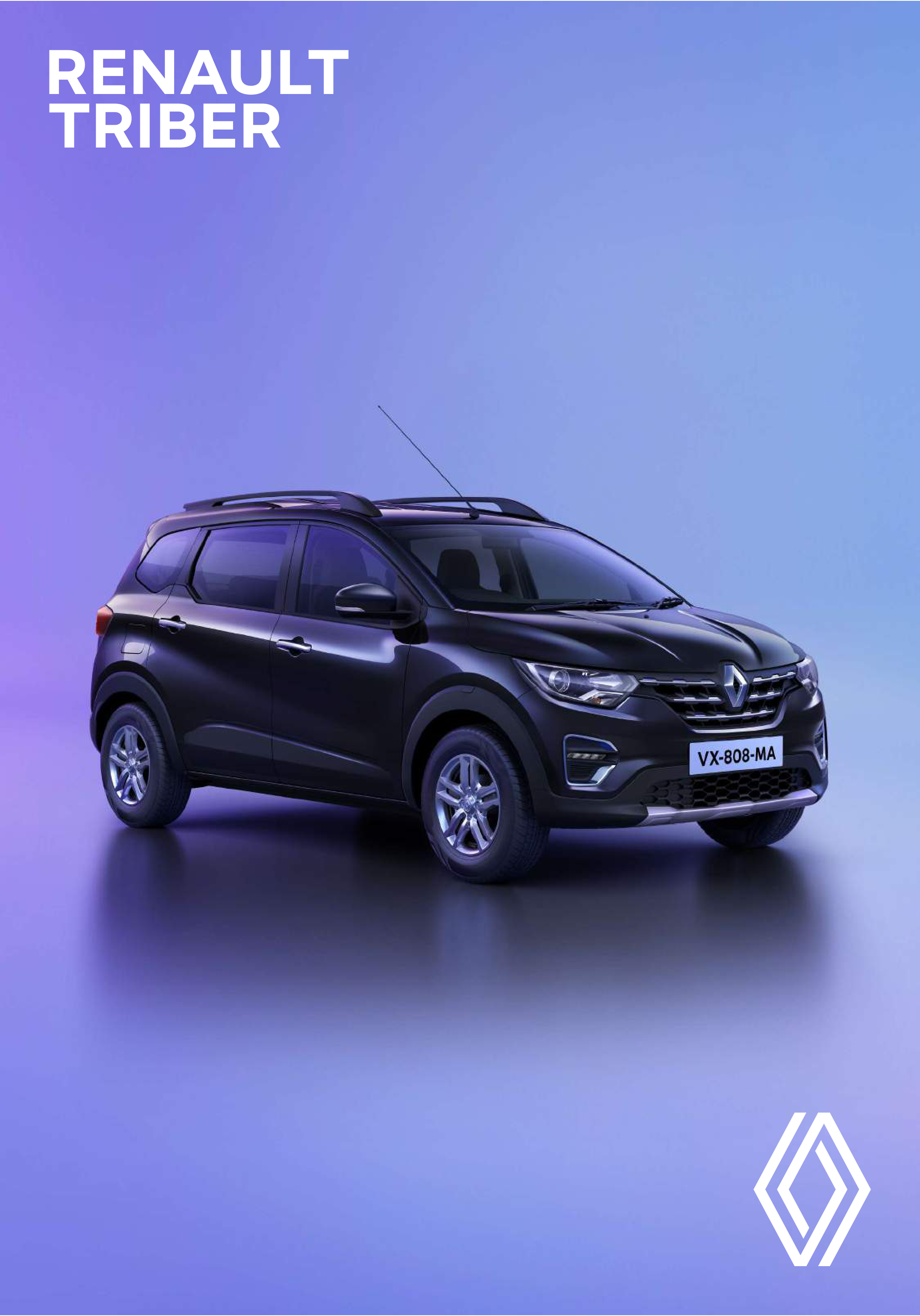
Renault Triber
Overall Rating

Renault Triber
Overall Rating
EMI Loading
Renault Triber Key Specifications
Renault Triber Highlights

8-inch touchscreen that is simple to use and supports wireless smartphone connectivity

7-inch digital driver display with a clean layout and easy navigation

Removable third-row seats to free up extra boot space when needed
Renault Triber Overview

When the Renault Triber launched in 2019, it achieved something genuinely unusual, packaging three rows of seating into a sub-4-metre body without significantly compromising on space and comfort in the last row.
The formula worked because Renault made smart decisions about wheelbase, packaging, and the modular third-row seat design, and it worked well enough that the Triber has maintained a steady following despite receiving relatively modest updates over the years.
The one consistent complaint was the engine. The 1.0-litre NA (naturally aspirated) unit produces 71 bhp and 96 Nm, which is sufficient for relaxed city driving with a light load, but falls short when all seven seats are occupied on an incline, when an overtaking manoeuvre is needed at highway speeds, or simply when the car is loaded up for a family road trip. Its 2025 facelift refreshed the exterior and added meaningful feature updates, but did not address the powertrain.
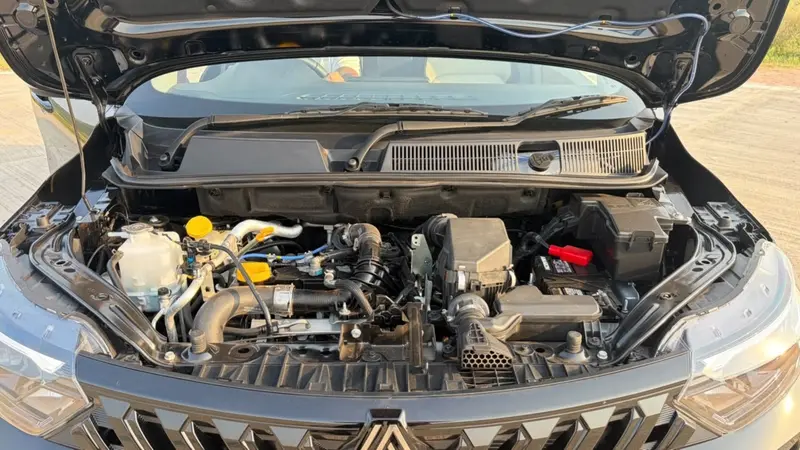
The September 2026 launch of the Triber Turbo does. The HR10 1.0-litre three-cylinder engine is the same unit found in the Kiger and Duster 1.0, but with a revised engine management system that delivers 180 Nm of torque on the Triber. This is 20 Nm more than either of those SUVs produces with the same block.
Combined with a claimed 0-100 km/h time of 10.8 seconds and the ABS, ESC, and traction control systems retuned specifically for the turbo's different power and torque delivery, this is a meaningful mechanical upgrade.
The NA petrol continues unchanged alongside the turbo, keeping the Triber accessible from a lower entry point for buyers who primarily use the car in the city. The result is a range that now spans a true budget seven-seater at one end and a genuinely capable family MPV at the other.
Engine and Performance
Engine and Performance

The 1.0-litre naturally aspirated petrol engine suits city driving well.
| Specification | 1.0L NA Petrol | 1.0L HR10 Turbo Petrol |
|---|---|---|
| Engine | 1.0L B4D three-cylinder NA | 1.0L HR10 three-cylinder turbo |
| Displacement | 999 cc | 999 cc |
| Power | 71 bhp at 6250 rpm | 99 bhp at 5000 rpm |
| Torque | 96 Nm at 3500 rpm | 180 Nm at 2000-3500 rpm |
| Transmission | 5-speed MT / 5-speed AMT | 5-speed MT |
Producing 71 bhp and 96 Nm, it handles stop-and-go traffic, moderate slopes, and short highway stretches with a light passenger load without complaint. The engine is smooth at low to moderate revs and is paired to 5-speed manual and 5-speed AMT options. Both transmissions are well-calibrated for relaxed urban use.
With four or more adults on board and luggage in tow, however, the engine's limitations on inclines and during highway overtaking become apparent. Owners consistently note that this is where the NA powertrain asks more of the driver than it should.
This engine can also be had with a dealership-level retrofit CNG setup.
The HR10 1.0-litre turbo changes the Triber's character in a meaningful way. Its 180 Nm of torque, notably 20 Nm more than the same engine produces in the Kiger and Duster thanks to Renault's revised engine management calibration for the Triber, arrives from just 2000 rpm and provides a broad, easily accessible power band. This high torque availability across the rev range is what matters in an MPV that regularly carries multiple adults and luggage.
The 99 bhp peak power is not headline-grabbing, but is a significant step up from the NA and should make a noticeable difference on highways at higher revs. A claimed 0-100 km/h time of 10.8 seconds is credible for the segment and the vehicle type.
As of its launch, the Triber turbo is only available with a 5-speed manual transmission option. However, a CVT is under development. Additionally, the MPV is also set to get a practical, factory-fitted underbody CNG setup, owing to its updated RGEP platform.
Ride and Handling
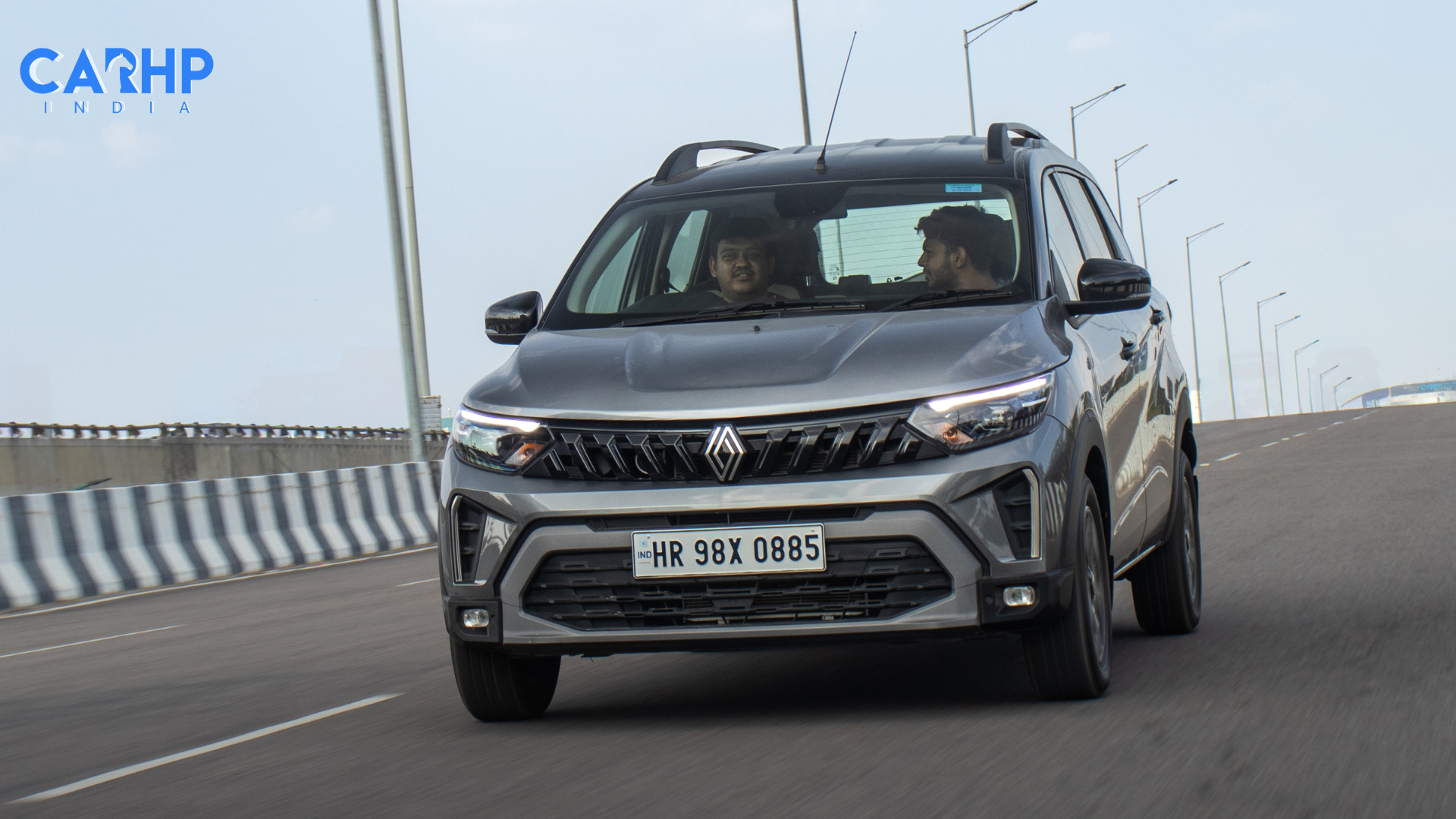
Ride quality is one of the Triber's most praised attributes regardless of powertrain.
The long 2636 mm wheelbase for a sub-4-metre car contributes to a settled, comfortable ride, and the suspension tuning absorbs typical Indian road imperfections like potholes, speed breakers, and broken surfaces with a composure that owners of the car consistently highlight.
To handle the additional performance, the Triber turbo gets revised suspension tuning, front and rear anti-roll bars, a new thermal management system and structural enhancements.
The ABS, ESC, and traction control calibrations have been retuned, and braking performance has also been improved.
The steering remains light, making city manoeuvring easy, and the turning radius is compact enough for tight urban U-turns despite the long wheelbase.
fuel economy
fuel economy
The Triber NA petrol returns a published ARAI figure of approximately 20 km/l in manual form, with real-world owner-reported city returns of 14 to 17 km/l depending on load and traffic conditions.
ARAI claims a higher 21 km/l for the turbo variant. However, expect real world figures to be lower than the NA petrol's, especially in city and mixed driving conditions. Highway driving figures could surpass the NA petrol.
The 40-litre fuel tank provides a reasonable range buffer.
For the CNG, ARAI claims 20 km/kg. Real world figure range from 16-18 km/kg in heavy city traffic and up to 22 km/kg with steady highway cruising. It gets a 60-litre water capacity cylinder.
interior
interior
 The Triber's cabin is, by design, an exercise in intelligent packaging.
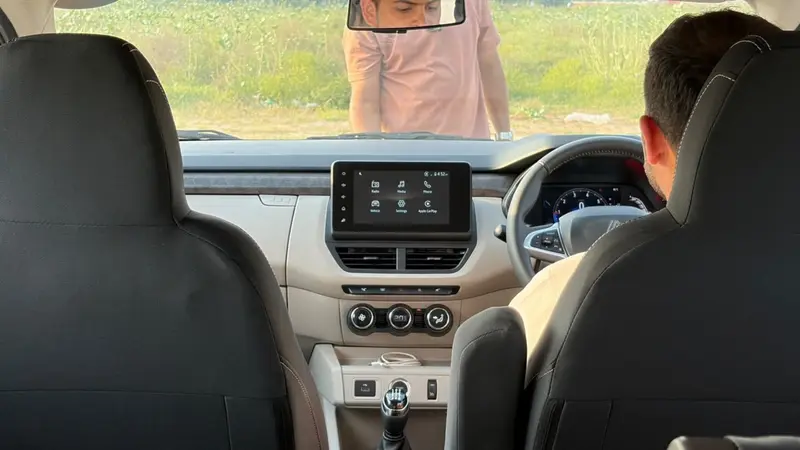
Its 2025 facelift brought meaningful cabin updates. The 8-inch touchscreen with wireless Android Auto and Apple CarPlay is a significant step up from the older wired unit, and it handles smartphone connectivity reliably.
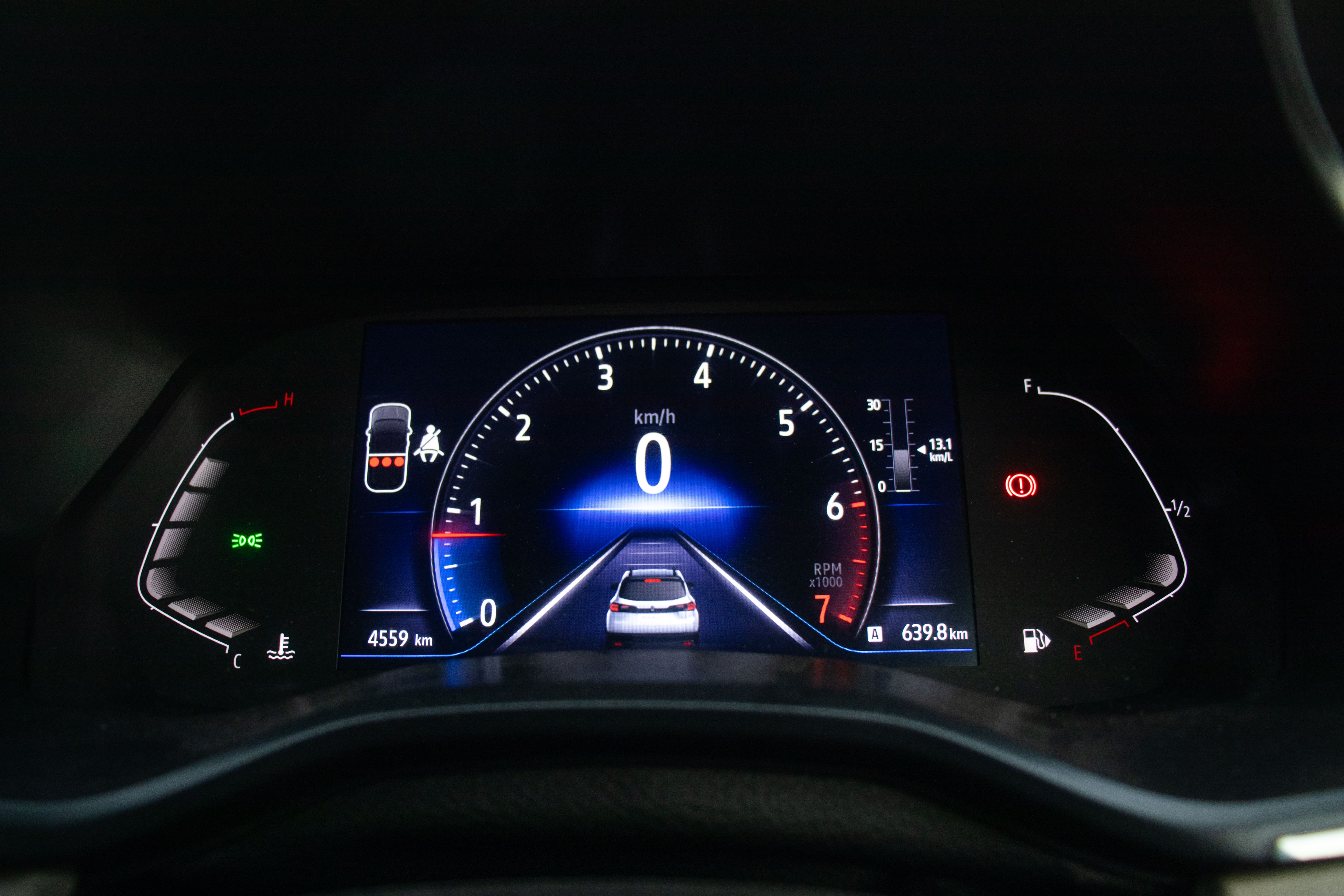
The 7-inch fully digital instrument cluster replaces the previous analogue-digital combination and provides clear, configurable readouts. The flat-bottom steering wheel with mounted audio and call controls adds a more premium feel.
The cabin gets a dual tone, black and white theme, providing a decent contrast and an airy feeling due to the majorly white elements.
Cabin material quality is the Triber's most consistent limitation across all variants.
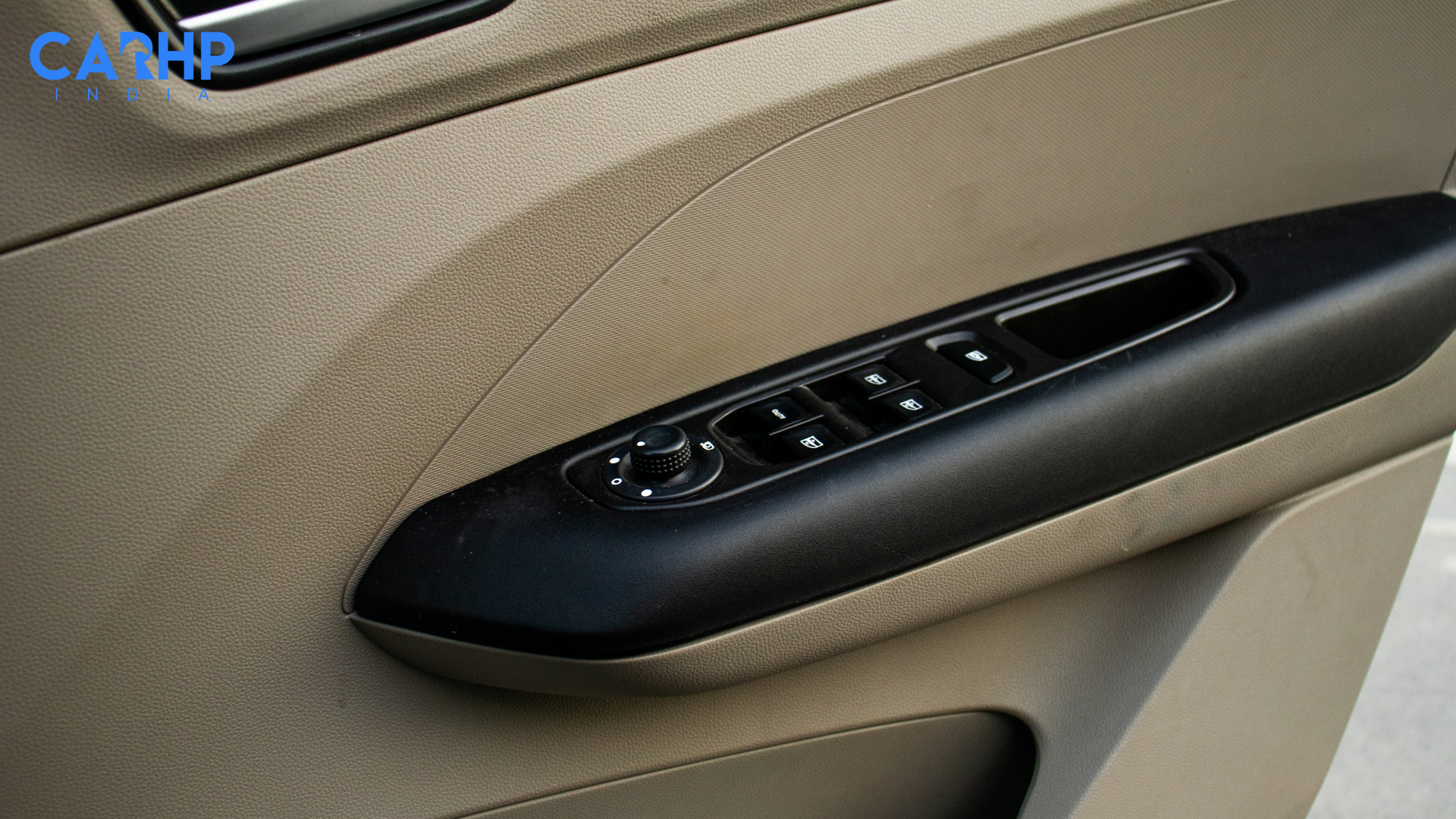
The plastics throughout the dashboard, door panels, and lower cabin are hard, plain, and do not suggest a premium product. The light grey interior colour scheme from the facelift helps the cabin feel less enclosed, but the surface quality remains basic relative to what even modest pricing in adjacent categories now offers.
This is an acceptable trade-off at the Authentic and Evolution trim levels where the Triber's value proposition is most straightforward, but it is more noticeable in the higher Techno and Emotion, where the cabin quality does not match the higher feature content and specification level.
The 2636 mm wheelbase, stretched as far as the sub-4-metre body allows, gives the first and second rows genuinely good space.
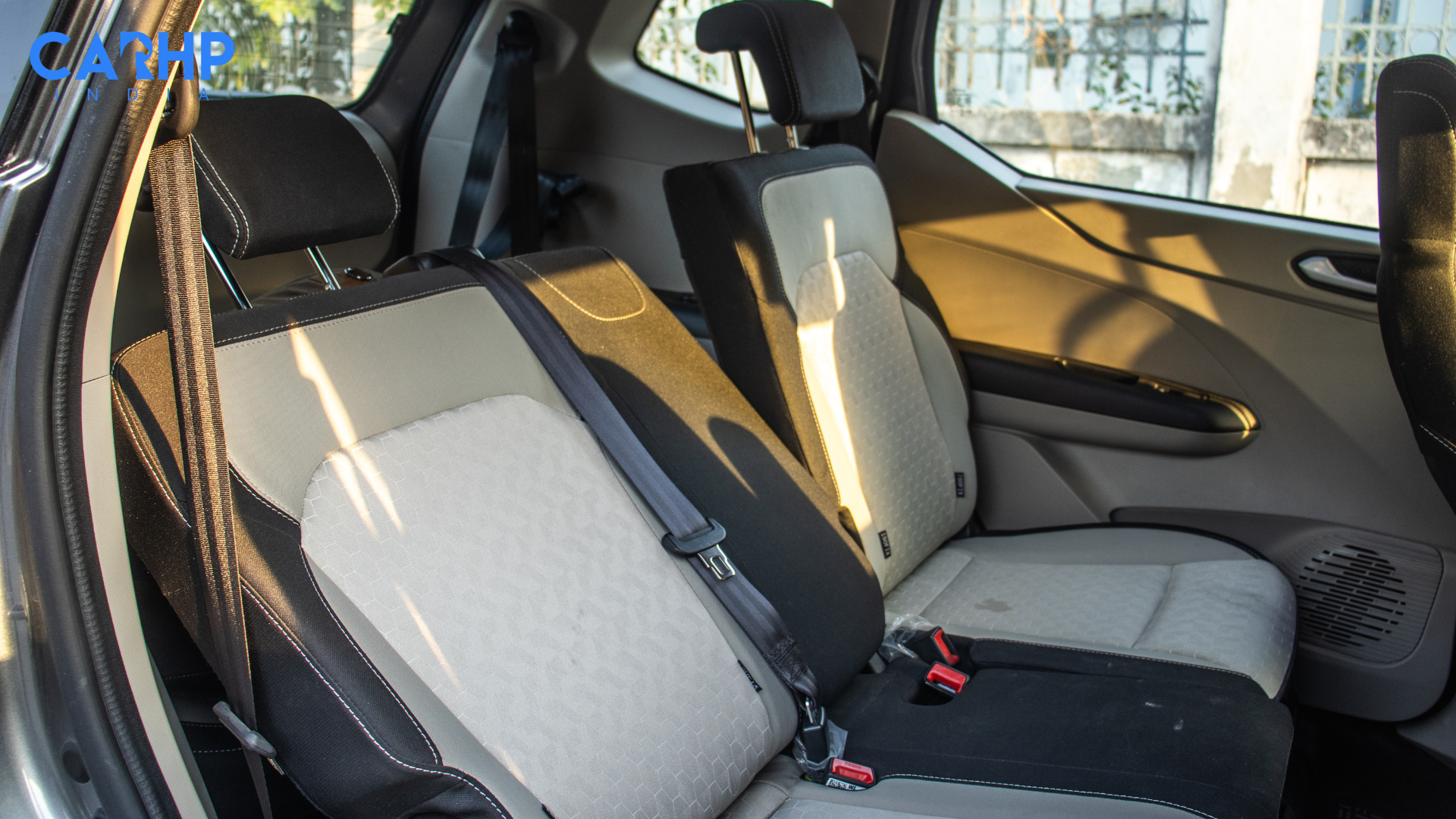
Second-row legroom is one of the better figures in its class, and the three-abreast bench accommodates adults without shoulder-to-shoulder compression that budget MPVs can sometimes produce.
Headroom is adequate across all three rows even for taller passengers.
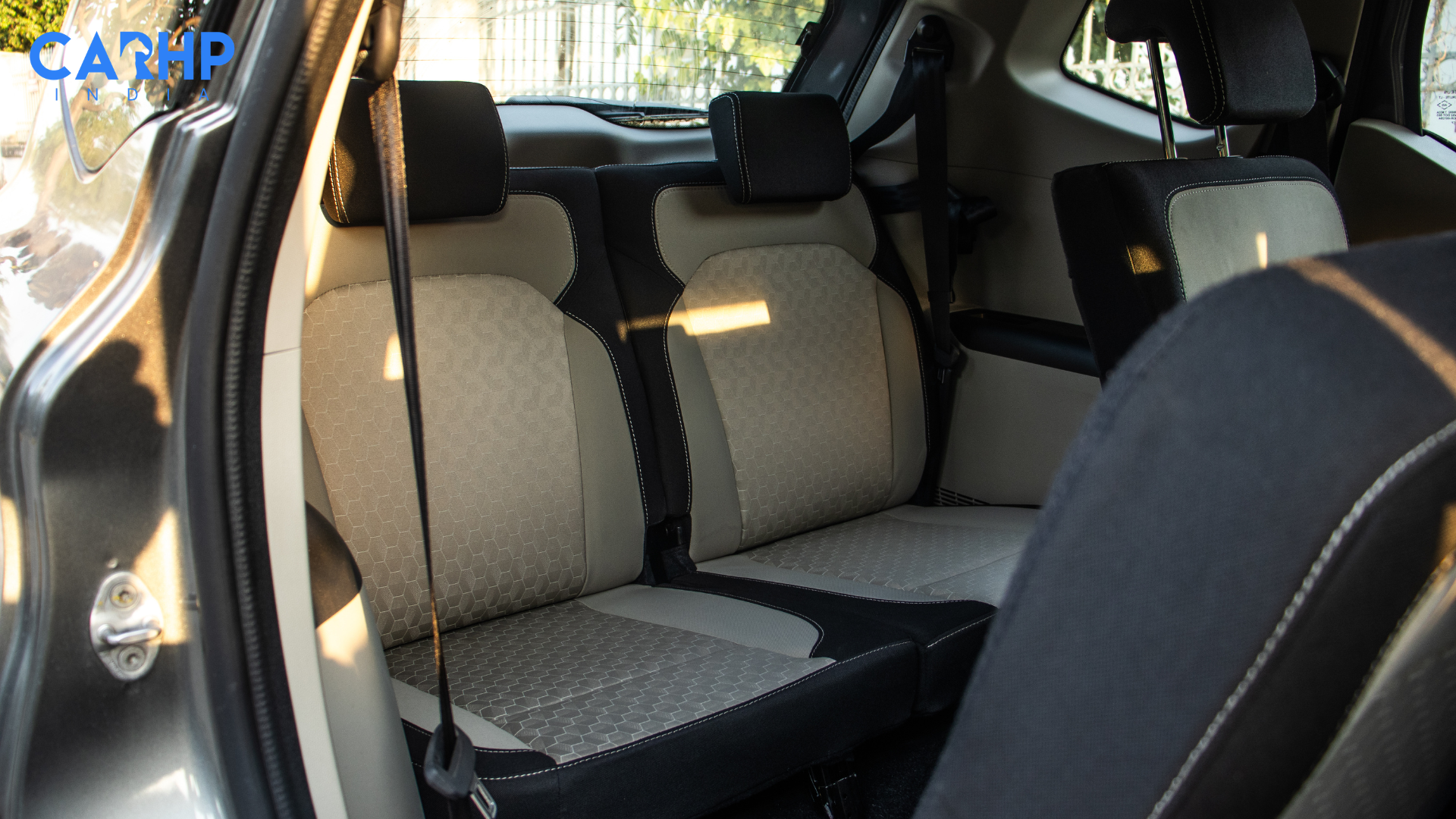
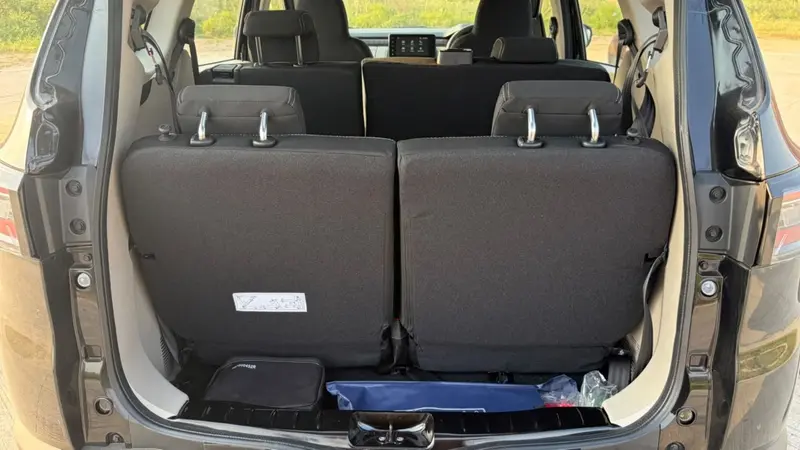
The third row folds away and tumbles flat in a modular arrangement that Renault calls EasyFlex.
Each third-row seat can be removed entirely, flipped up against the second row, or used in the conventional seating position. Boot space with the third row up is 84 litres, barely enough for a couple of small bags. Folding the third row down or removing it opens up a practical 625 litres.

This leaves buyers to choose between travelling with all seven seats occupied or usable cargo space.
Overall, if you keep your expectations in check considering its segment and price, the Triber's cabin does not disappoint.
exterior
exterior

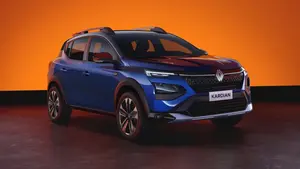
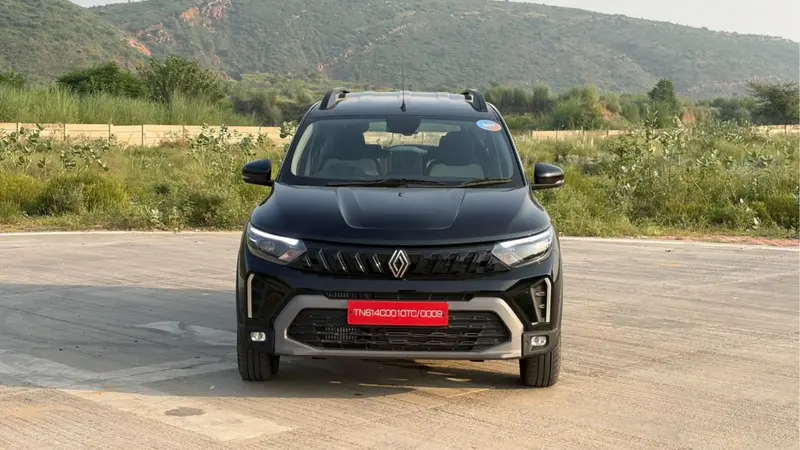
The Triber's crossover-like exterior design makes it look bigger and more planted than its actual dimensions on paper justify. Its 2025 facelift brought the visual identity in line with Renault's updated design language across its India lineup.
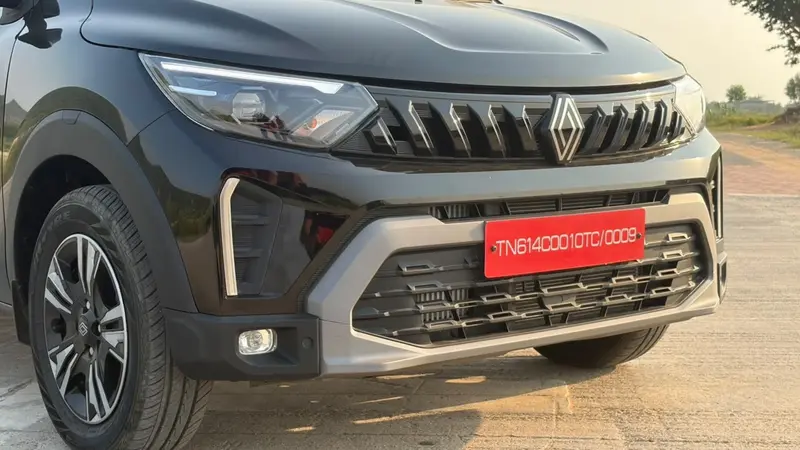
The front carries a gloss-black grille with Renault's new diamond logo, LED projector headlamps with LED DRLs, pixel-style LED fog lamps in the lower bumper, and a large air dam with a silver surround.
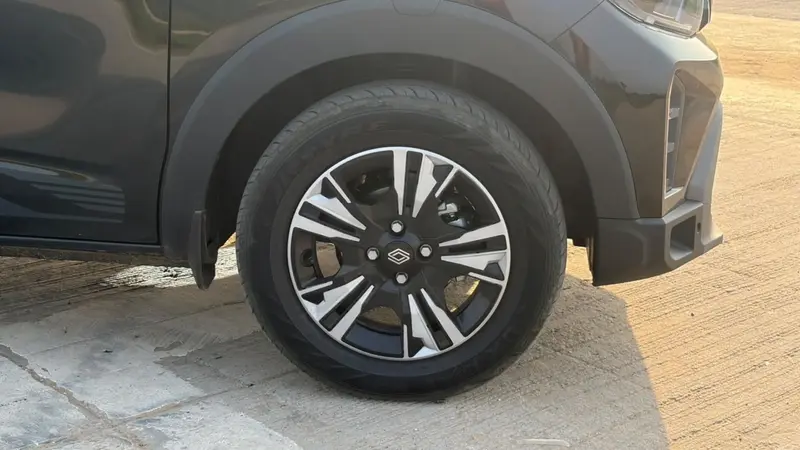
The side gains slim wheel arch cladding, gloss-black door handles, black-finished ORVMs, and functional roof rails across all variants.

At the rear, clear-lens LED tail lamps are connected by a gloss-black trim bar.
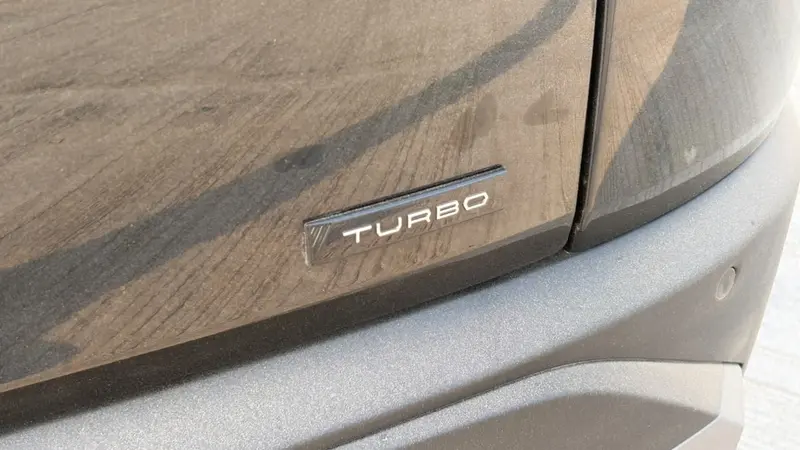
The Triber Turbo variants are visually identical to the NA petrol versions, with the sole distinguishing element being a 'TURBO' badge on the tailgate.
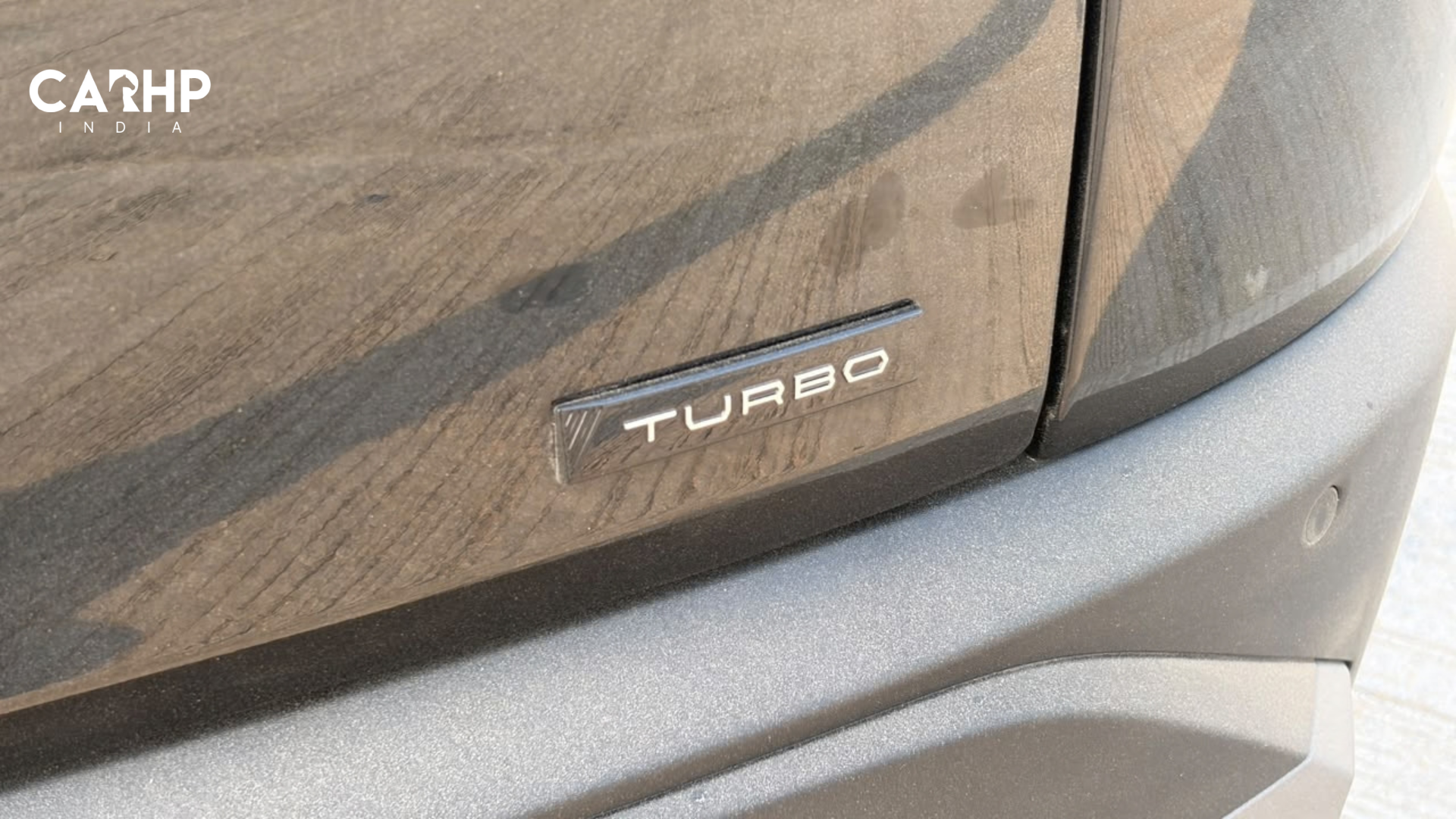
There are no unique alloy wheels, body colour choices, or exterior styling elements that separate the two powertrains. Dual-tone paint options are available for the Emotion trim at an additional cost.
The Triber's 182 mm ground clearance, which sits well above most sedans and conventional hatchbacks at this price, handles speed breakers, light off-camber surfaces, and poorly maintained roads with confidence. Its narrow 1734 mm width is a genuine asset in dense city traffic and narrow lanes.
Overall, it is one of the most classic looking cars available with well defined proportions and is devoid of eye burning light bars and big chrome grilles.
safety
safety
The Triber's 2025 facelift standardised six airbags, combined with ABS with EBD, ESP, hill start assist, ISOFIX mounts, and TPMS across all variants, giving the MPV a solid safety baseline for an entry-level seven-seater.
As previously mentioned in the Ride and Handling section, the ABS, ESC, and traction control systems have been specifically retuned for the turbo variants, acknowledging that the significantly higher torque output of the HR10 engine requires different chassis management thresholds than the NA unit to maintain stability under hard acceleration.
The 4-star Global NCAP adult occupant rating, along with the 3-star child occupant rating, gives the Triber an independently verified crash safety credential that its segment positioning warrants.
Though, it is worth noting that these ratings were achieved during GNCAP's previous testing protocols, in 2021, and the current model with six airbags has not been re-tested.
competition
competition
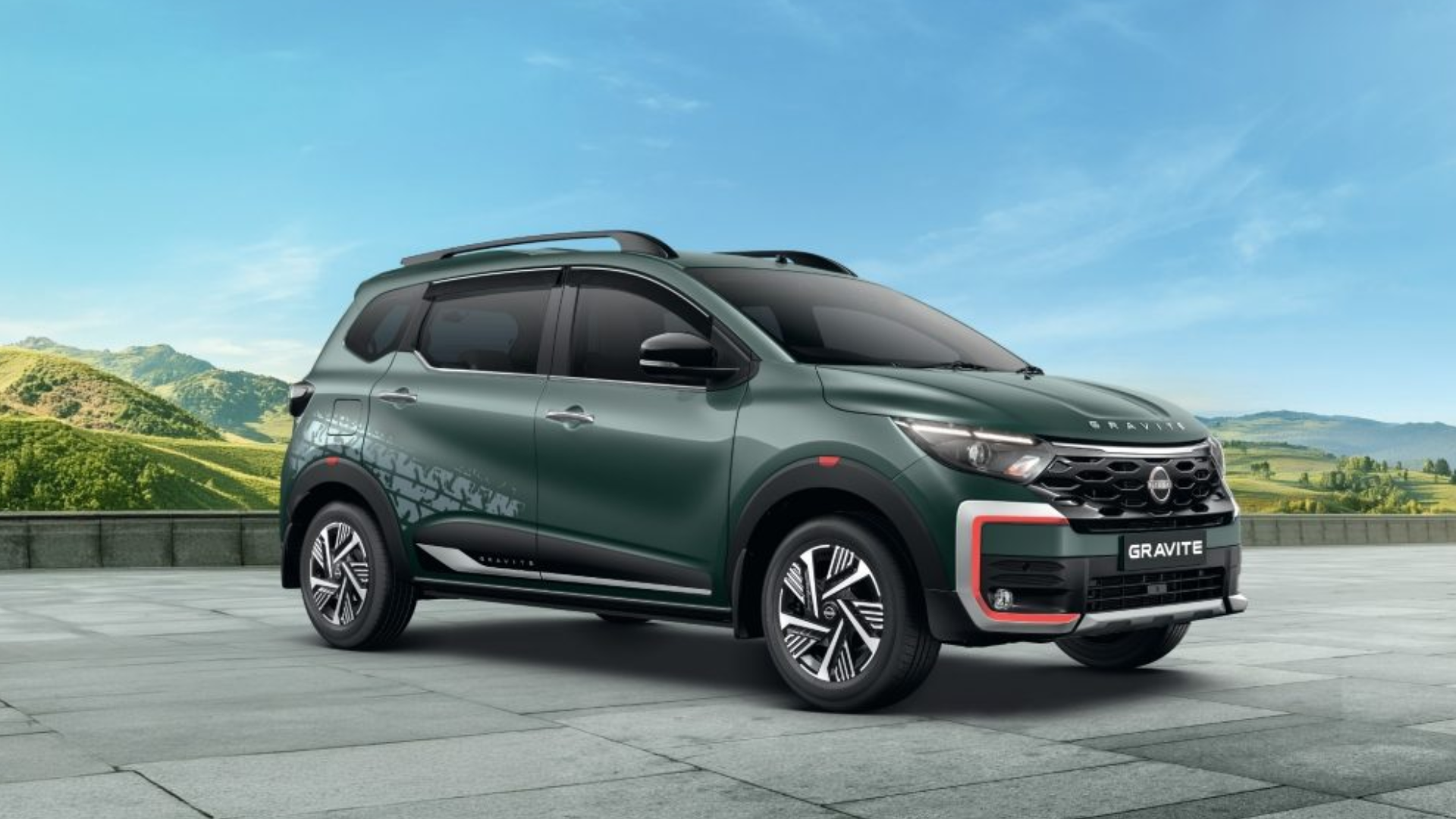
The Nissan Gravite is the Triber's badge-engineered sibling, sharing its platform and overall architecture under a different badge, and sold through Nissan's dealerships. It is mechanically the same vehicle with minor trim and feature differences. Buyers who prefer Nissan's service ecosystem or have a convenient Nissan dealership should include the Gravite in their comparison.
Though, the Triber's wider dealership network gives Renault a practical coverage advantage. Additionally, the Gravite does not offer a turbo petrol engine option yet.
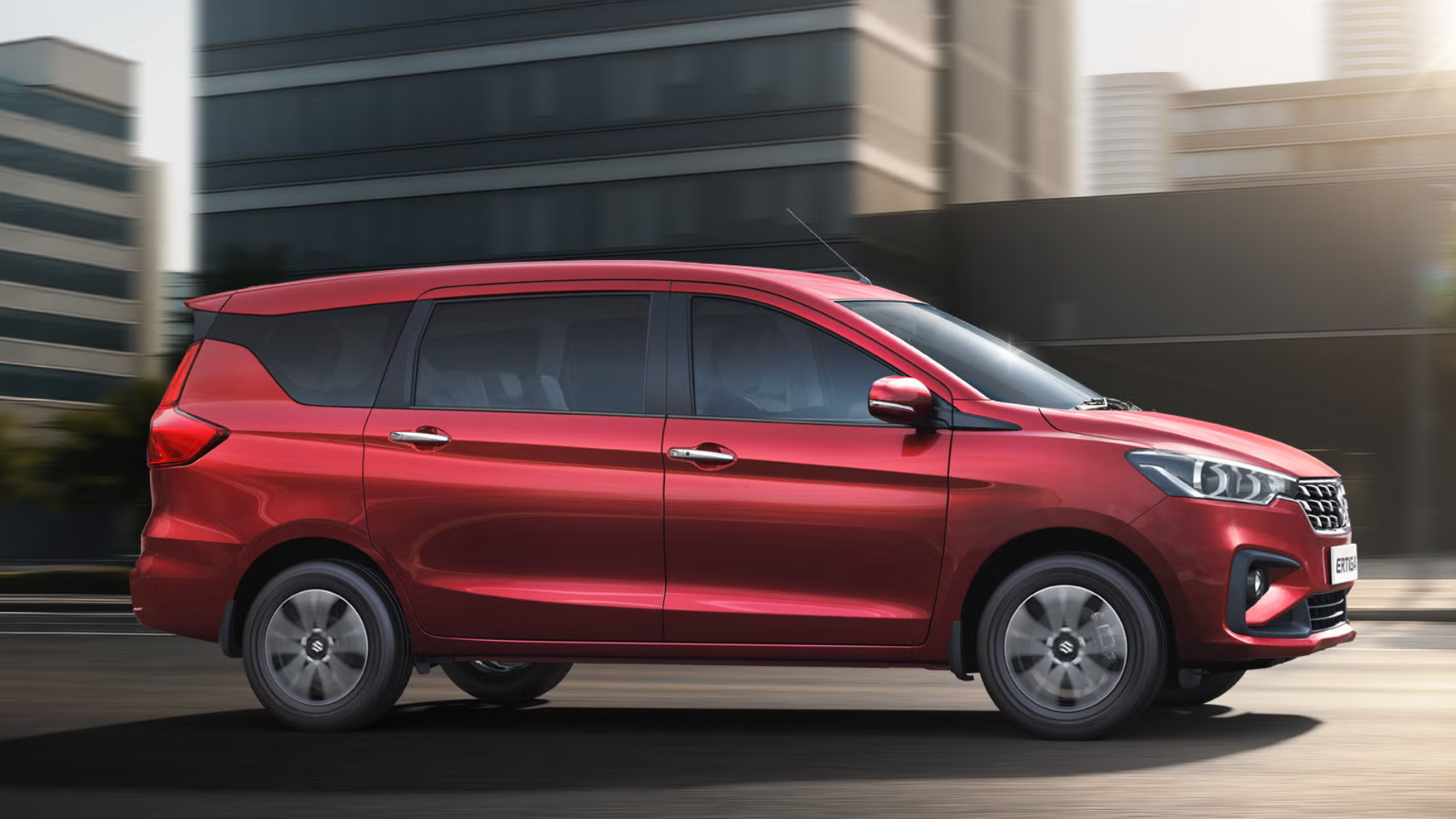
The Maruti Suzuki Ertiga is the segment's volume leader. It is a longer, more conventionally proportioned MPV, offering a refined 1.5-litre mild-hybrid petrol, factory-fitted CNG option, and Maruti's unmatched service network and resale value track record.
The Triber counters with a lower starting price, a smaller footprint that suits city driving, and now the turbo engine as a performance option the Ertiga does not offer. For buyers who prioritise highway performance or need a genuinely compact MPV for city use, the Triber Turbo now makes a stronger case than it ever has against the Ertiga's more relaxed naturally aspirated character.
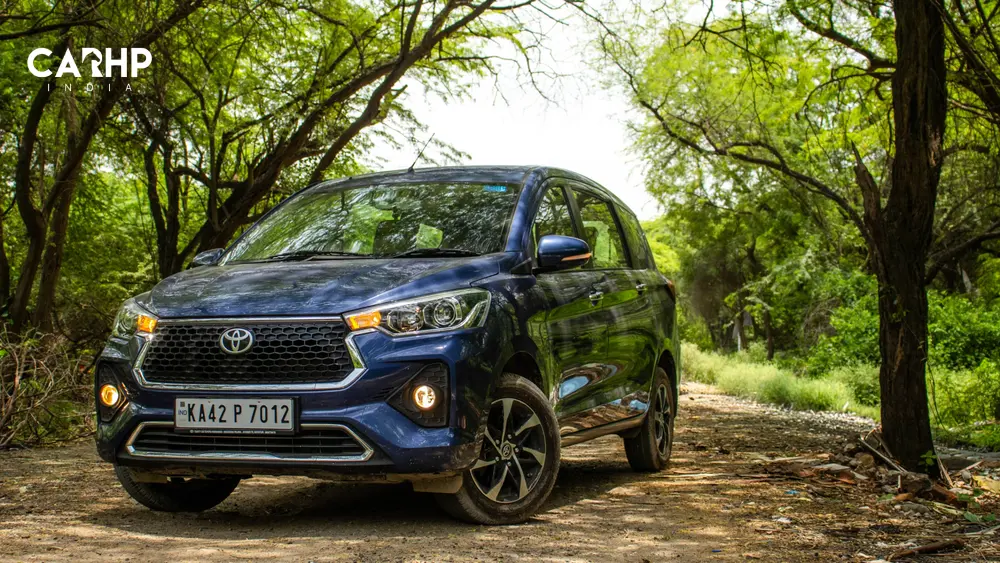
Toyota's Rumion is a rebadged Maruti Ertiga with Toyota badging and the assurance of Toyota's service standards, priced slightly above the Ertiga. For buyers in markets where Toyota's network is strong, the Rumion offers the same product with a different ownership ecosystem.
final verdict
final verdict
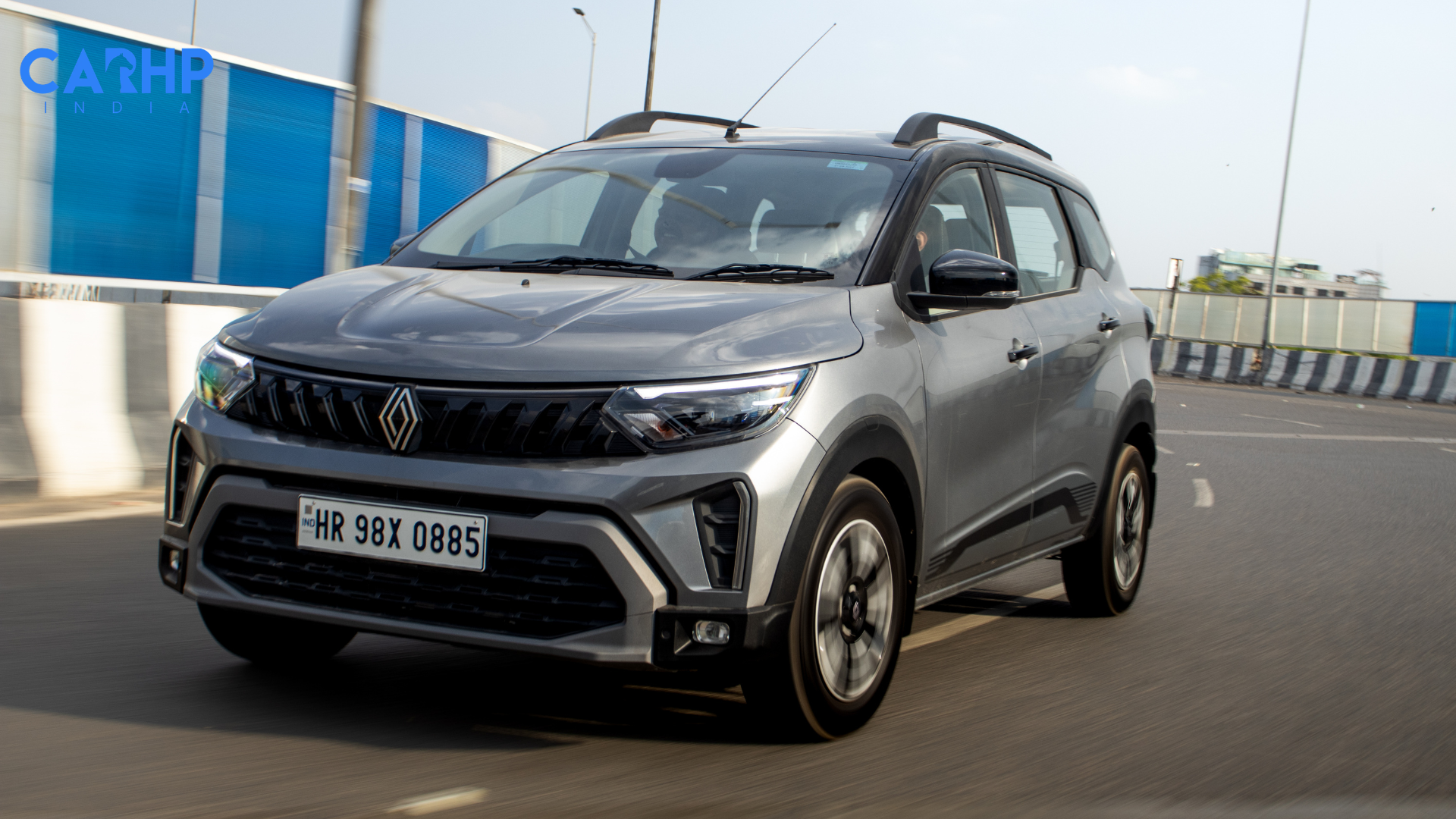
The Renault Triber with the turbo engine is meaningfully more capable than the car it sat alongside for seven years.
The 99 bhp and 180 Nm of torque transforms what was always a practical but underpowered budget MPV into a vehicle that can carry seven people on a highway without the driver feeling like they are imposing on the engine. The specific retuning of the ABS, ESC, and traction control for the turbo's characteristics reflects that Renault has approached this as an integrated powertrain upgrade rather than a simple engine transplant.
The NA petrol continues to hold its place as the budget entry into the seven-seater segment. It remains a sensible choice for buyers who predominantly use the Triber in the city, where the power deficit is rarely a meaningful concern and the fuel efficiency and low running costs are the priorities.
The Triber has its limitations. The cabin quality remains basic, no leatherette or ventilated seats are offered, the boot is impractically small with all three rows in use, there is no factory-fitted CNG, and the turbo is currently manual-only.
But the Triber's niche has never been buyers who want a plush interior with high-tech features. It remains a compact, affordable, reasonably comfortable seven-seater that now finally has an engine to match its true purpose.
The Techno Turbo is the most balanced variant in the range, adding auto climate control, cruise control, and a rear wiper to the turbo package without the Emotion's price premium. Those who want wireless charging and push-start alongside the turbo should opt for the Emotion Turbo.
Buyers who primarily drive in the city and can live with the NA engine's limitations should stick with the Emotion NA petrol AMT as the most feature-complete automatic variant in the range.
Renault Triber Expert Reviews

Renault Triber News
Renault Offering Up to Rs. 1.30 Lakh Benefits in September 2026
Renault India's September 2026 offers cover all four models in its lineup, with benefits ranging from Rs. 40,000 on the Kwid to Rs. 1.30 lakh on the Duster. Here is the full breakdown for every model, including state-wise differences where applicable.
Anmol Kumar
September 7, 2026




Renault Triber FAQs
What engines does the Renault Triber offer?
−The Triber comes with two engine options. A 1.0-litre naturally aspirated petrol producing 71 bhp and 96 Nm, available with a 5-speed manual or 5-speed AMT, and a 1.0-litre turbo petrol producing 99 bhp and 180 Nm, currently available with a 5-speed manual only. The naturally aspirated petrol can also be had with a dealership-level CNG setup.
Is the Renault Triber a proper 7-seater?
+Yes, the Triber can seat seven people comfortably, though the last row is best suited for children or short adults over shorter distances.
Why does the Triber Turbo produce more torque than the Kiger and Duster with the same turbo petrol engine?
+Renault has fitted the Triber with a revised engine management system that calibrates the engine to deliver 180 Nm rather than the 160 Nm that the same engine produces in the Kiger and Duster. This is a software and mapping decision designed to make full use of the engine's torque potential in the context of a seven-seater car.
What is the boot space of the Renault Triber?
+84 litres with all three rows in place, and 625 litres with the third row removed/folded flat.
What safety features does the Renault Triber offer?
+Six airbags, ABS with EBD, ESP with traction control (retuned for turbo variants), hill start assist, ISOFIX, and TPMS are standard across all variants of the Triber. A rear camera and rear parking sensors are available on Emotion variants.
What is the fuel efficiency of the Renault Triber?
+The naturally aspirated petrol returns an ARAI figure of approximately 20 km/l in manual form, with real-world returns of 14 to 17 km/l. The turbo claims an ARAI figure 21 km/l, but expect real-world figures lower than the standard petrol in city and mixed driving conditions.
Does the Renault Triber have a sunroof?
+No. A sunroof is not available on any variant of the Triber.
What is the mileage of the Renault Triber?
+The Triber delivers (manual) and up to (automatic) as per ARAI. Real-world mileage ranges from depending on conditions.
Is the Renault Triber available in petrol, CNG, electric or diesel engines?
+The Triber is currently available with Petrol engines.
What is the current ex-showroom price of the Renault Triber?
+The current ex-showroom prices start at and go up to , depending on the variant.
How many variants does the Triber come in, and what are their names?
+The Renault Triber is available in 11 variants: Authentic, Emotion, Emotion AMT, Emotion AMT Dual Tone, Emotion Dual Tone, Emotion Turbo MT, Emotion Turbo MT Dual Tone, Evolution, Evolution Turbo MT, Techno and Techno Turbo MT. It offers transmission options.
What is the engine capacity, power, and torque of the Triber?
+It has a engine that produces and of torque.
What are the key safety features in the Triber ?
+The Triber comes equipped with several safety features including Anti-lock Braking System (ABS), Central Locking, Electronic Brakeforce Distribution (EBD), Electronic Stability Control (ESC) and Hill Assist.
What are the boot space and dimensions of the Renault Triber?
+The Triber offers 84 Litres of boot space. Its dimensions are 3985 mm in length, 1734 mm in width, and it has a wheelbase of 2636 mm.
Which features are available in the top model of the Triber (touchscreen, camera, cruise control, etc.)?
+The top Emotion Turbo MT Dual Tone variant includes .
What is the standard warranty on the Triber, and what are the average service costs?
+Renault offers a warranty. Annual service costs range between .
What colours does the Renault Triber come in?
+The Renault Triber is available in the following colours: .
Which variants of the Renault Triber have a sunroof?
+variant of Renault Triber is having sunroof
Is the Renault Triber available in petrol, CNG, electric or diesel engines?
+The Triber is currently available with Petrol engines.
What are the key safety features in the Triber ?
+The Triber comes equipped with several safety features including Anti-lock Braking System (ABS), Central Locking, Electronic Brakeforce Distribution (EBD), Electronic Stability Control (ESC) and Hill Assist.
What are the boot space and dimensions of the Renault Triber?
+The Triber offers 84 Litres of boot space. Its dimensions are 3985 mm in length, 1734 mm in width, and it has a wheelbase of 2636 mm.
What colours does the Renault Triber come in?
+The Renault Triber is available in the following colours: Moonlight Silver With Mystery Black, Ice Cool White, Cedar Brown, Stealth Black, Cedar Brown With Mystery Black, Moonlight Silver, Metal Mustard Withe Mystery Black, Metal Mustard, Metal Mustard With Mystery Black Roof and Ice Cool White With Mystery Black.