Nissan Gravite
Overall Rating

Nissan Gravite
Overall Rating
EMI Loading
Nissan Gravite Key Specifications
Nissan Gravite Highlights
Nissan Gravite Overview

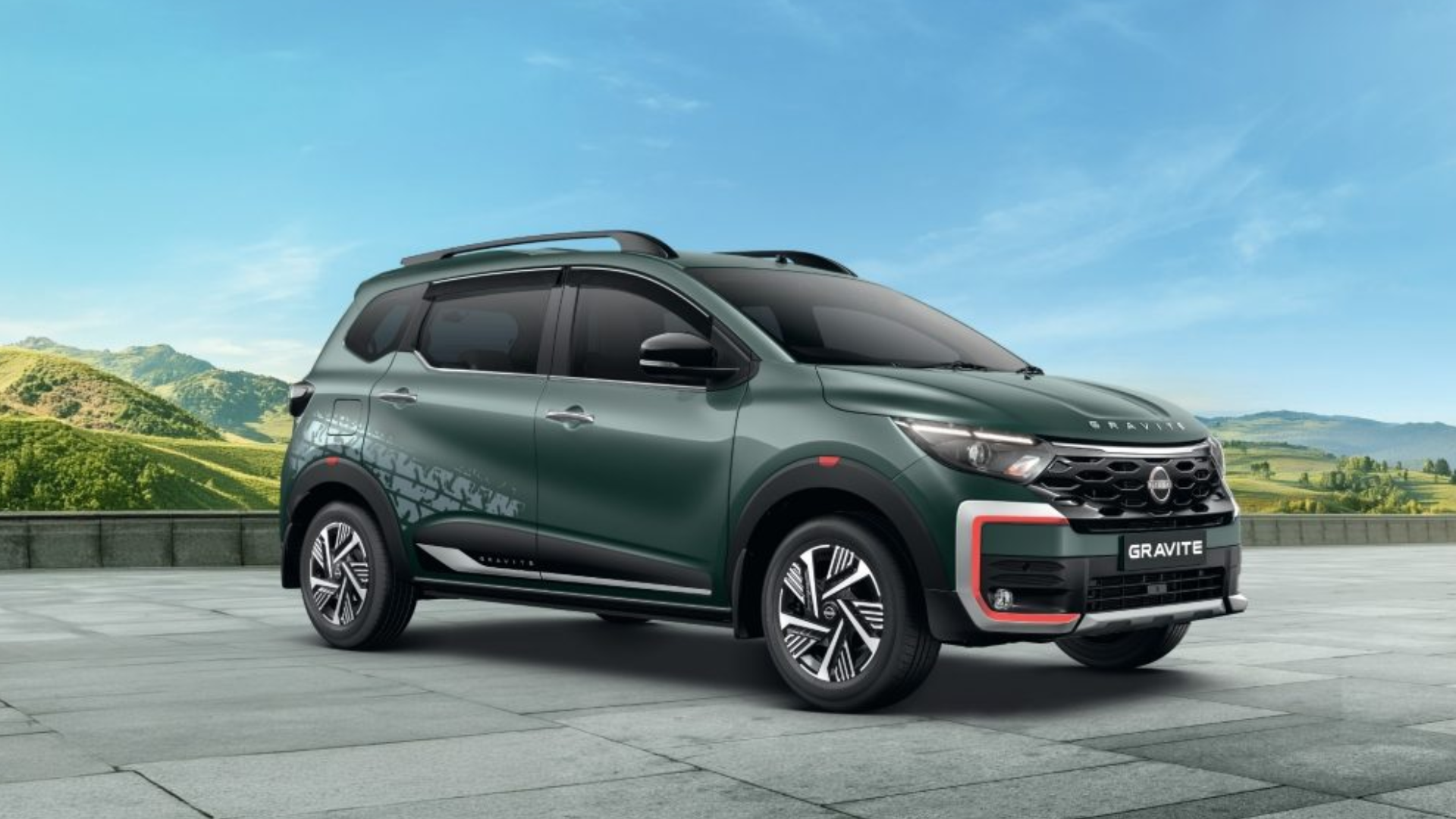
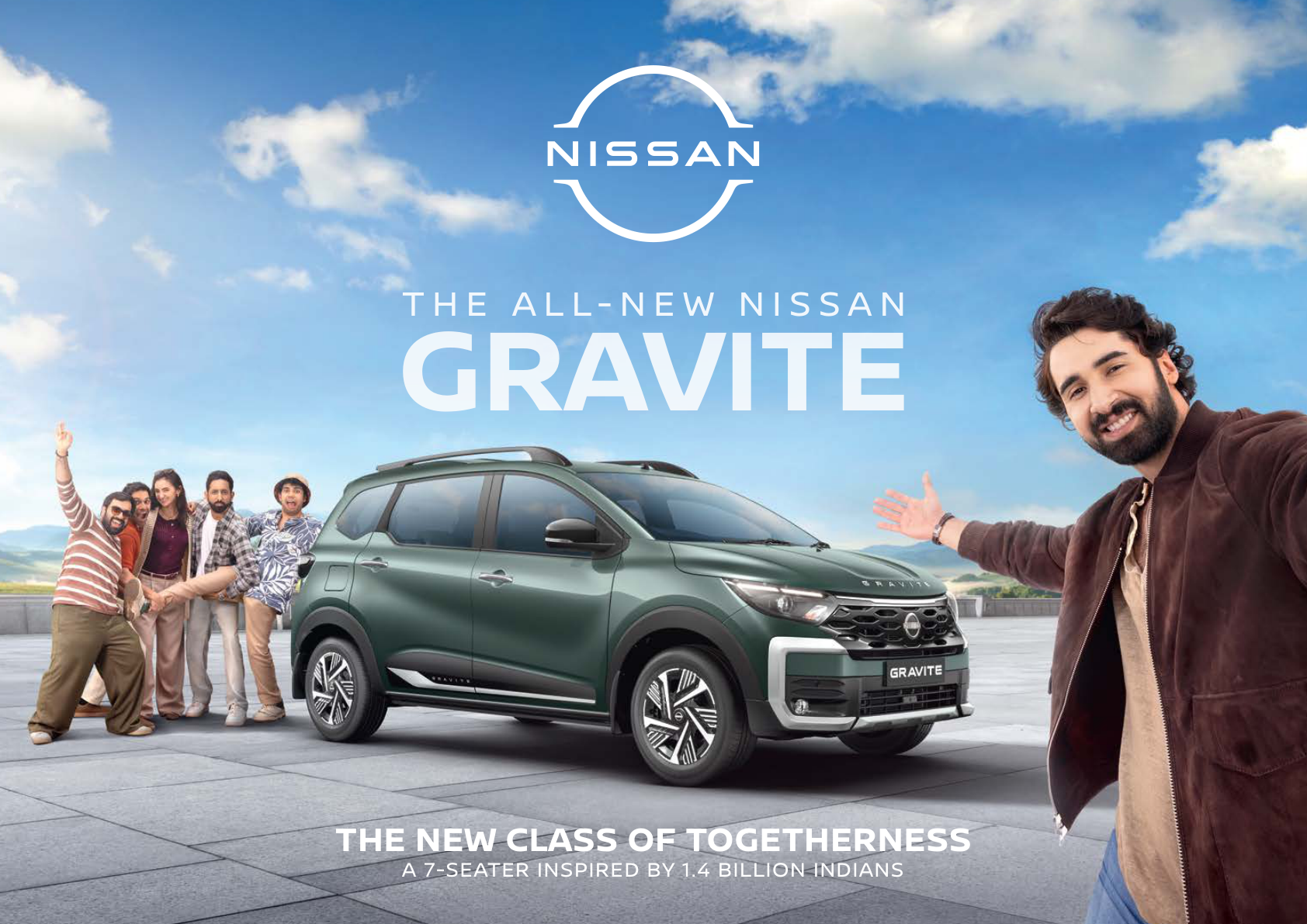
The Nissan Gravite is a sub-four-metre, seven-seater MPV introduced in February 2026 as part of Nissan's renewed product strategy for the Indian market. Designed primarily for budget-conscious families, the Gravite focuses on offering flexible passenger accommodation, practical interiors and affordable ownership costs without demanding the higher purchase price associated with larger MPVs.
The Gravite is based on the Renault-Nissan Alliance's CMF-A+ platform, which it shares with the Renault Triber. Although the two MPVs have nearly identical underlying mechanical components and dimensions, Nissan has introduced its own exterior styling elements, interior finishes and feature packaging to establish a separate identity for the Gravite.
The MPV is available in four main trims, namely Visia, Acenta, N-Connecta and Tekna.
It is is powered by a sole 1.0-litre, three-cylinder, naturally aspirated petrol engine, producing 71 bhp and 96 Nm of torque. Buyers can choose between a five-speed manual gearbox and a five-speed EZ-Shift AMT, although the automatic transmission is restricted to the higher variants.
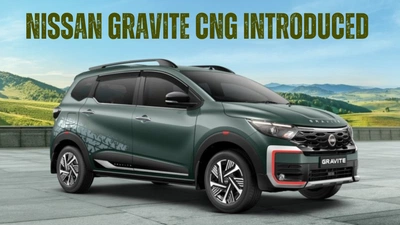
Nissan also offers a government-approved twin-cylinder CNG retrofitment kit at an additional cost.
One of the Gravite's biggest attractions is its modular cabin, and the feature list is also reasonably comprehensive for its price.
Safety is another area where Nissan has prioritised value. Six airbags are standard across all variants, alongside Electronic Stability Control, Traction Control System, Hill Start Assist, Brake Assist and ABS with EBD.
The Gravite's biggest limitation is is its naturally aspirated engine that feels underpowered when fully loaded. NVH levels could be better as well, and the luggage compartment is also quite restrictive with all three rows occupied.
Nevertheless, the Nissan Gravite presents an interesting proposition for buyers who need a genuinely flexible seven-seater without moving into a considerably more expensive MPV segment.
Engine and Performance
Engine and Performance
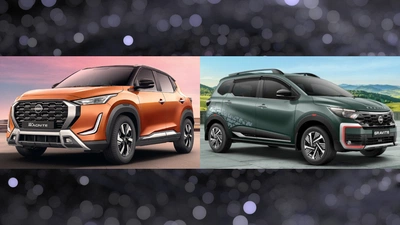
The Nissan Gravite is powered by a 1.0-litre, three-cylinder, naturally aspirated petrol engine that is shared with its compact SUV sibling, the Magnite. The engine has been tuned primarily for everyday driving requirements, with an emphasis on affordability and fuel efficiency.
| Specification | 1.0L NA Petrol | 1.0L NA Petrol-CNG |
|---|---|---|
| Engine | 1.0-litre, 3 cyl, naturally aspirated petrol | 1.0-litre, 3 cyl, naturally aspirated petrol |
| Power | 71 bhp @ 6,250 rpm | 71 bhp @ 6,250 rpm (Petrol mode) |
| Torque | 96 Nm @ 3,400-3,600 rpm | 96 Nm @ 3,400-3,600 rpm (Petrol mode) |
| Transmission | 5-Speed MT / 5-Speed AMT | 5-speed MT |
| Claimed Mileage | 19.3 km/l (Manual), 19.6 km/l (AMT) | 19.3 km/kg |
| Fuel Tank Capacity | 40 litres | 40 litres (50 litres CNG tank) |
It produces 71 bhp and a peak torque of 96 Nm. These figures feel reasonably adequate within busy city limits. Additionally, its compact dimensions and relatively light kerb weight help it maintain acceptable drivability during regular commuting. However, the engine's weakness gets exposed when the MPV is carrying a full complement of passengers and luggage, and it needs to be revved higher to extract satisfactory acceleration.
The limitations become more noticeable on highways, particularly when travelling with seven occupants and luggage. Overtaking requires careful planning, and drivers may need to downshift frequently to maintain momentum on inclines. The engine also becomes noticeably audible when pushed towards higher revs.
Unlike the Renault Triber which recently received a 1.0-litre turbo petrol engine option, the Gravite still misses out on one.
Buyers can choose between a five-speed manual transmission and a five-speed AMT. The manual gearbox is available across all four standard trims, although the clutch is relatively heavy and has a higher bite point. The AMT option makes city driving more convenient, but is restricted to the N-Connecta and Tekna variants.
The CNG version uses a separately installed retrofitment kit and retains the underlying petrol engine. Nissan has not published an official CNG-mode power output in its standard technical specifications, but like all retrofit CNG units, expect a noticeable drop in performance in CNG mode.
Overall, the Gravite's powertrains are best suited to buyers who prioritise affordability and everyday usability over outright performance.
Ride and Handling
The Nissan Gravite offers a reasonably comfortable ride quality.
Despite being a lightweight MPV with a suspension setup that is slightly stiff, it feels composed over most urban road surfaces and delivers a fairly predictable driving experience. Sharp potholes and larger undulations are noticeable inside the cabin, although they rarely make the ride uncomfortably harsh.
Interestingly, the suspension feels more settled when the vehicle is carrying a full passenger load, as the additional weight helps improve its composure over uneven surfaces.
The Gravite's steering is light at lower speeds, making parking and navigating narrow streets relatively effortless. However, the steering does not offer much feedback at higher speeds, which can make the driving experience feel somewhat disconnected.
The vehicle also exhibits noticeable body roll when negotiating corners, which is understandable considering its MPV proportions and comfort-biased setup. Nevertheless, its handling remains predictable, and the suspension maintains reasonable stability during highway cruising at legal speeds.
Overall, the Gravite offers a comfortable and confidence-inspiring driving experience for everyday use.
fuel economy
fuel economy
Fuel efficiency is one of the Nissan Gravite's strongest selling points, particularly considering its positioning as an affordable seven-seater.
The 1.0-litre naturally aspirated engine has been developed with relatively low running costs in mind, allowing the MPV to deliver competitive claimed mileage figures.
According to Nissan's official specifications, the Gravite delivers a claimed fuel efficiency of 19.3 km/l with the manual transmission and 19.6 km/l with the AMT gearbox.
For buyers who cover substantial distances, the twin-cylinder CNG retrofitment kit offers an additional economical alternative. Nissan advertises fuel efficiency of up to 24 km/kg with the CNG setup.
Real-world efficiency, however, can be considerably lower depending on traffic conditions, passenger load, driving style and air-conditioning usage.
Expect close to 12 km/l on the petrol manual in city conditions and 16 km/l on the highway, with marginally lower figures on the AMT. For CNG-equipped models, figures of close to 16 km/kg are achievable in city conditions and around 25 km/kg on the highway.
interior
interior
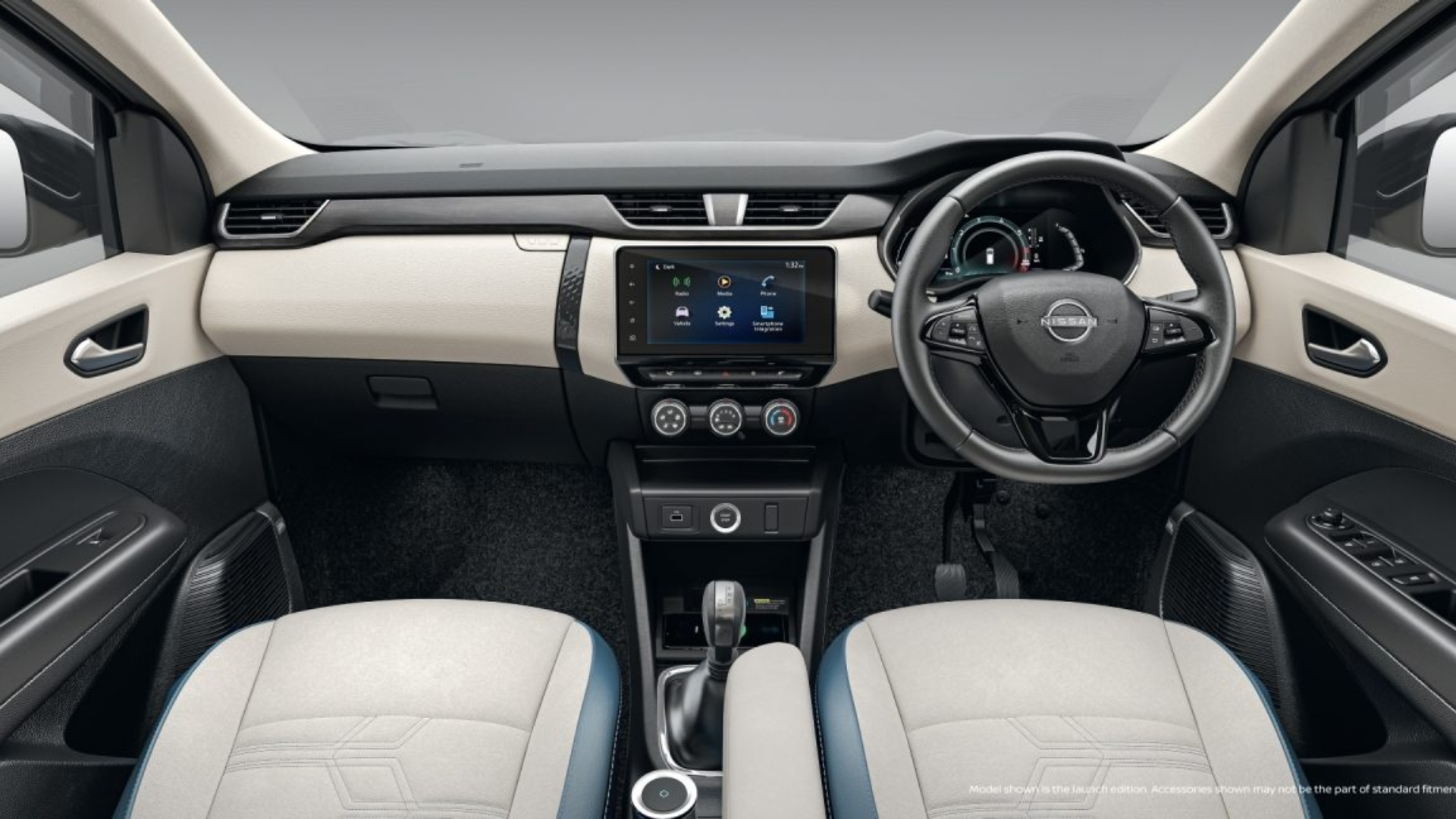
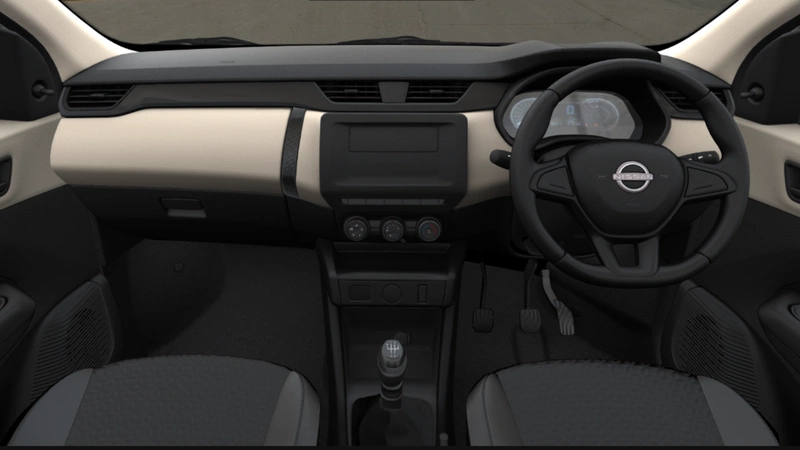
The Nissan Gravite features a practical and versatile cabin designed primarily around passenger accommodation and flexible luggage-carrying requirements.
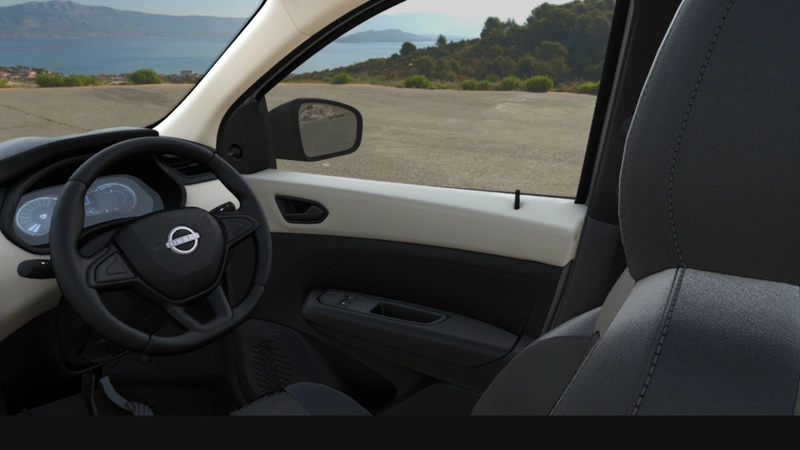
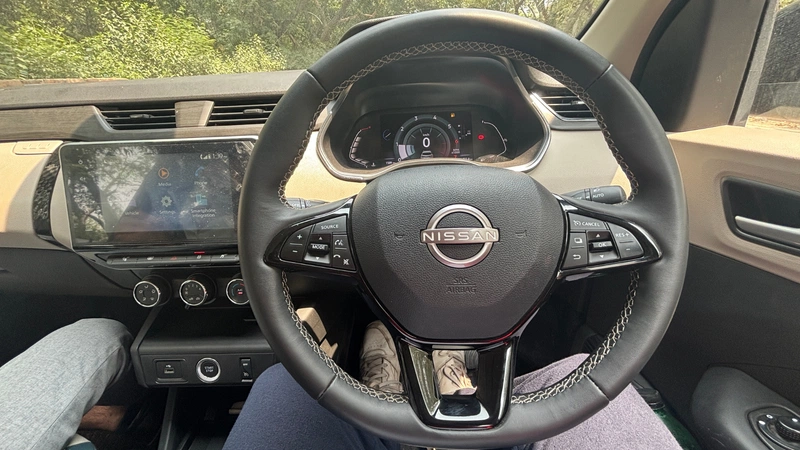
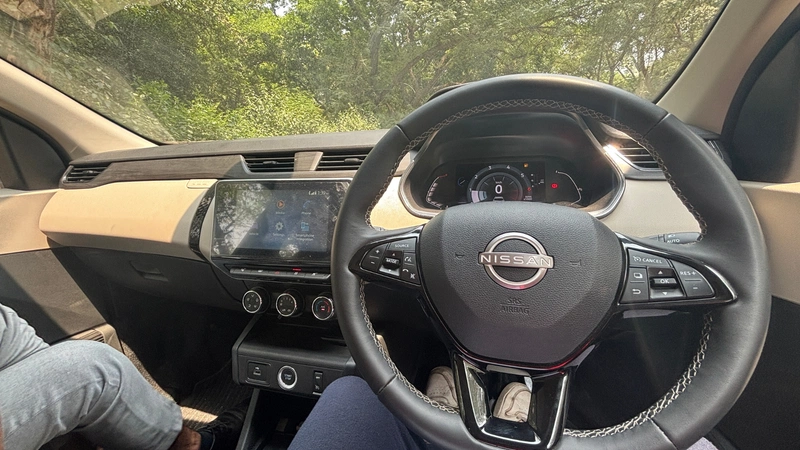
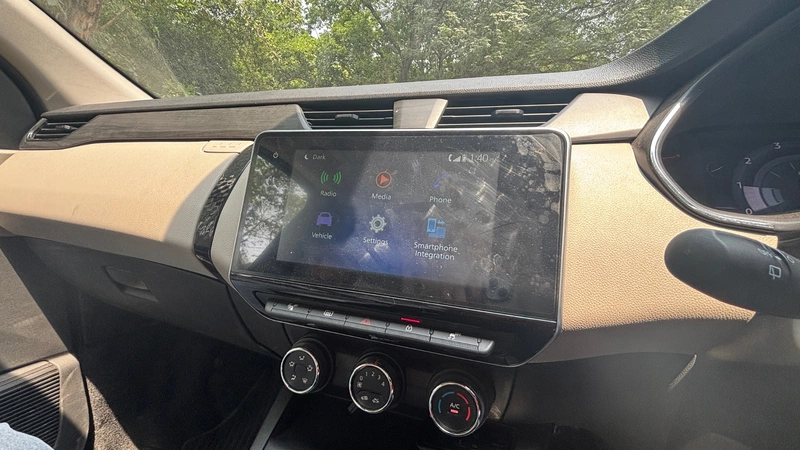
The dashboard receives a dual-tone black and beige finish with a wooden-effect decorative element on higher variants. The overall layout is fairly straightforward, with the infotainment system and essential controls positioned within easy reach of the driver. Higher trims also feature suede and fabric upholstery, while the top-spec version receives premium suede and leatherette seat coverings.
The front seats offer reasonable cushioning and support for everyday commuting. The driver's seating position is relatively upright, providing a good view of the road ahead. Storage spaces around the centre console, glovebox and door panels also improve everyday convenience.
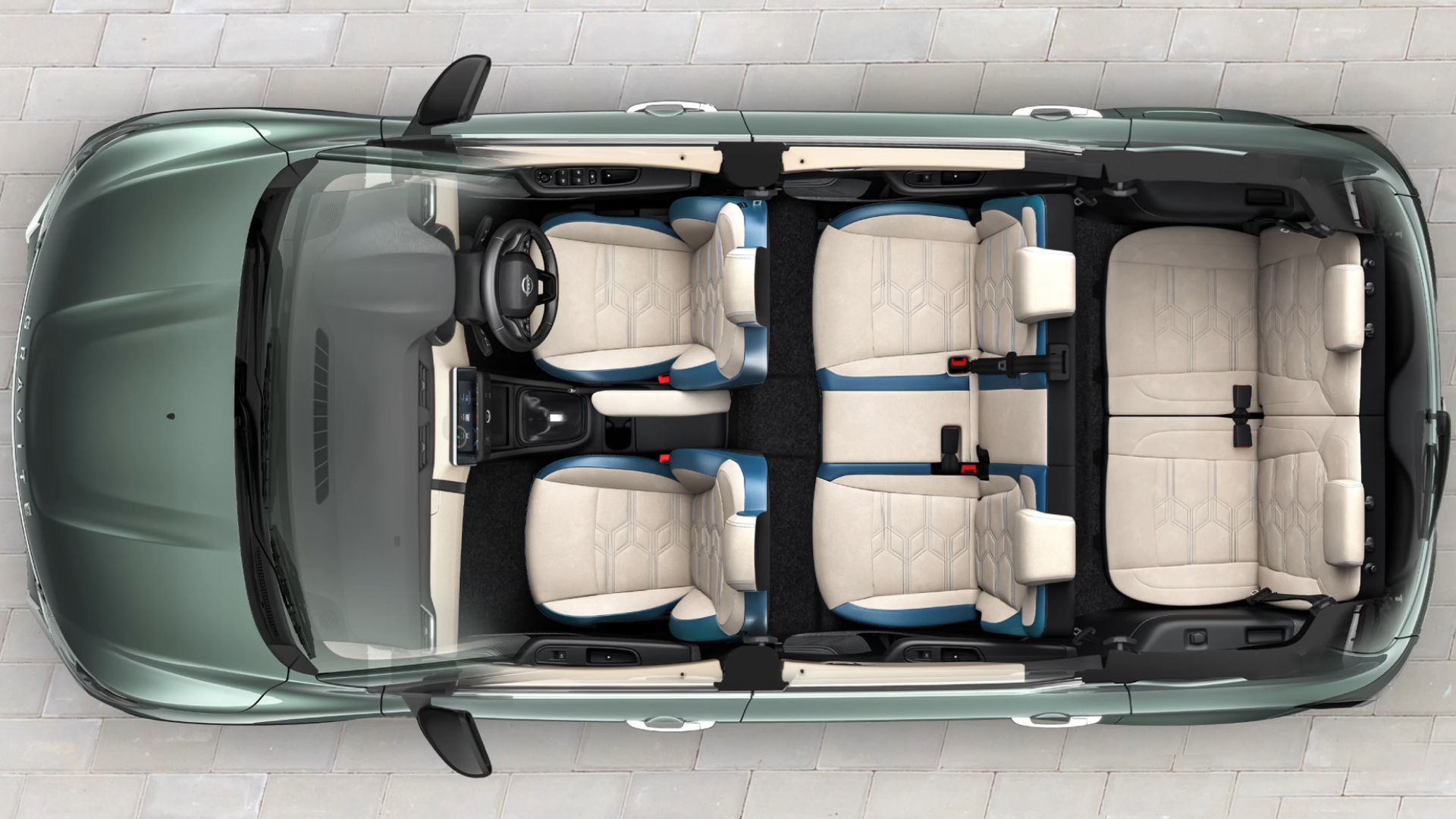
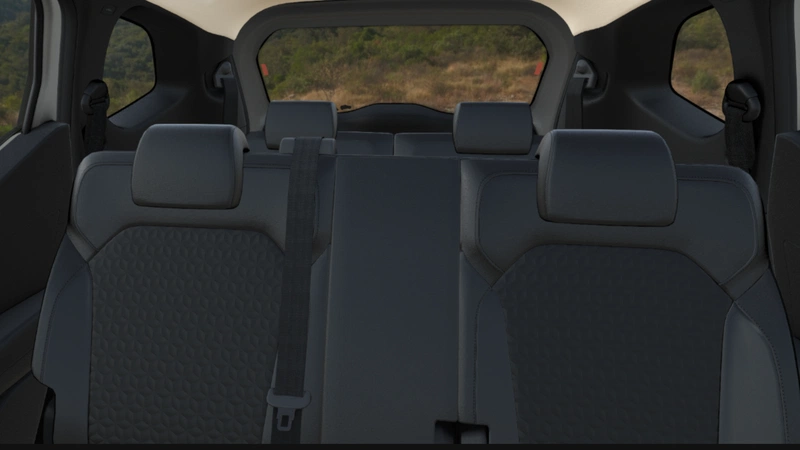
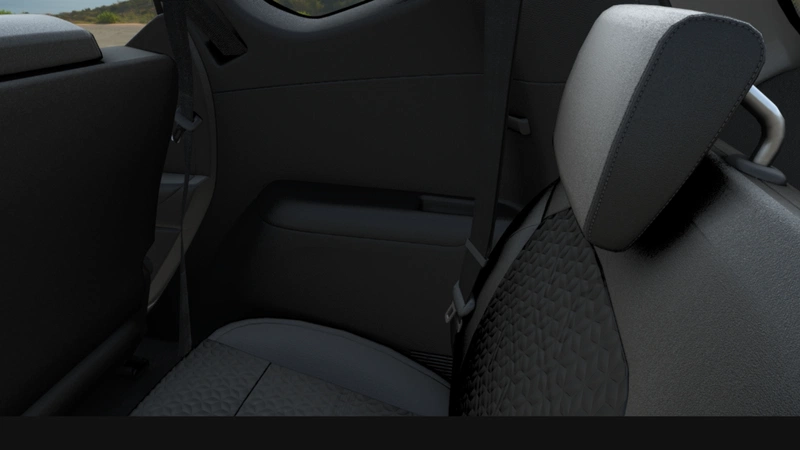
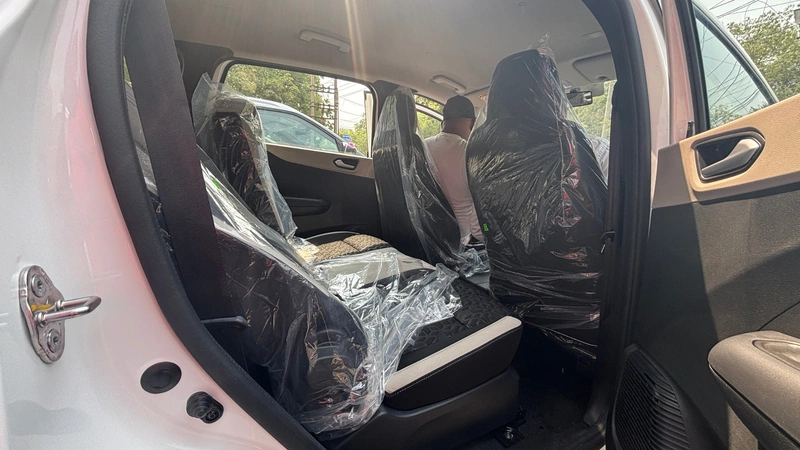
One of the Gravite's biggest strengths is its three-row seating arrangement. The second row offers sliding, reclining and folding functionality, allowing occupants to adjust the available legroom depending on the number of passengers travelling. It also features a 60:40 split configuration, improving the cabin's flexibility.
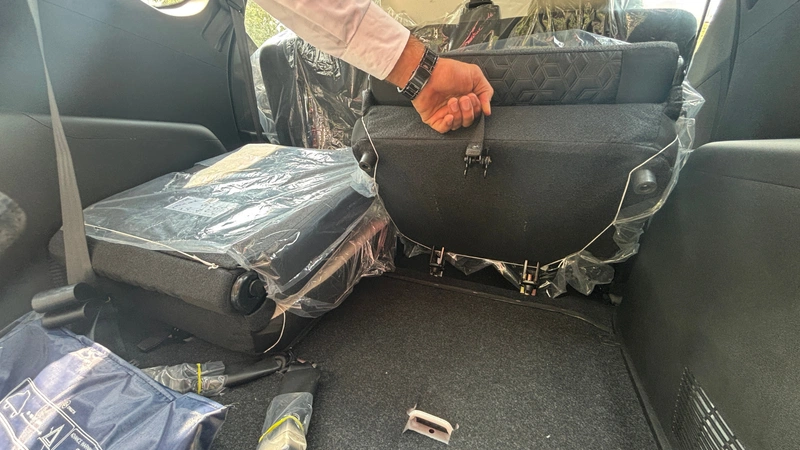
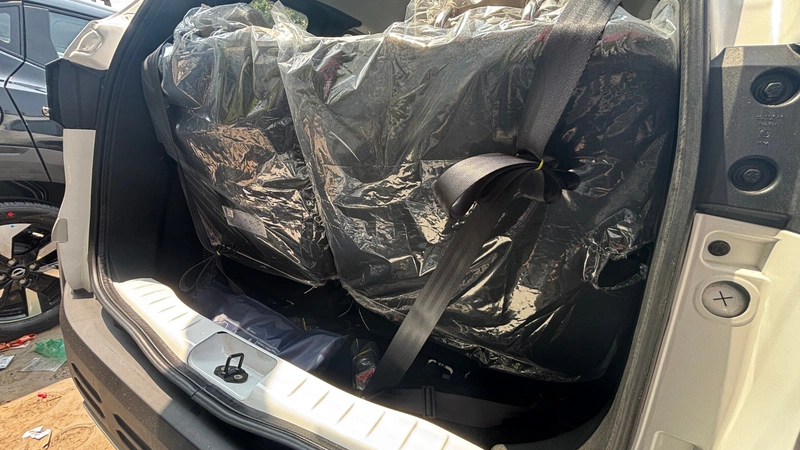
The third row consists of two individual seats with a 50:50 split-folding arrangement. These seats can also be removed completely, allowing buyers to transform the vehicle into a more conventional five-seater with additional luggage capacity. The third row is relatively usable for a compact MPV, although comfort naturally depends on the size of the occupants and the position of the second row.
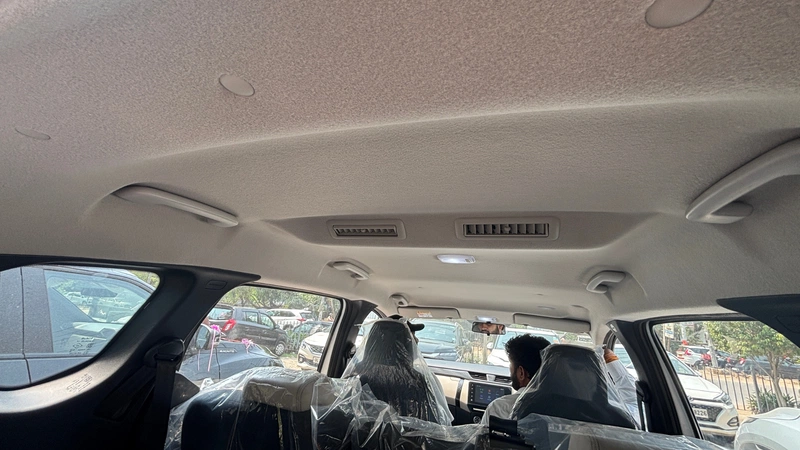
Nissan has also paid attention to passenger convenience by offering independent rear air-conditioning controls and dedicated air-conditioning vents for the second and third rows. This is particularly useful for families travelling with several occupants during hot Indian summers.
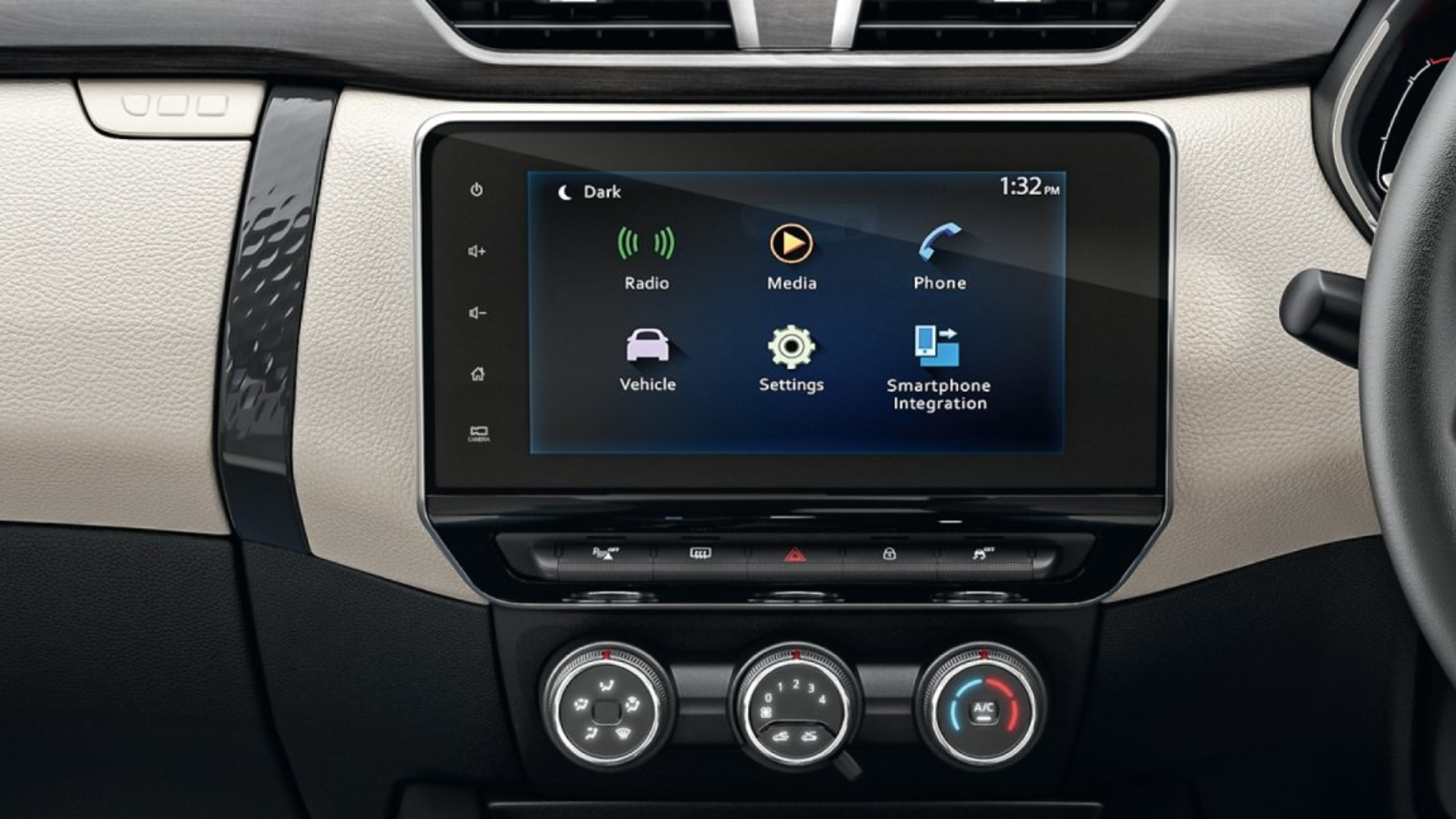
In terms of technology, the higher variants receive an 8-inch floating touchscreen infotainment system with wireless Android Auto and Apple CarPlay. The Tekna version also gets a 7-inch fully digital instrument cluster, wireless charging, rain-sensing wipers and automatic headlamps.
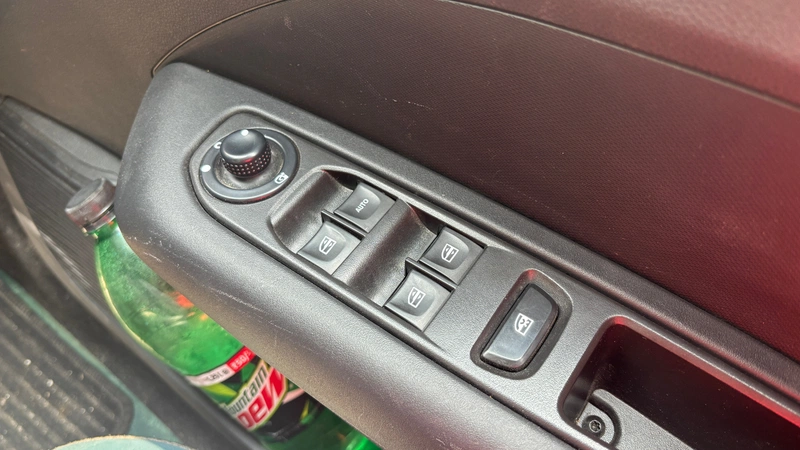
Other notable cabin features include push-button engine start/stop, cruise control on the manual variant, a cooled glovebox, a cooled centre console, rear power windows, steering-mounted audio controls and multiple charging provisions.
The Limited Launch Edition adds a few accessories to the package, including JBL speakers, a dual dash camera, an air purifier, ambient mood lighting and additional neck and lumbar cushions. These are part of the special edition's accessory package rather than standard equipment across the range.
In terms of luggage capacity, the Gravite's modular design allows it to accommodate different combinations of passengers and cargo. Nissan quotes 625 litres in the five-seat configuration, with the third row removed, and 320 litres in a six-seat configuration with one third-row seat removed. With all seven seats in place, however, the luggage compartment is considerably smaller.
Overall, the Gravite's cabin is one of its strongest attributes. While the material quality and overall finish reflect its affordable positioning, its flexible seating arrangement and practical storage spaces make it a strong choice for bigger families.
exterior
exterior
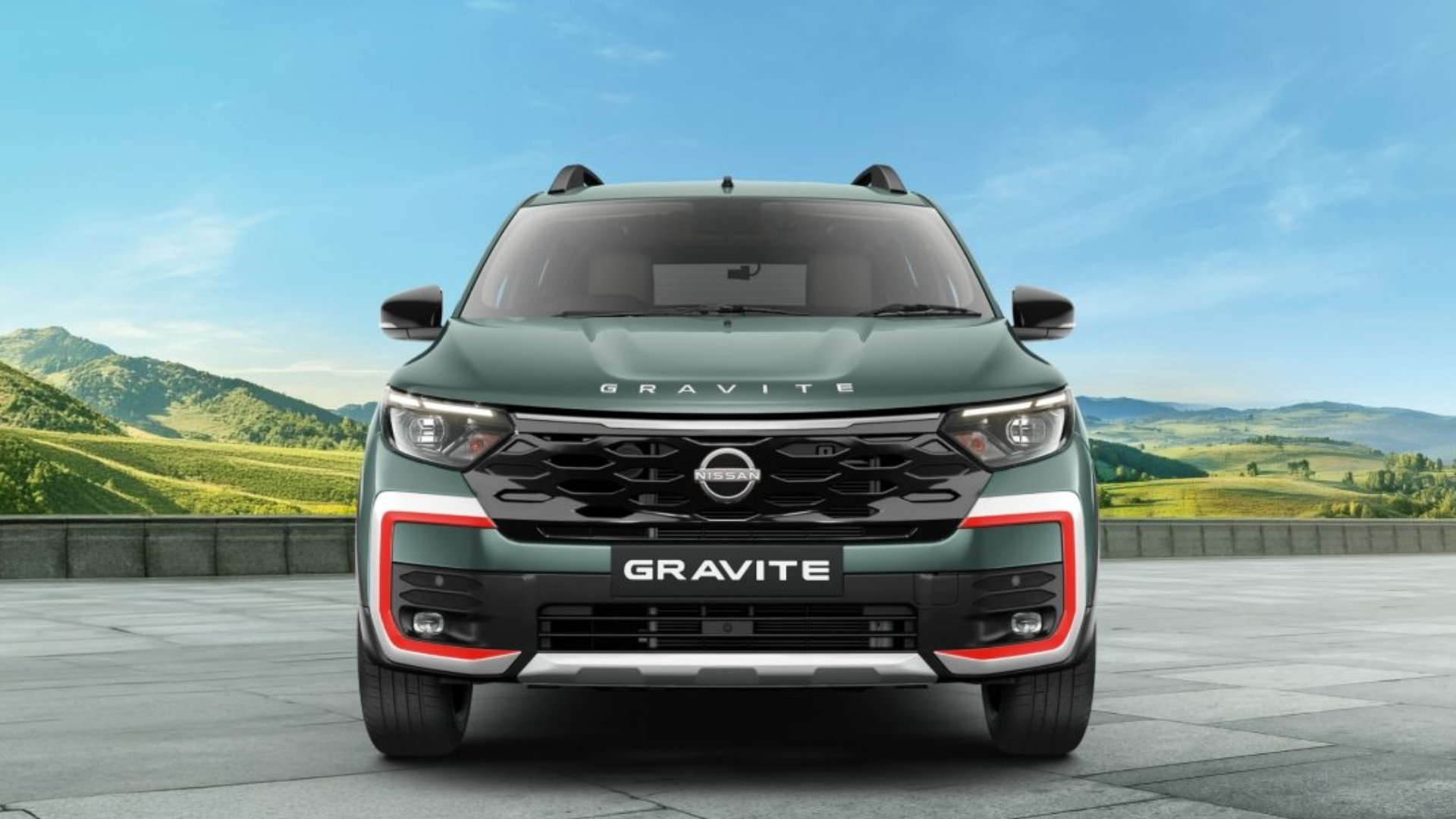
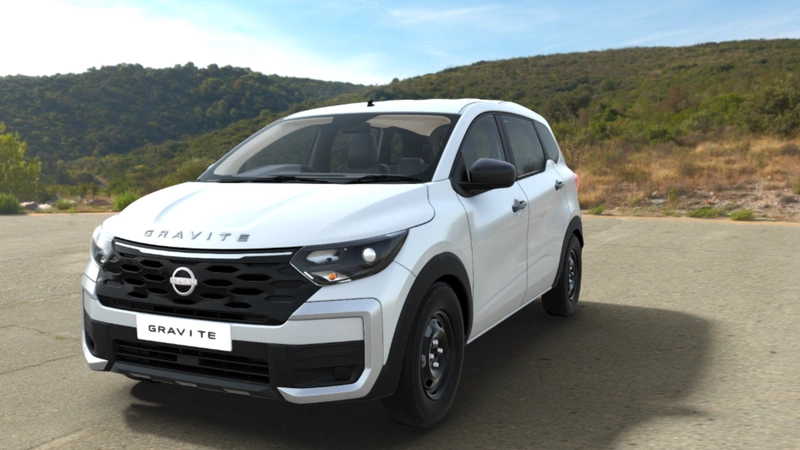
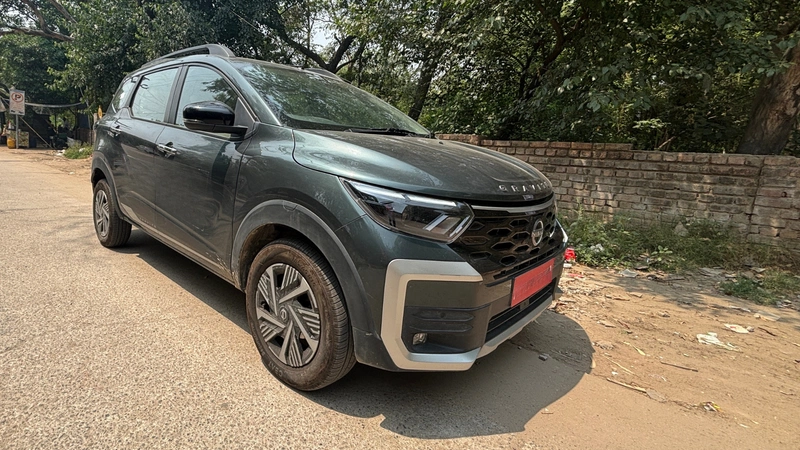
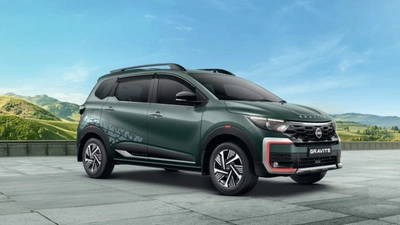
The Nissan Gravite follows a compact MPV design with several SUV-inspired styling elements. Although its overall silhouette is closely related to that of the Renault Triber, Nissan has introduced enough changes to give the vehicle a recognisable identity.
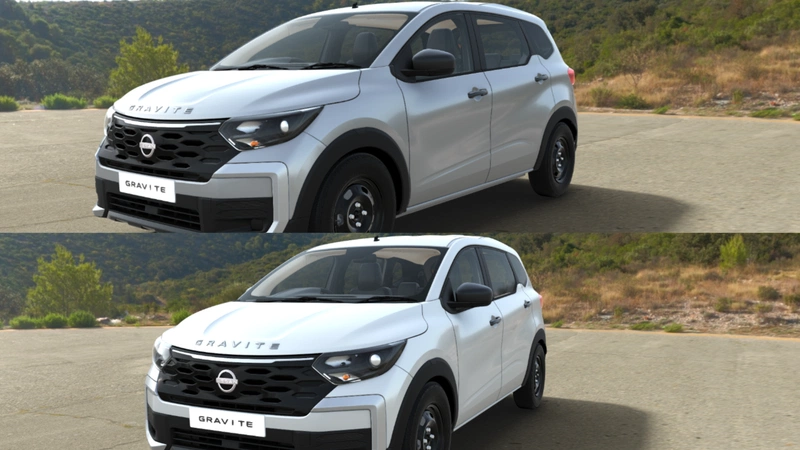
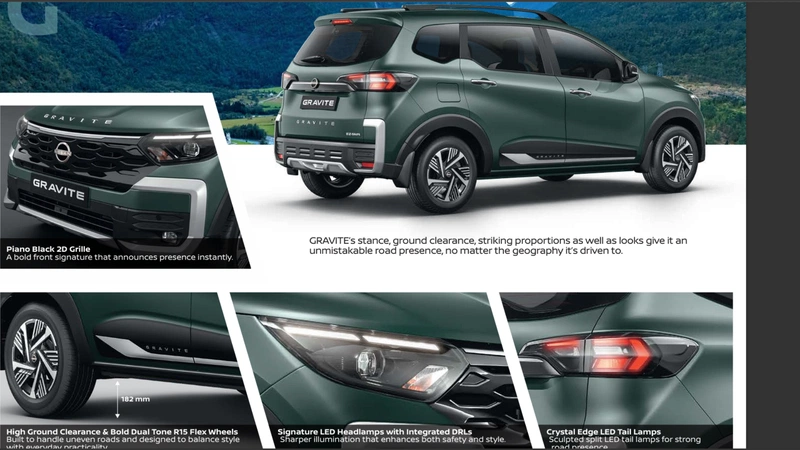
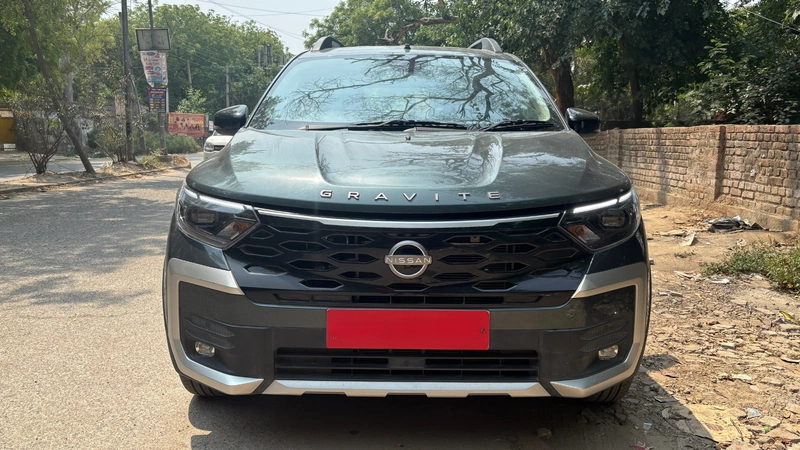
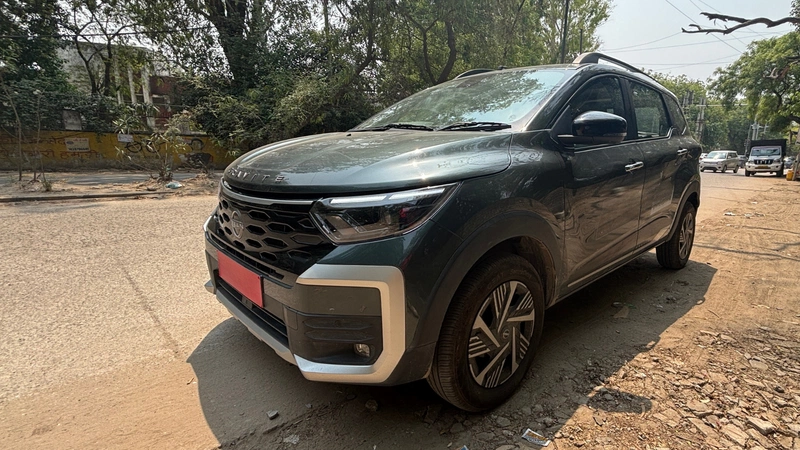
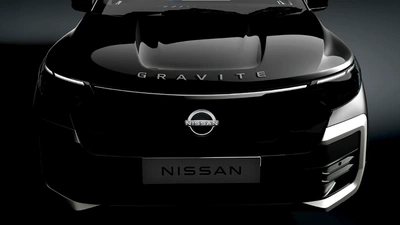
At the front, the Gravite features a prominent piano-black grille with Nissan's newer 2D logo. The bonnet receives distinctive Gravite lettering, while the redesigned bumper incorporates C-shaped elements that give the MPV a slightly more rugged appearance. Higher variants get signature LED headlamps with integrated daytime running lights and LED fog lamps. The front fascia is relatively upright, giving the vehicle a more substantial road presence despite its compact dimensions.
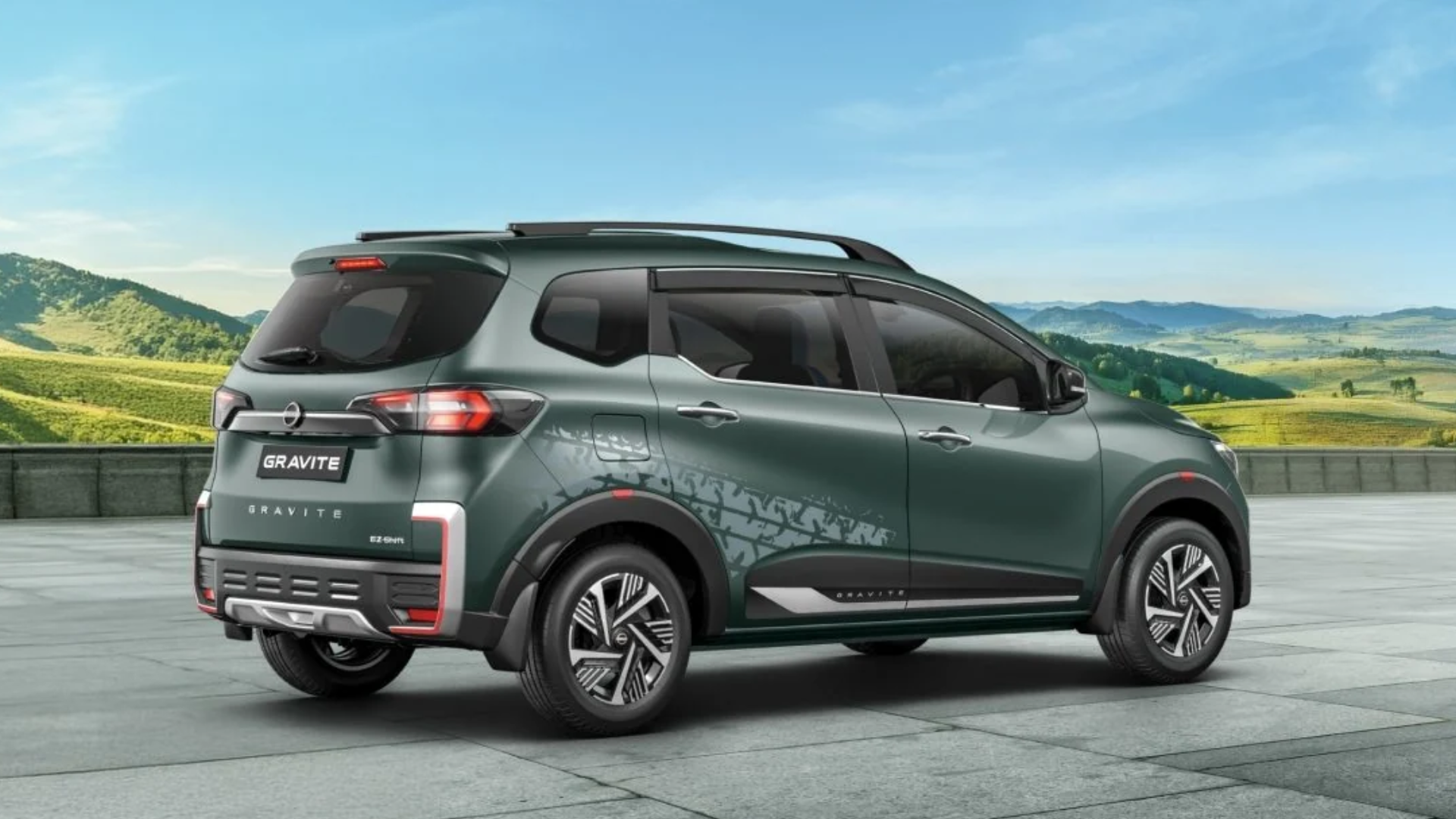
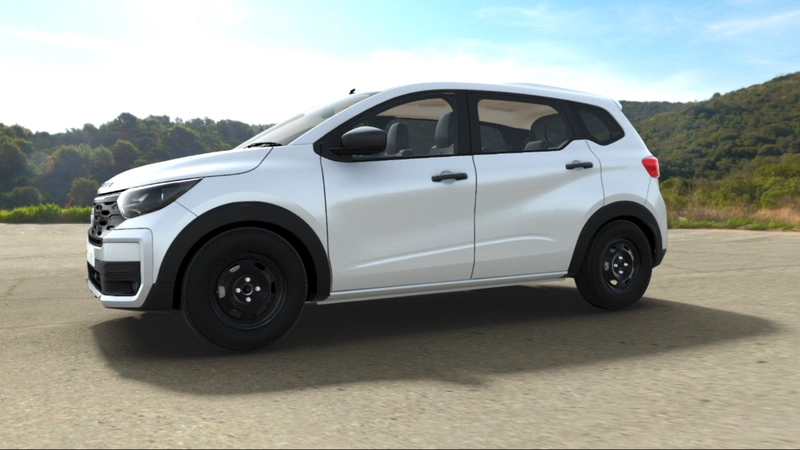
Moving to the sides, the Gravite retains the familiar body proportions of the Triber. The prominent wheel arches, functional roof rails and black lower body cladding contribute to its SUV-inspired appearance. The roof rails can support a maximum load of 50 kg, while higher variants receive 15-inch dual-tone Flex wheels with wheel covers designed to resemble alloy wheels.
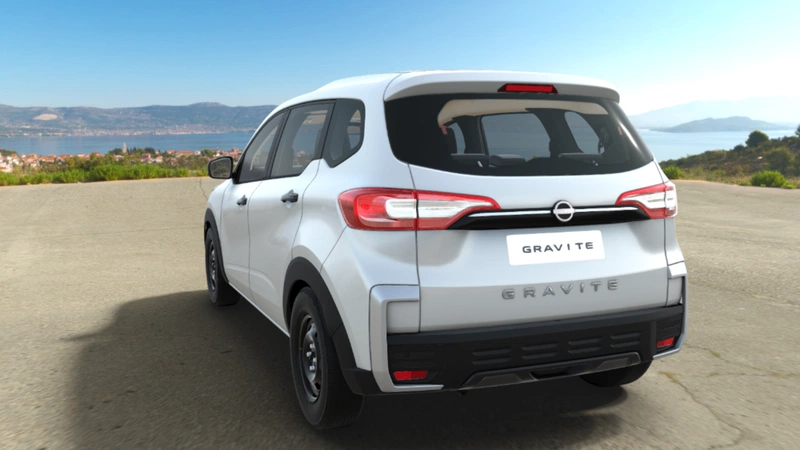
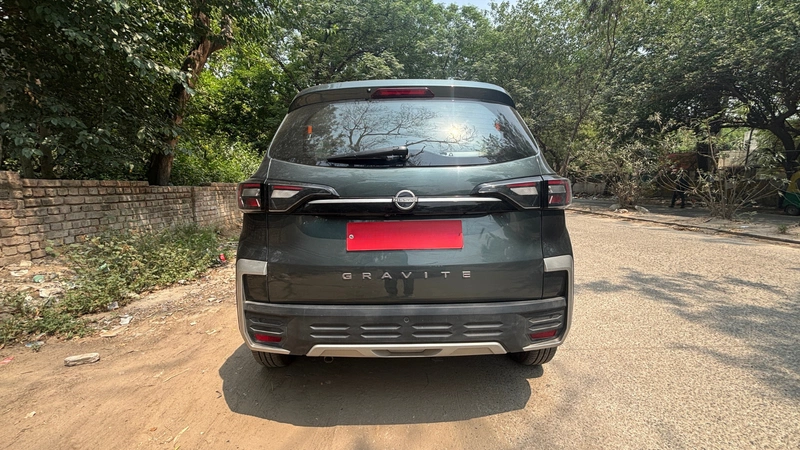
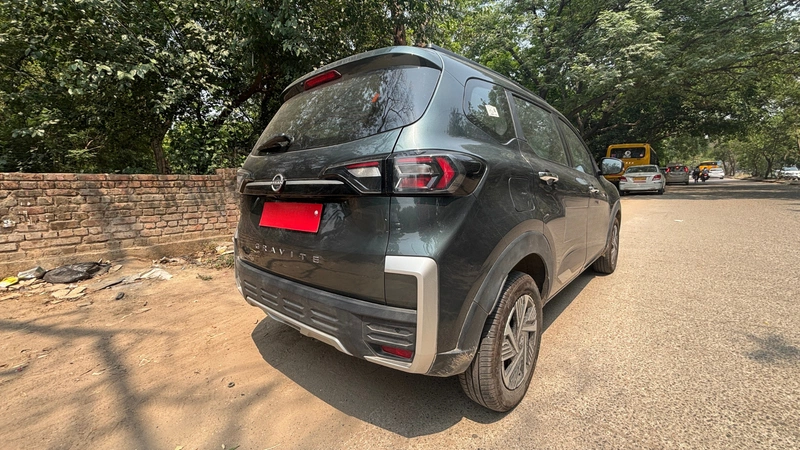
The rear profile features redesigned C-shaped bumper elements, distinctive Crystal Edge LED tail-lamps and prominent Gravite badging across the tailgate. The overall design is relatively simple but remains practical, with the large rear opening making access to the luggage compartment easier.
The Gravite is available in five colour options, namely Forest Green, Onyx Black, Blade Silver, Storm White and Metallic Grey. The Limited Launch Edition also receives additional exterior accessories, including C-shaped aero accents, wheel-arch inserts, body graphics, and chrome detailing.
safety
safety
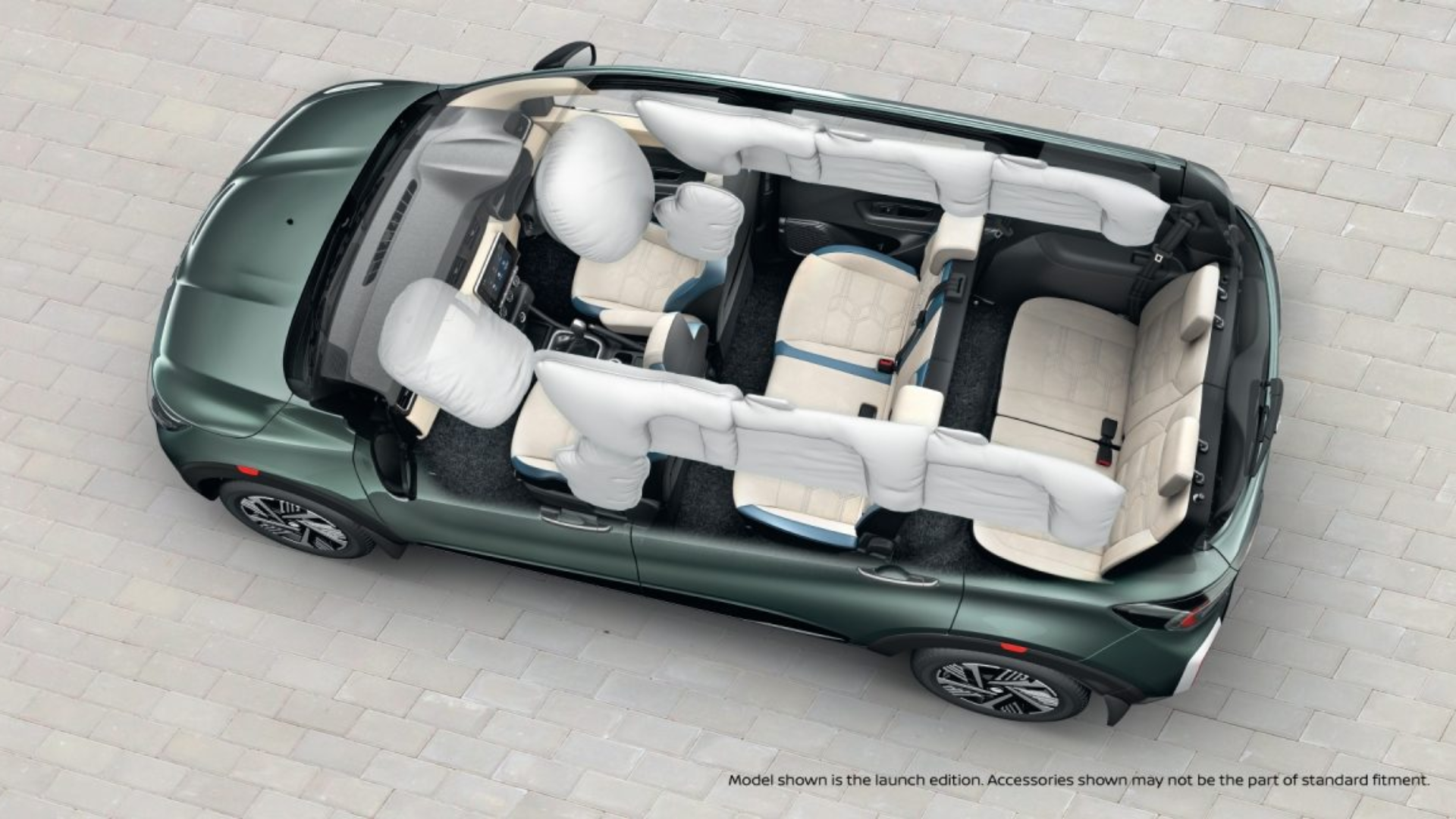
Safety is one of the important focus areas of the Nissan Gravite, particularly considering its positioning as an affordable family MPV.
Nissan has made six airbags standard across all variants, ensuring that even entry-level buyers receive a relatively comprehensive passive safety package. Additional standard safety equipment includes Electronic Stability Control, Traction Control System, Hill Start Assist, Brake Assist, ABS with EBD, Tyre Pressure Monitoring System and rear parking sensors, three-point seatbelts across all seating positions, seatbelt reminders for all occupants and ISOFIX child-seat mounting points.
Higher variants receive additional convenience and safety-related equipment, including front parking sensors, a rear-view camera with projection guidelines and rain-sensing wipers.
An important consideration is the absence of an independent crash-test rating for the Nissan Gravite itself. As of November 2026, the model has not received a published Global NCAP or Bharat NCAP crash-test rating.
Although the Gravite shares its underlying CMF-A+ platform and much of its mechanical construction with the Renault Triber, the latter's crash-test performance should not automatically be treated as a rating for the Nissan model.
For context, the Triber scored four stars for adult and 3 stars for child occupant protection in its initial 2021 test, which was conducted under Global NCAP's previous protocols. The India-made Triber was tested again in 2024 for the African market under the updated, stricter protocols, where it only managed to score two stars each for adult and child occupant safety.
Overall, the Gravite offers a reassuring range of standard safety equipment for its price bracket. However, the lack of an independent crash-test result remains an important consideration for buyers who place a high priority on safety.
competition
competition
The Nissan Gravite operates in a relatively small but important segment of the Indian automotive market, targeting buyers who need seven-seat practicality at an affordable price.
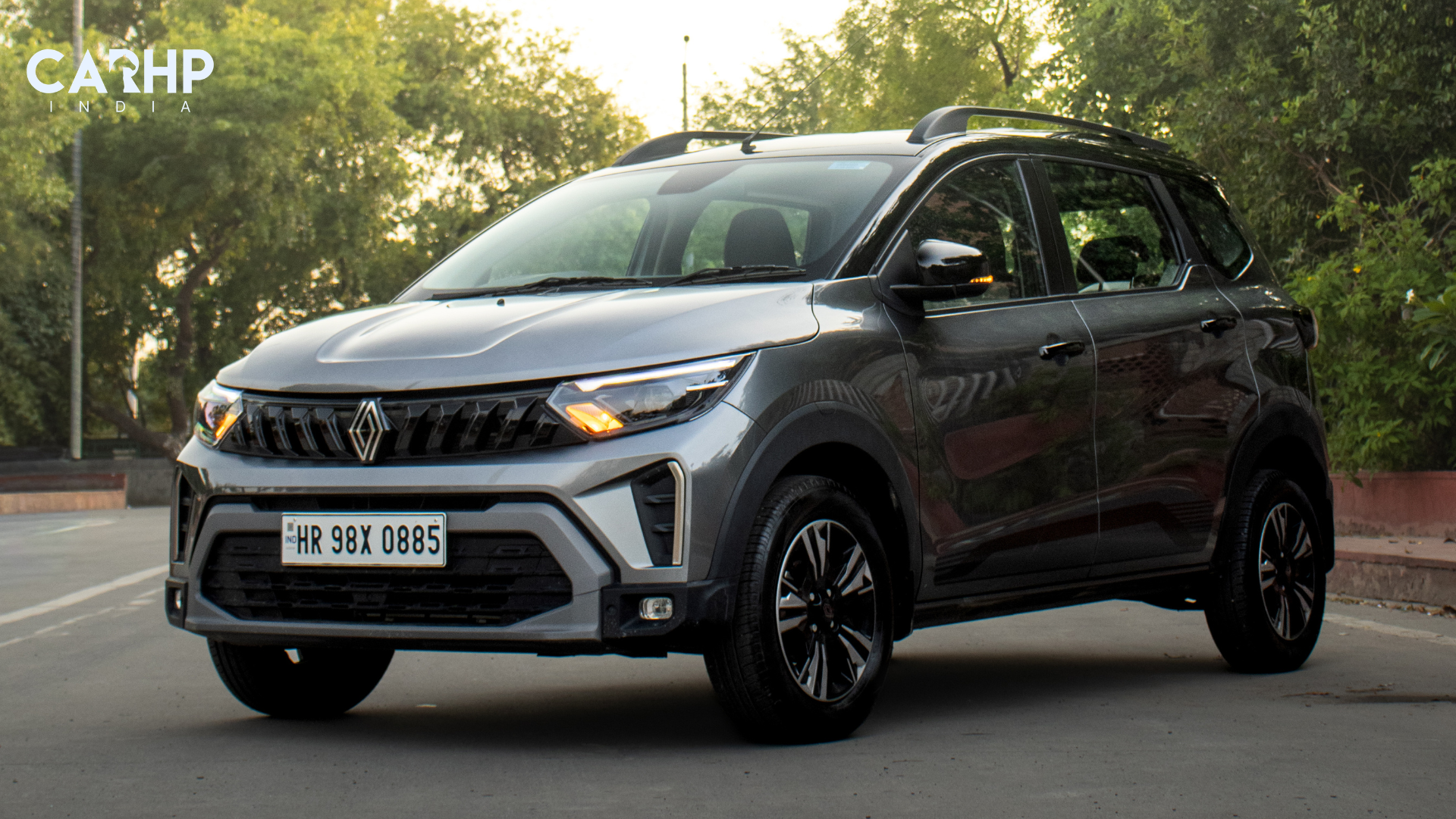
The Renault Triber is the Gravite's closest rival and mechanical counterpart.
Both vehicles share the CMF-A+ platform, the same 1.0-litre naturally aspirated petrol engine, manual and AMT transmission options, and a flexible three-row cabin. The primary differences are their exterior styling, interior finishes, equipment packaging and brand experience. However, the Triber additionally offers a turbo petrol engine option as well, which the Gravite does not.
Choosing between the two largely comes down to personal preference, but the Triber turbo should be the default pick for buyers who will spend a lot of their time on highways or fully loaded with luggage.
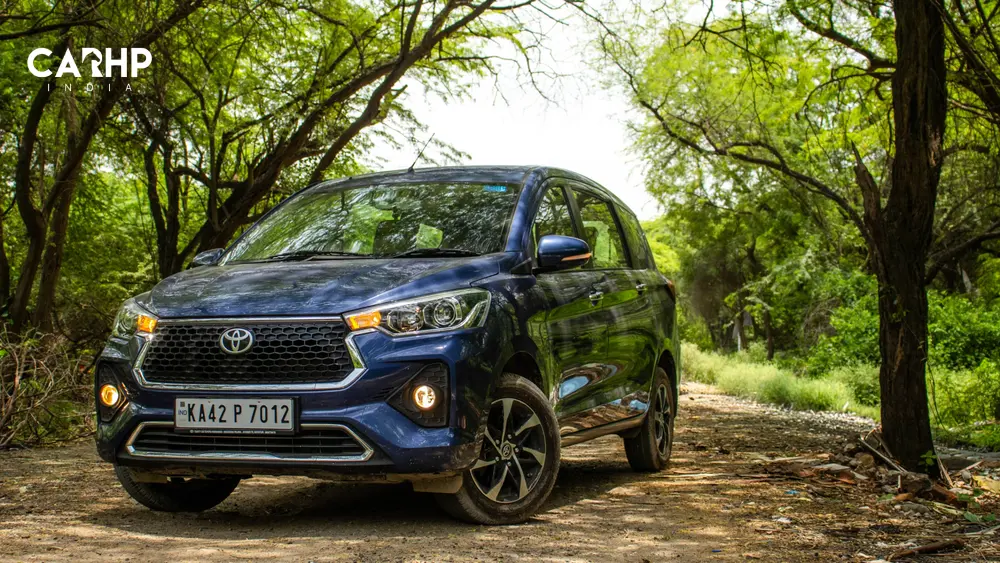
The Maruti Suzuki Ertiga and its badge-engineered sibling, the Toyota Rumion, are the more spacious and premium alternatives for buyers willing to spend considerably more.
They offer a larger 1.5-litre petrol engine, a six-speed automatic transmission and a factory-fitted CNG option. Their cabin is also more accommodating for passengers travelling over longer distances, although both are priced significantly higher than the Gravite.
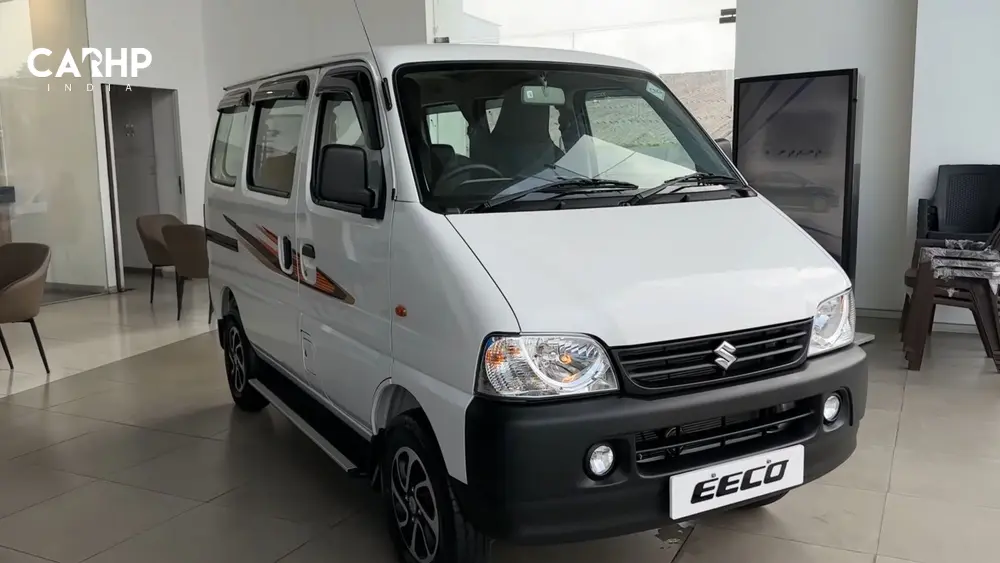
The Maruti Suzuki Eeco is another alternative for buyers prioritising affordability and passenger capacity over premium features. It offers practical seating configurations and relatively low ownership costs, but its utilitarian cabin, less sophisticated design and limited equipment make it a different proposition from the Gravite.
The Gravite's biggest advantage against these alternatives is its pricing and modular cabin. It offers a genuine seven-seat configuration in a compact footprint, along with six airbags as standard and an optional twin-cylinder CNG solution. While it cannot match the space and performance of larger MPVs like the Ertiga, it remains a more accessible option for buyers who need occasional seven-seat flexibility.
final verdict
final verdict
The Nissan Gravite is a practical and value-oriented MPV that makes a strong case for buyers looking for an affordable seven-seater in India. Its biggest strengths are its modular cabin, competitive pricing, relatively comprehensive safety equipment and economical powertrain options.
The flexible seating arrangement is particularly useful for families who frequently switch between carrying passengers and luggage. The removable third-row seats allow the cabin to be configured according to different requirements, while features such as rear air-conditioning vents, touchscreen smartphone connectivity and a digital instrument cluster improve overall convenience.
The availability of a twin-cylinder CNG retrofitment kit further strengthens the Gravite's value proposition. Buyers with high monthly driving requirements can benefit from lower fuel expenses without completely giving up the vehicle's seven-seat functionality.
However, the Gravite is not without compromises. Its 1.0-litre naturally aspirated petrol engine feels underpowered when fully loaded, and the lack of refinement becomes noticeable during aggressive acceleration. Not having the turbo petrol engine option from the Triber does not help its case either. The cabin also has its share of cost-cutting, while luggage capacity remains limited when all seven seats are occupied. The absence of an independent crash-test rating is another consideration.
Overall, the Gravite is a sensible choice for buyers who prioritise affordability, passenger flexibility and low running costs over outright performance or premium cabin quality. Its combination of accessible pricing, standard six airbags and optional CNG technology makes it a noteworthy contender in India's affordable MPV segment.
Nissan Gravite News
Nissan Gravite FAQs
What engine does the Nissan Gravite use?
−The Gravite uses a 1.0-litre, three-cylinder, naturally aspirated petrol engine producing 71 bhp and 96 Nm of torque. It is available with a five-speed manual or five-speed AMT.
What is the mileage of the Nissan Gravite?
+The Gravite delivers a claimed fuel efficiency of 19.3 kmpl with the manual transmission and 19.6 kmpl with the AMT gearbox. The optional CNG setup is advertised to deliver up to 24 km/kg.
Is the Nissan Gravite a seven-seater?
+Yes. The Nissan Gravite is a seven-seater MPV with a 5+2 seating configuration. It features a flexible second row and two removable individual seats in the third row.
Does the Nissan Gravite come with a CNG option?
+Yes. Nissan offers a government-approved twin-cylinder CNG retrofitment kit developed by Motozen. It uses two 25-litre water-capacity cylinders and is designed to retain the vehicle's seven-seat configuration.
Does the Nissan Gravite get an automatic transmission?
+Yes. The Gravite is available with a five-speed AMT. However, the AMT option is restricted to the N-Connecta and Tekna variants.
What is the ground clearance of the Nissan Gravite?
+182 mm.
Is the Nissan Gravite safe?
+The Gravite comes with six airbags as standard, along with ESC, TCS, Hill Start Assist, ABS with EBD, TPMS and ISOFIX child-seat anchorages. However, it does not currently have a published independent Global NCAP or Bharat NCAP crash-test rating.