My 700 KM Delhi-Dehradun Roadtrip With the Renault Kiger Turbo Manual: Most Underrated Highway Car?
Updated June 12, 2026
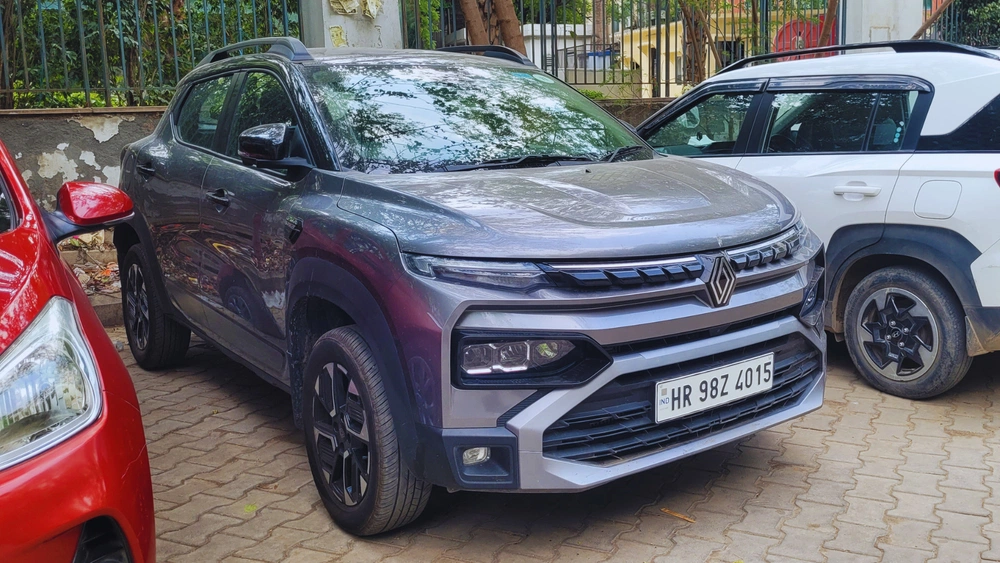
There are cars which impress you in a 15-minute media drive, and then there are cars which slowly reveal themselves over longer patches of uninterrupted highway driving. The Renault Kiger Turbo Manual falls firmly into the second category.
The interesting thing about this car is that its strengths don’t really show up in the city. In fact, the city conditions almost work against the Kiger.
Once the roads open up, the turbo spools, and the gearing settles into its rhythm, the Kiger transforms into something surprisingly mature. Honestly, that was unexpected.
The Kiger with its 1L Turbo engine is a different beast on the highway. It is the mildly sportier version of the regular Kiger, and can certainly hold its own against the likes of Fronx Turbo or even Punch Turbo for that matter.
Why did we choose Delhi-Dehradun Expressway?
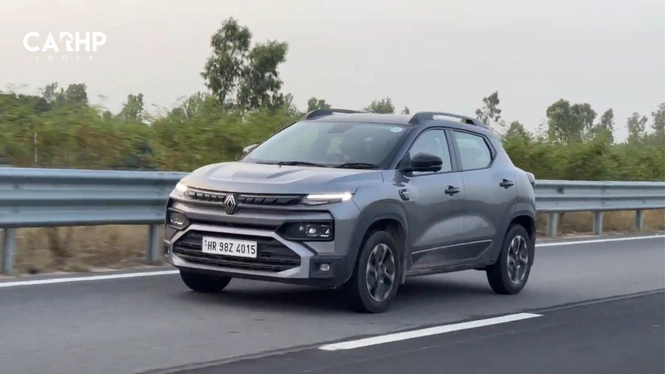
The Delhi-Dehradun expressway has been making headlines in the news as well as the automotive space in India, since this new expressway has cut down travel time between Delhi and Dehradun by almost 2 hours.
Following the buzz, we wanted to explore it for ourselves, and it matched perfectly with the kind of vehicle tests we had in mind.
Also Read - Renault Kiger Turbo Petrol MT First Drive Impressions
7 AM Meetup at Akshardham with the Team
As for the main characters of our trip: I was joined by Aman, who assisted me while we filmed a video comparing an electric car with a conventional ICE vehicle. Vatsal drove the Creta Electric, supported by Sayan.
The expressway in itself played a massive role in this story.
We started our journey from Akshardham Temple, and the route is genuinely world-class. Our Thursday drive consisted of smooth surfaces, wide lanes, long uninterrupted cruising stretches, and very low traffic.
As we left from Akshardham, we only had 20% fuel left in the car. Since we had the leverage to get fuel from any fuel station, we decided to get fuel on the way in order to explore if it is easy to find a fuel station on the way.
There might not be any petrol station situated on the expressway but there are certainly many others that are available at small detours. We did the same, took a small detour and got our petrol tank full and after driving in the same direction for almost 6 Kms beneath the elevated expressway, we were back on the main route.
What surprised us was the toll situation. Since the car didn’t have FASTag, we ended up paying close to ₹1200 across four toll booths, which felt excessive for the distance covered.
Eateries and restaurants are still somewhat sparse in patches, though multiple clean washrooms are available throughout the route.
Now focussing on our review methodology, we judged the Renualt Kiger on the basis of:
- Seating Comfort
- High Speed Stability
- Power and Torque Bands
- Cabin NVH Levels
- Air Conditioning and
- Overall Driving
Surprisingly, the Kiger handled most of those areas far better than expected.
The Turbo Engine Completely Changes This Car
Although the Kiger may look like a city car, it does not like crawling in traffic. Below the turbo band, especially in lower gears, it can feel slightly hesitant and juddery.
The low-end torque delivery isn’t particularly smooth, and combined with the heavier clutch and the characteristic 3-cylinder vibrations, bumper-to-bumper driving can become tiring rather quickly.
Also Read - Citroen C3 Review: Who Should Consider This Car?
But the moment the turbo wakes up, the entire personality of the car changes. This is where Renault genuinely got things right.
The torque spread on the highway is excellent. Once you are in the 80-110 km/h zone, the car barely asks for gear shifts. The tall gearing works beautifully here, and the engine always feels like it has enough power in reserve for quick overtakes.
You don’t constantly find yourself hunting for gears, just squeeze the throttle and the car pulls cleanly till approximately 6,500-6,600 RPM. This gives the Kiger a surprisingly enthusiastic character once you’re in the mid to high torque band.
This is probably one of the most underrated aspects of the car, because on paper, the Kiger Turbo doesn’t sound exciting. But out on an open highway, it feels energetic in a very effortless way.
Highway Stability Is Genuinely Impressive
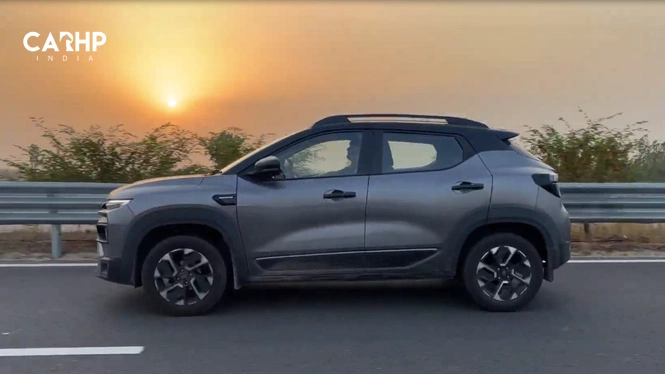
This was probably the biggest positive surprise of the trip. The Kiger feels remarkably planted at highway speeds.
Despite being a relatively tall subcompact SUV, body roll is extremely well controlled, and the car maintains composure during quick lane changes and high-speed cruising.
As someone who is 6’2”, headroom also never became an issue, which is still surprisingly rare in this segment.
In the city, it can occasionally feel slightly stiff over sharper bumps and broken roads, but on the highway that same firmness starts making sense. The car doesn’t float, bounce excessively, or lose composure at speed.
Renault seems to have tuned this car with highway maturity in mind rather than purely soft city comfort and honestly, that decision works here clearly.
The Seats Make A Bigger Difference Than Expected
One underrated but very important aspect of long-distance driving is fatigue and this is where the Kiger quietly performs very well.
The front seats are firm, supportive, and remain comfortable even after spending hours continuously behind the wheel. The ventilated seats rescued our backs from heavy sweating in the North Indian summers, though their actual cooling performance feels weaker than expected.
Still, combined with the seating posture and visibility, the cabin never felt physically exhausting during the drive, which is commendable because many compact SUVs start becoming uncomfortable after 3-4 hours of driving.
I felt fresh even after driving straight for 350 Kms from Akshardham to Rajpur Road, Dehradun.
Also Read - Skoda Kylaq Prestige Automatic Detailed Review
The Cabin Has Contradictions
The Kiger’s cabin is interesting because it simultaneously feels well put together and cheap. The plastics are visibly average in quality, and there’s no escaping that. Touchpoints and material richness are definitely something you would notice to be outright inferior when compared with the competition.
However, the interior quality doesn’t necessarily mean bad built quality. The Kiger feels like a car that is structurally solid and feels well put together.
Even after long highway runs, there were no squeaks, no rattles, no dashboard noises, no loose trim sounds. This fact particularly demands great appreciation given the segment may see better material quality but are plagued with bad build quality.
The NVH levels also have two distinct personalities. At lower speeds, the 3-cylinder nature of the engine is very noticeable, with the engine noise and significant vibrations filtering into the cabin.
But at highway speeds, the engine develops a surprisingly enjoyable grunt, and once the windows are rolled up, the cabin becomes nearly 80% isolated from the outside environment.
Wind and tyre noise are still noticeable, but never irritating enough to ruin the drive.
AC Performance Is Among The Best In Segment
The superstar of the cabin is the chiller AC unit equipped on the Kiger. The performance of the AC had us praising it almost every other hour on the road.
Even at 40-degrees outside, the cabin cools down very quickly when the AC temperature is set at 22-23 degrees. More importantly, the compressor doesn’t feel like it heavily strains the engine performance.
In smaller turbo petrols, aggressive AC usage often makes the engine feel weaker. That never became a major issue here. According to me, this matters far more than panoramic sunroofs or gimmicky features in the Indian summers.
Also Read - 2025 Renault Kiger Variants Explained
Features That Feel Half-Finished
When you talk about a budget car, especially when the price is Sub-10Lakhs Rupees, not everything can be impressive. There are certain trade-offs that you have to consider.
The 360-degree camera system feels underwhelming in execution. The camera quality itself is average, and despite being marketed as a 360 system, there is no properly rendered stitched bird’s-eye view. Instead, it mostly switches between directional camera feeds from different sides of the car.
Similarly, while the ventilated seats are appreciated as a feature addition, their actual cooling intensity could have been better.
This is a recurring feeling throughout the Kiger - smart features, slightly limited execution finesse.
Final Thoughts: A Better Highway Car Than City Car
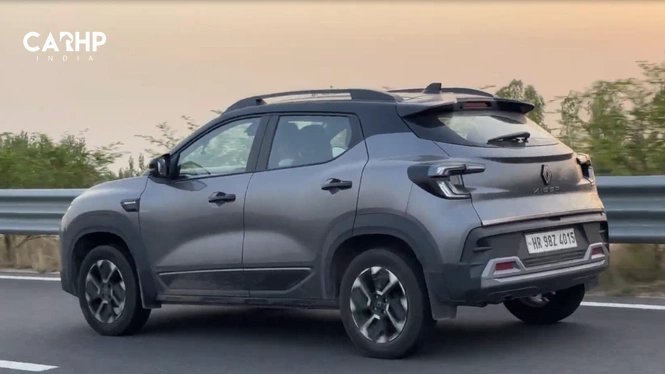
After 700 kilometers, the Renault Kiger Turbo Manual revealed itself as a car with a very specific personality.
This is not the most refined compact SUV, it is not the smoothest city commuter and It is not the most premium cabin experience either.
But once you leave the city behind, the Kiger suddenly starts to make sense as a serious contender in the Sub-10 Lakhs Rupees range.
If I had to describe the Kiger in one line, it would be - A solid highway companion.
In a market increasingly obsessed with big names, hollow feature lists and giant touchscreens, the Kiger quietly reminds you that sometimes a car’s real personality only appears once you actually drive it properly.
Table of Contents
- Why did we choose Delhi-Dehradun Expressway?
- 7 AM Meetup at Akshardham with the Team
- The Turbo Engine Completely Changes This Car
- Highway Stability Is Genuinely Impressive
- The Seats Make A Bigger Difference Than Expected
- The Cabin Has Contradictions
Join the Conversation
Trending
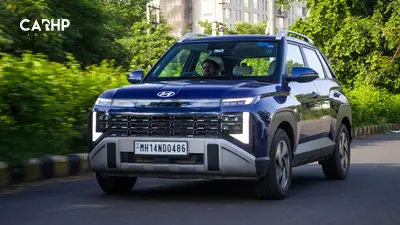
I Drove the Hyundai Venue HX8 Turbo Manual, and Can It Take on the Brezza and Nexon?
I tested the Hyundai Venue HX8 variant powered by the 1.0-litre turbo-petrol engine for over 1,500 km across Noida-Gurugram traffic and multiple expressways. We evaluated its real-world fuel economy, ride comfort, and overall drivability for daily commutes and long family road trips.
Vatsal Agrawal
September 16, 2026
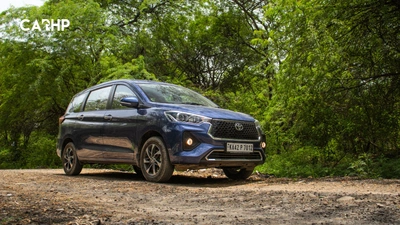
Toyota Rumion 700km Review: Is This the Right Car for a Joint Family?
So, overall, the Toyota Rumion is a great offering in the market, priced under ₹15 lakh, giving you a comfortable and spacious cabin, decent features, and a reliable petrol engine with good fuel efficiency.
Vatsal Agrawal
August 21, 2026
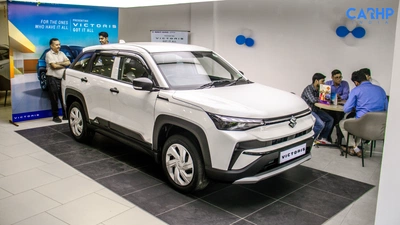
Maruti Victoris LXi CNG First Drive Review
This is the cheapest Victoris CNG you can buy and it comes with 27 kmpl mileage
Sayan Paul
August 17, 2026
Featured
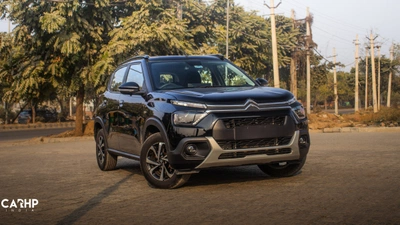
Citroen C3 Review: Who Should Consider This Car?
A few days ago, I took the Citroen C3X out for a spin in the city and on the highways. I travelled long distances and checked its fuel efficiency, features, comfort, and other factors. Today, I’ll briefly share my overall experience with the C3X and will tell you whether you should consider it or not and which is the most value-for-money variant of the lot.
Vatsal Agrawal
May 19, 2026
Tesla Finally In India Officially. Why Now And What Does It Mean For EVs?
The much-anticipated 2025 Tesla Model Y has officially arrived in India, marking a pivotal moment for the nation's burgeoning electric vehicle market. Launched on July 15, 2025, the Model Y Juniper facelift offers cutting-edge technology, impressive range, and signature Tesla performance. Positioned as a premium electric SUV, its entry will intensify competition and reshape consumer expectations for EVs across the subcontinent.
Charan Narain
July 17, 2025
Here Are 10 Things The Harrier.EV Offers That The Mahindra XEV 9E Doesn't
The Harrier.EV is an incredible new offer from Tata. Its most popular competitor would be the Mahindra XEV 9E, priced similarly. With these two incredible offerings from home grown brands available, here is a list of everything the Harrier.EV offers that the XEV 9E doesn't.
Charan Narain
June 13, 2025

Write a comment
Comments
No comments yet. Be the first to comment!