Why Maruti Suzuki Isn't Betting Big on EVs Yet
By Arjun Nair
Updated July 21, 2026
For over two decades, Maruti Suzuki has been the undisputed leader of India's passenger car market. It pioneered affordable mobility, built the country's largest sales and service network, and today accounts for nearly 40% of passenger vehicle sales.
Yet, when it comes to electric vehicles, the company that sells millions of cars every year has just one EV in its portfolio.
That raises an obvious question. Did Maruti simply arrive late to the EV race, or was it a deliberate business decision? The evidence suggests it was the latter.
Unlike Tata Motors and Mahindra, which invested heavily in dedicated EV platforms years before demand took off, Maruti spent most of the last decade strengthening its CNG, hybrid and fuel-efficient petrol lineup while publicly questioning whether India was ready for battery electric vehicles.
Maruti Never Believed India Was Ready For EVs
Maruti's cautious approach was never hidden.
Speaking to Forbes India in 2022, Chairman R.C. Bhargava had argued that electric vehicles were better suited to developed economies than India.
"All the talk about going electric can work in a rich country, but in a country where people are struggling to make a living, it is a difficult plan."
His concerns extended beyond affordability. Bhargava also warned about India's dependence on imported battery materials, particularly lithium, which remains heavily concentrated in China.
"Unless the chemistry of the battery changes and the costs come down, or you find a material that is not anybody's monopoly, we cannot talk of electrification in the country."
These statements, made consistently over several years, reflected Maruti's long-term strategy rather than personal opinions. While rivals accelerated EV investments, Maruti believed the Indian market would continue to favour affordable petrol, CNG and hybrid vehicles for many more years.
Rivals Were Building Platforms While Maruti Waited
The biggest difference between Maruti and its competitors is not the number of EVs they sell today, it is the investments they made years ago.
Tata Motors began developing its Ziptron EV technology well before launching the Nexon.ev. The same electrical architecture now powers multiple vehicles including the Tiago.ev, Punch.ev and Curvv.ev, allowing Tata to spread development costs across several products.
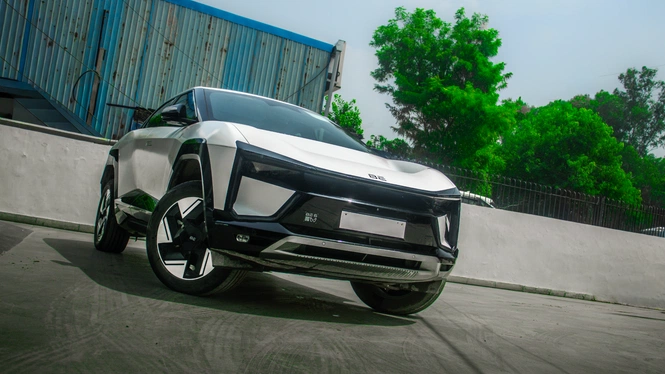
Mahindra took a similar approach by investing in its dedicated INGLO skateboard platform, designed specifically for electric SUVs. The company has already launched multiple Born Electric models with several more planned over the next few years.
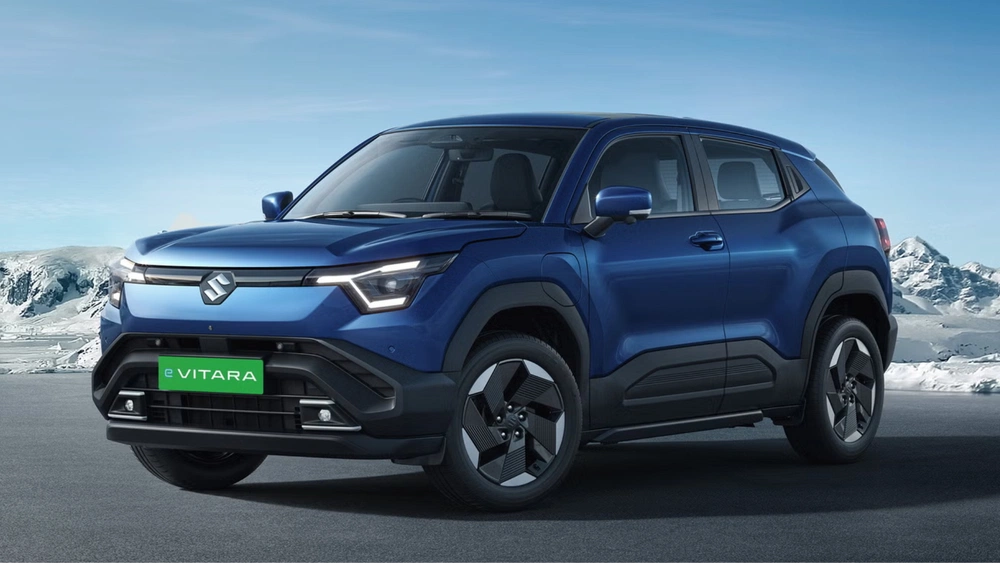
Maruti, on the other hand, recently entered the segment only with the e Vitara, built on the new HEARTECT-e platform jointly developed by Suzuki and Toyota. While the architecture is capable of supporting additional vehicles globally, Suzuki's announced EV pipeline remains relatively modest compared to competitors that have spent years expanding their electric portfolios.
The result is clear. Tata and Mahindra now have established EV ecosystems, while Maruti is only beginning its journey.
Also Read - Maruti Suzuki e Vitara Prices Hiked By Upto Rs 30,000
Maruti Chose CNG And Hybrids Instead
It would be unfair to say Maruti ignored cleaner mobility altogether.
Instead of betting everything on battery electric vehicles, the company diversified its investments across several technologies.
Today, Maruti dominates India's factory-fitted CNG market with more than ten CNG models and the largest market share in the segment. It has also invested heavily in strong hybrids, flex-fuel engines, ethanol-compatible vehicles and compressed biogas technology.
Suzuki President Toshihiro Suzuki has repeatedly described this as a "multi-powertrain strategy," where electric vehicles are only one part of achieving carbon neutrality.
From a business perspective, the strategy made sense. CNG infrastructure expanded rapidly across India, hybrid vehicles required no charging infrastructure, and both technologies allowed Maruti to continue serving price-sensitive buyers.
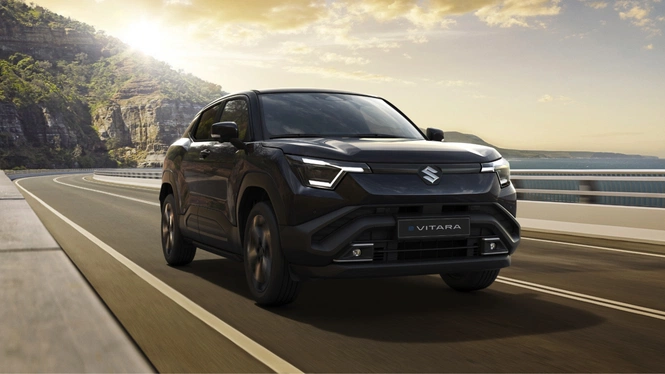
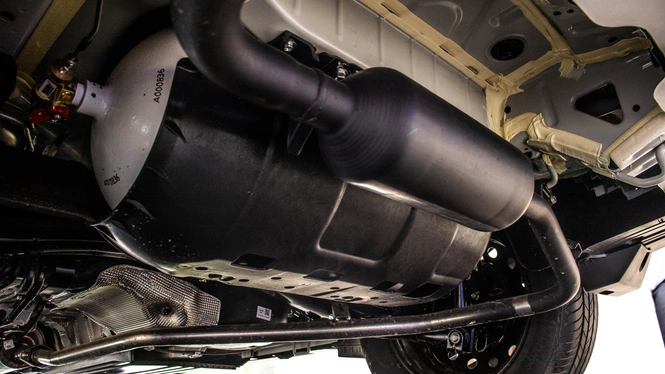
Maruti became the first carmaker to offer a factory fitted underbody CNG tank in the Victoris, in order to maximise space and eliminate the drawback that typically comes with CNG cars. A similar setup will feature on the upcoming Brezza facelift as well.
Also Read - Maruti Suzuki Brezza Facelift Details Leaked Ahead of Launch
The carmaker is also actively developing mass market strong hybrid cars for India, likely starting with the Fronx Hybrid, which has been spotted testing in Delhi NCR multiple times. Its new 1.2-litre Z Series engine, which powers the Swift and Dzire (possibly the Baleno facelift as well) is strong hybrid compatible.
Rather than pushing customers toward EVs, Maruti has chosen to offer lower-emission alternatives that fit existing infrastructure.
Export Markets Took Priority
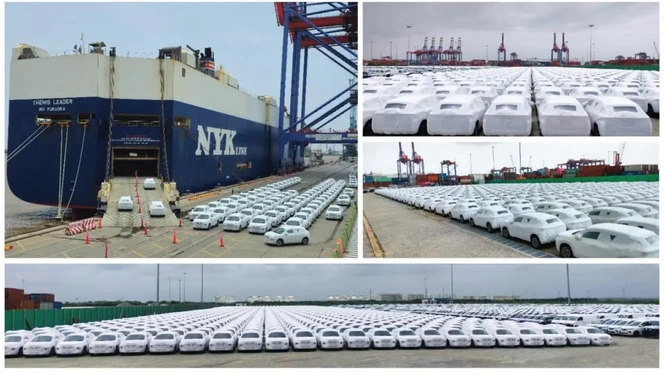
Even Maruti's first EV highlights where the company's priorities initially lay.
Production of the e Vitara began with exports to Europe and other global markets before deliveries commenced here in India. Europe has significantly stricter CO₂ emission regulations, making electric vehicles essential for Suzuki's global compliance strategy.
From Suzuki's perspective, exporting the e Vitara first was commercially logical.
From an Indian consumer's perspective, however, it reinforced the perception that Maruti's home market was not the company's first priority for electric vehicles.
For a manufacturer that has spent four decades building its reputation in India, launching its first EV overseas before aggressively targeting domestic buyers invited criticism.
Also Read - Check Out These Upcoming Hybrid Cars In India
Battery Manufacturing Remains A Challenge
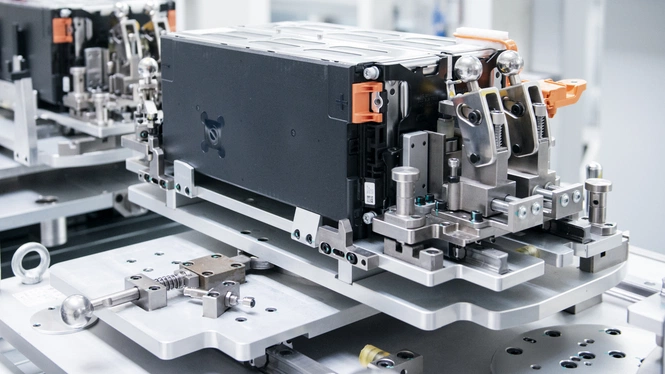
Maruti has also been vocal about another challenge that often receives less attention, battery manufacturing.
Speaking in 2025, R.C. Bhargava pointed out that India still lacked large-scale battery cell production, with most companies importing cells before assembling battery packs locally.
The company's joint venture with Toshiba and Denso has helped localise battery components and electrode manufacturing, but much of that production currently supports hybrid vehicles rather than fully electric cars.
Bhargava has also argued that establishing large battery cell factories requires investments running into tens of thousands of crores while exposing manufacturers to global supply chain risks, particularly if lithium availability becomes constrained. These concerns are valid.
However, Tata, Mahindra and several global manufacturers accepted those risks years earlier in order to establish an early presence in the EV market.
Was Maruti Right To Wait?
Looking back, many of Maruti's concerns have proved accurate.
Electric vehicles still account for only a small percentage of India's passenger vehicle sales, and charging infrastructure remains inconsistent outside major cities.
Battery costs continue to influence pricing, as many buyers still prioritise affordability over electrification.
All this considered, Maruti's cautious approach was grounded in market realities rather than technological hesitation.
The question is whether waiting too long has created a different problem.
Also Read - Which EV Charging Companies in India Have the Most Chargers?
Can Maruti Catch Up?
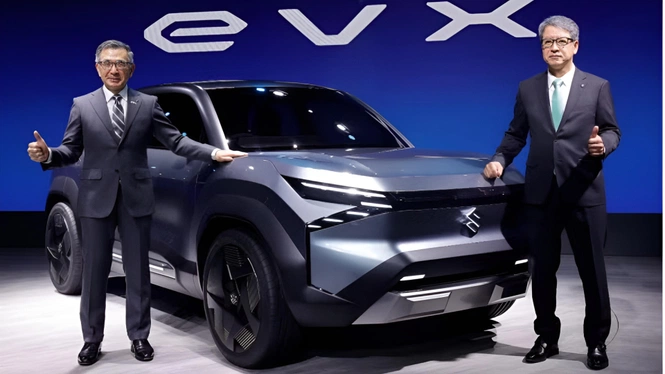
The Indian EV market has evolved much faster than many expected.
Consumers today have multiple electric SUVs, hatchbacks and sedans to choose from across different price segments. Tata Motors built strong brand recognition in electric mobility, Mahindra has positioned itself as a premium EV manufacturer, and global players such as BYD, MG and Hyundai continue expanding their offerings.
Maruti still has enormous advantages. It possesses India's largest dealership and service networks, unmatched manufacturing scale, one of the country's strongest supplier ecosystems and a loyal customer base that few manufacturers can match.
The challenge is that first-mover advantages are difficult to replicate. Brand perception, charging partnerships, software development and customer confidence take years to build.
However, considering its advantages, if the company decides to aggressively expand its EV portfolio, it has the financial strength and production capacity to become a major player.
For now, one thing is clear, that Maruti was never absent from the conversation around cleaner mobility. It simply chose a very different route to get there.
Sources: EVReporter.com, HT Auto, Forbes, ET EnergyWorld
Image Source: Maruti Suzuki, Suzuki Global, Skoda
Table of Contents
- Maruti Never Believed India Was Ready For EVs
- Rivals Were Building Platforms While Maruti Waited
- Maruti Chose CNG And Hybrids Instead
- Export Markets Took Priority
- Battery Manufacturing Remains A Challenge
- Was Maruti Right To Wait?
Join the Conversation
Trending
How 2027 Traffic Rule Changes Will Affect Drivers in India
India’s traffic rules are tightening, with repeat offenders facing possible driving licence disqualification and stricter deadlines for paying or disputing e-challans. New vehicle safety requirements will also affect specified commercial vehicles from 2027. Check the latest 2027 Indian traffic rules here.
Anmol Kumar
October 22, 2026
Check Out These Upcoming Hybrid Cars In India
Hybrid cars are gaining serious interest in India as more affordable options start appearing and real-world city mileage figures impress owners.
Salil Kumar
October 22, 2026
What Is CBG? Know About Its Production, Engine Performance, Prices and Future in India
Compressed biogas (CBG) is gaining attention in India as a renewable alternative to CNG. Here's how it is produced, its impact on engine performance and mileage, current pricing factors, and its future in India's automotive sector.
Salil Kumar
October 21, 2026
Hyundai Bayon Safety Features Revealed Ahead of October 26 Launch
Hyundai has revealed the safety package of the upcoming Bayon ahead of its October 26 launch in India. The compact SUV gets Level 2 Pro ADAS with 23 functions, six airbags as standard and a body structure made using 69% advanced multi-grade high-strength steel.
Anmol Kumar
October 21, 2026
Featured
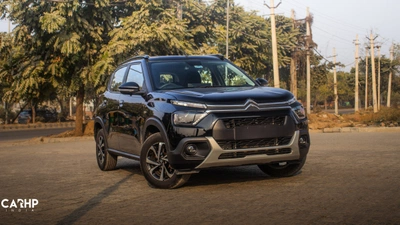
Citroen C3 Review: Who Should Consider This Car?
A few days ago, I took the Citroen C3X out for a spin in the city and on the highways. I travelled long distances and checked its fuel efficiency, features, comfort, and other factors. Today, I’ll briefly share my overall experience with the C3X and will tell you whether you should consider it or not and which is the most value-for-money variant of the lot.
Vatsal Agrawal
May 19, 2026
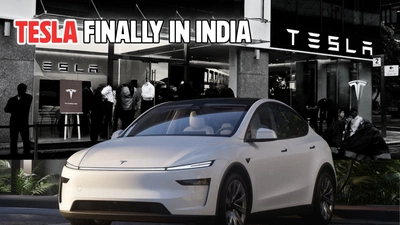
Tesla Finally In India Officially. Why Now And What Does It Mean For EVs?
The much-anticipated 2025 Tesla Model Y has officially arrived in India, marking a pivotal moment for the nation's burgeoning electric vehicle market. Launched on July 15, 2025, the Model Y Juniper facelift offers cutting-edge technology, impressive range, and signature Tesla performance. Positioned as a premium electric SUV, its entry will intensify competition and reshape consumer expectations for EVs across the subcontinent.
Author
July 17, 2025
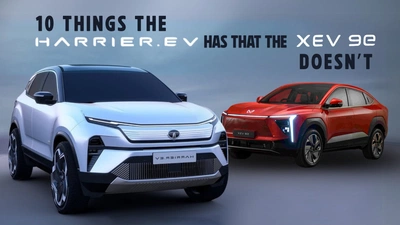
Here Are 10 Things The Harrier.EV Offers That The Mahindra XEV 9E Doesn't
The Harrier.EV is an incredible new offer from Tata. Its most popular competitor would be the Mahindra XEV 9E, priced similarly. With these two incredible offerings from home grown brands available, here is a list of everything the Harrier.EV offers that the XEV 9E doesn't.
Author
June 13, 2025
Write a comment
Comments
No comments yet. Be the first to comment!