Government Notifies Standards for Higher Ethanol Blends Up to E30
By Arjun Nair
Updated May 27, 2026
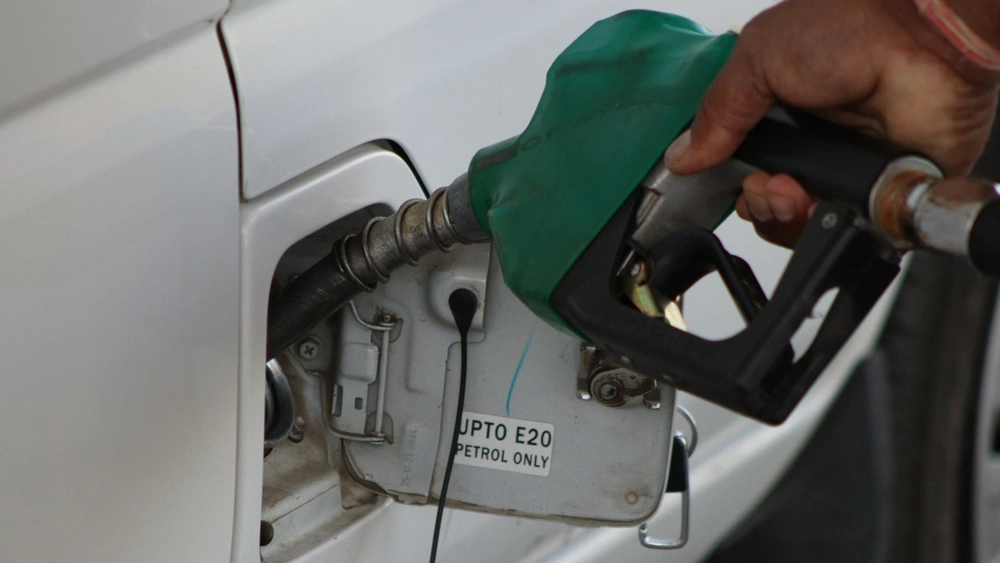
The Indian government has notified new standards for ethanol-petrol blends over the existing E20 - E22, E25, E27, and E30. The Bureau of Indian Standards (BIS) published the new standard (IS 19850:2026) on May 15.
This step aims to use surplus ethanol, reduce crude oil imports amid West Asia conflicts, save foreign exchange, cut emissions, and support farmers. The standard sets technical rules for mixing anhydrous ethanol with petrol, including composition, impurities, testing methods, and safety norms.
Petrol pumps will clearly label these new blends, so vehicle owners can know what exact fuel they are getting filled.
Higher blends are not mandatory yet, but this move provides a framework for gradual rollout as vehicles and ethanol supply become ready.
Also Read - A List Of All The E20 Compatible Cars On Sale
Ethanol Blending Concerns for Current Vehicle Owners
Many of you are likely worried about the impact on your petrol cars or bikes that are only compatible up to E20, or maybe even lesser. This is a valid concern, as E20 has already led to mileage drops and compatibility issues.
Higher blends may cause a further drop in mileage beyond what many already see with E20. Ethanol can affect rubber seals, gaskets, and fuel system parts in older cars.
Most Fully E20-compliant cars only started rolling out after April 2025, meaning that majority of existing vehicles on the road are only E10 compliant.
Using blends above E20 may raise questions on warranty and engine life. Manufacturers may deny warranty in such cases.
To address these, the Petroleum Ministry has asked the Automotive Research Association of India (ARAI) to study E10 and E20 compliant vehicles, monitoring their performance, mileage, emissions, engine life, and costs. Samples may be tested for 60,000-70,000 km to obtain accurate results.
Experts note that a small increase (like 1% above E20) is unlikely to cause major issues, but a jump to 25% could start showing its effects and needs careful assessment.
Owners are advised to continue using E20 for now, maintain their cars properly with regular servicing, and follow manufacturer advice.
Also Read - A Full List Of E20 Compliant Bikes and Scooters in India
What do E22, E25, E27 and E30 Mean?
E stands for Ethanol. The number after E shows the percentage of ethanol mixed with petrol.
So, E20 means 20% ethanol and 80% petrol. Similarly, E22 has 22% ethanol, E25 has 25%, E27 has 27%, and E30 has 30% ethanol blended with petrol.
E100 is 100%, or nearly pure ethanol.
Also Read - Maruti Suzuki's First E100 Flex-Fuel Vehicle To Be Revealed on June 5
Advice for Potential Car Buyers
Those of you who are planning to buy a new car or bike are advised to check their level of ethanol compatibility. Vehicles made after April 2025 are expected to be E20 compliant.
Ask dealers about the vehicle's readiness for higher blends like E25 or E30. Some companies are already developing flex-fuel vehicles. Consider possible effects on mileage and power, but also note benefits like better octane rating.
Source: Times of India
Table of Contents
- Ethanol Blending Concerns for Current Vehicle Owners
- What do E22, E25, E27 and E30 Mean?
- Advice for Potential Car Buyers
Join the Conversation
Trending
MG Windsor EV Indulge Edition Launched at Rs. 17.99 Lakh
The MG Windsor EV Indulge Edition brings a new exterior finish, a rear entertainment screen and additional cabin accessories to India's electric car market. Priced at Rs. 17.89 lakh, it uses a 38 kWh battery pack with a claimed range of 332 km.
Anmol Kumar
October 13, 2026
New Jeep SUV based on Tata Sierra set for 2028 Launch
Tata and Stellantis have reportedly sealed a deal that puts a new Jeep on the Sierra’s ARGOS platform. The mid-size SUV, codenamed J1J, is expected in 2028 with ICE and electric options, and will be built in Maharashtra.
Anmol Kumar
October 13, 2026
Best Diwali Offers On Most Popular Cars
Carmakers and dealers are rolling out festive deals. We pick the best Diwali 2026 offers on India's most popular cars and keep this list updated as new deals arrive.
Arjun Nair
October 13, 2026

Featured
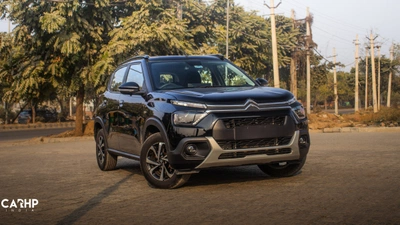
Citroen C3 Review: Who Should Consider This Car?
A few days ago, I took the Citroen C3X out for a spin in the city and on the highways. I travelled long distances and checked its fuel efficiency, features, comfort, and other factors. Today, I’ll briefly share my overall experience with the C3X and will tell you whether you should consider it or not and which is the most value-for-money variant of the lot.
Vatsal Agrawal
May 19, 2026
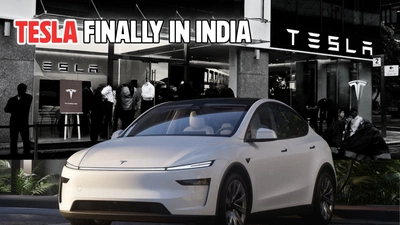
Tesla Finally In India Officially. Why Now And What Does It Mean For EVs?
The much-anticipated 2025 Tesla Model Y has officially arrived in India, marking a pivotal moment for the nation's burgeoning electric vehicle market. Launched on July 15, 2025, the Model Y Juniper facelift offers cutting-edge technology, impressive range, and signature Tesla performance. Positioned as a premium electric SUV, its entry will intensify competition and reshape consumer expectations for EVs across the subcontinent.
Author
July 17, 2025
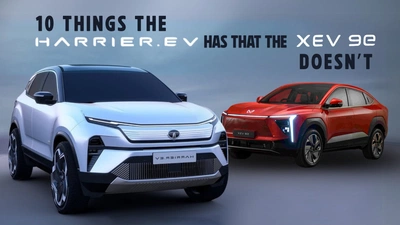
Here Are 10 Things The Harrier.EV Offers That The Mahindra XEV 9E Doesn't
The Harrier.EV is an incredible new offer from Tata. Its most popular competitor would be the Mahindra XEV 9E, priced similarly. With these two incredible offerings from home grown brands available, here is a list of everything the Harrier.EV offers that the XEV 9E doesn't.
Author
June 13, 2025
Write a comment
Comments
No comments yet. Be the first to comment!