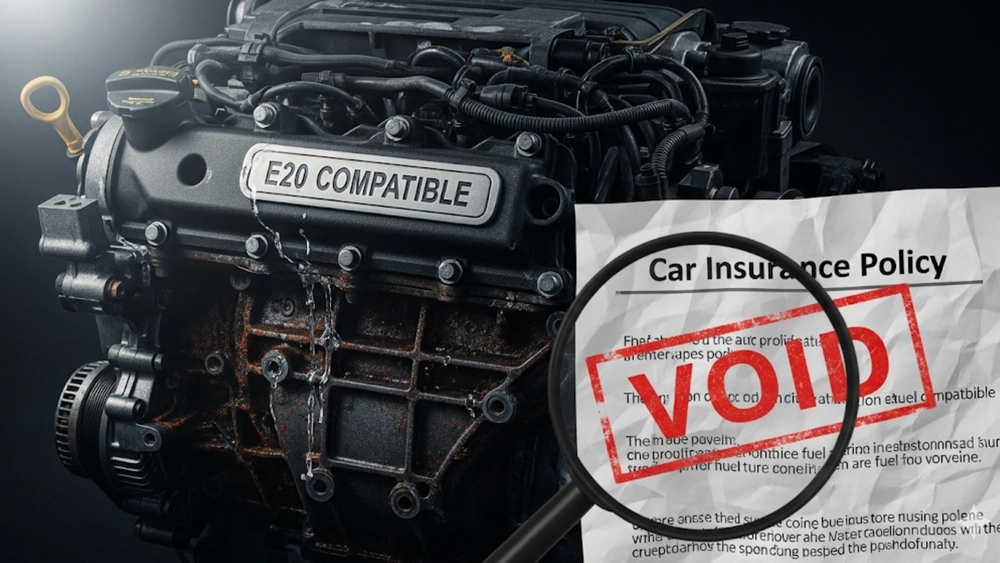
India took a bold leap this April when petrol pumps across the country switched to E20 fuel a blend of 80% petrol and 20% ethanol. The move, originally slated for 2030, came five years ahead of schedule.
The government calls it a win for energy independence, farmer welfare, and lower carbon emissions. But for millions of car owners, especially those driving older models, the rollout has been anything but smooth.
Also Read-A List Of All The E20 Compatible Cars On Sale
Why Drivers Are Worried
Ethanol isn’t new, but E20 is stronger than what most vehicles on Indian roads were designed to handle. Compared to the older E10 blend, E20 carries less energy, meaning lower fuel efficiency.
The bigger worry is ethanol’s corrosive nature. Rubber seals, fuel lines, and carburetors in cars built before April 2023 when E20 compatibility became mandatory under BS6 Phase 2 are vulnerable.
“Using E20 in vehicles not designed for it can cause premature wear and tear,” Toyota India has cautioned in an email to Cartoq, warning owners of models like the Hyryder and Innova Hycross that warranties could be voided.
Rural drivers have reported higher maintenance costs and more frequent breakdowns. Despite repeated government assurances that “E20 will not affect warranties,” as stated by the Ministry of Petroleum and Natural Gas, real-world stories suggest otherwise.
The Insurance Grey Area
If car owners weren’t already anxious, insurers have added another layer of uncertainty. Policies don’t clearly state whether damage from E20 in non-compatible cars will be covered.
Digital insurer ACKO told The Economic Times: “If the vehicle manual prescribes E10 and the owner uses E20, any resulting damage may not be covered, as it falls under negligence.” Even add-on engine protection covers, which many buy for peace of mind, exclude damage caused by using the wrong fuel.
Yet the government maintains insurance validity is unaffected. This contradiction has led to confusion, with scattered reports of claims being denied over ethanol-related corrosion.
In September 2025, a Public Interest Litigation questioning the rollout was dismissed by the Supreme Court, which sided with the broader national interest of energy independence.
ICICI Lombard has cautioned that insurance claims arising from E20 fuel-related damage in older, non-compatible vehicles could face rejection. The insurer stated that using a fuel not approved for a particular vehicle may be viewed as negligence or improper usage. In its advisory, the company said,
"Using a fuel your vehicle was not made for can be treated as improper use or negligence. Insurers may review these claims from that angle, and rejection is possible."
The warning primarily concerns vehicles sold before April 2023, many of which were not designed to run on 20 percent ethanol-blended petrol. According to ICICI Lombard, ethanol can gradually affect fuel lines, rubber seals and other engine components over time.
The insurer further noted,
"Ethanol is corrosive. In vehicles not built for it, it can degrade rubber seals, damage fuel lines, and wear down engine parts gradually." While the use of E20 fuel does not automatically invalidate an insurance policy, claims linked to long-term fuel-related damage may still be assessed on a case-by-case base"
Also Read- A Full List Of E20 Compliant Bikes and Scooters in India
What Carmakers Are Saying
- Maruti Suzuki says all its models built after April 2023 are E20-compliant.
- Hyundai reassures buyers that most of its 2023 and newer models can run on E20, but urges owners to double-check manuals.
- Tata Motors admits mileage drops are real but insists E20 is “safe for all compatible vehicles.”
- Mahindra confirms its latest SUVs are compliant, though it recommends premium fuels for turbocharged engines.
- Volkswagen and Skoda assure BS6-era cars made after 2023 are safe, with warranties intact.
- Renault India and partner Nissan also claim their recent models face no issues.
The consensus, echoed by the Automotive Research Association of India (ARAI), is that E20 is safe if your car is designed for it. But as Toyota bluntly put it: “Using E20 in non-compatible vehicles will cause engine damage and void warranty.”.
Source- ICICI Lmbard. Mint
Table of Contents
- Why Drivers Are Worried
- The Insurance Grey Area
- Caught Between Costs and Risks
- What Carmakers Are Saying
- Nobody Will Like The Answer To This Question
Join the Conversation
Trending
Everything You Need To Know About BS7 Emission Norms
India is gearing up for the next major leap in vehicle emission standards with Bharat Stage 7.
Arjun Nair
July 23, 2026
Which EV Charging Companies in India Have the Most Chargers?
EV adoption in any country is largely dependant on the availability of charging infrastructure.
Arjun Nair
July 21, 2026
Essential Features Every Car Should Have as Standard
Essential Features Every Car Should Have as Standard
Arjun Nair
July 13, 2026
Featured
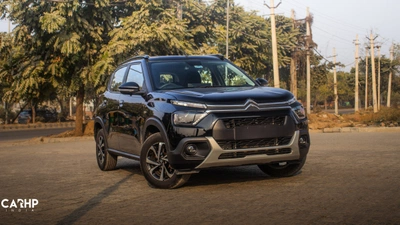
Citroen C3 Review: Who Should Consider This Car?
A few days ago, I took the Citroen C3X out for a spin in the city and on the highways. I travelled long distances and checked its fuel efficiency, features, comfort, and other factors. Today, I’ll briefly share my overall experience with the C3X and will tell you whether you should consider it or not and which is the most value-for-money variant of the lot.
Vatsal Agrawal
May 19, 2026
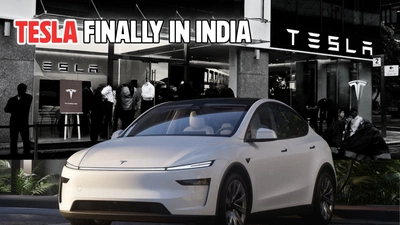
Tesla Finally In India Officially. Why Now And What Does It Mean For EVs?
The much-anticipated 2025 Tesla Model Y has officially arrived in India, marking a pivotal moment for the nation's burgeoning electric vehicle market. Launched on July 15, 2025, the Model Y Juniper facelift offers cutting-edge technology, impressive range, and signature Tesla performance. Positioned as a premium electric SUV, its entry will intensify competition and reshape consumer expectations for EVs across the subcontinent.
Author
July 17, 2025
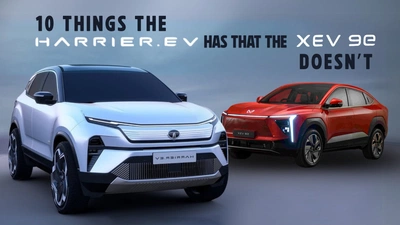
Here Are 10 Things The Harrier.EV Offers That The Mahindra XEV 9E Doesn't
The Harrier.EV is an incredible new offer from Tata. Its most popular competitor would be the Mahindra XEV 9E, priced similarly. With these two incredible offerings from home grown brands available, here is a list of everything the Harrier.EV offers that the XEV 9E doesn't.
Author
June 13, 2025
Write a comment
Comments
No comments yet. Be the first to comment!