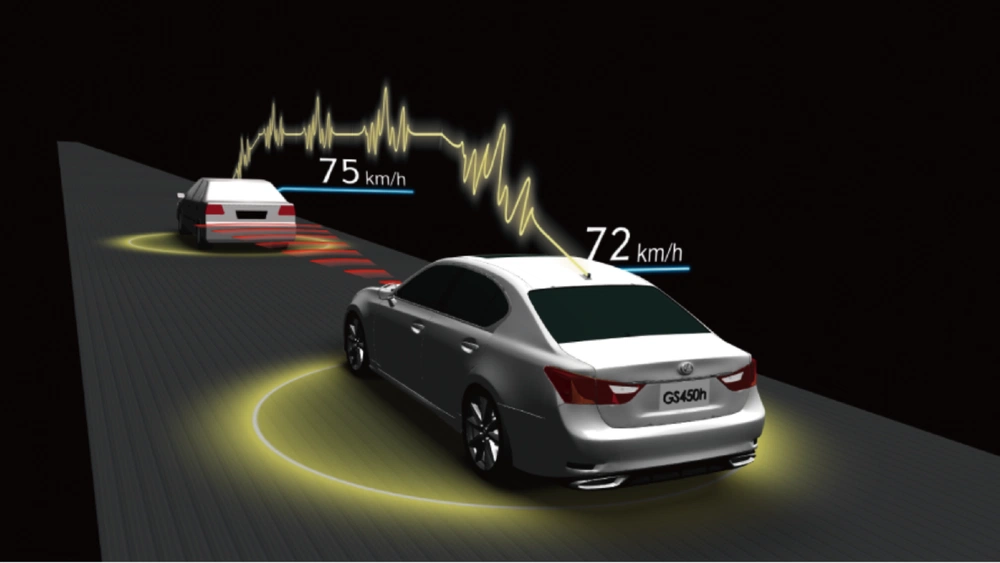
Imagine zipping through notorious traffic jams, your car suddenly alerting you to a speeding truck veering into your lane, before you even spot it. The government is gearing up to mandate V2V devices in all new vehicles, a move that could slash collisions by up to 80%. Gadkari, known for his no-nonsense approach to infrastructure, announced this during a recent high-level meeting, emphasizing how "talking cars" will revolutionize safety on our pothole-riddled highways and bustling city streets.
With the Department of Telecommunications approving dedicated spectrum, the stage is set for a nationwide rollout by year's end, blending cutting-edge tech with India's urgent need for smarter mobility.
These systems can help prevent crashes by warning drivers early and identifying vehicles in blind spot areas-Nitin Gadkari
How Cars Will "Talk" to Each Other
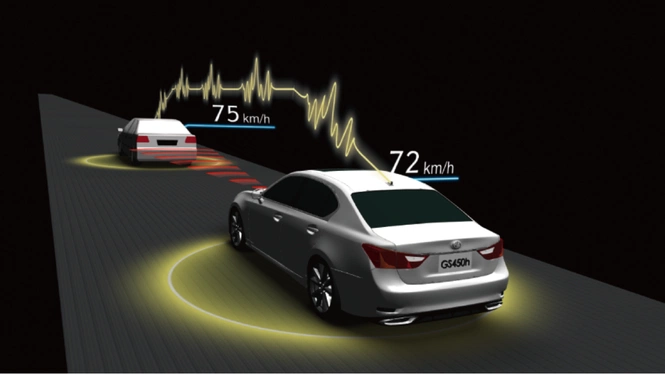
At its heart, V2V is like equipping vehicles with a sixth sense, a wireless network that lets them share vital info in the blink of an eye. Picture this: Your car broadcasts data packets every 100 milliseconds, including speed, position, braking status, and even steering angle, to any compatible vehicle within a 300-meter bubble.
This happens via Dedicated Short-Range Communications (DSRC) or the more advanced Cellular Vehicle-to-Everything (C-V2X), using the freshly allocated 30 MHz spectrum in the 5.875-5.905 GHz band. No Wi-Fi or cellular data required; it's a direct, low-latency chat that works even in signal-blackout zones like rural Rajasthan or foggy Himalayan passes.
The magic unfolds through on-board units (OBUs), compact devices installed in cars, that process this data in real time. If a vehicle ahead slams on the brakes, your OBU calculates the risk and triggers alerts: a dashboard flash, seat vibration, or urgent beep. Advanced versions integrate with GPS for precise mapping and can even predict hazards at blind curves or intersections.
In India, where erratic driving and mixed traffic (think scooters dodging buses) are the norm, V2V could prevent chain-reaction pile-ups by giving drivers precious seconds to react. It's not just reactive; proactive features like cooperative adaptive cruise control allow cars to sync speeds, smoothing traffic flow without human intervention.
We expect the ADAS equipped cars like the Mahindra 7XO, XEV 9S, BE 6, and Tata Nexon too get the V2V tech first as they have the required hardware like radar, ultrasonic sensor and processing power
Companies That Have Been at It for Years
While Gadkari's mandate feels fresh, V2V isn't a newborn idea, global auto giants have been honing it for over two decades. Back in the late 1990s, the U.S. Department of Transportation kicked off trials under the Intelligent Transportation Systems program, laying the foundation for what we see today.
General Motors (GM) was an early adopter, debuting V2V in their 2017 Cadillac CTS, where cars could warn each other of hard braking or slippery roads up to 1,000 feet away. Toyota followed suit, embedding it in models like the Prius Prime, focusing on urban collision avoidance through extensive Japanese pilots.
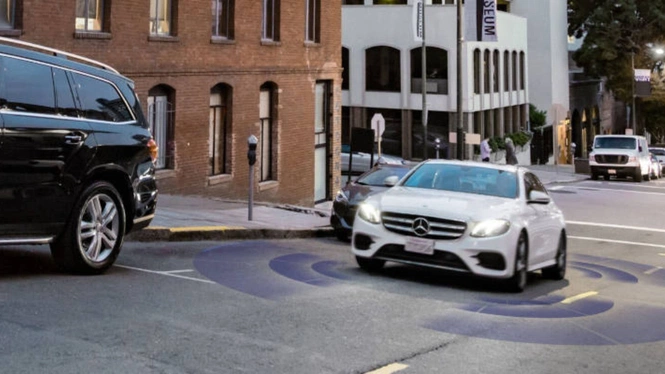
Mercedes patented CAR-X-CAR communications has been fitted to every Mercedes for years now.
Ford has been a key player too, collaborating on European projects like the Cooperative Intelligent Transport Systems (C-ITS) since the early 2010s, testing V2V in real-world scenarios to refine protocols. Tech behemoths like Qualcomm pioneered the chips powering C-V2X, partnering with Nissan and Ericsson for 5G-integrated trials in 2018.
In Asia, Hyundai and Kia have integrated V2V with their connected car platforms, while Huawei and LG have tackled security aspects, ensuring encrypted communications to fend off hacks.
Closer to home, Indian firms like Tata Motors and Mahindra are gearing up, drawing from these veterans. Bosch and Continental, suppliers with decades of experience in automotive electronics, have supplied V2V modules globally since the 2000s.
Pricing And Challenges
Rolling out V2V in a vast, varied nation like India demands smart modifications. Cost is a biggie: Each OBU might add ₹4,000-7,000 to a vehicle's price, but Gadkari assures it's a worthy investment for the lives it saves. The mandate starts with new cars, but retrofitting India's 300 million existing vehicles? That's trickier. Optional kits, perhaps government-subsidized, could bridge the gap, starting with commercial fleets.
Technical tweaks include standardizing protocols for interoperability, ensuring a Maruti communicates flawlessly with a Mercedes. Cybersecurity is paramount; encrypted, anonymous data exchange will prevent breaches, with guidelines drawing from global best practices. Infrastructure needs minimal upgrades since it's spectrum-based, but expanding coverage to remote areas and integrating with V2I (like smart signals) will enhance it.
Image source- Mercedes, Toyota, BMW
Table of Contents
- How Cars Will "Talk" to Each Other
- Companies That Have Been at It for Years
- Pricing And Challenges
Join the Conversation
Trending
Five Chinese Cars That Could Shake Up the Indian Market
Chinese carmakers BYD, Denza and Jetour could bring five new SUVs, a luxury MPV and a high-performance electric grand tourer to India, with expected prices ranging from Rs 18 lakh to Rs 1.35 crore.
Anmol Kumar
October 23, 2026
Denza India Debut Set for November 13, Z9 GT and D9 Expected as First Models
Denza has confirmed its India entry, with the Z9 GT and D9 MPV expected as its first models. Prices could range from around Rs 90 lakh to Rs 1.5 crore, with no launch date announced yet.
Anmol Kumar
October 23, 2026
Top 10 Petrol Cars With Best Mileage You Can Buy
A list of the 10 most fuel-efficient petrol cars in India, including their claimed mileage, prices, engines and key features.
Arjun Nair
October 23, 2026
Featured
Citroen C3 Review: Who Should Consider This Car?
A few days ago, I took the Citroen C3X out for a spin in the city and on the highways. I travelled long distances and checked its fuel efficiency, features, comfort, and other factors. Today, I’ll briefly share my overall experience with the C3X and will tell you whether you should consider it or not and which is the most value-for-money variant of the lot.
Vatsal Agrawal
May 19, 2026
Tesla Finally In India Officially. Why Now And What Does It Mean For EVs?
The much-anticipated 2025 Tesla Model Y has officially arrived in India, marking a pivotal moment for the nation's burgeoning electric vehicle market. Launched on July 15, 2025, the Model Y Juniper facelift offers cutting-edge technology, impressive range, and signature Tesla performance. Positioned as a premium electric SUV, its entry will intensify competition and reshape consumer expectations for EVs across the subcontinent.
Author
July 17, 2025
Here Are 10 Things The Harrier.EV Offers That The Mahindra XEV 9E Doesn't
The Harrier.EV is an incredible new offer from Tata. Its most popular competitor would be the Mahindra XEV 9E, priced similarly. With these two incredible offerings from home grown brands available, here is a list of everything the Harrier.EV offers that the XEV 9E doesn't.
Author
June 13, 2025
Write a comment
Comments
No comments yet. Be the first to comment!