Hyundai Grand i10 Nios vs Hyundai i20 - Which One Should You Buy
Hyundai Grand i10 Nios vs Hyundai i20 Comparison at CarHP India. Compare Hyundai Grand i10 Nios and Hyundai i20 Prices, Mileage, Features, Specs, Colours and much more.
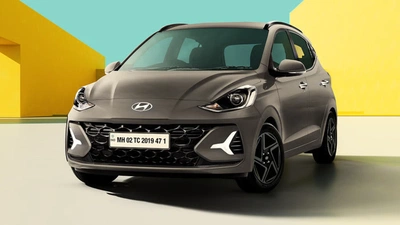
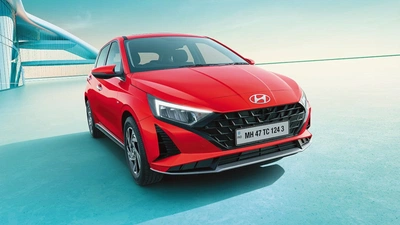
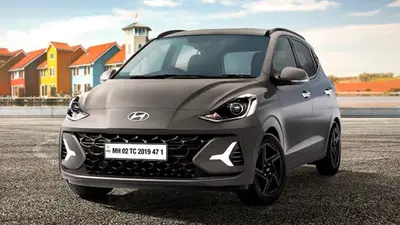
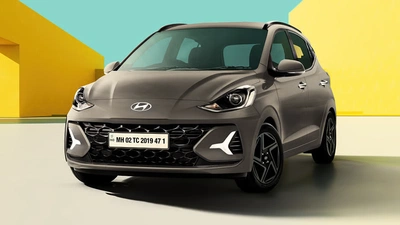
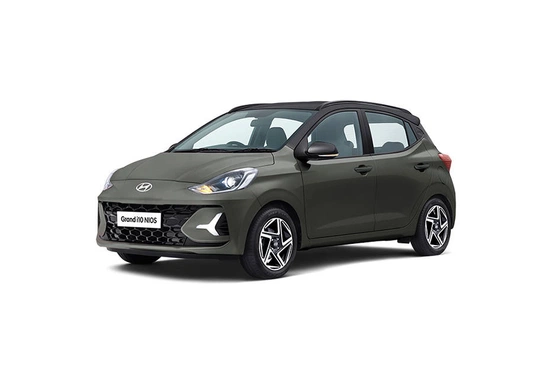
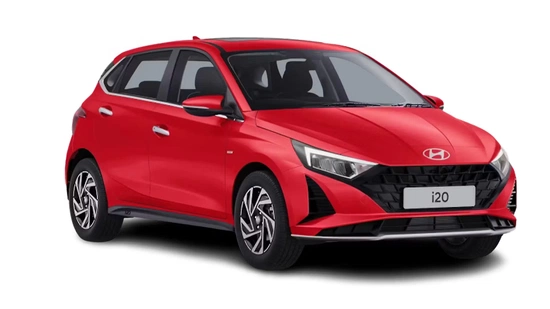
The Hyundai Grand i10 Nios comes in 20 variants. Engine options include Petrol and CNG as per the selected variant, paired with manual or automatic transmissions. The selected variant is priced at ₹5.60 Lakh. The cheapest variant, Era, costs ₹5.60 Lakh, while the top-end variant, Asta AMT, is priced at ₹8.09 Lakh. The Hyundai i20 comes in 17 variants. Engine options include Petrol as per the selected variant, paired with manual or automatic transmissions. The selected variant is priced at ₹6 Lakh. The cheapest variant, Era, costs ₹6 Lakh, while the top-end variant, Asta Opt iVT Knight, is priced at ₹10.53 Lakh.
₹ 5.60 Lakh
₹ 6 Lakh


Compare Minimum 2 Cars At Once — Tap To Activate / Deactivate
Smart Summary for Car Selection
 Why Choose Hyundai Grand i10 Nios?
Why choose
- Compact enough for congested streets and tight parking, with a turning circle suited to dense city use
- The 1.2-litre petrol pairs with an automated manual, keeping an automatic within reach at a much lower outlay than the i20's
- A factory CNG option exists here, which the i20 range does not offer at all
Why not choose
- The two-star Bharat NCAP result is the single biggest reason to hesitate, with a low adult occupant score
- The 260-litre boot is well behind the i20's and limits what a family can carry
- Rear seat space is tight for three adults and short on knee room behind a tall driver
- Equipment levels sit clearly below the i20's, with a smaller screen and a shorter feature list
- The engine is adequate in town but strained on the highway with a full load
Why Choose Hyundai i20?Why choose
- The 311-litre boot and the longer wheelbase make it the more practical of the two for family use
- A three-star Bharat NCAP result, two rungs above the Nios
- The continuously variable automatic is far smoother in stop-start traffic than the Nios's automated manual
- Cabin material quality, the larger screen and the Bose audio system are a clear step up from the Nios
- Six airbags and stability control on the upper versions
Why not choose
- There is no surround camera and no driver assistance suite anywhere in the i20 range
- The standard i20 is petrol only with the 1.2-litre naturally aspirated engine, since the turbo now sits solely in the sportier version of the car
- No CNG option is offered, so buyers chasing the lowest running cost have to look elsewhere
- A three-star crash score is behind several rivals that now carry five
 Our Recommendation For Most Buyers
Hyundai Grand i10 Nios
Budget is the honest reason to choose the Grand i10 Nios, and for a certain buyer it is a sound one. Anyone whose driving is short city trips, who parks in tight spaces, and who wants an automatic without paying for a bigger car will find the Nios does the job. The gas option also exists here and does not in the i20, which matters if monthly running distance is high.
The thing to weigh seriously is the crash result, which is two stars with a low adult occupant score. That is a real gap rather than a technicality, and buyers who carry children daily should think hard about it before deciding. If safety sits near the top of your list, the extra spend on the i20 buys a meaningfully better tested structure alongside more usable space.
Hyundai i20
Space is where the i20 earns its price over the Grand i10 Nios, and the difference is easy to feel from the back seat. The boot is larger, the cabin is wider, the material quality is a clear step up, and the continuously variable automatic is far smoother in traffic than the automated manual the smaller car uses. The constraint worth knowing is the engine list.
The standard i20 is now built around the naturally aspirated petrol alone, since the turbo engine has moved to the sportier version of the car, so there is no strong-performance option inside the regular range. There is no gas option and no driver assistance suite here either, so buyers who want lane keep assist at this price should look at compact SUVs instead.
Engine and Performance
Performance Specifications
Fuel Specifications
Dimensions and Design
Interior Specifications
Wheels & Tires
Suspension, Brakes & Steering
Safety Features
Interior Features
Comfort & Convenience
Infotainment Features
Exterior Features
Brochure

EMI Cost Comparison
Assuming 20% down payment, 9.5% interest, 60-month tenure
 Loan Amount
 Interest: 9.5%
 Down Payment (20%)
 Loan TenureLoan AmountInterest: 9.5%Down Payment (20%)Loan Tenure
Pros & Cons Comparison
Things We Like in Hyundai Grand i10 Nios
- Six airbags are standard across all variants.
- 1.2-litre four-cylinder petrol engine produces up to 82 hp.
Things We Like in Hyundai i20
- Refined and smooth petrol engine. Still uses a 4-cylinder unit while rivals have moved to 3-cylinders.
- Good standard safety including 6 airbags and ESP.
Things We Don't Like in Hyundai Grand i10 Nios
- Global NCAP rated the model 2 stars for adult protection.
- Only one petrol engine option is available in the lineup.
Things We Don't Like in Hyundai i20
- Rivals offer noticeably better mileage.
- The 311-litre boot is the smallest in the segment.
Hyundai Grand i10 Nios Comparisons

Hyundai Grand i10 Nios
₹5.60 - 8.09 Lakh
Maruti Suzuki S-Presso
₹3.50 - 5.25 Lakh

Hyundai Grand i10 Nios
₹5.60 - 8.09 Lakh
Citroen C3 X
₹4.99 - 10.21 Lakh
Hyundai Grand i10 Nios
₹5.60 - 8.09 Lakh
Maruti Suzuki Alto K10
₹3.70 - 5.45 Lakh
Hyundai Grand i10 Nios
₹5.60 - 8.09 Lakh
Hyundai Aura
₹6 - 8.67 Lakh
Hyundai Grand i10 Nios
₹5.60 - 8.09 Lakh
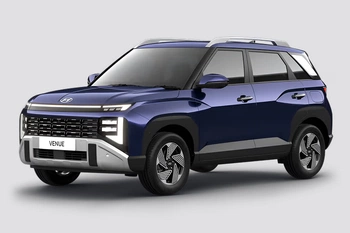
Hyundai Venue
₹8 - 15.83 Lakh
Hyundai Grand i10 Nios
₹5.60 - 8.09 Lakh
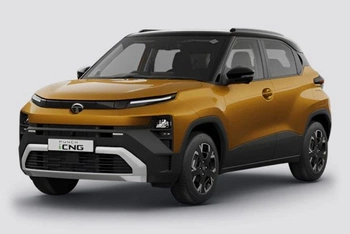
Tata Punch
₹5.70 - 10.67 Lakh
Hyundai Grand i10 Nios
₹5.60 - 8.09 Lakh
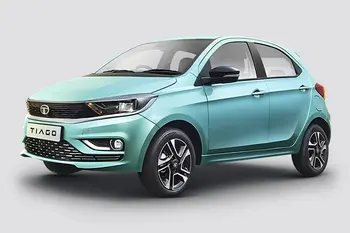
Tata Tiago
₹4.77 - 8.62 Lakh
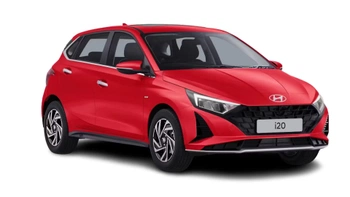
Hyundai i20 Comparisons
Car News