Tata Aeris vs Maruti Dzire: Which Compact Sedan Makes More Sense?
By Anmol Kumar
Updated October 1, 2026
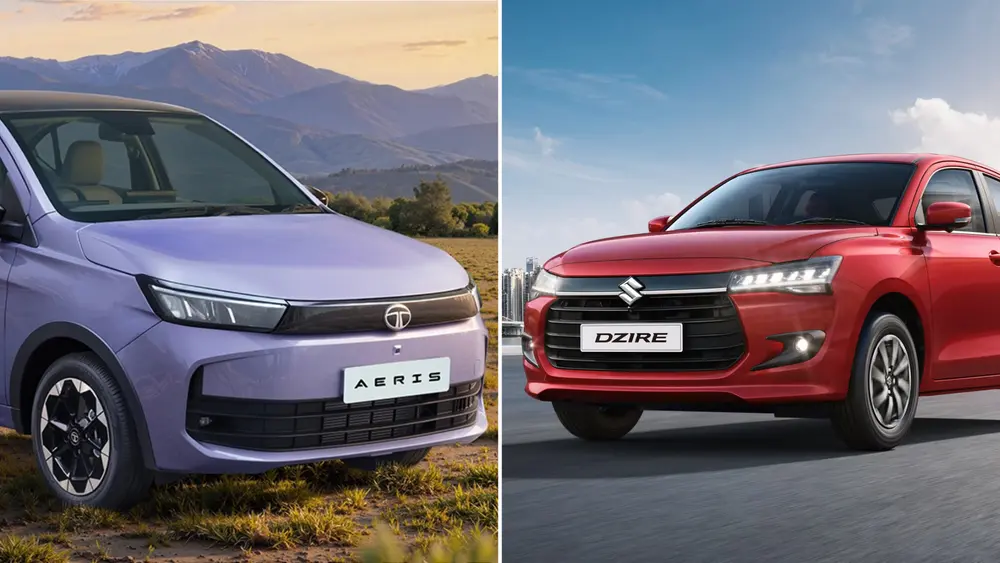
Quick Read - The Tata Aeris starts at ₹5.29 lakh, undercutting the Maruti Dzire by over ₹1 lakh. It also gets a larger boot and more features, while the Dzire offers better claimed mileage and established five-star crash-test ratings.
The compact sedan is no longer the default family-car choice it once was, but Maruti Suzuki has managed to keep the segment relevant with the Dzire. Now Tata Motors is giving buyers another option with the Aeris, a new sedan that replaces the Tigor after nine years.
Launched on September 25, 2026, the Tata Aeris starts at ₹5.29 lakh ex-showroom, making it almost ₹1 lakh cheaper than the Maruti Suzuki Dzire at the entry point. Deliveries of the Aeris are scheduled to begin on October 11.
On paper, the Aeris looks like the more feature-packed car, while the Dzire has the advantages of fuel efficiency, proven safety credentials and an established ownership ecosystem. The interesting part is that neither car dominates every area.
Here is how they compare when the numbers are put into everyday context.
Also Read - Best Sedans Under ₹10 Lakh in 2026
Same footprint, but very different priorities
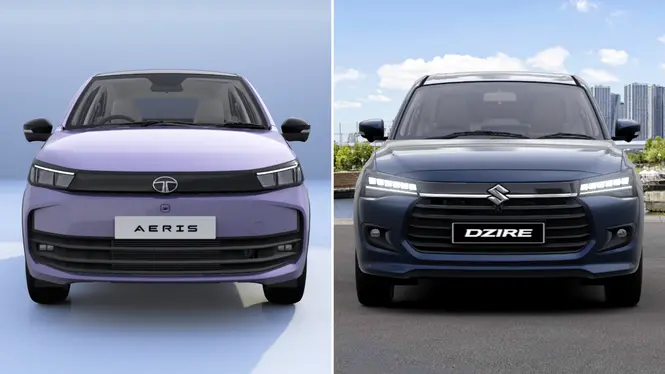
Both sedans are 3,995mm long and have an identical 2,450mm wheelbase, so neither has an obvious advantage when it comes to parking or basic cabin proportions. The big difference is width.
At 1,735mm, the Dzire is 51mm wider than the Aeris. That does not sound like much on paper, but it is one of those numbers that can matter when three adults are sitting across the rear bench.
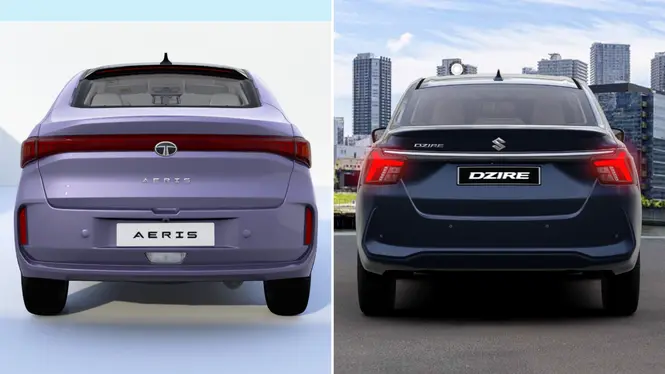
The Aeris, meanwhile, is slightly taller and has more ground clearance, which should be useful on broken urban roads and large speed breakers.
The other major advantage goes to the Tata: boot space. The Aeris offers 419 litres compared with 382 litres in the Dzire. That extra 37 litres is noticeable when you are packing family luggage rather than just shopping bags.
| Dimension | Aeris | Dzire |
|---|---|---|
| Length | 3,995 mm | 3,995 mm |
| Width | 1,684 mm | 1,735 mm |
| Height | 1,532 mm | 1,525 mm |
| Wheelbase | 2,450 mm | 2,450 mm |
| Ground clearance | 170 mm | 163 mm |
| Boot space | 419 litres | 382 litres |
The Aeris also has another practical trick for CNG buyers. Its twin-cylinder CNG system sits beneath the boot floor, leaving 227 litres of luggage space. That makes the car more usable for families that want the running-cost benefits of CNG without giving up the entire boot.
Also Read - Best CNG Cars With Big Boot Space
The Aeris is clearly more generous with features
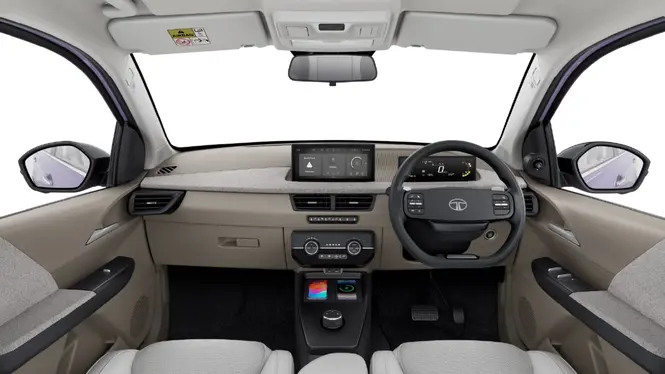
This is probably the biggest reason a buyer would consider the Aeris over the Dzire.
The Aeris starts offering useful equipment relatively early in the range, and by the Creative trim it becomes a noticeably more premium-looking proposition. A 10.25-inch touchscreen, automatic climate control, cruise control, rain-sensing wipers, LED lighting and a 360-degree camera are all part of the package.
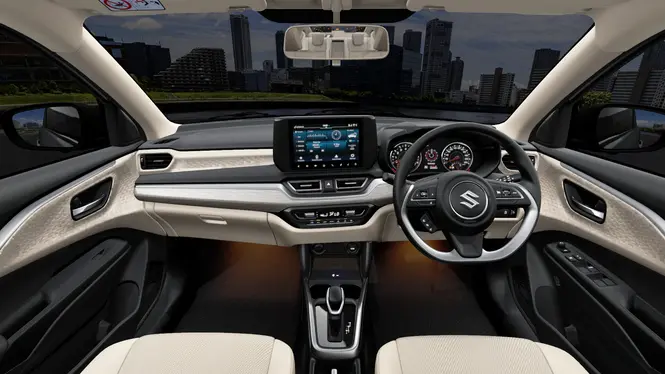
The Dzire is not poorly equipped, but Maruti spreads its more desirable features higher across the range. The 9-inch touchscreen, wireless Android Auto and Apple CarPlay, cooled glovebox and rear camera arrive on the VXi, while features such as LED headlamps, wireless charging and TPMS are reserved for higher trims.
The Aeris also offers a feature Maruti simply does not have on the Dzire: ventilated front seats. These are available on the range-topping Accomplished trim.
At the other end, the Dzire has a sunroof on the ZXi+, while the Aeris does not offer one at any price.
That difference sums up the philosophy of the two cars. Tata is using equipment to make the Aeris feel expensive for its price, while Maruti has kept some premium features exclusive to the top versions.
Also Read - Every Car With a Sunroof Under ₹15 Lakh
The engines are closely matched, but the Aeris should feel stronger around town
Both sedans use naturally aspirated three-cylinder petrol engines of roughly 1.2 litres, and both get 5-speed manual and 5-speed AMT gearboxes.
The Aeris produces 86hp and 113Nm, while the Dzire makes 81.58hp and 111.7Nm. The headline difference is small, but the torque characteristics are more interesting.
The Aeris reaches peak torque at 3,300rpm, while the Dzire's maximum torque arrives at 4,300 rpm. In everyday traffic, that lower torque peak should make the Tata feel more relaxed when pulling away from junctions or squeezing through heavy traffic.
| Petrol and CNG powertrain | Tata Aeris | Maruti Dzire |
|---|---|---|
| Petrol engine | 1.2L, 3-cylinder | 1.2L, 3-cylinder |
| Petrol power | 86hp | 81.58hp |
| Petrol torque | 113Nm | 111.7Nm |
| CNG power | 75.5hp | 69.75hp |
| CNG torque | 96.5Nm | 101.8Nm |
| Gearboxes | 5-speed MT, 5-speed AMT | 5-speed MT, 5-speed AMT |
Switch to CNG and the picture changes slightly. The Dzire makes less power than the Aeris but produces more torque, while the Tata retains the packaging advantage because of its twin-cylinder arrangement.
For a petrol buyer, the Aeris has the numbers on its side. For a CNG buyer, the choice is less straightforward because practicality and torque become more important than outright power.
Also Read - Cheapest Cars With ADAS You Can Buy Right Now
Mileage remains the Dzire's strongest argument
This is where the Maruti has a clear numerical advantage.
The Dzire is officially rated at 24.79kmpl with the petrol manual and 25.71kmpl with the petrol AMT. Its CNG version is rated at 33.73km/kg.
Tata has not yet published ARAI mileage figures for the Aeris. Because the car carries over the Tigor's powertrain, the outgoing sedan's 19.2kmpl claim gives us a rough reference point, but it should not be treated as the Aeris's final certified figure.
Real-world usage will always vary with traffic, driving style and air-conditioning, but the gap in claimed efficiency is large enough to matter.
Think about a buyer covering 15,000km every year. Even a difference of a few kilometres per litre adds up over time. The Aeris's lower purchase price helps offset some of that difference, but buyers keeping the car for several years will eventually feel the higher fuel spend.
This is why the Dzire still makes a strong case as a high-mileage family commuter. The Aeris has other reasons to tempt buyers, but fuel economy is not one of them.
Safety is the biggest area where the Dzire has an established advantage
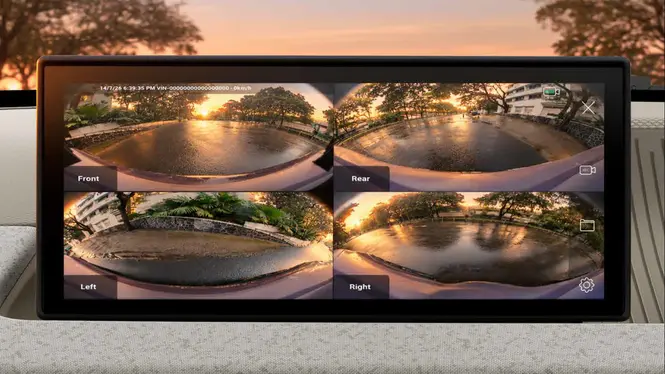
Both cars offer six airbags and electronic stability control from the base variant, along with ABS, ISOFIX mounts and rear parking sensors.
The Aeris adds plenty of useful safety technology as you move up the range. TPMS, hill-hold and a 360-degree camera become available higher up, and the 360-degree system also brings blind-spot monitoring.
Also Read - Safest Cars In India To Buy in 2026
The important difference is that the Dzire has independently established crash-test credentials, while the Aeris has yet to receive a crash-test rating from Global NCAP or Bharat NCAP.
The current Dzire carries 5-star ratings under both protocols. The Aeris cannot yet make the same claim.
That distinction matters because safety equipment on a brochure and crash performance are not the same thing. Six airbags and electronic stability control are valuable, but they do not replace an independent assessment of how a vehicle performs in a crash.
Pricing gives the Aeris a very strong opening hand
The Aeris starts at ₹5.29 lakh, compared with ₹6.31 lakh for the Dzire. The Tata also has five trims: Smart, Pure, Pure+, Creative and Accomplished.
Its range stretches from an affordable base petrol manual to a fully loaded CNG AMT at ₹9.74 lakh.
The Dzire has a wider variant spread, with LXi, VXi, ZXi and ZXi+ versions covering a broader set of customer needs.
The interesting comparison is around the middle of the range. The Aeris Creative costs ₹7.49 lakh and comes loaded with features that make it feel much closer to a higher-end car. The Dzire VXi starts lower, at ₹7.17 lakh, but does not match the Tata feature-for-feature.
What you get at roughly ₹7.5 lakh
| Feature | Aeris Creative | Dzire VXi |
|---|---|---|
| Touchscreen | 10.25-inch | 9-inch |
| 360-degree camera | Yes | No |
| Automatic climate control | Yes | No |
| Cruise control | Yes | No |
| LED headlamps | Yes | No |
| Rain-sensing wipers | Yes | No |
| Wireless smartphone connectivity | Yes | Yes |
| Reverse camera | Yes | Yes |
This is where the Aeris makes the strongest financial argument. You are not simply paying less for a smaller or more basic car. You are paying less and, in several areas, getting more equipment.
The Dzire's advantage is less visible on a specification sheet. Maruti has the broader service network, immediate availability and a long-established presence in the used-car market. Tata is also deliberately keeping the Aeris away from fleet sales, which could help it develop a different resale profile from the Tigor, although there is no long-term data yet to show how that will play out.
Also Read - Top 5 Carmakers with Highest Number Of Service Centers
Which one makes more sense?
The Aeris and Dzire appeal to slightly different priorities.
The Aeris makes sense for buyers who want maximum equipment for their money. It offers the larger boot, a more generous features list and a slightly stronger petrol engine. The Creative variant is especially interesting because it brings together the 10.25-inch touchscreen, 360-degree camera, automatic climate control, LED lighting and other premium features without crossing deep into the ₹8 lakh bracket.
The Dzire makes more sense for buyers who place greater emphasis on fuel economy, established safety results and ownership familiarity. Its wider cabin is also useful for families that regularly carry three people in the rear.
For the Aeris, the Creative looks like the sweet spot, while Pure+ makes sense for buyers trying to keep the purchase price under control. For the Dzire, VXi is the point where the car becomes substantially better equipped, while ZXi adds the features that make the higher price easier to justify.
The Aeris has arrived with a strong price and a lot of equipment, but the Dzire does not need to reinvent itself to remain relevant. Its mileage, safety credentials and established ownership base continue to be its biggest strengths.
For buyers choosing between the two, the decision ultimately comes down to what matters after the novelty wears off: more features and space from the Aeris, or lower running costs and a more proven ownership package from the Dzire.
Image Source: Tata Motors, Maruti Suzuki, Honda, Hyundai
Table of Contents
- Same footprint, but very different priorities
- The Aeris is clearly more generous with features
- The engines are closely matched, but the Aeris should feel stronger around town
- Mileage remains the Dzire's strongest argument
- Safety is the biggest area where the Dzire has an established advantage
- Pricing gives the Aeris a very strong opening hand
Join the Conversation
Trending
Best CNG Cars With Big Boot Space
These cars in our list offer great mileage and can store decent amount of stuff thanks to cleverly placed CNG tanks.
Salil Kumar
October 1, 2026

Maruti Suzuki Brings CNG-AMT Options To The Swift, Baleno and Dzire
Maruti has finally paired CNG with an automatic gearbox on the Swift, Dzire and Baleno, priced from Rs 7.92 lakh. The AMT trims share a 1.2 litre engine, a 55 litre boot-mounted tank and cost around Rs 35,000 more than the manual versions.
Anmol Kumar
October 1, 2026
Top 5 Cheapest Cars With LED Headlamps
The cheapest cars with LED headlamps in India now start below ₹6 lakh. Here's a list of the five most affordable options, including their lowest LED-equipped variants, prices and transmission choices.
Anmol Kumar
October 1, 2026

September 2026 Car Sales As Per Vahan
The car market saw an overall positive sales trend in September 2026. Mass market carmakers saw a slight increase, EV manufacturers grew significantly since the start of the year, and luxury carmakers recorded the best month out of the three.
Arjun Nair
October 1, 2026

Honda Elevate Facelift Pre-Bookings Open at Rs 21,000 Ahead of October 6 Launch
Honda has opened pre-bookings for the Elevate facelift at Rs 21,000, with prices set to be announced on October 6. The first official teaser reveals a sharper front end, a new connected tail light strip, and a refreshed cabin with ambient lighting.
Anmol Kumar
October 1, 2026
Featured
Citroen C3 Review: Who Should Consider This Car?
A few days ago, I took the Citroen C3X out for a spin in the city and on the highways. I travelled long distances and checked its fuel efficiency, features, comfort, and other factors. Today, I’ll briefly share my overall experience with the C3X and will tell you whether you should consider it or not and which is the most value-for-money variant of the lot.
Vatsal Agrawal
May 19, 2026

Tesla Finally In India Officially. Why Now And What Does It Mean For EVs?
The much-anticipated 2025 Tesla Model Y has officially arrived in India, marking a pivotal moment for the nation's burgeoning electric vehicle market. Launched on July 15, 2025, the Model Y Juniper facelift offers cutting-edge technology, impressive range, and signature Tesla performance. Positioned as a premium electric SUV, its entry will intensify competition and reshape consumer expectations for EVs across the subcontinent.
Charan Narain
July 17, 2025
Here Are 10 Things The Harrier.EV Offers That The Mahindra XEV 9E Doesn't
The Harrier.EV is an incredible new offer from Tata. Its most popular competitor would be the Mahindra XEV 9E, priced similarly. With these two incredible offerings from home grown brands available, here is a list of everything the Harrier.EV offers that the XEV 9E doesn't.
Charan Narain
June 13, 2025

Write a comment
Comments
No comments yet. Be the first to comment!