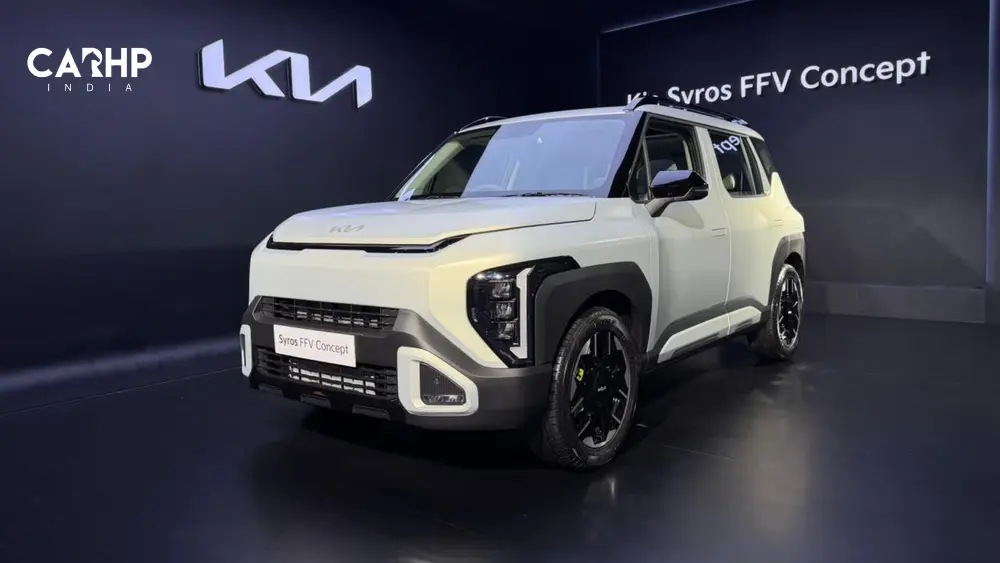
Quick Read - The Centre has amended India’s motor vehicle rules to recognise E100 fuel for specially designed flex-fuel vehicles. The move gives carmakers a clearer path to develop and certify E100-compatible cars, but ordinary petrol cars, including those designed for E20, cannot use E100. Fuel availability and the number of compatible vehicles remain key hurdles.
The Centre has amended India’s motor vehicle rules to formally recognise E100 fuel in the regulatory framework for flex-fuel vehicles (FFV). The amendment adds E100 alongside E85 in specified provisions governing vehicle emissions and testing. It gives manufacturers a clearer regulatory route to develop and certify vehicles capable of running on higher ethanol blends.
The new rules do not allow every petrol car to run on E100. The fuel is intended for vehicles specifically designed and certified by their manufacturers for it. A car approved for conventional petrol or E20 is not automatically compatible with E85 or E100.
The change is a step towards expanding flex-fuel technology in India, but it does not mean E100 will immediately be available at petrol pumps nationwide.
Also Read - BS7 Norms From April 1, 2029: 6 Major Changes Car Buyers Need to Know
What are E100, E85 and E20 fuels?
| Fuel type | What it means |
|---|---|
| E20 | Petrol blended with 20% ethanol |
| E85 | A high-ethanol fuel blend containing up to 85% ethanol |
| E100 | A fuel category based on nearly pure ethanol |
E20 is the blend most relevant to everyday petrol car owners in India. E85 and E100 contain much higher proportions of ethanol and require vehicles designed and certified to use them.
The latest amendment brings E100 into the relevant vehicle certification provisions. It does not change the fuel compatibility of cars already on the road.
Can your existing petrol car use E100 fuel?
No, unless it has been specifically designed and certified for the fuel.
A car’s ability to run on E10 or E20 does not establish that it can safely use E85 or E100. Higher ethanol blends require compatible fuel-system components and suitable engine calibration. Using a fuel that the manufacturer has not approved could cause compatibility or performance problems.
Before choosing a fuel, check the compatibility sticker on your car and consult the owner’s manual. Do not switch to E100 simply because the government has amended the rules. The notification does not require existing petrol car owners to modify their vehicles or change the fuel they use.
Also Read - Upcoming Flex Fuel Cars in India
What is a flex-fuel vehicle and how does it work?
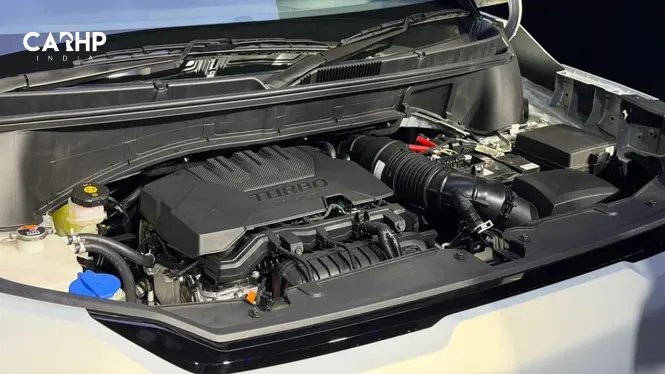
A flex-fuel vehicle, or FFV, is designed to run on different proportions of petrol and ethanol using the same fuel tank. Depending on its specification and certification, it can use a range of approved fuel blends, potentially including E20, E85 and E100
These vehicles use fuel-system components designed for higher ethanol concentrations. Their engine management systems can also adjust settings such as fuel injection and ignition timing according to the fuel composition. This allows the engine to operate on different approved blends without the driver manually changing its settings.
Flex-fuel technology requires more than simply filling a regular petrol car with a different fuel. Manufacturers must engineer and validate the vehicle for the blends it is designed to use, which is why E100 compatibility cannot be assumed for existing petrol models.
What changes for carmakers after the E100 approval?
The amendment updates the Central Motor Vehicles Rules, 1989, including provisions under Rules 115 and 115E relating to emissions and testing. By explicitly including E100 alongside E85 in specified provisions, it provides a clearer regulatory route for manufacturers developing vehicles designed to use the fuel.
This could support further investment in flex-fuel engines and compatible components. However, manufacturers still need to develop and certify individual models, while fuel suppliers need to make the appropriate blends available to customers.
The amendment also raises a specified vehicle weight threshold from 3,000kg to 3,500kg and updates certain technical provisions relating to other fuels. For most private car buyers, the key change is the formal recognition of E100 in the relevant vehicle rules.
Are flex-fuel cars and bikes available in India?
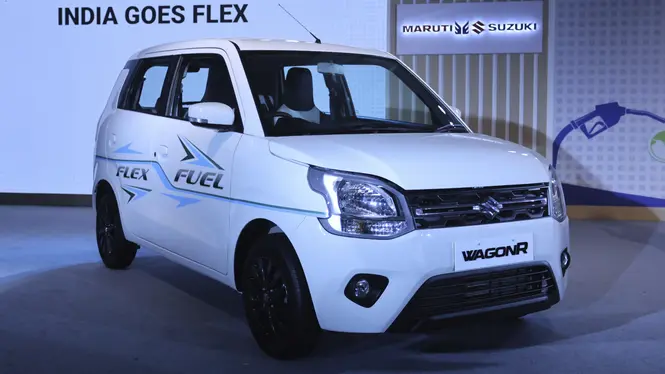
Maruti Suzuki introduced the Wagon R Bioflex in June 2026 as India’s first production-spec flex-fuel passenger car. It has been offered to private buyers, with initial deliveries beginning in Delhi. Maruti says the car is technically compatible with ethanol-petrol blends from E20 to E100.
As for flex-fuel bikes, they are Hero Splendor+ Flex Fuel, Hero HF Deluxe Flex Fuel, Suzuki Gixxer SF 250 FFV and Honda ADV160 Flex Fuel. These models are designed to run on approved petrol-ethanol blends up to E85.
Also Read - A full list of Every Flex Fuel Bikes and Scooters Available
Is E100 fuel available at petrol pumps in India?
Fuel availability remains a major practical consideration. Drivers cannot assume that E85 or E100 will be available at their usual petrol pump.
In June 2026, the government announced the rollout of E85 at 48 public-sector oil company retail outlets. It outlined plans to expand the network to 500 outlets by December 2026 and around 5,000 by December 2027.
These targets relate to the E85 rollout, not confirmed E100 availability at every outlet. The availability of the specific fuel approved for a vehicle will therefore remain important for buyers considering flex-fuel technology.
Before buying a flex-fuel car, check which blends it is certified to use and whether the relevant fuel is available along your regular routes. Wider adoption will require coordination between vehicle manufacturers, fuel suppliers and ethanol producers.
What should Indian car buyers do now?
If you own a regular petrol car, continue using the fuel recommended by the manufacturer. The new E100 rules do not require you to change your fuel or modify your vehicle.
For buyers considering a flex-fuel car, three things matter most: its certified fuel compatibility, the availability and price of the approved ethanol blend, and its real-world running costs.
The E100 amendment gives manufacturers a clearer regulatory route to develop compatible vehicles. The next major developments to watch are the arrival of more certified models and the expansion of fuel availability. Until then, the change is more significant for the future of India’s automotive fuel market than for the daily routine of most existing petrol car owners.
Also Read - What Is CBG? Know About Its Production, Engine Performance, Prices and Future in India
Table of Contents
- What are E100, E85 and E20 fuels?
- Can your existing petrol car use E100 fuel?
- What is a flex-fuel vehicle and how does it work?
- What changes for carmakers after the E100 approval?
- Are flex-fuel cars and bikes available in India?
- Is E100 fuel available at petrol pumps in India?
Join the Conversation
Trending

Land Rover Defender Gets Cheaper by Up to Rs 34 Lakh After Local Assembly
The Land Rover Defender 110 is now locally assembled in India, with prices starting at Rs 99 lakh. Here are the revised variant prices, engine options and key changes.
Anmol Kumar
October 27, 2026
Every Car With a Sunroof Under ₹15 Lakh
This list includes a variety of models, from premium hatchbacks to compact SUVs.
Arjun Nair
October 27, 2026

2026 Hyundai Bayon Every Variant Explained
The Hyundai Bayon gets seven variants priced from ₹9.99 lakh to ₹18 lakh. The HX5 offers the best balance, while the HX8 adds ventilated seats and the HX10 gets dual 12.3-inch displays and ADAS. Here’s what each variant offers and whether it’s worth the price.
Anmol Kumar
October 27, 2026

Universo Ferrari 2026 New Delhi: First India Exhibition Featuring Ferrari Luce EV, F80, F50, 12Cilindri, and More
Ferrari has brought Universo Ferrari to India for the first time at Yashobhoomi in Dwarka, New Delhi. The exhibition features the India debut of the all-electric Luce, the F80 hypercar, 12Cilindri models, Purosangue, racing cars like the 499P and SF-26, and classics including the F50. The show aims to connect with Indian enthusiasts and strengthen Ferrari’s presence in the luxury market.
Arjun Nair
October 27, 2026
Featured
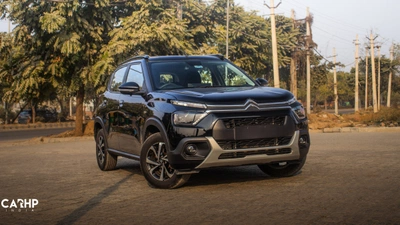
Citroen C3 Review: Who Should Consider This Car?
A few days ago, I took the Citroen C3X out for a spin in the city and on the highways. I travelled long distances and checked its fuel efficiency, features, comfort, and other factors. Today, I’ll briefly share my overall experience with the C3X and will tell you whether you should consider it or not and which is the most value-for-money variant of the lot.
Vatsal Agrawal
May 19, 2026
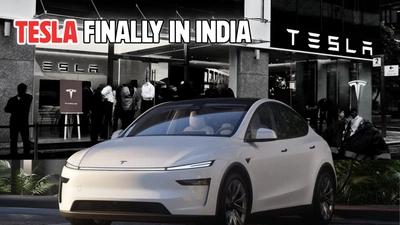
Tesla Finally In India Officially. Why Now And What Does It Mean For EVs?
The much-anticipated 2025 Tesla Model Y has officially arrived in India, marking a pivotal moment for the nation's burgeoning electric vehicle market. Launched on July 15, 2025, the Model Y Juniper facelift offers cutting-edge technology, impressive range, and signature Tesla performance. Positioned as a premium electric SUV, its entry will intensify competition and reshape consumer expectations for EVs across the subcontinent.
Author
July 17, 2025
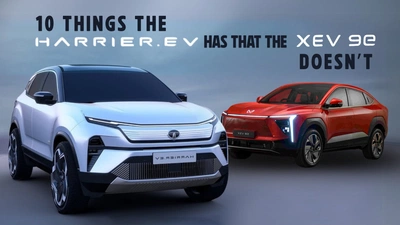
Here Are 10 Things The Harrier.EV Offers That The Mahindra XEV 9E Doesn't
The Harrier.EV is an incredible new offer from Tata. Its most popular competitor would be the Mahindra XEV 9E, priced similarly. With these two incredible offerings from home grown brands available, here is a list of everything the Harrier.EV offers that the XEV 9E doesn't.
Author
June 13, 2025
Write a comment
Comments
No comments yet. Be the first to comment!