
EMI Loading
Honda CB300F Key Specifications
Honda CB300F Variants & Prices
| Variant Details | Ex. Showroom Price | |
|---|---|---|
CB300F DLX Pro160 kmph | 30 kmpl | 293.52 cc | ₹ 1.55 Lakh* |
CB300F DLX Pro
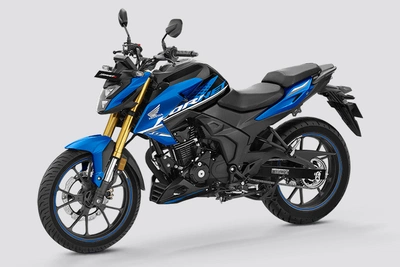
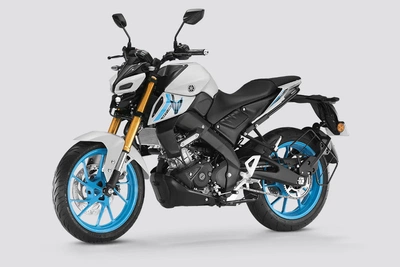
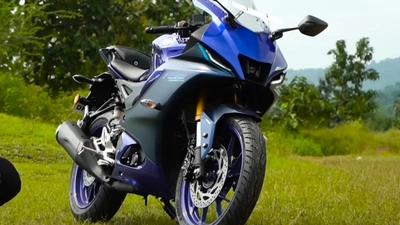
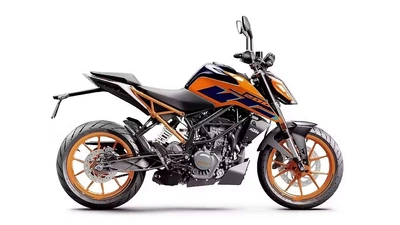
Honda CB300F Comparison with similar Bikes
Pros & Cons of Honda CB300F
Things We Like
- Torque-rich engine offers excellent city tractability and rideability.
- Segment-first traction control (HSTC) provides a superior safety net.
Things We Don't Like
- Top-end engine performance is modest compared to some rivals.
- Digital instrument cluster looks dated and lacks TFT display clarity.
Honda CB300F Overview

Engine, Performance and Mileage
Engine, Performance and Mileage
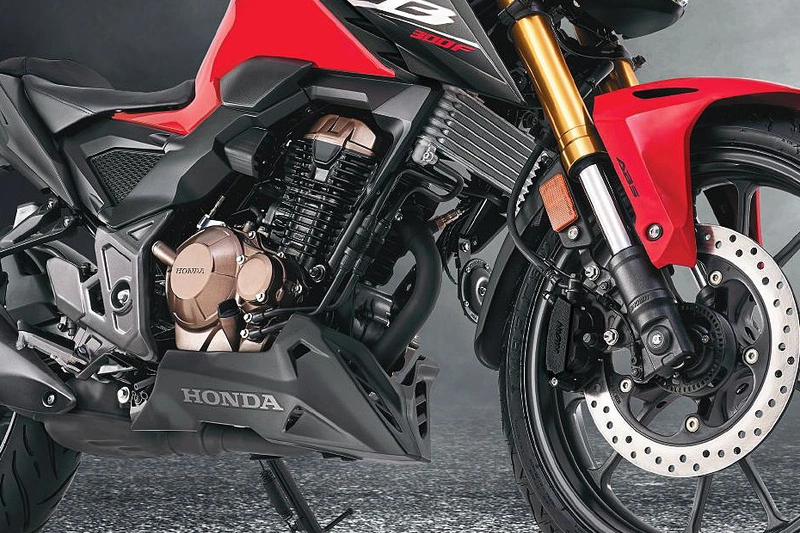
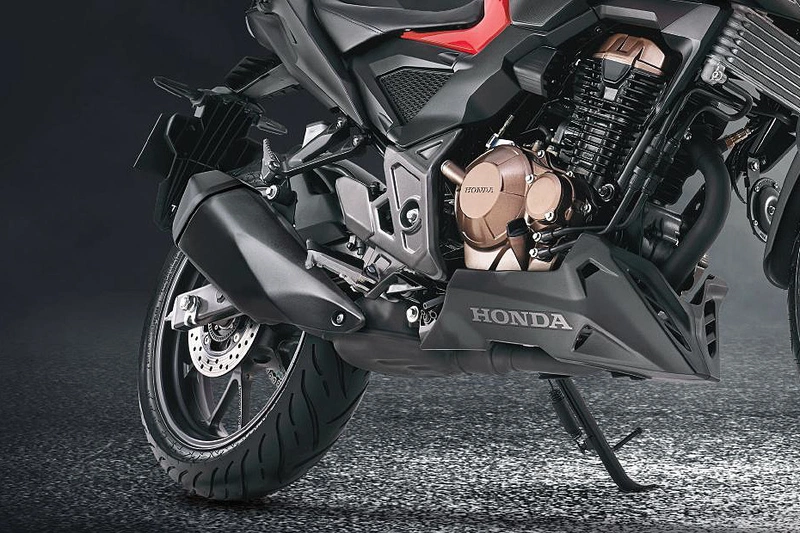
The heart of the Honda CB300F is a 293.52cc, 4-valve, oil-cooled, single-cylinder engine compliant with BS6 Phase 2 norms. It produces 24.5 PS of peak power at 7,500 rpm and a substantial 25.6 Nm of torque at a relatively low 5,500 rpm. This powertrain is mated to a 6-speed transmission equipped with a slip-and-assist clutch. In real-world application, these figures translate to a motorcycle with a character defined by its mid-range strength rather than outright top-end performance. In urban environments, the engine's tractability is its greatest asset. The early availability of torque means fewer gear changes are required in dense traffic, and overtakes can be executed swiftly without needing to drop multiple gears.
Throttle response is linear and predictable, making it accessible for intermediate riders. On the highway, the CB300F can comfortably cruise at speeds of 100-110 kmph in sixth gear, with some vibrations creeping in past the 6,000 rpm mark. The slip-and-assist clutch provides a light lever action, reducing fatigue during long commutes. In terms of fuel efficiency, owners can expect figures in the range of 30-35 kmpl, which is competitive for this displacement class.
posture comfort
posture comfort
The ergonomics of the Honda CB300F are tailored for a comfortable yet slightly engaging riding experience. The single-piece handlebar is positioned for a relatively upright posture, while the footpegs are slightly rear-set, creating a rider triangle that is a good compromise between a relaxed commute and a sporty lean. The seat height is an accessible 789mm, which should allow riders of average height to plant their feet firmly on the ground. The rider's seat is well-cushioned and sufficiently wide for long durations, though the pillion seat is smaller and best suited for short city rides.
The split grab rails are functional and easy for the pillion to hold. In terms of practicality, the 14.1-litre fuel tank is generous for the segment, theoretically offering a range of over 400 kilometres on a full tank, reducing the frequency of fuel stops on long journeys. As an oil-cooled engine, heat management is efficient, and the bike does not radiate excessive heat onto the rider’s legs in stop-and-go traffic—a significant advantage in Indian urban conditions. While there are no dedicated luggage mounting points, the design allows for the use of bungee cords or aftermarket saddlebags for touring purposes.
handling ride quality
handling ride quality
The CB300F is built on a diamond-type frame, suspended by a premium golden-finished upside-down (USD) front fork and a 5-step adjustable rear monoshock. This hardware combination, paired with a low kerb weight of 153 kg, provides a commendable balance between agility and stability. Within city limits, the motorcycle feels light and eager to change direction, filtering through traffic with minimal effort. The suspension is tuned for a slight firmness, which aids handling precision but can feel busy over sharp, broken patches of road. It absorbs undulations and minor potholes competently, but larger impacts are transmitted to the rider.
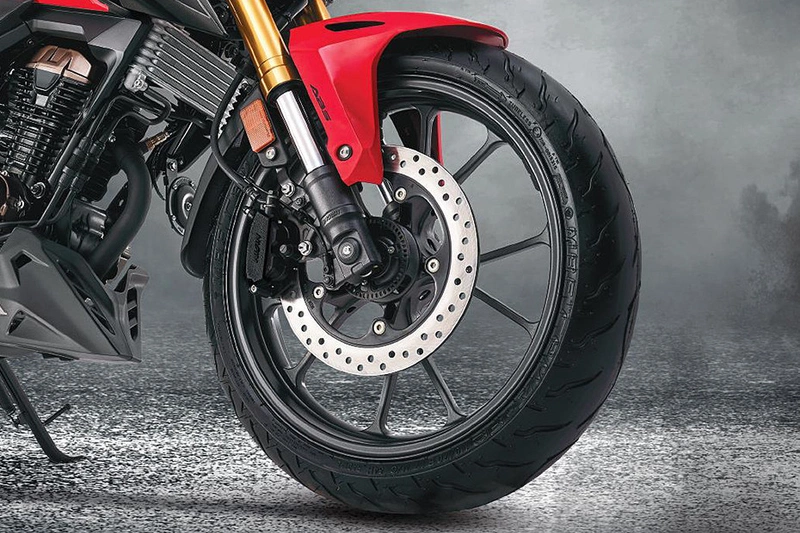
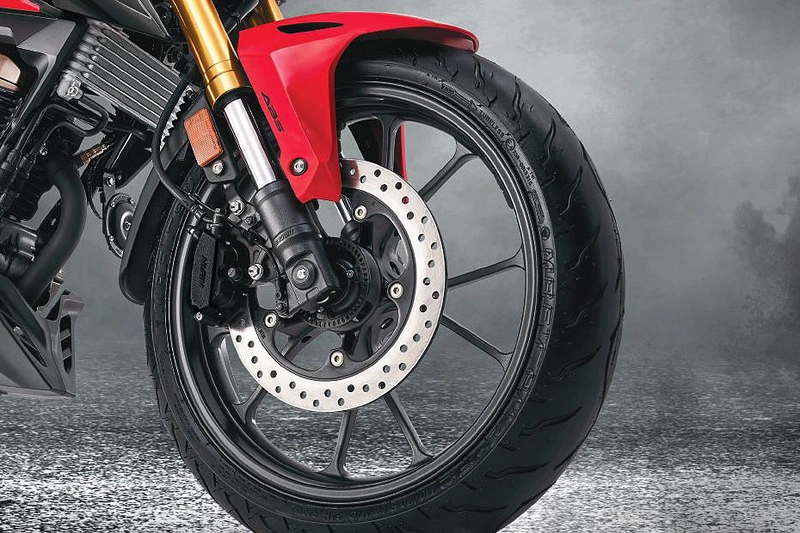
On open roads and through corners, the chassis feels composed, and the MRF Revz tyres (110/70-17 front, 150/60-17 rear) offer adequate grip for spirited riding. High-speed stability is impressive, with the motorcycle feeling planted. Braking duties are managed by a 276mm disc at the front and a 220mm disc at the rear, governed by a dual-channel ABS system. The braking setup provides progressive stopping power with good feedback at the lever, inspiring confidence during urgent braking manoeuvres. The system is on par with competitors like the Suzuki Gixxer 250, offering reliable and safe deceleration.
design
design
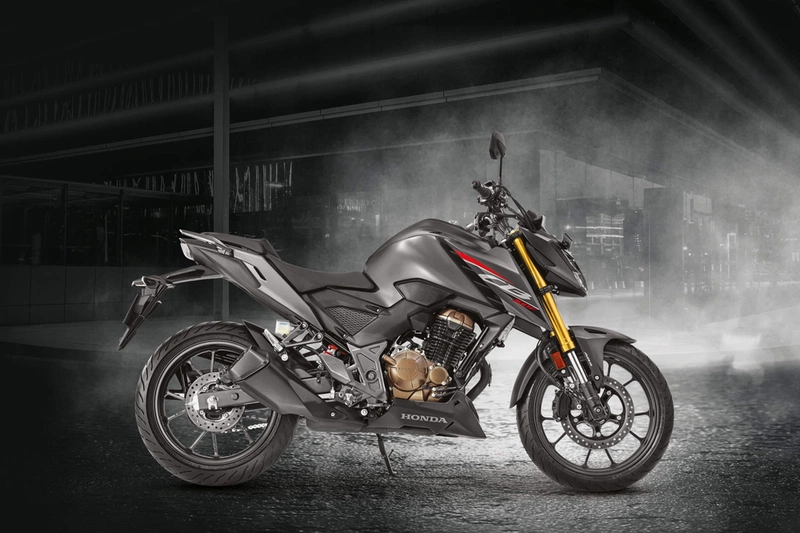
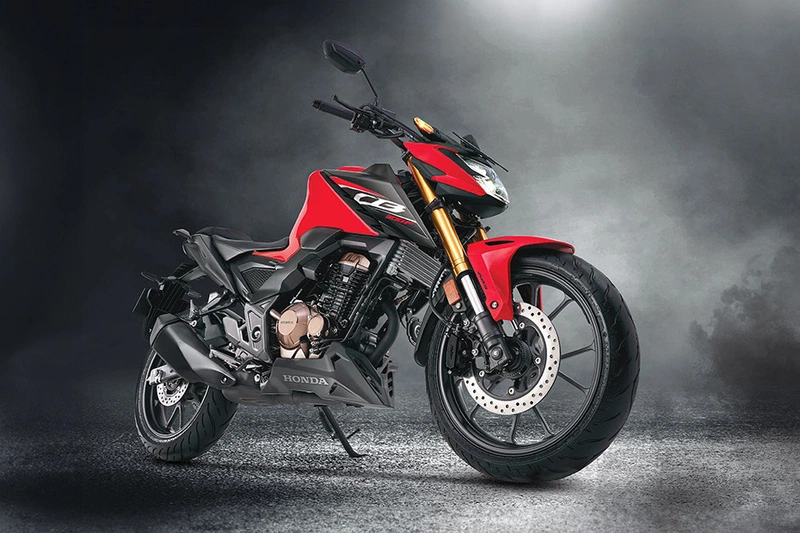
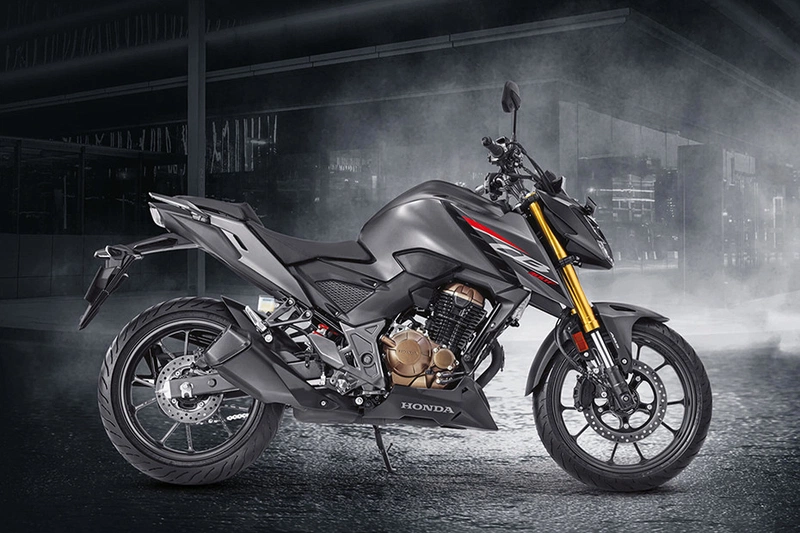
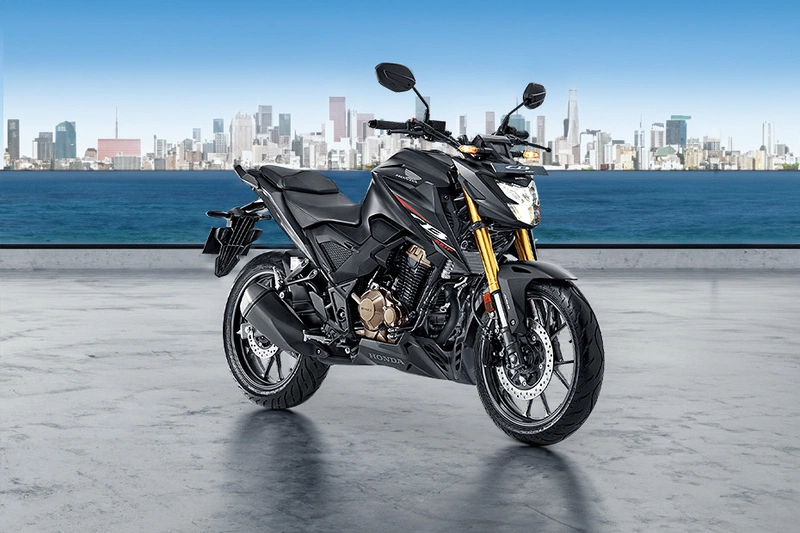
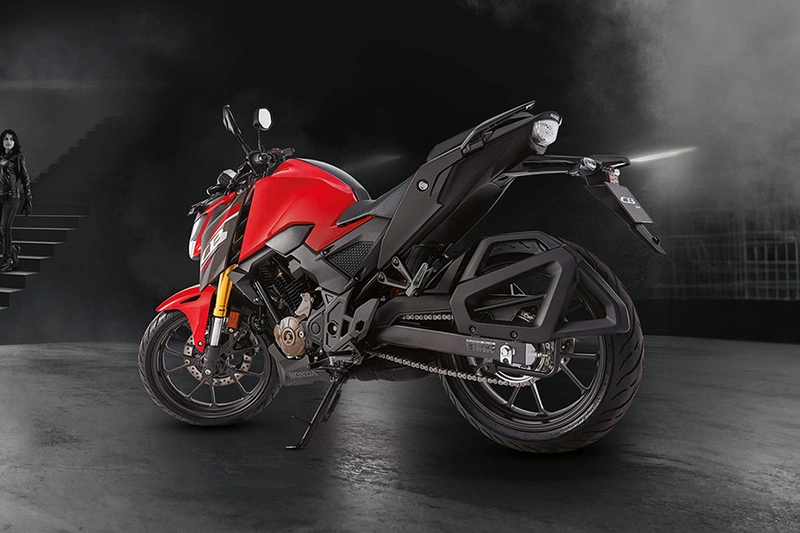
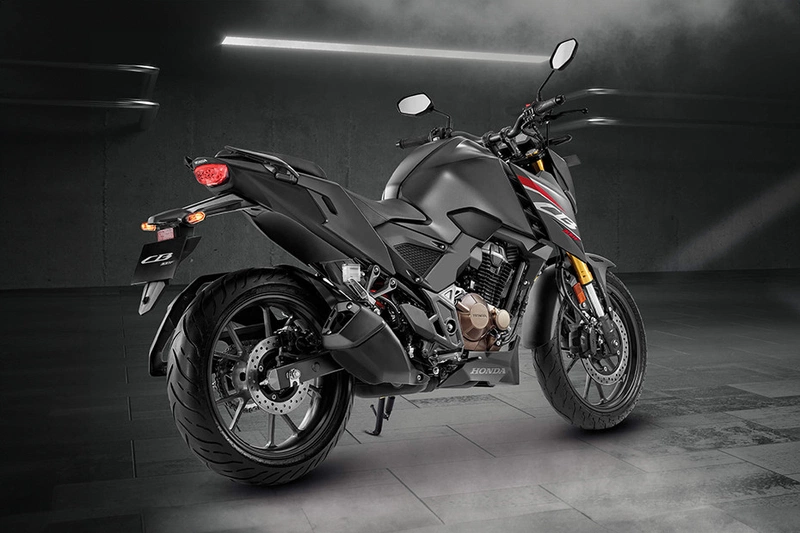
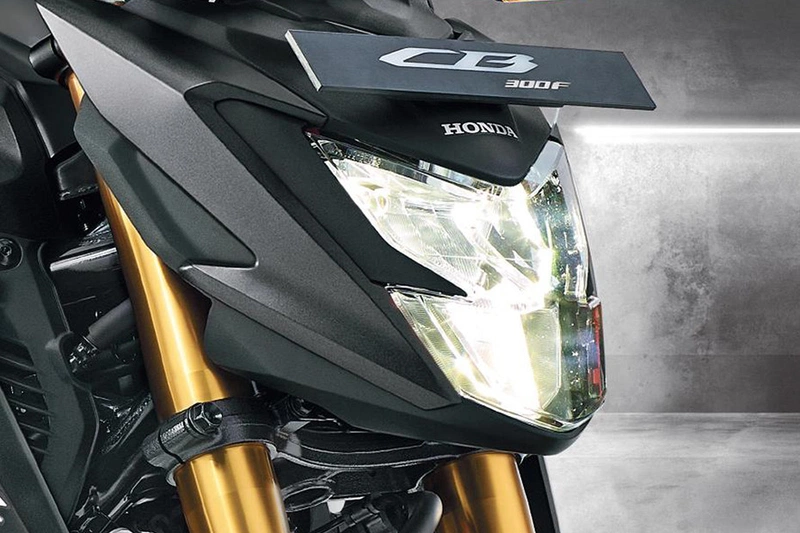
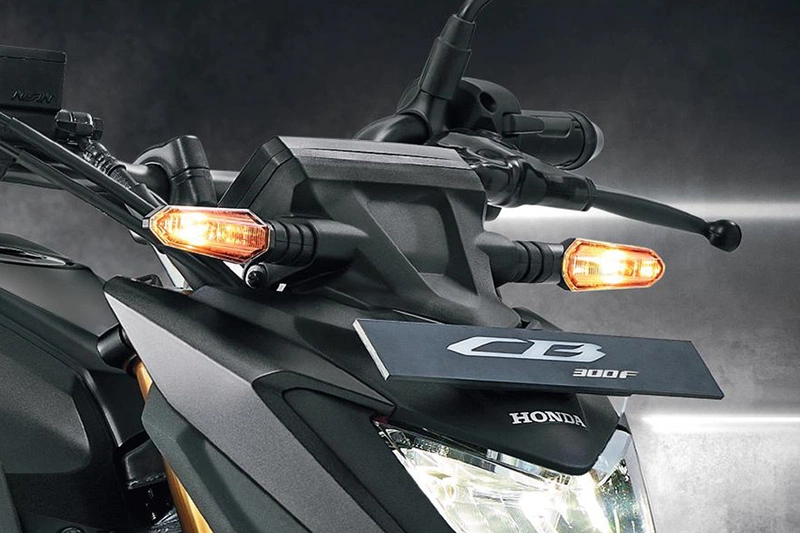
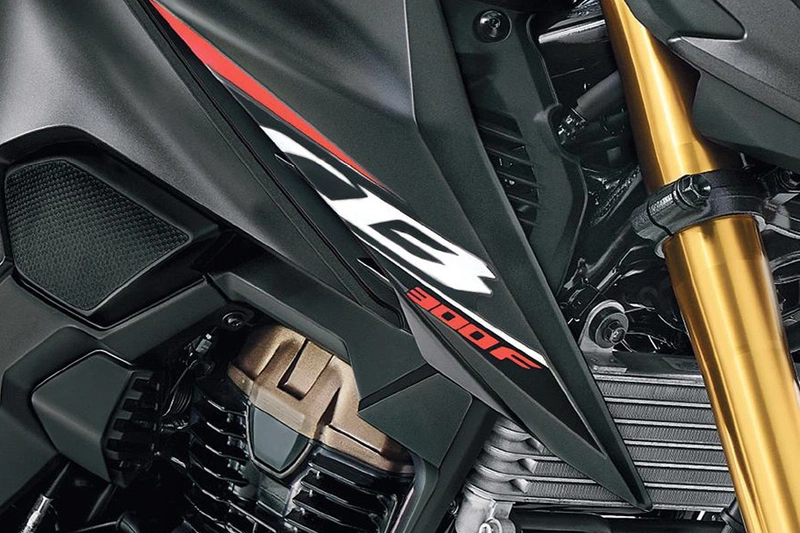
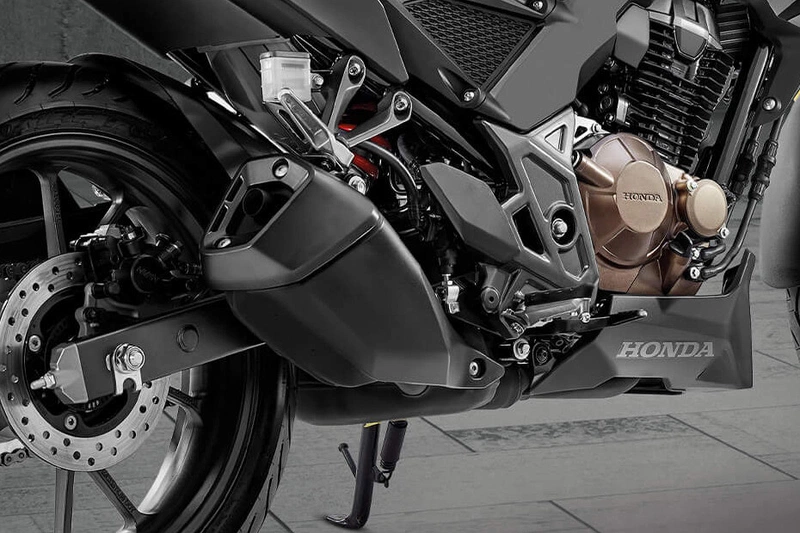
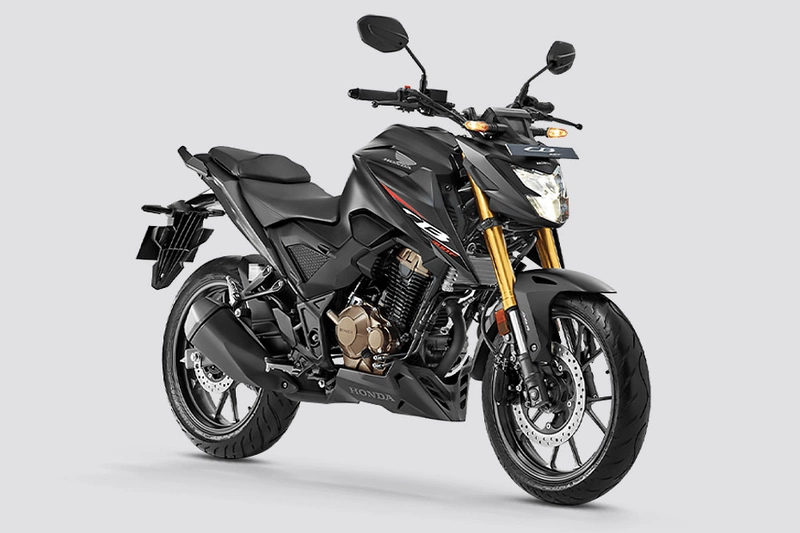
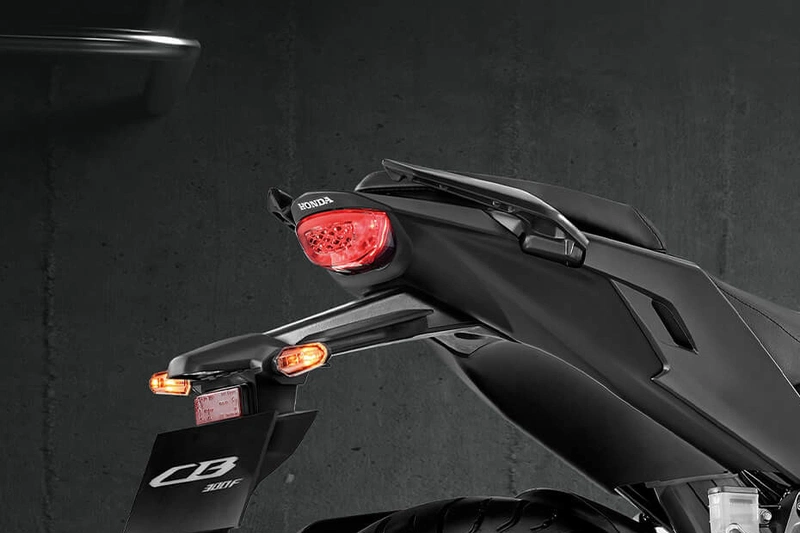
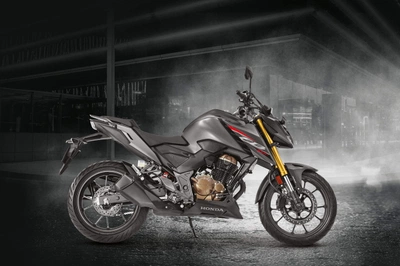
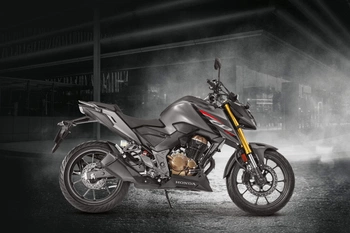
Visually, the CB300F adopts an aggressive streetfighter stance, drawing design cues from Honda’s international CB line-up like the CB500F. The sharp tank shrouds, muscular fuel tank, and stubby exhaust contribute to a forward-biased, athletic look. The all-LED lighting package, including the headlamp, taillamp, and indicators, not only enhances its modern appeal but also improves visibility during night rides. The rider interface is a fully digital negative LCD instrument cluster that displays essential information such as a speedometer, tachometer, gear position indicator, fuel gauge, and trip meters.
While functional, the display can be difficult to read under direct sunlight and feels a step behind the full-colour TFT units offered by some rivals. Where the CB300F excels is its practical feature set. It comes equipped with the Honda Smartphone Voice Control System (HSVCS), allowing riders to pair their smartphone for turn-by-turn navigation, calls, and music alerts via a compatible headset. A USB-C charging port is conveniently located, and the inclusion of hazard lights is a practical addition for Indian road conditions. These features add significant real-world value, making daily commutes and touring more convenient.
safety
safety
Honda has equipped the CB300F with a robust safety package that stands out in its price category. The foundation of its safety suite is the dual-channel Anti-lock Braking System (ABS), which independently modulates brake pressure on both the front and rear wheels. This prevents wheel lock-up during emergency braking on varied surfaces, from dry tarmac to wet or gravel-strewn roads, providing a crucial safety net for the rider. The most significant safety feature, however, is the Honda Selectable Torque Control (HSTC), or traction control. This system monitors front and rear wheel speeds and cuts engine torque if it detects rear-wheel slippage, preventing loss of traction during aggressive acceleration on low-grip surfaces.
This is a segment-first feature at its current price point and offers a level of electronic assistance typically found in more expensive motorcycles. Further safety is provided by the bright, all-LED lighting for superior visibility and a side-stand engine cut-off switch that prevents the rider from moving with the stand deployed. This comprehensive suite makes the CB300F one of the safer options in its class, surpassing rivals that typically only offer dual-channel ABS.
competition
competition
The Honda CB300F competes in a fiercely contested segment with several established players. Each rival offers a distinct proposition for potential buyers.
Suzuki Gixxer 250:
Its primary differentiator is the supremely refined and high-revving 249cc oil-cooled engine. The Gixxer 250 feels sportier and more engaging for riders who enjoy pushing their machine to its limits. Its chassis is widely acclaimed for its sharp, intuitive handling, making it a purist's choice for cornering.
Bajaj Pulsar N250:
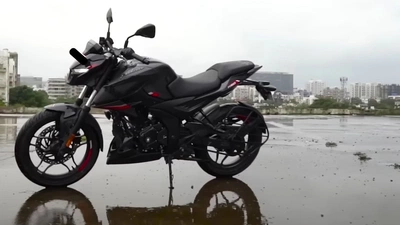
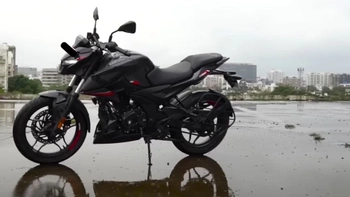
The Pulsar N250’s core strength is its exceptional value-for-money proposition. It delivers comparable power and torque figures, along with features like a slip-assist clutch and a USB charger, at a significantly more aggressive price point. It is the pragmatic choice for buyers prioritising performance-per-rupee over brand prestige or advanced electronics.
TVS Apache RTR 200 4V:
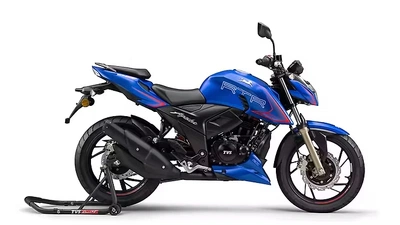
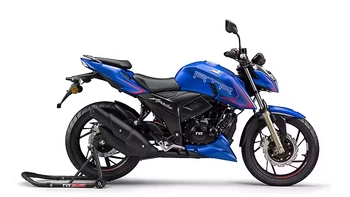
Despite its smaller 200cc engine, the Apache RTR 200 4V differentiates itself with a tech-heavy package. It offers segment-leading features like three riding modes (Sport, Urban, Rain), adjustable Showa suspension, and comprehensive Bluetooth connectivity. It targets a younger audience that values technology and nimble city handling above all else.
buying advice
buying advice
Who should buy it?
The ideal buyer is a city-focused rider seeking a refined, comfortable, and feature-rich motorcycle from a reliable brand. It is perfect for those upgrading from 150-200cc bikes who value safety features like traction control and the convenience of Bluetooth connectivity over raw top-end speed.
Who should skip it?
Performance enthusiasts seeking the most powerful engine and aggressive dynamics in the segment should look towards the KTM 250 Duke. Similarly, budget-conscious buyers who want maximum performance for their money will find the Bajaj Pulsar N250 a more compelling financial proposition.
Honda CB300F Specifications & Features
Engine & Transmission
| Starting | Self Start Only |
| Engine Type | 4 Stroke, Sl, Oil Cooled Engine |
| Displacement | 293.52 cc |
| Max Torque | 25.6 Nm @ 5500 rpm |
| Number of Cylinders | 1 |
| Cooling System | Oil Cooled |
| Fuel Supply | Fuel Injection |
| Gear Box | 6 Speed |
| Bore | 77 mm |
| Stroke | 63.033 mm |
| Compression Ratio | 9.3:1 |
| Emission Type | BS6.2 |
| Clutch | Multiplate Wet clutch |
| Valve Per Cylinder | 4 |
| gear shifting pattern | 1 Down 5 Up |
| spark plugs per cylinder | 1 Per Cylinder |
Motor & Battery
| Drive Type | Chain Drive |
| Transmission | Manual |
| Peak Power | 24.4 PS @ 7500 rpm |
Mileage & Performance
| Overall Mileage | 30 kmpl |
Performance
| Top Speed | 160 kmph |
Chassis & Suspension
| Body Type | Sports Bikes |
Tyres & Brakes
| Front Brake Diameter | 276 mm |
| Rear Brake Diameter | 220 mm |
| Radial Tyre | |
| Front Tyre Pressure Rider | 29 psi |
| Front Tyre Pressure Rider Pillion | 29 |
| Rear Tyre Pressure Rider | 29 psi |
| Rear Tyre Pressure Rider Pillion | 33 |
Dimensions & Capacity
| Width | 765 mm |
| Length | 2084 mm |
| Height | 1075 mm |
| Fuel Capacity | 14.1 L |
| Ground Clearance | 177 mm |
| Wheelbase | 1390 mm |
| Kerb Weight | 153 Kg |
| Fuel Reserve | 2.8 L |
| Seat Height | 789 mm |
| pillion grab rail | |
| pillion seat |
Electricals
| Headlight | LED |
| Taillight | LED |
| Turn Signal Lamp | LED |
| Low Battery Indicator | |
| Low Oil Indicator | |
| Low Fuel Indicator | |
| Drls |
Features & Safety
| Pass Switch | |
| Additional Features |
|
| Tachometer | Digital |
| Engine Kill Switch | |
| hazard warning indicator | |
| hazard warning lights | |
| no of tripmeters | 2 |
| shift light | |
| stand alarm |
Features
| Instrument Console | Digital |
| Speedometer | Digital |
| Tripmeter | Digital |
| Seat Type | Split |
| Clock | |
| Passenger Footrest | |
| Navigation | |
| Odometer | Digital |
| Body Graphics | |
| Usb Charging Port | |
| Call SMS Alerts | |
| Music Control | |
| voice assist |
App Features
| Low Battery Alert | |
| Navigation Assist | |
| Calls & Messaging |
Underpinnings
| Suspension Front | Telescopic (USD) |
| Suspension Rear | Monoshock |
| Brakes Front | Disc |
| Brakes Rear | Disc |
| Tyre Size | Front :-110/70-17 Rear :-150/60-17 |
| Wheel Size | Front :-431.8 mm,Rear :-431.8 mm |
| Wheels Type | Alloy |
| Tubeless Tyre | 1 |
| ABS | Dual Channel |
| Frame | Diamond Type |
| first service | 1000 Kms/30 Days |
| second service | 1000 Kms/80 Days |
| third service | 12000 Kms/365 Days |
| caliper front piston | 4 |
| caliper rear piston | 2 |
| Tyre Type | Tubeless |
Warranty
| Mobile Application | |
| Vehicle Warranty | 3 Years or 42,000 Km |
| Roadside Assistance |
Honda CB300F Price in Cities
₹ 1.84 Lakh - 1.84 Lakh
₹ 1.82 Lakh - 1.82 Lakh
₹ 1.79 Lakh - 1.79 Lakh
₹ 1.82 Lakh - 1.82 Lakh
₹ 1.77 Lakh - 1.77 Lakh
₹ 1.82 Lakh - 1.82 Lakh
₹ 1.91 Lakh - 1.91 Lakh
₹ 1.77 Lakh - 1.77 Lakh
₹ 1.85 Lakh - 1.85 Lakh
₹ 1.98 Lakh - 1.98 Lakh
Popular Brands




Honda CB300F Comparisons
Honda CB300F
₹1.55 Lakh
TVS Apache RTR 200 4V
₹1.42 - 1.50 Lakh
Honda CB300F
₹1.55 Lakh
Bajaj Pulsar N160
₹1.22 - 1.31 Lakh
Honda CB300F
₹1.55 Lakh
Bajaj Pulsar 150
₹1.11 - 1.18 Lakh
Honda CB300F
₹1.55 Lakh
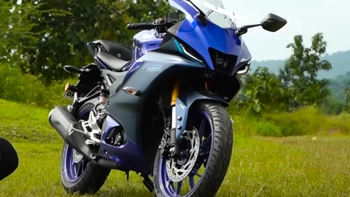
Yamaha R15 V4
₹1.71 - 1.97 Lakh
Honda CB300F
₹1.55 Lakh
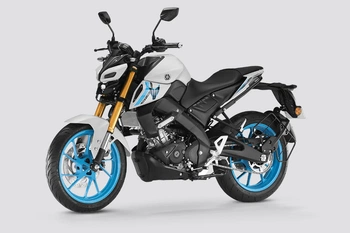
Yamaha MT 15 Version 2.0
₹1.63 - 1.72 Lakh
Honda CB300F
₹1.55 Lakh
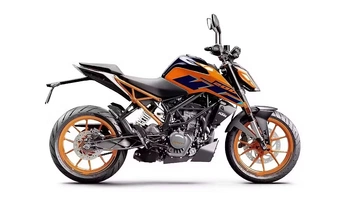
KTM 200 Duke
₹2 Lakh
Honda CB300F
₹1.55 Lakh
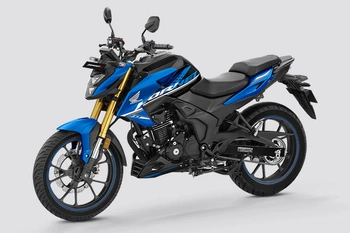
Honda Hornet 2.0
₹1.48 Lakh