Maruti Suzuki Victoris vs Kia Seltos - Which One Should You Buy
Maruti Suzuki Victoris vs Kia Seltos Comparison at CarHP India. Compare Maruti Suzuki Victoris and Kia Seltos Prices, Mileage, Features, Specs, Colours and much more.
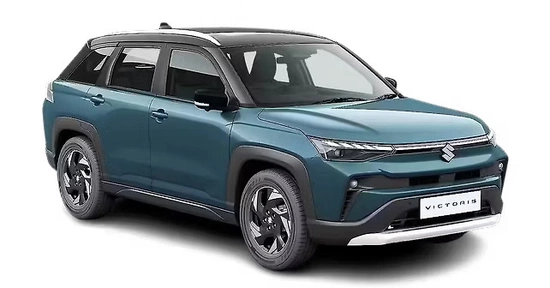
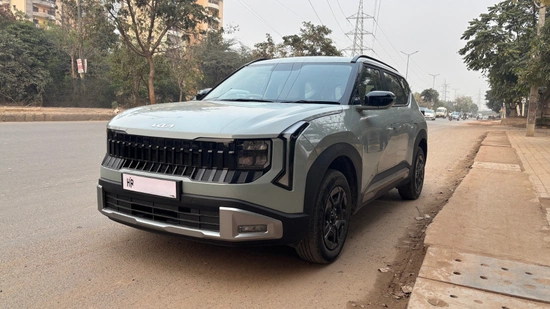
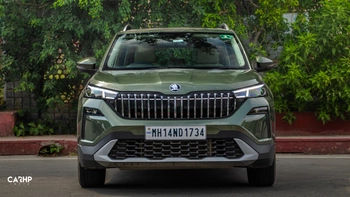
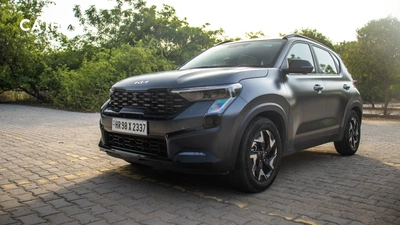
The Maruti Suzuki Victoris comes in 36 variants. Engine options include Petrol and CNG as per the selected variant, paired with manual or automatic transmissions. The selected variant is priced at ₹10.50 Lakh. The cheapest variant, LXI, costs ₹10.50 Lakh, while the top-end variant, ZXI Plus (O) Strong Hybrid, is priced at ₹19.99 Lakh. The Kia Seltos comes in 44 variants. Engine options include Petrol and Diesel as per the selected variant, paired with manual or automatic transmissions. The selected variant is priced at ₹11 Lakh. The cheapest variant, HTE, costs ₹11 Lakh, while the top-end variant, GTX (O) Diesel AT, is priced at ₹21.82 Lakh.
₹ 10.50 Lakh
₹ 11 Lakh


Compare Minimum 2 Cars At Once — Tap To Activate / Deactivate
Smart Summary for Car Selection
 Why Choose Maruti Suzuki Victoris?
Why choose
- A strong hybrid is offered with claimed economy up to 28.65kmpl, and no Seltos engine comes near that in city traffic
- CNG is offered as well, so there are two separate low-running-cost routes here where the Seltos has none
- All-wheel drive is available, and the Seltos does not offer it at any price, so buyers facing wet ghat roads or unmade approaches have one choice between these two
- Level 2 driver assistance covering automatic emergency braking, lane keep assist, blind spot monitoring, adaptive cruise, rear cross traffic alert, lane departure warning and high beam assist is offered
- It holds a five-star Bharat NCAP rating
- A powered tailgate is offered, which the Seltos skips
Why not choose
- All-wheel drive is tied to the top automatic version, so traction and a lower price cannot be combined
- At 4,360mm long on a 2,600mm wheelbase it is marginally smaller than the Seltos in both length and wheelbase, and rear space reflects it
- The CNG version is noticeably less powerful than the petrol or hybrid, so the cheapest running cost costs you performance
- No diesel and no turbo-petrol exist in the range, so there is no engine here built for outright pull
- Cabin design and perceived material quality sit behind the Seltos's
Why Choose Kia Seltos?Why choose
- A turbo-petrol and a diesel are both offered, so there is a genuine performance engine and a genuine long-distance engine, neither of which the Victoris has
- The diesel returned around 17kmpl with the manual and 15kmpl with the automatic in real driving, which makes it the cheaper choice for high highway mileage even against the hybrid
- Rear knee room and cabin width are both better than the Victoris's, so this is the car if adults sit in the back regularly
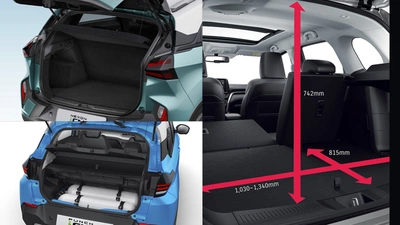
- The 447-litre boot handles family luggage comfortably
- Dual-zone climate control, lumbar support and a driver's seat memory function are all offered, and the Victoris matches none of them
- A clutchless manual is offered on the turbo, which gives two-pedal driving without a full automatic's complexity
Why not choose
- No all-wheel drive exists anywhere in the range, so a buyer who needs traction has to move to the Victoris regardless of everything else
- No CNG and no hybrid are offered, so the Victoris's two cheapest running-cost routes have no equivalent here
- No powered tailgate is fitted, which rivals at this price now include
- The strongest turbo output comes only with the dual-clutch automatic, so a manual buyer cannot have the quickest Seltos
- Rear drum brakes are fitted on most versions
 Our Recommendation For Most Buyers
Victoris
The Victoris is built for buyers who care what the car costs to run and where it can go. A hybrid claiming up to 28.65kmpl and a CNG option give it two cheap-fuel routes the Seltos cannot answer, and it is the only one of the two with all-wheel drive, which settles the comparison outright for anyone facing a wet ghat road or an unmade approach.
Level 2 driver assistance is comprehensive. The constraint is that all-wheel drive sits on the top automatic version only, so traction comes bundled with the highest price in the range. There is also no engine here built for pulling power, since neither a diesel nor a turbo-petrol exists.
Seltos
The Seltos is the better car for covering distance with people in the back. Its diesel returned around 17kmpl with the manual in real driving, which beats the hybrid on a highway run, and the turbo-petrol gives it a performance option the Victoris has nothing to match. Rear knee room, cabin width and the 447-litre boot all favour the Kia for family use.
What it cannot provide is all-wheel drive, at any price in any trim, so buyers with a traction requirement have to look at the Maruti. CNG and hybrid are both absent too, so for a city-bound high-mileage owner the Victoris will cost less to run every month.
Engine and Performance
Performance Specifications
Fuel Specifications
Dimensions and Design
Interior Specifications
Wheels & Tires
Suspension, Brakes & Steering
Safety Features
Interior Features
Comfort & Convenience
Infotainment Features
Exterior Features
Brochure

EMI Cost Comparison
Assuming 20% down payment, 9.5% interest, 60-month tenure
 Loan Amount
 Interest: 9.5%
 Down Payment (20%)
 Loan TenureLoan AmountInterest: 9.5%Down Payment (20%)Loan Tenure
Pros & Cons Comparison
Things We Like in Maruti Suzuki Victoris
- A more practical choice for Arena buyers than the Grand Vitara
- Excellent boot space thanks to underbody CNG tanks
Things We Like in Kia Seltos
- Better road presence than the previous gen model.
- Multiple engine and gearbox options on offer.
Things We Don't Like in Maruti Suzuki Victoris
- Despite a 210mm clearance, the underbody CNG tank may make owners cautious
- Removing spare wheel is inexcusable no matter how you look at it
Things We Don't Like in Kia Seltos
- Polarising design, especially at the front.
- No hybrid powertrain currently available.
Maruti Suzuki Victoris Comparisons
Maruti Suzuki Victoris
₹10.50 - 19.99 Lakh
Citroen Aircross X
₹8.89 - 14.72 Lakh
Maruti Suzuki Victoris
₹10.50 - 19.99 Lakh
Maruti Suzuki Grand Vitara
₹10.77 - 19.77 Lakh
Maruti Suzuki Victoris
₹10.50 - 19.99 Lakh
Hyundai Creta
₹10.91 - 20.46 Lakh
Maruti Suzuki Victoris
₹10.50 - 19.99 Lakh
Tata Nexon
₹7.40 - 14.52 Lakh
Maruti Suzuki Victoris
₹10.50 - 19.99 Lakh
Maruti Suzuki e Vitara
₹16.19 - 20.21 Lakh
Kia Seltos Comparisons
Kia Seltos
₹11 - 21.82 Lakh
Hyundai Creta
₹10.91 - 20.46 Lakh
Kia Seltos
₹11 - 21.82 Lakh
Tata Sierra
₹11.49 - 21.59 Lakh
Kia Seltos
₹11 - 21.82 Lakh
Maruti Suzuki Grand Vitara
₹10.77 - 19.77 Lakh
Kia Seltos
₹11 - 21.82 Lakh
Tata Nexon
₹7.40 - 14.52 Lakh
Kia Seltos
₹11 - 21.82 Lakh
Kia Sonet
₹7.41 - 14.37 Lakh

Kia Seltos
₹11 - 21.82 Lakh
Renault Duster
₹10.49 - 18.69 Lakh
Kia Seltos
₹11 - 21.82 Lakh
Maruti Suzuki e Vitara
₹16.19 - 20.21 Lakh

Kia Seltos
₹11 - 21.82 Lakh
Volkswagen Taigun
₹11 - 19.30 Lakh

Kia Seltos
₹11 - 21.82 Lakh
Mahindra XUV 7XO
₹13.99 - 25.79 Lakh
Car News



Delhi Announces Stricter Winter Anti-Pollution Measures
Delhi has announced winter anti-pollution measures that directly affect vehicle owners. Non-BS6 vehicles from outside Delhi will be barred from entering the city, parking charges will double, and the No PUC No Fuel rule will be enforced more strictly.
Salil Kumar
September 29, 2026



Maruti Suzuki Offering Up to Rs. 1.35 Lakh Benefits in September 2026
Maruti Suzuki's September 2026 Arena offers cover seven models, with the Victoris strong hybrid getting the highest benefits at Rs. 1.35 lakh. Here is the full breakdown, including fuel-type differences on the Wagon R, Alto K10, Swift, and Eeco.
Anmol Kumar
September 11, 2026