Hyundai i20 N-Line
Overall Rating

Hyundai i20 N-Line
Overall Rating
EMI Loading
Hyundai i20 N-Line Key Specifications
Hyundai i20 N-Line Highlights
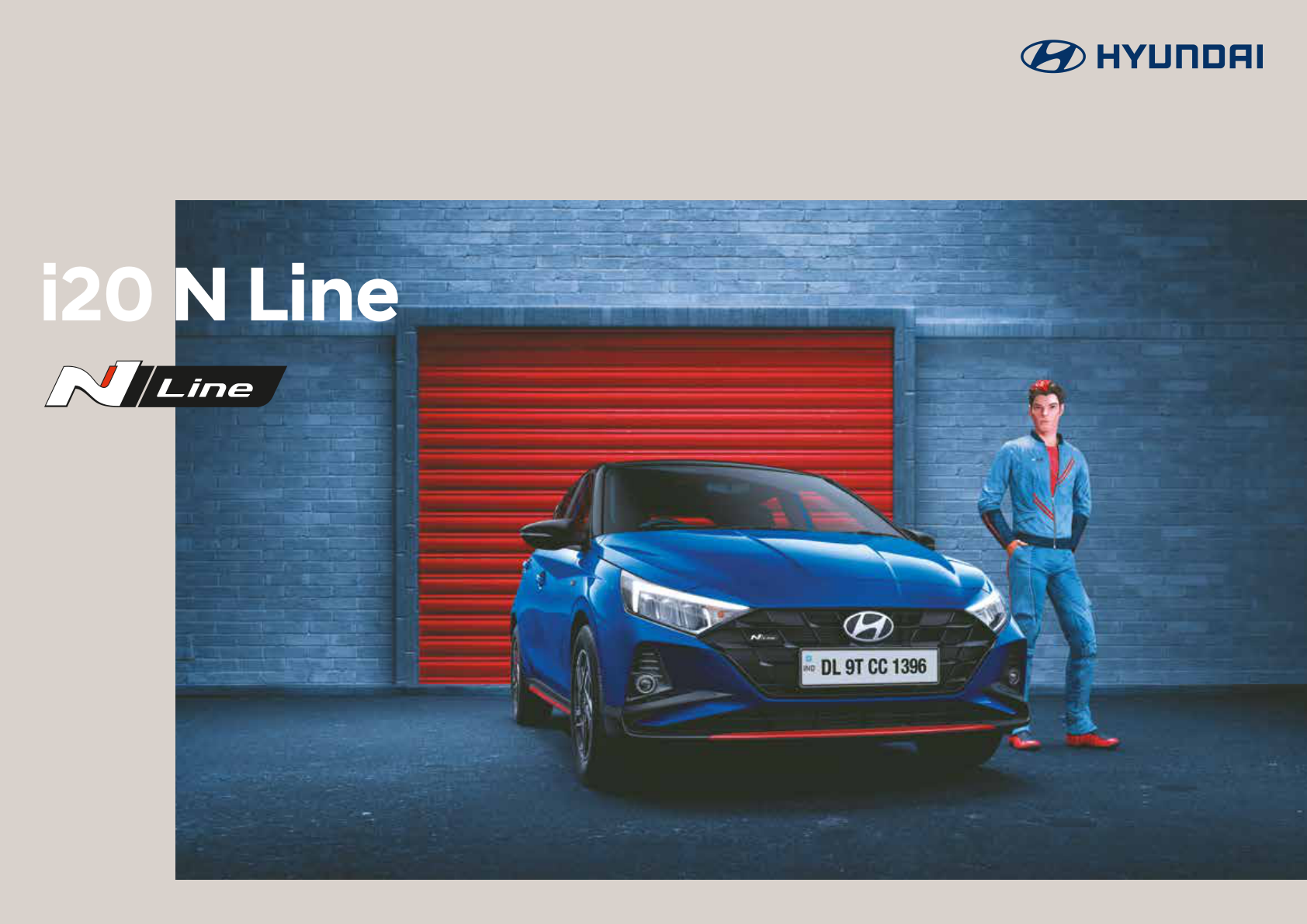

Sporty-looking steering wheel that enhances the driving feel

Tyre pressure monitoring system that alerts you to pressure loss in real time

10.25-inch touchscreen with wireless Android Auto and Apple CarPlay via adapter support
Hyundai i20 N-Line Overview


In India's premium hatchback segment, hot hatches have historically been rare, short-lived, or compromised by the absence of an automatic gearbox, eventually leading to them being discontinued.
However, Hyundai has been trying its best to ensure the i20 N Line does not meet the same fate. It has been on sale since 2021, has survived a full facelift cycle, and offers both a 6-speed manual and a 7-speed DCT, making it the only sporty premium hatchback remaining in this segment.
The N Line is not a hot hatch in the European sense, it is much more of a warm hatch.
It does not have a limited-slip differential, a distinct engine tune, or the aggressive ride penalty that performance-focused suspensions usually extract. What it has is a 30% stiffer damper setup over the standard i20, all-wheel disc brakes with red calipers, a more responsive steering calibration, Sport mode with a meaningful throttle map change, and a specific exterior and interior treatment that immediately sets it apart from the standard i20.
The engine is the same 1.0-litre three-cylinder turbo-petrol that powers the Venue and the Venue N Line, producing 118 bhp and 172 Nm, but it suits the N Line's character the most. There is a brief flat spot below 1,500 rpm typical of small-displacement turbos, after which the power arrives with good linearity up to the 6,500 rpm redline. It is not a car that feels fast in an absolute sense, but it rewards use of the rev range in a way the standard i20's naturally aspirated 1.2-litre never does.
The MY2026 updates, a built-in dashcam and wireless Android Auto and Apple CarPlay dongle added to the N8, along with the significant September 2025 GST-driven price reduction, have made the N Line range more complete and more accessible. The discontinuation of the N6 DCT variant means buyers who want the convenience of an automatic must step up to the N8, but the N8's feature additions justify that step in most respects.
With the Altroz Racer being discontinued in 2025, the i20 N Line does not have a direct competitor anymore, with its only closest rivals being the turbo petrol sub-4-metre crossovers and compact SUVs.
Engine and Performance
Engine and Performance
| Specification | Details |
|---|---|
| Engine | 1.0L (998 cc) Turbo GDi Petrol |
| Power | 118 bhp @ 6000 rpm |
| Torque | 172 Nm @ 1500-4000 rpm |
| Transmission | 6-speed Manual / 7-speed DCT |
| Drivetrain | FWD |
The 1.0-litre Kappa T-GDi produces 118 bhp and 172 Nm, with torque accessible from 1,500 rpm through to 4,000 rpm, giving it a usable midrange that suits both city driving and open road running. Weighing under 1,200 kg, it feels quicker than heavier compact SUVs with 1.0-litre turbo engines.
The engine's characteristic flat spot below 1,500 rpm is one of its few limitations. In slow urban traffic, particularly at low revs in a higher gear, where the turbo has not yet spooled sufficiently, the responses feel sluggish.
Once the turbo does wake up, the delivery is linear and willing, and the engine pulls cleanly to its 6,500 rpm redline. The twin-tip exhaust is not merely aesthetic, but actually contributes to a sound that is noticeably more sporty and characterful than other small capacity turbo units.
The 6-speed manual is available in both the N6 and N8, and it is the more driver-focused choice of the two gearbox options. The throws are short and precise, the clutch action is well-weighted, and the ratios are well-spaced for both the city and open highway stretches.
The 7-speed DCT in the N8 is the smooth, committed daily driver's choice. Gear changes are quick and seamless in Normal mode, while in Sport the transmission holds the gears for longer and responds to throttle inputs with more urgency.
The DCT's only notable weakness is the same one inherent to all dual-clutch units, i.e. occasional hesitancy in very slow crawling traffic, where the first-gear to second-gear transition at near-standstill speeds can produce a brief lurch. It is an infrequent occurrence in practice and not unique to Hyundai's implementation, but drivers who spend a lot of their time in dense city traffic will notice it more than those who drive in more flowing conditions.
The chassis and suspension are where the N Line's engineering effort is most clearly felt. The 30% stiffer damping over the standard i20, applied to both front MacPherson struts and the rear coupled torsion beam, reduces body roll substantially in fast direction changes, makes the car feel notably more planted at highway speeds, and gives the steering a firmer, more connected character.
Ride and Handling
The trade-off from the stiffer suspension is a firmer low-speed ride. Sharp-edged urban potholes and broken road surfaces are felt in the cabin at city speeds, with the rear seat passengers feeling the stiffer damping more acutely than front occupants. This is a compromise that all performance-focused suspension setups involve, but the i20 N Line navigates it with more nuance than a dedicated hot hatch would. Buyers expecting standard i20-level ride comfort will find the difference more than marginal.
With the re-calibrated steering, the handling has significantly improved as well. There is better communication from the front axle and less of the floaty, softly sprung quality that many Hyundai cars have historically been associated with.
All-wheel disc brakes, with red-painted front calipers, are standard on both variants and represent one of the N Line's most practically appreciated specifications. The standard i20's rear drum brakes are adequate in normal use, but the N Line's all-disc setup provides more consistent, confident stopping under repeated heavy braking and gives the car a safety-relevant advantage over its standard sibling that is proportionate to the way the N Line is driven.
Drive mode selection cycles through Eco, Normal, and Sport. Unlike on many cars, the drive modes on the N Line actually make a noticeable difference.
Eco softens throttle response and adjusts the air conditioning compressor for better fuel efficiency on longer runs. Normal is the well-balanced default for most driving. Sport sharpens throttle response noticeably and increases the steering weight.
Overall, the performance is more than adequate for the class and does justice to the car’s driving dynamics, which outshines most compact SUVs.
fuel economy
fuel economy
Both the manual and DCT carry identical ARAI-certified figures of 20.25 km/l, which is strong for a turbocharged petrol engine and reflects the small displacement and efficient calibration of the 1.0-litre unit.
Real-world returns vary considerably with driving style, as is always the case with turbocharged engines whose efficiency advantage over their ARAI cycle disappears quickly when the boost is used frequently.
In city driving with regular use of Sport mode and the upper rev range, owners report figures in the 13 to 14 km/l range.
In mixed urban and highway driving with moderate throttle inputs, 15 to 16 km/l is a realistic expectation.
On disciplined highway runs in Eco or Normal mode, some owners approach the higher end of the real-world range.
The 37-litre fuel tank is adequate for most city-use patterns and on par with other premium hatchbacks.
interior
interior

The i20 N Line's cabin takes the standard i20's already well-regarded interior and applies a consistent, confident sports theme throughout.
An all-black treatment with red accent stitching, red accents on the dashboard, seat fabrics with N-embossing, and the N-badged sporty steering wheel create an environment that communicates performance intent clearly without resorting to the kind of overworked styling that makes some sport-edition interiors feel exhausting to live with.
The steering wheel deserves specific mention. It nails the dimensions with the right diameter and thickness, is well-stitched, and feels reassuring to hold during enthusiastic driving. The round gear knob with a silver and red finish is of great quality and further elevates the sense of sportiness.
The N8's 10.25-inch touchscreen is a meaningful step up from the N6's 8-inch unit.
The N6's smaller screen offers wired Android Auto and Apple CarPlay only, which is a noticeable limitation at a time when wireless connectivity is increasingly standard. The N8's wireless connectivity works via a dongle adapter and functions reliably in real-world conditions.
The 10.25-inch fully digital instrument cluster displays drive mode status, N-specific graphics in Sport mode, and clear vehicle information across its full width. Hyundai's Bluelink connected car technology in the N8 adds remote start, remote AC pre-conditioning, and vehicle status monitoring via the Bluelink app.
The 7-speaker Bose system in the N8 is one of the most capable audio setups in the premium hatchback segment. Sound quality at moderate volumes is genuinely impressive, with good separation, controlled bass, and enough detail to satisfy most listeners without requiring any equaliser adjustment.
Front seat comfort is good but the seats lack the side bolstering that a more aggressively sporty character might suggest. More lateral support would suit the N Line's handling ability better, since you tend to move around a bit under fast cornering, with the seats not holding you as well as one would like.
One notable absence is ventilated front seats, which are not available on any N Line variant. Given the N8's pricing and the Bose sound system, Bluelink, and ambient lighting it includes, the absence of ventilated seats is the most significant missing comfort feature.

The rear seat provides adequate legroom for adults up to approximately six feet behind an average-height driver, and headroom is sufficient for most passengers.
The N Line's sunroof in both variants reduces the available headroom for tall rear occupants marginally, though most buyers accept this minor trade-off given the sunroof's value as a feature.

Boot space at 311 litres is adequate for two to three bags and weekly shopping but is not generous by segment standards. Families with regular large-luggage requirements will find this inadequate.
exterior
exterior

The N Line's exterior identity is built around contrast and precision rather than aggression.
| Dimension / Spec | Value |
|---|---|
| Length | 3995 mm |
| Width | 1775 mm |
| Height | 1505 mm |
| Wheelbase | 2580 mm |
| Ground Clearance | 170 mm |
| Turning Radius | Approx. 5.2 m |
| Boot Space | 311 litres |
Red accents on the grille, front and rear bumpers, and exterior mirrors are restrained enough to read as a coherent design decision rather than decoration.
The redesigned front bumper with its lower air intake treatment, chrome delete across the grille and window surrounds, the distinctive multi-spoke alloy wheel design, and the twin-tip exhaust at the rear are all elements that give the i20 N Line a specific visual identity while maintaining the standard model’s clean overall proportions.

The rear roof spoiler, introduced with the 2023 facelift, gives the car a slightly more assertive rear profile while contributing to rear aerodynamic stability. It is a subtle addition that works visually without overplaying the N Line's performance credentials.
Colour options include Abyss Black, Atlas White, Titan Grey, Thunder Blue, and Starry Night. Atlas White and Thunder Blue are available in a dual-tone combination with a black roof. Thunder Blue with a black roof is arguably the most visually striking configuration in the range and suits the N Line's character well.
Build quality is a strength across the range. Panel gaps are tight and consistent, the body structure feels solid, and the exterior plastics and trim do not suggest compromise relative to the car's price. The overall impression on the outside is of a vehicle assembled to a standard above other premium hatchbacks.
safety
safety
Six airbags, ESC with VSM, hill start assist, ISOFIX, TPMS, lane departure warning, and all-wheel disc brakes are standard across both variants, making the i20 N Line a well-equipped vehicle from a passive and active safety standpoint.
The all-wheel disc brake setup is one of the N Line's most practically significant safety differences over the standard i20, which uses rear drums. Under repeated heavy braking or in high-speed emergency stops, disc brakes on all four corners provide more consistent, fade-resistant stopping performance. Combined with the stiffer chassis dynamics that reduce body movement during evasive manoeuvres, the N Line is meaningfully better equipped to handle emergency situations than its standard sibling.
Lane departure warning is standard but is an alert-only system, warning the driver when the vehicle drifts from its lane without indicating but does not apply steering corrections. This is distinct from lane keep assist, which the N Line does not offer. There is no adaptive cruise control, autonomous emergency braking, or other intervention-based ADAS on any N Line variant.
The third-generation i20 with dual front airbags and ABS received a 3 star Global NCAP rating. While this looks decent on paper, Global NCAP confirmed the car's structure to be unstable. Additionally, there was a risk of the driver airbag not being able to protect the driver's head, with weak protection for the chest. While the added airbags and other standard safety features should improve the car's safety score if tested now, the unstable structure remains a cause for concern.
competition
competition
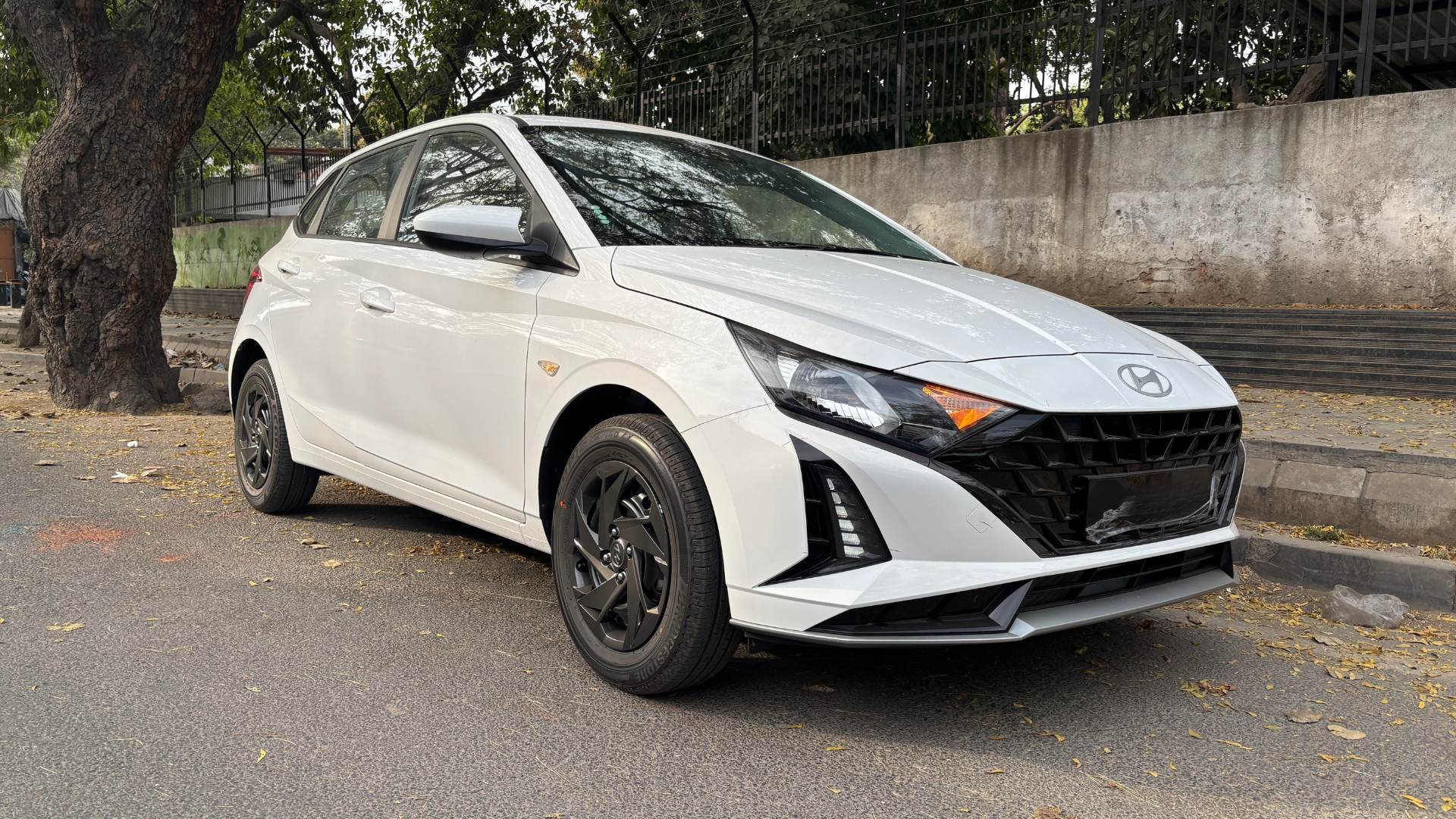
The regular Hyundai i20 is the most direct comparison point and provides important context for understanding what the N Line premium actually buys.
Available only with a 1.2-litre naturally aspirated petrol engine, the standard i20 is more comfortable over city roads, achieves better real-world fuel efficiency, and offers a similar feature set, including the same 10.25-inch touchscreen and digital cluster, at a lower price.
The N Line's additions are the specific mechanical tuning, the twin-tip exhaust note, and the visual identity.
Buyers who commute primarily on poor urban roads and do not prioritise driving engagement would be better served by the regular i20.
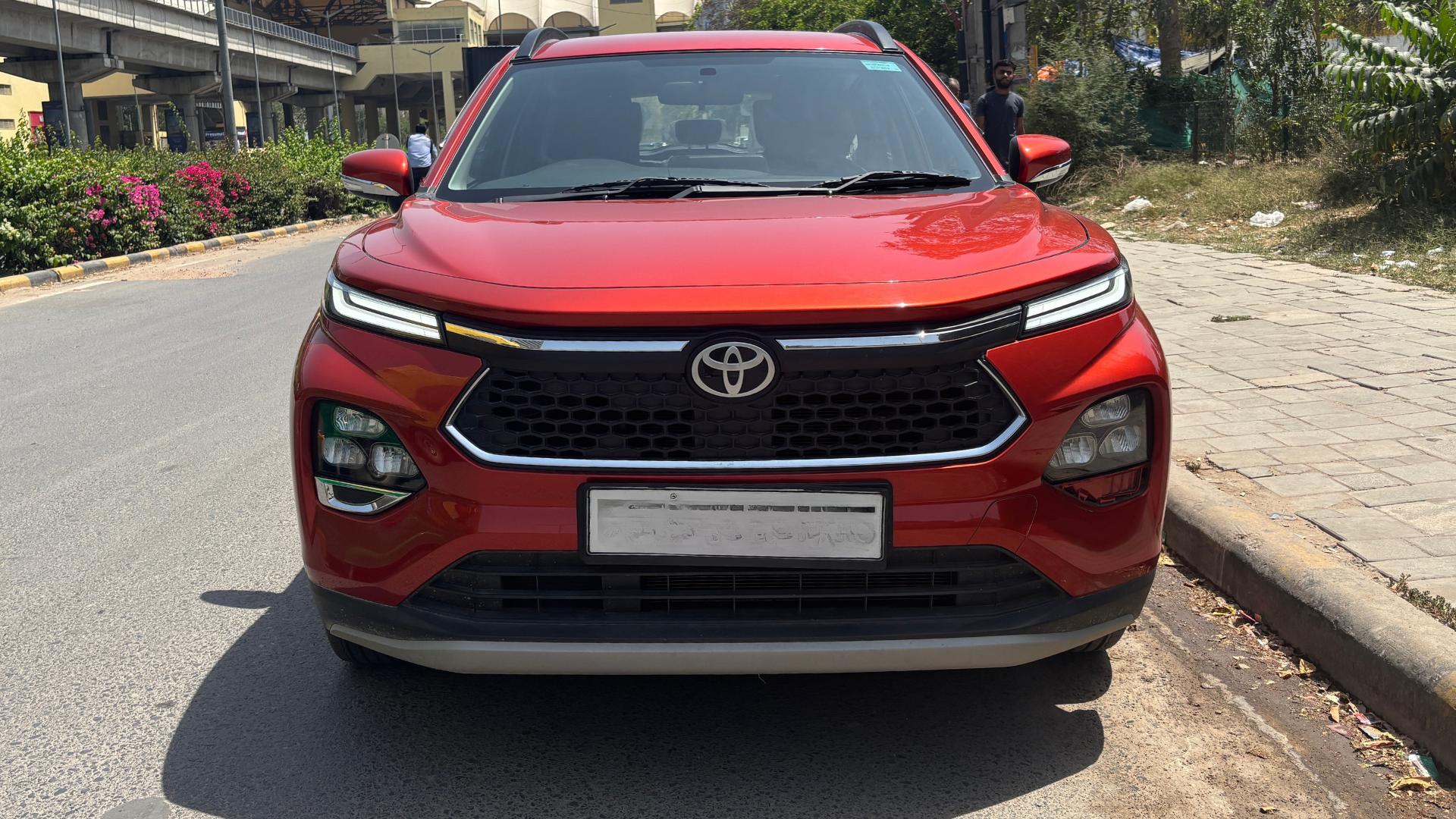
The Maruti Suzuki Fronx and its badge-engineered twin, the Toyota Urban Cruiser Taisor, use a 1.0-litre Boosterjet turbo-petrol in its higher trims, producing 99 bhp and 148 Nm.
While these figures are lower than the N Line’s, both cars are crossovers with 190 mm of ground clearance and a more upright seating position, which many Indian buyers find preferable to a hatchback. The Fronx and Taisor also carry the advantage of their manufacturer’s unmatched service network and resale values.
What the Fronx and Taisor Turbo lack is the N Line's driving dynamics and exhaust note that give the Hyundai its enthusiast appeal.
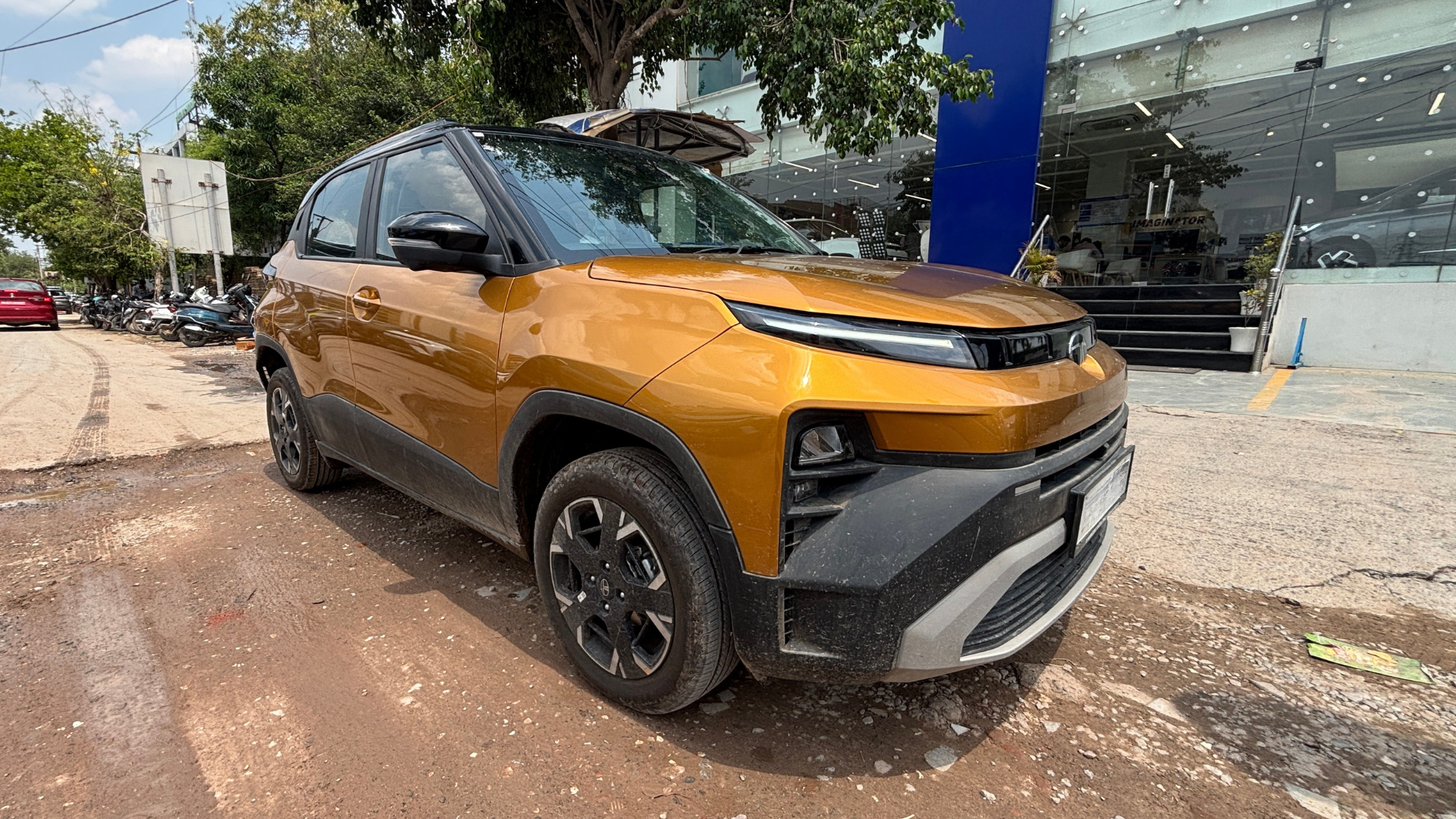
The 2026 Tata Punch facelift introduced a 1.2-litre turbo producing 118 bhp and 170 Nm, available only with a 6-speed manual.
The Punch Turbo counters the i20 N Line with a 193 mm ground clearance, a 5-star Bharat NCAP safety rating, and the SUV body type with a higher seating position.
For buyers who want turbo performance alongside proper SUV clearance, good rough road ride quality, and the strongest crash safety credentials in this price bracket, the Punch Turbo is an ideal pick.
It does not match the N Line's driving dynamics or sporty appeal, but brings a comprehensively practical and safety-validated package to the turbo-performance conversation at a similar price.
final verdict
final verdict
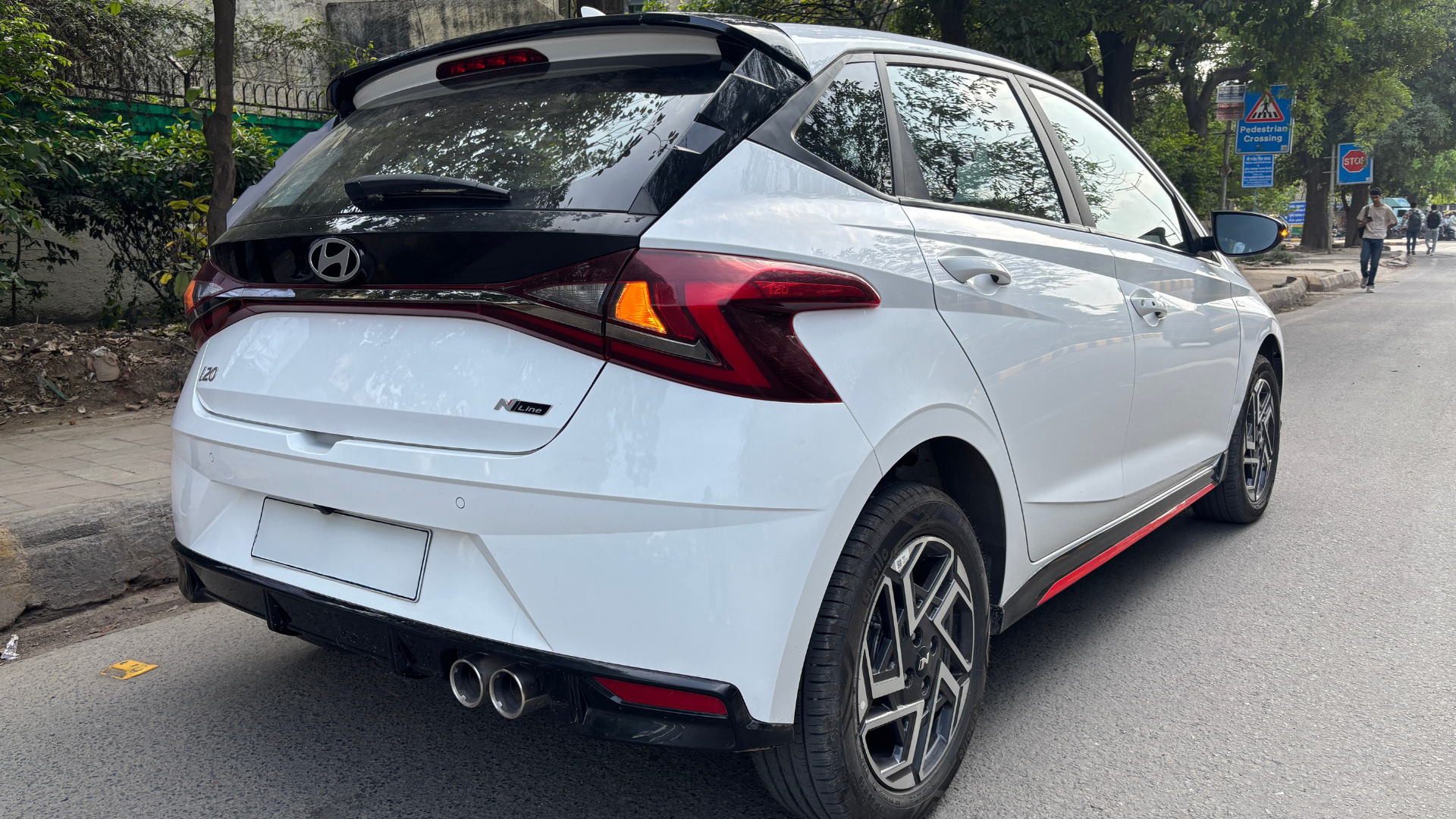
The hot hatchback segment in India, which once boasted quite a few fun to drive cars like the Volkswagen Polo GT, Maruti Suzuki Baleno RS, Fiat Abarth Punto, and the Ford Figo S, is only left with the Hyundai i20 N Line as of 2026. This reflects the narrowness of a market that has never fully embraced these hatchbacks.
The i20 N Line is a genuinely well-realised product. It gets a turbo engine that is characterful and rewarding when used through its rev range, a chassis tuning that delivers a more connected and engaging driving experience than any standard premium hatchback, and all-wheel disc brakes that give it a safety advantage over the rear-drum setups of its siblings.
The N8's feature list, anchored by the 10.25-inch touchscreen with wireless Apple CarPlay/Android Auto, 7-speaker Bose audio, Bluelink, and red ambient lighting, is competitive for its price.
Limitations include the absence of ventilated seats, a stiff ride that some rear passengers will find tiring on bad roads, and a 311-litre boot which is below average for the segment. Additionally, the standard i20 (2 airbags and ABS) only managed a 3 star Global NCAP rating, with a structure that was deemed unstable. This is worth noting since the N Line also shares the same platform.
For the buyer who values driving engagement in their daily car and wants a premium hatchback that justifies the heart-over-head choice, the N6 manual variant is a compelling entry point, while the N8 manual adds the larger screen, Bose audio, Bluelink, ambient lighting, and dashcam for those who want the full cabin experience.
The N8 DCT is the right (and only) choice for buyers who want the automatic. In the current market, where no direct rival exists in the sporty premium hatchback space, the choice of which N Line to buy is ultimately simpler than it looks.
Hyundai i20 N-Line News




Hyundai i20 N-Line FAQs
What engine powers the i20 N Line, and how much power does it make?
−The i20 N Line uses a 1.0-litre turbocharged GDi petrol engine, producing 118 hp and 172 Nm.
Is an automatic gearbox available on the i20 N Line?
+Yes. The i20 N Line is offered with a 7-speed dual-clutch transmission (DCT) along with the standard 6-speed manual.
What is the ARAI-certified mileage of the i20 N Line?
+The i20 N Line returns an ARAI-certified fuel efficiency of 20 kmpl with both the manual and DCT variants.
Does the i20 N Line have a sunroof?
+Yes, the i20 N Line comes with an electric sunroof as standard.
How many airbags does the i20 N Line offer?
+The i20 N Line comes with six airbags as standard.
Does the i20 N Line support wireless Android Auto and Apple CarPlay?
+The i20 N Line N8 variants get wireless Android Auto and Apple CarPlay. N6 variants get wired connectivity.
How much boot space does the i20 N Line get?
+311 litres.
What is the ground clearance of the i20 N Line?
+170 mm.
What is the mileage of the Hyundai i20 N-Line?
+The i20 N-Line delivers (manual) and up to (automatic) as per ARAI. Real-world mileage ranges from depending on conditions.
Is the Hyundai i20 N-Line available in petrol, CNG, electric or diesel engines?
+The i20 N-Line is currently available with Petrol engines.
What is the current ex-showroom price of the Hyundai i20 N-Line?
+The current ex-showroom prices start at and go up to , depending on the variant.
How many variants does the i20 N-Line come in, and what are their names?
+The Hyundai i20 N-Line is available in 8 variants: N6, N6 DCT, N6 DCT Dual Tone, N6 Dual Tone, N8, N8 DCT, N8 DCT Dual Tone and N8 Dual Tone. It offers transmission options.
What is the engine capacity, power, and torque of the i20 N-Line?
+It has a engine that produces and of torque.
What are the key safety features in the i20 N-Line ?
+The i20 N-Line comes equipped with several safety features including Anti-lock Braking System (ABS), Central Locking, Electronic Brakeforce Distribution (EBD), Electronic Stability Control (ESC) and Hill Assist.
What are the boot space and dimensions of the Hyundai i20 N-Line?
+The i20 N-Line offers 311 Litres of boot space. Its dimensions are 3995 mm in length, 1775 mm in width, and it has a wheelbase of 2580 mm.
Which features are available in the top model of the i20 N-Line (touchscreen, camera, cruise control, etc.)?
+The top N8 DCT Dual Tone variant includes .
What is the standard warranty on the i20 N-Line, and what are the average service costs?
+Hyundai offers a warranty. Annual service costs range between .
What colours does the Hyundai i20 N-Line come in?
+The Hyundai i20 N-Line is available in the following colours: .
Which variants of the Hyundai i20 N-Line have a sunroof?
+variant of Hyundai i20 N-Line is having sunroof
Is the Hyundai i20 N-Line available in petrol, CNG, electric or diesel engines?
+The i20 N-Line is currently available with Petrol engines.
What are the key safety features in the i20 N-Line ?
+The i20 N-Line comes equipped with several safety features including Anti-lock Braking System (ABS), Central Locking, Electronic Brakeforce Distribution (EBD), Electronic Stability Control (ESC) and Hill Assist.
What are the boot space and dimensions of the Hyundai i20 N-Line?
+The i20 N-Line offers 311 Litres of boot space. Its dimensions are 3995 mm in length, 1775 mm in width, and it has a wheelbase of 2580 mm.
What colours does the Hyundai i20 N-Line come in?
+The Hyundai i20 N-Line is available in the following colours: Thunder Blue With Abyss Black, Starry Night, Thunder Blue, Atlas White, Atlas White/Abyss Black and Titan Grey.