| Vehicle Category | Current Import Duty | Import Duty Under India-EU FTA | Notes |
|---|---|---|---|
| Cars priced below USD 40,000 | 70% | Phased reduction to 10% | Final eligibility criteria and price slab yet to be confirmed |
| Cars priced above USD 70,000 | 110% | Phased reduction to 10% | Applies within an annual quota of 250,000 vehicles |
| ICE-powered vehicles | 70%–110% | Gradually reduced to 10% | Only ICE vehicles eligible in the initial phase |
| Electric vehicles | Up to 110% | No change for now | EVs excluded to protect domestic EV manufacturing |
| Car parts and components | Varies by part | Phased abolition over 5–10 years | Expected to reduce costs of locally assembled cars over time |
What is the India-EU FTA Trade Deal?
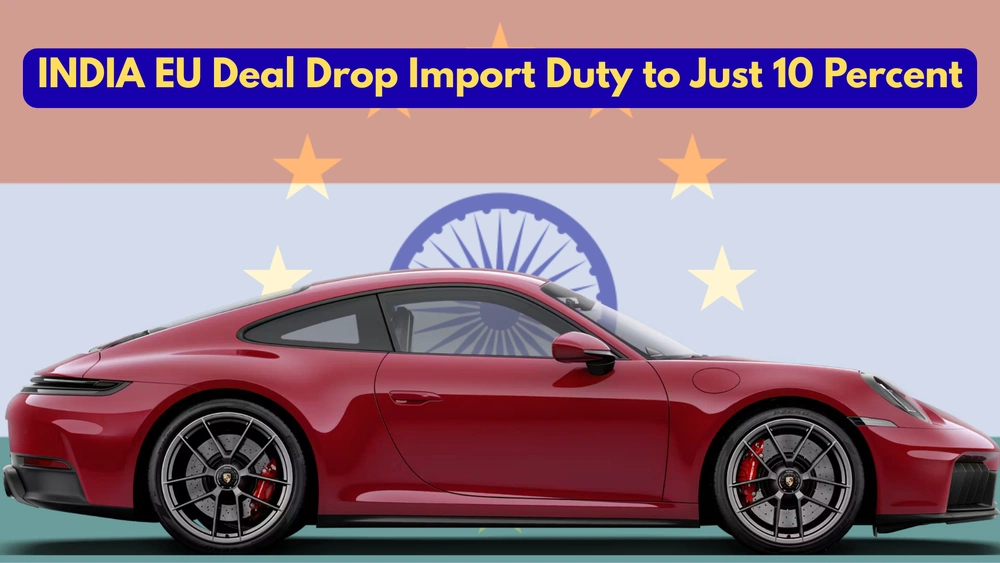
India and the European Union have officially signed a Free Trade Agreement that significantly reshapes the future of car imports into India. Under this agreement, import tariffs on European cars will be reduced in a phased manner from the current peak of 110 percent to as low as 10 percent. This benefit will apply to a capped annual allocation of 250,000 vehicles, ensuring the market is opened gradually rather than flooded overnight.
While the agreement confirms the scale and timeline of duty reduction, the exact price bracket of European cars eligible for these lower tariffs has not yet been finalised. That detail is expected to be clarified through subsequent policy notifications. Overall, the deal marks one of the most aggressive tariff liberalisation moves India has made in the automotive sector, while still keeping safeguards in place for domestic manufacturers.
How Will It Benefit Car Buyers?
The most immediate beneficiaries will be buyers of fully imported European cars. At present, imported vehicles are heavily taxed, making them far more expensive than their global prices. Cars priced above 70,000 dollars currently attract a massive 110 percent import duty, while those priced below 40,000 dollars face around 70 percent duty.
As tariffs reduce in stages to 10 percent, the price gap between India and international markets will shrink substantially for eligible models. Over time, this could translate into savings running into tens of lakhs on premium and luxury vehicles. Buyers will gain access to a wider range of European cars at more realistic prices, while increased competition may also improve brand offerings, specifications, and ownership packages.
That said, the benefits will not be universal. The tariff cuts apply only within the annual quota and only to specific vehicle categories, meaning price drops will be selective rather than market-wide.
How Will the Import Duty Reduction Work?
The duty reduction will not happen overnight. Instead, tariffs on eligible European cars will be lowered gradually from 110 percent to 10 percent over multiple phases. This staged approach gives Indian manufacturers time to adjust while allowing controlled access to imported vehicles.
For now, only internal combustion engine vehicles will qualify for the reduced tariffs. Electric vehicles have been excluded at this stage to protect India’s growing domestic EV ecosystem. Another major element of the agreement involves car parts. Import duties on automotive components will be progressively abolished over a period of five to ten years.
As component costs fall, locally assembled and CKD models are expected to become more affordable over time, even if they are not directly part of the CBU tariff quota. This could quietly benefit mainstream luxury cars assembled in India by reducing production costs and improving pricing flexibility.
What Happens to Car Parts and Local Assembly?
One of the most important long-term impacts of the India-EU FTA lies in car parts liberalisation. Currently, high duties on imported components add significantly to the cost of assembling vehicles in India. Under the new agreement, these duties will be phased out gradually over five to ten years.
This change is expected to make locally assembled European cars cheaper to manufacture, which could eventually reflect in lower prices or better standard equipment for buyers. Brands that already assemble cars in India may increase localisation, expand variant choices, or introduce more advanced powertrains once component sourcing becomes more economical.
What is the Fine Print?
Despite the headline-grabbing tariff cuts, several limitations remain. The reduced duties apply only to 250,000 vehicles per year, meaning demand could outstrip supply quickly for popular models. Eligibility rules, country-of-origin checks, and the final price threshold for qualifying cars are still awaited.
Only ICE vehicles benefit for now, with EVs kept out to safeguard domestic investments. Even with reduced customs duty, GST and applicable cesses will continue to apply, so prices will not fall in direct proportion to the tariff cut. Implementation will be phased and closely regulated, and brands may choose to absorb or pass on benefits strategically.
In effect, the India-EU FTA opens the door to far more competitive pricing for European cars, but in a controlled, gradual manner that balances consumer gains with protection for India’s automotive industry.
Source- Economic times, Hindustan times
Table of Contents
- What is the India-EU FTA Trade Deal?
- How Will It Benefit Car Buyers?
- How Will the Import Duty Reduction Work?
- What Happens to Car Parts and Local Assembly?
- What is the Fine Print?
Join the Conversation
Trending
Hyundai BAYON Design Sketches Revealed Ahead of India Launch
Hyundai India has released the first design sketches of the BAYON, its upcoming mid-size SUV. The renders preview a sculpted exterior with H-Edge lighting and a tech-focused cabin ahead of what is expected to be a launch later this year.
Anmol Kumar
September 16, 2026

Safest Cars In India To Buy in 2026
A complete list of Bharat NCAP tested models, their adult and child occupant protection scores, and star ratings.
Salil Kumar
September 15, 2026
Mahindra XUV 7XO Scores 5 Stars in Bharat NCAP, Gets Near-Perfect Adult Safety Score
The Mahindra XUV 7XO has been awarded a 5-star Bharat NCAP rating, scoring 30.76 out of 32 for adult occupant protection and 44.97 out of 49 for child safety. The rating covers the full variant range, petrol and diesel both.
Arjun Nair
September 15, 2026
Maruti Wagon R Facelift Spied Testing With New Head and Tail Lights
The Wagon R facelift has been spotted testing in CNG and heavy camouflage. A fresh face, reworked rear, and a bigger touchscreen can be expected on one of India's best-selling hatchbacks.
Anmol Kumar
September 15, 2026
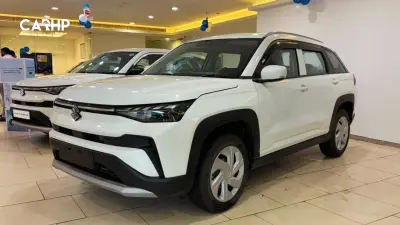
Maruti Suzuki Offering Up to Rs. 1.35 Lakh Benefits in September 2026
Maruti Suzuki's September 2026 Arena offers cover seven models, with the Victoris strong hybrid getting the highest benefits at Rs. 1.35 lakh. Here is the full breakdown, including fuel-type differences on the Wagon R, Alto K10, Swift, and Eeco.
Anmol Kumar
September 11, 2026
Featured
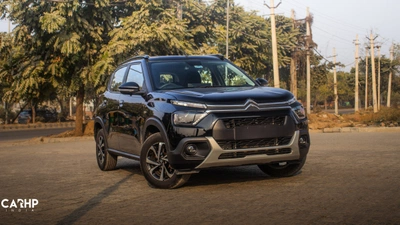
Citroen C3 Review: Who Should Consider This Car?
A few days ago, I took the Citroen C3X out for a spin in the city and on the highways. I travelled long distances and checked its fuel efficiency, features, comfort, and other factors. Today, I’ll briefly share my overall experience with the C3X and will tell you whether you should consider it or not and which is the most value-for-money variant of the lot.
Vatsal Agrawal
May 19, 2026
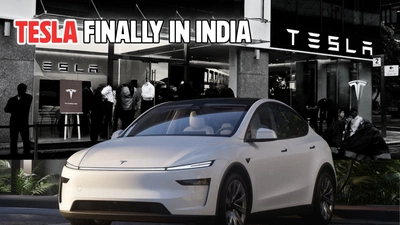
Tesla Finally In India Officially. Why Now And What Does It Mean For EVs?
The much-anticipated 2025 Tesla Model Y has officially arrived in India, marking a pivotal moment for the nation's burgeoning electric vehicle market. Launched on July 15, 2025, the Model Y Juniper facelift offers cutting-edge technology, impressive range, and signature Tesla performance. Positioned as a premium electric SUV, its entry will intensify competition and reshape consumer expectations for EVs across the subcontinent.
Charan Narain
July 17, 2025
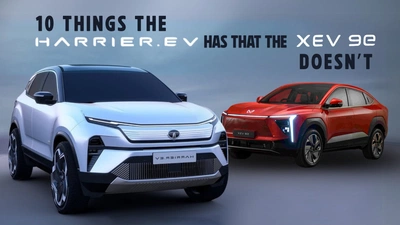
Here Are 10 Things The Harrier.EV Offers That The Mahindra XEV 9E Doesn't
The Harrier.EV is an incredible new offer from Tata. Its most popular competitor would be the Mahindra XEV 9E, priced similarly. With these two incredible offerings from home grown brands available, here is a list of everything the Harrier.EV offers that the XEV 9E doesn't.
Charan Narain
June 13, 2025
Write a comment
Comments
No comments yet. Be the first to comment!