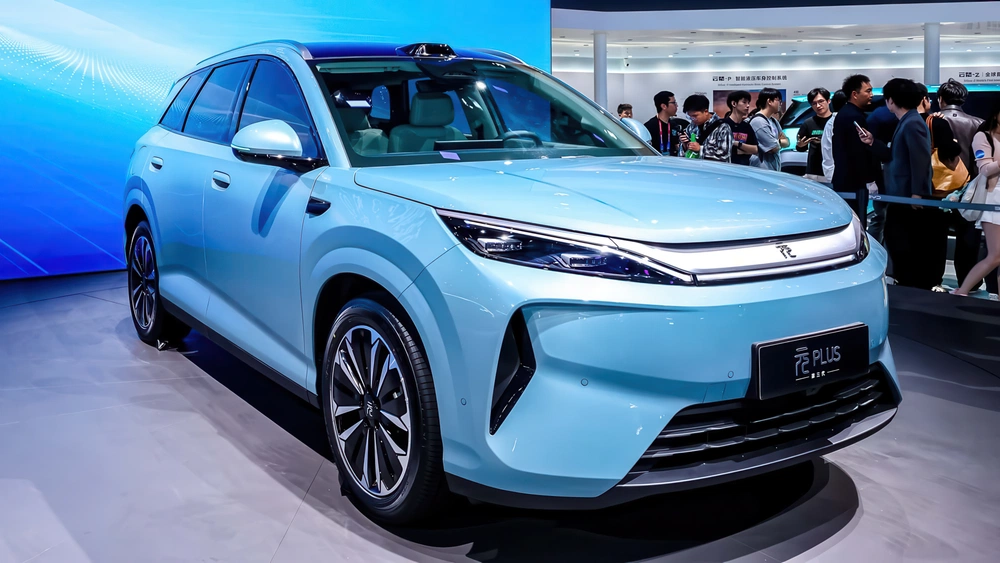
BYD unveiled the third-generation Atto 3, officially called the Yuan Plus in China, at the ongoing 2026 Beijing Auto Show. The SUV is more than a mere facelift, bringing major upgrades inside and out, repositioning the car as a more agile, smart and fun-to-drive SUV for the Chinese market.
The current Atto 3 on sale in India has been around since 2022, and while it has held up pretty well, it is starting to feel a little dated compared to popular competitors like the Tata Curvv EV and Mahindra BE 6 in its segment.
While an Indian launch is not confirmed yet, the new-generation Atto 3 could arrive sometime in 2027, potentially alongside BYD’s Sealion 6 and the second generation of the Atto.
That said, it is not expected to arrive with all the features offered in the Chinese model. The differences are likely to be seen inside the cabin, particularly with AI integration and software, while the rest of the car will largely remain the same.
Anyhow, here are the top features of the newly unveiled Chinese Atto 3, compared with the current model sold in India:
New Dragon Face Design & Larger Dimensions
The new Atto 3 has larger dimensions compared to the current Indian model. It is 210 mm longer at 4,665 mm, 20 mm wider at 1,895 mm, and 60 mm taller at 1,675 mm, while the wheelbase has increased by 50 mm to 2,770 mm.
As for the new Dragon Face design, it is mainly noticeable from the front end, which is highlighted by the thin and sleek headlights resembling the eyes of a dragon, with a silver bridge between them that incorporates the BYD badge, accompanied by a full-width slim white LED, which should resemble the eyebrows.
At the lower section of the front, a black shutter grille is present, along with dark tyre cooling vents positioned below each headlight.
The side body now gets a proper large SUV design, retaining the sloping roofline from before, and riding on either 18 or 19-inch wheel options. Meanwhile, the rear now gets a wave pattern LED light bar.
For personalisation, six exterior colours are available for Chinese buyers.
Overall, the car has a heavier and bolder appearance, making a departure from the softer design of the Indian Atto 3.
Also Read – Every Upcoming EV in 2026
New Interior Features & Larger Boot Space
The cabin of the new Atto 3 includes a two-spoke steering wheel, a digital instrument cluster, a large floating infotainment touchscreen similar to the one seen inside the MG Hector. The centre console houses a 50 W wireless charging surface along with a 60 W USB Type-C charging option.
Compared to the current Atto 3's interior, which has its quirks with the barrel-shaped vent strip and the cluttered centre console, the new model adds several conveniences. These include 16 speakers, a built-in refrigerator with heating function, and a power tailgate.
A head-up display is also available on the higher trims, providing additional visual information for the driver.
Additionally, the current Indian Atto 3 offers 440 litres of boot space. However, the new generation increases this to a BYD-claimed 750 litres. There is also now a front trunk under the bonnet, which adds another 101 litres and can be opened with a simple tap.
Also Read – Every Electric Car You Can Buy Under ₹10 Lakh
Rear-Wheel Drive & Adaptive Suspension
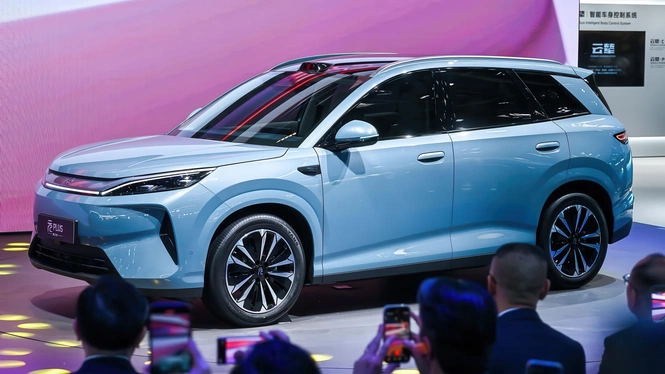
Another major change is that the Atto 3 now adopts a rear-wheel-drive (RWD) platform, whereas the Indian Atto 3 has a FWD setup.
The standard base model produces 272 hp at the rear, while the higher variant delivers 326 hp. Both options are expected to bring better weight distribution and driving feel than the outgoing model, which produces 204 hp.
The car now also gets an adaptive damping system, which adjusts damper stiffness in real time based on road conditions and driving inputs.
Also Read – All Rear-Wheel Drive Cars You Can Buy in India Right Now
Flash Charging & Bigger Batteries
The current India Atto 3 supports around 80-88 kW DC fast charging, taking roughly 50 minutes to reach 80% from 0%.
Meanwhile, the new Atto 3 supports flash charging technology, which allows charging from 10% to 70% in about 5 minutes, and 10% to 97% in around 9 minutes. Even with temperatures as low as -30°C, the charging time increases by only 3 minutes.
As for the battery, the model will offer two battery options - 57.545 kWh and 68.547 kWh, with a CLTC range (China's official EV test cycle) of 540 km and 630 km respectively.
Both use BYD's second generation Blade Battery (LFP chemistry), which promises improved energy density and better thermal performance compared to the first-generation packs in the current Atto 3.
Also Read – Best EVs Under ₹20 Lakh With 300 km of Real-World Range
Advanced Driver Assistance – DiPilot 300 With LiDAR
BYD has also equipped the new Atto 3 with comprehensive safety, defined by the LiDAR-based DiPilot 300 driver-assistance system, which is a step up from the basic Level 2 ADAS in the Indian model.
DiPilot 300 with LiDAR supports highway navigation assist and advanced parking features. The practical value of this in India depends on whether BYD maps Indian roads to the level required for these features to function properly.
In China, these systems work well because the map data exists. In India, the experience is likely to be more limited at launch.
Still, the hardware foundation is a generation ahead of what is currently offered.
Other safety features include far-side airbags (which protect against occupant-to-occupant impact in side crashes), an improved body structure, and a high-speed tyre blowout stability system.
Also Read – Cheapest Cars With ADAS You Can Buy Right Now
Image Source: Motor1
Table of Contents
- New Dragon Face Design & Larger Dimensions
- New Interior Features & Larger Boot Space
- Rear-Wheel Drive & Adaptive Suspension
- Flash Charging & Bigger Batteries
- Advanced Driver Assistance – DiPilot 300 With LiDAR
Join the Conversation
Trending

Hyundai Bayon Confirmed for India as Its Upcoming Intelligent SUV
Hyundai Motor India has officially named its next SUV the BAYON. Positioned between the Venue and Creta, it is expected to arrive with a 1.2-litre turbo-petrol, factory-fitted CNG, and a feature-heavy cabin before end of 2026.
Anmol Kumar
September 14, 2026

Maruti Suzuki Offering Up to Rs. 1.35 Lakh Benefits in September 2026
Maruti Suzuki's September 2026 Arena offers cover seven models, with the Victoris strong hybrid getting the highest benefits at Rs. 1.35 lakh. Here is the full breakdown, including fuel-type differences on the Wagon R, Alto K10, Swift, and Eeco.
Anmol Kumar
September 11, 2026

Tata Punch EV Now Costs Up to Rs 20,000 More in September 2026
Tata has raised Punch EV prices by Rs. 10,000 on 30kWh variants and Rs. 20,000 on all 40kWh variants from September 2026, with new prices now ranging from Rs. 9.79 lakh to Rs. 12.99 lakh ex-showroom.
Anmol Kumar
September 11, 2026

Mahindra Cars Available With Benefits of Up to Rs. 2.5 Lakh This September
Mahindra's September 2026 offers cover seven models, with the XUV400 EV getting up to Rs. 2.50 lakh in benefits and the pre-facelift Scorpio N at Rs. 1.50 lakh. The current Scorpio N facelift and XUV 7XO carry no offers.
Aman Kumar
September 11, 2026

Kia Opens Pre-Bookings for Carens CNG, Carens Clavis CNG, and Carnival Limousine Hybrid
Kia has opened pre-bookings for the Carens CNG, Carens Clavis CNG, and Carnival Limousine Hybrid in India. Both CNG models get factory-fitted 60-litre tanks, while the Carnival gets a 1.6-litre turbo-petrol strong-hybrid system. Prices not announced yet.
Anmol Kumar
September 11, 2026
Featured
Citroen C3 Review: Who Should Consider This Car?
A few days ago, I took the Citroen C3X out for a spin in the city and on the highways. I travelled long distances and checked its fuel efficiency, features, comfort, and other factors. Today, I’ll briefly share my overall experience with the C3X and will tell you whether you should consider it or not and which is the most value-for-money variant of the lot.
Vatsal Agrawal
May 19, 2026

Tesla Finally In India Officially. Why Now And What Does It Mean For EVs?
The much-anticipated 2025 Tesla Model Y has officially arrived in India, marking a pivotal moment for the nation's burgeoning electric vehicle market. Launched on July 15, 2025, the Model Y Juniper facelift offers cutting-edge technology, impressive range, and signature Tesla performance. Positioned as a premium electric SUV, its entry will intensify competition and reshape consumer expectations for EVs across the subcontinent.
Charan Narain
July 17, 2025

Here Are 10 Things The Harrier.EV Offers That The Mahindra XEV 9E Doesn't
The Harrier.EV is an incredible new offer from Tata. Its most popular competitor would be the Mahindra XEV 9E, priced similarly. With these two incredible offerings from home grown brands available, here is a list of everything the Harrier.EV offers that the XEV 9E doesn't.
Charan Narain
June 13, 2025

Write a comment
Comments
No comments yet. Be the first to comment!