Here is How Much Petrol, Diesel And CNG Prices Have Gone Up Since May
By Salil Kumar
Updated May 26, 2026
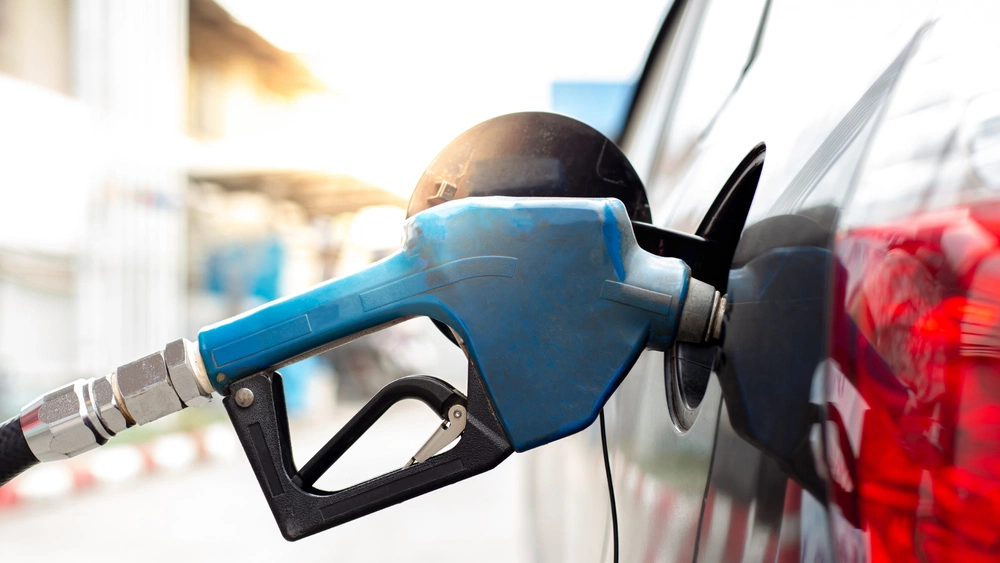
For the last few days, petrol, diesel, and CNG prices have been rising almost every 4–5 days. Here is a handy table that tracks how many times prices increased and gives a rough idea of how much fuel prices have gone up since the first hike a week ago.
Also Read- Diesel Cars With Best Mileage You Can Buy Under Rs 20 Lakh
Fuel Price Tracker
Petrol is at ₹102.12/litre, diesel at ₹95.20/litre, CNG at ₹83.09/kg, and LPG unchanged at ₹913/cylinder the fourth round of hikes in under a fortnight. Since March 2022, the pump price of petrol has climbed ₹7.35/litre, diesel ₹7.53/litre, and CNG ₹6.00/kg.
| Date | Petrol (₹/litre) | Diesel (₹/litre) | CNG (₹/kg) | LPG 14.2kg (₹/cylinder) |
|---|---|---|---|---|
| Pre-hike (Mar 2022) | 94.77 | 87.67 | 77.09 | 853 |
| 7 Mar 2026 | — | — | — | 913 (+60) |
| 15 May 2026 | +3.00 → 97.77 | +3.00 → 90.67 | +2.00 → 79.09 | — |
| 17 May 2026 | — | — | +1.00 → 80.09 | — |
| 19 May 2026 | +0.87 → 98.64 | +0.91 → 91.58 | — | — |
| 23 May 2026 | +0.87 → 99.51 | +0.91 → 92.49 | +1.00 → 81.09 | — |
| 25 May 2026 | +2.61 → 102.12 | +2.71 → 95.20 | — | — |
| 26 May 2026 | — | — | +2.00 → 83.09 | — |
| Current (May 26, 2026) | 102.12 | 95.20 | 83.09 | 913 |
| Total Hike (Mar–May 2026) | +₹7.35 | +₹7.53 | +₹6.00 | +₹60 |
Why did fuel prices suddenly shoot up after four years of silence?
The West Asia conflict escalated sharply in late February 2026, triggering what became an effective closure of the Strait of Hormuz - the narrow channel through which roughly 20% of the world's seaborne oil passes.
India imports over 85% of its crude oil requirement, and the Indian crude basket jumped from around $61 per barrel at the start of the year to averaging $117 per barrel in April 2026. This is the largest inflation-adjusted quarterly price jump since 1988.
The three state-run oil marketing companies - Indian Oil (IOC), Bharat Petroleum (BPCL), and Hindustan Petroleum (HPCL) were selling petrol and diesel at prices set in March 2022. Every litre they sold through 2026 was being sold below what it actually cost them.
By April 2026, that gap had grown to an estimated ₹18 per litre on petrol and ₹35 per litre on diesel. The daily combined loss across the three OMCs reached ₹1,000 crore. Petroleum Minister Hardeep Singh Puri warned that if nothing changed, the three companies could lose ₹1 lakh crore in a single quarter. This would potentially wipe out their entire FY26 profits.
Also Read - Top 10 Best Mileage CNG Cars You Can Buy In 2026
Why are the hikes coming in small installments instead of one big correction?
This is a deliberate strategy, and not a new one.
When the government faces a large pricing correction, it has two choices: take the hit in one go or spread it across smaller increments. A single ₹15–20 hike would have been economically accurate (given the actual under-recovery), but politically catastrophic.
It also risks a sharp spike in the Consumer Price Index, which feeds directly into inflation data that the RBI uses to set monetary policy.
Incremental hikes let the government do three things simultaneously - pass some cost to consumers, monitor how inflation and public sentiment react before the next step, and avoid the optics of a single dramatic correction.
How long will the hikes keep coming?
Prices could keep rising as long as crude stays where it is, which could be a while.
The EIA's May 2026 short-term energy outlook forecasts Brent crude (a benchmark for two-thirds of the world's traded crude oil,) averaging around ₹106 per barrel through May and June, before potentially easing to $89 per barrel in Q4 2026 as Middle East oil production gradually recovers.
But that forecast depends entirely on the Strait of Hormuz situation stabilising, which is something that remains deeply uncertain. Tanker traffic through the Strait has been at a near standstill, and ceasefire talks have stalled.
If crude stays above $100 per barrel through June 2026 as currently expected, another round of corrections, likely in the ₹2-4 per litre range is very probable before the monsoon session of Parliament.
CNG users should brace similarly, as its price in the National Capital crossed ₹80/kg for the first time ever after the May hikes.
Also Read - Government Notifies Standards for Higher Ethanol Blends Up to E30
Will fuel prices ever come back down?
Yes, but not to where they were, and not anytime soon.
For the current fuel price to stabilize the Strait of Hormuz would need to reopen and global crude would need to fall back below roughly $85–90 per barrel. The EIA currently forecasts Brent averaging $79 per barrel in 2027 if supply flows normalise, which would ease OMC pressure considerably.
But here's what most coverage doesn't say clearly - Indian fuel prices carry one of the heaviest tax loads in the world. Central and state taxes together account for over 50–55% of what you pay at the pump.
Even in a scenario where crude drops back to $60 per barrel, the government can, and has, quietly increased excise duty to maintain revenue, leaving retail prices unchanged.
Also Read- SUVs Under 10 Lakhs With Best Mileage In 2026
How can I track the latest fuel prices in real time?
The official method listed on IOCL is that you have to send a text to a number and expect a message shortly with the latest prices. I tried it, and there was no response for hours. The best bet is to do a quick Google search, which I assume most of you are already doing.
Other than that, we have a pretty comprehensive fuel price calculator with graphs, charts, and trends that you can bookmark and visit every day for latest prices.
Source: IOC, BPCL, HPCL
Table of Contents
- Fuel Price Tracker: March - May 2026 (Delhi Retail)
- Why did fuel prices suddenly shoot up after four years of silence?
- Why are the hikes coming in small installments instead of one big correction?
- How long will the hikes keep coming?
- Will fuel prices ever come back down?
- How can I track the latest fuel prices in real time?
Join the Conversation
Trending
Everything You Need To Know About BS7 Emission Norms
India is gearing up for the next major leap in vehicle emission standards with Bharat Stage 7.
Arjun Nair
July 23, 2026
Which EV Charging Companies in India Have the Most Chargers?
EV adoption in any country is largely dependant on the availability of charging infrastructure.
Arjun Nair
July 21, 2026
Essential Features Every Car Should Have as Standard
Essential Features Every Car Should Have as Standard
Arjun Nair
July 13, 2026
Featured
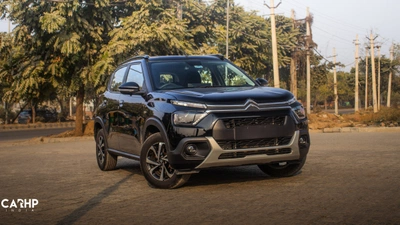
Citroen C3 Review: Who Should Consider This Car?
A few days ago, I took the Citroen C3X out for a spin in the city and on the highways. I travelled long distances and checked its fuel efficiency, features, comfort, and other factors. Today, I’ll briefly share my overall experience with the C3X and will tell you whether you should consider it or not and which is the most value-for-money variant of the lot.
Vatsal Agrawal
May 19, 2026

Tesla Finally In India Officially. Why Now And What Does It Mean For EVs?
The much-anticipated 2025 Tesla Model Y has officially arrived in India, marking a pivotal moment for the nation's burgeoning electric vehicle market. Launched on July 15, 2025, the Model Y Juniper facelift offers cutting-edge technology, impressive range, and signature Tesla performance. Positioned as a premium electric SUV, its entry will intensify competition and reshape consumer expectations for EVs across the subcontinent.
Author
July 17, 2025

Here Are 10 Things The Harrier.EV Offers That The Mahindra XEV 9E Doesn't
The Harrier.EV is an incredible new offer from Tata. Its most popular competitor would be the Mahindra XEV 9E, priced similarly. With these two incredible offerings from home grown brands available, here is a list of everything the Harrier.EV offers that the XEV 9E doesn't.
Author
June 13, 2025

Write a comment
Comments
No comments yet. Be the first to comment!