Certain things are not meant to be changed or shouldn’t be done precisely. Mercedes learned this lesson the hard way when they switched the mighty twin-turbo V8 with a yucky 4-cylinder setup and had the gall to slap the 63 badges on it.
Result: nobody bought it, reviewers hated it. Lesson learnt and they have decided to bring back the V8!
The Bavarians seem to have learned the lesson from their brothers from another mother, and instead of hybridising the glorious inline-6 M cars, they are adding tech to keep the M purists grinning for a few more years.
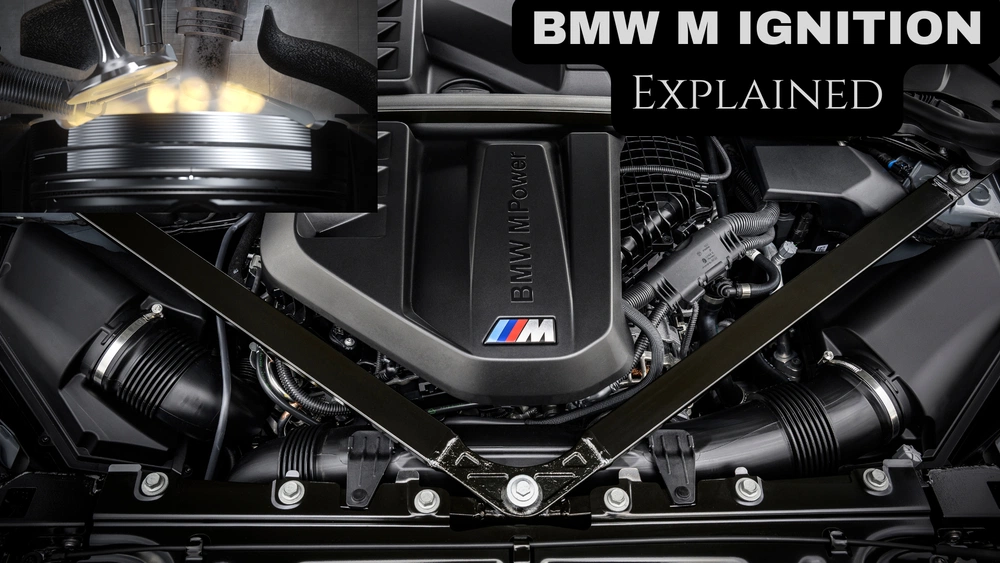
The fiesty sounding “M Ignition” is their marketing term for the pre-combustion technology that will grace late-2026 models of OG BMW M cars like the M2, M3 and M4.
So what is it, how does it work, and when will it make its way to India? Let’s find out.
Why Is BMW Even Doing This?
Before getting into what the technology is, it helps to understand why BMW is bothering with it at all. Europe is rolling out something called the Euro 7 emission standard in November. They limit 60mg/km emission limit but introduce stricter particle counting down to 10nm
Requirements now include a 7mg/km brake emission cap, mandatory On-Board Monitoring (OBM) systems, and extended durability performance reaching 200,000 km or 10 years to ensure long-term real-world compliance.
For most regular family cars, meeting these standards means tweaking fuel injection systems, adding bigger catalytic converters, maybe throwing in a mild hybrid system.
But M isn’t your regular run-of-the-mill stuff. They are performance engines, which are driven hard, burn a lot of fuel and, despite carrying OPF (it’s like DPF but for petrol cars), will not be able to survive the dangling Euro 7 sword or Euro 8 for that matter due in 2028-2030.
So why not do something now to prevent future emission problems way down the line?
BTW, our own Bharat Stage 6 etc pollution norms are based on Euro ones, and India will likely revise them as soon as Euro 7 drops prompting BMW to make an engine that does 2 things at once
Thing number 1: Make sure the cold-eyed, penguin loving Euro government is content with the future M car emissions
Thing number 2: Make sure BMW M fans do not start throwing Molotov at their headquarters, aka keep the inline-6 as it is.
Enter The M-Ignite
What Is M Ignite Technology and How Does It Work?
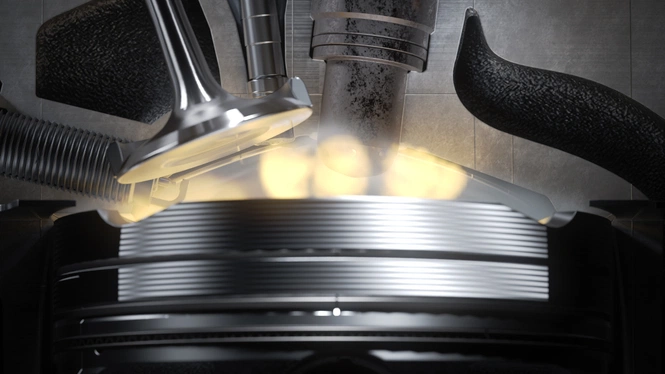
In a conventional petrol engine, each cylinder has one spark plug. That spark plug fires, ignites the fuel-air mixture from one point, and the flame travels outward across the cylinder. It works, but it's not perfectly efficient.
The flame takes time to travel across the entire cylinder, and during that time, some fuel burns incompletely. At high loads and high revs, this becomes a bigger problem.
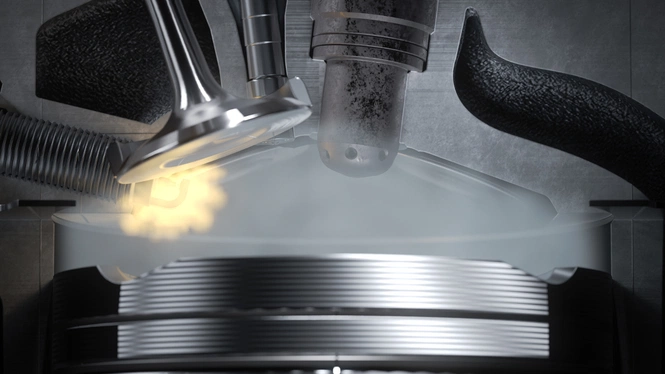
BMW M Ignite adds a pre-chamber to each cylinder. Picture a tiny room attached to the main room of the cylinder. This pre-chamber has its own spark plug and ignition coil. When the engine is cruising or working at normal loads, it behaves exactly like a conventional engine.
You can also watch this video if you prefer
The regular spark plug in the main cylinder fires, and everything works as it always has. But the moment you put your foot down hard, the pre-chamber system kicks in. Some of the fuel-air mixture gets channelled into the pre-chamber.
The pre-chamber spark plug ignites it. The resulting combustion then shoots out through small openings into the main cylinder at nearly the speed of sound, creating multiple simultaneous ignition points across the entire cylinder at once.
The result is that the fuel burns faster, more completely, and more efficiently. As a bonus, exhaust gas temperatures drop because the combustion is cleaner. BMW has also paired this with a higher compression ratio and upgraded turbochargers with variable turbine geometry.
Is BMW really the first one to do this? Uh, no.
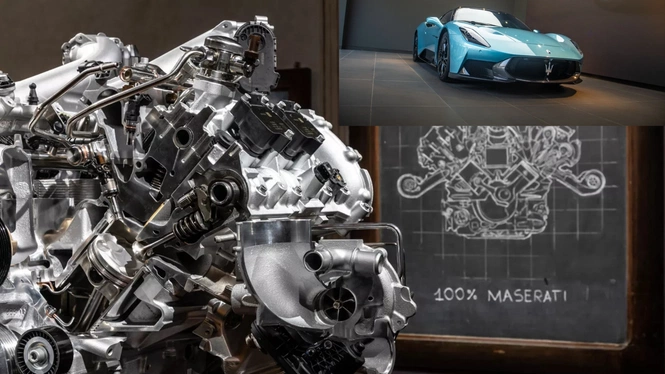
That credit goes to Maserati and their extraordinary Nettuno engine, which debuted in the MC20 supercar back in 2020.
The Maserati version works on a similar principle. Difference is the Italian system is not actively controlled
Maserati's Nettuno is actually a "passive" system. It uses one high-pressure direct injector per cylinder that fires the main fuel charge into the combustion chamber. As the piston rises, some of that charge is forced through tiny nozzles into the pre-chamber, where it gets ignited by the pre-chamber spark plug.
The fuel finds its own way there naturally as a side effect of the main injection. It's elegant and simple, but not actively controlled.
BMW M Ignite works the opposite way. It actively channels and controls exactly how much fuel-air mixture enters the pre-chamber through those engineered pathways giving the system more control over the pre-chamber mixture making it more adaptable across different driving conditions.
What Are the Potential Problems With Pre-Chamber Systems?
The first and most obvious concern is spark plug wear. A regular car engine already has one spark plug per cylinder. The BMW M Ignite system, like the Maserati Nettuno before it, has two. On a six-cylinder engine like the BMW M inline-six, that means twelve spark plugs total instead of six, plus twelve ignition coils, more wiring, and the pre-chamber hardware itself.
Maserati's own head of powertrain innovation confirmed this openly at the Nettuno's launch, acknowledging that the additional spark plugs, coils, and wiring drive up cost
The second problem is heat. The pre-chamber is a tiny enclosed space that gets absolutely hammered by extreme temperatures every time it fires. Unlike the main combustion chamber which receives cooler incoming air through the intake valves, the pre-chamber only receives hot gases, meaning temperatures inside it are significantly higher than anything a conventional engine component deals with.
The third issue is carbon buildup. Carbon deposits on the pre-chamber walls or around the overflow holes could gradually affect how efficiently the ignition jets form and travel into the main cylinder, slowly degrading the very efficiency advantage the system was designed to create.
None of these are reasons to be alarmed. BMW has clearly spent enormous resources getting M Ignite production-ready, and Maserati's Nettuno has been in the MC20 since 2020 without catastrophic reliability horror stories emerging.
When Will M-Ignition Equipped Cars Reach India?
Globally, production of the new M3 and M4 with M Ignite technology starts in July 2026, with the M2 following in August 2026. BMW India hasn't made an official announcement yet about Indian timelines.
Typically, updated global M models arrive in India anywhere between six months and a year after their international production begin. They could arrive here somewhere between late 2026 and the first half of 2027. the pricing will likely be a few lakhs more to to cover up the addional tech
Source- BMW,Maserati
Table of Contents
- Why Is BMW Even Doing This?
- What Is M Ignite Technology and How Does It Work?
- Is BMW really the first one to do this? Uh, no.
- What Are the Potential Problems With Pre-Chamber Systems?
Join the Conversation
Trending
Everything You Need To Know About BS7 Emission Norms
India is gearing up for the next major leap in vehicle emission standards with Bharat Stage 7.
Arjun Nair
July 23, 2026
Which EV Charging Companies in India Have the Most Chargers?
EV adoption in any country is largely dependant on the availability of charging infrastructure.
Arjun Nair
July 21, 2026
Essential Features Every Car Should Have as Standard
Essential Features Every Car Should Have as Standard
Arjun Nair
July 13, 2026
Featured
Citroen C3 Review: Who Should Consider This Car?
A few days ago, I took the Citroen C3X out for a spin in the city and on the highways. I travelled long distances and checked its fuel efficiency, features, comfort, and other factors. Today, I’ll briefly share my overall experience with the C3X and will tell you whether you should consider it or not and which is the most value-for-money variant of the lot.
Vatsal Agrawal
May 19, 2026
Tesla Finally In India Officially. Why Now And What Does It Mean For EVs?
The much-anticipated 2025 Tesla Model Y has officially arrived in India, marking a pivotal moment for the nation's burgeoning electric vehicle market. Launched on July 15, 2025, the Model Y Juniper facelift offers cutting-edge technology, impressive range, and signature Tesla performance. Positioned as a premium electric SUV, its entry will intensify competition and reshape consumer expectations for EVs across the subcontinent.
Author
July 17, 2025
Here Are 10 Things The Harrier.EV Offers That The Mahindra XEV 9E Doesn't
The Harrier.EV is an incredible new offer from Tata. Its most popular competitor would be the Mahindra XEV 9E, priced similarly. With these two incredible offerings from home grown brands available, here is a list of everything the Harrier.EV offers that the XEV 9E doesn't.
Author
June 13, 2025
Write a comment
Comments
No comments yet. Be the first to comment!