TVS Ntorq 150 Review: Good for Daily 100km Commute?
Updated May 18, 2026
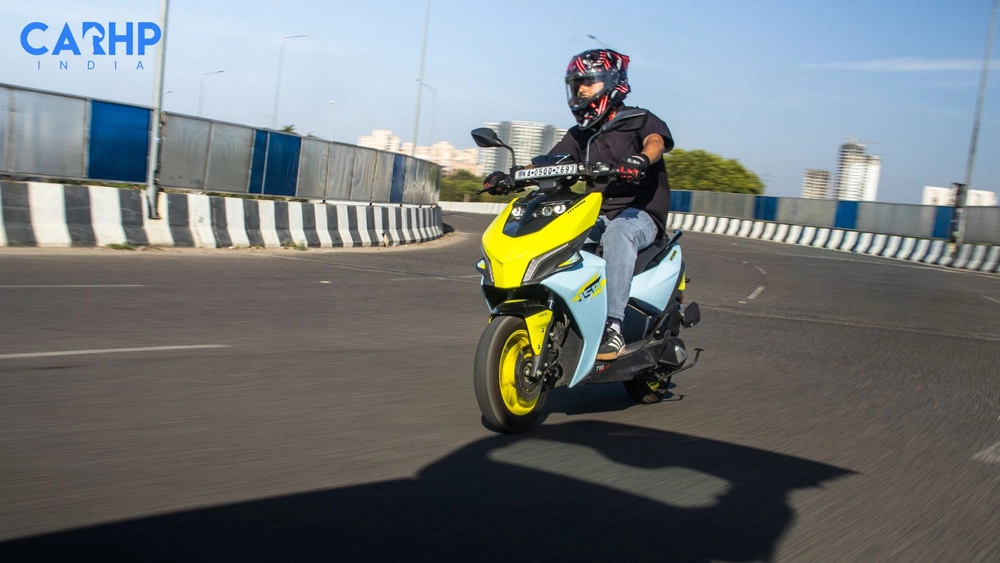
TVS Motor Company has built a strong reputation for making scooters that feel far more exciting than regular commuters, and the Ntorq 150 is a clear example of that approach. It is supported by the automaker’s experience in performance-oriented two-wheelers, the Ntorq 150 enters a segment that usually focuses on utility, and offers a sharper design, connected features, and a more fun-to-ride experience. The Ntorq 150 targets riders who want everyday convenience, but also expect a bit of performance and character from their machine.
I spent time riding the Ntorq 150 in daily traffic, on short highway runs, and over broken city roads to understand where it shines and where it stumbles.
What is the price of the TVS Ntorq 150?
The price of the TVS Ntorq 150 starts at ₹1.09 lakh (ex-showroom) for the base variant and goes to ₹1.18 lakh (ex-showroom) for the TFT variant.
What’s Good
Design
The design of the TVS Ntorq 150 is striking, with an aggressive front layout. It comes with quad-LED projector headlamps, which give it a premium appearance, and at night, they provide a strong throw. During my night rides, it gave me confidence.
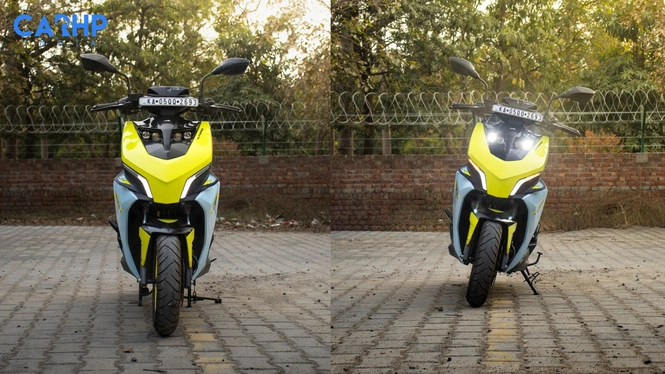
The seat is long enough, and since it has a seat height of 770mm, short riders will not have a problem while riding it daily. TVS offers the Ntorq 150 in three striking colour options, and since I drove the Nitro Green one, it grabbed people’s attention and has a good road presence.
The rear profile of the TVS Ntorq 150 is similar to its younger sibling, the Ntorq 125, but TVS has given it a more distinctive LED tail lamp and LED turn indicators. To ensure safety and a comfortable riding experience for pillion passengers, the grab handles offer good grip, and while I was a pillion passenger, the raised seat height and the grab handles inspired safety and confidence.
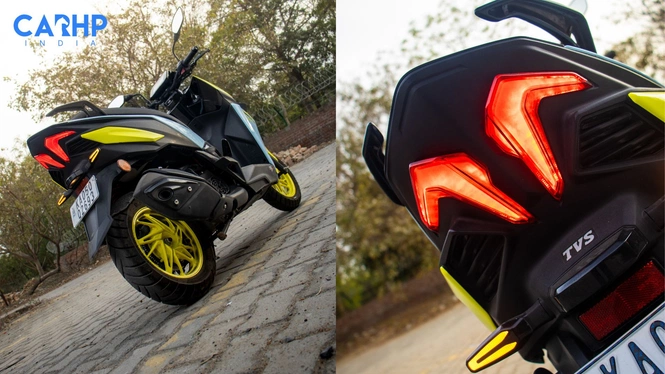
Moreover, the foot pegs are well-positioned, and on long travels, wherein I did Noida to Gurugram, it was pretty comfortable to be in.
Features
The TVS Ntorq 150 is loaded with multiple convenience features. The list includes hazard lamps, the SmartXConnect system, Bluetooth connectivity offering turn-by-turn navigation, call and sms alerts, two riding modes (Street & Race), a 0-60km/h sprint timer, a lap timer, and others. For better fuel efficiency, there is an auto start/stop system in the Street riding mode, and there is an iGo assist in the Race riding mode.
During my daily commute from Noida to Gurugram, I used the connected features a lot, and I feel that the turn-by-turn navigation is a useful feature. It uses Maples Map My India for navigation, which is pretty easy to read and understand. However, there were times when it got confused about which road to take, and this was especially evident around circular roundabouts in central Delhi.
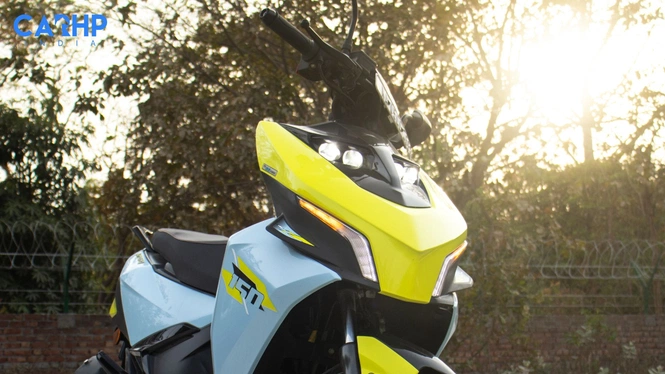
Along with that, I also liked the mobile connectivity, as I was able to cut the calls while riding, and the buttons are intuitive to use. Since I drove the top-spec variant, it has a 5-inch TFT instrument cluster, and the display quality is good. In broad daylight, it is easy to read and understand, and you even get night mode as well.
Also Read - Top 10 Features Of Suzuki E-Access
To keep your mobile phone charged, the Ntorq 150 has a USB Type-A charging port available, but I was not able to use it much. Firstly, it was placed in the under-seat storage, and once I put my iPhone on charge, due to the engine heat, it heated very quickly, and the charging stopped. To access that, I have to switch off the scooter and unlock the boot every time, which I felt was quite cumbersome over a period of time.
Engine
The TVS Ntorq 150 is equipped with a 149cc single-cylinder air-cooled petrol engine, which produces 13.2 bhp and 14.3Nm of peak torque, paired with a CVT gearbox. I enjoyed riding this scooter. The difference in power output and performance is quite evident. The engine is peppy, and on light throttle inputs, it is responsive.
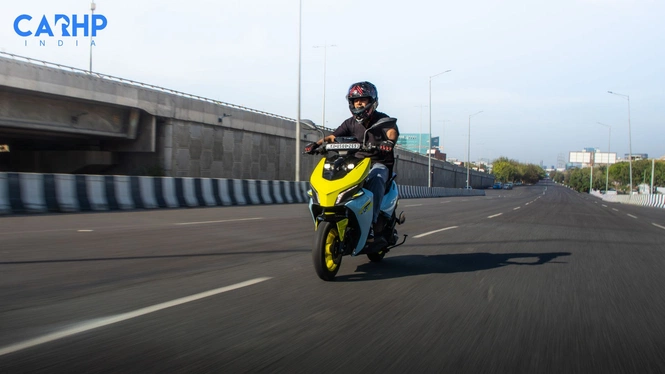
Since TVS offers the Ntorq 150 with two riding modes, Street and Race, I usually keep it in Street mode during my daily office commute.
As I have a travel of around 100km each day, I feel the Street mode delivers good performance for daily usage. At red lights, I did not feel the need to turn off the scooter as the auto start/stop system instantly kicks in and turns it off to save on fuel. But in stop-go situations, it became quite intrusive, and I literally turned it off in the settings menu.
Moreover, I also rode the Ntorq 150 in the Race mode, and as soon as I engaged that, there was a slight difference in the graphics of the instrument cluster, and the performance difference is also evident. The throttle inputs become a bit more responsive, and under hard accelerations, the revs do build instantly and give the ‘CVT’ effect, but on the similar side, it pulls effortlessly.
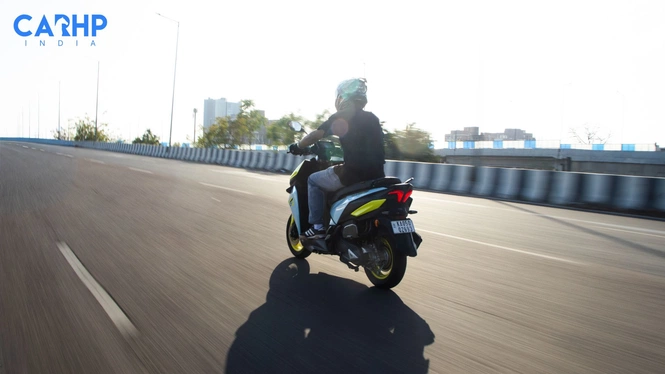
Additionally, it feels more fun and engaging to ride. When zipping through traffic, the Race mode is fun to ride, and the thumpy exhaust note keeps you engaged. When I was riding with a pillion, the Ntorq 150 was put in the Street mode by default, and I felt the engine was a bit struggling. So, for a better power delivery and experience, I put it in the Race mode, and after covering around 500km, I feel it is an ideal mode if you are riding with a pillion.
Ride Quality
The ride quality of the TVS Ntorq 150 is on the softer side. The suspensions are well-calibrated for city conditions and offer a good, comfortable ride quality. As I have a 100km daily commute, I did not feel any pain, and since it has a softer suspension setup, the ride quality did become a bit bouncy.
While I was on slow speeds through bad roads, the scooter maintained its line, and it was pretty comfortable. However, when I was cruising around 70-80km/h speeds, due to the softer suspension setup, it bounced a bit, and you may even lose control of it. But to safeguard that, there is traction control, which kicks in instantly. The front gets a slimmer tyre profile compared to the rear, and this staggered wheel size gives it a bold appearance and good grip as well.
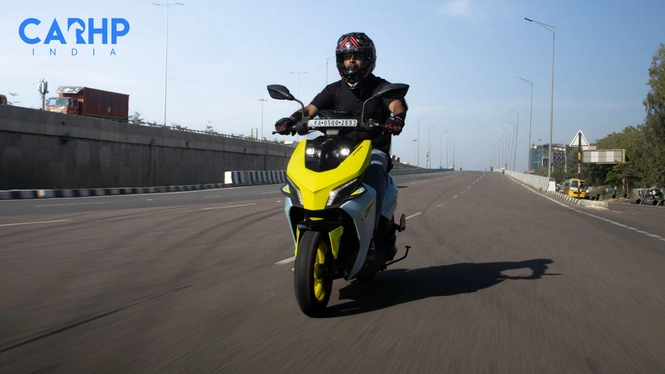
As the TVS Ntorq 150 offers telescopic forks at the front, it offers good control of the handlebars, and when you hit hard in potholes or bumps, it filters to the handlebars. However, the rear suspension offers a compliant ride quality, and when I rode along a pillion, it became a bit more bouncy, and you have to slow down on bumps and potholes.
Also Read - Ather Energy Dominates Q1 2026 as Electric Two-Wheeler Sales Surge in March
What’s Bad
Underseat storage
The first downside of the TVS Ntorq 150, which I felt was its underseat storage. Though it measures 22L, it is practical to keep only small items like your gym bag, a few grocery bags, and others. If you use a full-size helmet, then it will not fit in, and you will have to carry it everywhere. However, a smaller-sized helmet fits in, but then you compromise on the space on offer. The other 150cc scooters in its segment offer better space utilisation and in-depth storage.
Mileage
One of the key drawbacks of the TVS Ntorq 150, which I felt is its fuel efficiency. Though TVS says it has a fuel efficiency of 40 km/L. However, we got a real-world fuel efficiency of 36 km/L, (our cost of running came out to be around ₹2.5/km), and it depends on driving style as well. If you push it aggressively, you might even end up getting a much lower fuel efficiency.
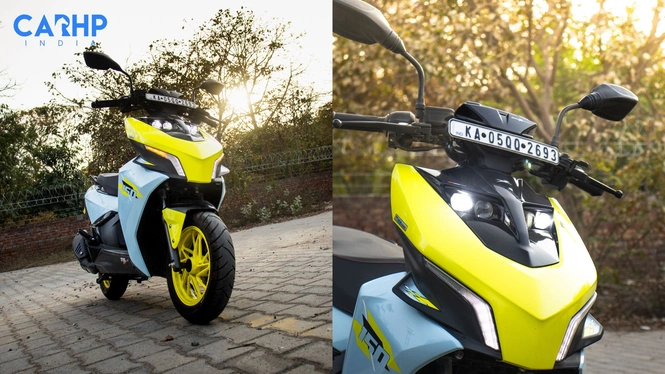
Moreover, TVS offers a mere small tank in the Ntorq 150. It has a 5L capacity, and since I have a daily commute of around 100 km, I have to go to the fuel station every other day. I feel TVS could have given a slightly bigger tank.
Braking
One of the major setbacks that I felt in the TVS Ntorq 150 is its braking. The Indian two-wheeler manufacturer offers a front disc brake and a rear drum brake along with single-channel ABS. During my daily 100km commute, the brakes offered in the Ntorq 150 did not feel confident, and in case of panic braking situations, I had to engage the front brakes.
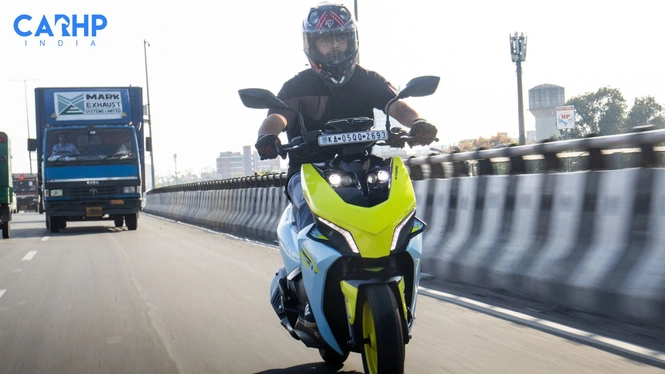
While riding and zipping through the traffic, I always planned the braking so that I could stop it in enough distance and used the front brakes more often than the rear ones. I expect TVS may update the braking power of the Ntorq 150 in future updates.
Should you consider the TVS Ntorq 150 in 2026?
Rating - 3.5/5
The TVS Ntorq 150 is not just another commuter scooter. It blends everyday usability with features, performance, and styling that make riding enjoyable. It is comfortable and surprisingly engaging, especially in city conditions where features like the auto start/stop system truly shine. It is not perfect. There are vibrations present, and a low under-seat storage holds it back from being the best in its segment. But if you want a 150cc scooter that feels modern, rides well, and does more than just take you from point A to point B, the TVS Ntorq 150 is one of the most compelling options you can buy today.
Join the Conversation
Trending
I Drove Renault Kiger for 10,000km & Here Are 5 Reasons Why You Need It !!
I have spent around 5 months with the Renault Kiger to understand what it is like in the real world. Here is my overall experience, and I will tell you the five reasons why you should definitely consider it for under ₹10 lakh.
Vatsal Agrawal
September 21, 2026
I Drove the Hyundai Venue HX8 Turbo Manual, and Can It Take on the Brezza and Nexon?
I tested the Hyundai Venue HX8 variant powered by the 1.0-litre turbo-petrol engine for over 1,500 km across Noida-Gurugram traffic and multiple expressways. We evaluated its real-world fuel economy, ride comfort, and overall drivability for daily commutes and long family road trips.
Vatsal Agrawal
September 16, 2026
Toyota Rumion 700km Review: Is This the Right Car for a Joint Family?
So, overall, the Toyota Rumion is a great offering in the market, priced under ₹15 lakh, giving you a comfortable and spacious cabin, decent features, and a reliable petrol engine with good fuel efficiency.
Vatsal Agrawal
August 21, 2026
Featured
Citroen C3 Review: Who Should Consider This Car?
A few days ago, I took the Citroen C3X out for a spin in the city and on the highways. I travelled long distances and checked its fuel efficiency, features, comfort, and other factors. Today, I’ll briefly share my overall experience with the C3X and will tell you whether you should consider it or not and which is the most value-for-money variant of the lot.
Vatsal Agrawal
May 19, 2026
Tesla Finally In India Officially. Why Now And What Does It Mean For EVs?
The much-anticipated 2025 Tesla Model Y has officially arrived in India, marking a pivotal moment for the nation's burgeoning electric vehicle market. Launched on July 15, 2025, the Model Y Juniper facelift offers cutting-edge technology, impressive range, and signature Tesla performance. Positioned as a premium electric SUV, its entry will intensify competition and reshape consumer expectations for EVs across the subcontinent.
Charan Narain
July 17, 2025
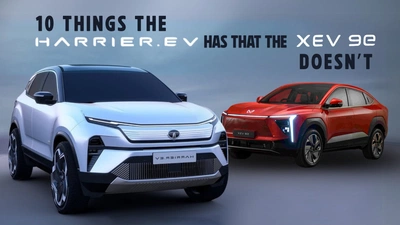
Here Are 10 Things The Harrier.EV Offers That The Mahindra XEV 9E Doesn't
The Harrier.EV is an incredible new offer from Tata. Its most popular competitor would be the Mahindra XEV 9E, priced similarly. With these two incredible offerings from home grown brands available, here is a list of everything the Harrier.EV offers that the XEV 9E doesn't.
Charan Narain
June 13, 2025
Write a comment
Comments
No comments yet. Be the first to comment!