Renault Triber 1000km Review: Ideal Family Car?
Updated May 18, 2026
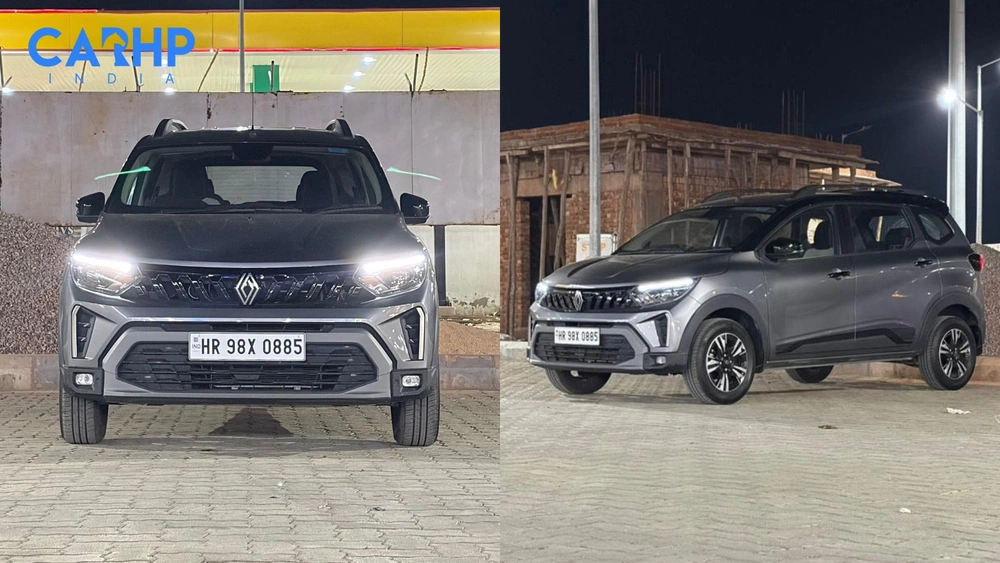
The MPV space in the market is a popular choice among car buyers as these cars offer a practical cabin, a good amount of space in the interiors, and decent features. If you are considering getting a new car, which comes with seven seats, has reasonable features, and rides well, you can check out the Renault Triber.
Recently, we drove the Renault Triber for around 1000km around the city and on the highways. Here is our opinion on whether the Renault Triber is worth every dime it demands. Let’s get started!
What is the price of the Renault Triber?
The price of the Renault Triber starts at ₹6.69 lakh (on-road, Noida) for the base Authentic variant and is offered in four variants. The price of the top-spec Emotion variant is ₹9.90 lakh (on-road, Noida).
What’s Good:
Design
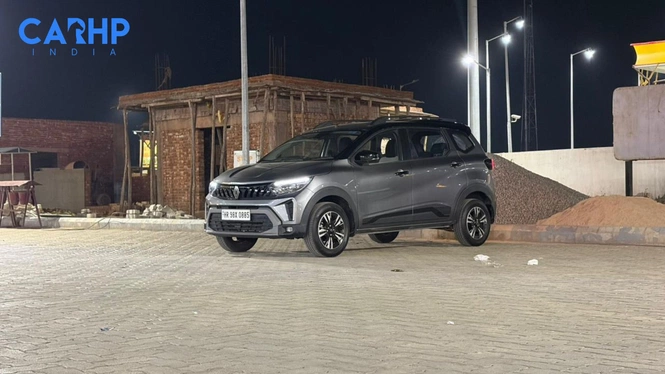
The exterior design of the Renault Triber is simple, clean, and appealing. Though it misses out on a ‘Wow’ factor, its clean design and with the 2026 update, things get slightly better.
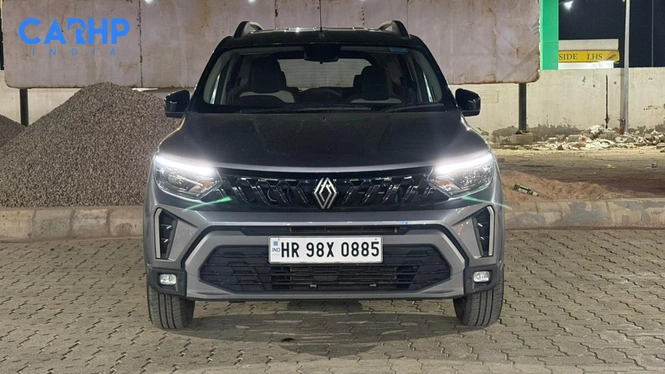
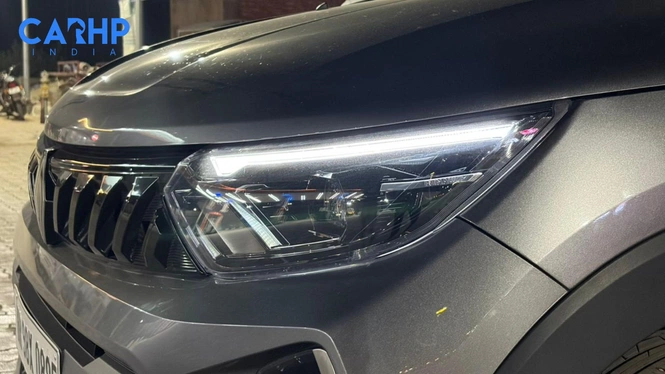
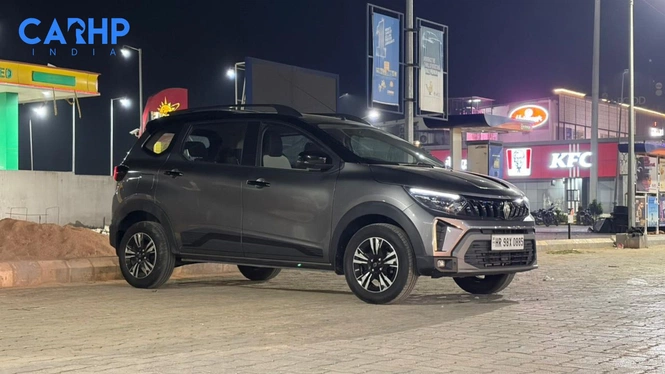
The front profile gets a blacked-out grille, a 2-D Renault logo, and LED projector headlamps and LED DRLs. The throw of the LED headlamps is pretty good, and during my night drives, I did not face any difficulty, which gave me confidence while driving. If you are looking for a good road presence like an SUV, then you have to compromise on that part.
Also Read: Renault Cars Offers and Discounts in April 2026 - Up to ₹1.08 Lakh in Savings
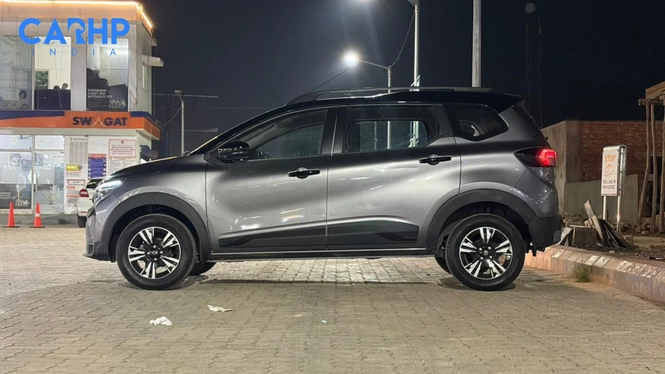
On the sides, given its positioning in the sub-4m compact SUV segment, it offers good interior space. It runs on 15-inch steel wheels and has a wheel cover on it. It is well designed and goes with the proportions of the car.
At the rear, nothing much has changed compared to the previous model. The design of the LED taillamps has become sharper, and Triber is boldly written in chrome. Overall, I feel the Renault Triber is well designed, giving it a clean and simple look considering its budget and the segment.
Seating Comfort
The seats of the Renault Triber are pretty comfortable. As I have a daily commute of around 100km, the front seats have good cushioning, and with the seat height adjustment, I have a good view of what's around. Though Renault offers fabric upholstery, you can upgrade to leatherette seats from the aftermarket. Everything is within reach, and you even get a driver's side armrest in the top-end variant. However, I kept that armrest folded all the time, as for me it was quite absurdly placed, and engaging gears was becoming quite tedious.
Coming to the second row seats, it is a good place to be in, though the cabin is not that wide enough, but you have a good view of the outside. The seating is comfortable, and on long trips, I was not tired in the second row. The windows are large enough, and it brings in a lot of light and enhance the overall airiness of the cabin. Though the Triber misses out on a rear centre armrest, I did feel the need for it on my long trip. I have had a good amount of knee, leg and head room, and the cabin is best suited for two passengers in the middle row seats, and three passengers can be a tight fit.
Talking about the third row seats, it is best suited for small kids or medium-sized adults. I spent a reasonable amount of time in the third row, and it is decent for short trips and office commutes only. On long runs, passengers might feel uncomfortable as the seat back is fixed and there is no scope for reclining.
Cabin Practicality
The Triber’s cabin is focused on practicality, with two cup holders, a dual-glovebox, and two 1L water bottles that fit easily in each door. Additionally, you get a cooled compartment as well, which helps me to keep my water chill and when not in use, it serves as a good storage space.
Talking about its boot space, with all three rows up, there is hardly any space for your backpacks, and Renault says there is around 85L of space on offer. However, you can remove the third row of seats in three simple steps and increase your boot space up to 625L, which is enough to store your luggage for weekend getaways.
Ride and Handling
The suspensions of the Renault Triber are tuned on the softer side. It helps in offering a comfortable ride quality, giving you a plush and relaxing cabin experience.
While I was cruising in the city, the soft suspension easily went over subtle bad roads and potholes without giving a jolt. However, when I went at a higher speed, the suspension noise filtered inside the cabin and the movement was evident.
While I was in the middle row seats, it was a comfortable place to be in. I did not feel much over here, and I happily spent time while munching on long distances.
Also Read - Best Rugged 4x4 and AWD SUVs You Can Buy
Talking about the steering wheel, it is very soft, and I feel that its response could have been better. While I spent quite a good time in bumper-to-bumper situations, it was easy to manuevere. However, when I cruised around 90-100km/h speeds, it felt a bit disconnected, and did not inspire confidence while making overtakes. Moreover, due to its tall-boy profile and softer suspension setup, the body roll is pretty evident, and it is not meant for spirited driving.
Features
The Renault Triber is equipped with decent features considering its price. For starters, the Triber comes with front and reverse parking sensors, a reverse parking camera, and cruise control, an 8-inch infotainment system with wireless connectivity for Apple CarPlay and Android Auto, a wireless charger, and more.
During my 800km experience. I enjoyed using the wireless connectivity feature for my iPhone, and it connected instantly. Since it has a regular audio setup, offering a 4-speaker and 2-tweeter setup, it has reasonable quality on offer. However, if you are a music lover and want a better experience, I will suggest getting an audio upgrade done to elevate your overall experience.
While reversing, the reverse parking camera and the sensors helped me to park in tight parking spaces. Regarding the camera quality, being a budget car, it has decent camera quality, and at night, it does get pixelated, but it gets the job done. It offers a good view, and sometimes the front parking sensors become quite intrusive.
While I was daily commuting between Noida and Gurugram and back, I used the cruise control often to get good fuel efficiency. One thing that I liked about the Triber is that Renault has neatly given a dedicated switch to turn on or off the cruise control, giving it a clean and neat look. It worked effortlessly and helped me to gain some reasonable numbers.
Engine
The Renault Triber is equipped with a 1.0L naturally aspirated inline three-cylinder petrol engine, making 71 bhp and 96 Nm of peak torque, paired with a five-speed manual or an AMT gearbox. Moreover, Renault also offers retrofitting of CNG in the Triber.
Since I drove the Triber with a five-speed manual gearbox, it is quite engaging to drive in the city. Regarding the performance, the Triber is not meant for spirited driving. The 1.0L engine offers decent grunt, and it is a good highway cruiser for your family. If you have to make quick overtakes, it requires planning, as there is no turbo kick happening, and sometimes I have had to make downshifts so that there is enough power output to overtake.
During my daily 100 km commute, I feel the gearshifts are a bit notchy, and some smoothness could have elevated the overall driving experience. However, on the contrary, the clutch is balanced between being too light and too hard. It sits somewhere in the middle, and once I got used to it, it became very easy to drive in the city.
Overall, I feel that the engine is decent for your daily office commute or your weekend getaway with your family, and it gets your job done. However, I expect Renault to offer a turbo petrol engine for better drivability and performance in its future updates.
What’s Bad
Fuel Efficiency
Though Renault offers the Triber with a naturally aspirated engine, it is not the most fuel-efficient one in its segment. As per ARAI, the Triber manual variant has a fuel efficiency of 18.2km/L. However, since I tested its fuel efficiency with a tank-to-tank method, during my 200km drive (including highway and city traffic conditions), I got a real-world fuel efficiency of 13.5km/L, and it cost me around ₹7/km. If you wish for more fuel efficiency and have a long distance to cover, I suggest getting CNG retrofitted as a better option as it would help in getting the running cost lower compared to petrol.
Noise Vibrations, and Harshness
One of the major drawbacks of the Renault Triber that got my attention was its NVH. The engine noise is pretty evident and is filtered inside the cabin. While you make an upshift around 2,000-2,500 RPM, the engine noise is pretty evident despite the insulation present under the hood.
Additionally, the suspension noise also filters inside the cabin if you go over bumps and potholes slightly at a higher speed. There were times when I felt it would easily go over the bump, without making much noise, but the softer suspension setup resulted in its noise filtering inside the cabin.
Regarding vibrations, the three-cylinder effect is present across the cabin. The engine vibrations are evident at lower speeds and smooth out at around 70-90km/h speeds. The vibrations are present on the steering wheel, pedals, and door panels, and I expect Renault to work on them in its future update model.
I feel the overall cabin NVH and the insulation could have been better to give it a more premium experience, being a budget MPV.
Features
Though Renault offers all the necessary features in the Triber 2026, I feel some features could have been added to enhance your overall cabin experience. For starters, I feel front ventilated seats, rear centre armrest, and a front centre armrest are a few key additions that could have been offered in the Triber.
Additionally, though the Triber offers an 8-inch infotainment screen that has a crisp display, it becomes difficult to read in harsh sunlight. The touch is intuitive to use, but I expect Renault to update the UI of the screen as it feels quite plain and basic in 2026.
Which is the most value-for-money variant in the Renault Triber?
After our 900km test, the most VFM variant is the top-spec variant, which brings in all the features under ₹10 lakh. However, if you are tight on budget, you can consider the base variant. We won’t recommend going for the mid-variants as the price jump is quite steep, and the feature addition is not that great.
Should You Buy it in 2026?
Our answer: Yes. If you want a budget MPV with a good cabin space, decent fuel efficiency, and a practical cabin, the Triber is worth considering. Though it has a soft suspension setup and the cabin has plenty of hard plastics, it may not be as premium as its rivals, but if you are looking for an MPV that offers space, decent features, and comes under ₹10 lakh, then this can be a good pick.
Table of Contents
- What is the price of the Renault Triber?
- What’s Good:
- Design
- Seating Comfort
- Cabin Practicality
- Ride and Handling
Join the Conversation
Trending

I Drove Renault Kiger for 10,000km & Here Are 5 Reasons Why You Need It !!
I have spent around 5 months with the Renault Kiger to understand what it is like in the real world. Here is my overall experience, and I will tell you the five reasons why you should definitely consider it for under ₹10 lakh.
Vatsal Agrawal
September 21, 2026
I Drove the Hyundai Venue HX8 Turbo Manual, and Can It Take on the Brezza and Nexon?
I tested the Hyundai Venue HX8 variant powered by the 1.0-litre turbo-petrol engine for over 1,500 km across Noida-Gurugram traffic and multiple expressways. We evaluated its real-world fuel economy, ride comfort, and overall drivability for daily commutes and long family road trips.
Vatsal Agrawal
September 16, 2026
Toyota Rumion 700km Review: Is This the Right Car for a Joint Family?
So, overall, the Toyota Rumion is a great offering in the market, priced under ₹15 lakh, giving you a comfortable and spacious cabin, decent features, and a reliable petrol engine with good fuel efficiency.
Vatsal Agrawal
August 21, 2026
Featured
Citroen C3 Review: Who Should Consider This Car?
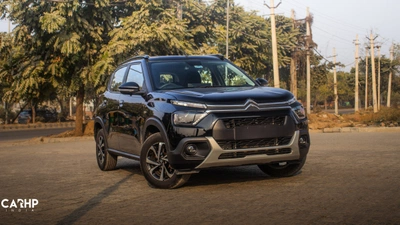
A few days ago, I took the Citroen C3X out for a spin in the city and on the highways. I travelled long distances and checked its fuel efficiency, features, comfort, and other factors. Today, I’ll briefly share my overall experience with the C3X and will tell you whether you should consider it or not and which is the most value-for-money variant of the lot.
Vatsal Agrawal
May 19, 2026
Tesla Finally In India Officially. Why Now And What Does It Mean For EVs?
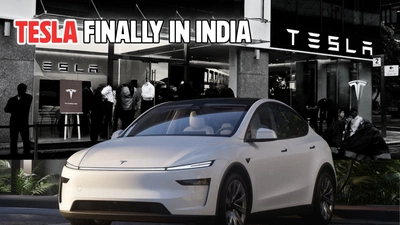
The much-anticipated 2025 Tesla Model Y has officially arrived in India, marking a pivotal moment for the nation's burgeoning electric vehicle market. Launched on July 15, 2025, the Model Y Juniper facelift offers cutting-edge technology, impressive range, and signature Tesla performance. Positioned as a premium electric SUV, its entry will intensify competition and reshape consumer expectations for EVs across the subcontinent.
Charan Narain
July 17, 2025
Here Are 10 Things The Harrier.EV Offers That The Mahindra XEV 9E Doesn't
The Harrier.EV is an incredible new offer from Tata. Its most popular competitor would be the Mahindra XEV 9E, priced similarly. With these two incredible offerings from home grown brands available, here is a list of everything the Harrier.EV offers that the XEV 9E doesn't.
Charan Narain
June 13, 2025
Write a comment
Comments
No comments yet. Be the first to comment!