Your Guide To Insuring Your Car In 2026
With more and more sales record being broken every month, a car insurance has become a must have for every car driver
By Salil Kumar
Published February 6, 2026
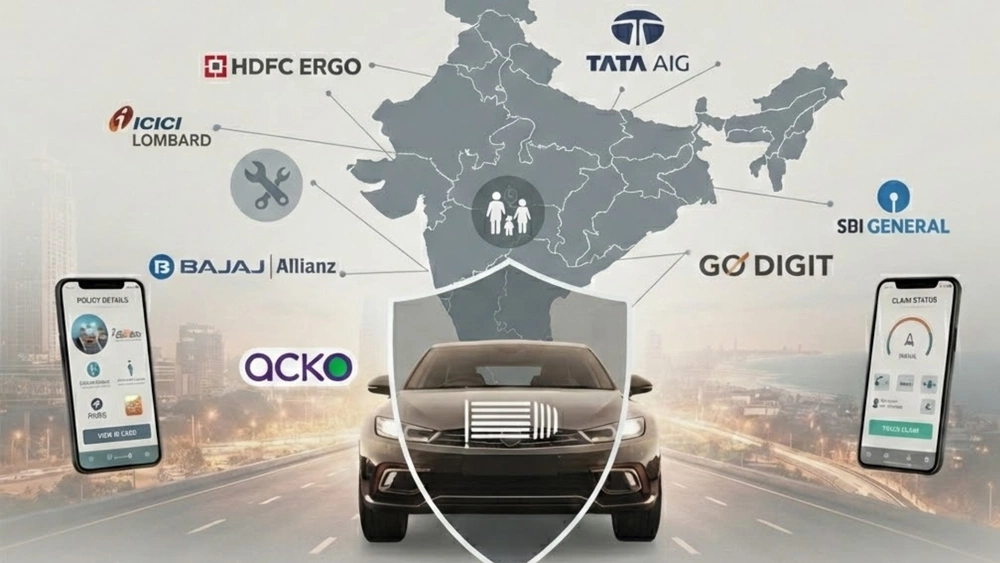
Table of Contents
- Car Insurance Basics
- Types of Car Insurance
- Where to Get Car Insurance
- How Much is Car Insurance?
- Explaining Car Insurance Terminology
- Best Companies to Get Car Insurance From
Car Insurance Basics
Car insurance is a financial safeguard designed to protect vehicle owners from monetary losses arising from accidents, theft, natural disasters, or third-party liabilities.
It acts as a contract between the policyholder and the insurer, where the insurer agrees to cover specified risks in exchange for a premium payment.
This coverage is crucial not only for compliance with legal requirements but also for providing peace of mind during unforeseen events on the road. Without insurance, owners could face significant out-of-pocket expenses for repairs, medical bills, or legal fees
As of 2026, with increasing road traffic and vehicle ownership, car insurance has evolved to include digital features like app-based claims and customized add-ons for electric vehicles.
Also Read- Govt Doubles Renewal Fees for 20+ Year Old Cars and Bikes
Types of Car Insurance
In India, car insurance primarily falls into three categories: third-party liability, own-damage, and comprehensive coverage. Third-party liability insurance is mandatory under the Motor Vehicles Act and covers damages or injuries caused to others in an accident, but it does not protect the policyholder's vehicle.
Own-damage insurance, on the other hand, safeguards the insured car against theft, fire, or accidents, excluding third-party liabilities. Comprehensive insurance combines both, offering all-around protection including add-ons like zero depreciation or roadside assistance.
- Third-Party Liability: Mandatory by law; covers damages/injuries to others only.
- Own-Damage (OD): Protects your own vehicle against fire, theft, or accidents.
- Comprehensive Coverage: Combines Third-Party and OD; highly recommended for 2026 vehicle tech.
Where to Get Car Insurance
Car insurance in India can be obtained through various channels, including direct purchases from insurance company websites, aggregator platforms, or authorized agents. Online portals like Policybazaar or Acko allow for easy comparison and instant policy issuance, often with discounts for digital transactions.
- Online Aggregators: Platforms like Policybazaar allow for quick comparison and discounts.
- Digital-First Insurers: Direct purchases via apps for paperless, instant issuance.
- Dealership Bundles: Policies often integrated with new vehicle sales at showrooms.
- Traditional Branches/Agents: Useful for personalized advice on local risks like urban flooding.
How Much is Car Insurance?
The cost of car insurance in India varies based on factors like vehicle type, engine capacity, location, and coverage level. As per 2026 IRDAI rates, third-party premiums start at Rs. 2,094 for cars under 1,000 cc, rising to Rs. 3,416 for 1,000-1,500 cc models, and Rs. 7,899 for those over 1,500 cc.
Comprehensive policies average Rs. 10,000 to Rs. 20,000 annually for sedans, influenced by the Insured Declared Value (IDV) and add-ons. Premiums may increase by 18-25% in some categories due to recent revisions, but discounts like No Claim Bonus (NCB) can reduce costs by up to 50% for claim-free years. Using online calculators helps estimate personalized quotes.
Also Read- A Guide On How To get Your Vehicle Scrapped In 2026
Explaining Car Insurance Terminology
Key car insurance terms include the Insured Declared Value (IDV), which represents the vehicle's market worth and determines the maximum claim payout.
- IDV (Insured Declared Value): The current market value of your car; the maximum payout limit.
- Deductibles: Out-of-pocket costs; increasing voluntary deductibles lowers the premium.
- NCB (No Claim Bonus): A loyalty discount for not filing claims, capped at 50%.
- Zero Depreciation: An add-on that covers the full cost of parts without wear-and-tear deductions.
- Own-Damage vs. Third-Party: "Own-Damage" covers your car; "Third-Party" covers your liability to others.
Best Companies to Get Car Insurance From
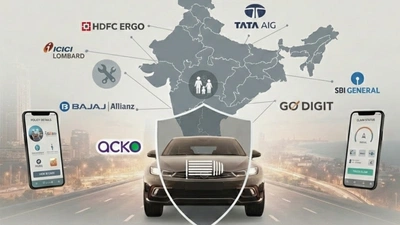
Top car insurance companies in India for 2026 include HDFC ERGO, known for its high claim settlement ratio of over 98% and extensive garage network of 8,000+. ICICI Lombard offers robust digital services and quick claims, with a CSR around 97%. Bajaj Allianz stands out for balanced pricing and add-ons tailored to EVs.
Tata AIG provides comprehensive coverage with 7,000+ garages, while Acko excels in affordable, app-based policies for tech-savvy users. SBI General is ideal for widespread reach, and Go Digit emphasizes hassle-free online processes. Choose based on CSR, network, and customer reviews for reliable protection.
- HDFC ERGO: Top-tier CSR (>98%) and a massive network of 8,000+ garages.
- ICICI Lombard: Known for efficient digital tools and a CSR around 97%.
- Acko: Preferred for budget-friendly, 100% digital/app-based experiences.
- Bajaj Allianz: Specialized in modern add-ons, particularly for Electric Vehicles.
- Tata AIG: Strong garage network (7,000+) and comprehensive plan variety.
Also Read- All You Need To Know About Vehicle Fitness Fees Increase
What to Avoid When Getting Insurance
When purchasing car insurance, avoid settling for the lowest premium without checking coverage adequacy, as it may lead to insufficient protection during major incidents. Do not overlook policy exclusions, such as wear-and-tear or driving under influence, which could void claims.
- Under-insurance: Don't pick the cheapest plan if it leaves significant coverage gaps.
- Ignoring Exclusions: Read the fine print on items like "driving under influence" to avoid claim rejection.
- Solely Cost-Focused Deductibles: Excessive voluntary deductibles can make claims unaffordable.
- Neglecting Add-ons: Skipping Engine Protection or Zero Dep can be expensive in the long run.
- Data Errors: Providing wrong vehicle or personal details can lead to policy cancellation.
How to File a Claim
Filing a car insurance claim in India begins with ensuring safety and notifying the insurer immediately, ideally within 24 hours of the incident. If involving third-party damage, theft, or injury, file an FIR at the nearest police station. Gather evidence like photos, witness details, and documents including policy copy, driving license, and RC. Submit a filled claim form to the insurer, who may appoint a surveyor for assessment.
For cashless claims, take the vehicle to a network garage; otherwise, opt for reimbursement by paying upfront and claiming later. In 2026, many insurers offer app-based tracking for faster settlements.
- Immediate Notification: Inform your insurer within 24 hours of any incident.
- Police Documentation: FIR is mandatory for theft or third-party injury/damage.
- Evidence Collection: Take photos and gather witness details at the scene.
- Claim Pathways: Choose "Cashless" (at network garages) or "Reimbursement" (upfront payment).
Tips for Saving on Car Insurance in 2026
To reduce premiums, maintain a clean driving record to accumulate NCB discounts. Install ARAI-approved anti-theft devices for up to 5% off. Opt for higher voluntary deductibles if you can afford minor claims.
Renew policies online early to avoid lapses and secure loyalty benefits. For electric vehicles, look for specialized covers that factor in battery life. Bundle with other insurances like health for multi-policy discounts.
Pay-As-You-Drive (PAYD)
Pay-As-You-Drive (PAYD) insurance, also known as usage-based insurance, has gained popularity in India by 2026, allowing policyholders to pay premiums based on actual vehicle usage rather than fixed annual rates. Under this model, introduced by IRDAI in 2020 and expanded with telematics technology, a base premium covers third-party liability, while the own-damage component is charged per kilometer driven, typically ranging from Rs. 0.50 to Rs. 1.50 per km depending on the insurer and vehicle type.
Users install a telematics device or use a mobile app to track mileage, location, and driving patterns, with safe habits like smooth braking potentially earning additional discounts up to 25%. This is ideal for low-mileage drivers in cities like Delhi, where annual driving might be under 5,000 km, potentially saving 30-50% compared to traditional policies.
Major providers like Bajaj Allianz, HDFC ERGO, and Acko offer PAYD with flexible top-up options for extra kilometers. However, it requires sharing driving data, and premiums could rise for high-usage or risky behaviors. In 2026, EV-specific PAYD plans account for battery efficiency, making it a sustainable choice.
- Usage-Based Pricing: Policyholders pay for the actual distance driven rather than a flat annual fee.
- Cost Savings: Ideal for low-mileage drivers (under 5,000 km/year), with potential savings of 30-50%.
- Variable Rates: The own-damage portion typically costs between Rs. 0.50 and Rs. 1.50 per kilometer.
- Telematics Integration: Uses apps or devices to monitor mileage and reward safe habits (e.g., smooth braking) with up to 25% discounts.
- Flexible Top-Ups: Allows users to purchase additional kilometer slabs if they exceed their initial limit.
Portability: Changing Your Insurer
Portability in car insurance allows policyholders in India to switch insurers at renewal without losing accumulated benefits like No Claim Bonus (NCB), as per IRDAI guidelines effective since 2011 and streamlined digitally by 2026.
To change your insurer, apply at least 45 days before the current policy expires by submitting a portability form, along with details of the existing policy, NCB certificate (transferable up to 50%), and vehicle documents like RC and PUC. The new insurer assesses the request within 7-15 days, ensuring seamless transfer of coverage, including add-ons if compatible.
Also Read- How to Get Your Vehicle's RC Extended
This is beneficial if the current provider has poor service, higher premiums, or limited network garages common reasons in competitive markets like Delhi. Portability does not apply mid-term and may involve a short inspection or premium adjustment based on the new insurer's rates. In 2026, online portals simplify the process with instant quotes and e-transfers, but ensure no pending claims, as they could delay approval
info source- HDFC, SBI, Policybazaar
Write a comment
Comments
No comments yet. Be the first to comment!