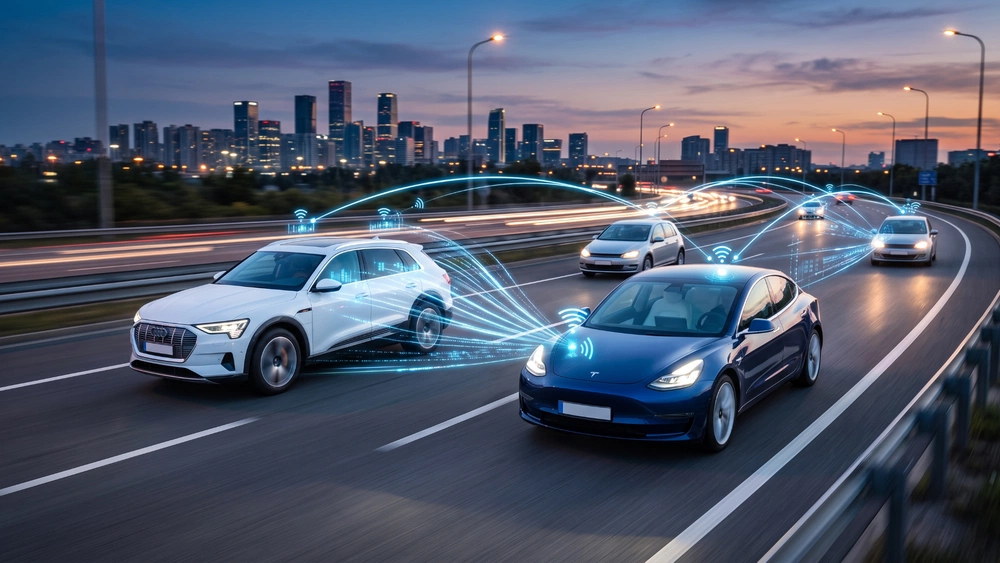
The Ministry of Road Transport and Highways has proposed making vehicle-to-vehicle communication compulsory on every new two-wheeler, car, bus and truck built from 1 October 2028.
The technology lets vehicles broadcast their speed, position, direction and acceleration to one another, so a driver is warned about a hazard well before it becomes visible. Here is all you need to know about it
What the Policy Says in Plain Terms
The draft sets out two dates rather than one, and most of the coverage so far has collapsed them into a single 2027 deadline. The clause itself separates them clearly, and the distinction matters to anyone timing a purchase or a product cycle.
| Date | What it requires | Fitment |
|---|---|---|
| 1 Oct 2027 | Vehicles in categories L, M and N that are fitted with V2V must comply with AIS-230 | Optional |
| 1 Oct 2028 | Vehicles in categories L, M and N must be fitted with AIS-230 compliant V2V | Mandatory |
AIS-230 is the new Indian technical standard governing how these systems must perform, covering radio behaviour, GNSS positioning accuracy, electromagnetic compatibility, cybersecurity and the reliability of the safety warnings themselves.
Categories L, M and N take in two- and three-wheelers, passenger vehicles and goods vehicles, which between them account for effectively everything on an Indian road.
Also Read – All You Need to Know About Tata Motors's Air Console
The hardware itself is a factory-fitted On-Board Unit running C-V2X, short for Cellular Vehicle-to-Everything, and the name is slightly misleading because no mobile network or SIM is involved. Vehicles communicate directly with each other across the 5.875 to 5.925 GHz band, which the Department of Telecommunications exempted from licensing requirements in June 2026.
That direct link is what allows a warning to travel around a blind corner or through three cars of traffic, which no camera or radar system can do.
Four applications are named in the standard: Emergency Brake Alert, Forward Collision Warning, Wrong-way Driving Alert and Emergency Vehicle Alert.
Every one of them is a warning rather than an intervention, and nothing in the standard obliges the vehicle to brake or steer on its own. Whether that V2V data ever triggers an actual response therefore depends entirely on how each manufacturer chooses to wire it into its own ADAS.
Can the Government Track Me With V2V?
They don’t need to. The Automatic plate identification cameras. Fast tag and VAHAN plates are already doing that. V2V is a short-range broadcast between vehicles. Your car shouts its speed and position a few hundred metres, nearby cars listen. Whether your data is stored or is personally identifiable is not yet cleared
Also Read – Unified Bharat e-Charge (UBC) Explained: India's Answer to the EV Charging App Problem
Image Source: Generated using Gemini
Table of Contents
- What the Policy Says in Plain Terms
- Can the Government Track Me With V2V?
Join the Conversation
Trending
2026 Maruti Suzuki Baleno Facelift Every Variant Explained
Every Baleno facelift variant explained, from the stripped Sigma to the ADAS-equipped Alpha (O). Find out exactly which trim suits your needs, what each one gives up, and where the real value sits in the lineup.
Anmol Kumar
September 19, 2026
5 Hatchbacks Under Rs 8 Lakh You Can Consider as Your Next Car
All these hatchbacks are good picks, suiting different requirements.
Arjun Nair
September 19, 2026
Top 10 Best Mileage CNG Cars You Can Buy In 2026
CNG offers an unbeatable value for money proposition for car buyers. Here are the most efficient CNG cars currently on sale.
Salil Kumar
September 19, 2026
Featured
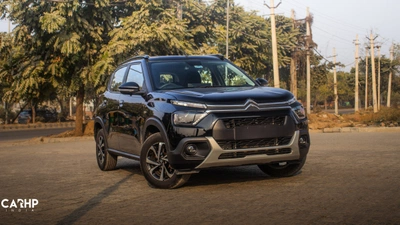
Citroen C3 Review: Who Should Consider This Car?
A few days ago, I took the Citroen C3X out for a spin in the city and on the highways. I travelled long distances and checked its fuel efficiency, features, comfort, and other factors. Today, I’ll briefly share my overall experience with the C3X and will tell you whether you should consider it or not and which is the most value-for-money variant of the lot.
Vatsal Agrawal
May 19, 2026
Tesla Finally In India Officially. Why Now And What Does It Mean For EVs?
The much-anticipated 2025 Tesla Model Y has officially arrived in India, marking a pivotal moment for the nation's burgeoning electric vehicle market. Launched on July 15, 2025, the Model Y Juniper facelift offers cutting-edge technology, impressive range, and signature Tesla performance. Positioned as a premium electric SUV, its entry will intensify competition and reshape consumer expectations for EVs across the subcontinent.
Charan Narain
July 17, 2025
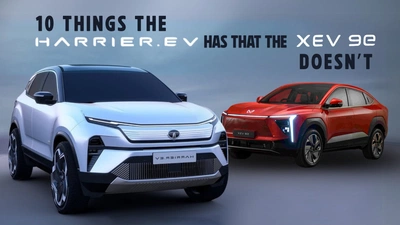
Here Are 10 Things The Harrier.EV Offers That The Mahindra XEV 9E Doesn't
The Harrier.EV is an incredible new offer from Tata. Its most popular competitor would be the Mahindra XEV 9E, priced similarly. With these two incredible offerings from home grown brands available, here is a list of everything the Harrier.EV offers that the XEV 9E doesn't.
Charan Narain
June 13, 2025
Write a comment
Comments
No comments yet. Be the first to comment!