Unified Bharat e-Charge (UBC) Explained: India's Answer to the EV Charging App Problem
By Salil Kumar
Published July 21, 2026
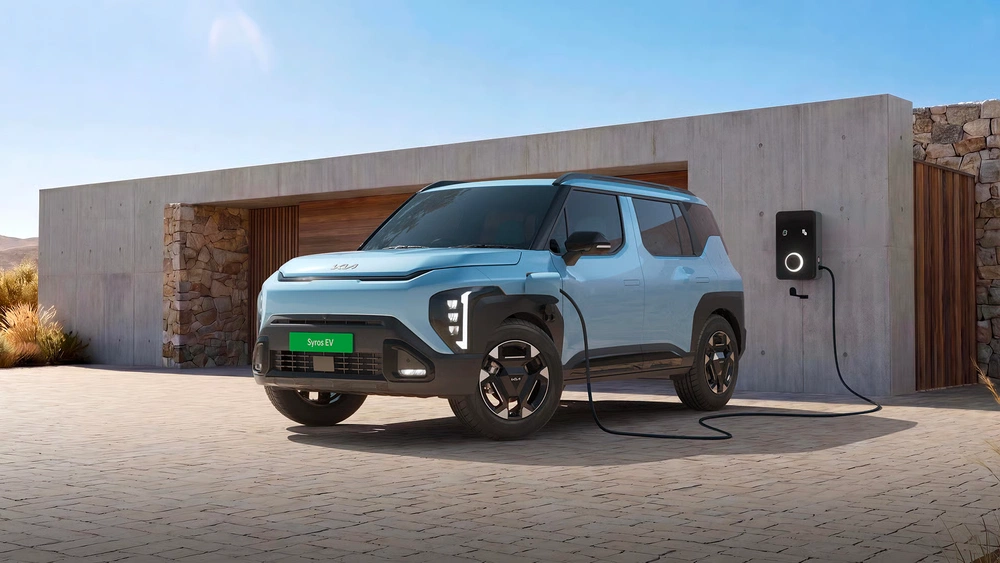
Every EV owner in India knows this problem. You're running low on charge, you open your Tata Power app, the charger is occupied. You switch to ChargeZone, the station nearby is down. You check the Statiq app, find one that works, but it won't accept your wallet. By then you've burned 15 minutes and probably some anxiety.
That's the UBC problem in one paragraph. And as of May 2026, there's finally a government-backed answer to it.
What UBC Actually Is
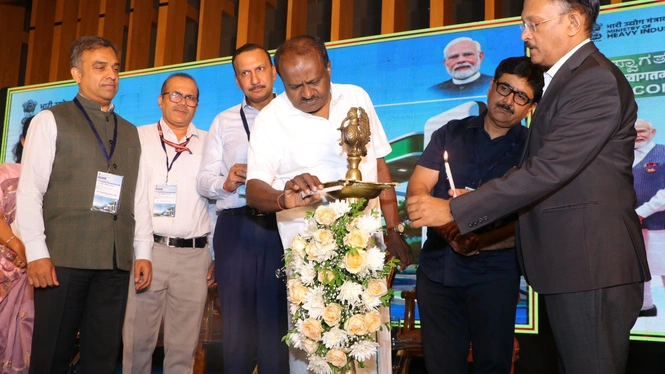
Unified Bharat e-Charge (UBC) is a national interoperability platform for EV charging, built by the Ministry of Heavy Industries, BHEL, and NPCI. The goal is simple: one app, every charger, any network.
India had 27,737 public charging stations installed as of March 2026, run by at least a dozen different operators, each with their own app and payment system. UBC doesn't replace those operators. It creates a shared layer on top of them, so a driver can discover and pay at a ChargeZone station through the Tata Power app, or find a Bolt.Earth charger through Google Maps, without creating separate accounts or wallets anywhere.
The minister himself called it "UPI for EV charging" when announcing it at the national charging infrastructure conference in Bengaluru on May 12, 2026. That comparison holds technically, not just as a soundbite.
Also Read – Which EV Charging Companies in India Have the Most Chargers?
The Tech Under the Hood
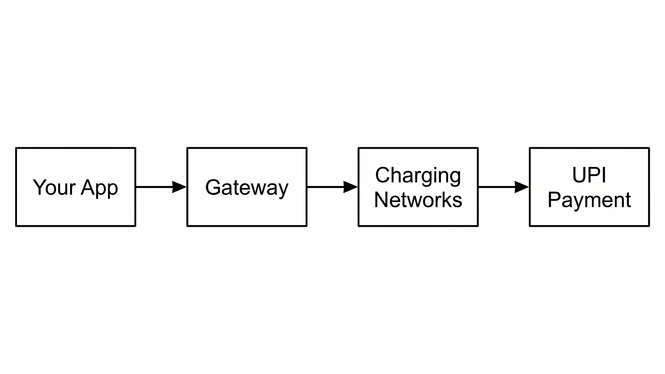
UBC runs on the Beckn Protocol, the same open architecture that powers ONDC (the government's e-commerce interoperability layer). This is worth understanding because it's what makes UBC fundamentally different from previous fragmented attempts at connecting charging networks.
Here's how a session actually works under UBC:
The user opens any UBC-compatible app (their OEM dashboard, Google Maps, a CPO's own app). That app is a Beckn Application Provider (BAP). It sends a discovery request to the Beckn Gateway, which broadcasts the query to all registered charging networks (Beckn Platform Providers, or BPPs). Every operator responds directly to the user's app with their station data, availability, and pricing. The gateway drops out. After that, the entire session is peer-to-peer between the user's app and the charging network's backend.
No central hub holds the session. No intermediary collects the payment. Money flows directly via UPI between the driver and the CPO. This means lower transaction costs for operators and no single point of failure for the network.
BHEL has been designated as the nodal agency for platform development and demand aggregation.
Also Read – All you Need To Know About BaaS
Who's On the Network
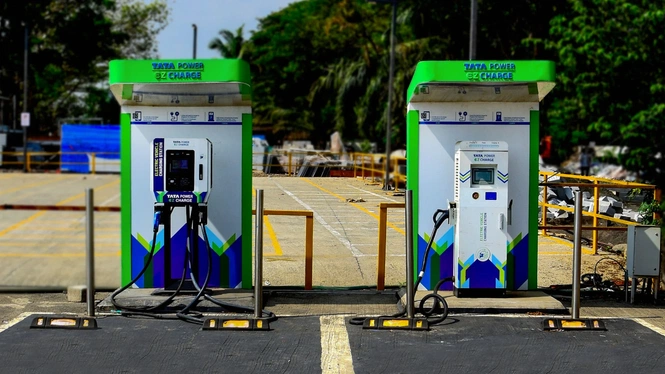
These are the operators whose networks will be accessible through UBC:
| Operator | Type |
|---|---|
| Tata Power (EZ Charge) | OEM-affiliated CPO |
| ChargeZone | Independent CPO |
| Bolt.Earth | Independent CPO |
| Statiq | Independent CPO |
| Indian Oil (IOCL) | OMC-run network |
| BPCL | OMC-run network |
| HPCL | OMC-run network |
| Maruti Suzuki | OEM network |
| Mahindra | OEM network |
This list covers the majority of India's public fast-charging infrastructure. OMC networks (IOCL, BPCL, HPCL) are particularly significant because they sit on highway real estate across 50 national corridors, which is where intercity range anxiety actually happens.
Also Read – Haryana Government Mandates EV Charging Stations in All New Buildings
Where Things Stand Right Now
UBC was announced on May 12, 2026. The app is not yet public. Integration is actively underway.
Kazam, one of the larger EV charging software providers, launched a free 7-day integration program on July 14, 2026, specifically to help CPOs onboard to UBC at no upfront cost. The program includes OCPI protocol integration support and sandbox testing. This matters because smaller CPOs don't have dedicated engineering teams to run protocol integrations themselves, and if they can't get on the network, UBC's coverage will have gaps on its day 1.
The PM E-Drive scheme, which is funding the physical charger buildout alongside UBC, has approved Rs 503.86 crore for 4,874 chargers across states including Karnataka, Rajasthan, Andhra Pradesh, Uttar Pradesh, Gujarat, Kerala, Telangana, and Tamil Nadu. The full scheme targets 72,300 public charging stations, against the current 27,737 installed as of March 2026.
So UBC is a software layer being built in parallel with the physical network still being deployed at scale. Both need to finish roughly together for the system to work as intended.
Also Read – Why Does Your Car’s Service History Matters During Insurance Claims and Renewals?
What Changes for EV Owners
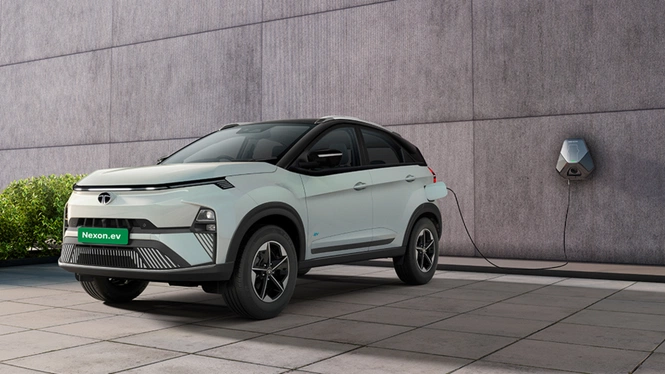
The immediate effect, once UBC goes live with full operator participation, is 1 account across every participating network. That means:
No more managing 4 wallets across 4 apps. Discovery across all operators in a single search. Unified billing history. RFID roaming, so your Tata Power RFID card works at a Bolt.Earth station. Real-time availability visible across networks, not just within one CPO's footprint.
The fleet impact is more significant. Commercial EV fleet operators currently need bilateral agreements with every CPO they charge through. Under UBC, a fleet management platform becomes a single BAP that accesses every BPP on the network, with consolidated invoicing and a single dashboard. That's not a minor convenience upgrade, it's a logistics change.
Also Read – Which EVs Are Available With BaaS Scheme?
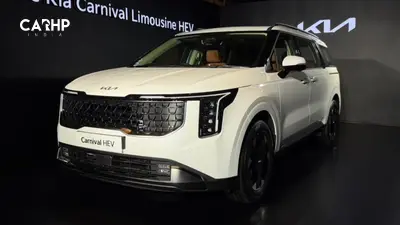
Image Source: Kia India, Tata Power, Tata Motors
Table of Contents
- What UBC Actually Is
- The Tech Under the Hood
- Who's On the Network
- Where Things Stand Right Now
- What Changes for EV Owners
Join the Conversation
Trending
2026 Skoda Slavia Facelift Every Variant Explained
A detailed variant-by-variant breakdown of the 2026 Skoda Slavia facelift covering every new feature, who each trim is actually for, and which variants are worth your money.
Anmol Kumar
October 23, 2026
New Toyota Fortuner to Debut on December 1, India Launch in 2027
Toyota will unveil the updated Fortuner globally on December 1, 2026. The SUV has been spotted testing in Thailand and is expected to reach India in 2027 with revised styling and cabin upgrades.
Salil Kumar
October 23, 2026
Renault's Upcoming 3-Row SUV Could Be Called Bigster or Boreal
A heavily camouflaged Renault SUV has been spotted testing in Ladakh. The test mule is believed to be the upcoming three-row SUV related to the Duster, with a possible launch in 2027.
Anmol Kumar
October 23, 2026
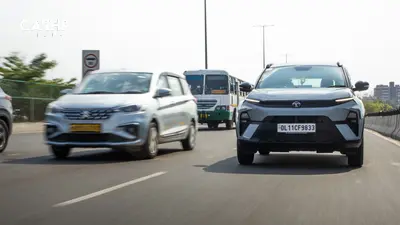
How 2027 Traffic Rule Changes Will Affect Drivers in India
India’s traffic rules are tightening, with repeat offenders facing possible driving licence disqualification and stricter deadlines for paying or disputing e-challans. New vehicle safety requirements will also affect specified commercial vehicles from 2027. Check the latest 2027 Indian traffic rules here.
Anmol Kumar
October 22, 2026
Featured
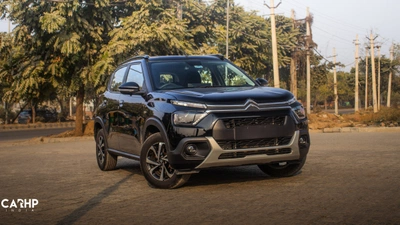
Citroen C3 Review: Who Should Consider This Car?
A few days ago, I took the Citroen C3X out for a spin in the city and on the highways. I travelled long distances and checked its fuel efficiency, features, comfort, and other factors. Today, I’ll briefly share my overall experience with the C3X and will tell you whether you should consider it or not and which is the most value-for-money variant of the lot.
Vatsal Agrawal
May 19, 2026
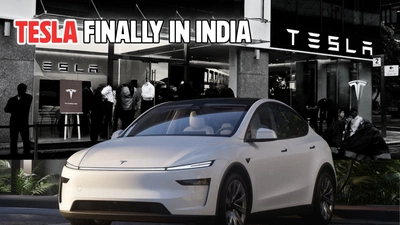
Tesla Finally In India Officially. Why Now And What Does It Mean For EVs?
The much-anticipated 2025 Tesla Model Y has officially arrived in India, marking a pivotal moment for the nation's burgeoning electric vehicle market. Launched on July 15, 2025, the Model Y Juniper facelift offers cutting-edge technology, impressive range, and signature Tesla performance. Positioned as a premium electric SUV, its entry will intensify competition and reshape consumer expectations for EVs across the subcontinent.
Author
July 17, 2025
Here Are 10 Things The Harrier.EV Offers That The Mahindra XEV 9E Doesn't
The Harrier.EV is an incredible new offer from Tata. Its most popular competitor would be the Mahindra XEV 9E, priced similarly. With these two incredible offerings from home grown brands available, here is a list of everything the Harrier.EV offers that the XEV 9E doesn't.
Author
June 13, 2025
Write a comment
Comments
No comments yet. Be the first to comment!